FOLK BELIEFS OF THE SOUTHERN NEGRO BY XEW'BELL XILES?L"CKETT. Ph.D. - CHAPEL HILL THE UNTVXRSITY OF NORTH CAROLES'A PRES? LOXEX^X: HTMPHREY MILFORD 1*55
pg Copyright/ 1926,y By The University of North Carolina Press Peesses of Edwards & Broughton Company RALEIGH
TO MY WIFE ^^62f
PREFACE Overwhelmed by the frenzy of a "holy dance" a Negro minister of my acquaintance panted: "You sees me dancin', folks, but de skip's on de inside!" After twenty years or more of close association with the Negro, an honorary membership in "de Mount Zion Missionary Baptist Church," and several years' experience as an amateur "hoodoo-doctor," I am convinced that "de signs an' wonders" disclosed here are but outward manifestations of a well-nigh inscrutable Negro soul. My peep behind the curtains has destroyed for me the fable that "the Southern white man thoroughly understands the Negro," and has opened my eyes to the importance of objective study as a means of establishing more cordial relationships. In a general sort of way the Southerner does understand the Negro, but this understanding is limited almost completely to the practical affairs of life, and consists chiefly in knowing how to make the Negro work. Regarding the feelings, emotions, and the spiritual life of the Negro the average white man knows little. Should some weird, archaic, Negro doctrine be brought to his attention he almost invariably considers it a "relic of African heathenism," though in four cases out of five it is a European dogma from which only centuries of patient education could wean even his own ancestors. This confusion of African and European lore only intensifies cultural differences, and for this reason I have modified this volume, originally a dissertation presented for the degree of
Vlll Preface Doctor of Philosophy in Yale University, into its present form. In essence a study of acculturation, it centers chiefly around folk-lore and superstition, because in almost all other affairs of Negro life the African element has been entirely supplanted by the European. Its aim is to present these Negro folkbeliefs, to show their origin whenever possible, and to indicate some of the general principles governing the transmission and content of folk-lore in general. My personal work among the older rural Negroes has shown me the necessity of haste in collecting this fastdisappearing lore. Several of my best informants during the year have passed on to the Great Beyond, and daily many pages of irretrievable folk-knowledge are being erased in a similar manner. While the lore presented here is but a smattering of the material existent, yet considerable pains have been taken to make it as representative as possible. Close personal field work has been supplemented by questionnaires sent out to all the Negro colleges of the South. In this way some ten thousand beliefs were gathered, most of them coming from Mississippi, Alabama, and Georgia — the heart of the "Black Belt" — though material was obtained from every state of the South, giving an index to the spread of each particular belief. About two-thirds of these ten thousand beliefs were duplications, and of the thirty-five hundred or so retained, almost a third were collected personally. A careful survey of the available published material indicates that almost twenty-four hundred of these beliefs have never before been published. This collection, including many citations from published sources, constitutes the basis of the present discussion.
Preface ix I am under obligations to Professor A. G. Keller and M. R. Davie of Yale University, whose courses iirst opened my eyes to the possibility of a scientific study of societal relations. Again I am indebted to Professor J. E. Cutler, who has read the manuscript and offered many valuable suggestions, and to Mr. W. G. Thayer, Librarian of the John G. White Collection of Folk-lore at the Cleveland Public Library, whose assistance in regard to source material has been of inestimable value. Without the cooperation of the Negro colleges and the assistance of my four hundred informants listed at the end of the text my efforts would have availed little. To Hattie Harris, Ed Murphy, and especially to Frank Dickerson, who now can speak only through these printed pages, I owe particular gratitude, not to mention Mrs. Allen B. Puckett, Robert Bryant, Professor L. G. Painter and many others whose names appear frequently throughout this volume. My greatest thanks, however, are due to my wife and to my mother, whose inspiration and assistance, not only in the preparation of the manuscript but also in the collection of lore, have enabled me to present this work in its present form. •^Columbus, Mississippi, iN. JN. r. August, 1925
CONTENTS I. Practical and Emotional Backgrounds 1 Antiques. Mental Heirlooms. Source of American Slaves. Physique and Folk-lore. The African Potpourri. Laziness, Humor, and Sexuality. Other Traits. Vocational Characteristics. Language a Unifying Force. Mutilated English. True Linguistic Survivals. The Conservatism of Verse. Other Possible Survivals. Slave English. Language and Lore. African Marriage Customs. American Survivals Few. Law and Government. Fewer Restrictions upon Self-gratification. Grandiloquent Speech. Courtship Formulas. Animal Folktales. Fossilized Customs. African Characters. The Dog. African Origins. Devil-tales and Others. The Tar-baby Story. Erroneous Nature-beliefs. Snakes. Miscellaneous Beliefs. Negro Jokes. Laughing at the White Man. Typical Riddles. Proverbs. Games. Survivals of African Music. Slave Dancing. "Holy Dances." Songs from the Soul. "Jump-up Song." African Singing. Negro Song Structure. Sovereignty of Religious Songs. Rag-time and Jazz. Education by Song. Rhythmic Lore. Funeral Fun. Conclusion.. II. Burial Customs, Ghosts, and Witches 79 The Concept of Death. European Acculturation. Dying in Ease. Prophylactic Measures. Dying Whispers. Preparation for Burial. Stygian Sign-posts. Wakes. The Funeral Procession. Negro Mourning Customs. Significance in Africa. Clothes and Crepe. Multiple Funerals. Grave-lore. Graveyard Omens. Dead Detectives. Troublesome Spirits. Ghost-dodging. Gifts to the Dead. Grave Decorations. "Layin' de Sperrit." The African Soul-concept. Survivals of the "Dream-soul." The Srahman and other Souls. Ghost-land. Polytheism in the South. Negro "Ha'nts." Brawny Specters. Ectoplasmic Manifestations. Serious Business. Cadaverous Avengers. Ghastly Associates. Mutilated Specters. The Mark of the Beast. Spookish Humor. English Phantoms. The Jack-o'-my-Lantern. The Origin of Jack. Flying Horses and Mermaids. "Double-sighted" Folks. How to See Ghosts. "Fightin' de Ghosses." Summary of Ghost-lore. The Absence of Fairies. Witches. Metamorphosis. Ridden by Witches. Vampires and Ghouls. Driving Off and Capturing Witches. Brooms and Silver Bullets. Hags and Horses. Sharp Points and Salt. Skin, Body, and Spirit. The Counting Instinct. Conclusion. III. VOODOOISM AND CoNJURATION 167 Contributory Factors. Reality of the Belief. The Fetishistic Foundation. Spirit and Object. Homes for Spirits. Witchcraft and Religion, The Fetish-dance. Origin of the Voodoo Cult. African Survivals. Marie Laveau. Louisiana Voodoo Rites. Diabolic Festivals. Rites in Other Localities. The "Judas Eye." Initiations. New Orleans Today. Modern Voodoo Seances. In Other Localities. The
xil Contents African Witch-doctor. The Man-fetish. Professional Obligations. The Southern Hoodoo-doctor. Other Pecularities. Visions and Metamorphosis. A Self-made Hoodoo-doctor. Professional Duties. Satisfied Patients. Common Sense Treatment. Evasive Instructions. In Africa. Out-hoodooing the Hoodoos. Credulity of the Hoodoo-doctors. Conjurers by Accident. Symptoms of Conjuration. African Charms. Survivals in America. The Fetish Color. Pre-conjural Preparations. "Layin' de Trick." New Orleans Charms. Tapers, Feathers, and Coffins. Other Charms. General Characteristics. Conjure-balls, Bottles, and Bags. "Tricken-bags" and "Luck-balls." Typical Negro "Hands." Other Ingredients. Conjurers Made to Order. A European Case. IV. VooDOOisM AND CoNJUEATiON — Continued 242 Images. Photographs. Roots. Graveyard Dirt. Reptiles in the Body. Reptilian Complications. "Lockin' de Bowels." The "Black Cat Bone." Practical African Witchcraft. Where Ghosts are Real. Negro Love-charms. Winning and Holding. "Shamin' yo' Fairer." Home-breaking. "Good-Bye, Enemy." Running Water, Running Men. Calling the Absent. Insanity Charms. "Dustin' Hats." Softening Hearts. Job Getters. Dodging the Law. Talismanic Watch-dogs. Circean Detectives. Gambling, Debt-getting, and Other Charms. Discipline and Train-stopping. Other Practical Applications. Preventives of Conjuration. Red Flannel and Silver. Pepper, Salt, and Frizzly Chickens. Horseshoes and Candles. Miscellaneous Preventives. Diagnosing Conjuration. Finding the "Hand." "Turnin' de Trick." Curing the Conjured. The Power of Faith. Reptiles Removed. Hoodoing for Science. Headaches, Bites, and Hoodoo. Fooled to Life. V. Positive Control-Signs: Minor Charms and Cures 311 Distinction Between Signs and Hoodoo. Positive and Negative Control-Signs. Prophetic Signs. Charms and Amulets. AnimalTaming. The Feminine Touch. The Cross Symbol. Controlling the Rain. Snakes. Poultry and Agriculture. Lost Things, Clothes, and Wind-making. Aids to the Love-lorn. Your Future Mate. Wedding Days and Colors. Contraceptives. Pre-natal Influences. Child-birth. Confinement and After. To the Manner Born. Food and Clothing. Nails, Hair, and Associates. Babies and Brooms. Birthmarks and Thrush. Fretfulness. Stuttering. Other Ills. For Future Greatness. Mirrors and Hats. Tooth-cutters. New and Old Teeth. Harnessing the Moon. New Year's Day. The Watery Grave. General Good Luck. Wishing. Fishing and Hunting. The Future. Practicality of Signs. Folk-remedies. Germs and Ghosts. Rheumatism. Backache. Chills and Fever. Sore Throat. "Fallen Palate." Colds and Other Respiratory Diseases. Whooping Cough. Hiccoughs. Toothache. "Shingles." Wens and Goiters. Earache. Sprains and Cramps. NoseBleed. Wounds. Snake-bite. Boils and Headache. Ringworm and Warts. Eye-trouble. Fits and Scrofula. Venereal Diseases. "Female•complaint." Miscellaneous Ills. Panaceas Prevention of Disease.
Contents xili VI. Negative Control-Signs: Taboos 393 Negro Taboos. Etiquette With a Vengeance. Feminine Lore. Sweeping. Hair and Nails. Ominous Friday. Unlucky Thirteen. The Perils of Sewing. Wash-day. The Imp of the Kitchen. Household-lore. Chairs, Lamps, and Clocks. Edged-tools and Other Things. The Trail to a Whipping. Coffee-drinking and Mirrors. Peanuts and Policemen. Dangerous Carpentry. The Rules of Sleep. Signs at Sunrise. Miscellaneous Domestic Beliefs. Vesta's Creed. Tree-planting. Marriage. Turning Back. Hands Behind Head. Walking Backwards. Teeth-sucking. Shoe-lore. The Elusive Fish. "Dont's" for the Farmer. The Borrowed Hat. Money and Trade. Friendship Hints. Personal Etiquette. The "Spring-keeper." Animal Taboos. The Power of the Petticoat. Conclusion. VII. Prophetic Signs or Omens 439 Nature of Prophetic Signs. The Swish of Skirts. Salt-spilling. The Flame of Fate. General Household Omens. Shoes and Clothing. Eyes that See Ahead. Follow Your Nose. Ears that Talk. Feet, Arms, and Face. Sneezing-signs. Hair. Features and Fate. Love and Wedding Omens. Cross-eyed Folks. The Deadly Female. Other Human Omens. The Wise Old Moon. The Voice of the Elements. Animal Harbingers. Cats. Brer Rabbit. The Rabbit Foot. Horses. Horseshoes. Dog-language. Miscellaneous Animal Omens. The Feathered Prophet. Shutting the Owl's Mouth. Poultry. Wild Birds. The Buzzard. The Friendly Redbird. Insects. Plants. Pins. Things Found. Dream-signs. Snake-dreams. Visions of Death and Burial. Dreams of Meat. Eggs. Other Common Dream-signs. Representative Specimens. Weather-lore. Four-footed Forecasters. Aches and Insects. Birds and Weather. Wild Birds. Vegetable Weather-prophets. Reliable Weather-signs. Moon and Stars. The Sky. Sunshine and Rain. Conclusion. VIII. Christianity and Superstition: Conclusion 520 Supplements to Christianity. Negro Religion Uniform. Polytheistic African Religion. Survivals in America. African Concept of Sin. Slave Religion. Negro Church a Social Center. Emotional Religion. "Praise Houses." The Emotion-expert. The Sermon. "A Slipperance uv de Tongue." "Comin' Thru." Resemblance to Africa. White Examples. Negro Visions. "Mrs. God." The "Foot-wash" and "Holy Dances." Christianity and Culture. Christianity in Africa. The Devil in Africa and America. Negro Devil-forms. The Faust Legend. Minor Devil-beliefs. Christ and Other Sacred Characters. Holy Herbs. God and the Lizard. Fetishistic Christianity. Christianized Voodooism. The Lucky Saint Joseph. Religion and
xiv Contents Conjure. Bibliomancy. Superstitious Conversion. Dreams and Religion. Aleatory Self-maintenance. Primitive and Civilized Religion. "Religion in Overalls." Meaning of Superstition. Eliminating Superstition. Literary Education Ineffective. Suggested Training. Race Pride. Conclusion. IX. References Cited - 583 X. List of Informants 599
ILLUSTRATIONS A Negro Conjure-Doctor Frontispiece. Songsters of Note Facing page 63 Negro Graves in Mississippi " 106 Mississippi Hoodoo-Doctors " " 201 Making a "Hand" " "283 Nutmeg, Red Flannel, and Silver... " "314 Some of My Informants " 385 Two Volumes OF Folk-Lore '' 438 Possession by the Spirit " ' 539
FOLK BELIEFS OF THE SOUTHERN NEGRO
CHAPTER I PRACTICAL AND EMOTIONAL BACKGROUND Antiques. No one appreciates the musty byways and corners of life more than the collector of antiques. The new chases the old from parlor to bedroom, to kitchen, to attic or woodshed, until finally the timehonored relic is either converted into kindling-wood or else is pounced upon by some antiquist and restored to its original place of honor. This dust-sifting is of double interest in the South since the cycle of degeneration is twice repeated. Grandfather's chair, possibly a splendid old Colonial piece, passes from the attic of the white planter to the "bes' room" of his Negro servant, from which it continues its usual route to the kitchen and woodshed as the Negro pride develops a longing for "new style stuff." Thus the Negro has very often become the custodian of many things which contributed much to the glory of the Old South, and the desire for a four-poster support for a veneered genealogy has sent even the most supercilious whites scrambling beneath the social bars into the dust of many a humble smokehouse and barn. In this pay-dirt are found many nuggets of mahogany, walnut or rosewood — spindle-beds and chairs, delicate tete-a-tetes, old clocks, spinning-wheels, what-nots, gate-leg tables, quaint old chests and dressers in various stages of dilapidation — battered, whitewashed, weather-beaten, smeared with enamel from the tencent store, patched up with rawhide or hickory, or hammered together with mutilated fragments of other
2 Folk Beliefs of the Southern Negro masterpieces Into the most mongrel mishmash Imaginable. And yet, In spite of paint, pounding, and patching, the master-touch of Chippendale, Sheraton, and others, and the French Influence from New Orleans and elsewhere are clearly discernible. Mental Heirlooms. Of no less Interest are the mental heirlooms of the Old South. Here again choice Items of folk-lore were handed down from the white master to the better class of slaves with whom he had more friendly contact. These European beliefs were later forgotten by the white man and relegated by the more advanced Negro to the garret of mental life; but in the more Illiterate Negro sections, and especially In the rural sections — the very woodshed of Negro life — may be found many fragments of early European thought. Mutilated and half-forgotten, smeared with the veneer of culture, and hammered together with Items of "book-larnin','' health propaganda, Scripture, and what not, this miscellany nevertheless shows the Negro to be, at least In part, the custodian of former beliefs of the white. But the task of ascertaining the component elements is very much more difficult with antique lore than with antique furniture. The Influences creating Negro furniture were definitely European or American, but with Negro folk-knowledge the African ^ past enters In and must be considered before any accurate analysis of these beliefs can be attempted. Ignorance creates an air of mystery, and Africa Is too often regarded as 1 While there are a few isolated cases of traits acquired from the American Indians, in the main the plantation Negroes were isolated so effectively from these savage folk, who spoke an entirely different language, that little important contact occurred. By the time the importation of slaves for the cotton plantations was in full sway the Indian was a negligible element in the environment.
Practical and Emotional Background 3 a sort of Cimmerian jumbo, responsible for all the "devilment" of the Negro ^ regardless of the insalubriousness of his particular American environment. Sources of American Slaves. Roughly speaking, the six to twelve million ^ Negro slaves brought to America came from that portion of the West Coast of Africa between the Senegal and the Congo rivers. True enough these West Coast slave markets did in turn obtain some slaves from far in the interior of the continent, ^ but the principal markets were about the mouths of the Senegal, Gambia, Niger, and Congo, and the majority of blacks were obtained from this West Coast region. * Here was the locality closest to America, the one with the densest population (more than half the total population of Africa was located in this western equatorial zone), * with the inhabitants consisting largely of the more passive inland people driven to the coast by inland tribes expanding towards the sea. ^ This mild and pacific disposition was enhanced by the tropical climate and excessive 1 With the exception of direct quotations the term Negro will be used to mean Afro-American, while the term African will be employed for African Negroes. 2 See Work, M. N., Negro Year Book, (1918-1919), p. 151. ^ For some idea of the extent of this contributing area, see Krehbiel, H. E., Afro-American Folksongs, pp. 56-57. Conrad, Georgia B., Reminiscences of a Southern Woman, Southern Workman, vol. 30 (1901), p. 252. Park, R. E., Journal Negro History, vol. 4 (1919), p. 117. Work, M. N., Negro Year Book (1918-1919), p. 151. Cable, G. W., The Dance in Place Congo, Century Magazine, vol. 31 (1886), p. 522. * Weatherford, W. D., The Negro from Africa to America, pp. 29-30. Brawley, B. G., Social History of the American Negro, p. 17. Brawley, B. G., Short History of the American Negro, pp. 1-2. Burton, R. F., Wit and Wisdom from West Africa, p. 387. Aimes, H. H. S., African Institutions in America, J. A. F. L., vol. 18 (1905), p. 15. 6 Simpson, B. L., The Conflict of Colour, pp. 236-37. ^ See Tillinghast, J. A., The Negro in Africa and America, p. 21. Keane, A. N., Man; Past and Present, p. 54. Wilberforce, W., The Abolition of the Slave Trade, pp. 86-87. Hutchinson, H. N., The Living Races of Mankind, p. 332.
4 Folk Beliefs of the Southern Negro humidity of the coast. ^ The lack of beasts of burden ^ forced pastoral tribes into agriculture, and native slavery (sometimes cruel, ^ but generally milder than the American form) " grew up as a natural concomitant. Thus we have in this section of Africa a people, for the most part, with an easy-going disposition; located in great numbers in that section of Africa closest to the New World; accustomed to agriculture and to human slavery; and a people of good physique — a quality further enhanced by the selective activity of the slave trade itself. ^ It is small wonder that, except for a few slaves taken from the Zambezi and Mozambique, the great majority of American slaves trace back their origin to this western seaboard. Physique and Folk-Lore. A detailed anthropological discussion of these West African tribes is aside from our present objective. It is true that the physical characteristics of a people affect their folk-beliefs, but only in a general sort of way. Thus the fetish figures in the African Collection at the U. S. National Museum reflect accurately the flat noses and kinky hair of the makers who modeled their gods in the image of African man. A folk predisposed to rheumatism would be naturally expected to stress cures for that disease in their folk-medicines, and a people with a high infant mortality to hunt about for teething aids. Nature made Africans black, and ethnocentrism, based upon this natural feature, always declares in the African story that all men were at first made black, but that 1 Tillinghast, J. A., The Negro in Africa and America, p. 10. 2 Ratzel, F., History of Mankind, vol. 3, p. 115. ' See Race Problems of the South, p. 142. * For a more detailed discussion, see Ellis, A. B., Tshi-speaking Peoples, pp. 289-94. Nassau, R. H., Fetichism in West Africa, p. 15. Chatelain, H., African Folk-Life, J. A. F. L., vol. 10 (1897), p. 'S2. ^ Tillinghast, J. A., The Negro in Africa and America, p. 106 ff.
Practical and Emotional Background 5 when Cain killed Abel he turned white from fear; ^ and in Maryland ^ and Mississippi, ^ at least, precisely the same belief still survives. Notwithstanding the recognition of the inevitable character of the color code in the South, race pride hangs pictures of heaven, dusky with black angels, in many lowly Negro cabins, and buys Bibles containing pictures of these same black angels, at enormous profits to the publisher. ^ Man notices that which affects him most, and interprets the world in terms of himself — thus physical qualities are at least to be kept constantly in mind in any discussion of superstitions. The African Potpourri. A Mississippi Negro, after ineffectually trying to dispatch his "techous" wife with an axe and an unloaded shotgun, came to "de secondhan' sto','' to purchase a revolver with which to finish his ghastly errand. To his surprise the impecunious trader produced two splendid firearms. "Lawd, Mistah, Cindy ain' wurth no twenty-dollah killin','' he exclaimed. Then, looking at the weapons again, "Here I wus thinkin' you didn't hab nuthin' much, an' dere you Is wid dose two fine guns. De Scripture sho wus rite when hit sed, 'Bettah treat ebbybody rite 'caze you nebbah kin tell what dey's got.' " ^ In the case of the Southern Negro it is always more than difficult to tell "what dey's got" from the viewpoint of tribal origin. Roughly speaking, the 1 Kingsley, M. H., West African Studies, pp. 384-85. Burton, R. F., Wit and Wisdom from West Africa, p. 124. 2 Bergen, F. D., Animal and Plant Lore, M. A. F. L. S., vol. 7 (1899), p. 80. ' 141. The.se numerals refer to the informants listed at the close of the text. Thus informant 141 will be found to be Hattie Harris, Columbus, Mississippi. * For an example of this latter form of exploitation, see Bok, E. W., The Americanization of Edivard Bok (21st ed., Scribners, 1922), p. 141. Ml.
6 Folk Beliefs of the Southern Negro native peoples of Africa on the West Coast between the twentieth degrees of latitude north and south, may be divided into two classes, the Bantus and the Sudanese or Negritians. ^ The Bantus, occupying all of Southern Africa below the fourth degree of north latitude, "have a uniformity of language, tribal organization, family customs, judicial rules and regulations, funeral rites, and religious beliefs and practice." 2 The so-called Sudanese, on the other hand, are not at all a homogeneous people. From the Niger to the Senegal there is a regular patchwork of individual, independent tribes having little in common as regards race, custom, or religion. ^ In this African hodge-podge the precise ancestry of particular Negro groups Is almost irretrievably lost. We know that such tribes as the Mpongive ^ and the Iboes ^ furnished many of the American slaves, at times leaving survivals of their language and customs in the New World. There are many indications that the same is true of the Yorubans ^ and Kroomen ^ and other tribes, but we have no guide as to the quota of slaves furnished by each. An analysis of the individual culture of each of these heterogeneous tribes is too broad a subject to be attempted in the present writing even If the data were complete. Furthermore such an analysis is by no means necessary. It Is of interest to know that the cannibalistic Fans did not reach the coast until about 1850, ^ that the tribes of Ashanti 1 Dowd, Jerome., The Negro Races, vol. 1, p. xi and 78 ff. 2 Nassau, R. H., Felichism in West Africa, p. L 3 Kingsley, M. H., West African Studies, pp. 38-39. * Milligan, R. H., The Fetish Folk of West Africa, p. 43. ^ Basden, G. T., Among the Iboes of Nigeria, p. 104. 8 Ellis, A. B., Yoruba-speaking Peoples, p. 109. ^ Griffith, T. R., On the Races Inhabiting Sierra Leone, J. A. /., vol. xvi (1887), pp. 300-304. 8 Plutchinson, H. N., Living Races of Mankind, p. 347.
Practical and Emotional Background 7 and Dahomey were very militant, ^ that the Woloffs were very quarrelsome, ^ and that subjugation of the Congo tribes was almost impossible owing to the protective environment, ^ because these facts indicate that their contributions to the slave population were relatively slight. On the other hand the cleverness of the Yorubans ^ and the more open environment of the Tshis ^ seem to point to the fact that they may have contributed a special share to Negro superstitions without giving the least clue as to what this contribution may havfe been. For this reason we shall merely indicate some of the more universal African characteristics, putting especial stress upon those which seem to have survived under American contact. As a matter of fact, European lore had a decided advantage due to its universality in America, and hence its greater chance of perpetuation. Purely local African lore would be apt to die out since its devotees in America were too few in number and too scattered to provide the constant repetition necessary for remembrance. Before the invention of writing, man had to be constantly reminded of his beliefs, else he forgot them. Even with the reduction of the manifold African languages to a common denominator through the adoption of English speech, only African beliefs of an universal nature would be likely to survive unless, perchance, many slaves from the same African locality were grouped together on a single plantation. Let us now consider a few of these broad African traits. ^ Kingsley, M. H., West African Studies, p. 480. "^ Peschel, O., Races of Man, pp. 464-65. » Phillips, R. C, The Lower Congo, J. A. I., xvii (1888), pp. 215-16. * Frobenius, L., The Voice of Africa, vol. i, p. 148. Ellis, A. B., Yoruhaspeaking Peoples, p. 32. ' Ellis, A. B., Ewe-speaking peoples, pp. 8-9.
8 Folk Beliefs of the Southern Negro Laziness, Humor, and Sexuality. Laziness is found both in Africa ^ and in America; in Africa being enhanced by the enervating tropical environment. The high degree of energy and perseverance developed by some educated members of the Negro race in the South would seem to particularize this trait as that of any primitive folk not yet fully disciplined in foresight instead of a deep-rooted, inborn racial characteristic. The slavery-time environment of the Negro was not calculated to leave a traditional background making for habits of energy and foresight. Impulsiveness is another African - trait which is gradually being laid aside in favor of greater self-restraint. A lively sense of humor characterizes both African ^ and Negro, possibly having survival-value in that it prevents pining away under adversity. ^ Examples will be cited in connection with Negro jokes, but a splendid illustration of its balsamic utility was recently brought to my attention by the following reel: W'ite fo'ks lib in a fine brick house, Lawd, de yalluh gal do's de same; De ole nigger lib in de Columbus jail, But hit's a brick house jes' de same. ^ While a well regulated sex life is in part a result of cultural background, yet the sexual indulgence of the Negro, so open in Africa and in many parts of the rural South, may conceivably be a racial characteristic developed by natural selection in West Africa as a result of the frightful mortality. ^ 1 Cruickshank, B., Eighteen Years on the Gold Coast of Africa, vol. 2, pp. 252-54. 2 Phillips, R. C, The Lower Congo, J. A. I., vol. 18 (1888), p. 218. ^ Johnston, H. H., The Negro in the New World, p. viii. * Talley, T. W., Negro Folk Rhymes, pp. 244-45. 6 143. * Tillinghast, J. A., The Negro in Africa and America, pp. 64-65.
Practical and Emotional Background 9 Other Traits. Despotism In West Africa seems to win loyalty, pride, and popularity, ^ possibly because a strong-minded master has spirit enough to resent aggression and self-reliance enough to protect his followers from outside annoyance. - The surprise of strangers at the respect commanded from the illiterate Negroes by a despotic "boss-man" ^ and the occasional employment of whipping as an effective means of control ^ indicate that remnants of this feeling may yet persist in parts of the South. Shortsightedness, indifference, and disregard of the future are traits common not only to Africans ^ and many Negroes, but to almost all undisciplined primitive peoples. ^ With the Ewe-speaking peoples "where any improvement in conditions is only likely to arouse the cupidity of an irresponsible chief (or the Southern slaveholder of later times), why seek to improve it.^ Hence we find a great indifference to the future.... The chiefs are arrogant and tyrannical and the people servile. The latter rarely go straight towards the end they wish to obtain, but seek to compass it by subterfuges and devious methods. Concealment of design is the first element of safety, and as this axiom has been consistently carried out for generations, the national character is strongl}^ marked by duplicity. The Negro lies habitually; and even in matters of little moment, or of absolute indifference, it is rare for him to speak the truth." ^ May not the organized hypocrisy of the 1 Ihid., p. 69. 2 Phillips, R. C, The Lower Congo, J. A. I., vol. 18 (1888), p. 218. ' See also, Bruce, P. A., The Plantation Negro as a Freedman, p. 35. ^ Tillinghast,.J. A., The Negro in Africa and America, p. 180. ' Bosnian, W., Description of the Coast of Guinea, p. 1Q;1. Kingsley, M. H., Travels in West Africa, p. 598. McDonald, G., The Gold Coast, Past a?id Present, p. 81. * See Lippert, J^ Kulturgeschichte der Mei^schheit, p. 37 ff. ^ Ellis, A. B., Eu'e-speaking Peoples, p. 11.
10 Folk Beliefs of the Southern Negro Southern Negro also be an adaptation forced upon him by conditions of Hfe? Sometimes this African prevarication approaches closely that of the white Americans. When the natives of Gabun are asked something they do not want to tell they say "wz amie^'' (I don't know). Nassau says, "I have long ago learned that, mi amie, though only sometimes true, is not always a lie. It is equivalent to our conventional 'Not at home,' or a polite version of 'Ask me no questions and I'll tell you no lies'... it is a kind of notification that the conversation had better be changed," ^ Vocational Characteristics. There is no particular point in going into elaborate details concerning the industrial organization of the West Africans, since it was practically all speedily displaced in America by European methods of livelihood. A thorough test was possible in this field ^ and this test showed American methods the superior adaptation to the new environment into which the slave had come. Besides, the Africans were brought over to be industrially exploited, and the white master was careful to see that American farming practice was followed by the slave. He cared less about the amusements and religion of the Negro so long as they did not affect his working ability. But the American Negro remained still an agriculturist in a rural environment, a fact which both In environment and occupation might be expected to tend to a closer preservation of African agricultural folkbeliefs. Even today almost three-fourths of the Southern Negroes live in a rural ^ environment, and in this 1 Nassau, R. H., Fetichism in West Africa, pp. IIO-IL 2 Keller, A. G., Societal Evolution, pp. 128-168. « Negro Year Book (1921-1922), p. 391.
Practical and Emotional Background 11 relative isolation the more primitive type of superstitions are generally preserved more easily than in an environment where outside contact is greater. That this is not always true is shown by the apparently greater prevalence of superstition with the New Orleans city Negro as compared with many of his rural kinsmen — a fact probably accounted for by the voodoo traditions of that city and the more frequent interchange of such ideas through a multitude of people all clinging to the same old beliefs. Briefly, the West Africans are mostly in a confused state of transition from the stage of purely nomadic savagery to that of settled agriculture. ^ They have no domestic draught animals and are ignorant of the plow, - their chief agricultural implement being a heavy knife or cutlass to cut down trees and dig holes. The women go around among the burned logs and tree roots and stick in their roots and shrubs whenever they can find space; and nature does the rest. ^ The chief form of division of labor with the Africans was according to sex, the woman doing the steady, monotonous household work, and carrying on most of the agriculture, while the men turned to the more strenuous and exciting occupations of hunting and warfare, also taking for the main part, a predominant place in the work of building houses, caring for the cattle, blacksmithing and tailoring. * Beyond this there is little separation into difi^erent trades, except in a general 1 Tillinghast, J. A., The Negro in Africa and America, pp. 25-26. 2 Waitz, T., Anlhropologie der Naturvolker, bk. ii, p. 80. Cruickshank, B., Eighteen Years on the Gold Coast of Africa, vol ii, p. 272. ^ Chaillu, P. B. du, Explorations and Adventures in Equatorial Africa, p. 125. See also, Cruickshank, B., Eighteen Years on the Gold Coast of Africa, vol. ii, p. 272. Tillinghast, J. A., The Negro in Africa and America, pp. 17 ff. ^ See Winterbottom, T., Account of the Native Africans in the Neighborhood of Sierra Leone, p. 89. Johnston, Sir H. H., The Negro in the New World, pp. 23-24 and 318.
12 Folk Beliefs of the Southern Negro sort of way, that of blacksmiths, weavers, shoemakers, and musicians, in some tribes, ^ with the addition of carpenters, dyers, and potters in others. ^ American slavery tended to destroy to some extent the sex division of labor, men and women alike being field hands, though the women still occupied the predominant place as household servants. More individual specialization was made possible, though trade and commerce, the industry liked best by the Africans, ^ was almost entirely supplanted by agriculture. Most of the West Africans have private property in women, slaves and movables, but not in land; the idea of group or family responsibility giving rise to communal ownership as regards this possession. '* In general the succession of property is through the female line, ^ though among the Yorubans, who show a tendency towards individual ownership of property, the tie between father and child has been recognized and inheritance through the male line is common. ^ In America when the Negro was freed, private property was substituted for family property, and inheritance was shifted to the male line, but in most cases under slavery, the doling out of weekly rations to the family rather than to the individual kept the group idea still in the Negro's mind. ^ Mollieu, G., Travels in the Interior of Africa to the Sources of the Senegal and Gambia, p. 59. 2 See Johnston, Sir H. H., The Negro in the New World, p. 318. Tillinghast, J. A., The Negro in Africa and America, p. 37. Ratzel, F., History of Mankind, vol. 3, pp. 121-22. Waitz, T., Anthropologic, vol. 2, p. 96. ' Ratzel, F., History of Mankind, vol. 3, p. 117 ^Kingsley, M. H., West African Studies, p. 436. Waitz, T., Anthropologic der Naturvolker, bk. ii, p. 80. Nassau, R. H., Fetichism in West Africa, pp. 22, 156 and 167. Ellis, A. B., Ewe-speaking Peoples, p. 217. ^Nassau, R.H., Fetichis7ninWestAfrica,p.l3. Chatelain, H., Folk-Tales of Angola, M. A. F. L. S., vol. i (1894), p. 8. Kingsley, M. H., West African Studies, p. 428. Kingsley, M. H., Travels in West Africa, pp. 484-85. « Ellis, A. B., Yoruba-speaking Peoples, pp. 174-77, 217, and 302-03.
Practical and Emotional Background 13 Language a Unifying Force. Even more important than the substitution of raccoon and opossum for elephant and gorilla, or cotton and persimmon for palm and plantain in myth-making material, was the adoption of the English language in the place of the many heterogeneous tribal languages and dialects of Africa. Language is the vehicle in which social traditions ride on from one generation to another, and the possession of a common language at least enabled a universality of lore impossible to unconsolidated Africa. While the African tongue seldom speaks in the industrial life of the Negro today, yet in the more spiritual relations of play and religion, where the pruning-knife of the white man has been less severe, may be heard occasionally half-incoherent mutters reminiscent of jungle days. Mutilated English. The separation of this African element from the language of the Southern States is difficult because of the barbaric mangling of healthy English words by the tongue of the would-be Negro savant. The Negro meets with the "Christian and Deviled Egg Society" (Christian Endeavor and Aid Society) ^ and dwells upon "dem curious Cadillacs (Catholics) what woan' eat no meat on Friday," ^ He "resists" to "assist," "decopious" is "beautiful," a "refressiator" is a "refrigerator," ^ and he even runs at times into such impossibilities as "brown cheatom" (bronchitis) and "gumelastin" (gum elastic), leaving the puzzled folklorist at a "conclusive standstill," as the Negro would say, as to whether to run for an African dictionary or a Negro interpreter. Words like 1262. 2 278. '279.
14 Folk Beliefs of the Southern Negro "allerkerchle" (apparently meaning "anvil dust") and "ponton" (a blue-gummed Negro, who is really a cross between a horse and a man) ^ are unclaimed virgins — mutilated figurines of fair England or dusky Africa, or perhaps inchoate dream images of the Negro slave himself. In the song, "Round the Corn, Sally," 2 the expression "iggle-quarter" may mean "eagle-quarter," and "ginny bank," "Virginia bank," but the term "count-aquils" is certainly enigmatical. I have often heard the Negroes speak of "ring-lights" and "fellomcity" in connection with their religious services. ^ One author speaks of the terms as unintelligible, * but an old conjure-doctor tells me that they represent inscriptions from "Misapop" contained In the Union History of Christ, a book I have never been able to locate. (Among other things these Inscriptions, found on a stone which could only be overturned by a nineyear-old child, taught that woman could go to heaven without being converted — a fact known to all who read "Physiology.") According to him the term "ringlights" means "blessings" while "fellom-city" means "peace." ^ Another better educated Negro tells me that the old slaves used the term "fellom-city" to mean "heaven" and "ring-lights" to mean the brightest lights there, « definitions which fit In well with the context as I have heard these terms used. True Linguistic Survivals. Nevertheless there are distinct African contributions to English speech, although often merely In the form of dialect, as where 191. 2 Allen, W. F., Slave Songs of the United States, p. 68. ''141. * Southern Workman, vol. 23 (1894), p. 210. ^91. ^57.
Practical and Emotional Background 15 the nasality of the eastern coast Negro of America shows a close relation to the extremely nasal native language of the Guinea Coast region. ^ The term "voodoo" — or "hoodoo" as it is popularly called — seems to be derived from the vodu of the Ewes, a term used along with edro for gods and superhuman or supernatural agencies of all kinds. ^'Fodu appears to be derived from vo (to be afraid), or from vo (harmful)." - The term "goober" (peanut) is manifestly derived from gooba ^ or guha ^ by which this groundnut {arachis hypongea) is known all over Africa. It is to be noted that this ground-nut is linked up with witchcraft. Among the Susu-speaking peoples of Sierra Leone it is a constituent of a charm designed to produce bad crops, ^ while with the Southern Negroes, Gullah Jack, one of the leaders in Denmark Vesey's Insurrection of 1822 and a sorcerer of note, advised his followers to eat only parched corn and ground-nuts before the battle, and to put a crab's claw in their mouths to prevent being wounded. ^ Today the Negroes say it is unlucky to eat peanuts when you are going away to play a game of any sort, ^ and peanut hulls scattered about the door mean that you will go to jail, s The African term Makara or Mbakara, in the sense of white man, is closely related to the Negro "buckra man" (poor white). ^ "Pickaninny" also * Johnson, Sir H. H., The Negro in the New World, p. 396. ^ Ellis, A. B., Ewe-speaking Peoples, pp. 29-30. See also, Dana, M., Voodoo, Metropolitan Magazine, vol. 28 (1908), p. 537. Kennedy, L., Vodu and Vodun, J. A. F. L., vol. 3 (1890), p. 241. ' Bacon, A. M., Proposal for Folk-Lore Research at Hampton, Va., J.A.F. L., vol. 6 (1893), p. 307. ■* Owen, M. A., Voodoo Tales, p. 39 (note 2). * Thomas, N. W., Anthrop. Kept, of Sierra Leone, pt. 1, p. 50. * Brawley, B., Social History of the American Negro, pp. 135-37. ' 401 and 182. 8 141. ' Burton, R. F., Wit and Wisdom from West Africa, p. 329.
16 Folk Beliefs of the Southern Negro "appears to have been an African word used by the early American slaves for the word "baby." ^ The term "Gullah" is thought to be a corruption of "Angola." 2 In Louisiana the terms Counjai or Koundjo (a sort of Negro dance), ^ and grigri (noun signifies "charm" — verb means "to bewitch"), seem to be of African origin, the term gris-gris being employed in the Senegal as a general name for amulets. * Conservation of Verse. Many of these African survivals are found in rhymes, especially in voodoo songs, the rhythm being an aid to memory and clinging to the old words long after the original meaning has been forgotten. Both verse and religion are conservative, and such unknown words by their very mystery occasion a sort of reverence on the part of the singer, similar to that evoked by the use of Latin in church services. One such survival is: Tig, tig, malaboin La Chelema che tango. Redjoum. In 1878 Lafcadio Hearn asked his black nurse in New Orleans the meaning of this refrain: "She only laughed and shook her head: 'Mais c'est Voudoo ca; je n'en sais rien.' " ^ Other such examples are the so-called Guinea or Ebo Rhymes, the former tongue showing a mixture of African and English, while the latter shows an addition of some foreign language, as 1 Talley, T. W., Negro Folk Rhymes, p. 186 (note). 2 Gonzales, A. E., The Black Border, p. 9. ' Krehbiel, H. E., Afro- American Folksongs, p. 116. ^ Newell, N. W., Reports of Voodoo Worship in Hayli and Louisiana, J. A. F. L., vol. 2 (1899), p. 44. ^ Krehbiel, H. E., Afro-American Folksongs, p. 37.
Practical and Emotional Background 17 evidenced by the word, la used for "the." ^ Talley cites two such cases: Frog in a Mill ^ Once dere wus er frog dat lived in er mill He had er raker don la bottom o'-la kimebo Kimebo, nayro,*dilldo, kiro Stimstam, formididdle, all-a-board-la rake Wid er raker don la bottom o'-la kimebo. Tree Frogs ^ Shool!Shool!Shool! I rule! Shool!Shool!Shool! I rule! Shool! Shacker-rack! I shool bubba cool. Seller! Beller eel! Fust to ma tree'l Just came er bubba. Buska! Buska-reel! A Mississippi informant mentions the phrase lacka shoola, though she does not know the meaning. * In one of the Creole songs, the refrain Ouende, ouende, macaya is used after each line, and, in the Congo, ouende has the meaning "to go," "to continue to," "to go on," while the Creoles of Martinique use the term macaya to mean "to eat excessively" — giving the refrain the sense of "Go on! go on! Eat enormously!" ^ Other survivals in New Orleans are quimbe (Creole tchombe or chombo) (to take) and ouarasiy 1 Talley, T. W., Negro Folk Rhymes, p. 247. 2 Jhid., p. 167. 3 Ibid., p. 168. «175. ^ Krehbiel, H. E., Afro-American Folksongs, p. 39 ff. 2
18 Folk Beliefs of the Southern Negro ourasal used as a refrain to a song, although the meaning is not precisely clear. ^ Other apparently meaningless song lines with the Southern Negro are lee cum, lee cum, genikebukobuk, lee ki, used as a song in one of their animal folk tales ^ and the refrain, Toko onaman, toko, used as a refrain to one of the corn-shucking songs on an antebellum plantation in Alabama. ^ Onaman seems to be derived from oona or ona, which was used by the early slaves in both the singular and plural to mean "you" when speaking of friends as "Ona build a house in Paradise," ^ but of toho I could find no equivalent. The voodoos of Missouri know of the existence of a being called Samunga, who is called upon as follows when going for mud of which to make "tricks" (charms or conjures): Minnie, no, no Samunga Sangse see sa soh Samunga. Miss Owen thinks this may perhaps be the Gounja of the Hottentots. ^ Colonel Higginson says, "In my regiment there was a phrase, 'Lulla nigger talk,' referring doubtless to Angola, and there was a word my'o for the river of death in one of their hymns, which was probably African," ^ since in the Cameroon dialect mawa signifies "to die." ^ Again in one of the Creole songs there is the line, "Mo na me ouanga pour li" (I will make an ouanga for him), the term 1 Ream, L., Gombo Zh(bes, p. 38 (note 1). 2 Harvey, E. H., A Brer Rabbit Story, J. A. F. L., vol. 32 (1919), pp. 443-44. 3 407. * Allen, W. F., Slave Songs of the United States, Preface p. xxv. 6 Owen, M. A., Among the Voodoos, I. F. L. C. (1891), pp. 241-42. 8 Higginson, Col. T. W., Letter in Southern Workman., vol. 23 (1894), p. 180. ^ Allen, W. F., Slave Songs of the United States, p. 38 (note).
Practical and Emotional Background 19 ouanga being of African origin and applied to all things connected with the voodooism of the Negroes. ^ This term wongah {ouanga) in Louisiana, means a voodoo charm; ("wangateurs" are conjurers) ^ and is probably derived from the Ga term wong, "a charm." In a voodoo song mentioned by Mr. Cable ' the words tigui li seem to be the African tigewala, *'a maker of charms," or "medicine-man;" and the concluding sentence. Do se dan go-do, to be. Do dsi dank godo, "Oh, curved snake, may you be fat," i.e., "have a good meal." * The close association of these African terms with Negro voodooism even in advance would lead us to suspect that the voodoo practices are also African in origin. Other Possible Survivals. In a few other fields African expressions were remembered for a time after English was learned. A very old acquaintance of mine tells of Uncle Dennis, an African slave, who could count to five in his native language, ^'^bosa, boha, bio, banyon, buckanana.^^ ^ Many other strange terms have come to have an American Negro meaning, but were, I suspect, used once in Africa in the same or in a difi'erent sense. The term mojo is often used by the Mississippi Negroes ^ to mean "charms, amulets, or tricks," as "to work mojo" on a person or "to carry a mojo." In New Orleans the term iobe or toby is used in the same sense. ^ In Virginia "Gombrework" means the work of conjuring or conjuration, 1 Hearn, L., Gombo Zhebes, p. 16 (note 3). '277. ^ Cable, G. W., Creole Slave Songs, Century Magazine, vol. 9 (1886), p. 820 (note). * Ellis, A. B., On Vodu Worship, Popular Science Monthly, vol. 38 (1891), pp. 662-63. 6 245. «1()3. ^54.
20 Folk Beliefs of the Southern Negro ingany or tingany means flour, and harberdidie means turkey buzzard. ^ Coonjine as used by the Mississippi River Negroes, refers to a peculiar motion of the body used apparently to lighten or hasten the labor of unloading; and hully-gully {hull da gull) or {oil ola) is the expression for "how many" in the children's game of guessing how many nuts a person holds in his hand. ^ Aw, a kind of expletive equivalent to "to be sure" (as "Cold aw," in response to a statement regarding the chilly weather), ckurray (spill or throw away), and tote (to carry), reflect a possible African origin, as do also such proper names as Cuffy, Quash, and perhaps Cudjo. ^ At times, African words remain with an altered meaning, as where the Negro word bonki (bone), meaning he-goat, is the same term used by the Woloffs for hyena. * Slave English. Apart from such isolated cases as these the African impress upon the English language was negligible. Everywhere English became the accepted method of communication and English folkbeliefs and superstitions were given an enormous advantage over the African forms. Possibly one reason for the fragmentary character of Negro folk-songs is the fact that the slave was not fully in possession of the English language when these songs were composed. ^ This difficulty is expressed well in one of the early slave prayers: 1 Southern Workman, vol. 24 (1895), p. 78. 2 Southern Workman, vol. 23 (1894), p. 26. " Allen, W. F., Slave Songs of the United States, Preface, p. xxv. ^ Greber, A., Uncle Remus Traced to the Old World, J. A. F. L., vol. 6 (1893), p. 247. ^ Park, R. E., Journal of Negro History, vol. iv (1919), p. 125.
Practical and Emotional Background 21 Make he good, like he say, Make he say, like he good, Make he say, like he good, like he God, which may be thus interpreted: "Make him good as his doctrine, make his doctrine as pure as his life, and may both be in the likeness of his God." ^ Such expressions as "de nineteen wile in his han' " (the anointing oil in his hand) ^ and "silly yan" (sweet lamb) 3 occurring frequently in slave songs show how often the Negro approximated the English sound without In the least getting the meaning. Language and Lore. While the lore of the whites and the blacks are by no means entirely distinct, the Importance of a mastery of English Is shown by the fact that, roughly speaking the greater the departure of the Negro from the standard English In dialect, the less the lore of the Negro Is like that of the white. * Where the slaves were herded together In large groups, and rarely came Into contact with any whites save their owner and overseer, they were observed to profit little by the Imitative faculty and to make little progress In mastering English. ^ Thus the smaller the plantation the greater the contact between whites and Negroes and the greater the chance for English folk-beliefs to enter the Negro mind. Also the planters who owned but few slaves were more likely to be uneducated and more superstitious — thus Increasing the possibility of transmission of English superstitions. Always there Is a strain towards consistency ^ Lyell, Sir C, A Second Visit to the United States of North America, vol. ii, pp. 15-16. * Krehbiel, H. E., Afro-American Folksongs, p. 218. »394. * Davis, H. C, Negro Folk-Lore in South Carolina J.A.F. L., vol. 27 (1914), p. 241 ff. ^ Lyell, Sir C, A Second Visit to the United States of North America, vol ii, pp. 268-69.
22 Folk Beliefs of the Southern Negro in the mores ^ — when the Negro acquired in part the language and outward culture of the white man there would be a tendency to acquire his folk-beliefs as well. For these and other reasons to be brought out later, we must not be surprised to find a good part of the Negro folk-beliefs to be of English or European origin. In 1780 there were 1,500,000 whites and 43,000 slaves in New England, New Jersey, and Pennsylvania. A greater chance for the interchange of folk-beliefs was thus afforded where the number of slaves was small, and when, not long after the Revolution, the Negroes were largely removed to the South ^ these New England folk-beliefs were doubtless carried with them and mingled with those of the South. African Marriage Customs. While the slave owner was not quite so concerned with the Negro's marriage customs as he was with his working customs, yet in the main a partial approximation of the white man's standards was attained. Generally throughout West Africa polygamy is the established form of marriage, ^ romantic love and kissing are unknown, * and wives are purchased in a purely business fashion with little display of feeling. ^ The dominant aifection in the home is the intense devotion of the African for his mother, ^ "more fights being occasioned among boys ' See Sumner, W. G., Folkways, p. 5 ff. ^Aimes, H. H. S., African Institutions in America, J. A. F. L., vol. 18 (1905), pp. 15-18. 2 TilHnghast, J. A., The Negro in Africa and America, pp. 60-61. Kingsley, M. H., Travels in West Africa, pp. 212 and 662. Kingsley, M. H., West African Studies, pp. 377-78. Talbot, D. A., Woman's Mysteries of a Primitive People, p. 96. Bosnian, W., Description of the Coast of Guinea, p. 169. * Ellis, A. B., Tshi-speaking Peoples, pp. 285-88. Kingsley, M. H., Travels in West Africa, p. 212. * Ellis, A. B., Tshi-speaking Peoples, p. 280. Ellis, A. B., Ewe-speaking Peoples, p. 199. For the betrothal customs, see Ellis, A. B., Tshi-speaking Peoples, pp. 235-36. ElUs, A. B., Yoruba-speaking Peoples, pp. 182-83. Ellis, A. B., Ewe-speaking Peoples, p. 201. * Wilson, L. Western Africa, p. 116.
Practical and Emotional Background 23 by hearing something said in disparagement of their mothers than by all other causes put together." ^ In much of Africa kinship is reckoned through the females. ^ American Survivals F ew. In the case of the Southern Negroes there was some tendency to cling to this same regard for the mother, since in slavery times when a husband and wife were located on separate plantations, the children always belonged to the owner of the mother. Thus the influence of the mother was greater, a fact which has some importance in regard to the handing down of folk-beliefs. It is also rather noticeable that in the Negro folk-songs, mother and child are frequently sung of, but seldom father ^ — possibly pointing back to the African love for the mother and the uncertainty and slight consideration of fatherhood. A possible African survival lies in the practice of calling all old people "Uncle" and "Aunty" whether they are actually relatives or not. This may well point back to African conditions where an offspring stood closer to his maternal uncle than to his actual father. Though women are bought and sold as property in Africa, the girl has a certain element of choice, ■* and sometimes manages in the African folk-tale, by a proper display of wit, to get the man she desires. ^ The intense desire for children reflects the high rate of infant mortality. Many charms are used to promote fecundity, and a common wedding salutation is, "Mayst thou beget (or bear) 1 Kingsley, M. H., West African Studies, pp. 373-74. '^ Bosman, W., Descriptions of the Coast of Guinea,p. 165. Winterbottom, T., Account of the Native Africans in the Neighborhood of Sierra Leone, p. 151. 3 DuBois, W. E. B., Souls of Black Folk, p. 259. * Ellis, A. B., Tshi-speaking Peoples, p. 285. Ellis, A. B., Yorubasp caking Peoples, p. 185. * Koelle, Rev. S. M., African Native Literature (Kanuri Proverbs), p.-151 ff.
24 Folk Beliefs of the Southern Negro twelve children with her (or him)." ^ Since women are regarded as property, adultery is simply a violation of a property right, punished much the same as theft. It may be defined as "intercourse with a married woman without the consent of the husband; for men can and do lend their wives, and the latter do not seem to have the right to refuse compliance." ^ Due in part to the negligence of the master in educating the slave in the English concept of matrimony, ^ in part to the frequent breaking up of the slave family through the sale of one or more of its members, and in part, perhaps, to the natural sexuality of the Negro, many less advanced members of that race today are, to say the least, careless in their sexual life. But, in the main, English matrimonial customs gained the ascendancy. Kinship came to be reckoned through the male line instead of the female, and wife purchase was done away with, although there is occasionally in verse ^ a reference to buying a wife, which, however, may have been suggested by the fact that American Negro slaves were always bought and sold, causing them to consider themselves as articles of merchandise. One old Negress tells me of a slave who married a girl from a group of native Africans just received on the plantation. According to her statement, the young man was forced to obtain the consent of every member of the girl's group before he was allowed to 1 Burton, R. F., Wit and Wisdom in West Africa, p. 167. 2 Ellis, A. B., Ewe-speaking Peoples, p. 202. See also, Kingsley, M. H., West African Studies, pp. 434-35. Ellis, A. B., Yoruba-speaking Peoples, pp. 183-84. Ellis, A. B., Tshi-speaking Peoples, pp. 282 and 286. Chatelain, H., Folk-Tales of Angola, M. A. F. L. S. (1894), vol. 1, p. 272. For divorce customs, see Nassau, R. H., Felichism in West Africa, p. 10, and Ellis, A. B., Tshi-speaking Peoples, pp. 297-98. For the training of children, see Frobenius, L., The Voice of Africa, vol. 1, pp. 156-58, and Ploss, H., Das Kind in Brauche u. Sitte der Volker, vol. 2, p. 343. ^ See Lyell, C, Travels in North America in the Years 1841-42, vol. i, p. 146. < See Talley, T. W., Negro Folk Rhymes, p. 145 and 510.
Practical' AND Emotional Background 25 marry her, ^ a requirement which on the surface appears to point back to a very primitive condition of groupresponsibility if not of group-marriage. Law and Government. Briefly noting the matter of African government, we find that practically the ground plan of African law is "the simple plan that they should take who have the power, and they should keep who can." ^ With some few exceptions ^ the government is of a despotic type with most of the power residing in the chief of the tribe. * While having somewhat the nature of a cult bond, ^ the West African secret societies, such as the Egbo or Ogbondi, not only aid in preserving order and discipline, but even at times correspond to our mutual benefit societies or lodges. ^ In the case of law and government with the Negro slaves the despotism of the chief was supplanted by that of the master, and the right of blood revenge was forbidden them. Under the cut-anddried status of the slave we find almost no survival in this field, unless it be the so-called Negro "governor" '342. ^ For more details, see Kingsley, M. H., Travels in West Africa, p. 536. Thomas, N. W., Anthrop. Rept. of Sierra Leone, pt. i, p. 70. Ellis, A. B., Tshi-speaking Peoples, p. 273. Ellis, A. B., Ewe-speaking Peoples, pp. 161-62. Ellis, A. B., Yoruba-speaking Peoples, pp. 164-65. ' See especially, Bosman, J., Description of the Coast of Guinea (Pinkerton), p. 405. * Kingsley, M. H., Travels in West Africa, p. 484. * Livingstone, D., Missionary Travels and Researches in So uth Africa, p. 446. ^ For a more detailed discussion, see Gatschet, A. S., African Masks and Secret Societies, J.A.F. L., vol. 12 (1899), pp. 209-10. Ellis, A. B., Yorubaspeaking Peoples, pp. 107-11. Nassau, R. H., Fetichism in West Africa, pp. 12, 139, 145, and 147-48. Marriott, H. P. F., The Secret Societies of West Africa, J. A. I., vol. 29 (1899), pp. 21-25. Chatelain, H., Angolan Customs, J. A. F. L., vol. 9 (1896), p. 17. Beatty, K. J., Human Leopards, p. 25. Kingsley, M. H., Travels in West Africa, p. 531. Basden, G. T., Among the Ibos of Nigeria, p. 263. Marriott, H. P. F., Secret Society of West Africa., J. A. I., vol.29 (1899), p. 23. Ageebi, M., The West African Problem, in Spiller, G., Inter-racial Problems, p. 345. For a description of the operation of African law in practical affairs, see Tillinghast, J. A., The Negro in Africa and America, p. 89. ElMs, A. B., Ewe-speaking Peoples, p. 223. Ellis, A. B., Tshi-speaking Peoples, pp. 303-04..A
26 Folk Beliefs of the Southern Negro who played a prominent role in New England slave festivals, more freedom being allowed them in that section. This "governor" was decorated with some of the emblems of royalty and the customs at this time were of apparent African type. ^ The Negro, however, does retain his intense passion for joining lodges and secret societies, most of which in America have the nature of mutual benefit organizations. Fewer Restrictions upon Self-gratification. The fetters of the white man have shackled but loosely the amusements and ostentations of the slave, except where these interfered with his working ability. Folkbeliefs and customs of purest African ancestry sport in this sphere, whereas in the domain of industry, marriage, and government they have been manacled even unto death. One will-o'-the-wisp flaunts itself at the very beginning as a sort of warning to the folklorist — the tendency of some Negroes, in common with certain whites, to attain pompousness by claiming relationship with nobility. I have run across far too many cases of old slaves claiming direct descent from African rulers to be willing to accept all such assertions at their face value. One has to be careful about such genealogies and also about the so-called African family traditions offered in support of them. Clothing and Ornamentation. The meager ^ clothing of the West African is used much more for ornamentation and the exaltation of personality than for protection or from a sense of shame. ^ The same is 1 Aimes, H. S., African Institutions in America, J. A. F. L., vol. 18 (1905), pp. 15-20. 2 See Tillinghast, J. A., The Negro in Africa and America, p. 44. 3 See Lippert, J., KuUurgeschichte der Menschheit, vol. 1, p. 365 ff. Le Cornpte, C. N. de Cardi, Ju-Ju Laws and Customs in the Niger Delta, J. A. I., xxix (1899), p. 60.
Practical and Emotional Background 27 also true of the stereotyped bodily scarification practiced by many tribes. These scars served as a kind of tribal mark or coat-of-arms, and in some cases it was possible through these marks to trace back American slaves to their original African clans and tribes. ^ Much the same purpose was served by the little brass figures worn on the arms by members of the Ogbondi leagues. ^ In America the slave owner dictated the style of clothing given the slave, and, from his viewpoint, protection of the body rather than the gratification of vanity, was the deciding principle. Thus the native fashion was ruthlessly annihilated, and scarification was likewise tabooed, since the slave owner did not want his property to depreciate in value. In Africa, decoration of the hair reaches a high point, often consisting in mixing some plastic material with the hair and shaping the whole into a highly fantastic coiffure. ^ With the Negro woman of the South the hair is still a prime object of decoration as evidenced by the many elaborate coiffures and by the "Hair Dresser" signs on many a lowly Negro cabin; although there is a decided tendency to remove the kink, by odoriferous unguents of all kinds in imitation of the straight hair of the whites. Whether the source of vanity be copper or iron ornaments or houses ^ the West African cares more for quantity than for quality. This matter of quantity applies even to such things as bustles. "The size of this extraordinary appendage (the bustle worn behind by Gold Coast women) ^ Lippert, J., KuUurgeschichte der Menschheit, vol. i, p. 396. ^ Frobenius, L., The Voice of Africa, vol. i, p. 176. ^ Lippert, J., KuUurgeschichte der Menschheit, vol. i, p. 381. * Chaillu, P. B. du, Explorations and Adventures in Equatorial Africa, p. 88.
28 Folk Beliefs of the Southern Negro varies according to the consequence of the wearer, always increasing in proportion to her dignity." ^ The Joloffs prefer EngHsh copper coins to silver ones. "Because it requires a larger number, and a greater weight, to represent the same value in piasters, they imagine themselves so much the richer" ^ — much as a small boy prefers two nickels to a dime. Precisely this same sort of things holds true with the rural Southern Negro; huge gold plated ornaments are preferable to smaller ones of solid gold, and heavy round silver dollars are always more desirable than greenbacks. It is the size and showiness in jewelry rather than the fineness of design or quality which always attracts them. Grandiloquent Speech. Both in Africa ^ and in American the Negro seems to find a decided pleasure in altiloquent speech. Perhaps this bombast is partly due to the fact that the long and unusual word has a sort of awe-inspiring, almost fetishistic significance to the uneducated person, and with the Negro, at least, it indicated a desire to approximate the white man in outward signs of learning. As it is, the Negro is constantly being lost in a labyrinth of jaw-breaking words full of sound and fury but signifying nothing. A loquacious old slave in my locality always comes forth with, "Underneath de ole foundations whar imputations rivals no gittin' 'long," * when he especially desires to impress his audience. Another Mississippi Negro, singing of the life of Moses, exhibits 1 Cruickshank, B., Eighteen Years on the Gold Coast of Africa, vol. 2, p. 283. 2 MoUieu, G., Travels in the {interior of Africa to the Source of the Sengeal and Gambia, p. 60. 3 See Kingsley, M. H., Travels in West Africa, p. 434. *48.
Practical and Emotional Background 29 the following rare display of English grammar recorded exactly as sung: When Moses had grewed to a manhood To a Gypsun once he had slun. ^ I will admit however, that the vitalization of English displayed by a few earlier lines more than made up for any later desecrations. Thus: We kin almos' see de baby (Moses) Hide-an-seeking' 'roun' de throne. And in truth "we kin almos' " see the child. A secretary of a Negro church in a letter to a friend of mine, thanking her for an organ she presented to the congregation, regrets "to note that your affectionating act found me in a unequipped attitude to express to you our gratitude." Nevertheless he takes "this probability" to thank her, saying, "if my letter was made to elongate a mile in distance" it could contain but a small portion of his "countless gratitude." 2 But not always is the work a mutilation. At times the creative impulse comes in and the "Spoter-Wrinkle" Methodist Church of Hazlehurst, Miss., results, with true Biblical backing, ^ as does also the small town, "Balance Due," which derived its name from the "balance due" slips sent out monthly to the Negroes in their cooperative effort to buy land. ^ Courtship Formulas. In courtship the suitor with a retinue of grandiose words had a decided advantage, and many plantations had an old slave experienced in 1 394. 2 358. 'See Ephesians, 5:27. ^279.
30 Folk Beliefs of the Southern Negro the words and ways of courtship to instruct "young gallants in the way in which they should go in the delicate matter of winning the girl of their choice." ^ In one difficult courtship the suitor went to sea and acquired long nautical terms in order effectively to ''split dick" (talk dictionary) with the obdurate father who wished his daughter to have an educated husband. ^ An example of such wordy courtships from South Carolina is: "Miss Letty, I come fo' to cou't you, but I 'fraid fo' to ventu,' pervidin' if you have any dejection ma'am. I come wid a few current tickles an' a few current tags to mix my seed wid your generation, pervidin' if you have any dejection ma'am.?" 3 Another such formula found in Mississippi and other parts South is, "Kin' lady, went upon high gum an' came down on little Pe de, where many goes but few knows." If such figurative speech is beyond the understanding of the fair one she may escape gracefully by saying, "Sir, you are a huckleberry beyond my persimmon." ^ Again if the tremulous suitor is in doubt as to the exact relation to the h}^meneal altar of his prospective lady-love he may solicit this information In a euphemistic fashion by asking, "Deah lady, ef dere wuz three glasses a-settin' on de table, one full, one half-full, and de odder empty, which one wud you choose?" If she replies, "de full one," he will know she Is already married; "de half-full one," then she Is engaged to another; while "de empty one" tells him that her life Is empty of all others, ^ 1 Banks, F. D., Plantation Courtship, J. A. F. L., vol. 7 (1894), p. 146 ff. ^Southern Workman, vol. 25 (1896), p. 226. 3 Parsons, E. C, Folk-Lore of the Sea Islands, S. C, M. A. F. L. S., vol. 16 (1923), p. 135 (note 2). * 141. Also cited with other examples in Southern Workman, vol. 24 (1895), p. 15. M06.
Practical and Emotional Background 31 Animal Folk-tales. The most unaffected creatures of African thought, however, inhabit the realm of Negro animal folk-tales. Here was a line of slavethought not merely unrestrained but even encouraged by the whites, since these stories were often clamorously demanded by white children and stood the Negro nurse in good stead. In the rural environment these animal stories still retained the same force and meaning they possessed in their rural African environment. Thus we have a great mass of such folk-tales coming directly from their African home. Perhaps originally in Africa these stories had a deeper purpose than merely providing amusement. Almost always the weaker animal by his superior wit wins out in the contest with more ferocious animals of superior strength. In a symbolic way this may have been originally a form of prayer or incantation whereby protection against these powerful denizens of the jungle was secured. This seems all the more likely since in Africa, as illustrated by the Benga tribe, the lower animals were believed in prehistoric times to have human speech and to associate with man even in marriage. ^ Some West Africans, ^ along with other savages, ^ seriously believe that apes can speak, but judiciously hold their tongues lest they should be made to work. On the Gold Coast "no one says he will kill his dog tomorrow if the dog is within hearing, lest it should run away. On the occasion of the Peace celebration the Government presented the people with a number of sheep, and by way of amusing their herd I told the sheep they had only one day to live. ^ Nassau, R. H., Where Animals Talk, p. 165. The title is sufficient indication of the native belief regarding power of speech with animals. 2 Taylor, E. B., Primitive Culture, vol. 1, p. 379. ^ Klaatsch, A. A., Evolution, and Progress of Mankind, p. 89.
32 Folk Beliefs of the Southern Negro The shepherd was quite indignant, as he was responsible for their safe keeping and told me the sheep would try to escape. One did. The shepherd explained it was really my fault." ^ Obviously animals with such powers of understanding might also be supposed to be afraid and to slink away when hearing stories relating to their downfall, though in Africa any such possible supernatural motive has at present been largely subordinated to that of self-gratification. "The telling of folk-lore tales amounts, with the African Negro, almost to a passion. By day, both men and women have their manual occupations, or even if idling, pass the time in sleep or gossip; but at night, particularly with moonlight, if there be on hand no dances, either of fetish-worship or of mere amusement, some storyteller is asked to recite. This is true all over Africa." ^ Fossilized Customs. With the older Southern Negroes much the same idea regarding the human powers and actions of the animals in "olden times" is in vogue. "Dey sho could talk in dem days, w'ite folks, an' dey carried on dey's business an' dey's devilment jes' lak folkses" 3 — an expression which with these Negroes is not a mere saying or superstition but a belief, as firm as that in "Norah's Ark," for instance. These animals, regarded by the old slaves as being much larger in old times, ^ are probably the half-forgotten shadows of uncouth jungle-beasts. "De creeturs wuz mos'ly farmers in dem (olden) days;" ^ folks had to get things by "swappin' and traffickin' " on account of 1 Cardinal, A. W., The Natives of the Northern Territories of the Gold Coast, p. 37. '' Nassau, R. H., Fetichism in West Africa, p. 330. '305, 307 and 9L See also, Harris, J. C, Uncle Remus, pp. 20-21, and Told by Uncle Remus, pp. 76 and 267 ff. < Harris, J. C, Told by Uncle Remus, pp. 31-40. *76zd., p..51.
Practical and Emotional Background 33 the lack of money; ^ they "didn't hab no matches den... an' folkes hatter tote coals kivered wid ashes fur miles an' miles, if dey let de fire go out;" ^ all of these statements possibly refer to customs of African days. Elephants, lions, tigers, and other ferocious beasts stalk through these Negro folk-tales as they stalked through the African jungles in which the tales originated. "Old King Sun wuz mo' neighborly" in the olden days than now, ^ possibly because he was regarded as a deity taking a hand in the destinies of man. ^ Rather common, ^ though not of animal association, is the story of the old woman who sought to obtain the young man whom she desired by fulfilling his requirement of sleeping out on the housetop all night between two wet sheets. She froze to death about three a.m. and did not get her man after all. One informant adds that "always in de olden days when a pore pusson wuz fixin' ter marry a rich pusson de pore one had ter spend de nite on de roof," ^ and we immediately suspect a possible survival of some old African marriage-test or exposure custom. African Characters. With the Ewe people in Africa these folk-tales are merely stories of the adventures of beasts and birds to whom the natives ascribe the power of speech, and we have nothing of the nature of metaphor or moral such as the fables of ^sop. "This form of myth is probably primary, the allegory and moral lesson being 'added when a more advanced stage of civilization is reached." ^ The leading topic of most 1 Ihid., p. 77. 2 Boyle, Mrs. V. F., Devil Tales, p. 161. ' Harris, J. C, Told by Uncle Remus, p. 177. *See Ellis, A. B., Ewe-speaking Peoples, pp. 31-71. ^ 141, and 91. See also. Parsons, E. C., Tales from Guilford County, N. C, J.A.F. L., vol 30 (1917), p. 194. "307. ' Ellis, A. B., Ewe-speaking Peoples, p. 268. 3
34 Folk Beliefs of the Southern Negro animal tales is the victory of cunning and craft over stupidity or brute force, and in the Negro folk-tales not only the plots of the majority of the stories but even the principal actors are of African origin. Generally in Africa, it is the jackal or fox, hare or tortoise, who is pitted against the lion, wolf, or hyena. ^ Only the spider, a great favorite in African folk-lore, ^ has been almost entirely dropped from the folk-tales of the Negro, and this may perhaps be due to a falling away of African religious beliefs, since on the Gold Coast the spider is regarded as the Creator of all men, and is supposed to speak through the nose as the local demons are said to do. ^ It also may be that the spiders of the South, being smaller and less terrifying than the African type, have caused that creature to lose its prestige. "Cunnle Rabbit"" (so-called by the African natives) is in reality not a rabbit at all, but the water deerlet or chevrotain, noted for its nimbleness and cunning. It is about eighteen inches long, slender and graceful in form, with a soft fawn-colored skin, and the daintest of legs and feet. This little creature is very difficult to capture and its shyness, fleetness and cunning have led the natives to invest It with a sort of veneration. It may be that the similarity of proper names have led the slave to Invest the American hare with the qualities of their Cunning Rabbit, since "it certainly requires a very friendly eye to see in the hare all the mental acumen accredited by the Negroes to Brer Rabbit." ^ iQreber, A., Uncle Remus Traced to the Old World, J. A. F. L., vol. 6 (1893), p. 247. ^ Ellis, A. B., Yoruba-speaking Peoples, p. 258. ^ Burton, R. F., Wit and Wisdom from West Africa, pp.,. 133-34. * Cronise and Ward, Cunnie Rabbit, Mr. Spider and the Other Beef, pp. 15-18.
Practical and Emotional Background 35 The Dog. Of all the animals standing low In the estimation of the African the dog Is the most despicable. 1 While the dog fares better In American Negro folk-lore, he Is usually given a subordinate place and the fact that the worst possible form of cursing with the Southern Negro Is to declare a man to be related to a bitch seems to show traces of the former African disgust for this animal. African Origins. In general the simpler stories are the more likely to have had a separate origin, a case of parallelism, while the odd and complex stories are likely to have been disseminated from a common source. In the case of odd Negro folk-tales this center of origin must have been In the Old World, since the tide of migration has steadily been westward. ^ Harris himself says, "One thing Is certain, the animal stories told by the Negroes In our Southern States and In Brazil were brought by them from Africa. Whether they originated there or with the Arabs or Egyptians or yet more ancient nations must still be an open question." ^ Ruby A. Moore testifies directly to the fact that such was the case. "Most of them (Negro stories as told by Uncle Remus) are fables told me by my grandfather's sometime slaves when I was a child. Many of these Negroes had been brought over In 1858 from the Galla district in the Congo Country of Africa, and as soon as they could make themselves understood by a gibberish that was a mixture of our language and theirs, their stories, fables, traditions, etc., began to be circulated among the other darkles." * 1 Chatelain, H., Folk-Tales of Angola., M. A. F. L. S., vol. i (1894), p. 300. ^Greber, A., Uncle Remus Traced to the Old World, J. A. F. L., vol. 6 (1893), p. 245 ff. ' Harris, J. C, Uncle Remus, Introduction, p. xii. * Moore, R. A., Siiperstitions from Ga., J. A. F. L.. vol. 7 (1894), p. 306.
36 Folk Beliefs of the Southern Negro Coming now to some examples of African tales brought to America we see, first of all, the doubtful case of the fox who fooled the bear into using his long bushy tail for a fishing line. Something in the water caught it and bit it off, leaving the bear forevermore with a short tail. So runs the Yoruban version, ^ and the common American version is like it except that the rabbit's tail is supposed to have frozen up in the ice and snapped off, ^ But this latter version is common in the tales of Reinhart Fuchs in Europe, except that the wolf is substituted for the rabbit, while with the Northern Countries the bear maintains this position. ^ One of my informants gives a version closer to the African one in that the fox fools the rabbit into getting his tail frozen in the stream; then the owl tries to pull him out by his ears, stretching them to their present-day immoderate length; and finally gets him out by biting the rabbit's tail off close to the ice, leaving him with his little bob-tail. * In spite of the close similarity of these stories, the natural absence of ice in the African version and its presence in the American and European ones would lead us to doubt its African origin; Many European tales were absorbed by the Southern Negroes, and in these days of an education for Negroes, Cinderella and Daedalus and Icarus hobnob with Brer Rabbit and Brer Fox. Devil Tales and Others. Mrs. Virginia Frazer Boyle records some very interesting old slave stories related by an old nurse, in her book. Devil Tales. Concerning these she writes me that Dr. Paul Carus located all of 1 Lomax, J. A., Stories of an African Prince, J. A. F. L., vol. 26 (1913), p. 6. 2 Harris, J. C, Uncle Remus, pp. 120-24. Also informant 91. •'' Jacobs, J., Reynard the Fox, Introduction, pp. xvii-xviii and xxix. Campbell, J. F., Popular Tales of the West Highlands, vol. 1, pp. 280-81. ♦7.
Practical and Emotional Background 37 their origins on the West Coast of Africa with the exception of the story about "The Devil's Little Fly" (found among Negroes in Georgia, Tennessee, Mississippi and Alabama), which appears to be of Assyrian origin. ^ There is an African story of the devil in disguise marrying a proud girl who disdained all other suitors, ^ which shows many points in common with the Southern Negro version, although the mode of escape is different. In the Sea Island version ^ the devil is represented as having to undress in order to eat — a possible remnant of some African ceremonial food custom. The familiar story of Brer Rabbit telling the girls he was going to make a riding horse of Brer Fox, then actually so doing through pretense of sickness, * has its counterpart in the African story of Mr. Turtle making a riding horse of Mr. Leopard. ^ Again Brer Rabbit asks God (or an old witch) for more sense. God tells him to bring Him some snake's front teeth (or squirrels, or blackbirds in a bag, or some alligator teeth). Brer Rabbit does this in his usual sly manner, whereupon God tells him that he already has enough sense (or else knocks him in the head so that his eyes pop out, or lets a hound dog bite his long tail off). ^ This story has an almost precise agreement with the Woloff story where the Creator tells the hare to catch some sparrows in a calabash. "^ 2 Cronise and Ward., Cunnie Rabbit, Mr. Spider and the Other Beef, pp. 178-87. 'Parsons, E. C, Folk- Lore of the Sea Islands, S C, M. A. F. L. S., vol. 16 (1923), pp. 45-46. ' 21, 74, and 362. ^ Cronise and Ward, Cunnie Rabbit, Mr. Spider and the Other Beef, pp. 70-76. «330. ^ Parsons, E. C, Folk-Lore of the Sea Islands, S. C, M. A. F. L. S., vol. 6 (1893), p. 249. See also, Cronise and Ward., Cunnie Rabbit, Mr. Spider and the Other Beef, pp. 40-49. Barker, W. H., and Sinclair, C, West African Folk-Tales, (London. 1917), pp. 29-31.
38 Folk Beliefs of the Southern Negro With the Southern Negro, according to a South CaroHna version, ^ the rabbit and the wolf are working in the field together, Brer Rabbit slips away three times to eat the cheese they are saving for dinner, explaining his absence each time by saying that his wife had presented him with a child, the first one being named Startun, the next, Halfun, and the third, Doneun (the cheese all eaten). With the Africans it is the rabbit and the antelope digging a well, but the rabbit slips off to eat the food as before and his three hypothetical children are called Uncompleted-one, Halfcompleted one, and Completed-one. ^ With the African, the story then turns to the "tar-baby episode" (figure smeared with bird-lime), while the Negro story goes on to tell about the "tell-tale grease," which, however, also has an African origin. ^ With the Negro, Brer Rabbit tells the elephant (ruler of earth) that he has a cow that he wants pulled out of a mudhole. Then he tells the whale (ruler of water) the same thing and has them pull against one another until both are dead. Brer Rabbit then becoming ruler of everything. ^ The Ibos have the tortoise fooling the buffalo and the elephant into such a struggle, ^ while others have the spider enticing the elephant and hippopotamus, " and still others, the tortoise against the rhinoceros and hippopotamus, ^ but the plot pattern with all Is essentially alike. Brer Guinea (or Rooster) sits up with his head tucked under his wing and his legs tucked under his feathers and tells Brer Rabbit that his U25. 2 Dennet, R. E., Notes on the Folklore of the Fjort, pp. 90-93. ' Parsons, E. C, Folk-Lore of the Sea Islands, S. C, M. A. F. L. S., vol. 16 (1923), pp 12-14. * 305, and 326. * Basden, G. T., Among the Ibos of Nigeria, p. 277. * Cronise and Ward, Cunnie Rabbit, Mr. Spider and the other Beef, pp. 117-23. 7 Milligan, R. H., Fetish Folk of West Africa, pp. 214-15.
Practical and Emotional Background 39 head and legs were so cold that he had his wife chop them off for him. Brer Rabbit goes home and meets his death by having his wife do the same for him. ^ In Africa exactly the same episode takes place between the rooster and the rabbit. ^ The South Carolina Negro has the hedgehog beat the rabbit In a race by hiding Mrs. Hedgehog, who could not be distinguished from him, at the finish line, ^ while In Africa the snail * or frog ^ beats the deer, or the chameleon the elephant, " or the turtle the antelope, ^ by the same strategy. The American alligator acquired his scaly skin by being trapped In a fire by Brer Rabbit, * which Is a literal outline of the Rhodeslan story, except that the African version mixes people In with the plot. 9 The Tar-baby Story. Possibly one of the best known Importations is the familiar tar-baby story, where Brer Rabbit Is trapped by slapping an- Image smeared with tar. In Africa, with the Ewes he Is then thoroughly beaten for muddying up a spring which he would not help dig; ^ " or, as the Yoruban version goes, Is caught by slapping a trap and fools the other animals Into throwing him scot free Into an open field where he has told them he would be devoured by beasts of ^307. For variants, see Parsons, E. C, Tales from Guilford County, N. C, J. A. F. L., vol. 30 (1917), p. 190 ff. Parsons, E. C, Folk-Tales Collected at Miami, Fla., Ibid., p. 226. Parsons, E. C, Folk-Tales from Students in Tuskeegee Institute, Ala., J. A. F. L., vol 32 (1919), p. 401. ^ Boas, F. and Sinango, C. K., Tales and Proverbs of the Vandau of Portuguese South Africa, J. A. F. L., vol. 35 (1922), p. 180. 394. * Ellis, G. E., Negro Culture in West Africa, p. 199. * Basden, G. T., Among the Ibos of Nigeria, p. 274. 6 Milligan, R. H., Fetish Folk of West Africa, pp. 214-15. ^ Schwab, G., Bulu Folk-Tales, J. A. F. L., vol. 27 (1914), p. 277. Nassau, R. H., Where Animals Talk, pp. 95-98. 8341. See also, Harris, J. C, Told by Uncle Remus, pp. 258-59. 9 FuUer, Dr. C. C., In Talley, T. W., Negro Folk Rhymes, pp. 309-10. 10 Ellis, A. B., Ewe-speaking Peoples, pp. 275-77.
40 Folk Beliefs of the Southern Negro prey. ^ Commonly in America he is trapped by the tar image for muddying a spring and fools the captors into throwing him into the briar-patch where he was "bred and born," ^ although in one interesting Arkansas variant he is trapped while fishing in Brer Fox's fishing house and escapes when Brer Fox tries to melt the tar off" him in order to eat him. ' In another African case it is Mr. Spider who gets caught on an image smeared over with sticky gum from a tree. * Variants of the story appear in widely separate countries. In the Bahama Islands an elephant devises the tar-baby; in Canada a Frenchman; in Brazil an old woman or man catches a monkey on a wax baby; in Mauritis and in one South African version the tortoise puts glue on its back and catches the hare or jackal, while in another South African version the jackal is caught in lime which a man put on a fence. If Mr. Jacob be correct there is also a similarity in the story in India of the Jataka, of Buddha and the demon with the matted hair ^ — all of which shows the story pattern to be one of tremendous antiquity. Perhaps Espinosa and Boas are right in considering Spain and Portugal as the center of origin, from which latter country these stories were carried to the Guinea Coast of Africa as early as 1480, and from thence brought over into Negro America by the slaves. ^ 1 Lomax, J. A., Stories of an African Prince, J.A.F. L., vol. 26 (1913), p. 5. 2 114, 31, 305, and 89. See Harris, J. C, Uncle Remus, pp. 7-11 and 16-19. 2 27. For other variants, see Bacon, A. M., and Parsons, E. C, FolkSongsfrom Elizabeth City County, Va., J. A. F. L., vol. 35 (1923), pp. 256-60. * Cronise and Ward., Cunnie Rabbit, Mr. Spider and the Other Beef, pp. 101-11. ^Graber, A., Uncle Remus Traced to the Old World, J. A. F. L., vol. 6 (1893), p. 251. « Espinosa, A. M., A Folk-Lore Expedition to Spain, J. A. F. L., vol. 34 (1921), pp. 127-42. Boas, F., Mylholoy and Folk-Tales of the North American Indians, J. A. F. L., vol. 27, pp. 374-410. Tozzer, A. M., Social Origins and Social Continuities, pp. 20-21.
Practical and Emotional Background 41 At any rate the African source seems to prevail over the Indian in the case of the tar-baby story, since neither the story nor tlie motif has a marked place in Hindu fiction; since it is not widespread there and has not been passed on to neighboring peoples like other Hindu stories; and since it is found more in Africa (22 cases) than elsewhere, though the field has been less explored than India. ^ While I have no cases of the tar-baby being used by the Africans to catch evil spirits, yet the Mississippi Negroes say that such an image would be bound to bring good luck, since the tar-baby was the only thing sharp enough to stop Brer Rabbit, ^ and there is the statement by an old Negro man that in 1861 such a tar-baby was painted above the door of a blacksmith shop near Sumpter, S. C, to guard the shop against ill luck. ^ In certain localities in Georgia the tar-baby was regarded as a monstrous living creature composed of tar, who haunted lonely places about the plantation, insulting people beyond endurance so that they would strike him and give themselves into his sticky embrace. * Erroneous Nature-beliefs. These cases represent typical migrations of African animal folk-tales into America. Doubtless there are many more which will be identified when additional study of African sources are made, since there are other Negro tales with an African swagger to them which apparently show no counterparts in the folk-lore of other peoples. Many 1 Brown, Dr. W. N., The Tar-baby Story at Hoyne, Scientific Monthly, vol. 15 (1922), p. 230 ff. "91. * Davis, H. C, Negro Folk-Lore in South Carolina, J. A. F. L., vol. 27 (1914), p. 245. ^ Pendleton, L., Notes on Negro Folk-Lore and Witchcraft in the South, J. A. F. L., vol. 3 (1890), pp. 291-92.
42 Folk Beliefs of the Southern Negro tales have to do with the physical peculiarities of the various animals. For example, a stingy old woman wearing a red bonnet, a black blouse, and a white apron, was changed instantly into the familiar woodpecker because she was too selfish to give a poor old man a piece of the cake she was baking. ^ Originally the frog had a tail but no eyes, and the mole eyes but no tail. They traded and both assumed their present day form. ^ Gradually this form of lore shades off into erroneous beliefs concerning animals and natural phenomena in general. These mistaken ideas of the Negroes (and many whites) regarding objects of nature and natural history are not arranged in story form and are not related for amusement, but simply constitute items of everyday folk-knowledge. Taken as a whole they are believed in more literally than are the folktales and show much more of the European influence in their making. Most of these erroneous natureconcepts cluster around snakes or other reptiles, possibly showing a distant relationship to the fetish snakes of African voodooism. Snakes. The "coach-whip" snake (sometimes called the "hoop-snake") usually runs in pairs. One of them binds the victim in his coils while his mate whips that unfortunate person to death. These snakes have a tail plaited in four strands like a whip (in reality the scale arrangement does look like a plait). It is of no use to pretend to be dead when caught by one of these snakes — the reptile sticks the tip of his tail into his captive's nose and can tell whether he is breathing or not. If the person is alive he is speedily beaten to 1141. ^Southern Workman, vol. 24 (1895), p. 78.
Practical and Emotional Background 43 death. ^ Others say that this snake seizes his tail in his mouth and rolls over and over like a hoop until he overtakes his victim. If the poor unfortunate feigns death the serpent thrusts the pointed end of his tail into the person's ear and pierces the ear-drum, forcing him to cry out from the pain. ^ These snakes will stand up on the tip of their tail and whistle like a man. If you whistle back they will answer, leading you on to your inevitable fate of being whipped to death. When you want to run away from such a snake, never run straight. The snake can not turn without "quirling" (coiling) and that gives you time to get away. ' An old conjure-doctor told me very convincingly of the "horn-snake," which has a hard horn running off at right angles to the body close to the end of the tail. This snake also rolls over and over after a person like a hoop, then suddenly straightens out and hooks him with the horn. The venom is kept in this horn and so strong is this poison that on one occasion when he was hooked at by such a snake whose poisonous horn scarcely missed him and stuck into a green tree, the tree immediately died. ^ "Milk-snakes" (or blacksnakes as some say) will charm children and suck cows dry. You can always tell when this has been done for the cows will then give bloody milk, poisonous to human beings. The cows will low for these snakes and the latter will wait for them in a certain part of the field. One cow died of grief after her "milk-snake" was killed. ^ In rare cases these "milk-snakes" even » 205. 2 Davis, Henry C, Negro Folk-Lore in South Carolina, J. A. F. L., vol. 27 (1914), p. 245. 'Smiley, P., Folk-Lore from Va., S. C, Ga., Ala., and Fla., J. A. F. L., vol. 32 (1919), p. 381. *91. ^141. and 57. Bergen, F. D., Animal and Plant Lore, M. A. F. L. S., vol. 7 (1899), pp. 86-87.
44 Folk Beliefs of the Southern Negro nurse sleeping women. Other peculiar snakes are "spreading adders," which spread out as flat and as thin as a carpet when you approach, and look like the earth itself, and "king-snakes," which have a very powerful spine and can kill any other snake by wrapping themselves around that reptile and crushing every bone in his body. ^ All snakes except blacksnakes can whistle, and moccasins can blow. ^ Some Europeans ^ say that a snake will not entirely die before sundown. The Negro has this same idea, * but extends it to wasps and hornets as well. ^ A lizard or garter-snake will shed its tail to escape from your hand. Later it comes back and gets the tail, or runs off with that member in its mouth, puts it back on, and is just as complete as ever. If you kill a "pilot-snake" look out for the rattler which soon will follow. ^ A wavy snake track in the dust of the road indicates that a poisonous snake has passed. Harmless snakes leave an absolutely straight track with no curves at all. ^ The smell of watermelon also tells one of a snake somewhere close by. ^ The eel is the male catfish ^ and has several amazing peculiarities. If you fry an eel thoroughly and then allow the meat to become cold it will become raw and bloody again. ^ " When a snake or eel is put into a frying-pan the feet will "come out" 1 Smiley, P., Folk-Lore from Va., S. C, Ga., Ala., and Fla., J. A. F. L. vol. 32 (1919), p. 381. 2 91, and 141. Southern Workman, vol. 25 (1896), p. 16. ' Fogel, E. M., Beliefs and Superstitions of the Pennsylvania Germans, p. 220. ^297. ^ Davis, H. C, Negro Folk-Lore in South Carolina, J. A. F. L., vol. 27 (1914), p. 245. ^Ibid., and 91, and 141. ^342. 8 45, and 112. Wiltsie, H. M., In the Fields of Southern Folk-Lore, J. A. F. L., vol. 14 (1901), p. 206. * Davis, H. C, Negro Folk-Lore in South Carolina, J. A. F. L., vol. 27 (1914), p. 245. " 91, and 292. Southern Workman, vol. 25 (1896), p. 16.
Practical and Emotional Background 45 (appear). ^ The "snake-doctor" or mosquito hawk is thought to be able to bring a dead snake back to life again, and in some places it is believed that the presence of this insect indicates that a snake is lurking near by. ^ Miscellaneous Beliefs. Besides these snake-beliefs there are many others of a miscellaneous nature. For instance, when a terrapin (cooter) or crawfish, grabs you he will never let go until it thunders. ^ You should never kill a turtle; he will come back and haunt you, ^ while if you kill a lizard his mate will come to count your teeth and you will surely die. ^ If a bat alights on your head he will stay there until it thunders. ^ The bite of the spring lizard is sure death, and the sting of the big "cow-ant" {Sphaerophthalma occidentalis) is likewise deadly poison. ^ Frogs are dangerous — they eat buckshot and coals of fire. ^ All the crabs are poor on a moonlight night, and all the "varmints" come ashore on the spring-tide (the highest of all tides). ^ If fire from a "lightning-bug" gets into your eye it will put it out. ^ » Apparently of English origin ^ ^ is the belief that if insects bite you in "dog days" the bites are worse and will take longer to heal. ^ ^ When a mule is dying the other mules in the lot with ' 45, and Bergen, F. D., Animal and Plant Lore, M. A. F. L. S., vol. 7 (1899), p. 88. 2 141. Southern Workman, vol. 25 (1896), p. 16. 3 292, and Davis, H. C, Negro Folk-Lore in South Carolina, J. A. F. L., vol. 27 (1914), p. 245. ^404. * Hardy, Sarah M., Negro Superstitions, Lippincotts Monthly Magazine, vol. xlviii (1891), p. 738. « Price, Sadie, F., Kentucky Folk-Lore, J. A. F. L., vol. 14 (1901), p. 33. ^ 141. Davis, H. C, Negro Folk-Lore in South Carolina, J. A.F. L., vol. 27 (1914), p. 246. 8 91. « Parsons, E. C, Folk-Lore of the Sea Islands, S. C, M. A. F. L. S., vol. 16 (1923), p. 209. 10 286. Bergen, F. D., Animal and Plant Lore, M. A. F. L. S., vol. 7 (1899), 91. 1 ' Lean 's Collectanea, vol. 2, p. 242. J 2 257.
46 Folk Beliefs of the Southern Negro him will neigh until the dead mule is carried away. ^ You can pick out a good mule, however, by turning the animal loose and letting him wallow. If he can roll all the way over he is a strong, healthy mule and worth a lot of money. ^ A colt born in May will always lie down while being driven through water. ' Plant lice come from the dew on cotton. ^ A rabbit when chased by dogs will return to its starting point, lick its four paws, make a jump and the dogs can no longer trace it. ^ A woman with child will expect the young one a day or so before or after the new moon ^ — a belief also found in Herefordshire. ^ Some Negroes have a very peculiar belief about the so-called "dog-finger." This finger is the first, or middle finger (opinions difi^er) of the right hand (one conjurer claims it is the index finger, ^ while another informant says the second finger of the left hand). ^ But at any rate this "dog finger" should never be allowed to touch a wound for fear of causing evil results. 10 "De lef ban's de debbil's han' an' de dawgfinger's de conjure-finger." ^ ^ In Europe the forefinger is esteemed poisonous, and therefore never used to apply anything to a wound or bruise, though stroking a wound with the ring finger will quickly heal it. ^ ^ Other Negroes believe that the earth is a 1 289. ^ 286, and Richardson, C, Some Slave Superstitions, Southern Workman, vol. 41 (1912), p. 247. ' 297, and Thomas and Thomas., Kentucky Superstitions, p. 213. * Davis, H. C, Negro Folk-Lore in South Carolina, J. A. F. L., vol. 27 (1914), p. 246. 5 394, and Bergen, F. D., Animal and Plant Lore, M. A. F. L. S., vol. 7 (1899), p. 83. 6 288. 'Leather, E. M., Folk-Lore of Herefordshire, p. 15. 8 258. » 304. ' » 286, and Southern Workman, vol. 23 (1894), p. 66. 1148. ^^ Lean's Collectanea, vol. 2, p. 403.
Practical and Emotional Background 47 huge mass of dirt with great hollow cavities just below the surface. If the top soil gets softened by repeated rains or other causes it will fall downward for a mile or two revolving as it falls. This so-called "earthquake-hole" is then filled in with melted rock and the individual going down with the original top soil is buried under a mile or so of volcanic matter. ^ When the sun is eclipsed have a basin of water arranged so that the sun is reflected from the water to a mirror to your eyes. You will see the moon chasing itself around and around the sun. For an eclipse of the moon simply look at that body through a piece of silk. You will see a star running "roun' and roun' hit." - Go to the chicken-coop any night at three o'clock and you will hear the chickens sneeze. ^ If you hold your breath while a mosquito is biting you he will be unable to withdraw his bill and you can kill him. * Wild geese flying south make the initials of each state over which they pass. ^ Many Negroes believe that the male opossum with his forked sex organ copulates into the nose of the female who then blows the spermatic fluid into her pouch — a belief showing some degree of natural observation since it is true that the copulatory organ of the male is bifurcate and that the female licks her pouch just before parturition to prepare it for the young, though, of course, intercourse and birth occur the same as with other mammals. ^ '105. 2 141. 3 Bergen, F. D., Animal and Plant Lore, M. A. F. L. S., vol. 7 (1899), p. 84. ^91. * Thomas and Thomas, Kentucky Superstitions, p. 267. ^ 74, and 326. Hartman, C, Traditional Beliefs Concerning the Generation of the Opossum, J. A. F. L., vol. 34 (1921), pp. 321-22.
48 Folk Beliefs of the Southern Negro In this same class of mistaken nature-beliefs is the idea, of European origin, ^ that no matter how hard it may rain the sun is bound to shine for a moment at least, every Saturday. ^ A dog coming into a house during a storm will "draw lightning," ^ while it is dangerous to be around a wet horse during an electrical storm for the same reason. * Bats flying into the house are sure to bring bed-bugs with them; you can see such vermin under the bat's wings. ^ When eggs are set under a hen they are usually marked to distinguish them from eggs which might be laid later in the nest. The Negroes say the marks put on the shell will be reproduced on the chicks. ^ The eggs will hatch in exactly the same rotation in which you put them into the nest — if you want all the chicks to hatch at once put all of the eggs in at once, not one at a time. ^ I have often observed the Mississippi Negroes taking the eggs from a guinea-hen's nest with a spoon, under the European ^ misconception that the guinea would abandon the nest if you touch it with your fingers. There is also the European ^ belief that on Christmas Eve at twelve o'clock (or on Christmas morning just before day) ^ ° the cattle all kneel in prayer. ^ ^ The Negroes also add that if any one is so foolhardy as to get up and see the cows pray that ' Lean's Collectanea, vol. 1, p. 350. 2 83. 3 199. * 297. 6 342. 6 Bergen, F. D., Animal and Plant Lore, M. A. F. L. S., vol. 7 (1899), p. 84. 7 57. ^ Fogel, E. M., Beliefs and Superstitions of the Pennsylvania Germans, p. 180. ' Hunt, R., Popular Romances of the West of England, p. 389. 1" 286, and Work, M. H., Som£ Geechee Folk-Lore, Southern Workman, vol. 35 (1905), p. 635. 11141. Pendleton, L., Notes on Negro Folk-Lore and Witchcraft in the South, J. A. F. L., vol. 3 (1890), p. 202.
Practical and Emotional Background 49 person will die. ^ Possibly the belief that if you sit out under a pine tree on Christmas Eve you will hear the angels sing and will die shortly afterwards, - is a degeneration of the former belief. Other Negroes set New Year's Eve as the time when the stock unite in prayer. ^ Negro Jokes. Returning to another phase of pure self-gratification, we find Negro laughter feeding and flourishing upon simple jokes containing scarcely enough substance to nourish a commonplace grin on the face of unimaginative white listeners. A Negro barber "wuz so hard-up (penniless) dat he run out an' gib Brer Rabbit a shave an' a hair-cut an' collect fifteen cents 'fo' Brer Rabbit could budge a step." ^ The heavy-footed humor of the white man would be able to chase no more than a stale smile from such a story, but the Negro will tell and retell the narrative for fifteen minutes or so, arousing many an uproarious peal of laughter from the situation where one of their own race outwits the sly Brer Rabbit. In another case a goat butts a man in the head. The man's brains are taken out by the doctor to be fixed, but he carelessly leaves them lying around and they are stolen and eaten by a prowling cat. The physician, in a quandary, gets some dog's brains and sews them back in the place of the brains that were stolen. Later, when the man is asked how he is feeling, he replies; "Pse all right, 'ceptin' dat when I sees a rabbit I des can't keep frum barkin'." ^ Brer Buzzard oflFers to teach Brer Rabbit how to fly. He takes him up 136. 2175. 3 18, and 401. * 307. 5 129. 4
50 Folk Beliefs of the Southern Negro in the air and, telling him to let go, shakes him off his back. Brer Rabbit hits the ground with a whack and the other animals all laugh at him and taunt him at his attempt to fly. "Er course I kin fly. Didn't you all see me? De trubbl' wuz Brer Buzzard forgot ter tell me how ter Ian'." ^ Laughing at the White Man. If the value of humor lies in the indirect satisfaction of repressed desires, those who seek a sex basis for such expression should find much of interest in Negro jokes, but, unfortunately, the majority of such anecdotes will not bear retelling here. Accounts of the tricks used by unfaithful wives to deceive their husbands figure largely. But the Negro does love to laugh at the mishaps of his white master, as evidenced by such stories as that of the new field hand who did not understand the meaning of the dinner bell. His master found him in the field still working after the bell had rung, and angrily commanded him "to drop whatever he had in his hands" and run for the table whenever he heard it ring. Next day at noon he was carrying his master, taken sick in the fields, across a foot-log over the creek when the bell rang. He "dropped" the white man in the water and nothing was done to him for he had only done what his master had commanded. ^ Possibly the opportunity of poking fun at the white race in an Indirect way Is the basis of the many Irishman jokes, so widespread among the Southern Negro, such as that one about the Irishman who couldn't tell a watch from a terrapin, and in consequence was laughed at for stamping a good watch to pieces under the impression that it was a terrapin, later having his 1288. 2.307.
Practical and Emotional Background 51 heart gnawed out by a terrapin which he put into his pocket thinking it another watch. ^ Men wise in the world but ignorant of the country are always objects of ridicule, like the city sport who refused to shoot the deer he saw because he thought it was running so recklessly that if let alone it would kill its own self. ^ Escape from an embarrassing predicament is another favorite theme, illustrated by the escape of "de widderwom.an frum de Hairy Man. De Hairy Man had cotched her in de woods an' wuz fixin' ter kill her," but she asks for a few moments in which to pray. The "Hairy Man" didn't know what prayer was, so the woman took advantage of this spiritual ignorance to call her dogs, who ate up her monstrous assailant, ^ In another case a hunter who had only one shell was suddenly confronted with a drove of ducks and a dangerous rattlesnake at his feet. While he was debating, his gun went off and killed "five thousand" ducks, his ramrod went down the snake's throat and choked him to death, and the unexpected enters in when the gun kicks the hunter into the river and he walks out with his boots full of fish. ^ But this story is too complicated and has a white man's turn; 1 suspect the remarks I overheard from an old Negro while he was preparing his friend's body for burial are more typical, and certainly they appealed to the Negro sense of humor since a hearty laugh resulted. A former enemy of the dead man entered the room where the corpse was being washed, and Tony, looking up from his work, said maliciously, "Ef I wuz you, »305. = 307. U90. *165.
52 Folk Beliefs of the Southern Negro Will, I'd she' slap ole Henry's face good an' plenty now ter make up fer dat time he whipped you up so bad." In another case I heard a group of Negroes laugh at a tailless cow. "Dat dere damned ole cow," chuckled the Negro farmer, "jes' kept on a-chawin' up my cawn. Didn't seem ter do no good ter beat her up so I tuk an' throwed an axe at 'er. Hit would a missed dat fool cow but she stuck out her tail ter run an' 'fo' Gawd, de axe cut hit slap off!" ^ Typical Riddles. Riddles are also favorites with the Negroes, expecially around the country firesides on winter evenings, and, while I have located no direct African survivals, there are some built according to the very common African plan of guessing the simile used, while others approach the form, apparently more common to European peoples, of deciphering the partial description. I cite a few which I obtained from South Carolina as representative, listing those which seem to have more of an African turn first: Black hen set on the red hen's nest? Ans. A black pot sitting on the fire. The horse in the stable and the bridle outside? Ans. A potato in the bank and the vines outside. ^ I went way down the road and I saw a rabbit. I pulled its neck off and drank the blood. What was that? Ans. A bottle of whiskey. ^ 1 Over one hundred and fifty typical Negro jokes are related in the following selections: Bacon, A. M., and Parsons, E. C, Folk-Lore from Elizabeth City County, Va., J. A. F. L., vol. 35, pp. 291-311. Parsons, E. C, Folk-Lore from the Sea Islands, S. C, M. A. F. L. S., vol. 16 (1923), pp. 65-150. 2 120. 3337. ^381.
Practical and Emotional Background 53 White sends white to drive white out of white? Ans. A white man sends a white boy to drive a white cow out of a white cotton patch. ^ I run out my Wicky Wicky Wackom, I meet Tom Tackom I send Tom Tackom to run broom-smackom out of my Wicky Wackom. Ans. A dog to run a cow out of the cotton field. Got an ear but does not hear.^ A7is. An ear of corn. ^ Round as a biscuit, busy as a bee, You can guess every riddle but you can't guess me. Ans. A watch. ^ A riddle, a riddle, as I suppose, A hundred eyes and never a nose. Ans. A sifter (sieve). ^ Chip cherry up, chip cherry down, No man can climb chip cherry up chip cherry down. Ans. Smoke. ^ What goes through the woods and never touches anything.'' Ans. Your echo. '' Humpty Dumpty sat on the wall, Humpty Dumpty had a great fall. All the king's horses and all the king's men Couldn't put Humpty Dumpty together again. Ans. An egg. ^ 1.309. 251. 3 383. 4321. 6 163. 6 50. 7343. U20. See Parsons, E. C, Folk-Lore of the Sea Islands, S. C, M. A. F. L. S., vol. 16 (1923), pp. 151-75 for 187 representative Negro riddles.
54 Folk Beliefs of the Southern Negro Why does a chimney smoke? Ans. Because it cannot chew. ^ Proverbs. Both Negroes and Africans have proverbmaking as a part of their culture. Typical Woloff proverbs are: "Before heahng others, heal thyself." "He who covers himself with cotton should not approach the fire." "What goes in at one ear goes out by the other." ^ On the lower Niger they say, "Where there's smoke there's fire" ^—a. saying I have often heard with the Mississippi Negroes, but since the English are also proverb-making peoples one cannot be too sure as to origins. Other illustrative Negro sayings are: "Don't measure my quart by yo' ha'f bushel." ^ "A mile 'roun' de road shorter dan a ha'f-mile 'cross de field." ^ "A gruntin' woman and a screechin' do' neber wears out." ® "Lewellyn (hunger) kin only be beaten out er de house by chunkin' him wid braid." ^ "Neber cross a bridge 'fo' you gits to hit." ^ "Neber 'spise a bridge dat carries you safely ober." ^ "Ef you wants ter keep yo' milk sweet leab hit in de cow." ^ " Games. Most of the games played by Negro children are probably of English origin, since they are largely the same as those played by white children of the »130. * Burton, R. F., Wit and Wisdom from West Africa, p. 1 ff. ' Leonard, A. G., The Lower Niger and Its Tribes, p. 75. * 141, and Showers, Susan, Alabama Folk-Lore, Southern Workman, \o\. 29 (1900), p. 179. M07. «288. ' Southern Workman, vol. 23 (1894), p. 210. »298. » 150. i«35.
Practical and Emotional Background 55 South and North. Games Hke hide-and-seek, hide the-switch, etc., are common; others, like "King WiUiam was King George's son," ^ show plainly their English origin. The custom of having colored Easter eggs and of "nicking" them (knocking two of them together, the cracked egg going to the lad with the harder egg) is common not only with the Negroes, * but with the whites in England and in other much more remote parts of the world, such as Egypt or Persia. ^ "The Easter egg with its red or yellow color — all sorts of colors are now common — is the emblem of life, or as Wuttke puts it, 'Das sinnbild des neu beginnenden naturlebens.' The rabbit, which is supposed to lay these eggs, is the symbol of fertility and as such is sacred both to Ostara, the goddess of spring, and to Hulda or Harke." * It is evident that the Christian Easter was early intermingled with pagan spring festivities, and that we have a reflection of this in the Easter customs of the Southern Negro and the whites as well. There are other games played by the Negroes (and whites), which are undoubtedly of English origin, as "In and out the windows," the words of which resemble closely the English game song, "Round and round the village." ^ Again the boyish practice of arranging the fingers so as to leave a space (called a "crow's nest") between them with the thumbnail waiting underneath, ready to jab into the finger of the first impetuous youth who accepts the dare and puts his finger into the hole, is plainly allied ^141. For a description, see Davis, D. W., Echoes from a Plantation Party, Southern Workman, vol. 28 (1899), p. 57. 2 141. ' Brand, J., Popular Antiquities of Great Britain, vol. i., pp. 168-69. * Fogel, E. M., Beliefs and Superstitions of the Pennsylvania Germans, p. 16. ^ See Gomme, Alice B., Dictionary of British Folk-Lore, Ft. i. Traditional Games, vol. ii, pp. 122-43.
56 Folk Beliefs of the Southern Negro with the "corbie hole" of the Scotch lads. ^ Other games I have observed, like whip-lash (or pop-thecracker) where a human whip, formed by holding hands is sharply swung, throwing the end ones into a wild rush; or "King George's Army," where the party is divided on the basis of their choice of some animal, or plant, or what not, into two sections and pitted in a pulling contest one against the other, are similar to games played in Africa to test strength, ^ although the reference to "King George's Army" in the chorus of the latter game seems to point to an English origin. Doubtless we have here cases of independent origins, since the plays are designed to make a sort of universal appeal. In the game "What time old witch.^" or "Chick-a-ma, chick-a-ma, craina crow" we have a possible survival not only of belief in witches but also apparently of cannibalism, since the "old witch" steals the children (chickens) from the leader and pretends to cook and eat them. ^ Survivals of African Music. Though outwardly yielding to the despotism of the master the real Negro rulership was vested in that great triumvirate, instrumental music, dancing, and song. Even among the educated Negroes at Hampton and Tuskeegee today, music is the main disciplinary force employed. * McMaster in describing the slaves of the early eighteenth century, says: "Of music and the dance they are passionately fond. With fragments of a sheep's rib, with a cow's jaw, or a piece of iron, with an old kettle 1 Chambers, R., Popular Rhymes of Scotland, pp. 115-16. -Southern Workman, vol. 23 (1894), p. 85. 3 281, aiidSouthern Workman, vol. 23 (1894), p. 86. Smiley, P., Folk-Lore from Va., S. C, Ga. Ala., and Fla., J. A. F. L., vol. 32 (1919), p. 376. ^Johnston, Sir H. H., The Negro in the New World, p. 390.
Practical and Emotional Background 57 or a piece of wood, with a hollow gourd and a few horse hairs, they would fabricate instruments of music and play the most plaintive airs." ^ In Louisiana the jawbone and key were merely counterparts of that common African instrument of rhythm — a stick with one edge notched like a saw, over which another stick was rubbed. ^ "The instruments commonly in use on the Gold Coast are drums, horns made from elephant's tusks, the duduben, a long wooden instrument played like a clarionet, and the sehnku, a species of guitar. Calabashes filled with shells are used as rattles to mark the time. Drums are made of the hollowed sections of trunks of trees, with a goat's or sheep's skin stretched over one end. They are from one foot to four feet high, and vary in diameter from about six to fourteen inches. Two or three drums are usually used together, each drum producing a different note, and they are played either with the fingers or with two sticks. The lookers-on generally beat time by clapping their hands." ^ Among the Cameroons "the drum is at once the primary and principal instrument, and serves the chiefs for signaling. Besides wooden trumpets there are others covered with hide. Stringed instruments are found here, both of the harp and lyre kind.... Among wind instruments we have pipes carved from wood, others made from a round fruit, buffalo-horns, which carry their sound a long way, and above all the well known hollow elephant's tooth, with a mouthpiece at the side, near the tip." '* "It would be easy to fill pages 1 Haynes, G. E., The Trend of the Races, p. 73. 2 Krehbiel, H. E., Afro-American Folksongs, p. 13. ' Ellis, A. B., Tshi-speaking Peoples, p. 326. * Ratzel, F., History of Mankind, vol. 3, pp. 111-18.
58 Folk Beliefs of the Southern Negro with traveler's notes on the drum playing and dancing of the African tribes to illustrate their marvelous command of rhythm.... African drums are of many varieties, from the enormous war drums, for which trunks of large trees provide the body and wild beasts the membranes which are belabored with clubs, down to the small vase-shaped instruments played with the fingers. The Ashantees used their large drums to make a horrific din to accompany human sacrifices, and large drums, too, are used for signaling at great distances. The most refined eiforts of the modern tympanist seem to be put in the shade by the devices used by African drummers in varying the sounds of their instruments so as to make them convey meanings, not by conventional time-formulas but by actual imitations of words." ^ Thus it appears that the drum is the most common African musical instrument, a fact which may account for the patting of the foot and the use of the banjo with its rattling distinct notes in the case of the American Negro. ^ Slave Dancing. Early slave amusements consisted largely of the dances that the Negroes had brought over from Africa, ^ and of these dances it would seem that the Calinda dance was originally a war dance of some kind, since Lafcardio Hearn saw it danced in the West Indies by men only, all stripped to the waist and twirling heavy sticks in a mock fight. * In the Voudou, Congo, and Calinda dances the orchestra consisted of the empty wooden box or barrel drum. ^ In fact. 1 Krehbiel, H. E., Afro-American Folksongs, p. 65. 2 See Talley, T. W., Negro Folk Rhymes, pp. 234, and 239. * Brawley, B., Social History of the American Negro, pp. 31-32. * Krehbiel, H. E., Afro-American Folksongs, p. 12L » Ibid., p. 67.
Practical and Emotional Background 59 apart from the jawbone of the mule which was used as a sort of fiddle by rattling a stick across Its teeth, the barrel drum with an oxhide stretched across one end was a favorite slave musical Instrument, as exemplified by the Negroes of Louisiana, A man would sit astride the barrel and beat upon the hide with his hands, feet, and even his head in times of special excitement, while another slave beat upon the wooden sides with sticks. ^ The love of the dance is common to both Negro and African, but many of the dances, like the Calinda mentioned above, are more distinctly African than others. "Near Calhoun, Ala., there are Africans who came to this country after the Civil War. The leader in their 'shout' will hold his right hand to his face, his head bent to the right, and call out, 'Higha!' the circle rejoining: Leader: Higha! Circle: Malagalujasay! Leader: Higha! Circle: Lajasaychumbo! Um! Urn! Urn! Leader: Higha! Circle: Haykeekeedayo, ho! The women move slowly around the circle, the left foot somewhat in advance of the right, the right drawn up to the left as It Is moved on a few Inches at a time and in rhythm. The body is slightly bent, with the buttocks protruding. The men stand erect." ^ The Congo dance, formerly held by the slaves of New Orleans, showed, in its choice of a king, who wore a ' Fortier, Alcee, Customs and Superstitions in Louisiana, J. A. F. L., vol. 1 (1888), pp. 136-37. 2 Smiley, P., Folk-Lore from Va., S. C, Ga., Ala., and Fla., J. A. F. L., vol. 32 (1919), p. 378.
60 Folk Beliefs of the Southern Negro huge pyramidal crown of gilt paper boxes, ^ some possible vestiges of former African customs. Holy Dances. In African music the dance served to stimulate religious feeling, military fervor, and sexual passion, ^ In America, with the slave, the military element was dropped, but the "Flower Dance," found near Appotomax, the "Roper Dance," in country districts of Alabama, and the "Rocking Daniel Dance," observed at Yamassee, Florida, ^ (and common among the Negroes in many parts of the South ^)testify to the use of the dance in creating religious frenzy. In many of the Negro churches of the South and in some of the more primitive ones of the North, dancing is one of the most important elements in the worship. While some of these church dances are decidedly lascivious and are used to appeal to sex under the guise of religion, there are others more distinctly used for secular purposes. These and the songs accompanying them are called "reels" and are distinctly tabooed to good church members, although in general in the black South it is considered perfectly proper to dance provided you do not cross your feet in so doing. "Hit aint railly dancin' 'less de feets is crossed." ^ Songs From the Soul. The white man most of the time sings from the song book, but the Illiterate Negro sings from the soul. In a fashionable Negro church choir here in Columbus, Mississippi, there is one oldtime Negro who formerly could not refrain from pat1 Flint, Rev. J., Flines Letters, p. 140. 2 Ellis, A. B., Tshi-speaking Peoples, p. 326. ^ Davenport, F. M., Primitive Traits in Religious Revivals, pp. 54-55. M4L U41.
Practical and Emotional Background 61.ting his foot and swaying his body as he "bassed fo'th de glory-songs," though the other more cultured singers held their frozen pose of stilted propriety. Lately this old Negro has been acquiring some rudiments of an education, and it has been pathetic in a way to see how the training of the head has drawn the melody from the foot, until now nothing is left except a few shame-faced quivers when he half-forgets himself in song. Perhaps his efficiency has been increased, but "de worrisome look" on his face bespeaks a barren soul whose bulwark of melody erected against the cares of life has been torn down. Much of the happiness of the uneducated Negro is based upon his unrestrained surrender to this spirit of song. Jump-up Songs. Today "note-singing" and "booksinging" 1 are rapidly forcing the old-time "jump-up songs" into the land of forgotten things. Lovers of folk-songs have to push farther and farther into the rural districts to find anything more than lingering echoes of those incomparable slave melodies. Individual Negro composers pass out printed copies of their songs (the Mississippi Negroes call them "ballads") which are learned and sung even by rural congregations until today it is almost impossible to separate the old from the new. Even here the creative impulse of the "songster" is not ended — the "ballads" usually come without music and frequently a tune must be improvised, the lines often being altered to fit in with the new melody. Thus a Negro choirleader of my acquaintance was asked to "chune1 It is to be noted that the development of the Negro in this respect is an exact duplication of that of the white churches in the South.
62 Folk Beliefs of the Southern Negro up" a "ballad" which a member of the congregation had received from St. Louis. The chorus of the original ran: Let us run to Jesus, every one, Let mother teach her daughter, Let father teach his son, To run to Jesus, every one. To make a ht associate for the new "chune" the chorus was altered to: Let us run to Jesus, ev-ery one. Let us run to Jesus, ev-ery one. Let us run to Jesus, ev-ery one. Let mothers teach their daughters. Let fathers teach their sons, To run, run to Jesus, ev-ery one. ^ In spite of the modern tendency to enjoy vacantly the thought-products of other minds, many illiterate Negroes still shift for themselves in things musical. As a matter of fact the ordinary Negro prayer is really, in a sense, a spontaneous song, since it is often sung as a sort of chant, and in moments of earnestness stilted phrases are laid aside and particular individuals are prayed for by name after humming over their particular besetting sins. Sorrow is expressed in the same fashion; in fact there are a large group of regular Negro church songs known as "mourns" because they are tuned in the sing-song fashion of prayer or grief. 2 I was once present at the occasion of the burning down of a Negro home. The little daughter 1294. i^Sei, and 296.
SONGSTERS OF NOTE
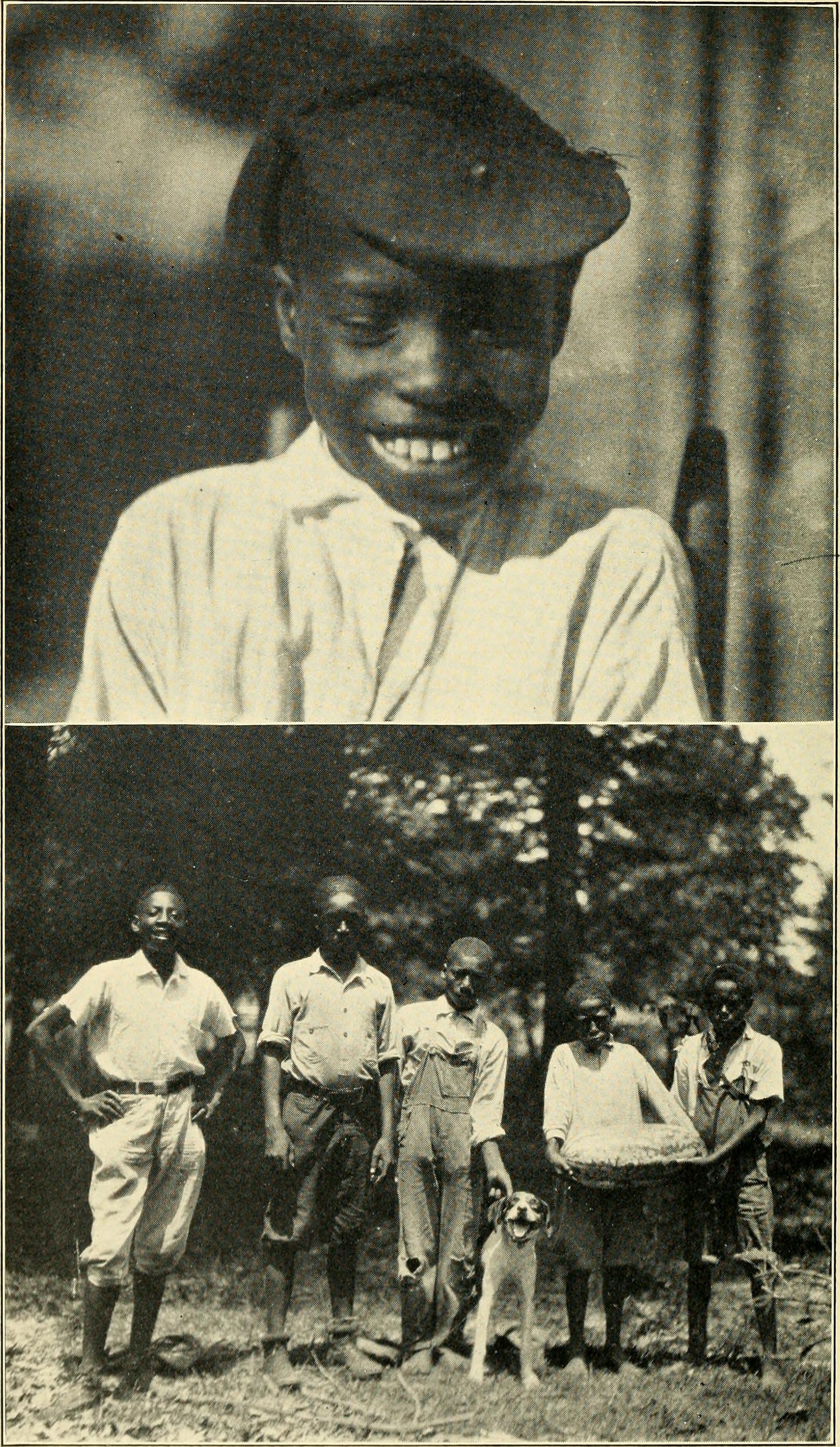
Practical and Emotional Background 63 of the house was sorrowfully watching the flames consume the family possessions, all the while wailing the most doleful dirge: Oh Lawd, Papa had some matches, Took an' lef 'em in de closet, Lawd, Rats chawed de matches, Lawd, Cotch'd all de clothes on fiah, Lawd. Us throwed on watah, Lawd, Couldn't put hit out, Lawd, couldn't put hit out! An' all Papa's things done hurned\ Again and again she chanted, giving various details of the catastrophe, but always ending up with the tearful refrain, "^w' all Papas things done burnedT^ Even in this case, however, the general scheme of the chant is much like that of a deacon's prayer, or the "mourn" of the convert who has just "come through" and chants over his trip to hell and heaven and his various experiences with the supernatural. Even the Negro minister in his moment of frenzy resorts to this same form of expression. In general, this spontaneous expression of ideas in rhythm comes during times of stress and excitement, although I have heard one Negro, at least, working alone and singing, Ah'm gona git shot all to pieces About de gal ah loves! a piece which he claims to be original. Be it original or not it shows where his mind was and after all, who knows but what it might have been a time of stress with him. Another Negro friend of mine was singing: Ef yer wants ter hear er preacher sing, Jes' cut up er chicken an' gib him er wing.
64 Folk Beliefs of the Southern Negro Suddenly he paused, seemed to be in deep meditation for a moment or so, then came out with: Ef yer wants ter hear er preacher pray Jes' cut up er chicken an' gib him er laig. ^ True, the versification is poor enough, but the creation was his own and the Negroes seem to be very proud of these rude compositions. In one case I heard a Mississippi Negro interrupted while singing: Nigger is you singin' dat song rite? Look-a-heah, man, dis yere viah song, en I'll sing it howsoevah I pleases. Widespread are the cases of such spontaneous song. A slave Negress sings to her baby an improvised song warning her runaway husband, hiding outside the window, to get away from the cabin where men were waiting to capture him; ^ and to the tune of "Pharaoh's Army" is recorded by the South Carolina Negroes the nefarious attempt of one Reuben Bright to burn Sidney Park Church: Rheuben Bright he had a scheme To burn Sidney Park with the kerosene, etc. ^ Negro folk-song-making still goes on as evidenced by the many verses relating to the sinking of the Titanic, such as the following from an old Mississippi Negro: It was sad when dat great ship went down — ship went down, It was sad when dat great ship went down — ship went down. 1143. 2 Talley, T. W., Negro Folk Rhymes, pp. 88-89. 3 Davis, H. C, Negro Folk- Lore in South Carolina, J. A. F. L., vol. 27 (1914), p. 252.
Practical and Emotional Background 65 Women, wives and little chillun los' their lives — los' their lives It was sad when dat great ship went down. ^ Other historical events impressive to the Negro were couched in rhyme, as: Grant ate the watermelon, Greeley ate de rind: Grant he got elected, Lef ole Greely way behind. ^ African Singing. Both in spontaneity and in the method of singing the verses the Negroes resemble the Africans. Miss Kingsley tells of a Negro woman who was expelled from a tribe in the Niger Delta for the unpardonable sin of bearing twins. "She would sit for hours singing or rather mourning out a kind of dirge over herself, 'Yesterday I was a woman, now I am a horror, a thing all people run from. Yesterday they would talk to me with a sweet mouth, now they greet me with curses and execrations. They have smashed my basin, they have torn my clothes!' and so on." ^ "The Tshi songs consist of a recitative with a short chorus. The recitative is often improvised, one taking up the song where another is tired. Frequently the words have reference to current events, and it is not uncommon for singers to note the peculiarities of persons who may pass and improvise at their expense. This is particularly the case when the ^ 210. For other cases of improvised singing, see Odum, H. W., and Johnson, G. B., The Negro and His Songs, pp. 2-3, and 35 fif. Brawley, B., Social History of the American Negro, pp. 214-15. Allen, W. F., Slave Songs of the United States, Preface, pp. xvii-xviii. Perkins, A. E., Negro SpirituMs from the Far South, J. A. F. L., vol. 35 (1922), p. 223. 232. 3 Kingsley, M. H., Travels in West Africa, pp. 476-77.
66 Folk Beliefs of the Southern Negro; strangers are Europeans, as the latter do not as a rule understand Tshi, and the singers can allow themselves greater latitude than would be the case if their remarks were understood." ^ "The leader of a chorus is accorded much the same honor amongst the Ibos as that granted the minstrel in the ancient days in England. He must possess not only the musical gift but the poetic instinct also. He creates his theme as the song proceeds, and great ingenuity is displayed in fitting words to time and tune on the spur of the moment. Any unusual incident is seized upon and utilized as material by the leader, and. when this fails he has recourse to the retelling in song the exploits of old.... Couplets appear to be most in favor with the Ibos, the leader chanting two lines as a solo and the full company joining in with a doublelined chorus. Occasionally one hears a four-lined song without solo or chorus, and there are a number of songs intended to be sung as solos." ^ Almost without alteration these descriptions might be applied also to the Southern Negro. Negro Song Structure. "Imaginary measures either of two or four beats, with a given number of words to a beat, a number that can be varied limitedly at will, seems to be the philosophy underlying all Negro slave verse construction." ^ The Negro is peculiar in that he habitually begins his song with the chorus instead of the verse, * and in that he alone of all instrumental music composers has ever had the per1 Ellis, A. B., Tshi-speaking Peoples, p. 328. For another example of spontaneous singing, see Mungo Park, Travels, pp. 197-98. "Basden, G. T., Among the Ibos of Nigeria, pp. 190-9L See also, Cruickshank, B., Eighteen Years on the Gold Coast of Africa, vol. 2, pp. 265-67. 3 Talley, T. W., Negro Folk Rhymes, p. 231. * Ibid., p. 326.
Practical and Emotional Background 61 formers sing a few of the opening measures of his composition while the string division of the orchestra played its opening chords — a method which assists the hearers to a closer musical understanding and heightens the general artistic finish. ^ Many of their songs are built on the basis of "calls" and "sponses" (answers), the leader singing one part and the audience coming in on the refrain as:^ Leader (call): Oh where you runnin' sinnah? Audience (sponse): You can't hide, ^ etc. Some ^ describe this arrangement as possibly originating from the meaningless "field calls" and "responses" of the slave Negro, which in turn go back to similar calls and responses in Africa, where they are used in calling for help when lost, or in indicating the approach of enemies, for instance. ^ In spite of frequent repetitions, the little variations in the words and tunes and in the arrangement of the verses with the Southern Negroes prevent monotony, the same song seldom following the same order of verses and refrain when heard at difi"erent times. ^ In a great many cases the Negro will repeat the same verse with the alteration of only one word, as, in the song: Doan' you let no gambler turn you 'round, Turn you 'round, turn you 'round, Doan' you let no gambler turn you 'round, Keep on to Galilee. "^ 1 Ihid.. p. 237-38. 2 See Ihid., p. 267 ff. 3 104. * Talley, T. W., Negro Folk Rhymes, p. 275 ff. ^Sheppard, W. H., In Talley, T. W., Negro Folk Rhymes, pp. 277-78. ® Odum, Anna K., Some Negro Folk-Songs from Tennessee, J. A. F. L., vol. 27 (1914), p. 255. 7 72.
68 Folk Beliefs of the Southern Negro Here each verse is like the preceding except that the terms, "sistah, bruddah, liah, hypocrite, etc.," are substituted for "gambler." This construction was probably due to the inability of the slave Negroes to read or write and serves frequently as a useful earmark of the older songs. Such repeated verses were easily remembered and the dull repetition itself had a sort of tom-tom effect in bringing on the "sperrit" upon the half-pagan Christians. While the Creole songs originated chiefly in the masculine mind instead of with the woman, ^ cradle songs and lullabies, on the other hand, are more likely to be of feminine origin. Sovereignty of Religious Songs. It is a rather noticeable thing that, contrary to the case with most native peoples, it is the religious songs of the Negroes which have challenged the admiration of the world, while little or no secular music of special value is found among them. 2 This is a bit hard to understand as is also the aversion of the church-going Negro to singing secular songs (reels) even for the innocent collector of folk-songs. It is a sin to sing such songs, and only the "onconverted" or the "backslider" will readily supply them. Talley attributes this in part to the emotionality of the Negro, ^ and in part to the fact that the Negro centered his secular rhymes around his African religion, as evidenced by the large amount of animal lore in Negro rhyme, just as he centered his Jubilee Song words around his American Christian religion. ^ However, this would fail to 1 Cable, G. W., Creole Slave Songs, Cent. Mag., vol. xxxi (1886), p. 813. 2 Talley, T. W., Negro Folk Rhymes, p. 235. Some other good collections of Negro songs not cited here are: Curtis-BurUn, N., Negro Folk-Songs. HoUowell, E., Calhoun Plantation Songs. Religious Folk Songs of the Negro. (Hampton, Va.). Johnson, J. W., The Book of American Negro Spirituals. Scarborough, Dorothy, On the Trail of Negro Folk-Songs. Kennedy, R. E., Black Cameos and Mellows. ^ Talley, T. W., Negro Folk Rhymes, p. 235. * Ibid., pp. 316-17.
Practical and Emotional Background 69 account for the present Negro taboo against all secular songs, whether they deal with animal or fetishistic topics or not, leading us rather to the conclusion that the Negro's attitude is merely a survival of the attitude of the early white churches from which he derived his first training. The rural Negro is less exposed to contact with modern civilization and his beliefs consequently change more slowly and give us an index of attitudes of the past. This seems all the more likely, since the Negro church-code also forbids such frivolities as checker-playing, baseball, and dancing, amusements formerly forbidden to white Christians. If former African objects of worship form the basis for the taboo it is strange that Negro folk-tales, dealing with animals, are not also tabooed. Rag-time and Ja7/L. There seems to be a general agreement that modern rag-time is a debased offspring of Negro music. The rhythmical propulsion coming from the initial syncopation common to the bulk of Negro songs, and the frequent use of the fivetone or pentatonic scale seem to be the two most obvious elements which have been copied by composers and dance-makers who have wished to imitate them. ^ The word "jazz" has been variously associated with the Negro — by some regarded as African in origin. It is stated to be common "on the Gold Coast and in the hinterland of Cape Coast Castle. In his studies of the Creole patois and idioms in New Orleans, Lafcadio Hearn reported that the word jazz, meaning to speed things up, to make excitement, was common among the blacks of the South, and had been adopted by the Creoles as a term to be applied to music of a rudi^ Krehbiel, H. E., Afro-American Folksongs, Preface, p. v.
70 Folk Beliefs of the Southern Negro mentary syncopated type." ^ Others consider the term derived from "Charles" (nicknamed "Chaz"), a Negro drummer in Vicksburg, Miss., ^ while Comm. Sousa thinks it derived from the old-fashioned minstrel show where the performers "cut loose" and improvised or "jazzboed" the tune. ^ The term jazzbo would simply mean a command to the "bo" (a "buddy" or associate) to jazz, unless indeed the term be a corruption of jaw-bone — a favorite instrument among the early slaves. The vulgar word "jazz" was in general currency in low dance resorts ("Honkytonks") thirty or more years ago, which would lead us to suspect a different origin, * although the prevalence of animal names associated with jazz — such as turkey-trot, elephant-glide, camel-walk, fox-trot and bunny-hug — would seem to indicate a relation to Negro folk-songs. However, Mr. Lopez thinks these animal names are due to the fact that there is something "animal-like" in the emotional effects of jazz. ^ It is hard to make a definite assertion in the face of such statements — none of the old Mississippi ex-slaves whom I questioned remembered the term having been used in slavery times. At least, however, Negro music shows the characteristic jazz elements, and Negroes have been prominent in both the composing and playing of this type of music, while in the purchase of phonograph records they show a decided penchant towards jazz tunes — which, however, may also be said of the present day whites as well. Some of the Negro ^ Quotation from the New York Sun. Finck, H. T., Jazz, Lowbrow and Highrow, Elude, vol. xlii, No. 8 (Aug. 1924), p. 527. 2 Lopez, v., Elude, vol. xlii, No. 8 (Aug. 1924), p. 520. * Whitman, P., What is Jazz Doing lo American Music, Elude, vol. xliii. No. 8 (Aug. 1924), p. 523. * Smith, Clay, Etude, vol. xlii, No. 9 (Sept. 1924), p. 595. * Lopez, v. Etude, vol. xlii. No. 8 (Aug. 1924), p. 520.
Practical and Emotional Background 71 spirituals have found their way into white vaudeville, as was the case of "Ain't it a shame to steal on Sunday?" which, picked up from Jubilee Singers in St. Louis, appeared in "Shuffle Along" in New York in 1922. ^ The same is true of a recent popular song "It ain't a-gonna rain no more," ^ and I have heard the orchestra at a fashionable (white) wedding reception play "Nobody knows de trubbl' I've seen," an exquisite bit of melody ^ which possibly would not have been considered so opportune had the guests been acquainted with the Negro original. Education by Song. As we said before, rhymed knowledge is remembered knowledge, a fact which makes the rhyme of use to parents in instructing chilren. Many a white man runs through "thirty days has September" to find out the length of a particular month, and many a Negro lad washes his feet at night because of the rhyme about one lad who got a whipping for failing to observe this rite. ^ Unable to read the Bible, the illiterate slave sang the Bible, reducing to rhythm the exploits of Noah, Samson, David, Solomon, and other Biblical characters. I cannot resist the temptation of setting down word for word one characteristic Mississippi stanza relating to the plagues sent upon Pharaoh: McDumas came 'fo' de desert, Playin' a host uv a game uv bluff, Had frawgs up-on de kitchen, An' in de dinin' room wuz not enuf. 1 J. A. F. L., vol. 35 (July-Sept. 1923), p. 331. 2 For the original Negro version, see Talley, T. W., Negro Folk Rhymes, p. 269. ' For words and music, see Krehbiel, H. E., Afro-American Folksongs, p. 75. * TaUey, T. W., Negro Folk Rhymes, p. 171.
72 Folk Beliefs of the Southern Negro Dere wuz frawgs upon de mirror, Till dey wuz rushin' upon de leaves, Dey wuz comin' out er de people's pants-laigs, Dey wuz rushin' out er de people's sleeves; No doubt dey had frawgs fer dinnuh, Frawgs fer breakfas' an' frawgs fer tea, Dere wuz frawgs all a bondage Ober Ian' an' in de sea. ^ A graded Sunday School lesson might excel in accuracy of detail, but never could it approach this expository trip-hammer in relentlessly pounding the frog-episode past the forgetting point. When tempted to Indulge, the rhyme: Whiskey nor brandy, ain' no friend to my kind — Dey kilt my po' daddy an' dey trubbl'd my mind, ^ warned him of the consequences, and If he was inclined to fish on Sunday, the rhymed story of "Fishing Simon" 3 and the talking iish caught on that day reminded his superstitious soul of the awful dangers awaiting him. Respect, obedience, and caution are summed up: Spik w'en yo spoke unter, Come w'en yo' call. Ef yo' jump 'fo' I show yo', Yo' git er bad fall. * There were "arithmetic rhymes" which mingled the multlphcatlon table with admonitions to "tend to yo' business"^ and "alphabet rhymes": 1394. 257. 3 See Talley, T. W., Negro Folk Rhymes, p. 177. ^ 57, and Owen, Mary A., Voodoo Tales, p. 226. s 57, and Talley, T. W., Negro Folk Rhymes, p. 12L
Practical and Emotional Background 73 A, B, C, Double down D Lazy chilluns gits hick'ry tea (a whipping), ^. teaching both letters- and energy. "The Alabama Way" 2 warned the recalcitrant slave that there were worse places where he could be sold, while the following rhyme emphasized the importance of arithmetic: Naught's a naught Five's a figger. Five fer de white man, Naught fer de Nigger. Ten's a ten. Hit's mighty funny; Ef you cain't count good You don't git no money. ^ Rhythmic Lore. Many other purposes are served by these rhymes. The familiar spiritual, "Steal away to Jesus" was first sung as a notice to the other slaves on the plantation that a secret religious meeting would be held that night, ^ and wakeful pickaninnies at bedtime were scared into quietness by: Doan' talk — go ter sleep! Eyes shet an' doan' you peep! Keep still, or he jes' moans, "Raw Head an' Bloody Bones!" ^ 1 llyi^^ p. 154. 2 Talle'v, T. W., Negro Folk Rhymes, pp. 164, and 239. » 57, aiid 297. « Talley, T. W., Negro Folk Rhymes, pp. SOO-OL 5 57, and Ibid., p. 174.
74 Folk Beliefs of the Southern Negro the last line being a familiar expression used in England for the same purpose. ^ Another rhyme used in scaring children to sleep is: Baa, baa, black sheep, where's yo' lamb? Way down yon'er in de valley, De butterflies an' buzzards pick his eyes out An' de po' little sheepie cries, "Mammy," the idea being that the child must close his eyes to keep them from being likewise "picked out." ^ g^. perstitions were often put into verse form, — a fact which shows their importance to the Negro people. Connections were made between features and conduct: Blue gums an' black eyes: Run 'roun an' tell lies. Liddle head, liddle wit; Big long head, not a bit. ^ Many superstitions, such as hanging up a snake or turning his belly upwards to make rain, * and the hooting of the owl as a bad omen, ^ were arranged in such a form. Many of them, however, were of English origin and show clearly the conservatism of Negro verse and the value of his folk-lore in reflecting Continental beliefs. Thus the Negro rhyme: De whis'lin' woman, and de crowin' hen, Nevah comes to no good en', ^ is evidently derived from the Northamptonshire proverb: ^ Lean's Collectanea, vol. 2, p. 8. 2 298. 3 57, and Talley, T. W., Negro Folk Rhymes, p. 100. *b7, and Ibid., p. lOL '"57, and/6iVi., p. 149. •298, a.nd Ibid., p. 170.
Practical and Emotional Background 75 A whistling woman and crowing hen, Are neither fit for God nor men. ^ The Northumberland chant: Rain, rain, go away; Come again another day... ^ is Still used by the Mississippi Negro, as is also the Somersetshire rhyme: Matthew, Mark, Luke, and John, ^ Bless the bed that I lay on. Similarly the Negroes sing: Rye baby buntin' Daddy's gone a-huntin' Ter fetch a littl' rabbit skin Ter wrap de baby buntin' in. ■* a version almost identical with the Scottish. ^ Some of these have a remarkable antiquity. The Negro sings of the frog who "a-co'tin' " rides, with a "sword an' pistol" by his side. ^ A 1630 Scottish version has it: Ye frog wald a-wowing ryd. Sword and buckler by his syd, although the song actually seems to date back as far as 1580. ^ ' Henderson, W., Folk-Lore of the Northern Counties of England, p. 28. ^ Chambers, R., Popular Rhymes of Scotland, p. 182. 3 Ibid., pp. 149-50. *298. ^57, and Chambers, R., Popular Rhymes of Scotland, p. 13. « Talley, T. W., Negro Folk Rhymes, pp. 203, and 57. 'Chambers, R., Popular Rhymes of Scotland, pp. 55-60. For this and other survivals of European ballads in Negro folk-songs, see 'Scarborough ^ Dorothy, On the Trail of Negro Folk-Songs, pp. 33-64.
76 Folk Beliefs of the Southern Negro Besides Biblical themes secular stories are told in verse: Bill Dillix says to dat woodpecker bird; "Wat makes yo' topknot red?" Says he, "I'se picked in de red-hot sun, Till it's done burnt my head." ^ The origin of the snake is explained in verse - as is also the split lip of the sheep (due to laughing too hard at the goat when the latter fell down), a verse also having a moral turn to it. ^ Humorous stories are also related, such as that one about the Negro who mistook a bear for a big louse* or the short letter: She writ me a letter As long as my eye, An' she say in dat letter "My Honey! Good-bye!" ^ Humor by exaggeration is common, as Illustrated by the verses below: Her face look lak a coffee-pot Her nose look lak de spout. Her mouf look lak a fiah-place Wid de ashes taken out. ^ Old Man Samson wuz a good ole man. Washed his face in a fryin'-pan. Combed his hair wid a sorghum-wheel, Died wid de toothache in his heel. '' 1 Talley, T. W., Negro Folk Rhymes, p. 203. ^ Ibid., p. 165. Including also the superstition that the snake's tail wiU not die before night. ^ 57. See also, Ibid., p. 17. * Ibid., and Talley, T. W., Negro Folk Rhymes, p. 43. 6 57, and Talley, T. W., Negro Folk Rhymes, p. 113. "375. ^235.
Practical and Emotional Background 11 Even courtships were carried on in verse as the following sample indicates: He: Is you a flyin' lark or a settin' dove? She: I'se a flyin' lark, my honey-love. A "settin' dove" is one who has already found her soul-mate and has settled down, while a "flyin' lark is a gal dat ain't made no 'ttachments, but is flyin' 'bout lookin' fer a place ter res' her wary (weary) haid." ^ Some of these verses are so well preserved as to tell us of the "long white stockin's" worn by the masters in Colonial days. ^ Funeral Fun. Here ends our discussion of selfgratification. We might go on to take up such factors as intoxicants, condiments, art, and similar matters, but so little of this shows any trace of African sources that it is scarcely worth our while. The mores of selfgratification are not clear-cut nor individualistic in type, but adhere closely to the other societal divisions. Wherever pleasure is found or vanity satisfied there is self-gratification. For instance "the chief recreations of the natives of Angola are marriages and funerals." ' The African is intensely social and occasions of this sort as well as palavers, secret societies and other meetings oflFer a chance for gathering together in crowds and making an inconceivable hubbub, which to them is as much self-gratification as self-perpetuation or any other basic societal activity. Precisely the same thing holds true with the rural Southern Negro, as with other isolated folk, who have but little social intercourse. '406. 2 Talley, T. W., 'Negro Folk Rhymes, p. 40. ^ See Lippert, J., KxdUirgeschichte der Menschheit, vol. ii, p. 353 ff.
78 Folk Beliefs of the Southern Negro Conclusion. From these preliminary cases it will be seen that the tendency is for the Negro to take over English practices in regard to the direct maintenance and perpetuation of life, while in things relating to pleasure, his customs seemingly have more of an African turn. Perhaps the safest generalization we can make at present is that the greater the contact with the whites in any given field, the more the effects of European influence, while in other fields where white supervision was less stringent, the greater the African survivals in Negro lore and custom. In either case there are beliefs which seem to have no direct European or African parallels, and which may represent independent Afro-American developments, though we would hesitate about dogmatically classing them as such until more information regarding both European and African sources is forthcoming. For the remainder of this discussion our attention will be directed to those folk-beliefs and superstitions more or less directly connected with the supernatural.
CHAPTER II BURIAL CUSTOMS, GHOSTS, AND WITCHES The Concept of Death. In general, the West African does not believe in natural death. The great number of deaths by violence and the lack of traditions telling him that all men must die leads to the common primitive idea that death is not the inevitable fate of man, but that it is due to the evil interposition of some outside agency. Among both Bantu and Negro races in Africa the rule is that death is regarded as a direct consequence of the witchcraft of some malevolent human being, acting by means of spirits over which he has by some means or other obtained control. ^ The Southern Negro thoroughly believes in natural death, but in many cases under my observation sudden deaths, especially deaths with attendant delirium, are attributed to witchcraft. - They sing: Oh Deat' he is a little man, And he goes from do' to do'..:^ showing their idea of death as a spirit. There is also the idea that if two in the house are sick and one dies the other will immediately improve in health ^ — probably meaning that the disease spirit has been satisfied. 1 For details and exceptions, see Kingsley, M. H., Travels in West Africa I pp. 459, and 461. Winterbottom, T., AccouJit of the Native Africans in the I Neighborhood of Sierra Leone, vol. i., p. 235. Burton, R., E. Wit and Wisdom I from West Africa, p. 394. Nassau, R. H., Fetichism in West Africa, pp.239, I and 242. Nassau, R. H., Where Animals Talk, p. 235. I 2 See also, Bruce, P. A., The Plantation Negro as a Freeman, p. 121. \ M12. See also, Allen, W. F., Slave Songs of the United States, p. 12. ^See Parsons, E. C, Folk-Lore of the Sea Islands, South Carolina, M. A. F. L. S., vol. 16, p. 213. Also 141.
80 Folk Beliefs of the Southern Negro Whatever the mode of death, In both Africa and America, it is generally believed to be accompanied by the departure of the soul from the body; though in Africa, the dead man's mouth is propped open, he is loudly called upon to come back to his body, and other practices are resorted to in an attempt to keep the spirit from leaving. ^ European Acculturation. Returning to the American Negroes, we must not be surprised to find a great many of their funeral observances to be of European origin. One touch of Nature makes the world akin, and at the death of either slave or master the social barriers on the better plantations were temporarily relaxed under the common grief, and the Negro allowed to come into contact with the white man's beliefs. This was also possible with esteemed household servants who were often allowed to come into contact with the sick even until death occurred; In fact even being ordered to carry out certain European observances such as covering mirrors or stopping clocks. White supervision ceased at Interment, however, so that In a general sort of way those practices up to actual burial are European, while grave decoration and avoidance of the spirit are more African in type. I had a good chance for first-hand observation of these burial practices a short time ago when one of the Negro servants on the place died, being around from almost the moment of death until the body was safely interred. In fact, owing to lack of adequate transportation facilities I even drove a car full of mourners in the funeral procession, absorbing superstitions all the way along. 1 See Kingsley, M. H., Travels in West Africa, p. 471. Ellis, A. B., Ewespeaking Peoples, p. 157.
Burial Customs, Ghosts, and Witches 81 Dying in Ease. If a person dies hard it is a bad sign; he will haunt the survivors. Thus the first efforts are made to enable the dying man to leave this world with as little suffering as possible. The bed should never be placed "crossways uv de world" (north and south), but east and west, with the head towards the west. ^ This should make the departure less prolonged, but if not, the pillow should be taken from under the head of the dying person. - A person cannot die on a bed containing feathers of a wild fowl; thus, when an individual is dying hard it is sometimes better to carry him to another mattress so that he will not suffer so much, ^ a belief decidedly of European origin. •* Prophylactic Measures. As soon as death occurs the mirrors and pictures in the room are carefully covered up or turned towards the wall, some say because the mirrors will tarnish and never be clear again, ^ others, because it is bad luck (generally death) ^ to get the reflection of the corpse in the mirror or even to see yourself in it before the body is taken out. ^ Other informants say a reflection of the corpse might permanently hold in either the pictures or mirrors. * I have in my possession an old mirror with two defects in the silvering which an imaginative person may conceive of as resembling human eyes. The original 145, and 61. Southern Workman, vol. 26 (1897), p. 18. 2 341. 3 112. * Brand, J., Popular Antiquities of Great Britain, vol. 2, p. 230. Lean's Collectanea, vol. 2, p. 574. 5 339, 148, 342, 47, 289, 341, 253, 160, 142, 328, and 190. « Smiley, P., Folk-Lore from Va., S. C, Ga., Ala., and Fla., J.A.F.L., vol. 32 (1919), p. 382. ' 99, and 357, and 320. *237, 61, and 152. A possible remnant of the primitive idea of the soul being located in the reflection.
82 Folk Beliefs of the Southern Negro owner says, "Us didn't klvver hit up when May (his first wife) died, an' in jes' a day or so afterwards her eyes popped out on hit." ^ Another informant says the ghost will run you unless the glasses are covered. ^ The English version is that if you looked into the mirror at this time you would see the corpse looking over your shoulder. ^ The clock is also stopped lest it "run down to nothing" and can never be fixed so as to keep good time again. * Another informant says it will strike thirteen times if not stopped, meaning, of course, bad luck. ^ The English version is that the clock is stopped to show that with that particular man "time is over." ^ Distinctly European ' also is the Negro idea that when the head of the house dies some one must go out to whisper his death to the bees; unless this precaution is taken they will all leave or die. ^ The bees (makers of the sacred mead) were the messengers of the gods and were to take the news of the death to them. ^ Both Negro ^ " and European ^ ^ also notify the fruit trees when the owner of the orchard dies, lest all decay. Dying Whispers. Various omens are observed at the time of death. If the body remains limp for some time after death it is a sign that some member of the 1377. 230. 'Henderson, W., Folk-Lore of the Northern Counties of England, p. 39 and 4L Lean's Collectanea, vol. 2, p. 590. *41, 141, 67, 357, 387, 346, and 341. ^83. * Henderson, W., Folk-Lore of the Northern Counties of England, p. 39. Lean's Collectanea, vol. 2, p. 590. ' Henderson, W., Folk-Lore of the Northern Counties of England, p. 266. Leather, E. M., Folk-Lore of Herefordshire, Y). 2%. Gomme, G. L., Folk-Lore as an Historical Science, p. 162. * 141, and Thomas and Thomas, Kentucky Superstitions, p. 271. ^ Gomme, G. L., Ethnology in Folklore, p. 127. 10 188. ' ' Lean's Collectanea, vol. 2, p. 583.
Burial Customs, Ghosts, and Witches 83 family will soon follow, ^ while the last person whose name is called by the dying will be the next to follow, ^ both beliefs being of English origin. ^ If a dying person hits you, you will surely die. To keep from dying, if such a person does hit or bite you, you must hit or bite him back in the same place. * The Missouri Negroes say that if a person dies on Easter Sunday, for seven consecutive weeks there will occur seven deaths. * If an old person be the first to die in a community in the year it is a sign of a lot of old people's deaths; if a young person, many young people will die. * When a person is dying, if there is a dog on the place the animal will always howl. "^ Some say all dogs must be kept out because they "wall their eyes" at this time. * Preparation for Burial. As soon as the person is dead and arrayed in his grave clothes, a dish of salt is put on his breast to prevent the body from "purging" or from "swelling." * In England the same practice is in vogue to keep evil spirits off, since salt is Christ's savour of the earth, ^ " or to prevent swelling or putrefaction. ^ ^ None of the kinsmen of the dead should assist in preparing the body for burial. * "^ 1 378, 46, and 346. Also Southern Workman, vol. 23 (1894), p. 16. "^Southern Workman, vol. 23 (1894), p. 16. 'Gregor, W., Folk-Lore of the Northeast of Scotland, p. 211. Lean's Collectanea, vol. 2, p. 571. «231. '99. 6 92. 7 289. »237. 9 341. 1 " Gregor, W., Folk-Lore of the Northeast of Scotland, p. 207. ^ ' Simpson, Eva B., Folk-Lore in Lowland Scotland, p. 206. Henderson, W., Folk-Lore of the Northern Counties of England, pp. 39-40. Brand, J., Popular Antiquities of Great Britain, vol. ii, p. 234. 12 141.
84 Folk Beliefs of the Southern Negro The reasons for this are unknown to the Negro, but probably at first lay In the fear of leading the dangerous dead man to think they were pleased at his demise and were trying to hustle him oif. "Hit's wrong fer us ter holp wid Daddy's funeral," the children told me, and even refused to take into the house the funeral wreaths we brought, sending one of the visitors out for them. It is also thought to be bad for any one to work around a dead person until he is tired, ^ i.e. in a weakened condition where spiritual harm might result. Money should be placed upon the dead man's eyes to keep them from coming open, ^ but he should be buried without shoes, ^ and with the hair combed out and left loose — never plaited. Some say that if the hair is more elaborately dressed the devil would send his blackbirds to unplait it, and that these birds can be heard at their work inside the coffin even after it has been buried. ■* The water in which the corpse is washed should not be carried out until morning, ^ or, in the case I observed, not until the body has been removed — a usage directly contrary to that regarding other dirty water, none of which can be allowed to remain in the house overnight without bringing misfortune. ^ If the bed clothes are taken out of the house before the corpse goes out, you are "taking out another member of the family." ^ You should never sweep out the house before the corpse is removed for you would be the next to follow. ^ The possible 1 Southern Workman, vol. 26 (1897), p. 18. 2 286, and 150. 3341. ^ Southern Workman, vol. 26 (1897), p. 18. M5. ^Southern Workman, vol. 23 (1894), p. 16. 7396. « 109, 148, 141, and 155. Parsons, E. C, Folk-Lore of the Sea Islands, S. C, M. A. F. L. S., vol. 16 (1923), pp. 213-14.
Burial Customs, Ghosts, and Witches 85 origin of this taboo is shown by the Congo custom of not sweeping a house for a whole year after a death lest the dust should injure the delicate substance of the ghost. 1 Stygian Sign-posts. There are various sign-posts pointing to the direction taken by the soul of the dead. If it rains while a man is dying, ^ or if the lightning strikes near his house, the devil has come for his soul. ^ Possibly this is the belief referred to in the old spiritual: I doan' want ter die in a storm, good Lawd, I doan' want ter die in a storm. If a person die with the mouth and eyes open he will go to the "bad place," ^ this no doubt being one reason for carefully tying up the dead man's mouth and pressing his eyes shut almost before death has occurred. The European version is that if the eyes of the corpse remain open he is "looking after a follower" and another death will soon occur. ^ If you dream of a dead person moving in a hurry, that person has gone to hell; but if you see him in a pleasant state it is a sign he is in heaven. ^ While rain during death is a bad sign, rain soon after a person is buried is a good sign, indicating that that person has found eternal rest. '■ Perhaps this belief throws light upon the song Mr. Allen has trouble explaining in his "Slave Songs": 1 Tylor, E. B., Primitive Culture, vol. i, p. 454. 2 141, 47, and 341. '45, and Southern Workman, vol. 23 (1894), p. 16. <341, and 180. ^Leather, E. M., Folk-Lore of Herefordshire, p. 119. Lean's Collectanea, vol. 2, p. 571. Meyer, E. H., Deutsche Volkskunde, p. 270. Hunt, R., Popular Romances of the West of England, p. 433. 6 131. ' 166, 188, and 189.
86 Folk Beliefs of the Southern Negro Rain fall and wet Becca Lawton. Rain fall and wet Becca Lawton... ^ This was probably a plea for rain to indicate that the dead Becca Lawton had gone on to glory — a fact all the more probable since there is some vague tradition connected with the song, of grass not growing over the grave of a sinner. However, the Negroes are not all agreed about the belief; some say a rain just after burial Is a sign the person has gone to hell, ^ while sunshine after a person's death denotes eternal rest, but the English version associates rain with heaven. ^ Wakes. Some say that "ha'nts" won't bother you until the body Is burled — the man Is "not rallly dald ontil den" — that Is, the soul Is supposed to stay in the body until that time. * In the case of wicked men, however, the spirit Is supposed always to be lingering around on earth. ^ The most common view, nevertheless. Is that the spirit of a man stays around the house (or visiting loved places and friends) ^ for three days after the man's death and then stays around the grave for three days more. After this It goes wandering. ^ This three-day Idea was probably derived from the Christian story of the resurrection, but during the three days (sometimes less) elapsing between death and burial, the body should never be left alone. Neighbors come and "set up" with the body — food Is served and melodies sung — the spontaneous expression of grief in rhythmic form at this time probably being the 1 Allen, W. F., Slave Songs of the United States, pp. 21-22. 2 324,405, 67, 61, and 219. * Lean's Collectanea, vol. 2, p. 591. < 306. 6 354. 6 141. ^91.
Burial Customs, Ghosts, and Witches 87 beginning of many spirituals. ^ The older Negroes complain: "Wakes ain' what dey ustah be. We ustah sing an' pray all de nite long, but now de young folks dat 'tends 'em jes' tells annidotes all nite." ^ In other localities the body is placed on a "coolin'board" and covered with an arrangement of sheets, the one over the face being raised when the mourners address the corpse. "Mourners may talk to the body to this effect: 'Mandy, you gone an' lef me.... I may be nex'... Po' Mandy!... Po' John!.' A plateful of salt and ashes is placed under the coolin'-board... whatever disease the body has goes into the ashes and salt. 'Ashes takes up from de body de disease.' These ashes are carried to the grave; and at the words, 'Ashes to ashes and dust to dust,' they are thrown into the grave." ^ No one would think of leaving a "settin'-up" alone and the last one to leave such a meeting will be the first one to die. * This idea of a wake may be either European ^ or African in origin. Tke Funeral Procession. The African has an intense passion for burials — even pawning himself and his children into slavery if need be to give his relations a proper funeral. « The Southern Negro has much the same notion, paying dues to a lodge all his life or going head over heels into debt to see that he or his relations are laid away in style. No matter what the press of work may be, a funeral is always more im^ Southern Workman, vol. 26 (1897), pp. 18-19. 2 407. 3 Smiley, P., Folk-Lore from Va., S. C, Ga., Ala., and Fla., J. A. F. L., vol. 32 (1919), pp. 382-83. ^ 57. Southern Workman, vol. 26 (1897), pp. 18-19. ^ For a description, see Brand, Popular Antiquities of Great Britain, vol. II, p. 227 ff. ^ Kingsley, M. H., Travels in West Africa, p. 491.
88 Folk Beliefs of the Southern Negro portant. A funeral is a great occasion with uneducated Negroes — a time for social gathering, and above all, the Negro loves a crowd. When the time comes for burial the corpse should be taken from the house feet first, else it would be looking back and beckoning to a member of the family to follow ^ — a belief European in origin, - as is also ^ the common Negro belief that If you put your hand on the corpse the ghost will not harm you ^ (or you will be afraid of no more dead people). ^ This may be the remnant of an old ordeal, since the wounds are supposed to bleed if the murderer touches the corpse. It is extremely bad luck to carry a corpse to the cemetery In his own vehicle — a hearse should always be hired. ^ The corpse should not be allowed to stop between the house and cemetery (with the exception of the church) — all gates being opened beforehand. "^ If the procession should stop another death will soon follow, ^ a mishap on the way probably Indicating that the corpse Is dissatisfied and regrets having to leave this world. A person who counts the carriages in the funeral procession does no more than count the days before his own death, ^ a belief of European origin. ^ "^ While it Is extremely bad luck to walk ahead of the corpse ^ Mt is even worse luck to meet a funeral procession face to face. Per1346. 2 Lean's Collectanea, vol. 2, p. 589. ^ Ibid., p. 583, and Leather, E. M., Folk-Lore of Herefordshire, p. 120. Henderson, W., Folk-Lore of the Northern Counties of England, p. 40. M5, and Moore, R. A., Superstitions from Georgia, J. A. F. L., vol. 7 (1894), p. 305. ^61. «306. ^346. «360. "67. 1 " Fogel, E. M., Beliefs and Superstitions of the Pennsylvania Germans, p. 129. ' ' 99, and 188.
Burial Customs, Ghosts, and Witches 89 sons should always turn squarely about on seeing such a procession and face the direction in which the hearse is going. ^ In the funeral procession in which I drove, I noticed that even Negroes meeting us in cars would stop their cars and turn squarely about in their seats until the procession had passed. The belief is of European - inception as might be gathered from its wide circulation. No sensible person would be so foolhardy as to pass (get ahead of) a funeral procession, ^ and a person crossing in front of such a line or going between the cars is simply "crossing his own grave," * If a bird flies into a church or a house during the procession it is a sign of seven consecutive deaths. ^ Even to see a funeral "signifies an unhappy marriage"; ^ the first one to drive a hearse will be the next to die; ^ a person following just behind the hearse should never drive white horses for the same reason; ^ and a baby carried in a funeral procession before it is a year old will die. ^ Negro Mourning Customs. The mourning begins in a perfunctory sort of way immediately after death occurs, gradually increasing in intensity until the body is finally laid away. There is always excessive flattery. Death claimed a husband whose relations 1 141, 286, 341, 397, 251, 140, 149, 225, 359, and 374. Southern Workman, vol. 25 (1894), p. 16. Lee, C, Some Negro Lore from Baltimore, J. A. F. L., vol. 5 (1892), p. 112. Bergen, F. D., Current Superstitions, M. A. F. L. S., vol. 4 (1896), p. 133. 2 Henderson, W., Folk-Lore of the Northern Counties of England, p. 27. Lean's Collectanea, vol. 2, p. 592. 3 341. 4 99. ' Ibid. «85. ''Southern Workman, vol. 28 (1899), p. 450. * Lee, C, Some Negro Lore from Baltimore, J. A. F. L., vol. 5 (1892), p. 112. " 141, and Thomas and Thomas, Kentucky Stiperstitions, p. 14.
90 Folk Beliefs of the Southern Negro with his wife were just about to be severed by a divorce court. From the wails of the widow one would have \ postulated a turtle-dove married-life instead of the actual cat-and-dog affair. The testimony at the funeral and that at the divorce court were as wide apart as east from west. Mourning is an essential, and to be done well it must be spontaneously given in a sort of chant — really another case of spontaneous song. At a funeral I observed recently, one of the dead man's young daughters, sitting on the front seat of the church with the other members of the family, did not seem to be doing her full lachrymal duty. She was taken out by one of the good church members and roundly scolded, after which she contributed her full quota of noise and tears. The chant usually ends with a kind of refrain such as, "All dat I got done gone!" droned over and over again with eerie monotony. Sometimes there are convulsions, sometimes a weaving of the body to and fro in a serpentine dance, but always it is the women and not the men who are the mourners. The men usually sit dry-eyed and awed, content to let the women fare the departed on his way. Significance in Africa. One has only to read the accounts of African explorers ^ to realize the high degree of similarity as regards not only direct mourning practice, but excessive flattery and the more profound display on the part of the women as well. The position of the African ghost in the other world depends largely upon the style in which the dead man 1 See Nassau, R. H., Feiichism in West Africa, p. 216. Ellis, A. B., Yoruba-speaJdng Peoples, p. 157. Cardinal, A. W., The Natives of the Northern Territories of the Gold Coast, p. 108.
Burial Customs, Ghosts, and Witches 91 departs this world; thus great personal sacrifices are made in order to have an expensive funeral, ^ the length of the wake varying with the wealth and rank of the deceased. ^ Without a proper burial the ghost could not go to its final destination ^ but would linger around and wreak fitting vengeance on the survivors. ^ In Loanda, much of the deafening noise at funerals is for the purpose of driving away these evil spirits, ^ which are also appeased by sacrifices and abstinences of all kinds. ^ Among the Ibos a real burial and a later mock-burial are necessary to enable the dead man to rest in peace, ^ and in other localities, in case the person has died away from home, the rites will be held over a small fragment of his corpse or over some earth, water, or other substance from the locality in which his^ death occurred. * Clothes and Crepe. The Southern Negroes consider it proper for the relatives always to wear black to the funeral — the material to be borrowed if possible instead of being bought. Although an Arkansas informant says that black worn after the funeral will cause some one else to die, ^ the common Mississippi custom is for the widow to stay in mourning for about six months, wearing either black or white (generally ^Kingsley, M. H., Travels in West Africa, p. 491. Burton, R. H., Wit and Wisdom from West Africa, p. 220. Chatelain, H., African Folk-Life, J. A. F. L., vol. 10 (1897), p. 33. 2 Ellis, G. E., Negro Culture in West Africa, p. 69 ff. Ellis, A. B., Tshispeaking Peoples, p. 239. ^ Leonard, A. G., The Lower Niger and its Tribes, p. 142. * Basden, G. T., Among the Ibos of Nigeria, p. 119 ff. 5 Chatelain, H., Angolan Customs, J. A. F. L. (1896), vol. 9, pp. 16-17. *See Ibid., and Thomas, N. W., Anthrop. Rept. on Sierra Leone, pt. 1, pp. 71-72. Lippert, J., Kulturgeschichte, der Menschheit, vol. ii, p. 236 ff. ' Leonard, A. G., The Loiver Niger and its Tribes, p. 154. 8 Burton, R. F., Wit and Wisdom from West Africa, p. 211. EUis, A. B., Tshi-speaking Peoples, p. 233. Basden, G. T., Among the Ibos of Nigeria, pp. 115-16. 9 341.
92 Folk Beliefs of the Southern Negro the former), and then changing to "second mourning" which consists of lavender trimmed with black. ^ In some cases the original primitive idea of mourning being a sort of disguise used for the purpose of avoiding the ghost, is quite evident. One informant directly says, "de wearin' uv black is 'tended ter keep de ghos' frum boddering you." ^ Crepe is generally placed upon the door, but in certain Georgia communities where there are an unusual number of deaths in the family a piece of black ribbon is tied to every living thing that comes in the house after the body has been taken out — even to dogs and chickens. ^ This is interesting in that it seems to be an attempt to pacify an avenging spirit which was the cause of the deaths. Somewhat similar to this is the belief that one of your family will die if you wear anything new (especially new shoes) * to a funeral. ^ Here the danger would seem to be that of exciting the envy of the dead man — somewhat analagous to one of the reasons for wearing sack-cloth and ashes in former times. Others say the new clothes will wear out quickly if worn for the first time to a funeral. ^ Multiple Funerals. Very common is the custom of holding several funerals for a person, although this does not seem to be at all analagous to the Ibo custom of second burials. In general a person has a separate funeral for each lodge or association to which he belongs. ^ In the case of the last funeral I attended 1112. 2 198. In Africa, strips of cloth or an article of clothing belonging to the deceased are sometimes hung up to indicate the death of the owner. See Basden, G. T., Among the Ibos of Nigeria, p. 117. 3 231. ^318. " 109, and 203. " 172. ' 155, 288, and 345
Burial Customs, Ghosts, and Witches 93 there were two services In the same afternoon — one preached by the Odd Fellows and the other by the Home Aid Society of the Church. A big preacher has his funeral preached (even after burial) in each of the churches under his pastorate, ^ and sometimes one for several anniversaries after his death. ^ At times the Negro will be buried the day after he dies and the funeral preached several months afterwards, ^ no doubt a result of part-time pastorates where a minister was not always available immediately after a death. In other cases there appears to be one funeral at the cemetery to which flowers are taken but no mourning worn, and another held some time later at the church at which the female relatives wear black. This second service is called "stirring up the dead." * Mr. Brannon thinks that the reason for this is that the rural Negroes cannot always get together on short notice for the funeral. Thus a modest burial is held and from six to nine months later a day is set, all the countryside assembles with dinner on the grounds, a preacher is called in who is a good eulogizer (whether he knew the dead man or not), and a general funeral service is held. The widow is the chief mourner — if she has married in the meanwhile her new husband chimes in with her. No monuments are placed on the grave until after this funeral sermon is preached. ^ In certain cases at the first funeral the dead man in his casket at the church receives the greetings and farewells of his friends just as if he were capable of 1 112, and 47. 2 306. 3320. ^279. * Brannon, P. A., Central Alabama Negro Superstitions, Birmingham (Ala.) Netvs, Jan. 18, 1925, p. 15.
94 Folk Beliefs of the Southern Negro comprehending, ^ but in those cases falHng under my personal observation the Hd of the coffin was simply removed at the close of the sermon and the congregation silently filed around, gave a coin to the usher at the foot of the coffin (the money to be given to the widow and children), and then took one final look at the face of the departed. They call this ceremony the "last respects," and apparently the money gift has something of the nature of a sacrifice. I might add that the funeral sermons I have heard had some flattery, of course, but were jocular to an extreme, showing very little of the pharisalcal hypochondria of the whites, the mourning and solemn faces being restricted mainly to the direct relatives of the dead man. The others came for a good time. Grave Lore. The graves are dug east and west and the head of the man laid towards the west. An old Mississippi grave digger informs me that this is always the case. - A person should not sleep or be buried "crossways uv de world" and the head is towards the west, 3 ("so de dald won't hab ter tu'n 'roun' when Gabr'l blows de risin' trumpet in de east"), although one collector cites cases of burials with the head to the east so that the dead will rise, attributing it to the star In the east at the Saviour's birth. •* The grave should never be left open overnight lest it cause another death, but should be dug and closed on the day of burial. ^ The tools used in digging a grave are 1 Kane, H. P., Reception by the Dead, J. A. F. L.. vol. 5 (1892), p. 148. ' 2S6. The same is true in England. See Lean's Collectanea, vol. 2, p. 589. »38, and 342. SoiUhern Workynan, vol. 23 (1894), p. 16. Parsons, E. C, Folk-Lore of theSea Islands, S. C, M. A. F. L. S., vol. 16 (1923), pp. 214-15. ^Smilev, P., Folk-Lore from Va., S. C, Ga., Ala., and Fla., J. A. F. L., vol. 32 (1919), pp. 382-83. * 141, 286, and 189. Thomas and Thomas, Kentucky Superstitions, p. 75. Southern Workman, vol. 26 (1897), p. 19.
Burial Customs, Ghosts, and Witches 95 left on the site for a day or so after burial, ^ the spades being, in certain localities, laid across the grave. ^ The Negroes say it is bad luck (or death ^) to move them, * the idea no doubt originally being that the ghost of the dead remained in that locality for a definite period of time. Graveyard Omens. Various omens are observed at the cemetery. If a horse neighs ^ or lies down ^ there during the service, or if the casket slips while being lowered into the grave, it is a sure sign that some one else will soon follow. To leave a grave before it is filled, or to be the first one to leave the cemetery, is another pointed invitation to death; ^ the European version being that the sex of the first person to leave the cemetery after the funeral forebodes the sex of the next person to die. * At the close of the service every one throws in a handful of dirt upon the box in a sort of exorcistic fashion as a tribute of respect to the dead, ^ although none of them seems to be able to give an exact reason for so doing. If the earth sinks in more rapidly than usual on a new-made grave it is a sign that another of the family will soon die, ^ " a belief common in Herefordshire. ^ ^ A person should never point at a grave for fear his finger (or his mother's > 112. 2 346. ^ Hardy, Sarah M., Negro Supei-stitions. Lippincotl's Monthly Magazine, vol. xlviii (1891), pp. 738-39. * Southern Workman, vol. 23 (1894), p. 209. "322. •151. ^ 57, and 397. Southern Workman, vol. 26 (1897), pp. 18-19. * P^ogel, E. M., Beliefs and Superstitions of the Pennsylvania Germans, p. 126. "346, 32, 54, and 341. Smilev,P., Folk-LorefromVa.,S.C.,Ga.,Ala., and Fla., J. A. F. L., vol. 32 (1919), pp. 382-83. Southern Workman, vol. 23 (1894), p. 209. ^°81, and 286. Richardson, C, Some Slave Superstitions. Southern, Workman, vol. 41 (1912), p. 247. ' ' Leather, E. M., Folk-Lore of Herefordshire, p. 119.
96 Folk Beliefs of the Southern Negro teat) ^ will rot off, ^ and it brings bad luck to step over a grave. ^ Only the latter idea seems to be of European association. * In regard to the former, the Negroes say the finger will remain unharmed if you put it in water or into the ground. ^ Others tell me that pointing at a grave will cause you to die unless you spit on your fingers, ^ others claim a ghost will run you, ' or that you will get your finger cut off, but they all agree that it is a risky business. Dead Detectives. The living may be conquered or deceived, but the might of the dead-hand is wellnigh resistless. For instance if a person has been slain by an unknown murderer, bury the murdered man face downwards, and the murderer will not be able to leave the locality until the body is turned over. ^ Others say bury the body in a standing position, ^ or else bury the liver of the murdered man separately from the rest of the body. The murderer will be caught near the spot where the liver is buried. ^ ° In other ways the grave is made to yield its secrets. "Ef de murderer tech de daid body," so an old slave, who claims to have actually witnessed the performance, says, "de blood will sho rise in de cawpse to de place whar he teched." ^ ^ (The European idea is that blood will flow from the wound.) ^ ^ Others claim 1 190. 2 206, and 141. 3 286, 224, and 405. * Lean's Collectanea, vol. 2, p. 191. 6 Parsons, E. C, Folk-Lore of the Sea Islands, S. C, M. A. F. L. S., vol. 16 (1923), p. 211. 6 250, and 274. 7 61, and 108. 8 279, 342, 135, and 189. 9339. i»91. 1 1 286. '2 Henderson, W., Folk-Lore of the Northern Counties of England, pp. 40-41. Klaatsch, A. A., The Evolution and Progress of Mankind, p. 209.
Burial Customs, Ghosts, and Witches 97 blood will flow from the bones of the murdered man when touched by the murderer, no matter how old and bleached these bones may be ^ — while still others claim the bones will bend upon such a touching. ^ The intestines of the dead man will make a grumbling noise when the body is touched by the murderer, ^ and the blood shed on the floor will rise up again upon the touch of the murderer's foot no matter how much these stains have been scoured. * Troublesome Spirits. On the Gold Coast of Africa "it is a common practice to bring dirt from a man's burial place if he died far away from home, or better, to bring a piece of his clothes. Thus the returning spirit will find he has not been neglected by his family, and will therefore be disinclined to trouble them with sickness and misfortune." ^ Formerly in South Carolina, the Negro funerals were held at night with a funeral feast afterwards. "Every one was expected to bring from the graveyard and lay before the door a clod of earth, as proof that he had really been to the burial, on pain of being haunted by the 'sperrit' of the deceased. At one time the Negroes would burn no wood that had fenced in graves or burial-grounds." ^ These cases indicate that the ghost of the dead man is to be feared and that due steps should be taken to avoid, propitiate, or drive ofl^ the evil spirit. Many of these customs reflect at least the African theory if not the actual practice, though others 191, and 397. 2 141, and Southern Workman, vol. 24 (1895), p. 49. 3397. ^91. ^ Cardinal A. W., Natives of the Northern Territories of the Gold Coast, p. 105. 8 Waring, Mary A., Mortuary Customs and Beliefs of South Carolina Negroes, J. A. F. L., vol. 7 (1894), p. 318. 7
98 Folk Beliefs of the Southern Negro are doubtless of European origin, since there is after all, a general similarity in such practices all over the world. Ghost-dodging. Taking first the cases of avoidance, we find both In Africa and In America many such practices. The cult is inconsistent In that the ghost which Is considered all-powerful, is yet very easily fooled. In parts of South Carolina, all cups, pans, and buckets are emptied after a funeral because the spirit will remain on the premises If encouraged by free access to food and water. ^ The same practice Is found in Mississippi with the additional precaution that the food be thrown to the west, ^ possibly so that the spirit will leave with the setting sun. Many are the means of steering clear of these snooping manes. It is bad luck to call a coffin pretty ^ — you will soon be put in one like It; ^ a pregnant woman should not look into a grave or she will never "feel the baby" ^ (In England It Is said that the child will be pale). ® A sick person who looks upon a dead body will surely die; ^ and in South Carolina, ^ Georgia, ^ Alabama, ^ ^ Arkansas, ^ ^ Louisiana ^ ^ and Mississippi, at least, the belief is prevalent that a person should not wear clothes belonging to the dead. In Mississippi the reasons given are that the dead person will come back 1 Hawkins, J., An Old Mauma's Folk-Lore, J. A. F. L., vol. 9 (1896), p. 13L See also, Southern Workman, vol. 26 (1897), p. 19. 2 141. "148. * 310, and 188. 6 141. ^Lean's Collectanea, vol. 2, p. 110. ^ 102, and 341. « 141, and 381. 9 264. 1 0 397. '1341. »2 18.
vY Burial Customs, Ghosts, and Witches 99 for the clothes — one informant tells of a ghost pulling at one of its old dresses a friend was wearing ^ — or else, as one old slave puts it, "de clothes uv de daid rots away ez de body rots away/'^f Precisely this same idea prevails in England, ^ as might be guessecN from its wide spread in the Negro South. It is par-\.o'« ticularly stringent in the case of babies. When a Kj baby dies its clothes should never be put on the next baby, nor should the next baby be allowed to sleep in the dead baby's cradle, lest it also die. * A Negro believes that the departed has the power to haunt all objects which his body has touched — this belief making him afraid of temporary coffins used by undertakers. ^ A person should not be so foolhardy as to name a child for one who is dead — if he does so the child will die. ^'\ In the Sea Islands a dead mother will haunt the baby and keep him awake at night unless the baby is handed across the casket or across the mother's grave. ^ In another case in South Carolina the children march around the father's casket singing a hymn, after which the youngest is passed first over and then under the casket and the casket is taken out on the run upon the shoulders of two men. ^ In Norfolk, Virginia, after a death in the house, the position of the door-knobs is changed ^ so that the 1306. 2 286. ' Leather, E. M., Folk-Lore of Herefordshire, p. 89. Lean's Collectanea, vol. 2, p. 585. U50. 6 105. »112. See Southern Workman, vol. 24 (1895), p. 49. ^ Parsons, E. C, Folk-Lore of the Sea Islands, S. C, M.A.F.L. S., vol. 16 (1923). p. 213. 8 Allen, W. F., Slave Songs of the United States, p. 101 (note). 9 Bergen, F. D., Animal and Plant Lore, M.A.F.L. S., vol. 7 (1899), p. 15.
100 Folk Beliefs of the Southern Negro ghost may not find its way In. In other localities a new addition Is made to the house to keep the ghost away (fool the ghost), expecially if the dead man has been very wicked. ^ Among the Ibos of Africa, when several children in one family have died one after another on reaching about eight to ten years, the next child to expire at this age Is buried face downwards, "so that he may not see the way to be born again. It is thought that his spirit is one of those mischievous sprites who only reincarnate to bring grief to parents." ^ The Southern Negro in such a case, although he does not directly believe in reincarnation, will also bury on its face the last child to die that those coming after will live. ^ The Geechee Negroes of Georgia also have this same usage, or else they sell the new-born child to some one for ten or twenty-five cents, and the child will then live * — without doubt a case of deceiving the spirits. In the case of the West Africans "nobody wars with ghosts" 5 but every one strives in every way to keep out of their path or at least to keep them well disposed. Many are their practices of avoidance. Mourning involves both disguise and propitiation; sometimes a whole African neighborhood goes into mourning, since failure to do so would be regarded as Indicative of a guilty connection with the man's death. ^ It Is considered dangerous for the young to 1 274.; 2 Talbot, D. A., Woman's Mysteries of a Primitive People, p. 22L 3 14L * Work, M. H., Some Geechee Folk-Lore, Southern Workman, vol. 35 (1905), p. 634. ^ Burton, R. F., Wit and Wisdom from West Africa, p. 173. * Nassau, R. H., Where Animals Talk, p. 27. For customs regarding mourning, expecially with widows, see Cardinal, A. W., Natives of the Northern Territories of the Gold Coast, p. 108. Kingsley, M. H., Travels in West Africa, p. 112, 487-88.
Burial Customs, Ghosts, and Witches 101 go near the graves of the old, ^ and In certain cases the house is entirely or partially deserted after a death. ^ The Mississippi Negro generally contents himself with an alteration in the house, but in one case I observed during the past year the fear of the former habitation was so great that it was necessary to put up an entirely new cabin in another locality in order to persuade the tenants to remain. Often in Africa the name of a survivor will be changed after a death to deceive the evil spirits ^ and great care is taken to cover up prosperity of any kind lest their envy be excited. * Gifts to the Dead. "A man's ghos' looks an' do's jes' lak de man hisse'f!" ^ Because of these human likes and dislikes the lingering "ha'nt" may be propitiated and won over by gifts or flattery. A widespread practice of this sort in Georgia is that of placing bread and coffee under the house of the deceased to prevent his ghost from returning and haunting the living. 6 The funeral is a propitiation in a sense, and if these rites are postponed too long or forgotten altogether the neglected dead may return and demand a funeral. ^ In the case of one Negro hoodoo at least, bitter herbs and the hoodoo's drinking-cup were thrown in before the grave was filled in order to "lay the spirit." ^ When a person is murdered the clothes 1 Thomas, N. W., Anthrop. Rept. on Sierra Leone, pt. 1, p. 71. 2 Lippert, J., Kulturgeschichte der Menschheit, vol. ii, pp. 245-46. Bastian, A., Der Mensch, vol. ii, p. 323. Ellis, A. B., Ewe-speaking Peoples, p. 158. ^ Cardinal A. W., The Natives of the Northern Territories of the Gold Coast, p. 72. * Basden, G. T., Among the Ibos of Nigeria, p. 271. Chatelain, H., Some Causes of the Retardation of Negro Progress, J. A. F. L., vol. 8 (1895), p. 183. 5 48. 6 172. ''Southern Workman, vol. 26 (1897), p. 19. 8 Boyle, Mrs. V. F., Devil Tales, p. 109.
102 Folk Beliefs of the Southern Negro in which he was murdered should be buried in the coffin with him. ^ The old Sea Island "stick-lick" at funerals, where slaves fought with sticks across the grave, every lucky blow bringing a half-pint of rum to the successful one, - may be a survival of some ancient African funeral game. The Boston Herald of May 7, 1887, cites a case of the Negroes on the Lower Mississippi keeping up fires and queer dances around the grave of a dead pastor, trying to bring him back to life by the same conjuring methods employed in the interior of Africa. ^ It is also rather noticeable that the Negroes accuse the Jews of putting food and money in the coffin with the dead so that he can eat and buy things when he gets to heaven ^ — possibly a transference of their former practices to a people with whom they are not very familiar. The Negroes talk of placing molasses at the foot of the grave and a pone of bread at the head so that the dead person can "sop his way to the promised land." ^ True enough this is partly humor, but with all people much humor consists of treating lightly topics which in reality are either half or wholly accepted. Others wittily suggest planting watermelon seed on the head of the grave so the juice from the melons will run down into the mouth of the dead person. ® An old Vicksburg Negress tells me of cooking a supper for the dead. Two people should cook it together, neither saying a word during the process. Get some dirt from the dead person's grave and set it in a saucer in the middle of the table. »2S6. 2 Parsons, E. C, Folk-Lore of (he Sea Islands, S. C, M. A.F.L. S., vol. 16 (1923), pp. 149-50. ^ Negro Dances in Arkansas, J. A. F. L., vol. i (1888), p. 83. *286. » 306, 294, 291, and 341. See also, Talley, T. W., Negro Folk Rhymes, p. 26. •341.
Burial Customs, Ghosts, and Witches 103 Cook something, such as turnip greens, that the dead person Hked to eat, set the table for three and put up three chairs. Then bless the food without speaking to one another and start in silently to eat. Watch the third plate. Unseen hands will manipulate the knife and fork, greens will be taken from the dish all the time, but the chair will remain vacant. All will be well, but should you speak while your invisible guest is with you the wind will blow, the dogs bark, the chickens cackle, and thunder and lightning appear to frighten you. ^ An Alabama Negro says, "Unless you bury a person's things with him he will come back after them." ^ It is remarkable how closely this approaches the African custom. "In all the Vai towns, once or twice every year after the dead have been buried the remaining relatives visit the grave and carry with them rice, rum, palm butter, and so forth, which are placed near the grave. They then go through a kind of ceremony in which they chant Vai songs in honor of the dead. They believe that where the dead are it is necessary for them to have food to eat. They think that the dead also need clothes or something to wear, and so they carry to the grave white cloth. All these articles are left at the grave and it is thought that the spirit of the deceased will come for them. In thus providing for the dead they have the idea that if they do not so provide the spirits will be displeased and punish them for their neglect.... The object, therefore, of making sacrifices to the dead is to keep in the favor of the 149. 2 286.
104 Folk Beliefs of the Southern Negro imaginary spirits thereof and thus prosper in life." ^ So great is this belief in the actuality of spirits of the dead and their malevolent tendencies, unless properly propitiated, that the Timne-speaking peoples offer rice on the graves to keep the dead men from catching their hoes or spoiling the rice crop, ^ while "in some districts on the Lower Congo, for several weeks after interment, palm wine is periodically poured down to the deceased through a small hole leading from the surface of the grave to the body. ^ The Louisiana Negroes on All Saints' Night, so I am told, cook food especially for the dead, but such food must be unsalted. God allows all spirits to return to earth on this night and they are supposed to eat the essence of the food. This food is left all night on the table. ^ Grave Decorations. One Mississippi Negress tells me that to keep the deceased from coming back again, the cup and saucer used in the last illness should be placed on the grave. The medicine bottles are placed there also — turned upside down with the corks loosened so that the medicine may soak into the grave. ^ Precisely the same thing is found in South Carolina, ^ and 1 Ellis, G. E., Negro Culture in\W est Africa, p. 87. For the sacrifice of human beings, furniture, implements, etc., see Lippert, J., Kulturgeschichte der Menschheit, vol. ii, p. 279 ff. Kingsley, M. H., West African Studies, pp. 175, and 452. Elhs, A. B., Ewe-speaking People, p. 117. Ellis, A. B., Tshi-speaking Peoples, pp. 157-58. Tillinghast, J. A., The Negro in Africa and America, pp. 50, and 53. Cronise and Ward, Cunnie Rabbit, Mr. Spider and the Other Beef, pp. 25, and 148. Thomas, N. W., Anthrop. Rept. on Sierra Leone, pt. 1, pp. 78-79. Burton, R. F., Wit and Wisdom from West Africa, pp. 220, and 379 ff. 2 Thomas, N. W., Anthrop. Rept. on Sierra Leone, pt. 1, p. 31. 3 Glave, E. J., Fetishism in Congo Land. Century Magazine, vol. 19 (1891), p. 835. 4 18. *45, and Brannon, P. S., Central Alabama Negro Superstitions. Birmingham (Ala.) News, Jan. 18, 1925, p. 15. 6 Parsons, E. C, Folk-Lore of the Sea Islands, S. C, M. A. F. L. S., vol. 16 (1923), p. 214.
Burial Customs, Ghosts, and Witches 105 here, as all through the Black Belt, ^ broken crockery is used as the chief decoration for Negro graves. This seems to be a direct African survival, though Mr. Brannon seems to think it may have originated from somewhat similar American Indian practices. ^ In parts of the Congo "the natives mark the final resting-place of their friends by ornamenting their graves with crockery, empty bottles, old cooking-pots, etc., all of which articles are rendered useless by being cracked or perforated with holes. Were this precaution not taken, the grotesque decoration would be stolen." ^ Broken crockery, along with other articles, is used also in Angola. "* I have observed this sort of decoration all through the South. In South Carolina, bleached sea-shells, broken crockery and glassware, broken pitchers, soap-dishes, lamp chimneys, tureens, coffee-cups, syrup jugs, all sorts of ornamental vases, cigar boxes, gun locks, tomato cans, teapots, flower pots, bits of stucco, plaster images, pieces of carved stone-work from one of the public buildings during the war, glass lamps and tumblers in great number, and forty other kitchen articles are used. On the children's graves were dolls' heads, little china wash-bowls and pitchers, toy images of animals, china vases, pewter dishes and other things which would interest a child. ^ In Mississippi, so far as I have been able to observe, china and glassware have been the 143. ^ Ibid., Central Alabama Negro Superstitions, Birmingham (Ala.) News, Jan. 18, 1925, p. 15. ' Glave, E. J., Fetishism in Congo Land, Century Magazine, vol. 19 (1891), p. 825. Compare the picture of a Congo grave given on p. 827 of this article with those of Southern Negro graves elsewhere in this volume. * Chatelain, H., Angolan Customs, J. A. F. L., vol. 9 (1896), p. 17. ^IngersoU, E., Decoration of Negro Graves, J. A. F. L., vol. 5 (1S92). pp. 68-69. Bolton, H. C, Decoration of Graves of Negroes in South Carolina, J. A. F. L., vol. 4 (1891), p. 214. See also, Brannon, P. A., Central Alabama Negro Superstitions, Birmingham (.^la.) N'ews. Jan. 18, 1925, p. 15.
106 Folk Beliefs of the Southern Negro chief decorations — no distinction being made between the graves of children and adults. Lamps are very frequently used for decoration. In Lee County, Alabama, in one small cemetery, over twenty-three were found, some with oil and chimneys, used to give light at the time of death. A Gullah Negro says they are used because they are pretty; Alabama Negroes say they "make light," or "lead the deceased on into glory." They are most often used with persons who died at night, those dying in the daytime often not being so honored. ^ In general, however, the glass Is broken — the Negroes say to keep it from being stolen, ^ or to indicate that some member of the family "has been broken," ^ although probably the original remote African Idea was to free the spirit from the article and let it go on to the next world to serve the dead owner. The Negroes mostly say that the practice is simply an old-time custom, the meaning of which they do not know, although one old slave advanced the idea that glass and china, since they will not rot, are used to indicate the graves where a tombstone Is lacking, as is the case with many Negro graves. * However, this does not seem to be the case in practice, since some of the graves (see illustration) are fenced In and have a tombstone as well, but nevertheless have the customary adornment of broken china. It may be barely possible that the custom might have once served to keep the spirit within the grave, although the sacrifice motive seems the more probable one. This former Idea is indicated by some Negroes them1 Brannon, P. A., Central Alabama Negro Superstitions. Birmingham (Ala.) News, Jan. 18, (1925), p. 15. 2.32. "226. <65.
NEGRO GRAVES IN MISSISSIPPI
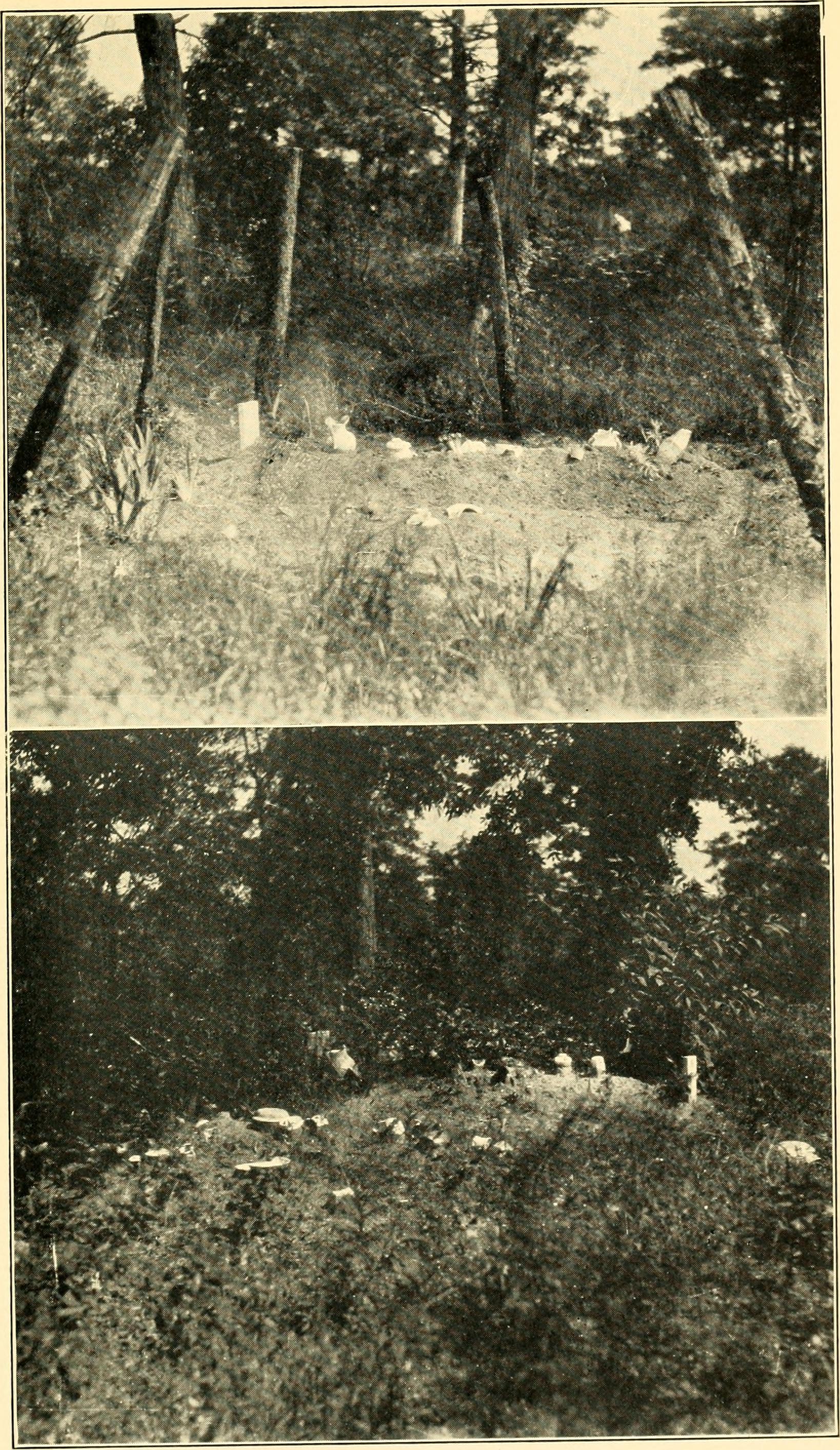
Burial Customs, Ghosts, and Witches 107 selves, who say that china placed on the grave will keep evil spirits away, ^ keep the man's spirit away, ^ or keep the ghost off until you kill hogs, whereupon he will return for some fresh meat. ^ The latter statement indicates that the wants of the ghost are the same as those of human beings. ^''Layin' de Sperrit.^'' While positive methods of exorcism and coercion will be taken up at greater length in dealing with conjuration and with ghosts in general, yet to a certain extent the Southern Negro believes that by steps taken at burial the restless dead may be prevented from haunting the living. The corpse may be turned in the ground so that it will lie face downwards;* or a grapevine^ or rattan® stake (with a horseshoe beside it, so some say) may be driven into the breast of the grave; or the toes of the dead may be pinned together;^ or silver screws may be used in the cofhn. ^ In another case the Alabama Negroes take a lock of hair, a garment, and some personal possession of the dead person, place these in a hole bored in a tree and plug up the hole tightly. Thus the spirit of that person is secured and is prevented from returning to earth to "ha'nt." ^ Burial itself is, in a sense, the putting of the body beneath the earth where it will be less easy for the ghost to return and work harm. Thus, one Negro says, "Bury de daid man deep, 'caze den his ghos' can't 1 150. M05. '311. M41. 6 258. "141. '341. 8 Moore, R. A., Superstitions from Georgia, J. A. F. L., vol. 7 (1894), p. 305. "407.
108 Folk Beliefs of the Southern Negro git back ter ha'nt yer." ^ Much the same sort of thing is true with the Africans. Sometimes in West Africa the ground above the grave is pounded down hard, ^ thus making it more difficult for the spirit to get out. Unusual people or people dying unusual deaths are often given peculiar burials. Thus with the Timne people, "a person burnt to death must be buried in the road or the town will burn; a person who dies of snake-bite is buried at the entrance to the town, or the snake will come in; if a leopard kills any one he must be buried across a river or the leopard will come into the town." ^ Sometimes a body thought to contain a "dangerous soul" will be cut up or destroyed by burning. * The African Soul-concept. Obviously such cases indicate that all is not ended with death. Even in Africa a man has a soul or spirit which survives after death, or, as is often the case, leaves the body even during life. Remembering that African religion differs so much in character from one district to another that an absolute generalization is impossible, ^ let us consider some aspects of this native belief in a soul, or rather in souls, since the African, in his endeavor more readily to explain certain phenomena, very often 1198. * Burton, R. F., Wit and Wisdom from West Africa, p. 396. Ellis, A. B., Ewe-speaking Peoples, p. L58. * Thomas, N. W., Anthrop. Rept. on Sierra Leone, pt. 1, p. 125. For other such cases, see Ibid., p. 49, and 124, and Cronise and Ward, Cunnie Rabbit, Mr. Spider and the Other Beef, p. 300 (note). Glave, K. J., Fetishism in Congo Land, Gentury Magazine, vol. 19 (1891), p. 835. Ellis, A. B., Tshi-speaking Peoples, p. 299. For general burial customs, see Kingsley M. H., Travels in West Africa, p. 479. Ellis, A. B., Ewe-speaking Peoples, p. 158. Basden, G. T., Among the Ibos of Nigeria, p. 113. Thomas, N. W., Anthrop. Rept. on Sierra Leone, pt. 1, p. 129. * Kinp;.sley, M. H., Travels in West Africa, i)p. 479-80. ^ Kingsley, M. H., West African Studies, pp. 130-37, and 442.
Burial Customs, Ghosts, and Witches 109 assigns more than one soul to every individual. ^ Such a consideration is more important. In that light Is thereby thrown upon certain beliefs of the Southern Negroes regarding ghosts and spirits in general. Survivals of the ''^Dream-soul.'''' It is generally thought that the primitive concept of a soul arose largely through sleep, dreams, or allied phenomena, ^ and It is certain that the dream-soul plays an Important role in the African spirit realm. The Ewe people believe that every man "has a second Individuality, an indwelling spirit {krd) residing in his body.... This kra existed before the birth of a man, probably as the successive kra of a long series of men, and after his death it will equally continue its independent career, either by entering a new-born human body, or by wandering about the world as a sisa^ i.e. a kra without a tenement.... The occurrences in dreams are believed to be the adventures of the kra during its absence." ^ A man must be awakened quietly to give this dream-soul time to come back; otherwise he will become very ill and will have to go to the native doctor to obtain another kra. When a man wakes up in the morning with "that tired feeling" he says that his dream-soul has been out fighting and has bruised itself. ^ "A native goes to sleep and dreams some fearful dream, awakes, and feels himself spellbound. Up he gets and fires off a gun to frighten away the evil spirits." ^ A dying Gaboon Negro related how his dream-soul was stabbed 1 Ellis, A. B., Tshi-s-peaking Peoples, p. 125 ff. Kingsley, M. H., West African Studies, p. 200 ff. 2 Tylor, E. B., Primitive Culture, vol. i, pp. 440^5. 3 Ellis, A. B., Tshi-speaking Peoples, pp. 1.5-16. * Kingsley, M. H., West African Studies, p. 200 ff. ^ Dennett, R. E., Notes on the Folklore of the Fjort, p. 17.
110 Folk Beliefs of the Southern Negro in the side by the dream-soul of his enemy, causing him his fatal sickness. ^ To a certain extent the Southern Negro's concept of the soul approaches that of his African forebear. There is in some cases apparently a definite belief in a kra or dream-soul. One Alabama informant tells me, "A dream is regarded as a real experience in which the soul of the sleeper goes to another world. So you must never awaken a sleeping person lest his soul fail to find its way back to the body." ^ Pointing to the same idea is the widespread belief that if you go to bed thirsty at night your soul will wander about and drink from all sorts of foul mud puddles, ^ or fall into the well and be drowned. * Some go so far as to say that a bucket of water should be left in the room so that one's spirit may drink, or else it may wander so far away in search of water that it can't get back and the sleeper, as a result, will never wake up. ^ Here we have reflected, not only the dream-soul idea, but also the typical primitive notion that death is due to the permanent absence of the soul from the body. An old Negro from Georgia, by virtue of the fact that he was born with a double caul, claims to possess two spirits — one that prowls around and one that stays in the body. Unless his mind was evil these spirits could keep him from harm. ^ The Sea Island Negroes have this same idea of an indwelling soul which conditions the bodily feelings — at least in the 1 Milligan, R. H., The Fetish Folk of West Africa, p. 38. Ellis, A. B., Tshi-speaking Peoples, pp. 148-56. M88. ' 141, and 286. Thomas and Thomas, Kentucky Superstitions, p. 142. M88, and 341. 5 231. * Steiner, R., Braziel Robinson Possessed of Two Spirits, J. A. F. L., vol. 13 (1900), p. 226.
Burial Customs, Ghosts, and Witches 111 case of infants. When a baby is taken any distance from home, they notify the spirit by calling "Come baby!" or, "Come, Spirit!" The Spirit is also called at every crossroad. Otherwise the child would be fretful and cry all the time. ^ This idea applies in a less degree to grown people. Some of the old women refuse to close their cabin door even in cold weather for fear of shutting their spirit out and causing misfortune. Mischievousness in the case of one of the boys was thought to be due to the fact that his spirit was shut up somewhere. ^ The Srahman and Other Souls. In addition to this dream-soul, there is also in West Africa the soul that is immortal — the one that lives on in the ghost world. This soul, with the Ewe peoples, differs from the kra in that no immediate diiference in the body is evidenced when the kra leaves, but if the immortal soul leaves, the body falls into a condition of suspended animation such as a swoon or trance, or, if the soul remains permanently away, into the state of death. ' After death this soul becomes a srahman, or ghost of the dead man, "The srahman, or ghost-man, only commences his career when the corporeal man dies, and he simply continues to exist in the ghost-world or land of dead men." ^ In addition there is the shadowsoul which may be injured by driving a nail in a person's 1 Parsons, E. C, Folk-Lore of the Sea Islands, S. C, M. A. F. L. S., vol. 16 (1923), p. 198. Towne, L. H., Pioneer Work on the Sea Islands, Southern Workman, vol. 30 (1901), pp. 400-01. Hawkins, J., An Old Mauma's Folk-Lore, J. A. F. L., vol. 9 (1896), p. 130. ^ House, G. B., The Little Foe of all the World, Southern Workman, vol. 35 (1906), pp. 598-99. * Ellis, A. B., Ewe-speaking Peoples, p. 106. * Ibid., pp. 15-16. For other characteristics of this soul, see ElUs, A. B., Tshi-speaking Peoples, p. 125 ff. Kingsley, M. H., West African Studies, p. 200 ff. Ellis, A. B., Yoruba-speaking Peoples, p. 127.
112 Folk Beliefs of the Southern Negro shadow; ^ and the ukpon or "bush-soul" — the soul that lives In an animal that Is away wild in the bush. ^ Often a man Is made very ill by his bush-soul being trapped and Injured by some unscrupulous wizard. ' With many of these West Africans the souls of the dead are thought to be later reincarnated in some human * or animal form. While there seems to be no definite belief In reincarnation with the Southern Negroes, yet some of them say that there is a birth for every death; when some one dies a baby will be born In the world to take his place ^ — an idea probably ultimately derived from reincarnation. Others reverse the arrangement and say that every time a girl baby Is born an old man will die, and whenever a boy baby comes Into the world an old woman will depart. ^ In one case a Negro preacher was using as a text the passage of Scripture telling how the child, whom the prophet Elisha ralsedj from the dead, sneezed seven times. ■^ "Ebber since den," he thundered, "when ennybody sneezes seven times, hits er sign dey's a ha'nt riz up frum de daid." ^ This looks somewhat like reincarnation, and such is certainly the case with iKingsley, M. H., West African Studies, p. 200 ff. Burton, R. F., Wit and Wisdom from West Africa, pp. 389-90. 2 Kingsley, M. H., West African Studies, p. 200 ff. Ibid., Travels in West Africa, p. 3603 Malcolm, L. W. G., Short Notes on Soul Trapping in Southern Nigeria, J. A. F. L., vol. 35, (1922) p. 219. ■^ See Basden, G. T., Among the Ibos of Nigeria, p. 119. Chatelain, H., Folk-Lore in an African's Life, Southern Workman, vol. 25 (1896), p. 165. Wilson, J. L., Western Africa, p. 210. Talbot, D. A., Woman's Mysteries of a Primitive People, p. 38. Cardinal, A. W., The Natives of the Northern Territories of the Gold Coast, pp. 66-67. Tylor, E. B., Primitive Culture, vol. ii, pp. 8-9. Burton, R. F., Wit and Wisdom from West Africa, p. 376. fi 141, and Parsons, E. C, Folk-Lore of the Sea Islands, S. C, M. A. F. L. S., vol. 16 (1923), p. 197. 6 405. 7 II Kings 4:35. 8 384.
Burial Customs, Ghosts, and Witches 113 the idea prevalent in parts of the South, that the spirit of the dead man will come back to earth in the form of some animal, ^ Ghost-land. With the African, however, not all souls are born again; there are always plenty left over or temporarily out of a habitat to people a realm of ghosts. "The general consensus of opinion is that the world of spirits is peopled by the souls of dead human beings.... The locality of these spirits is not only vaguely in the surrounding air; they are also localized in prominent natural objects — caves, enormous rocks, hollow trees, dark forests." ^ The Yorubas believe that "animals also possess souls which, like the souls of men, go to Dead-land." ^ This concept of another world is also derived from sleep and dreams, and this shadow-world does not differ in kind from the earthly world, as shown by the following statement of an Ibo native: "We Ibo look forward to the next world being much the same as this, the only great difference being that we will not have our fleshy bodies, and that it will be one of perpetual gloom, for there will be no day there. This we know from dreams, in which it seems to us that, while we on this earth are in light, the spirits with whom we converse are always in darkness. In all other ways, however, we picture life there to be exactly as it is in this world." ^ Strictly polytheistic, the African in his effort to explain natural phenomena by animism, locates a soul in practically 2 Nassau, R. H., Fetichism in West Africa, p. 52 ff. ^ Ellis, A. B., Yoruba-speaking Peoples, p. 133. * Leonard, A. G., The Lower Niger and Its Tribes, pp. 185-86. For variations and other details, see Ellis, A. B., Tshi-speaking Peoples, pp. 157-58, and Ellis, A. B., Ewe-speaking Peoples, pp. 15-16, and 108. Kingsley, M. H., Travels in West Africa, p. 488 and 587. Bosnian, W., Description of the Coast of Guinea, p. 131. 8
114 Folk Beliefs of the Southern Negro everything. "The Tshi-speaking Negro does not limit the possession of a ghost, or soul, to man, but extends It to all objects inanimate as well as animate." ^ Thus, non-human ghosts and spirits play their part in the great African spirit environment. Miss Kingsley says: "Once I had to sit waiting a long time at an apparently clear bush path, because In front of us a spear's ghost used to fly across the path about that time In the afternoon, and if any one was struck by it he died. A certain spring I know of is haunted by the ghost of a pitcher." ^ But let us consider now the American Negro. Polytheism in the South. While the Southern Negro today is not professedly polytheistic, yet the Intensity of his beliefs in devils and angels and In secondary spirits of all kinds really gives him a sort of polytheistic Christianity. Jesus is an anthropomorphic spirit who comes riding along "wid er rainbo' 'cross his shoulder," ^ as one of their songs states. When a mule balks a ghost Is stopping him •* — a belief which also exists in at least some portions of Northumberland. ^ Spirits rustle the leaves on the trees « — in fact, one of their 1 Ellis, A. B., Ewe-speaking Peoples, p. 17. For the location of spirits in rivers, lakes, trees, hills, portions of the sea-shore, and elsewhere, see Ellis, A. B.,, Yoruha-speaking Peoples, pp. 34-106, 275-301. Ellig, A. B., Tshispeaking Peoples, p. 13, 34 ff, and 39 ff. Ihid., Ewe-speaking Peoples, pp. 31-77. Cardinal, A. W., The Natives of the Northern Territories of the Gold Coast, pp. 34-35. Koelle, Rev. S. M., African Native Literature (Kanuri Proverbs), p. 373. Burton, R. F., Wit and Wisdom from West Africa, p. 59. For a general classification, see Nassau, R. H., Fetichism in West Africa, pp. 66-70. Ellis, A. B., Tshi-speaking Peoples, pp. 17-18. For an explanation of this form of animism, see Tylor, E. B., Primitive Culture, vol. i, pp. 474-96, and vol. ii, pp. 204-29. 2 Kingsley, M. H., Travels in West Africa, p. 522. ^141. See also, Perkins, A. E., Negro Spirituals from the Far South, J. A.F.L., vol. 35, p. 224. "306. * Henderson, W., Folk-Lore of the Northern Counties of England, p. 231. «319.
Burial Customs, Ghosts, and Witches 115 verses refers to a "Mulberry witch" laughing; ^ the witch apparently being a sort of tree spirit. It is nothing peculiar to African religious thought, which puts a soul in everything, that an African pot should be able to run, 2 but when the American Negro, professedly Christian, tells of a pot or an ax running away ^, or of a swamp going to sleep and having bad dreams, * we evidently have a good example of ideas closely approximating former African doctrines. But only occasionally with the Negro does a ghost take an inanimate form, though I have heard of them even changing to logs. ^ In one case a ha'nt took the form of a wash-pot, jumped up the hill into a wagon and scared the driver to death. "Ha'nts kin te'k enny fo'm, w'ite folks, even a brickbat, clock, chair, er ennything." ^ Another ghost was accustomed to appear as a bundle, ^ while in another case a group was going across the fields at noonday when they suddenly saw a whole house coming after them. It passed so close by that it knocked their hats off, and neither house nor hats were ever seen again. * On another occasion a group of railroad Negroes heard the whistle and the sharp grinding of a locomotive almost upon them. They leaped for their lives — but the ghostlocomotive never appeared, though it was distinctly heard by all. ^ But whatever the theory, the actual ghost is seldom seen in this form. A haunted house 1 Talley, T. W., Negro Folk Rhymes, p. 153. '^ Cronise and Ward, Cunnie Rabbit, Mr. Spider and the Other Beef, p. 156. » Harris, J. C, Told by Uncle Remus, p. 290, and 292 ff. *Ibid., p. 130. 6 8. 6 305. ^ Babcock, W. H., Folk-Lore Jottings from Rockhaven, D. C, J. A. F. L., vol. 14 (1891), p. 172. 8 288. « 253.
116 Folk Beliefs of the Southern Negro is merely the location of a dead man's spirit, while haunted trees are generally feared, not for themselves, but for the spirit that lurks around them. Even dogs are reported to avoid trees upon which men have been hung; ^ while a certain tree in South Carolina is feared because a ghost appears near it in the shape of a small animal, perhaps a dog, then increases in size to the size of a sheep, and afterwards becomes successively metamorphosed into a calf, and an ox. ^ Ghosts as white spots, vapor, or balls of fire are more common. One girl woke up screaming in the night, saying that a ball of fire had struck her arm. She was unable to use that member for two or three weeks. ^ Such cases, however, are not strictly representative of Negro ghost beliefs, which, in the main, are more closely centered about definite dead folks. Let us consider in greater detail this more numerous class to which is assigned characteristics both African and European in nature. Negro ''''Ha'ntsr In all the squalid lore of mankind there is nothing more ghastly than those unearthly beings, who, for the most part, were at one time men. In Negro ghost-lore this hideousness is all the more patent, since the lovable fairy or brownie is completely subordinated to the goblin, incubus, or ogre, who seeks only the harm of mankind. These Negro ghosts gather together nightly in the graveyard, * though deserted houses, streams of water, garrets and even churches are often polluted by their presence, ^ which is made known by lights in the church, which, however, 1 342. 2 Waring, Mary A., Mortuary Customs and Beliefs of South Carolina Negroes, J. A. F. L., vol. 7 (1894), p. 319. 8 76. *64. U50,
Burial Customs, Ghosts, and Witches 117 are extinguished upon the entry of a human. On dark, rainy nights especially, they like to prowl in the shape of persons. Catholic sisters, cows, clouds, dogs, etc., but most of the time having eyes like coals of fire. 1 Although more active on Friday nights, ^ on the last quarter of the moon, ^ and at midnight, * they do not hesitate to appear at twelve o'clock noon at times. Although almost invariably loathsome in appearance these specters are not always evil in their actions; sometimes when properly approached with courage they point out the location of concealed treasures. ^ The air is full of these uncouth monsters — one must be very careful not to brush against them. In case you are not one of those lucky (or unlucky) few who can see ghosts, you must look out for signs of their nearness. A rabbit (or black cat) ^ running across your path in the moonlight, ^ or better still, a warm current of air (at night) ^ is a sure sign of their presence 3 (it is their breath blowing on your back). i° Other ghost-minded folk claim that a cool wind on your back gives notice of a spirit behind you. ^ ^ The soft murmur of the forest trees when the wind is not blowing is the whispering of these comfortless creatures. ^ - If the shade is one of your former ac1341. 2 17. 3 141. * 306. 6 395. * Hunter, Rosa, Southern Workman, vol. 27 (1898), p. 57. ' Pendleton, L., Notes on Negro Folk-Lore and Witchcraft in the South, J. A. F. L., vol. 3 (1890), p. 206. 8 Steiner, R., Superstitions and Belief s from Central Georgia, J. A. F. L., vol. 12 (1899), p. 47. 9 141, 238, and 341. 1 0 268.,. 1183. 12 141, and Pendleton, L., Notes on Negro Folk-Lore and Witchcraft in the South, J. A. F. L., vol. 3 (1890), p. 206.
118 Folk Beliefs of the Southern Negro quaintances, he will mention your name to his dingy comrades and break a stick to attract your attention; thus, whenever you hear a stick break in the thicket at night you may know it is a ghost trying to get your attention. ^ In fact, these uncanny bogies often let themselves be known only by the sounds they make; one Missouri family was forced to relinquish a haunted house, offered free to them, because inexplicable sounds of breaking dishes and tramping cattle on the floors below gave them no opportunity to slumber. ^ Never answer a strange voice in the night; a spirit (of some relative) ^ is calling you, and to answer it means death. * Brawny Specters. If any one should be so foolhardy as to mock a strange noise at night, the insulted goblin would snatch him out of bed. ^ Perhaps muscular strength may seem incompatible with such volatile construction, but one Vicksburg Negro learned to his sorrow that strength of arm does not depart with death. This suitor was forcing unwanted attentions upon a girl when suddenly the shadowy hand of the girl's dead father dealt the impetuous youth a mighty wallop on the jaw. Even today this tactless swain's mouth is lopsided. ^ A person should never turn his head when he feels a spirit slapping him; he would never be able to turn it back to its proper position. ^ 157. 2351. 3 Smiley, P., Folk-Lore from Va., S. C, Ga., Ala., and Fla., J. A. F. L., vol. 32 (1919), p. 382. * 200, and 306. 661. * 368. The Yoruba people of Africa have a proverb: "If a ghost shakes thy hand, thine arm shrinks." See Burton, R. F., Wit and Wisdom from West Africa, p. 143. 754.
Burial Customs, Ghosts, and Witches 119 This fear of the departed is one reason why it is considered a bit unwise to marry a widow too soon after her husband has become an unwilling "ha'nt." One impatient suitor in Arkansas called upon such a recent widow. As he entered her house his shoe flew off, a few more steps and off came his coat. Suddenly a ghost appeared, sitting in the woman's lap, and the suitor's ardor speedily cooled. ^ A fresh smell, like steaming coffee, indicates a lurking "ha'nt"; ^ and such "smells" are unduly attracted by sleeping with your feet towards the window, ^ or by having half a pumpkin in the kitchen. ^ Perchance this latter notion is a modification of our Hallowe'en pumpkin usages. Ectoplasmic Manifestations. Some ghosts look like thin vapor or headless men and women draped in white. When they walk there is an eerie sound like rustling silk or gently beating wings. They most often mourn in a stifled sort of way like the wind in the treetops, but occasionally there is the husky sobbing of a child and rarely a sinister scream. Muffled sounds, the suggestive rattle of a shutter, a board creaking, a chair rocking, or soft footsteps in an empty house — all such signs are indications of a sombre visitor from beyond the grave. ^ A man is not really dead until the body is buried. His soul stays in the body (all are not agreed on this) until this rite is performed and the dead man's haunt will not molest you until then. But should the dead man be an enemy of yours his avenging spook will soon be on your trail. ^ The ghosts 1341. 2112. =•33. * Waring, Mary A., Negro Superstitions in South Carolina, J. A.F. L., vol. 8 (1895), p. 252. M50. •306.
120 Folk Beliefs of the Southern Negro of wicked persons are red ^ or black, while good spirits are white. Bad spirits sometimes take the form of a black man without a head, or a black cat, dog, hog, or cow — the cow at times having only one horn standing out between her eyes (perhaps a Negro version of the fabled unicorn). Good spirits, on the other hand, appear as white doves, men and children (at times with wings), or else look like mist or clouds. The air from these good spirits will cure sickness. They are able to fly high, but the evil spirits remain close to the ground and lead men into ditches or briar-patches. ^ There are ghost forms of all sizes — from that of a gnat to a horse. The forms often seen are those of dogs, lambs, bears, and other animals, ^ although again they appear in human form but not able to walk upright, jumping after people on their hands and knees like rabbits, with their faces tied up in black cloths. * Arkansas Negroes tell various stories of these diabolical marplots. One Negro was chased by something with a huge head and two tiny legs; another on horseback suddenly found an unbidden companion seated behind him. Every time the terrified rider would hit the horse the ghost would also hit the animal and the driver as well. Still another was tactless enough to throw at a small white spot he saw by the road one night. The spot increased so rapidly in size that it soon reached across the road and the field as well. In running around the church trying to escape the ^Southern Workman, vol. 23 (1894), p. 210. ^Steiner, R., Braziel Robinson Possessed of Two Spirits, J. A. F. L., vol. 13 (1900), p. 227. 3 150. ^Waring, Mary A., Mortuary Customs and Beliefs of South Carolina Negroes, J. A. F. L. (1894), p. 318.
Burial Customs, Ghosts, and Witches 121 white horror the unlucky man fell down and broke his arm. ^ Serious Business. Would that my pen could give some small idea of the deadly seriousness and sincerity with which these personal happenings are related by the rural Negroes. Many times I have found myself wondering whether, after all, these less cultured folk were not in touch with influences to which the whites are impervious, so great is the earnestness of Negroes, whom I know to be trustworthy in other affairs, in picturing the chill horror of these nocturnal meetings. One old Negro woman lived in a house near the edge of the graveyard. One morning she looked out towards the well in the yard. Beads of cold perspiration appeared on her forehead. The well crank was turning and a bucket of water coming up though no human being was to be seen. An invisible hand seized the dipper and lifted it to about the position where a mouth would normally be. A ghastly whirring noise through the treetops — and all was as it had been. ^ Another Negro driving by the graveyard on a pitch-dark night was filled with nameless dread when his horse balked. He could see no one but was aware of a bulky form getting into the buggy with him — he could hear the springs creak and feel them settle under the weight. The horse moved on very slowly; nothing could persuade him to go faster. The unhappy man tried to sing, but could think of no other song than "Hark from the tomb a doleful sound." His unseen companion mocked him, "Hark! Hark! 1.341. 2 288.
122 Folk Beliefs of the Southern Negro Hark!" He could feel the mouldy breath of the visitor on his shoulder. When the man and his ghoulish companion neared a store the horse stopped and the unseen visitor left him without a word of thanks. ^ Still another Negro met an old woman on three successive corners while walking straight along at night. The last time when he tipped his hat to her he became apprehensive and looked back after he had passed. Not a soul was to be seen. A loitering gait was quickly metamorphosed into a break-neck gallop. 2 Another Negro was startled out of his wits when a bunch of chains suddenly fell out of a tree near him on a lonely night. ^ Continental ghosts wear chains, but the English ghost, dead or alive, is free of them, * though the clanking of chains is sometimes heard with English animal-ghosts. ^ The Negro, bred in slavery, often invested his dead with the same accouterments worn by the living. Cadaverous Avengers. "De ha'nts '11 sho' git you ef you dances er do's wrong. Law'! Marse Newbell, dey kin even set yo' house a-fiah." ^ This indicates the way in which the imaginary environment is drawn upon to facilitate better discipline in the real environment. The fear of an avenging "ha'nt" is often as powerful a deterrent with the would-be thief or murderer as the fear of the avenging noose. One man in a fit of anger killed his wife. To his horror he found that the print of her face where she struck the floor could not be erased. Her spirit would come back, ^Southern Workman, vol. 23 (1894), p. 210. 2 153. M36. ^ Brand, J., Popular Antiquities oj Great Britain, vol. 3, p. 69. * Henderson, W., Folk-Lore of the Northern Counties of England, p. 238. 6 306.
Burial Customs, Ghosts, and Witches 123 knock on the door, blow the light out, or flutter at the window. Often in the night, even until his death, he could hear the dull thud of her murdered body again falling to the floor. ^ Some grave-robbers dug up the body of a wealthy woman and stole her jewels. As they attempted to remove a diamond ring, to their consternation, the loathsome hands of the corpse closed upon them. They broke away and ran in terror, but the baneful specter stalked to her former house and pointed out these servants who had robbed her. Other mercenary bigots stole the two silver dollars holding down a dead man's eyes. That night the dead man came and asked for his money, which was thrown to him with due perturbation. ^ An old Negro slave tells me of his white master who shot a neighbor in a dastardly fashion. While waiting at the doorstep for this master one night, this old Negro heard two shots in the direction of the graveyard in which the murdered man was buried, and then the sound of galloping hoofs. His master's horse came running in with his owner lying limp across his back. The slave put the white man to bed; next morning he was sent to the cemetery to see if he could find anything dead there. A ghostly form had seized his master's bridle as he passed the cemetery, twice the rider had fired at it with silver bullets, but the ghost merely croaked, "You shot me once; I can't be shot again!" The slave looked near the scene of the shooting but found only a revolver with two cartridges discharged. ^ The same informant tells of even the rain having pity and turning to blood when it fell 188. 2341. 3 286. See also, Backus, E. M., Negro Ghost Stories, J. A. F. L., vol. 9 (1896), pp. 228-30.
124 Folk Beliefs of the Southern Negro upon the roof of a lonely house on the roadside in which a poor old man was murdered. Another informant tells me of a man who asked to be buried in his own back yard. Two, four, then six horses were hitched to the hearse but they couldn't budge it towards the cemetery. Then two horses were hitched to the rear and easily pulled it to the back yard where the man was buried. ^ An economical housewife picked up a bone in the graveyard and took it home to make soup with it. That night a thin voice wailed over her bed, "I want my bone! I want my bone!" She paid no attention at first, but the voice gradually increased in volume until the whole house shook with, 'T WANT MY BONE! I WANT MY BONE!" "Take it," the frightened woman cried. All was then silent^ and next morning the bone was gone. ^ An ill-bred little boy cursed and swore at an old hired lady on the place because she was smoking his father's pipe. Shortly afterwards the old lady died. All went well until about three weeks later when the lad awoke one night shrieking that the old lady was after him. His parents went to the rescue but could see no one, though the sheets, quilts, and window curtains in the room were tearing themselves, a strip at a time, and tying themselves about the boy's neck, arms and legs, almost choking him to death. All they could do was to cut the strips as fast as they were tied until the invisible Something left for the night. Next morning at breakfast this same invisible misanthrope spit in every dish on the table so that the family were compelled to go without their meal. This happened many times afterwards, so that the family would '306. 2337.
Burial Customs, Ghosts, and Witches 125 often eat away from the house. The woman continued to worry the lad until he became very ill. She would often appear in the form of a cat and would even tie him to the top of the house unless the cords were cut as fast as she tied them. People came from far and near to see the strange spectacle, and one circus owner offered to buy the lad to display in his show. Collard seed were strewn about the door with no effect. One man brought a pistol loaded with golden bullets. He was very boastful about what he was going to do, but when the "ha'nt" slapped him and nailed his hat on the top of the house he left on the run, leaving his pistol behind. The boy kept the pistol and finally succeeded in wounding the evil shade so that she never came back. He then recovered from his illness but his mind was forever affected by that gruesome experience. ^ Ghastly Associates. Whether the "ha'nt" be revenging some direct wrong or not, there are many cases of the infliction of personal injury or death upon people who approach "ha'nts" too closely. Some boys in a buggy were driving along one Sunday afternoon when they saw a man out in the field hoeing cotton. They remonstrated with him about violating the Sabbath; the man stopped their buggy, whipped them all soundly, then quickly and utterly vanished into thin air. ^ Another time a little boy and girl saw a large rat run under the corn crib. They set the crib on fire and a voice came, "Don't do that! Don't do that!" That night they lay in bed asleep. About twelve o'clock there was a dreary mutter: "Come 1 195. 2 306.
126 Folk Beliefs of the Southern Negro here, brother! Come here, sister!" A ghostly hand tore the shingles off the roof, an uncouth form hopped into bed with the two children and killed them both, i Dora May of Mobile, on a dare, went to a tomb at midnight and thrust her hand into a hole in the grave. Something seized her arm with a cold, clammy grasp. She shrieked and strained but could not get away. Others tried to help her but could not pull her arm out. Terror finally overcame them and they all ran away, leaving poor Dora May alone in the graveyard all night. Next morning she was dead, and her arm had to be amputated to secure her release. A fanciful story, perhaps, but it is remarkable what a hold it has upon the Negroes of Mobile. ^ Ghosts have also been known to carry men up into the air until they disappeared entirely and forever from sight. ^ A dead father returned and broke up the dishes because his daughter was not obedient to her mother. * Even white people may appear. One authoress in Mobile, after her death was often "seed a-settin' on de bench in de garden wid er w'ite dress on. Alius she gits dimmer an' dimmer, an' finally goes away." ^ Women picking cotton, weird misshapen forms "dat je'k folkses outer dey's baids at nite," ^ white shadows in the midst of a whirlwind: these are some of the forms in which these ghastly denizens of the other world appear to appall those who believe in them. They are often guardians of buried treasure; one favorite theme is that of a haunted house, generally with treasure buried below it. People are offered a 1 263. 2 320. 8 Southern Worktna?i, vol. 26 (1897), pp. 122-23. *341. 6 320. «104.
Burial Customs, Ghosts, and Witches 127 huge reward to spend the night there, but extremely few are able to do so. ^ Generally a person who has died an untimely death leaves a dangerous, dissatisfied ghost. So great is the fear of some Mississippi Negroes for a certain haunted tree where a man was hung that they will go five or six miles out of their way at night to avoid passing that spot. ^ Mutilated Specters. In America, as in Africa, ^ these ghosts often take a mutilated form, probably representing those poor dissatisfied souls who are forced to lead a painful existence in the other world with some of their parts missing. Many are the apparently sincere stories I have heard related about meetings with these headless prowlers of the night. One reputable Negro nurse tells me of driving down the road at night when suddenly the horses shied at the figure of a man dimly outlined in the gloom (horses generally show a great sensitivity to spirits). On looking closely she saw that this silent figure had no head. ^ In another case a murderer chopped a man's head off; to his everlasting horror the head began to talk to him. Another man was decapitated in a railroad wreck. His headless body walked up and down the track asking if any one was hurt. ^ A wife died, making her husband promise not to sell any of the household furniture. A short time afterwards the unfaithful husband sold a pair of bedsprings and a mattress to a Negress, who, of course, was unaware 1341. 2.319, and 406. 'See, Lomax, J. A., Stories of an African Prince, J. A. F. L., vol. 26 (1913), pp. 7-8. Cronise and Ward, Cunnie Rabbit, Mr. Spider and the Other Beef, pp. 21-22. ^342. ^244.
128 Folk Beliefs of the Southern Negro of the promise he had made. That night she and her sister went to bed, first jamming the ax under the door so that it could not be opened. In the middle of the night they woke up to see the ax mysteriously creeping from under the door. A woman clad in red flannel (the fetish color) walked in. She had a great long neck but no head. There she stood "a-turnin' dat long neck 'bout de room tryin' ter look at us. Us hollered fur us's brudder, he come runnin' in, an' dat ha'nt wuz gone!"^ Another Vicksburg Negro saw a little man walking across the fields with no legs, ^ while in other cases ^ headless men, armless men, and dismembered limbs, falling down the chimney one by one, and acting as if they had some real unison, are featured. Ghosts in the shape of "natchel men," unnatural men twenty feet high, * a person's relatives, vanishing sheets, men in black; ^ in these and many other forms the specters appear. The Mark of the Beast. Some say that spirits may come in any shape, as men, cows, cats, dogs, or other animals, but that they are always black. If a man leaves an unknown treasure buried, his ghost will come back colored red. ^ A man has two ghosts, an evil ghost, derived from the body and a "Holy Ghost" derived "frum de insides." "All ha'nts come frum daid people, 'caze dere mus' be a soul ter be a ghos', an' animals hain't got no souls. Sometimes ghosses look lak dawgs er cats, but dey's nutthin' but folkses 1288. 2 25. 'Bacon, A. M., and Parsons, E. C, Folk-Lore from Elizabeth City County, Va., J. A. F. L., vol. 35, p. 290. «8. 6 244. * 141, and Steiner, R., Observations on the Practice of Conjuring in Georgia, J. A. F. L., vol. 14 (1901), p. 178.
Burial Customs, Ghosts, and Witches 129 in dat shape." ^ I would not credit most Negroes with such close reasoning on the subject, but it is true that many goblins do appear in animal form. Dogs are the most common shapes taken; generally big dogs (big as a calf) ^ with big red eyes. ' There is one Negro verse: Ole Joe's dead an' gone, but his ha'nt blows de ho'n; An' his hound howls still from de top o'dat hill, * which shows that ghost hounds are not always associated with metamorphosed human bodies but may represent the spirits of deceased dogs as well. One Mississippi slave tells me of seeing a little white pug dog that became bigger and bigger, until it was as large as a calf. ^ The specter hound or dog is a very common sprite in Lancashire, in one part being supposed to be a black dog without a head, ^ a form also common with the Mississippi Negroes. ^ Sometimes these dogs carry lanterns on their heads, ^ or else have big red eyes glowing like chunks of fire. Horses which have killed men during their lifetime, in some localities appear in a headless form after death. * Ghosts also appear as cats, ^ " which sometimes change into sheeted figures; ^^ donkeys "wid eyes ez big ez 2 244. * Talley, T. W., Negro Folk Rhymes, p. 59. ^ 32. See also, Babcock, W. H., Folk-Lore Jottings from Rockhaven, D. C, J. A. F. L., vol. 4 (1891), p. 172. ' Hardwick, C, Traditions, Superstitions, and Folklore, p. 172. ^306. 8 Bacon, A. M^ and Parsons, E. C, Folk-Lore from Elizabeth City County, Va., J. A. F. L., vol. 35, p. 289. 9 Bergen, F. D., Animal and Plant Lore, M. A. F. L. S., vol. 7 (1899), pp. 130-31. lo Smiley, P., Folk-Lore from Va., S. C, Ga., Ala., and Fla.. J. A. F. L., vol. 32 (1919), pp. 367-68. 1 1 325. 9
130 Folk Beliefs of the Southern Negro buckets an' ears lak a man's coat"; ^ disappearing cows; 2 invulnerable turkeys; ^ and even insects. One Negro boy earnestly tells of a huge grasshopper ghost as big as a horse. This dreadful creature was clad in human clothes even down to shoes and hat, and went away whistling, jumping over cows and fences. * Mrs. Boyle assures me of the authenticity of her story where the half-insane plantation "maumer" conceives of the soul of a dead baby appearing in the form of a butterfly, ^ though in Ireland it is also thought that the soul sometimes appears in the form of this same insect. ^ Perhaps these animal ghosts may show some relation to the African "bush-soul" as well. The Gullah Negroes, especially on the Georgetown Coast, believe in "plat-eye," an antebellum ha'n associated with the new moon and the form of an animal, usually a dog. Generally the shape taken was that of a small dog (with fiery eyes), which grew larger and larger every minute. In one case, hoofbeats were heard and a great horse passed by. Then only a little dog was to be seen. ^ At other times these "plat-eyes" may float like wraiths along the marshes or unfrequented paths, or stoop like low hung clouds and envelop the victim. » In another case a murdered husband's ghost hopped out of the coffin in the form of a frog, changing to his own form, and going back into the cofiin again. ^ 161. 2 36. 8 141. M04. ' Boyle, Mrs. V. P., Devil Tales, p. 184 ff. * Lean's Collectanea, vol. 2, p. 558. 7 Davis, H. C, Negro Folk-Lore in S. C, J. A. F. L., vol. 27 (1914), p. 248. « Gonzales, A. E., The Black Border, p. 183. »306.
Burial Customs, Ghosts, and Witches 131 Spookish Humor. Negro humor, with Its tendency to "laugh off" the fearful, often clusters around these spirit visitants, generally taking the form of reflections upon white men, the picturization of the abject terror of meeting ghosts, or the skill of the Negro in avoiding them. One story told me by an Arkansas informant is that of a slave-owner who used to put a sheet over his head and go out to scare his slaves. This man owned a monkey who was very imitative. One night the monkey watched him put the sheet over his head and slip out to scare people, whereupon the monkey slipped a sheet over his own head and, unobserved, followed his white master. The man hid behind a tree and when a Negro passed he jumped out to scare him. The Negro ran; then the sheeted monkey jumped out from behind the white man, and the white man ran with the monkey after him, calling, "Run big Jim; little Jim ketch you!"^ With a few alterations this same theme is found at least in Alabama, ^ North Carolina and Florida. ^ Another man was running from a ghost. After running for a long time he said to himself: "I sho' hab been runnin' some" "Ain' we been runnin' though?" replied the ghost. "fFeV replied the man, "Hit won't be we in a few minutes." * Another man ran from a haunted house with a ghost at his heels. "So tired! So tired!" panted the man, and the ghost at his heels said the same thing. ^ Much 1341. 2397. ' Parsons, E. C, Tales from Guilford County, N. C, J. A. F. L., vol. 30 (1917), p. 17/?, and Folk-Tales Collected at Miami, Fla., Ibid., p. 227. *357. 6 341.
132 Folk Beliefs of the Southern Negro of the humor here is lost since it depends upon the realistic descriptions and vivid gesticulations of the story teller. Another man volunteered to spend the night in a haunted house. He sat down by the fire and made himself comfortable. Pretty soon an ordinary cat appeared, looked at the man, and said, ''Well, I can't do nuthin' 'til Martin comes." The cat then disappeared but presently a much larger cat came, repeated the same words, and vanished. Then a huge cat, as large as a tiger stalked in: "Well, I can't do nuthin' 'til Martin comes." "Well you kin tell Martin when he do come dat I done been here but I'se sho' gone!" quavered the scared man as he left through the window. ^ Much humor is also derived from tales of frightened Negroes who had mistaken opossums, billy-goats, dogs, donkeys, ^ cows, ' and other harmless animals for ghosts. Sometimes prowling Negroes bent on some rascality will disguise themselves as ghosts in order to scare off any possible investigators. ^ Perhaps this may account in part for the fact that so many of the ghost stories have such a realistic turn to them. English Phantoms. Most of the ghosts described here, with the possible exception of cows and horses, are to be found in Africa as well as in America, but one is by no means to suppose that they are necessarily of African origin. In England, from eighty to one hundred years ago, "the whole world was so overrun with ghosts, boggles, bloody-bones, spirits, demons, ignis fatuiy fairies, brownies, bug-bears, black-dogs, 1 175, and 219. 2 341. 2 403. * Waring, Mary A., Mortuary Customs and Beliefs of South Carolina Negroes, J. A. F. L., vol. 7 (1894), pp. 318-19.
Burial Customs, Ghosts, and Witches 133 specters, spelly-coats (Scotch boggles, wearing garments of shells which made a horrid rattling when they appeared abroad), scare-crows, witches, wizards, barguests, Robin-good-fellows, hags, night-bats, scrags, break-necks, fantasms, hob-goblins, hoboulards, boggy-boes, dobbys, hobthrusts, fetches, kelpies, warlocks, mock-beggars, mumpokers, jimmy-burties, and apparitions, that there was not a village in England that had not its peculiar ghost! Nay, every lone tenement or mansion which could boast of any antiquity had its boggle or specter. The churchyards were all haunted. Every green lane had its boulderstone, on which an apparition kept watch by night; every common had a circle of fairies belonging to it; and there was scarce a shepherd to be met with who had not seen a spirit." ^ Out of this array, at least some British spooks must have retained their spectral association with the American colonists. The J ack-o'' -my- Lantern. This is especially true of the ig7iis fatuus, sometimes known as Jack-of-thelantern, will-o'-wisp, Peg-a-lantern, Kitty-candlestick, Jacket-a-wad, and similar terms. The basic idea in European lore is that these wandering flames belong to the souls of persons well known and recently dead, and the Negro concept is not essentially diiferent. ^ The Scotch also believe in the will-o'-the-wisp, and in Ayrshire there is a child's rhyme: ^ Denham, M. A., A Collection of Proverbs and Popular Sayings, Percy Society, vol. 20, p. 63 (note). ^ Newell, W. W., The Ignis Fatuus. Its Character and Legendary Origin, J. A. F. L., vol. 17 (1904), pp. 36-90.
134 Folk Beliefs of the Southern Negro Spunky, Spunky, ye're a jumpin' light, Ye ne'er tak hame the school weans right; But through the rough moss, and owre the hag. Ye drown the ill anes in your watery den! ^ In other localities in the west of England, it is those mischievous and unsociable sprites, the Pigseys, which appear like men, carrying lanterns at times, and leading people into bogs. Their power, however, may be broken by wearing one's coat inside-out. ^ The Southern Negroes are very familiar.with this apparition which they call Jack-o'-lantern, or Jack-o'-my-lantern, though the whites of the locality pay little or no attention to such beliefs, thus making this a bit of English lore preserved almost exclusively by Negroes. These Jack-o'-lanterns carry lights and would certainly fool you into the swamp or river, ^ unless you turn your pockets wrongside out, * doubtless to show the avaricious spirit that you have nothing in them. Some of the Missouri Negroes speak of these goblins as "Waller-wups" and say that they resemble old women carrying a lantern. You are filled with an irresistible impulse to follow this light, which impulse is overcome only by flinging yourself down, shutting your eyes, holding your breath, and plugging up your ears. ^ Others consider this curiosity as a torch borne by the spirit of an old man ^ and say that any one foolhardy enough to desire a closer acquaintance may compel its approach by sticking a knife-blade into the 1 Chambers, R., Popular Rhymes of Scotland, p. 184. See also, Brand, J., Popular Antiquities of Great Britain, vol. 3, pp. 395-411. 2 Hunt, R., Popular Romances of the West of England, p. 82. 3 Harris, J. C, Uncle Remus, p. 157. * 300, and 115. See also, Lee, C., Some Negro Lore from Baltimore, J. A. F.L., vol. 5 (1892), p. 110. ^ Owen, Mary A., Voodoo Tales, pp. 274-75. «57.
Burial Customs, Ghosts, and Witches 135 ground, ^ a belief similar to that of the Scotch Highlanders with reference to the "death-light." ^ Again one may dodge this ignis fatuus, by turning his back upon it and running for his life. It represents a demon "hot from hell"; one horseman who attempted to investigate closer paid the penalty of having himself and his horse consumed in flames. ' Some of the views of the Jack-o'-lantern are still more grotesque. In some of the Southern seaboard states it is regarded as "a hideous creature, five feet in height, with goggleeyes and huge mouth, its body covered with long hair, which goes leaping and bounding through the air like a gigantic grasshopper. This frightful apparition, stronger than any man and swifter than any horse, compels its victims to follow it into the swamp where it leaves them to die." ^ Again one old conjurer tells me that the Jack-o'-lantern is nothing but a sort of firefly flapping around in an envelope of jelly which serves as wings. When the wings fly open you can see the light, when the wings are closed the light is invisible. ^ In addition to avoidance by turning the pockets wrong-side out the Jack-o'-lantern may also be driven off by carrying a new knife that has never cut wood. ^ The Origin of Jack. Various legends are in vogue among the Negroes to account for the origin of this creature. One illustrating the common theme, was told me by a root-doctor last summer. Jack sold 1 Hawkins, H., An Old Mauma's Folk-Lore, J. A. F. L., vol. 9 (1896), p. 131. '^ Campbell, J. G., Witchcraft and Second Sight in the Highlands and Islands of Scotland, p. 170. * Pendleton, L., Notes on Negro Folk-Lore, J. A. F. L., vol. 3 (1890), p. 206. * Sykes, W., British Goblins, p. 18. '258. «57, and Davis, H. C, Negro Folk-Lore in S. C, J. A. F. L., vol. 27 (1914), p. 248.
136 Folk Beliefs of the Southern Negro himself to the devil at the crossroads one night at twelve o'clock. For seven years all power was given to him to do as he pleased, but at the end of that period his soul belonged to the devil. Old Satan called for him, but Jack was ready. He had tacked a piece of old shoe sole up above the door, and asked the devil to get it for him. The devil stood in a chair and reached for it. Jack then took a hammer and nailed the devil's hand fast, slipping the chair out from under him. Upon a promise of his freedom Jack then released old Satan. Finally Jack died. He went up to heaven, but those in charge would not let him in. He went down to hell, but the devil threw a chunk of fire at him and told him he was too smart for hell. Jack, deprived of a dwelling, was forced to pick up the chunk of fire and to spend all his time wandering about the earth luring people into swamps and mudholes at night. ^ The other versions ^ differ as to details, but agree in that Jack was forced out of hell and compelled to roam the earth. Flying Horses and Mermaids. We have thus far described the main varieties of Negro ghosts. Possibly the flying horses might well be added to this list. Men who have seen them say that they look like brown horses but have wings and fly. Most of the time these "air-mares" are leading the wind and storm. They live mostly in cliffs, like eagles, along the watercourses. ^ If a horse is dying and hears the neighing of these flying horses before the end comes, he will 1141. 2 Newell, W. W., The Ignis Faluus, J. A. F. L., vol. 17 (1904), pp. 39-41. Jamison, Mrs. C. v., Ala. Legend Concerning the Will-o'-the-Wis-p, J. A. F. L., vol. 18 (1905), pp. 250-51. "306, and 91.
Burial Customs, Ghosts, and Witches 137 arise and be cured immediately. ^ The mermaids are, of course, common in England, - but in only very few cases have I found a belief in them among the Negroes. One of these mermaids was supposed to haunt a certain creek near my home, where she sallied forth at night to hop upon the radiators of passing cars. ' The association with automobiles led me to suspect a recent origin, and further investigation showed that the belief was brought over by a member of the American Expeditionary Force who had just returned from his trip over the seas. The old slave Negroes of my acquaintance seem to have little knowledge of such creatures, though perhaps the belief may be stronger among the coast Negroes. "Double-sighted^^ Folks. Not all people are able to see ghosts; sometimes it happens that one of two people walking together can see shadowy forms while his comrade cannot. One such case was related by a Mississippi Negro. A man and his sweetheart were walking together; in the road ahead the man kept seeing the figure of a woman, but the girl could see nothing. Nevertheless, she refused to go out again with a man who had this power. * Some say that only a person born with a caul can see ghosts ^ — a belief of English extraction. ^ On the Sea Islands such a "double-sighted" person may be prevented from seeing ghosts by dipping his fingers in tar, or by carefully keeping the caul. Should the caul be lost, another 1104. * See Hunt, R., Popular Romances of the West of England, p. 148 ff. 3 306. *289. * 17, 59, 65, and 189. Also Pendleton, L., Notes on Negro Folk-Lore and Witchcraft in the South, J. A. F. L., vol. 3 (1890), p. 206. * Henderson, W., Folk-Lore of the Northern Counties of England, p. 13.
138 Folk Beliefs of the Southern Negro could be obtained from the "doctor shop" since the midwives often steal the cauls and sell them there. ^ The Louisiana Negroes say that when this "veil" is lost the individual can still see spirits but not talk to them. Should the caul become torn, the owner dies. When the owner is ill the caul becomes limp; when well, the caul is firm. Even deaf people with cauls can hear the spirits talk. ^ The seventh son, in the Sea Islands, is regarded as distinguished, ^ though in other localities seventh sons are said to be able to see ghosts or spirits * or to make good doctors. ^ People born like horses or dogs with "putty in their eyes" can also see spirits, ^ the same applying to a person whose eyebrows meet, ^ though another informant says that people with long eyebrows must cut them off to be able to see ghosts. * Again there is the idea that a person born on Christmas day can see spirits ^ — a reversal of the common English belief which denied such persons this power. ^ ^ All animals, ^ ^ and especially cats, ^ ^ can see ghosts. For an ordinary person to see "ha'nts" he should look through the eye of a needle, ^ ^ or over the left shoul1 Parsons, E. C, Folk-Lore of the Sea Islands, S. C, M. A. F. L. S., vol. 16 (1923), p. 197 ff. 2 17. 3 Parsons, E. C, Folk-Lore of the Sea Islands, S. C, M.A.F. L. S., vol. 16 (1923), pp. 197-98. * Thomas and Thomas, Kentucky Superstitions, p. 286. 6 141. *91, and Hawkins, J., An Old Mauma's Folk-Lore, J. A. F. L., vol. 9 (1896), p. 131. 7 240. 8 216. 3 69. i"Denham, M. A., A Collection of Proverbs and Popular Sayings. Percy Society, vol. 20, p. 63 (note). 11141, and Steiner, R.,' Superstitions and Beliefs from Central Georgia, J. A. F. L., vol. 12 (1899), p. 261. 12 93. 13 399.
Burial Customs, Ghosts, and Witches 139 der, 1 or under the upraised right arm - of a person who does possess this ablHty. Ghosts may also be seen by looking very steadily past the edge of a doorcasing or anything of that sort, holding your head so that you can just see past the edge. ^ A person who can see spirits Is also able to give you that ability by rubbing his right hand over your face. * How to See Ghosts. Perhaps the simplest way for an ordinary person to see ghosts is to look back over his own left shoulder, ^ though the same result may be accomplished by looking through a mule's ear; ^ by punching a small hole in your own ear; ^ by looking Into a mirror with another person;^ by breaking a rain-crow's ^gg Into some water and washing your face in It; ^ or by breaking a stick In two. ^ " Some say that if you go to the graveyard at twelve o'clock in the day and call the name of any one you know, his spirit will answer you, ^ ^ though generally the procedure Is more complicated. One of my conjure friends says to go to a graveyard at twelve o'clock noon or midnight and take with you a piece of mirror and a pair of new steel scissors. At exactly twelve o'clock hold up the mirror before your eyes and drop the scissors on the ground. Call upon that person with 1 45, and 102. 2 141. 'Bergen, F. D., Animal and Plant Lore, M. A. F. L. S., vol. 7 (1899), p. 130. M36. * 108, 341, 339, 405, 141, and 198. «222. '302. 8 141. ^ Steiner, R., Ohservalions on the Practice of Conjuring in Georgia, J. A. F.L., vol. 14 (1901), p. 178. »«141. I'Work, M. H., So7ne Geechee Folk-Lore. Southern Workman, vol. 34 (1905), p. 634.
140 Folk Beliefs of the Southern Negro whom you desire to talk. You will see his reflection in the mirror and can ask him what you please. The blades of the scissors of their own accord will begin to work, cutting away any doubt or fear that might arise in your mind. ^ Another method used is to put half a dozen pure white dinner plates around the table at home, and then go to the graveyard at twelve, noon, and call the name of some dead acquaintance. His spirit will answer you at once. ^ Or else wipe oif a rusty nail and put it in your mouth. The spirits will crowd about you. ^ If you eat a little fat meat or grease at night you will be able to see witches, ghosts, and all sorts of half-visible occupants of the atmosphere. ^ Whenever you talk to such ghosts, however, you must say all you have to say in one breath. If you so much as gasp, or make the least indrawing through the lips, your slippery companion is gone forever. ^ ^''Fightin'' de Ghosses^ So absolute is the Negro's belief in these malign agencies that a great deal of his eifort is devoted to warding off or avoiding them. One most common way of getting out of the clutches of these evil calibans is to ask them, "What in the name of the Lord do you want?" ^ They will then go away and leave you, or, as others say, carry you to a place and tell you to dig until you find a pot of money. ^ In Herefordshire the phrase used in speaking to a 191. 2 141. "306. ^ Babcock, W. H., Folk-Lore Jottings from Rockhaven, D. C, J. A. F. L., vol. 4 (1891), p. 172. 8339, 341, 150, 406, and 189. Richardson, C, Some Slave Superstitions, Southern Workman, vol. 41 (1912), p. 246. M66.
Burial Customs, Ghosts, and Witches 141 ghost is, "In the name of God, who art thou?" whereupon the ghost will lead you to some hidden treasure. ^ Apparently the Negro ghost, like the African one, is not without his human attributes. One informant says, "If a ha'nt bodder you, ax him fer some money an' he'll sho' leab." ^ Religion is an excellent antidote against the wiles of these ghosts, as evidenced by mentioning the name of the Lord. One old man got lost in the woods. Dusk came and with it the ha'nts. The man preached, quoted scripture, and prayed, but the persistent ha'nts still remained. Finally in desperation he reached for his hat to take up a collection. At once the ha'nts fled. ^ In reality, however, the Bible is used to ward off ghosts. Get some one to read a verse from the Bible backwards to you (many Negroes cannot read). Fold the page^ place a knife and fork within it, and put it under your pillow. No ha'nt will enter your house. "* Reading the Bible backwards is supposed to prevent ghosts from entering; reading it forward, to keep them from harming one if they are already in the house. ^ It is worthy of note that in Europe witches are supposed to say their prayers backwards; the Lord's Prayer is said backwards to raise the devil; ^ and with the Gascon peasants the Mass of Saint Secaire is said backwards at midnight to cause a person to wither away and die. ^ 1 Leather, E. M., Folk-L ore of Herefordshire, p. 33. Hunt, R., Popular Romances of the West of England, pp. 243-49. =^340. 3 150. ^93. 6 Bergen, F. D., On the Eastern Shore, J.A.F.L., vol. 2 (1899), pp. 298-99. ' Lean's Collectanea, vol. 2, p. 430. 7 Frazer, J. G., The Golden Bough, pp. 53-54.
142 Folk Beliefs of the Southern Negro Demons link arms with human beings In their distaste for evil smells. Burn some old shoes and sulphur, and spiritual visitants will be effectually driven off. ^ While whiskey on the person always attracts ghosts, ^ It is also a very useful thing to have when you are being chased by ghosts. Pour a little on the ground and the spirits will stop and drink it, giving you time to get away. ^ The Yoruban of Africa pours out palm oil on the ground when he prepares to cut down an Asorin tree, so that he may escape while the tree spirit Is licking It up. * Sweet milk with the Southern Negro Is also said to have the same power. ^ Ha'nts will not go where there is new lumber, ^ therefore new steps, ' a new floor, or any changes, such as a new mantel or a changed doorknob, ^ will keep ghosts away. Some Negroes paste newspaper on the wall for this same purpose, ^ though here the potency may be that ghosts, like witches, have to count every letter before working harm, rather than that paper represents new material. A horseshoe put up over the door (or in the fire) ^ " Is also an infallible armor against these Impish visitors, ^ ^ while others on passing a graveyard keep their fingers tightly crossed. ^ ^ Ghosts may be killed only by silver or brass bullets. ^ ^ ^ 141, and Waring, Mary A., Negro Superstitions in South Carolina, J. A.F.L., vol. 8 (1895), p. 252. 2 168. »306, 81, and 150. Southern Workman, vol. 23 (1894), p. 46. * Burton, R. F., Wit and Wisdom from West Africa, p. 243. * 93. "139. ^ Richardson, C, Some Slave Superstitions. Southern Workman, vol. 41 (1912), p. 246. 8 141. 8 191. 1081. "131, 168, and 112. 1^69. i«236.
Burial Customs, Ghosts, and Witches 143 Near Aiken, S. C, there Is an old Revolutionary battlefield. Whenever the Negroes pass there at night, so I am informed, they shoot off silver bullets in their pistols to frighten away the lurking ghosts, ^ In a Mississippi locality an old man was found dead by the roadside with a cat preying upon his body. Sixteen dogs were sent in to whip the cat, but he whipped them all and kept on with his ghoulish meal. Finally a silver bullet was fired at the animal and he was killed. ^ Turning the coat, trousers, hat, ^ or pockets, ** wrongside out. Is also a very effective means of keeping out of the clutches of these goblins, being a method used in Europe with reference to fairies. ^ Salt sprinkled thoroughly about the house ^ and especially In the fireplace;^ black pepper or a knife about the person;8 or matches worn in the hair, ^ all bring dire perturbation to these umbrageous visitors. Precisely the same Is true of a rabbit's foot carried in the pocket, ^ " or of a black cat's tail hung in front of your house. ^ ^ When an unusually indefatigable spook is on your trail you may, as a last resort, overcome him by throwing some hair from a black cat over your left shoulder, saying: "Skit, scat, turn to a bat." Your nocturnal admirer will 1 187. 2 285. ' Richardson, C, Some Slave Superstitions, Southern Workman, vol. 41 (1912), p. 246. * 306, and Williamson, G., Superstitions from Loidsiana, J. A. F. L., vol. 18 (190.5), p. 229. * Lean's Collectanea, vol. 2, p. 188. * Derrickson, Mrs. S. D., Various Superstitions, J. A. F. L., vol. 5 (1892), p. 243. '152. «341. ^ 141, and Thomas and Thomas, Kentucky Superstitions, p. 287. 1 « 274. 1133.
144 Folk Beliefs of the Southern Negro then turn Into a bat and leave you alone. ^ Have your feet perfectly comfortable when passing through a graveyard and the dead will not talk to you. ^ Sometimes a good hunting dog will "run sperrlts" at night but this may be absolutely prevented by tying a glass button about his neck. ^ Ha'nts, like witches, may also be kept away by planting mustard seed under your doorstep, ■* or by keeping a sifter under your head while asleep. ^ Some say that ghosts will not budge from a foot with fern seed In the hollow, * though one Informant recommends fern seed or sulphur to keep spirits away. ^ Again a haunted place is safely passed by throwing your hat behind you, walking around to the right, picking It up and hurrying by the place so as not to aggravate the haunts to follow. ^ The most peculiar method told me of driving ghosts from one's house Is as follows: "Ef you Is boddered by ha'nts, go out whar de billy-goats sleep an' git some uv their dung in a sack. Take disyere In yo' house, an' at ten o'clock dat night hab yo' husband or er fr'en' stand 'cross de room frum you. Turn yo' backs ter each odder an' throw de dung ober your halds towards dat pusson behinst you. DIs will sho' drive dem ghosses away fer good, fer what's got a harder haid than a billy-goat.f"' 9 Whatever a person do, he should never be so foolish as to shoot at a ghost (except with 1311. 2 260. ^ Steiner, R., Observations on the Practice of Conjuring in Georgia, J. A. F. L., vol. 14 (1901), p. 178. *93. 6 81. « Boyle, Mrs. V. F., Devil Tales, p. 178. 791. * Steiner, R., Observations on the Practice of Conjuring in Georgia, J. A. F. L., vol. 14 (1901), p. 178. 9 141.
Burial Customs, Ghosts, and Witches 145 silver bullets). If he does this the ghost will "slap his haid around" and give him a crooked neck, ^ or else great balls of fire will appear. ^ Summary of Ghost-lore. From this sketch it is evident that the Negro has not entirely succeeded in localizing the cult of the dead In a well established hell or heaven. True enough, the white man has not entirely done so either, but ghosts are less terrifying to him and less attention is paid by him to keeping out of their clutches. In Africa, beings animate and inanimate possess spirits; the English tendency is to restrict ghosts to animate forms, thus leading us to look upon the few inanimate Negro ghosts as of African complexion if not of African origin. But there is now a tendency towards purely human ghosts with the inanimate ghosts almost entirely eliminated and with the animal ghosts linked up, for the main part, with human souls. With the English, these human souls have become more abstract and ethereallzed — they have ceased to be eldola and have become daimons — but with the Negro this etherealizing process has not by any means gone on to its full completion. Ghosts to him are, for the most part, the souls of definite dead folks, and even In the case of the abstract Jack-o'lantern there is the effort to link him up with a hypothetical Jack. The Abse7ice of Fairies. One striking thing about Negro lore Is the fact that the familiar English fairies, elves, brownies, and other good spirits are conspicuous by their absence, except In the case of well educated Negroes who know about them from books but who do ^61, and 341. 2 61. 10
146 Folk Beliefs of the Southern Negro not seriously believe In them. Possibly the fairy Is a form too abstract to appeal to the Negro mind, which tends more towards the avoidance of the malevolent than the cultivation of the helpful. Furthermore, the slave owner used fear of the supernatural as a means of discipline, naturally stressing the horrible rather than the happy. Undoubtedly this accounts In part for the preponderance of the evil over the good, though the tendency among primitive peoples Is almost always to remember the wicked and to forget the good. But In regard to fairies again. It seems to me that the chief reason why they are lacking among the Negroes Is that they did not to any extent flourish among the white colonists. The belief In them, so far as I have been able to discover Is almost entirely lacking among the whites of the South. ^ Fairies, elves, brownies, and such beings, are dependent largely upon hoary traditions clustering around certain localities; when the locality has been changed the fairies have been abandoned, and America is much too young for new beliefs of that sort to have arisen. Gomme says, "Witchcraft has been explained as the survival of aboriginal beliefs from aboriginal sources. Fairycraft has been explained as the survival of beliefs about the aborigines from Aryan sources." ^ The white contact with the Indians was too short for any beliefs of such a nature to arise in America, and the association with the Negroes was too intimate and free from mystery as to origins to allow the formation of such beliefs about them. Thus it has happened that few fairy beliefs have developed in America, while those 1 Though traces of them still linger in isolated mountainous sections, so I am in formed. ^ Gomme, G. L., Ethnology in Folklore, p. 63.
Burial Customs, Ghosts, and Witches 147 possible ones brought from England were discarded from the lore handed down to the Negroes in favor of more nocuous spirits. Witches. But witches — ah, they are diabolical entities and flock both from England and Africa in great hoards. Most whites of the South have practically given up such beliefs, but the Negroes portray in a modified form the England of three centuries or so ago, in so far as such ogresses are concerned. Sometimes these Negro hags take the conventional form of "a real old woman dressed in rags," ^ the female witch being supposed in some localities to have breasts located under her arms, and the skin around her neck, resembling a collar; while the male witch always hates to look a person in the face. ^ These witches, of course, can enter the house through any opening, large or small; ^ one Virginia witch on being married, asked her husband to unstop certain auger holes in the floor, doubtless wishing to use the apertures for exits. ^ In other localities the witch is supposed to be able to enter only through the keyhole, oozing her semi-fluid body through with a sort of whistling sound, ^ In England of the seventeenth century, "in every place and parish every old woman with a wrinkled face, a furred brow, a hairy lip, a gobber tooth, a squint eye, a squeaking voice, a scolding tongue, having a rugged coate on her back, a skull-cap on her head, a spindle in her hand, a dog or cat by her side, 1341. 2 Cross, T. P., Folk-Lore from the Southern States, J. A. F. L., vol. 22 (1909), p. 251. 3 141. * Cross, T. p., Folk-Lore from the Southern States, J. A. F. L., vol. 22 (1909), p. 252. 5 Southern Workrnan, vol. 23 (1894), pp. 26-27.
148 Folk Bei^iefs of the Southern Negro was not only suspected but pronounced a witch." * In the case of the West Africans "witches and vampires are still in fashion among them, and belong to the good old-fashioned variety which come into your bedroom in the dead of night, sit on your chest and suck your blood. It is not unusual to hear even the more or less educated native complain that he has passed a most unpleasant" night because 'witches visited him'." - With the Susu-speaking peoples "witches are born, not initiated; they put inside a man's house 'medicine' in a pot, consisting of rice, groundnut, sesame and fundi, which is buried inside the door and causes him to get bad crops. A witch can live in a crocodile or leopard and seize people; four or five go into one animal and if the animal is shot, they die too." ^ In the Timne country "the witch is also believed to eat human beings, who go on living and breathing till the heart is reached; then they die. This killing is said to be done with the eyes only." * The Yoruba witch destroys people when asleep by sucking their blood, and the owl is the bird into which the witch passes when wishing to work evil. ^ With the Yoruba people "a belief in metamorphosis is universal, and it is not limited to a change to an animal form, since men and women are sometimes transformed into trees, shrubs, rocks or natural features." " This is especially true all over West Africa in the case of witches and wizards; leopards, * Brand, J., }\>piilar Anliquitics of Great Britarn, vol. 3, p. 2. For other charact(M-istics of the MiigUsli witt'li, see (^aini)boll, J. G., Witchcraft and Second Siqht in the lli(ihlamh and Islandtt of Scotland, pp. 1-53. Hueffer, O. M., The Book of W'itches, pp. SS-12(i. - Beatty, K. J., Human Leopards, ]). 110. ' Tlioiuas, N. W., Anthrop. Kept, on Sierra Leone, pt. 1, p. 50. * Ibid., J). 4(5. * liurton, l^ v., Wit and Wisdoin fro7n West Africa, pp. 204-05 (note). " Elhs, A. B., Yorvba-speakin(j Peoples, pp. 122-23.
Burial Customs, Ghosts, and Witches 149 hyenas, lions, and serpents being common forms taken. ^ Apparently the English witch most commonly takes the form of a cat (particularly a black cat) ^ or hare, though she occasionally appears as a sheep, red deer, rat, gull, cormorant, or even as a whale. ^ Metamorphosis. Precisely this age-old belief in metamorphosis is found with the Southern Negroes, though the whites of the South have very largely given it up. Many are the tales of witches who were injured when certain animals were harmed. One old witch took the form of a cat and tried to steal money from a man's pocket. The man chopped off the cat's paw with a hatchet. The next morning he found the paw • changed to a human hand and the wedding ring upon it showed the hand to belong to the wife of a certain man. Investigation led to the fact that her hand was missing and her husband left her. * This story exists in various versions throughout the South, ^ and illustrates clearly the belief in lycanthropy. In one case the witch fastens tin plates to her side and turns to a bird, but the plates fall off and she breaks into pieces on the ground — ^the pieces turning into moles. ^ In another case the witch takes the form of a cat and does good to all who treat the cat well — some Negroes paying particular attention to stray cats because they 1 See Ihid., p. 134, and Nassau, R. H., Fetichism in West Africa, p. 71, and 202. %Brinton, D. G., Iconographic Encyclopedia of the Arts and Sciences, vol. i, p. 321. Cardinal. A. W., The Natives of the Northern Territories of the Gold Coast, p. 37. Coudenhove, H., African Folk, Atlantic Monthly, Aug. 1921, p. 16.5. Ellis, A. B., Ewe-speaking Peoples, p. 103. ^Eichler, Lillian, The Customs of Mankind, pp. 642-43. Hueffer, O. M., The Book of Witches, pp. 19-24. ' Gomme, G. L. Ethnology in Folklore, pp. 49-50. Campbell, J. G., Witchcraft and Second Sight in the Highlands and Islands of Scotland, pp. 30-45. ^306, and Parsons, E. C, Folk-Lore of the Sea Islands, S. C, M. A. F. L. S., vol. 16 (1923), pp. 24-25. ^ P'or other versions, see Bacon, A. M., and Parsons, E. C, Folk-Lore from Elizabeth City County, Va., J. A. F. L., vol. 35 pp. 283-84. 6 Ibid., p. 284. ■
150 Folk Beliefs of the Southern Negro may be human beings In disguise. ^ One Georgia Informant says, "Witches Hve In stumps, In hollow logs, caves, and such places. They change their appearance to all forms, from gnats to horses, but especially prefer the shape of large birds such as the buzzard. Their color Is dusty like old cobwebs." 2 The cat Is the natural companion of old people who spend a great deal of time at home and make friends with these pets, therefore, to my way of thinking, the cat Is the animal associated most closely with witches. In fact, a black cat Is said to be a witch, ^ according to the Negroes, though others so regard all cats and add that the color of the cat Indicates the color of the witch. ^ In Europe the chariot of the goddess Freya was drawn by cats. Cats and witches are constantly associated together In the folk-lore of the northern countries of Europe, and witches often take the form of a cat — especially a black cat, ^ as I have Indicated before. Literally, with the Negro, a witch may take any form. ^ After a witch has been "riding" you she usually crawls Into your grate. Look there and If you see anything, a frog, large beetle, or any other creature, "dat's de witch In dat ah fawm. Jam a fawk In de frawg an' you jams a fawk In de witch herse'f. Sometimes do' de witch looks jes' lak a shadder." ^ You may catch 1 Smiley, P., Folk-L ore from Va., S. C, Ga., Ala., and Fla., J. A. F. L., vol. 32 (1919), pp. 364-65. See also, Bergen, F. D., Two Negro Witch Stories, J. A. F. L., vol. 12 (1899), p. 145. 2 150. 3 Steiner, R., Superstitions and Beliefs from Central Georgia, J. A.F.L., vol. 12 (1889), p. 286. * 141, and Bacon, A. M., and Parsons, E. C, Folk-Lore from Elizabeth City County, Va., J. A. F. L., vol. 35 (1922), p. 284-85. 8 Henderson, W., Folk-Lore of the Northern Counties of England, p. 170 ff. « But especially owls, bats, black cats, black dogs, or buzzards, see Harris, J. C, Uncle Remus, p. 153 ff. Cross, T. P., Folk-Lore from the Southern States, J. A. F. L., vol. 22 (1909), p. 251. U41.
Burial Customs, Ghosts, and Witches 151 a witch by putting a sifter face down before the door. Look there in the morning and you will see the witch in the shape of a ball of white smoke. ^ Ridden by Witches. The chief activity of the witch is riding folks, though occasionally there is that evil succubus who steals wives. ^ One informant regards witches as identical with conjurers: "Dey's sho' hoodoos, Marse Newbell, dey sho' is. Dey's done sold deir soul ter de debbil, (the old European view) ^ an' ole Satan gi' dem de pow'r ter change ter anything dey wants. Mos' gen'ally dey rides you in de shape uv a black cat, an' rides you in de daytime too, well ez de night." ^ You can always tell when such witches have been riding you; you feel "down and out" the next morning and the bit these evil fiends put in your mouth leaves a mark in each corner. ^ When you feel smothered and can not get up, *' ("jes' lak somebody holdin' you down") ^ right then and there the old witch is taking her midnight gallop. You try to call out, but it is no use; your tongue is mute, ^ your hair crawls out of its braids and your hands and feet tingle. ^ My old mammy was very sick one time. Something heavy was pressing upon her chest. A good woman touched her, the load was lifted, and a dark form floated out through the window. "Hit mus' 'er been a witch." ^ ^ When you find your 147. 2 Cross, T. P., Folk-Lore from the Southern States, J. A. F. L., vol. 22 (1909), p. 251. 3 See Hueffer, O. M., The Book of Witches, p. 69, and 107-11. "141. 6 65. « 104, and 306. '30. 8 341. 9 155. 10 112.
152 Folk Beliefs of the Southern Negro hair plaited into little stirrups In the morning ^ or when It is all tangled up and your face scratched you may be sure that the witches have been bothering you that night. In Virginia "the hag turns the victim on his or her back. A bit (made by the witch) Is then Inserted In the mouth of the sleeper and he or she is turned on all-fours and ridden like a horse. Next morning the person is tired out, and finds dirt between the fingers and toes." One man who was about to be ridden by a witch seized the bridle and forced It into the hag's mouth. She began to shift her shape rapidly but was severely bitten by her would-be victim. ^ In England the belief is that the witch enters the bedroom, puts a magic bridle on a person and changes him into a horse. She rides him all night and he returns all tired out in the morning. If a bridle be slipped over the witch she will be turned Into a horse. * There is one Negro song about an old woman who saddles, bridles, boots, and spurs a person, and rides him fox-hunting and down the hillsides, ^ but in general, the Negroes deny that the person ridden is actually changed into a horse. « But, horse or not, when a person talks or cries out In his sleep a witch Is surely after him. ^ Horses as well as humans are ridden; you can tell when the witches have been bothering them by finding "witches' stirrups" (two strands of hair twisted together) In the 1 345. ^ Harris, J. C, Uncle Remus, p. 155. 3 Cross, T. P., Folk-Lore in the Southern States, J.A.F. L., vol. 22 (1909), p. 252. * Henderson, W., Folk-Lore of the Northern Counties of England, pp. 155-56. ^57. For complete song, see Meikleham, R., A Negro Ballad, J. A. F. L., vol. 6 (1893), p. 300. «141. '200.
Burial Customs, Ghosts, and Witches 153 horses' mane. ^ A person who plaits a horse's mane and leaves It that way is simply Inviting the witches to ride, 2 though they will seldom bother the horses except on very dark nights, and even then have a decided preference for dark colored horses. ^ In England * and Scotland, ^ such "fairy stirrups" are attributed to the pigsles (piskles) riding the animals. Vampires and Ghouls. The activities of the hags are not, however, restricted by the Negroes wholly to riding people. Vampires are not common, but one Negro tells of a young girl constantly declining while an old woman got better and better. This was because the harridan sucked young folks' blood while they slept. "De chlUun dies, an' she keeps on allvln'." ^ Another Missouri "witcher-ooman has blood sucking children." ^ Ghouls are also occasionally found. In one story a man married a king's daughter who was a witch. She would not eat food like other people, but would crumble up bread with a quill and eat It like a sparrow. Often at night she would dress herself and go out to the graveyard. Her husband followed her on one occasion and hid behind a bush In the cemetery. "She would dig up that body an' cut off slashes of 'em jus' like meat, an' eat 'em." ^ Doubtless the story represents a survival of ancient cannibalism, and the fact that a king Is spoken of 1 32, and 306. Harris, J. C, Uncle Rerrms, pp. 151-52. 2 398. "35. * Hunt, R., Popular Romances of the West of England, p. 87. ^ Campbell, J. F., Tales of the West Highlands, vol. 2, p. 82. ^ Mrs. S. P. M., Voodooism in Tennessee, Atlantic Monthly, vol. 64 (1899), p. 377. 'Owen, Mary A., Voodoo Tales, pp. 210-11. * Parsons, E. C, Tales from Guiljord County, N. C, J. A. F. L., vol. 30 (1917), p. 187.
154 Folk Beliefs of the Southern Negro Indicates its foreign origin. One old conjurer tells me that these grave-robbing hags are called "zebraws," ^ but the term is entirely enigmatical and may represent an African expression or a mutilated English term. The divining rod is sometimes spoken of as the "witches' stick," ^ showing that finding treasure Is also one hag activity. Witches are also supposed to afflict people with diseases and to transfer diseases from one person to another. ^ Driving off and Capturing Witches. Coming from two sources, the witch beliefs are too firmly accepted to occasion much disputation. The greatest variance among the Negroes is to be found In the great number of methods used in avoiding or driving off witches. The most common legend in this regard is that of an old witch who took off her skin, hung It on the wall and went out to ride some one. While she was gone, a man slipped In and sprinkled red pepper In the skin. The witch came back and tried to slip it back on. "What de mattah, skin.f" Skinny, doan' you know me.? Doan' you know me, skinny! Doan' you know me!" she cried in agony, hopping up and down until she was finally discovered and killed. " In various forms this same plot exists all through the South — in Georgia, ^ Missouri, ^ Virginia, ^ Louisiana, ^ North Carolina and the Sea Islands, as well as In the Bahamas. ^ The 191. 2341. 338. «104. M51, and Harris, J. C, Uncle Remus, pp. 150-56. 6 351. ^ Bacon, A. M., and Parsons, E. C, Folk-Lore from Elizabeth City County, Va., J. A. F. L., vol. 35, p. 285. 854. 'For complete bibliography see Parsons, E. C, Folk-Lore of the Sea Islands, S. C, M. A. F. L. S., vol. 16 (1923), pp. 63-64.
Burial Customs, Ghosts, and Witches 155 belief is too widespread to be an Independent development; to the best of my knowledge It Is not found In Europe; but In West Africa there Is the widespread Idea that the witch leaves her skin behind on going out, 1 and among the Vals It Is thought that salt and pepper sprinkled In the room will prevent her from getting back Into her hide. ^ Slippery Indeed are these bat-like demons of the night. By drinking a certain liquid from an old greasy gourd and repeating a certain formula, some Negro witches were able to enter a locked store or even to rise In the air until they entirely disappeared from sight. ^ In avoiding or hindering such jinns as these, a person must keep several things In mind. In the first place he should never eat crickets or grasshoppers else he will himself turn into the very creature he is trying to avoid. ^ Again a person should never lie on his back while asleep ^ or eat too much grease ^ — such action invariably leading to the visits of these nocturnal monsters. Doubtless the connection between eating too much grease and seeing ghosts or witches has a real physiological basis; a heavy diet such as this is most conducive to nightmares. Finally, a person should remember to crush the egg-shells after the egg has been removed lest the witches use them for boats in which to sink ships. ^ Almost precisely the same belief is found In many 1 Dayrell, E., Folk-Stories fro7n Southern Nigeria, West Africa, pp. 11-19. Milligan, R. H., The Fetish Folk of West Africa, p. 240. 2 Ellis, G. E., Negro Culture in West Africa, p. 63. * Bacon, A. M., and Parsons, E. C, Folk-L ore from Elizabeth City County, Va., J.A.F.L., vol. 35, pp. 286-87. *168. 6 233. 6 365. ^ Lee, C, Some Negro Lore from Baltimore, J. A. F. L., vol. 5 (1892), p. 112.
156 Folk Beliefs of the Southern Negro parts of Europe. ^ Conjurers can tell a witch upon sight, but ordinary folks have to rely to some extent upon screech owls and dogs, which creatures always make a noise when a witch is approaching. ^ If you suspect a certain neighbor of being a witch, invite her to see you, give her a seat, and when she is not looking, stick a fork into the floor beneath her chair. If she is a hag her hag-spirit will be pinned to the floor and she will not be able to withdraw her bodily presence until the fork is removed. By such a method one old lady who came to stay for a few minutes was forced to stay all day. ^ In Herefordshire, it was said that a witch could be detected by hammering a tenpenny nail into her footprint. If really a witch, the woman would be obliged to retrace her steps and draw out the nail. * Any one who refuses to step over a broom, the darkies assert, is also a witch. ^ Brooms and Silver Bullets. This brings us to the methods of exorcising witches. Since a witch will not step over a broom, one sure way of keeping a witch from riding you (in Europe also) ^ is to place a broom across the door. ^ This is especially true of an old-fashioned sedge-broom, the efficacy here seeming to be that the hag must count every straw before she can enter. ^ Others maintain, at least in their stories, 1 Simpson, Eva B., Folk-Lore in Lowland Scotland, p. 193. Fogel, E. M., Beliefs and Superstitions of the Pennsylvania Germans, p. 185. Lean's Collectanea, vol. 2, p. 148. 2 Harris, J. C, Uncle Remus, pp. 152-53. ^Southern Workman, vol. 23 (1894), p. 47. ■• Leather, E. M., Folk-Lore of Herefordshire, p. 53. ^112, and Williamson, G., Superstitions from Louisiana, J. A. F. L., vol. 18 (1905), p. 230. * Leather, E. M., Folk-Lore of Herefordshire, p. 53. Fogel, E. M., Beliefs and Superstitions of the Pennsylvania Germans, p. 13S. Hardiwick, C, Traditions, Superstitions and Folk-Lore, p. 116 ff. M02. 8 Cross, T. P., Folk-Lore from the Southern States, J. A. F. L., vol. 22 (1909), p. 252.
Burial Customs, Ghosts, and Witches 157 that a broom across the door will prevent the witch from budging once she is in the room. ^ In European lore the broom was sacred to Donar (Thor) and Woden because of its relation to lightning, ^ and the witch generally rode upon it on her nocturnal travels. ^ Witches will always be offended and slap you if you empty the bucket of drinking water (most Negroes as a matter of course have no plumbing system) before retiring. * Thus, at times, pails of water are placed about the kitchen for the witches, this keeping them satisfied and preventing them from riding some member of the family at night. ^ Again it is said that if a person who has just been ridden by a witch gets up quickly and pours some water into a flask before the witch has time to leave, the old woman who is the witch will come around the next day and reveal her identity. ^ Should you desire actually to kill the witch you may do so by shooting her ^ or the animal form she takes. ^ There are also cases in Yorkshire where a witch has taken the form of a hare (the most common disguise of a witch in all the northern countries of Europe) and has been killed when the hare was shot with silver bullets. ^ A Negro witch may also be injured by shooting at an image or silhouette of board representing the one to be punished, ^ " and silver is 1 Bacon, A. M., and Parsons, E. C, Folk-Lore from Elizabeth City County, Va., J. A. F. L., vol. 35, pp. 248-85. 2 Fogel, E. M., Belief s and Superstitions of the Pennsylvania Germans, p. 11. 3 Heuffer, O. M., The Book of Witches, pp. 25-30. ^233. ^ Bergen, F. D., Animal and Plant Lore, M. A. F. L. S., vol. 7 (1899), p. 15. 6 38. ' 150. * Pendleton, L., Notes on Negro Folk-Lore and Witchcraft in the South, J. A. F. L., vol. 3 (1890), p. 202. ^ Henderson, W., Folk-Lore of the Northern Counties of England, pp. 165-66. ^''Cro.ss, T. P., Folk-Lore from the Southern States, J. A. F. L., vol. 22 (1909), p. 253.
158 Folk Beliefs of the Southern Negro again effectively used in catching witches by going out at night and putting a half dollar over the stable door. ^ Hags and Horses. This connection between horses and witches is further shown by the statement that witches are synonymous with nightmares and may be prevented from riding you by placing a fork under your pillow. ^ This connection with the horse is all the more strange since horseshoes hung over the doors, windows, beds and in other parts of the house, are supposed to be a sure way of keeping these unwelcome visitants away. ^ The Maryland Negroes say, "de witch got to travel all over de road dat the horseshoe been 'fo' she can git in de house, and time she git back it would be day." ^ A horse bridle put over the churn will free the butter from a witch's control. ^ In England also this connection between witches and horses is well marked, and may possibly reflect an ancient strife between men of Paleolithic times and new arrivals from the East in Neolithic times, who had domesticated the horse instead of using it simply for food. In many parts of England the horseshoe over the door is used to keep out witches. ^ The term "witch" seems to be derived "from the Dutch 'witchelen,' which signifies whinnying and neighing like a horse; in a secondary sense, also, to foretell and prophesy; because the Germans, as Tacitus informs us, 1 L54. 2 102. 3 341, 344, and 288. Also Owen, Mary A., Voodoo Tales, Yi. U. ^ Minor, Mary W., How to Keep off Witches, J. A. F. L., vol. 11 (1898), p. 76. ^ 141, and Thomas and Thonaas, Kentucky Superstitions, p. 279. * Hunt, R., Popular Romances of the West of England, p. 432. Brand, J., Popular Antiquities of Great Britain, vol. 3, p. 2. Lean's Collectanea, vol. 2, p. 446.
Burial Customs, Ghosts, and Witches 159 used to divine and foretell things to come by the whinnying and neighing of the horses." ^ Without doubt the fact that the horse has been used in the past as a fetish animal for auguries has led to its present-day association with witches, and also, possibly to the fact that in New Orleans and in parts of Mississippi, at least, a hoodoo-doctor is spoken of as a "horse." - While the African does not use the horseshoe, he does employ charms of various kinds against witches. For instance, among the Vais, "people often go to the beri-mo (medicine-man) and get medicine which is put in a horn and placed on the outside of the door of the suspected witch; that is sufficient to keep the witch from entering the house and getting into his skin, which may be seen in the bed. They say the horn will fight the witch at the door until daylight, when they can catch the witch. The person suspected is actually in the house in bed, but they say that is only his skin, and cite instances when by this method they have caught witches." ^ Sharp Points and Salt. In the first part of the preceding paragraph it was stated that nightmares may be prevented from riding you by placing a fork under your pillow. One North Carolina version is that the fork should be placed back of your pillow with the tines upward. When the hag aims to throw her bridle-reins over your head they will catch on the tines of the fork; then you must throw the reins over her head. "The hag then immediately turns to a horse. You must lose no time in jumping upon her back and riding off to the nearest blacksmith, call him ' Brand, J., Popular Antiquities of Great Britain, vol. 3, p. 2 (note). "Seep. 201. ' Ellis, G. E., Negro Culture in West Africa, p. 63.
160 Folk Beliefs of the Southern Negro up and have her shod; after this has been done you may take her home and put her in the stable or tie her up anywhere. In the morning she will return to her true shape, but the shoes will remain on her hands and feet and she will be in your power until you have them taken off." ^ This represents one interpretation, but the most usual version is that sharp things, such as forks, knives, scissors, or needles, placed around the bed serve to catch the witch's skin and prevent her from getting into it when she leaves. ^ One woman in Maryland stopped this witch-riding business by putting pins in a chair near the bed. "Witches have to set down befo' dey can git out de skin; dey can't ride you long as dey is in dey skin." This witch sat down on the pins, stuck fast, and was unable to remove her epidermis. She could not get up, nor was she allowed to leave until she had promised never to come again. ^ Salt and pepper are wonderful defenses apart from their ability to make a witch's skin untenable. These condiments, and especially salt, sprinkled under your pillow, ^ about your bed, ^ in all of the doors and windows, and on your back, ^ will surely save you from being ridden by these equine hags. Also rubbing your livestock with red pepper and salt will keep these same visitors from them. ' One man in Maryland, unknowingly married a snake, which appeared to him as a woman. He would not believe what his friends told him until he found that ^Southern Workman, vol. 24 (1895), p. 49. 2 J55 g^j^(j 341. » Mmor, Mary W., How to Keep Off Witches, J. A. F. L., vol. 11 (1898), p. 76. <67. 6 112. «141. ' 150.
Burial Customs, Ghosts, and Witches 161 in baking bread for her own use, she always left out the salt. Unknown to her he slipped a pinch of salt into the bread she was eating; immediately she turned into a snake and ran up the chimney where she was killed. 1 Skin, Body, and Spirit. Thus far two hag theories have been indicated. The first is the theory of the skinless body; and harm may be wrought to the body by properly treating the skin. The other is the hag spirit, quite apart from the body, and capable of projection, at the will of the owner, to a considerable distance from the body, but essential to the life of the body. This spirit, if caught or trapped, can be used to bring the hag to repentance; 2 this attribute probably being the factor which allows certain witches to appear in two places at the same time. ^ A hag may be caught in a properly conjured bottle and if this bottle is then hidden in the ashes under the.fire, she will die in agony. * Some say that the bottle should be simply put down on its side with the mouth open. Whatever you find within the bottle in the morning — roach, cricket, spider, gnat, or other insect or animal — represents the witch, and whatever is done to the thing captured will be done to the witch as well. Another way to capture these hideous creatures is to grease a gourd inside and outside and set it down by your bed. The witch rides you without her skin and the gourd is so slippery that she slides right in, and you will find her there in the morning. ^ A still clearer illustration 1 Bergen, F. D., Two Witch Stories, J. A. F. L., vol. 12 (1899), pp. 68-69. ^Southern Workman, vol. 23 (1894), p. 47. 3 Owen, Mary A., Voodoo Tales, p. 11. * Davis, H. C., Negro Folk-Lore in South Carolina, J. A. F. L., vol. 27 (1914), p. 247 ff. 6 141. 11
162 Folk Beliefs of the Southern Negro of this double spirit is shown by one method used, reminding us somewhat of African soul-trapping. "Take a bottle half full of water and hang it on the outer post of the bed, close to the head-board. Get a new cork, stick into it nine new needles and hang it over the bottle about an inch above its mouth. Having made these preparations you may go to sleep prepared to wake and do your part when the hag puts in an appearance. When your mysterious visitor arrives, you must bear her riding patiently, knowing that this ride will be her last. The decisive moment for you is when she at last leaves her seat upon your chest to make her escape before the morning dawns. One of the limitations placed upon this uncanny being is that after her night's fun Is over she must depart over the head-board of the bed close to the outer post. As her semi-fluid corporeal substance glides over she finds the cork hanging in which the nine new needles are set. Her fatal instinct for counting seizes her; she stops. Now is your time. Rouse yourself, reach quickly up over your head, and cork the bottle by so swift a movement that the hag cannot escape. She cannot with all her supernatural powers, work her way through the glass or through the new cork, defended by the nine needles. You will not be troubled with that hag again. But some day soon some old woman, faint and weak and nearly dead, will crawl into your house and entreat you to let her spirit out of the bottle or she must die. And if you are obdurate and continue to keep the bottle corked, the poor old thing will gradually waste away and die." ^ Southern Workman, vol. 23 (1894), pp. 46-47.
Burial Customs, Ghosts, and Witches 163 The Counting Instinct. The fatal counting Instinct mentioned above is the basis for many other modes of exorcising these denizens of the air. Apparently the witch is forced to stop and count whatever comes before her; even in the case of the broom across the door, part of the efficacy lies in the fact that all of the straws must be counted. The most common advantage that is taken of this counting impulse, in so far as the Negroes are concerned, is through the use of the sieve hung over the keyhole, ^ or put under the pillow. - The idea is that the witch must count all the holes in the sifter before she can go away. One Negro tried this and next morning found an old white woman holding on to his sifter. She had not finished counting when day broke and could not get away. ^ Another woman found a pile of jelly, representing the witch, within the sifter. ^ Others say that a witch can count but five. When she reaches that number she jumps through the hole in the sifter and is gone. ^ Perhaps this Maryland belief is a survival of African times where counting was done on the fingers and five was in actuality the extent of counting ability. Some place the sieve over their face with a three-prong fork under it to catch the witches if they try to get through the holes. ^ In Europe the witch is connected with the sieve but not in the same manner as among the Negroes. The sieve was used by the witches as a boat, though at first the 1 324, and 370. 2 240. 3 286. ^250. 6 Minor, Mary W., How to Keep Off Witches, J. A. F. L., vol. II (1898), p. 76. ^ Lee, C, Some Negro Lore from Baltimore, J. A. F. L., vol. 5 (1892), p. 110.
164 Folk Beliefs of the Southern Negro witch-sailing was probably done In the air, since the sieve, among the Aryans, was a cloud emblem; the Implement by means of which water was filtered into raindrops. ^ Equally important in keeping witches away is the Negro practice of scattering mustard (or turnip) seed about the house. The witch has to count 2 or pick up ^ all these seeds before she can ride you. Generally she can be caught before this has been accomplished. One old slave tells me that she must pick the mustard seed up because they burn her. This will wake the house up and the family can catch the witch or at least find the skin she has shed 4. In North Carolina It is said that a witch carrying silver and gold with her does not have to stop to pick up the seed; ^ some say that witches have to carry money and lodestone with them in order to work a charm at all. « In South Carolina this small grain Is scattered In the form of a cross, and the witch Is supposed to devour every grain before going about her mongrel affairs. ^ Sand is also used Instead of grain; » In parts of Alabama sand is sprinkled on the floor during illness. The monster causing the disease spends so much time counting the grains that the person is relieved by natural treatment. ^ ^ Hardiwick, C, Traditions, Superstitions and Folk-Lore, p. 108. ^ 135, and Owen, Mary A., Voodoo Tales, p. 11. ^ 141, and Williamson, G., Superstitions from Louisiana, J. A. F. L., vol. 18 (1905), p. 230. Lee, C, Some Negro Lore from Baltimore, J. A. F. L., vol. 5 (1892), p. 111. ^'32. ^ Parsons, E. C, Tales from Guilford County, N. C, J. A. F. L., vol. 30 (1917), p. 189. 6 155. ^ Dana. M., Voodoo. Metropolitan Magazine, vol. 28 (1908), p. 535. 8 264. ' Brannon, P. A., Central Alabama Negro Superstitions, Birmingham (Ala.) News, Jan. 18, 1925, p. 15.
Burial Customs, Ghosts, and Witches 165 Similar to the use of the cross Is the open Bible placed beneath the pillow, i While the sacredness of the Bible adds extra power to the charm, the value lies In the fact that the witch must count every letter In the book before taking her midnight gallop. Some Negroes use any ordinary book, or simply throw a newspaper on the floor under the Impression that they win awake and find any attempted marauder counting the letters. 2 This counting motif also applies to a hair-brush, put at the door, ^ to checkered cloth put on a chair near the bed ("Dem dere witches hab ter count evvy square an' day'll be done broke 'fo' dey finishes"), * and possibly to alligator teeth worn around the neck. Other unrelated methods of avoiding witches consist of wearing a bit of asafcetlda around the neck, ^ or a hoodoo bag on the top of the head; 6 and in turning your coat inside out. ^ If a witch is riding you and you call for a knife, the witch will leave at once. ^ Conclusion. The beliefs relating to burial, ghosts, and witches show certain broad similarities both In Europe and Africa, and the Afro-American beliefs resulting from the contact of these two cultures seems to indicate a very slight predominance of English influence. Recalling the sweeping changes In selfmaintenance and self-perpetuation and the great ^216, and 141. Hawkins, J., An Old Mauma's Folk-Lore, J. A. F. L., vol. 9 (1895), pp. 129-30. Southern Workman, vol. 23 (1894), p. 27. 2 181. »273. M41. ^ Ibid., and Hawkins, J., An Old Mauma's Folk-Lore, J. A. F. L., vol. 9 (1896), pp. 129-30. 6 341. ' Steiner, R., Superstitions and Belief s from Central Georgia, J. A. F. L., vol. 12 (1899), p. 261. 8311.
166 Folk Beliefs of the Southern Negro number of African survivals in self-gratification, it would seem that greatly dissimilar customs are either completely changed or else scarcely altered at all; while customs showing a general similarity are blended so as to exhibit certain characteristics of both groups. In other words, those folk-beliefs and customs found in Africa alone either appear to be almost entirely replaced by European beliefs or else to remain almost intact in their pure African form. On the other hand, those found in Africa and Europe, which are sufficiently alike to indicate either a remote common origin or else a case of parallelism. In their AfroAmerican form, exhibit the characteristics of both of the above countries. Like beliefs combine into a new mongrel form; extremely unlike beliefs refuse to mix, remaining almost entirely unchanged or being supplanted in their entirety. A study of Kentucky superstitions seems to show that "the only class of original contributions made by the Negroes to our stock of superstitions is that of the voodoo or hoodoo signs, which were brought from Africa by the ancestors of the present colored people. These have taken only slight root in the Caucasian mind." ^ Thus the author shows - that only the "hoodoo" beliefs are common to the Negroes alone, while other (European) superstitions are held more nearly by whites and blacks alike. This state of affairs is not entirely true of the South as a whole, though voodoo signs, aside from a few slight traces of European lore, seem in general a Negro contribution. We will now consider these beliefs with the ultimate view of determining why the Negro should retain them after many other African beliefs had been more or less altered or completely dropped. ^ Thomas and Thomas, Kentucky Superstitions, p. 4. 2 Ibid., pp. 283-85.
CHAPTER III VOODOOISM AND CONJURATION Contributory Factors. Though the spirit of the slave was too often left fallow to the weeds and thistles, his flesh was cultivated to the state of highest productivity. The slave was property and yielded rich returns only when physically fit. For this reason the Negroes generally had proper medical attention, the doctor usually being paid a certain stipend a year and called whenever needed. ^ While this in itself would tend towards the substitution of rational cures for disease in the place of the magic and conjuration of the African medicine-man, yet the same master who protected his investment against disease germs also protected it against undue physical violence, and thus forbade a slave from inflicting bodily injury upon a fellow slave. This would lead invariably to indirect revenge or revenge by witchcraft. Lacking overt and natural means of obtaining justice, the slave turned to his conjure-bag and after the Civil War, when the treatment of disease was taken out of the hands of the master and given again to the Negroes, their desire to avoid expensive medical attention focussed their attention again on the all-powerful "root-doctor" or "hoodoo-man," as the healer of diseases. The Sea Island Negroes have their medicine-men or "gufferdoctors," - and, in the tobacco belt of Virginia, professional "trick-doctors" exist who make their living 1 Tillinghast. J., The Negro in Africa and America, p. 133. Conrad, G. B., Reminiscences of a Southern Woman, Southern Workman, vol. 30 (1901), p. 169. dsift -Johnston, Sir H. H., The Negro in the New World, pp. 470-71.
168 Folk Beliefs of the Southern Negro solely from witchcraft. ^ From personal experience I can testify the same as holding true of Mississippi, Alabama, and Louisiana, and informants from other states indicate the condition as existing in all parts of the rural South. Reality oj the Belief. The Negro indicates this belief in conjuration even in his songs: Keep way f'om me hoodoo an' witch, Lead mah paf frum de po'house gate; Ah pines fer de gold'n harps an' sich, Oh Lawd, Ah'll jes' set an' wait. ^ Ole Satan am a hah an' a conjurer too: Ef you don't mind out he'll conjure you. Miss Owen mentions pneumonia as a disease that is attributed, by the Missouri Negroes, to conjuration. " I have seen insanity, boils, ill luck in hunting or courting, death, constipation, and what not laid at its door. In fact, I think one might safely say that any inexplicable or unexpected calamity, both in Africa ^ and in many parts of Negro America, is often blamed on witchcraft. In a rural Negro church near Columbus, Miss., there was a constant change of ministers because of the reliance of the congregation upon "jacks" (charms wrapped up in red flannel). A new minister was more quick-witted. He wrapped a large hunk of coal in red flannel, planked it on the pulpit one night and said: "Folks, dis yere de daddy-jack I'se got. Bring yo' baby-jacks on up." 1 Bruce, P. A., The Plantation Negro as a Freedman, p. 115. 2 279. 3 141, 112, and 342. Allen, W. F., Slave Songs of the United States, p. 108. Odum, H. W., Negro Hymns, J. A. F. L., vol. 26 (1913), p. 376. ■» Owen, Mary A., Voodoo Tales, p. 209. 6 Milligan, R. H., The Fetish Folk of West Africa, p 122.
VOODOOISM AND CONJURATION 169 The members of the congregation were afraid not to do this. Thus the minister found out who had "jacks," destroyed their charms, and was able to hold his position without further trouble. ^ The Fetishistic Foundation. I recently attended an "all-day meetin' wid dinnuh on de groun','' at which a Negro church laid their corner stone some ten or fifteen years after the church had been completed. This was praiseworthy in that, in their poverty, they did not allow an expensive corner stone to postpone the active work of the church, but in our case it is advisable first to consider that corner stone of fetishism upon which much of the witchcraft of the Southern Negro depends. I have spoken before of the great West African imaginary environment thronged with ghosts and spirits. All of these ghosts and spirits are not of human origin, for a man may attribute a soul or double to an animal, tree, or rock by the same method by which he attributes one to man, i.e. by dreaming of it. These spirits are not automatically shunted off to a far-away heaven when death occurs, but they linger close enough to man to meddle ceaselessly in his affairs. By appropriate rites and ceremonies these spirits may be centered in almost any object, and there are endless ways, apart from the customary cult, whereby they may be used to serve more advantageously the needs of man. If the natives of the Gold Coast be typical, the African pays little attention to the periodic movements of the heavenly bodies. "All of the deities are of the earth, and their worship is born of fear of some possible ill, or of a desire for some possible good." ^ "... The 1124. 2 Ellis, A. B., Tshi-s peaking Peoples, p. 21.
170 Folk Beliefs of the Southern Negro souls of those who perished are called upon to appear in wooden images and to be consulted as oracles; their spirits must be made serviceable; parts of their bodies are carried around to serve as amulets." ^ This intensely utilitarian use of religion is at the basis of what Is known as fetishism; there is no religion of fetishism, but fetishism is a stage through which possibly every religion has passed during the course of its development. ^ Spirit and Object. The term "fetish" is an English word of Portuguese origin. It is derived from, feitico — "made," "artificial," and this term, used of charms and amulets worn in the Roman Catholic religion of the period was applied by the Portuguese sailors of the eighteenth century to the deities they saw worshiped by the Negroes of the West Coast of Africa. ^ Ultimately It is derived from the Latin, factitus, In the sense of "magically artful." ^ Charms or amulets in West Africa are vocal (cabalistic.words or phrases), ritual (rites or ceremonies), and material, but the charms that are most common are material, the fetish. ^^A fetish, strictly speaking, is little else than a charm or amulet, worn about the person, or set up at some convenient place, for the purpose of guarding against some apprehended evil, or securing some coveted good." ^ While, theoretically, there are two parts to a fetish, the object itself and the indwelling spirit, yet the African "most usually combines the two as • Gatschet, A. S., African Masks and Secret Societies, J. A. F. L., vol. 12 (1899), p. 208. 2 Lippert, J., Kullurgcschichle der Menschheit, vol. 2, p. 364. ^ Nassau, R. H., Felichism in West Africa, p. 80. ^ Tylor, E. B., Primitive Culture, vol. ii, p. 143. Kingsley, M. H., West Ajrican Studies, p. 114. Ellis, A. B., Tshi-Speaking Peoples, p. 176 ff. * Nas.sau, R. H., Fetichism in West Africa, p. 78 ff.
VOODOOISM AND CoNJURATION 171 forming a whole, and this whole is (as the Europeans call it) the 'fetish,' the object of his religious worship." ^ Although at first there is always the notion of this spirit dwelling within the object, in some cases, owing to the institution of a new religion or the suppression of the priesthood, there is, in the course of time, "no one to simulate possession" and the idea of an indwelling god is lost, leading to a worship of the object per se. ^ But cases like this are rare; on almost every occasion among the West Africans, it is clearly the spirit and not the object itself which receives the worship. According to a Gold Coast native, the fetishes are regarded as "spiritual, intelligent beings who make the remarkable objects of nature their residence or enter occasionally into images and other artificial representations which have been duly consecrated by certain ceremonies." ^ Here is set forth the common African view, which regards the spirit as the essential part of the fetish, while the object is merely the habitation in which it, temporarily at least, dwells. "A fetish is not necessarily always occupying the abode, natural or artificial, which it is supposed to favor as its habitation.... It only comes and enters that abode when called by the priest by the tinkling of bells and by his dance. When thus summoned it will temporarily occupy the body prepared and made acceptable for it. It may even come and rest there of its own accord, but for all intents and purposes, a fetish image, or rock, or tree, is nothing but an image, rock or tree, till the priest who is en rapport with the power or spirit which is known to have adopted one of these places as its abode, calls on it to come and enter it. Thus a 1 Waitz, T., Anthropologie, vol. ii, p. 174. 2 Ellis, A. B., Tshi-speaking Peoples, p. 193. ' Kingsley, M. H., West African Studies, p. 171.
172 Folk Beliefs of the Southern Negro 'fetish' cannot be stolen or die. An odum tree may fall down which was sacred as the known abode of this power. When that happens all it means is that the spirit or power will go elsewhere. So, in war, if a fetish body (abode) is captured, that does not mean that the fetish is captured. It is temporarily lost, no doubt, but its own priests may be able to make an acceptable home for it once more." ^ In accordance with this same idea, the Ibos say, "When the spirit withdraws, or is driven out of a ju-ju (fetish), the material and visible parts are no more valuable, or worthy of honor than the shell of a nut after the kernel has been extracted." ^ Cases such as these show that the native is not foolish enough to worship blindly sticks and stones, but that it is the spirit dwelling within these objects which receives his reverence. Homes for Spirits. "Over the wide range of many articles used in which to confine spirits, common and favorite things are the skins and generally the tails of bush-cats, horns of antelopes, nut-shells, snail-shells, bones of any animal, but especially human bones; and among the bones are especially regarded portions of skulls of human beings and teeth and claws of leopards. But, literally, anything may be chosen — any stick, any stone, any rag of cloth." ^ In general, however, those things are fetishes which either have been closely associated with the dead — closely enough to receive the spirit of the departed; or those things which have some decided peculiarity in themselves, which peculiarity is best explained by the natives by > Rattray, R. S., Ashanli Proverbs, p. 29. Nassau, R. H., Fetichism in West Africa, p. 62. 2 Basden, G. T., Among the Ibos of Nigeria, p. 215. Nassau, R. H., Fetichism in West Africa, p. 63. * Nassau, R. H., Fetichism in West Africa, p. 76.
VoODOOISM AND CoNJURATION 173 assuming that the object In question is inhabited by an indwelling spirit. In the former class are relics of the dead, ^ graves or caverns ^ (the latter probably in the beginning being used for graves), ^ dangerous objects and localities, ^ carrion animals such as the vulture, ^ snakes • (probably mistaken for worms, or else fetish because living in caves or holes near graves), ^ and similar animals or objects. * Some peculiar objects which have been regarded as fetishes by the West Africans are trees that rub together in the wind and make a squeaking sound, ^ the owl with his nocturnal habits, 1 0 and poisons of all kinds. ^ ^ To the Bulu natives an organ introduced by a missionary was "a fetish and full of talking spirits," while glasses worn by a certain missionary were regarded as a powerful fetish capable of turning natives into monkeys, ^ ^ Among other things regarded in a more or less fetishistic way are the whiskers from leopards, ^ ^ certain frogs, 1 ■* and the Ehoro (a hare or rabbit); ^^ but the type which most closely approaches that of the Southern Negro seems to be the suhman, or individual deity, from the possession of which that individual gains prestige and from which he derives many charms or talismans. ^ ^ 1 See Ihid., p. 159 ff. Milligan, R. H., The Fetish Folk of West Africa, p. 30. Ellis G. E., Negro Culture in West Africa, p. 52. 2 Nassau, R. H., Fetichism in West Africa, p. 58 ff. 3 See Lippert, J., Kulturgeschichte der Menschheit, vol. 2, p. 367 ff. ^ Ellis, A. B., Tshi-speaking Peoples, p. 34 ff., and 62. ^ Burton, R. F., Wit and Wisdom from West Africa, p. 85, and 326. * Kingsley, M. H., West African Studies, p. 483. ^ See Lippert, J., Kulturgeschichte der Menschheit, vol. 2, p. 403 ff. 8 See Ellis, A. B., Ewe-speaking Peoples, p. 178, and 180. Bundv, R. C, Folk-Tales from Liberia, J. A. F. L., vol. 32 (1919), pp. 406-07. ^ Nassau, R. H., Fetichism in West Africa, p. 179. 1" Ellis, A. B., Ewe-speaking Peoples, p. 51. ^^ Nassau, R. H., Fetichism in West Africa, p. 263. 1 2 Milligan, R. H., The Fetish Folk of West Africa, p. 75, and 122-24. 1 ' Kingsley, M. H., Travels in West Africa, pp. 130^31. 1^ Burton, R. F., Wit and Wisdom from West Africa, p. 229. ^' Ibid., p. 2.55. '" For a complete description of this suhman, see Ellis, A. B., Tshispeaking Peoples, pp. 98-104.
174 Folk Beliefs of the Southern Negro Witchcraft and Religion. This class of individual deities approaches very closely what we would call witchcraft. But "witchcraft and religious rites in West Africa are originally indistinguishable." ^ Miss Kingsley agrees with this statement, and says, "there was no witchcraft whatever in West Africa, nothing having a true distinction in the native mind from religion." ^ In another place, speaking of the crowd of spirits with which the African universe is peopled, she says, "as they are the people who must be attended to, he (the native) develops a cult whereby they may be managed, used and understood. This cult is what we call witchcraft," ^ All of these spirits "are capable of being influenced, and made subservient to human wishes by proper incantations," ^ So practical are the ends attained through the use of the various fetishes, and oftentimes so evil are the results sought that we call it witchcraft"; to the native it is not to be sharply distinguished from his everyday religion. "As the spirits can influence both natural elements and men, either for or against man, and as they can be propitiated by gifts and enlisted one against another, it is to these inferior spirits the African looks for preservation from harm and for success in his undertakings, that is, for happiness.... These (human) media are generally called in English, fetish-men, medicine-men, doctors, or priests. Though forming a sort of secret society and wielding great power individually, they have no hierarchic organization, and exert, as a rule, no combined efforts as a class. The 1 See article in Edinhurg Review, vol. 186 (1897), p. 221. ^ Kingsley, M. H., West African Studies, pp. 157-58. 3 Ibid., Travels in West Africa, pp. 442-43. ^ Ibid., p. 445.
VOODOOISM AND CoNJURATION 175 fetish-man or medium is not a witch. Consulting and! enlisting spirits in self-defense or for blessings is considered a duty, not a crime. But the misuse of a spiritual influence for bringing harm, especially sickness and death, on one's fellow-creatures is the most heinous crime. It is almost invariably punished by death or banishment in slavery." ^ From this it would seem that witchcraft Is to a large extent simply spirit-power turned to evil uses, but the principle is the same as that of religion. We must remember that the African gods are not con- / cerned with moral practices. ~ With them the same spirit can be persuaded to work Indifferently good or I evil, while, with our more moral religion. It Is impossible j to conceive of God being called upon deliberately to take a direct hand In dastardly enterprises. With the African a distinction may be made between white and black art, but it Is simply a case of the same power being turned to different ends, just as fire may be used for warmth and protection or for burning a neighbor's barn. "So long as these fetishes are used simply for protection the owner Is a practicer of white art, but, when they are used to Injure others or force others to do certain things pleasing to the owner of the fetish, their possessor is said to practice black art. It is thia latter that keeps the African native in constant fearj At any hour his enemy may by witchcraft destroy his property, rob him of his friends, or take his life. All that an enemy has to do Is to get some of his victim's hair, his nails, or water In which he has bathed, and have a witch doctor make a concoction which, buried In front ^ Chatelain, H., Some Causes of ^the Retardation of African Progress, J. A. F. L., vol. 8 (1895), p. 182. 2 Kingsley, M. H., West African Studies, p. 159.
176 Folk Beliefs of the Southern Negro of the victim's door or secretly hung in his room, will bring sure death. If the man dies, this black art has worked; if he fails to die then he himself has a fetish stronger than the spirit that was trying to induce his death. In this murderous superstition, the natives have an absolute confidence." ^ Besides witchcraft being a kind of perverted religion it is also to a certain extent a hovering about of an old religion which the priesthood of the more modern religion is anxious to stamp out, causing these latter, to a certain extent, to look upon those who employ it as quacks or rival practitioners. ^ There is always a conservatism about religion, a clinging to the old — as shownby the Yoruban proverb, "Never did our fathers honor an orisha of this kind," ^ meaning that people should be careful about innovations. But gradually the older religious forms are almost forgotten and their use by a very few people is looked upon to a certain extent as witchcraft, mainly because it is odd and mystic. "Witchcraft acts in two ways, namely, witching something out of a man or witching something into him. The former method is used by both Negroes and Bantu, but is decidedly more common among the Negroes." 4 Besides the supplications to the spirit of the new moon and other higher spirits, and the various cabalistic words and phrases, ^ even such an intangible thing as the dance has a fetishistic nature, since the stimulation resulting from it, as from other more material intoxicants, is best explained by re^ Weatherford, W. D., Negro Life in the South, pp. 123-24. See also, Nassau, R. H., Fetichism in West Africa, pp. 268-69. 2 Kingsley, M. H., West African Studies, p. 162. See also, Lehman, A., Aberglaube unci Zauberei, pp. 2-7. 3 Ellis, A. B., Yoruba-speaking Peoples, p. 223. ^ Kingsley, M. H., Travels in West Africa, p. 461. « Ibid., p. 452.
\^OODOOISM AND CoNJURATION 177 ferring it to the influence of spirits. ^ Moreover at times, the dance has the nature of a visual prayer. ^ For example, "when the Gold Coast Negroes have gone out to war their wives at home dance a fetishdance in imitation of battle, to give their absent husbands strength and courage." ^ The old-time gods might not understand the new-fangled language, but acting out victory shows them unmistakably that victory is what is wanted. But, reserving a more detailed discussion of these African charms for a later connection, let us now consider the matter of conjuration with the Southern Negroes of America. Origin of the Voodoo Cult. Most of the Negroes speak of conjuration as "hoodoo" — the Negro version of the familiar "voodoo" or "voudou." Some writers would derive the term from the followers of Peter Valdo, the Waldenses, or Vaudois {vaudois, a witch) of France — a sect later spreading into Hayti;^ yet the prevailing opinion today is that the term is of African origin, being derived from the vo (to inspire fear) of the Ewe-speaking peoples and signifying a god — one who inspires fear. ^ Fodu is not the name of an especial deity, but is applied by the natives to any god. "In the southeastern portions of the Ewe territory, however, the python deity is worshiped, and this vodu cult, with its adoration of the snake god was carried to ^ See Lippert, J., Kulturgeschichte der Menschheit, vol. i, pp. 613-14. ^ Keller, A. G., Unpublished Lectures. ' Tylor, E. B., Anthropology, p. 298. Frazer, J. G., The Golden Bough, p. 26. * See Newell, W. M., Myths of Voodoo Worship and Child Sacrifice in Hayti, J. A. F. L., vol. 1 (1888), pp. 16-30. ' The Picayune's Guide to New Orleans (1896), p. 64. Ellis, A. B., Ewespeaking Peoples, pp. 29-30. Ibid., On Vddu Worship, Popular Science Monthly, vol. 38 (1891), p. 65. Cable, G. W., Creole Slave Songs, Century Magazine, vol. 31 (Apr. 1886), p. 815. Kennedy, L., Voodoo and Vodun, J. A. F. L., vol.6 (1893), p. 307. 12
178 Folk Beliefs of the Southern Negro Hayti by slaves from Ardra and Whydah, where the faith still remains today. In 1724 the Dahomies invaded Ardra and subjugated it; three years later Whydah was conquered by the same foe. This period is (beyond question ^that in which Hayti first received the vodu of the Africans. Thousands of Negroes from these serpent-worshiping tribes were at that time sold into slavery, and were carried across the Atlantic to the western island. They bore with them their cult of the snake. At the same period, Ewespeaking slaves were taken to Louisiana." In 1809, because of war between France and Spain, some of these Haytian planters with their slaves fled from Cuba, where they had sought refuge during the Haytian revolution, to New Orleans and made their residence there. These Africans, too, were faithful adorers of the serpent. Such were the principal sources of the voodoo religion in the United States. ^ African Survivals. In Africa Danh-gbi, the deity of the python, is esteemed as omniscient. He has a great order of priests and many wives, the kosio, who devote their lives to licentious dancing, and debauchery — a sort of religious prostitution. No human sacrifice or cannibalism is found in this African cult. The indwelling spirit of the python enters the body of the priest and speaks through his mouth in a strange, unnatural voice. ^ Formerly in New Orleans, the two ministers of the serpent god — the king and queen, or master and mistress, or papa and mama — communicated the will of the sacred serpent. These 1 Ellis, A. B., On Vodu-Worship, Popular Science Monthly, vol. 38 (1891), p. 651 ff. ^ Ibid., p. 655. Nott, G. W., Marie Laveau, Times Picayune, New Orleans, Nov. 19, 1922, Magazine, Section, p. 2.
VOODOOISM AND CoNJURATION 179 ministers held office for life, and to disobey or resist them was an offense against the deity himself. ^ In New Orleans voodooism "was, in fact, a system of fetish idolatry. Its main feature consisted of the worship of the serpent, and 'Li Grand Zombi' was the mysterious power which guarded and overshadowed the faithful Voudou' and was held sacred. The serpent was kept by the priestess or queen of the voodoos in an exquisitely carved box on a table in her own bed chamber. Candles were kept continually burning around it and two voodoos were specially delegated to watch these lights night and day." 2 Cable mentions, besides "Zombi," the additional even more solemn name, "Magnam," as associated with voodoo. "Even in the midst of the Calinda dance. was sometimes heard, at the height of its frenzy, the invocation — Aie! Aie! Voodoo Magnam! The worshipers were not merely a sect, but, in some rude, savage way, also an order. The king and queen were the oracles of the serpent deity, and, of the two, the queen was by far the more important. She held her office for life, obtaining it not by inheritance but by election or its barbarous equivalent. ^ Marie Laveau. Marie Laveau was the last voodoo queen, and in my investigation of voodooism in New Orleans recently, I found many conflicting views regarding her. A member of the Historical Society 1 Castellanos, H. C, New Orleans as It Was, p. 91. ^ The Picayune's Guide to New Orleans (Nicholson & Co., 1896), p. 64. ^ Cable, G. W., Creole Slave Songs, Century Magazine, vol. xxxi (1886), pp. 815-16.
180 Folk Beliefs of the Southern Negro distinctly remembers her funeral, which was attended by large numbers of superstitious Negroes, all expecting supernatural occurrences. Some of these Negroes stated that Marie Laveau had a live snake which she kept under her bed and fed like a baby. When its mistress died the snake departed and the Negroes said it was the devil gone to claim her soul. An old Frenchman, a personal friend of Marie Laveau's states that a great deal at present said about her is pure fancy and fiction. She was simply a "griife," * so he says, a "procuress" and a hair-dresser, visiting the homes of her clients and using her intimate knowledge gathered there in dealing with related white customers. As a matter of fact, Marie Laveau, so he states from personal knowledge of her house, was afraid of snakes, but kept a small jointed wooden snake on her mantel along with other bric-a-brac to fool the superstitious. So great has been the web of fancy woven around this unique character that an original painting of her, which this antique dealer could not sell for ^2 just after her death, is now worth over 3250. 2 Miss Mary A. Owen, who has undoubtedly a more intimate knowledge of the Missouri voodoos than any other white person, mentions the power of the serpent in one of the charms used., To bring a person to you, take several hairs from your head, name them for that person, and place them in a bottle of rainwater near the front door of your house. Within three or four days the hairs will swell and turn to snakes and the person named will start for that spot — ^ Explained as the offspring of a Negro and a mulattress with sometimes a little Indian blood. 2 269.
VOODOOISM AND CoNJURATION 181 "for nothing can withstand the power of snakes." ^ At present, however, the serpent seems to be used mainly as an ingredient of charms with no thought of actual worship — its presence in the modern voodoo performances in New Orleans being, I gather, mainly for effect. Louisiana Voodoo Rites. The secret meetings of the voodoo society were held at night. Castellanos tells of the members divesting themselves of their usual raiment and putting on sandals, girding their loins with red ^ handkerchiefs, of which the king wears a greater number and those of finer quality than the ordinary member. He also has a blue cord about his waist and his head draped with some crimson stuff. The queen is dressed more simply, with red garments and a red sash. The ceremony begins with the adoration of the snake, placed in a barred cage upon an altar in front of the king and queen, and a renewal of the oath of secrecy. The king and queen extol future happiness and exhort their subjects always to seek their advice. Then individually the members come up to implore the voodoo god — to invoke blessings upon friends and curses upon enemies. The king patiently listens. Then the spirit moves him. He places the queen bodily upon the box containing the deity. She is seized with convulsions and the oracle talks through her Inspired lips. ^ She bestows flattery and promises of success; then lays down irrevocable laws in the name of the serpent. Questions are asked and an offering 1 Owen, Mary A., Among the Voodoos, I. F. L. C. (1891), p. 244. 2 Note the fetish color. ^ Note the implication that the woman is more susceptible to hypnotic influences.
182 Folk Beliefs of the Southern Negro taken; new work is proposed and the oath of secrecy again taken, sometimes sealed by the warm blood of a kid. After this the voodoo dance begins. The initiation of new candidates forms the first part of this ceremony. The voodoo king traces a large circle in the center of the room with a piece of charcoal and places within it the sable neophyte. He now thrusts into his hand a package of herbs, horse hair, rancid tallow, waxen effigies, broken bits of horn, and other substances equally nauseating. Then lightly striking him on the head with a small wooden paddle, he launches forth into the following African chant: Eh! eh! Bomba, hen, hen! Canga bafio te, Canga moune de le, Canga do ki la Canga li. At this the candidate begins to squirm and dance — an action called ^''monter voudouy If he steps out of the ring in his frenzy, the king and queen turn their backs to neutralize the bad omen. Again the candidate enters the ring, again he becomes convulsed; drinking some stimulant, he relapses into an hysterical fit. To stop this the king sometimes hits him with a wooden paddle or with a cowhide. Then the initiate is led to the altar to take the oath, and from that moment becomes a full-fledged member of the order. The king then places his foot upon the box containing the snake. He seems to get a sort of shock which is transmitted to his queen, and through her to every one In the circle. Violent convulsions take place, the
VOODOOISM AND CoNJURATION 183 queen being the most violently affected. From time to time the serpent is again touched to get more magnetic power. The box is shaken, and tinkling bells on the side increase the general delirium already under way, aggravated by much drinking of spirituous liquors. "Then is pandemonium let loose. Fainting fits and choking spells succeed one another. A nervous tremor possesses everybody. No one escapes its power. They spin with incredible velocity, whilst some, in the midst of these bacchanalian orgies, tear their vestments and even lacerate their flesh with their gnashing teeth. Others, entirely deprived of reason, fall down to the ground from sheer lassitude, and are carried, still panting and gyrating into the open air." ^ Diabolic Festivals. A reporter of the New Orleans Times-Democrat for June 24, 1896, writes in essence as follows, concerning a voodoo festival held on St. John's Eve on Bayou St. John, near New Orleans: "The rites consisted in building a large fire, in a dance on the part of a central personage, the destruction of a black cat and its devouring raw. The scene concluded with an orgie, in which the savage actors ended by tearing off their garments." Such is the theatrical description given with various adornments, and with the words of a song said to be chanted on the occasion: Au joli cocodri — ■ Vini gro cocodri — Mo pas cour cocodri zombi! Yo! Ya! Columbo!^ 1 Castellanos, H. C, New Orleans as It Was, pp. 92-95. See also, Dana, M., Voodoo, Metropolitan Magazine, vol. 29 (190fe), p. 536. 2 Quoted in J. A. F. L., vol. 10 (1892), p. 76.
184 Folk Beliefs of the Southern Negro An intelligent quadroon of Augusta, Georgia, tells of "a class of persons who can cast spells and make people sick. They all know each other. In New Orleans they hold meetings, at which spells are cast. These meetings are called together by the head man, on complaint of one of the band. They all dance or walk around a pot which is placed in the center of the room. As they dance, the imprecation is uttered against the person who is to be injured. Fire is placed in or under the pot." 1 Other New Orleans Negroes add that at these gatherings the dancers alternately shrink to about a foot in height and then expand to gigantic size. When the fire goes out they fall like dead people to the ground. ^ White men attended some of these meetings, as was the case with one held on St. John's Eve between Spanish Fort and Milneburg, near New Orleans. Coffee and gumbo were served, and the men had to remove their coats so as not to break the charm. A small tablecloth in the center of the room contained, In addition to cakes, beans, and corn, several bunches of feathers, candles, small piles of bones, and shallow Indian baskets filled with herbs. Dancing, gradually working into a frenzy, took place to the notes of a tomtom. Alcohol was spit upon the candles to make a flame and to fool the superstitious, but there were no snakes nor nakedness. ^ In 1806 a voodoo danCe was held in Algiers on St. John's Eve to invoke the powers to hold back a white girl's lover, preventing him from leaving for Baltimore as was his intention. 1 Culin, S., Reports Concerning Voodooism, J. A. F. L., vol. 2 (1889), p. 233. 2 Pitkin, Helen, An Angel by Brevet, pp. 181-82. ' Historical Sketch Book and Guide to New Orleans (N. Y. 1884), p. 229 ff.
VOODOOISM AND CoNJURATION 185 The white girl's father discovered her, clad in her night clothes with bare feet and streaming hair, waving a wand while the voodoos, all the while chanting in an unknown tongue, danced wildly about a cauldron containing serpents and frogs. One of the women was sprinkling a powder in the flames, which diffused a deathly sickening odor. ^ The mother of one of my informants tells of an old Negro "auntie" tying a string about her neck and left wrist to prevent witchcraft when the voodoo queen passed them on the streets of New Orleans. "The Negroes of New Orleans used to have meetings presided over by this woman. These meetings were held out in the swamps along the river edge and always at night, and it is said that frightful, savage dances and other barbarous incantations took place at these gatherings." ^ p. Larousse, in his Dictionaire Universal du XIX Steele, tells of one of these meetings in a large hall where the police found about fifty naked women. Two of the band were white and well known in the city. They were executing with frenzy the dance of the voodoo, while the high priestess devoted herself to incantations. "In the center of the room was a large vase containing a fetid mixture, and round about this, on three dishes of silver, many snakes calmly reared their heads. The scene was made brilliant by the light from hundreds of candles. In the four quarters of the hall stimulating perfumes burned on hearths." ^ Castellanos mentions a police raid of about 1860 or earlier where a group of women clad only in white camisoles were 1 Seymour, W. H., A Voudou Story, Times Picayune, New Orleans, July 3, 1892, p. 14. 2 376. ' Quoted in Dana, M., Voodoo, Metropolitan Magazine, vol. 28 (1908), p. 530.
186 Folk Beliefs of the Southern Negro found dancing this voodoo dance. Many white women of the highest walks of society were found among them. "These facts are beyond controversy, and the scandal, attested by thousands, was made the subject of town gossip for many a year." ^ One of the voodoo songs stated that the queen, Marie Laveau, knew all kinds of gri-gri or charms; that she had gone to school with the crocodiles and alligators; that she had a speaking acquaintance with the Grand Zombi, and that when the sun went down every evening in a little corner of the wild woods he would come out of the bayou to teach Marie Laveau all voudou mysteries. Still another ran 'L' Appe vini, li Grand Zombi, 'L' Appe vini pour fe grI-gri! ^ One of my informants, a white man of New Orleans, witnessed personally one of these voudou dances held between Spanish Fort and Milneburg, on St. John's Eve in 1877 or 1878. An iron pot was swinging on a tripod with gumbo cooking in It. Claret mixed with cinnamon and aromatic herbs was warmed and served with the gumbo, but neither in the food nor In any attendant worship was any snake to be seen. All participants were naked and Marie Laveau beat time while the men — all of them white — and "pretty yellow girls" danced around. Much immorality was in evidence around the deserted place. ^ A later account tells of a meeting of mixed whites and colored 1 Castellanos, H. C, New Orleans as It Was, pp. 99-100. 2 The Picayune's Guide to New Orleans (1896), p. 66. See also, Pitkin, Helen, An Angel by Brevet, p. 61. a 269.
VOODOOISM AND CoNJURATION 187 on the shores of Lake Pontchartrain for voodoo purposes. Dr. Alexander, a colored voodoo doctor, the successor of Marie Laveau, presided, and here again a large number of white women of respectable middleclass families were found almost completely disrobed, ^ Rites in Other Localities. The Missouri voodoos prepare for their snake dance by first rendering a rattlesnake torpid by feeding him a young rat, bird, or toad just before the dance begins. "The participants, who are not all Voodoos by any means, have been on short rations or none for nine days; they are full of tobacco-smoke or whiskey, and their nerves are still further excited by fear of the snake and the god or devil he represents. They howl In any key, without words or rhythmic sounds, the same as they do at a religious revival or camp-meeting. Sometimes they circle wildly about, with their hands clasping those of the persons next to them; sometimes they jump up and down In one spot, while they make Indecent gestures or twine their arms about their own naked bodies. They keep this up until the greater number of them fall exhausted, when they have a rest, followed by a feast of black dog, and... kid." This snake dance Is supposed to give strength to the body. 2 Mrs. Boyle describes a voodoo dance where the chief figure used a cluster of rude shell castanets swung by a leather thong. At each revolution, accompanied by a high note In the wall, the rough edges of the shells cut deeply Into the steaming flesh, r Finally after three-quarters of an hour the leader fell exhausted, with blood trickling from her breast and shoulders. ^ 1 J. A. F. L., vol. 3 (1890), p. 67. 2 Owen, Mary A., Among the Voodoos, I. F.L. C, 1891, p. 237. 3 Boyle, Mrs. V. F., Devil Tales, pp. 97-98.
188 Folk Beliefs of the Southern Negro The ^^ Judas Eye^ Besides the making of charms and the employment of sinister drugs, those passing beyond the first rank in the society are able, It Is reported, to exercise "that concentration of mind and will which gives hypnotic mastery over the personality of others." The neophyte retires to long solitude and tortures himself In order to gain complete control. He must first dominate his own mind — and he makes his own will the great fetish power by which to control his fellows. ^ Personally I have often noticed the penetrating, unwavering eyes of the various conjure-doctors. ^ These hoodoos tell me that you should never take your eye off a person. Look him squarely In the eyes and ask what you deeply want. You will get It. ^ Another backs up this statement and suggests the wearing of an amulet of some sort on your watch chain to intercept evil glances and to divert a person's gaze while you meet his eyes squarely, thus giving you a decided advantage. ^ Somewhat general among the Southern Negroes Is the belief In the evil of "Judas eye," whereby a person Is able to harm you simply by looking at you. ^ Traces of this evil eye belief are found both in Africa « and In Scotland. ^ Initiations. There are four degrees of voodoo, of which little Is known beyond the first. In thi's the budding magician is taught the lore of dreams, the making of various charms and fetishes and the use of 1 Dana, M., Voodoo, Metropolitan Magazine, vol. 28 (1908), p. 532. 2 See frontispiece. 354. * 258. S45. See also, Boyle, Mrs. V. F., Devil Tales, p. 107. * Burton, R. F., Wit and Wisdom from West Africa, p. 205 (note). ^ Campbell, J. G., Witchcraft and Second Sight in the Highlands and Islands of Scotland, p. 59 ff.
VOODOOISM AND CoNJURATION 189 poisons, together with the remedies to be employed in counteracting them. ^ " 'To be strong in de haid' — that is, of great strength of will — is the most important characteristic of a 'cunjerer' or 'voodoo.' Never mind what you mix — blood, bones, feathers, grave-dust? herbs, saliva, or hair — it will be powerful or feeble in proportion to the dauntless spirit infused by you, the priest or priestess, at the time you represent the god or 'Old Master'." 2 Miss Owen says of voodooism: "Unlike the Aryan and Red Indian magic, based on fasting, contemplation and 'prayer,' it relies on daring that which is horrible and repulsive, and, above all, in a perfectly subjective iron zvill. It also acts greatly by the terror or influence inspired by the conjurer himself. And its cures and means are fouler and far more revolting than those of Indian 'medicine.' " ^ The initiation used by the Missouri voodoos to get this "strength uv haid" involves, first, the drinking of a pint of whiskey, into which has been put some bark (steeped in rainwater), gathered from two small saplings which rub together in the wind ^ (the higher you climb for this bark the higher will be your rank in voodoo craft). After this the initiate remains alone in meditation and fasting for nine days. The novice's dreams are all very prophetic at this time, and in them he will be made aware of some objects which are his particular fetish or medicine. After these nine days he presents himself to his "teacher," who is always a person of the opposite sex. ^ A second initiation ^ Dana, M., Voodoo, Metropolitan Magazine, vol. 28 (1908), p. 530. 2 Owen, Mary A., Among the Voodoos, I. F. L. C. (1891), p. 230 ff. ' Owen, Mary A., Voodoo Tales, Introduction, p. vi. For one of their repulsive incantations, see Dana, M., Voodoo, Metropolitan Magazine, vol. 28 (1908), p. 533. * Compare Nassau, R. II., Fetichism in West Africa, p. 179. ' Owen, Mary A., Among the Voodoos, I. F. L'.C. (1891), p. 230 ff.
190 Folk Beliefs of the Southern Negro features the leaves from a weed pulled up at random at midnight (the more leaves on the weed the more exalted your place). These leaves are worn under the right arm for nine days, during which period the dreams of the wearer are very carefully observed. ^ The preparation for full membership in "The Circle" "consists in learning the 'Luck Numbers' (not lucky numbers), a simple feat, for seven is a lucky number to conjure or hoodoo by, but nine is better; three is a good number, but five is better. Four times four is the Great Number. Neither the devil nor his still greater wife can refuse to assist in the working of a charm with that number 'quoted in'... Ten is the unlucky number. At the first lesson the student receives a secret name by which he must call himself when he is working spells." - Perhaps this secret name is for the purpose of concealing his real identity from the devil whose aid he is invoking. New Orleans Today. Dana speaks of Voodoo as devil worship — an African fetishism of the basest sort. He thinks the voodoos are still banded into a society and that the cult is not declining but making headway. 3 My investigations in New Orleans this summer, in which I posed as a real conjure-doctor and prescribed as well as received charms, cause me to think that such is not the case, and my many years of close acquaintance with the Negroes of Mississippi point to the same conclusion. Remnants of voodooism, in the form of spells, "tricks," conjuration and witchcraft of all kinds still persist, but the closest search fails to reveal any underlying organization; and real 1 Ibid., p. 231 ff. 2 Ibid., p. 232 ff. Voodoo Tales, p. 174. 2 Dana, M., Voodoo, Metropolitan Magazine, vol. 28 (1908), p. 529, and 535.
VOODOOISM AND CoNJURATION 191 "hoodoo-men," who inspire the fear and patronage of countless superstitious clients, have confided to me that they have long wished to join the voodoo society, but years of residence in New Orleans have failed to bring to light the existence of any such. With the death of Marie Laveau "Voudouism all but disappeared from New Orleans. The little that is practiced today assumes a harmless form; a few chicken bones placed on a doorstep, a black cross-mark on the front board, a bright red powder sprinkled on the banquette; these are the last vestiges of the once-dreaded 'gris-gris.' " ^ So great was the number of voodoo imposters practicing their profession among the Negroes of New Orleans that in July, 1886, the Board of Health was compelled to interfere with a view to their suppression. ^ Many are still there today, but they are 'ess open in their methods. I located several during my stay there the past summer, and several Negroes have testified to spending often as high as 3500 for their services in the treatment of ills — physical, mental, family or otherwise. Personally I was offered $2S for a cure I suggested for a weak back, although I eventually collected my reward in information rather than in money. One intelligent Negro cook who took me to one of the doctors, who, however, steadily refused to give up his information, told me of his extreme success in using charms to cure her brother of a "wandering mind." Castellanos, writing in 1895, says, "The prince of the occult science, styling himself Don Pedro, is now the recognized head of the sect, and his adepts, as I am told, are legion. The police have, however, * Nott, G. W., Marie Laveau, Times Picayune, New Orleans, Nov. 19, 1922, Magazine Section, p. 2. 2 Bruce, P. A., The Plantation Negro as a Freedman, p. 125 (note).
192 Folk Beliefs of the Southern Negro nearly broken up his business, having compelled him to go Into hiding. He Is heard of sometimes through the medium of the press, as he advertises occasionally as a healing medium. The organization of the Voudous, as an organization, has been suppressed in a great measure by the efforts of our municipal authorities." ^ Even In 1894, Fortier mentions much the same condition as prevails today: "Although this sect (Voudoux) Is nearly extinct, the Negroes are still very much afraid of their witchcraft." ^ Many people both black and white, today, still believe in the power of the "voodoo-doctor," but, so far as I could find out, their methods today are no different from the conjure methods of the ordinary "root-doctor" of the rural South, except that there Is a greater mixture of Catholicism with conjuration in New Orleans proper. That this belief In voodooism still survives is shown by an advertisement of a New Orleans clairvoyant: A wish obtained without voudouism; please call on Mme. Genevieve, etc. ^ Modern Voodoo Seances. In her Angel by Brevet, Mrs. Helen Pitkin (Schertz), gives two very interesting accounts of these modern voodoo seances. Although written In the form of fiction she assures me, personally, that they are scientifically accurate, being an exact reproduction of what she herself has seen or obtained from her servants and absolutely free from imagination. This past summer I was absolutely unable to 1 Castellanos, H. C, New Orleans as It Was, p. 99. See also, Pitkin, Helen, An Angel by Brevet, Introduction, p. 6. 2 Fortier, Alcee., Louisiana Customs, p. 130. ^ Holton, H. C, Fortune Telling in America Today, J. A. F. L., vol. 8 (1895), p. 303.
VOODOOISM AND CoNJURATION 193 gain admission to such a performance, and Mrs. Pitkin tells me that with the exception of Sothern and Marlowe she has also been unable, in spite of her personal acquaintance with these Wangateurs, to gain an audience for her friends. In the first seance she tells of a white girl calling upon a Negro voodoo-woman to obtain help in winning the man she loves. At the meeting, the girl is allowed to wear nothing black, and is forced to remove the hairpins from her hair, lest some of them be accidentally crossed, thus spoiling the charm. In the room were paintings of the various Catholic saints and an altar before which was a saucer containing white sand, quicksilver, and molasses, apexed with a blue candle burning for Saint Joseph {Veriquite). All the way through, there is this strange mixture of Catholicism and voodooism. The "Madam" kneels at the girl's feet and intones the "Hail Mary" of the Church, there is a song to Liba (voodoo term for St. Peter) and another to Blanc Dani (St. Michael). The money collected for the seance is put in front of the altar with the sign of the cross. After the "obi-woman" spewed wine upon all present, she sang and danced until the frenzy (spirit) came upon her. The white girl was asked to make her wish. She wished for the obstacles to her love to be removed. Gumbo and rice were served from the pot — which also contained snakes. Then the girl wrote her own name, her rival's name, and her lover's name on separate slips of paper. The slip containing her rival's name was put to soak in a dish of vinegar, salt, and pepper, while her name and her lover's name were dropped into a dish of burning whiskey. 13
194 Folk Beliefs of the Southern Negro A candle with seven notches in it was handed to the girl with the instruction to burn a notch each night for seven nights, repeating three "Hail Mary's" each time. She was given a pinch of the ^''poiv'' guine^^ from the saucer and told to put five grains in her mouth whenever her lover came near her, in order to soften him towards her. Also, when he first entered the house she was to make a glass of sugared water with basilique and throw it into the yard with her back towards the street. Again she was to put ^^poiv'' guine''^ and clove in her mouth to get what she wanted from him; she must put a piece of his hair where the cistern water could splash on it; and she was to keep a piece of lodestone about her when he was near "to ambition him." Three knocks broke the silence of the room. '''Grand ZombiV was the shout. An orgy seized the Negro spectators; they whooped and danced and shouted. The "Madam" fell dazed and awoke as from a deep sleep. All knelt before the shrine and began the litany of the Blessed Virgin. The girl parted with five dollars more for the sake of a special nineteen-day intercession with St. Michael, and was ordered to go to St. Rock the following Friday to make a wish. On the same day (Friday) ^ she was to cut and sew something belonging to her rival, who would then never live to wear it. She was also given some dust from a murderer's grave with the instruction to rub her rival's picture with it and to carry the picture upside down in her pocket, thus producing death. In case 1 There is a widespread Negro belief that if a garment is cut out for a person on Friday that person will never live to wear it.
VOODOOISM AND CoNJURATION 195 of failure of these, the "Madam" assured the girl that she herself had laid wanga against her rival and that she must die. ^ In the other case, the girl applied to a W angateur to break a spell laid against her house and to cure a friend of fever. Here again were sacred pictures and colored candles provided by the "holy store"; green, white, and red being used ordinarily, but black being best to "put a cross on somebody." In the center of the room was a huge black candle, bristling with countless needles and pins, all threaded with black cotton. Now and then steel splinters would fall as the burning candle released them. An invocation to the Father, Son, and Holy Spirit, a song, ''''Vert Agoussou^'' and the meeting was on. The girl was given a candle blessed by the voodoo and told to burn it and make a cross ''''au nom du Pere'''' every time the church bell rang. Then came food — gumbo with lizards in it, a snake in a platter of oil (for voodoos only), congri beans and drink. A drum, made of a cured cat-skin, sounded. The doctor worked himself into convulsions and "CA<2r/o" spoke through him like a child. The doctor then advised a root tea for the sick girl, and promised to let loose six white pigeons for the crippled lad — the lad being cured as soon as they all crossed water. To dispose of the one who set the charm against her, the girl was advised to let a calf-tongue dry in the sun, stick it full of pins and needles threaded with black thread, and hang it in the chimney until absolutely dry. Thus her enemy would not be able to speak again; her tongue would dry as the calf-tongue dries. 1 Pitkin, Helen, An Angel by Brevet, pp. 182-212.
196 Folk Beliefs of the Southern Negro A magnet was given the girl "to draw luck." The blackened pins falling from the candle were also given her with the instruction to put them in the cemetery with a dollar and fifteen cents, thus causing her enemy to die. Graveyard dirt was thrown upon the company, a screech owl hooted outside, the doctor went off again into convulsions, seized a black cat which slunk through the room, choked it to death, tore the flesh open and sucked the warm life-blood (Mrs. Pitkin again assures me of the truth of this statement) and the meeting was over. ^ In Other Localities. Such beliefs are by no means confined to New Orleans, although there the Catholic element is more in evidence. In 1885 it was estimated that in Atlanta, perhaps a hundred old men and women practiced voodooism as a profession, telling fortunes, locating lost and stolen goods, furnishing love philters, and casting spells upon people and cattle. 2 Such incantatory beliefs are found in the Northern states as well, even in cities such as Philadelphia 3 and Pittsburg. ^ "The Obeah men of the West Indies have many clients in the United States, and a recent issue of the New York Age announced that the Negro quarter around 135th Street, New York, was overrun with fortune tellers and witch doctors, many or most of them from the West Indies." ^ But these practices are simply remnants of ' Pitkin, Helen, An Angel by Brevet, pp. 258-88. ^Concerning Negro Sorcery in the United States, J. A. F. L., vol. 3 (1890), p. 28L ^ Culin, S., Reports Concerning Voodooism, J. A. F. L., vol. 2 (1889), p. 223. * Cleveland News, Cleveland, Ohio, vol. 82, No. 284 (Nov. 11, 1923). * Park, R. E., Magic, Mentality and City Life, Pub. Amer. Soc. Society, vol. xviii (1924), p. 114. My own observations in Harlem lead to similar conclusions.
VoODOOISM AND CoNJURATION 197 what was once voodoo or its African equivalent, and known better to the Negroes as "hoodoo," "goofer," "tricking," "witching," "conjuring," or "handicapping," We now turn to a consideration of the nature of this modern Negro magic. The African Witch-doctor. One of the highest factors In successful conjuration Is the conjure-doctor, ^ and in the case of the Southern Negro this Individual shows many traits In common with his African prototype. In Africa the native witch-doctor or medicineman Is simply another kind of fetish, the man-fetish; and it is the spirit within the man and not the man himself, which is revered. Probably In the greater number of cases the medicine-man holds his office because of some peculiarity which is best explained by the hypothesis of an Indwelling spirit. The Man-fetish. In the Congo region a young man attracts attention because of his unusual success In fishing, hunting, warfare, or other activities. This success is accounted for by attributing It to some supernatural agency or to some charm possessed by the young man, who exploits this belief and imparts his power to others — for a consideration. Gradually he builds up his reputation. By a judicious use of charms procured from well-known fetish-men and by the use of his imagination, he gradually accumulates many charms — different herbs, stones, pieces of wood antelope horns and skins, and feathers, tied in artistic bundles. Finally he becomes a fetish-man himself. Almost invariably this Is the way the thing starts. ^ For a general discussion of medicine-men, see Maddox, J. L., The Medicine Man, pp. 22-71, 91-131. ^ Glave, E. J., Fetishism in Congo Land, Century Magazine, vol. 19 (1891), p. 829.
198 Folk Beliefs of the Southern Negro "The order of Fetish-men is further augmented by persons who declare that the fetish has suddenly seized on them. A series of convulsions and unnatural distortions establish their claim." ^ "Great endurance in dancing, and falling into convulsions are chief qualifications in the Gold Coast Fetishman." 2 "Among the Gallas, when a woman grows tired of the cares of housekeeping she begins to talk incoherently and to demean herself extravagantly. This is a sign of the descent of the holy spirit, Callo, upon her. Immediately her husband prostrates himself and adores her; she ceases to bear the humble title of wife and is called, 'Lord'; domestic duties have no further claim on her, and her will is divine law." ^ The high priest of the Ibos induces this "possession" by starving for several days, by drinking nothing but water, by enforced constipation, and by immersing himself in the river from four to seven days at a stretch. He is then consulted regarding the future of the country. ^ I fancy any of us could prophesy under similar treatment. In other ways the priests or sorcerers try to create an atmosphere of "queerness" to be explained by spirit possession. Some will wear a black cat's skin around their neck, ^ others will study ventriloquism, sleight-of-hand, the medical properties of herbs, or spend their time unearthing family secrets with which to astonish their clients. ^ One Congo medicine-man 1 Kingsley, M. H., West African Studies, p. 17L ^ Cruickshank, B., Eighteen Years on the Gold Coast of Africa, vol. ii, p. 142. 3 Frazer, J. G., The Golden Bough, p. 98. * Ibid., p. 23L ' Cardinal A. W., The Natives of the Northern Territories of the Gold Coast, p. 30. * Ellis, A. B., T shi-speaking Peoples, pp. 127-28.
VOODOOISM AND CoNJURATION 199 had a charm which he said would whistle if it could cure the person applying for help. To the observer's surprise the medicine-horn apparently did emit a wheezy whistle when held out at arm's length by the fetish-man. However, when pressed for further information (and paid for it), the medicine-man secretly showed the observer that he had made the sound by means of a perforated bean, which he had concealed in his nostril. ^ However, the indwelling spirit is not always induced by acquired peculiarities. In many cases a person is "born different," and to explain this difference or queerness the same old indwelling-spiritexplanation is brought forward. Thus in many tribes albinos ^ and even insane persons, ^ are regarded with special reverence. Professional Obligations. Among the Orimbunda, as in nearly all parts of Africa, the witch-doctor is an important personage. "He is feared by all classes, and often has more influence and power than the chief himself. Whenever anything is lost or stolen, they apply to the witch-doctor to find out where the object is, or who is the thief. As no one is supposed to die a natural death, the doctor is called in to discover the witch who caused the death. To him they go for all kinds of charms to protect themselves against all evils, or to cast a spell on some one whom they wish to injure; to him they also go for help in cases of sickness. He is also a diviner, reading both the past and future. At all spirit feasts, at the installation ^ Glave, E. J., Fetishism in Congo Land, Century Magazine, vol. 19 (1891), p. 836. * Koelle, Rev. S. M., African Native Literature (Kanuri Proverbs), p. 401. Ellis, A. B., Tshi-speaking Peoples, pp. 48-49. Kingsley, M. H., Travels in West Africa, p. 513. ^ Nassau, R. H., Fetichism in West Africa, p. 118 and 272.
200 Folk Beliefs of the Southern Negro of a new chief, in preparation for war, and on almost every occasion, the witch-doctor plays a prominent part. He bears an influential position among his people, and his art is the source of a considerable income, for always before he begins operations, the pay must be brought and laid down before him. Thus it Is that he is loath to part with even a few of his charms, much less a full set." ^ Much the same thing is true of the witch-doctor in Sierra Leone. In their case "the practice of this profession is usually confined to certain families, the secrets of the profession being handed down from father to son. Only one member of the family practices at the same time, although he may have a number of assistants who are commonly members of the family. Some of these witch-doctors profess to be able to name and trace their ancestors back to a remote period." - These West African priests are applied to in almost every concern of life, from naming children Ho exposing thieves, adulteresses, and slanderers, not to mention the thousand and one bits of oblism for averting misfortune and procuring good luck. ■* In spite of the prestige of the witchdoctor, his occupation is not without its dangers. Miss KIngsley says, "It is risky work for them, for spirits are a risky set to deal with." ^ With this word of appreciation we again turn to a consideration of the Afro-American witch-doctor. The Southern Hoodoo-doctor. On the Sea Islands this personage is known as the "root-doctor," "wooddoctor," "nigger-doctor," "fortune-teller," "witchcraft1 Dorsey, G. A., The Odnibanda, or Witch-doctor of the Orimhunda of Portuquese Southwest Africa, J. A. F. L., vol. 12 (1899), pp. 183-84. 2 Beatty, K. J., Human Leopards, p. 24. 2 t'llis, A. B., Ewe-speaking Peoples, p. 154. * Ibid., Tshi-speaking Peoples, p. 124. * Kingsley, M. H., West African Studies, pp. 178-79.
; ^ ^-^?«r i '^^Bm" MISSISSIPPI HOODO-DOCTORS
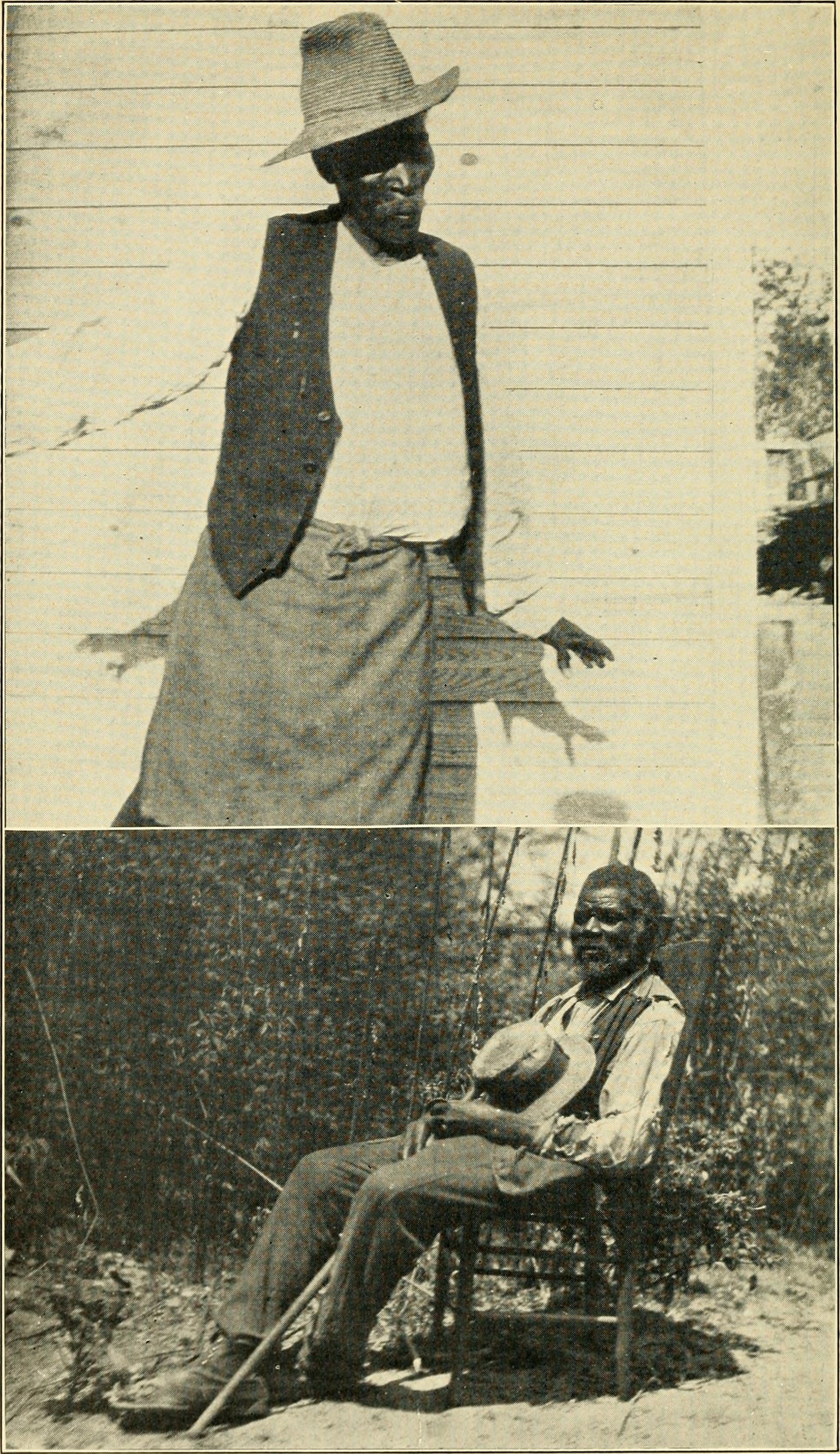
VOODOOISM AND CoNJURATION 201 woman," or infrequently as the "goofer-doctor." i The term "root-doctor" is common through the South, as is also "hoodoo-doctor." One Mississippi Negro mentioned the term "two-facer" as applied to conjurers, 2 and with the prairie Negroes near Columbus, Miss., the term "horse" ^ is used for them just as it was used in old New Orleans to mean a voodoo priestess, * thus showing how elements of African culture may spread from one locality to another. The term "Wangateur" is also often used in New Orleans. ^ In Africa the witch-doctor is usually selected because of some physical or mental peculiarity which shows him to be possessed of a spirit. I have noticed that the American witch-doctor is also possessed of unusual mentality and often shows physical peculiarities as well. Miss Owen mentions a "Witcheh-man" as having a whopple-jaw, a hare-lip, a lop-side, a crooked leg, one eye like fire and the other eye dead. ^ Ed Murphy, a Mississippi conjure-doctor, who is held in awe by many of the Negroes of the locality, and to whom I am greatly indebted for voodoo-lore, has three birthmarks on his left arm (representing the Father, Son, and Holy Ghost), a "luck mole" on his right arm, he is "chicken-breasted" (which means that he can never have consumption), was born with a caul on his face, and has (so he says) kinky hair on the sides of his head and straight hair on top. His face (see frontispiece) shows considerable personality, and these traits, coupled with his habit of living off by himself 1 Parsons, E. C, Folk-Lore of (he Sea Islands, S. C, M. A.F.L. S., vol. 16 (1923), pp. 211-12. 2 153. 3 348. * Cable, G. W., The Grandissimes, p. 68. 6 277. 6 Owen, Mary A., Voodoo Tales, pp. 218-19.
202 Folk Beliefs of the Southern Negro and attending to his own business, give him a tremendous influence with the Negroes of that locality. Another informant describes the "hoodoo" as always having a wizened face and red eyes. ^ Old folks (with their peculiar ways) are particularly liable to be hoodoos, ~ while one Louisiana conjurer was afflicted with a skin disease whereby he first became spotted and then changed in color to a sort of pinkish-white. ^ Often, besides extreme redness of eyes, the conjuredoctor is tall and dark. He is always in a deep study, looking at some distant object, and, so one informant says, in contradiction to my own observations, never looking a person straight in the eyes. They sleep like a cat, waking up at the slightest noise or pain, and telling their own fortunes to see if any one is trying to injure them. "One conjure-doctor is pictured as having the remarkable gift of turning as green as grass most, and when he was just as black as a man could well be; and his hair covered his neck and around his neck he had a string, and he had lizards tied on it. He carried a crooked cane (so does Ed Murphy). He'd throw it down and he would pick it up and say something, and throw it down, and it would wiggle like a snake, and he would pick it up and it would be as stiff as any other cane." Often they go around with a very sanctified air with leathern bags on their arms. * Other Peculiarities. In one Gullah district, Sabey, whom the Negroes feared because of his ability to throw spells, was "a queer, misshapen mulatto, al1 15L Smiley P., Folk-Lore from Va., S. C, Ga., Ala., and Fla., J. A. F. L., vol. 32 (1919), p. 379. 2 305. 3 18. * Southern Workman, vol. 24 (1895), p. 118.
VOODOOISM AND CoNJURATION 203 most an albino, with green eyes and yellow wool lighting and thatching a shrewd and twisted, though good-natured monkey face," ^ "Pig-Tail Charley," the grandson of a witch, was "a po', peakedy, no'count HI' young 'un, wid a whopple (awry) jaw, a blin' eye, an' a shriveled laig," but he played the Pied Piper in that the pigs listened to his whistle-call and followed him into a bluff which closed in after them. 2 Other Negroes, possibly because of seeing a side-show magician, or because of a confusion of "hoodoo" with "Hindu," describe the hoodoo-man as follows: "The hoodoo-man usually wears a turban on his head, wears a Turkish dress with bloomer pants. He never walks any place but always rides in a buggy. He is a very short, heavy-set man, and usually weighs about three hundred pounds. He always wears a moustache so that you cannot see his mouth, and has a very dark complexion." ^ Others say that hoodoomen, who always have long hair and beards, always carry a loaded cane with which they tell whether you are honest or not. ■* Dr. H. Roger Williams of Mobile, Alabama, who has had many experiences with all types of conjurers, writes me as follows about the hoodoo-doctor: "He usually wears a long Prince Albert coat, that shows signs of having been in service many years. His hair is seldom, if ever, combed, his shoes, in many instances, are tied on his feet with white strings, eyes typical of sensuality, and his boast, the fact that he has never been to school a day in his life — knowing nothing but what he has learned of 1 Gonzales, A. E., The Black Border, p. 107. 2 Owen, Mary A., Pig-Tail Charley, J. A. F. L., vol. 16 (1903), p. 59. 3 341. *345.
204 Folk Beliefs of the Southern Negro God. His credentials show him to be an ordained minister, and he invariably introduces himself as Reverend Doctor. With absolute assurance in his tone of voice, he makes no effort to give a reason for anything, but dogmatically asserts his God-given power to heal all manner of diseases. 'Chile, her sickness ain't nat'ul, and edicated doctor's medicine is pintedly ag'in it!' is a common expression met with in the sick room as soon as a physician has left the room of a patient in a neighborhood where a hoodoodoctor has once been, and often his skill is baffled by doubt." ^ Conjuration on the part of a blue-gummed Negro or a Negro with one eye black and the other blue is unduly effective and death usually results. ^ "A blue-gummed Nigger," so one old conjure-doctor says, "is a 'Ponton,' a cross 'twixt a horse and a man, and ef he bites you hit's shore death." ^ This idea of a bite from a blue-gummed Negro being fatal has considerable spread throughout the South, ^ In the animal world the woodpecker is looked upon as being always a conjurer, ^ possibly accounting for the fact that the constant tapping of this bird upon the roof of the house is regarded as an omen of death. ^ Visions and Metamorphosis. Nat Turner, who led the insurrection in Virginia in 1831, was mentally precocious and had marks on his head and breast which were interpreted by the Negroes who knew him as marking him for some high calling. As he worked in 1397. 2 141. Steiner, R., Observations on the Practice of Conjuring in Georgia, J. A. F. L., vol. 14 (1901), p. 177. 391. 4 345. Davis, H. C, Folk-Lore in South Carolina, J.A.F. L., vol. 27 (1914), p. 248. 6 141. Owen, Mary A., Voodoo Tales, p. 54. 8 141.
VOODOOISM AND CoNJURATION 205 the fields he saw drops of blood on the corn, and he also saw white spirits and black spirits contending in the skies. An eclipse of the sun in February 1831, was interpreted as the sign for him to go forward. ^ This matter of vision is not uncommon. Ed Murphy lies down on his back at night, folds his arms, and a whole troop of visions swing into sight. He can see his enemies coming; can see the future. He lives by himself a lot and meditates; does not like to be bothered by other folks. By looking through a clear pebble dipped in water he claims to be able to induce these visions — in much the same manner as crystal gazing with more advanced people. This "beauty rock," by the way, is the same sort of stone that David used to kill Goliath, thus bringing in a reign of peace. Carry one in your pocket and you, too, will have peace. ^ Ed Murphy is very religious — intensely so, as are most of the other conjure-doctors of my acquaintance— and is the "main-exhorter" at revival meeting time, his impressive personality scaring timid souls into the Kingdom as well as into the insane asylum. Mrs. V. F. Boyle informs me that this sort of thing is common, there being good and bad hoodoos, the good hoodoo often being part hoodoo and part preacher. ^ Often a hoodoo-doctor is supposed to have the ability of changing into animal forms. A scared Negro told me of seeing Ed Murphy change himself into a cow and then into a cat. * Ed does not deny doing it — such stories increase his prestige. Shadrach, ' Brawley, B., Social History of the American Negro, p. 141. 2 258. »42. M04.
206 Folk Beliefs of the Southern Negro a hoodoo, had the power of getting out of his skin and taking an animal form, such as a screech owl. Oftentimes he lent his skin to the devil to go about in. ^ A Self-made Hoodoo-doctor. Such are the chief characteristics which Negro public opinion sets down as being those of the conjuring profession. Suffice it to observe that in almost all cases the conjure-doctor is a peculiar individual, set aside because of his verypeculiarity for dealings with the supernatural. Not always are the conjure-doctors Negroes; sometimes white women assume the role for the sake of the rewards to be gained by successful imposture. ^ After being asked to pay 320 for some trifling information by Negroes, whom I had good reason to believe, were hoodoos, I finally adopted the role of conjure-doctor myself, in order to be able to discuss the tricks of the trade as hoodoo to hoodoo without having to live the rest of my life on "half-rations." Even conjurers are not without their professional spirit, and I found them quite willing to swap clinical knowledge and even materia medica with one, once they believed him to be a "rale trick-doctor." No, I have no whopple-jaw nor blue gums, but I do have a startling collection of red flannel rags, rabbit's feet, lodestone and steel filings, an Egyptian idol, a "jack," graveyard dirt, voodoo charms from New Orleans, and some knowledge of Negro conjuration practices along with imagination enough to conjure up missing details when necessary. By a promiscuous display of this equipment I soon had patients seeking my aid, and my truly spectacular "tricks" soon convinced even the hard-shelled hoodoos that I was one of the gang. 1 Boyle, Mrs. V. F., Devil Tales, p. 81 ff. ^Southern Workman, vol. 26 (1897), p. 37.
VOODOOISM AND CoNJURATION 207 Professional Duties. One of the first things we conjure-doctors have to do is to diagnose the case, tell the person whether he is conjured or not (he usually is if some of the less ethical members of the profession get hold of him) and to find out who "layed de trick." The "trick" (charm) must be found and destroyed and the patient cured. If the patient wishes we must also be able to turn the trick back upon the one who set it. Besides this, a conjurer truly up in his profession must be able to lay haunts, and to locate buried treasure or a vein of water. The treasure trove may be found by taking a divining rod (a small branch with two side limbs running off in the shape of a "V"), driving a nail in the end of each branching twig and in the spot where they converge, holding these twig ends in the hands, and marching boldly over the suspected landscape. When you pass over the buried treasure the free end will be pulled suddenly towards the ground. Or, simpler still, you may put three pieces of brass in your right hand, keeping them well separated. Sniff occasionally and when you pass over the buried treasure you will find that the brass will automatically begin to smell. Water may be located by a similar rod without the nails; or if you observe a tree in the locality with the limbs longer on one side than on the other, the tree bending somewhat in that direction, you may be reasonably sure that a vein of water is located beneath the surface of the earth on that side. ^ The divining rod idea is, of course, European. ~ Satisfied Patients. A notable thing about the conjure-doctor is the fact that he usually satisfies his ^ 141. Compare Steiner, R., Superstitious Beliefs from Central Georgia, J. A. F. L., vol. 12 (1889), p. 271. 2 Lean's Collectanea, vol. 2, p. 346.
208 Folk Beliefs of the Southern Negro patients. I tested this out on my own clients. When I made a "trick" I would charge 25 cents down, let the Negro keep the charm for a week, and if it satisfied him he was then to pay me 32 more. While I always excused myself from the $2 on the basis of special friendship, in very few cases was my client unwilling to pay the money. True there is often trickery. In one case an old Negro woman was taken sick. A scheming conjure-doctor at once buried a bottle containing human hair, graveyard dirt, and two small sticks in the path leading to her spring. He told her she was conjured and offered to find the conjure for 310. Roaming over the location with a little iron rod he located the charm he had buried, broke the bottle and buried it in the middle of the public road, giving the old woman some roots to chew. The woman gladly paid the 310 and, strange to say, recovered — illustrating the power of mind over body. Although the trick was exposed she still believes that she was conjured and that she was cured by the doctor. ^ In another case, a man had "a rising" on his arm. The conjure-doctor slipped a lizard into a poultice which he bound on the sore; and later, taking the poultice off, told the man he was conjured and had lizards in his arm. Although the hoodoo-doctor collected considerable money in an attempt to cure the trouble, the patient finally died, thinking to the last that he had reptiles in his arm. ^ Like all other medicine-men, the conjure-doctor often uses his ready wit to keep his patient satisfied in case the charm does not work. A slavery-time ' Steiner, R., Observations on the Practice of Conjuring in Georgia, J. A. F. L., voL 14 (1901), pp. 175-76. 2342.
VOODOOISM AND CoNJURATION 209 "trick-doctor" gave one of the slaves a "hand" (charm) that was supposed to enable him to "cuss out" the master without being harmed. He tried this and was given a terrific whipping. On complaining to the trick doctor he was told, "I gl' you a runnin' han! (a charm which would give the possessor swiftness of foot). Why didn't yer run.?" ^ Common Sense Treatment. A little common sense mixed with the charm will often bring the desired result whether the charm itself works or not. A New Orleans "hoodoo-man" sold a suitor some "French Love Powder" (sugar of milk in this case) for $S. He was to sprinkle this upon whatever he gave to the woman, but he was always to take her something she liked and lots of it; he was never to cross the woman nor make her mad no matter how much she annoyed him or flirted with other men; he was to show her on every occasion that he was interested in her alone. A few months later the man came back singing the praise of the conjurer, and introduced to him the woman, who, by his wonderful love-powder was induced to become his wife. ^ A "conjure-woman" in Algiers, La., was given $S for a bottle of medicine (lemonade) to break a husband of quarreling. Her directions were for the unhappy wife to fill her mouth with the medicine whenever her good man began to quarrel and not to swallow it until he had ceased. Then she was to swallow the medicine and kiss him. So successful was this treatment that several wives came to the doctor upon recommendation for the same prescription. ^ 1 Smiley, P., Folk-Lore from Va., S. C, Ga., Ala., and Fla., J. A. F. L., vol. 32 (19191, p. 365. 2 397. ^ lUd. 14
210 Folk Beliefs of the Southern Negro Evasive Instructions. In case the "trick" fails to work, there are always the mystifying instructions to aid the conjurers in evasion. For one love-charm the following was prescribed: Take nine "u" nails, a piece of graveyard dirt, one quart of vinegar, one quart of "May water" (water caught from the first rain in May), mix them together and boil them down to one-half quantity. Take it off the fire, let it cool and stand for nine days, then fill the vessel to its original quantity, using equal parts of vinegar and "May water." Let this stand for nine more days, then put into a jug and cork up tightly. For nine nights after sundown, go to the woman's house and sprinkle some of this around in her yard where she will walk over it. On the tenth night propose to her and she will accept you without fail (note that 28 days are allowed for events to take their natural course). The charm failed but the "joker" lay in the order for nine "u" nails. The poor suitor had used nine "new" nails — while the conjurer had advised nine "used" nails. If the "used nails had been employed the conjurer could still escape by claiming to have advised nine "new" nails. At any rate the suitor paid five more dollars for a box of "French Love Powder" that had been "smuggled over from France," and went on his quest still hopeful. ^ One conjurewoman in Algiers, La., claims to collect from fifty to two hundred and fifty dollars per week when business is good, often, giving as many as twenty-five Negroes "hands" to win in the same gambling game. She says, "It is amusing to see how easily satisfied they are with an explanation if they come back claiming to have failed, invariably paying a larger sum to get a better hand." 2 1397.
VOODOOISM AND CoNJURATION 211 In Africa. Precisely the same sort of thing is found with the African witch-doctor. "The hunter going out, certain of success, returns empty-handed; the warrior bearing on his breast a fetish panoply, which he is confident will turn aside a bullet, comes back wounded; every one is some day foiled in his cherished plan. Do they lose their faith.f" No, not in the system— their fetishism — but in the special material object of their faith — their fetish — they do. Going to the oganga whom they paid for concocting that now disappointing amulet, they tell him of its failure. He readily replies: 'Yes, I know. You have an enemy who possesses a fetish containing a spirit more powerful than yours, which made your bullet miss its mark, which caused your opponent's spear to wound you. Yours is no longer of use; it is dead. Come, pay me, and I will make you a charm containing a spirit still more powerful.' " ^ Out-hoodooing the Hoodoos. But this sort of deception is not deliberate with all Negro conjure-doctors. Most of them I have seen, believe very firmly in the materials they prescribe and are willing to use charms prescribed for them. I shall never forget the time I had to imagine a special "trick" for backache for a conjure-doctor of New Orleans, who, in spite of his skill in treating others was not able to cure himself. In order to obtain important information regarding his methods it was necessary that I quickly produce an unusual charm to cure his ailing back — my remedy was an amazing mixture of voodoo, thin air. Scripture, and scientific fact. In brief, I told him that man was made of clay and that it would take clay to patch him up. ^ Nassau, R. H., Fetichism in West Africa, pp. 85-86.
212 Folk Beliefs of the Southern Negro The earthworms are the spirit of clay (this from an old Negro slave) and lively earthworms must be fried in fresh lard (the hog is a dirty animal). Mix some asafoetida or strong perfume (strong smell) with this, since strength is the thing you are striving for. Get some hair from a strong man (Sampson's strength lay in his hair), burn it and mix it with the ointment, stirring it always UP and repeating, "Sam-son! Samson!" with each stroke. Be earnest and concentrate on strength and power. Then get some bark from the north side (strong side) of a big oak tree (I helped him gather this myself), powder it and mix in the same way, saying, "Sam-son! Sam-son!" with each stroke. Finally, get a small strand of steel cable (strength and flexibility) and boil it in vinegar (strong taste). Keep all these ingredients separate until the new moon, then mix them, pounding an upturned dish-pan with a stick in the left hand (strong sound) while stirring it up with the right hand, saying, "Sam-son!" with every stroke. Let the mixture stand until the moon is full (thus getting the full strength of the moon in it), then stop it up tightly in a jar which is to be kept tightly wrapped in red flannel (strong color). Rub this on with a red flannel cloth, rubbing always from below, up, saying, "Sam-son!" as you rub it on. Every morning and night face the north with arms outstretched and feet well apart and concentrating on strength and Samson. Then I added a few worthwhile items — dress as well as you can, hold your head up, save at least 32 each week, work hard and earnestly, bathe at least every other day, do a bit of kindness each day, be cheerful even if you have to force yourself to smile, and if you are not bettered, consult a first rate medical doctor and not a hoodoo. The
VOODOOISM AND CoNJURATION 213 "Negro-doctor" took these down literally (he could read and write) and then transcribed them in a number code, so that he could use them without fear of detection. I had a hard time getting rid of him. He told me his whole store of information and insisted on quitting his work and following me wherever I went about the city, declaring that already he felt better and feeling sure that the continued treatment would do him much good. I actually believe it will, and am sorry that I could not remain longer in New Orleans to check up on the case. He showed his gratitude by offering me 325 for the cure — my improvised charm was sufficiently complex to win his entire attention. Without doubt many of the conjuration practices originated in the brain of some quick-thinking hoodoodoctor — in fact I have often seen this improvising going on myself, and apparently these products have the same efficiency as those hallowed by antiquity. Credulity of the Hoodoo-doctors. So great is the credulity of these Negroes, even the conjure-doctors themselves, that there is no excuse for failure. I tested this out in the case just mentioned. I had just purchased two small notebooks, both exactly alike. We were sitting on the levee at Algiers, just across from New Orleans, and for a time I busied myself jotting down the experiences and remedies of this conjure-doctor for whose backache I had just oifered a cure. When the conversation lulled, unknown to him I changed the notebook upon which I had been writing, for the unused one which I had concealed in my inner coat pocket. Then I told him I possessed the power of keeping him from seeing things I did not want him to see. "You have seen me writing in this
214 Folk Beliefs of the Southern Negro book," I said, "now read what I have written." Making a pass at the Negro, I handed him the unused book. He opened it and saw only the blank pages. His jaw dropped, his eyes nearly popped out of his head — in fact I thought he was going to fall backward into the "Father of Waters." "My Gawd, white man, you's wonderful!" Later on when he was not looking I again brought out the book upon which I had been writing, snapped my fingers at him and again restored to him his ability to read. Perhaps such practices are not exactly ethical, but I won my man's respect and obtained information, besides testing out the extreme credulity of even the conjure-doctors themselves. Conjurers by Accident. So great is the fear of these conjure-doctors that it is extremely hard to get a Negro to testify against one in court, no matter how much the Negro has been swindled by him. ^ They are afraid not to keep the charm given them by the hoodoo-doctor on their person, for the idea prevails that the conjure-men will find it out in some way or other, and that they will "haint yo' till yo' leabe dis yere earth." ^ Steiner cites, in detail, cases where it was necessary for him to discharge good workmen simply because of their supposed conjuring and their demoralizing effect upon the other superstitious Negroes. In some cases accidental happenings almost force a man to become a conjurer. One Georgia Negro picked up a hat which had blown from another Negro's head and handed it back to him. Within a short time the owner of the hat died. The Negro who picked up the hat drank from a bucket at the well. Another 1 397. 2349.
VOODOOISM AND CoNJURATION 215 Negro followed him and shortly after died. Both these deaths were attributed to the innocent Negro — men would not work around him, he had to be discharged. He had accidentally earned the reputation of being a conjurer. He could not get a place to stay or cook, and was eventually forced to live far off from his fellows and, in actuality, to follow conjuring. ^ Symptoms of Conjuration. We turn now from a consideration of the "hoodoo-doctor" to a general consideration of conjuration itself — known variously as "hoodooing," "goofering," - "handicapping," ^ or "tricking." ■* The principles of thought upon which this form of magic is based are well set forth in Frazer's Law of Similarity and Law of Contact or Contagion. According to the former, like produces like, or an effect resembles its cause; the latter states that things which have once been in contact with each other continue to act on each other at a distance after the physical contact has been severed. ^ While we shall not follow this classification it could be conveniently applied to practically the whole of conjuration. Some hoodoos burn a kind of powder called "goopher dust," which represents the person being hoodooed, who is perhaps miles away at the time. This causes the conjured individual to lose his personality and to become sick or insane. One must have power to be able to make up a protecting "hand" or charm. Another conjurer or hoodoo outside the vicinity can work a cure for one so afflicted. ^ A person can tell when he is hoo^Steiner, R., Observations on the Practice of Conjuring in Georgia, J. A. F.L., pp. 173-79 (1901), vol. 14. n4i. 354. *306. ^ Frazer, J. G., The Golden Bough, p. 11. « 152.
216 Folk Beliefs of the Southern Negro dooed by the suddenness of the attack — sharp pains follow directly upon handling, stepping over, or swallowing the charm. The regular physician does no good; a conjure-doctor had better be called In at once. There are signs of lizards and snakes In the body — the regular food eaten does no good. The person makes strange noises; goes like a dog, cock, fox, cat, or other animal, and finally becomes Insane unless relieved. ^ One old Negro, whose sister was killed by a process of this kind and who had been conjured himself, says: "You kin tell 'caze you feels so diffe'ntly. Fer a while you eats a lot mo' dan you ustah eat, den you gits so you doan' want no vlttles no time. After dis you pines away an' dies." - Some say mosquitoes fly out of a conjured person's head. ^ No trouble in the world exhibits such fiendish and unearthly symptoms as does conjuration. A Mississippi informant tells me of one old man who could conjure folks by taking a looking-glass and turning their mouths wrongside out, making their eyes as big as dollars. Folks so aflfected would "bark lak dawgs an' go walkin' 'long on dey's heels an' de backs er dey's hands wid deir bellies up towards de sky." ^ In another case a girl set a hoodoo for a suitor who had stopped coming to see her. Within a short time this desultory suitor suddenly dropped dead while working in the field. His flesh became "ridged up lak cottonrows" and the other Negroes knew he had been tricked. ^ When you are conjured you feel like you have never ^ Bacon, A. M., Conjuring and Conjure-Doctors, Southern Workman, vol. 24 (1895), pp. 209-10. 2 65. 3 150. * 305. 6 288.
VOODOOISM AND CoNJURATION 217 felt before In all your life. Uncouth thoughts take possession of your mind. If a rabbit has been used in working the hoodoo, you will become timid, and afraid of every one, just as the rabbit is timid. If you are in doubt as to your condition you can verify your misgivings by telling your fortune with cards. ^ When people "jes' aint actin' natch'l" their misconduct is explained by conjure. A devoted husband was trailing after another woman; "Solon's er good man, fur he's des hoodooed an' hain't 'sponsible." 2 When a sweetheart has been getting along with you all right and then suddenly, with no real cause, "breaks off," you may know that she is not responsible for what she is doing. She has been "handicapped," and in order to win her back it is necessary for you to consult a "root-doctor" and have the spell removed, unless you know how to take it off yourself. ^ African Charms. In Africa many articles are used in charm-making. Charms of lions' claws, teeth, lips, and whiskers are the best protectives against lions; an elephant hunter carries about with him the point of an elephant's trunk; the spine bones of serpents are strung into a girdle to cure backache * (probably because of their flexibility). Like produces like. With the Timne-speaking peoples small things, such as rice husks and other rubbish, are put in a fish trap and hung high up, that the rice may stand high; a pot will be broken so that bad people may be "broken" in the same way; a blacksmith makes a straight knife for a sacrifice, that work and all other things may be 1141. 2 Boyle, Mrs. V. F., Devil Tales, p. 11. »54. ''Nassau, R. H., Fetichism in West Africa, pp. 84-85.
218 Folk Beliefs of the Southern Negro "straight"; and a broom will be hung over the door that the house may be "clean" and no bad sickness come in. ^ The Calabar natives will bury the placenta beside a palm tree planted at the birth of a child so that the tree will grow with the child. ^ The Gold Coast sorcerer is generally distinguished by his goatskin medicine-bag. "Inside the bag are all kinds of apparent rubbish, some old bones, dirty little rags containing 'medicine,' weird-shaped stones, bits of iron, broken pottery, feathers, bits of skin, horn — a regular rag-and-bone merchant's collection. But the principal items are two or more smoothly-rounded stones little larger than a golf-ball, and a stick." ^ Great is the variety of these charms. In some cases water drawn with the back toward the river is used. * "Various articles are used in their composition, such as oil, leaves, beads, hair, finger-nails, toe-nails, etc. Most of the charms the women put on in Africa are merely small bits of paper with Mohammedan writing, wrapped in a piece of soft leather. The 'hoodoos' and 'fetishes' are of more importance than the ordinary charms, and their composition is more complex, consisting of leaves, barks, roots, horns, and bones, either of man or beast, or of both, all carefully placed in a countrypot made of clay, and kept from every eye save that of the owner's and, perhaps, the near relatives. What is called 'gree-gree' is a fetish that is employed by its owner to revenge any wrong received by him." ^ 1 Thomas, N. H., Anthrop. Rept. on Sierra Leone, pt. 1, p. 53. ^ Burton, R. F., Wit and Wisdom from West Africa, p. 411, ' Cardinal, A. W., The Natives of the Northern Territories of the Gold Coast, p. 130. ■* Burton, R. ¥.., Wit and Wisdom from West Africa, p. 344. * Cronise and Ward, Cunnie Rabbit, Mr. Spider and the Other Beef, pp. 2627. For other representative African charms, see Beatty, K. J., Human Leopards, pp. 23-24. ElUs, A. B., Ewe-speaking Peoples, p. 94. Leonard, A. G., The Lower Niger and Its Tribes, pp. 499-500. Kingsley, M. H., Travels in West Africa, p. 462. Elhs, A. B., Tshi-speaking Peoples, pp. 103104.
VOODOOISM AND CoNJURATION 219 Survivals in America. But let us consider again the American Negro. Cable writes of the New Orleans Negro: "To find under his mattress an acorn hollowed out, stuffed with the hair of some dead person, pierced with four holes on four sides, and two small chicken feathers drawn through them so as to cross inside the acorn; or to discover on his doorsill, at daybreak, a little box containing a dough or waxen heart stuck full of pins; or to hear that his avowed rival or foe has been pouring cheap champagne in the four corners of Congo Square at midnight when there was no moon— will strike more abject fear into the heart of many a stalwart Negro or melancholy quadroon than to face a leveled revolver." ^ "The hollowed out acorn mentioned by Mr. Cable seems a copy of the cutch-nut charms of the Gold Coast whose chief use there, however, is to restrain the slanderous tongue. and the pouring out of champagne on a moonless night at the four corners of the court, the form of incantation to Shugudu, a malignant god, who will lend his aid to any one who on a dark night will pour a libation of rum into a hole dug in the ground, or bury a fowl alive." ^ In his Grandissimes Mr. Cable mentions again the pouring of oblations of champagne on the ground and the casting upon the floor of a little of whatever a person was eating or drinking to propitate M. Assouquer (the voodoo imp of good fortune). ^ "An Ashanti never drinks without pouring a few drops of the wine on the ground for the denizens of the spirit world who may happen to be about (also some for 'fetishes'). Food is constantly placed * Cable, G. W., CreoleSlave Songs, Century Magazine, April 1886, pp. 286-87. =' Ellis, A. B., On Vddvr-worship, Popular Science Monthly, vol. 38 (1891 ), p. 662. 3 Cable, G. W., The Grandissimes, pp. 125, 177, and 296.
220 Folk Beliefs of the Southern Negro aside for them." ^ In the West Indies "the favorite decoctions in use among witch doctors consist of bones, ashes, grave-dirt, human nail parings, mixed, perhaps, with asafoetida or any other substance having a pungent odor." ^ On the Gold Coast it is beHeved that a man may be harmed by a "medicine" made from the dust picked up from his foot-tracks, ^ and in Sierra Leone "many persons, even educated persons in Freetown, have a superstition about their hair being left about, and take precautions to have it disposed of in such a way that nobody can get possession of it. Strong 'medicines' are supposed to be made with human hair, and with this 'medicine,' injury can be inflicted on the person from whom the hair was obtained." * Other tribes have these same regulations; nails and blood falling into the same category. ^ The almost precise agreement with Southern Negro practices need scarcely be mentioned. The Fetish Color. "Bosman (A.D. 1795) says that red was the royal color at Ardra (one home of the Vodu-worship), which is the probable reason for its being the favorite vodu color in Hayti." « Red flannel is almost always used by the American Negro in making his "tricks," but we cannot be too certain of its African origin. The Ibos say that "if a man sees red cloth in a dream, it means that one, either of his own immediate household, or near connection will 1 Rattray, R. S., Ashanti Proverbs, p. 37. 2 Park, R. E., Magic, Mentality and City Life, Publication American Social Society, vol. 8 (1924), p. 111. * Cardinal A. W., The Natives of the Northern Territories of the Gold Coast, p. 48. ^ Beatty, K. J., Human Leopards, pp. 56-57. 6 Milligan, R. H., The Fetish Folk of West Africa, p. 39. Kingsley, M. H., Travels in West Africa, p. 447. •Ellis, A. B., On Vodu-worship, Popular Science Monthly, vol. 38 (1891), p. 659.
VOODOOISM AND CoNJURATION 221 shortly die." ^ But in Europe, "red objects, such as the houseleek, the mountain ash, rowan-berries, the oak with its red bark, animals having a red color, even red objects, such as stockings, bands, garters, coats, wax tapers, and other things, were sacred to him (Thor orDonar).... It is probable for the same reason that red flannel underwear is worn to prevent rheumatism (by the Negroes as well). Since Donar was the god of marriage and since everything red was sacred to him, the tying of a piece of red flannel around the leg to stop puerperal hemorrhage is a direct survival of the old paganism." ~ In Scotland there is also the saying: Rowan, ash and red thread Keep the devils frae their speed. ^ Cable mentions the fact that in New Orleans a red ribbon was worn about the neck in honor of "Monsieur Agoussou," the demon upon whom the voodoos called in matters of love, which demon especially loved that color. ^ Thus, while it seems more probable that the use of red is of African origin in the case of Negroes, since the Negro practices the voodoo rites associated in Africa with this color, we cannot be absolutely sure that there has been no European infiltration. In both Europe and Africa it may well be that the red color represents what was formerly sacrificial blood offered to the fetish in question. 1 Leonard, A. G., The Lower Niger and Its Tribes, p. 146. 2 Fogel, E. M., Beliefs and Superstitions of the Pennsylvania Germans, p. 8. * Dyer, T. F. T., English Folk-Lore, p. 10. See also, Lean's Collectanea, vol. 2, p. 270. * Cable, G. W., The Grandissimes, pp. 91-92.
222 Folk Beliefs of the Southern Negro Pre-conjural Preparations. For skill in conjuring, a person should eat the brains of a snake or rat ^ or else devour a live frog. ^ An Alabama informant says, "If you want to be a conjurer go out with an old conjurer and he will call all the snakes, lizards, frogs, scorpions, snails, worms, and rats. You will have to lie down and let all these things crawl over you while you are looking at them. If you don't jump up you can be a conjurer." ^ If a person seeks roots in his work, he should get them whenever possible oif of high ground — the high always prevails over the low — and he should always get them in pairs, male and female. They work better that way, but a person should pick the proper time so that everything will be receptive for his work. Don't try any tricks on a bright cloudless day — the earth is all closed up then and nothing much can be accomplished. Wait until you see some thunderclouds coming up. The earth will begin to crack open — opening her mouth to receive the rain. The ants will be hurrying to and fro, looking for shelter. Then set your charm; everything is receptive and your success is assured. * ^^Layin'' de Trick.'''' Most often, perhaps, the "charm" ("trick," "hand," "mojo," ^ "toby," « "grigri," ^ "hoodoo," or "wanga," » as it is variously called), is put in the path or on the ground where the person will come into contact with it or at least will step over ^91, and Owen, Mary A., Voodoo Tales, p. 250. In parts of the French Congo, only witches will eat snakes or lizards. See Dennet, R. C, Notes on the Folklore oj the Fjort, p. 10. 2 240. * 258. 6 103, and 189. 6 54. ^269. « 277.
VOODOOISM AND CoNJURATION 223 it. Such a conjure is most advantageously put down on a young moon so that it will rise up and grow as the moon grows. In other cases the conjure is rolled up in a ball and hung from the limb of a tree where the person to be conjured will unknowingly brush up against it. i "One of the most effective ways in which conjuring is supposed to be done is to take a bunch of hair or wool, a rabbit's paw, and a chicken gizzard, tie them up in a cotton rag, and fasten the bundle to some implement which the man to be conjured is in the habit of using. As soon as he catches sight of it, all of his spirit leaves him, his eyes nearly bulge out of their sockets and a cold sweat breaks out all over him. Sometimes the trick or spell will last so long that he will grow weak and fall away to a mere shadow; of course he is then utterly unfit for work, and unless he is removed from the scene of his troubles, and his mind freed from the belief that he is conjured, he will soon die of pure fright." ^ Conjure material is sometimes put into a person's shoes. "One instance is of a girl who detects her father-in-law putting something into her shoes after she is supposed to have gone to sleep. She burns the shoes and so avoids the trick; the shoes in burning make a noise like a bunch of fireworks." Conjures may be set in sweet potatoes in the field, among chips in the woodshed, in perfume (a bottle of cologne presented to a girl by her unsuccessful rival puts her eyes out when she smells of it), or even on a carving knife, the first one to use it being the one to receive 1 141. See also, Steiner, R., Braziel Robinso7i Possessed of Two Spirits, J. A. F. L., vol. 13 (1900), p. 228. 2 Hall, J. A., Negro Conjuring and Tricking, J. A. F. L., vol. 10 (1897), p. 242.
224 Folk Beliefs of the Southern Negro the harm. ^ A girl was given a bunch of roses on her wedding day and her attention was called to their sweet fragrance. That girl fell dead when going into the church. ^ A common method of conjure is by means of things put in a person's hat. "To conjure by means of a hat, take a toad, dry and powder, and put the powder in the hat, or the dried toad may be put up all over the door or under the steps. Toads, frogs, lizards, etc., must be all procured at night on the waste of the moon, as that will insure a wasting away of the body." ^ Even the wind may be the innocent bearer of "devilment." Find out the direction of the wind and stand so that it will blow from you towards your enemy. Having dusted your hands with powdered devil's shoe string and devil's snuff, hold them up so that the wind will blow from them towards the man coming towards you. The dust will be carried into his eyes and your opponent will be at least temporarily blinded. My hoodoo friend uses this on white men with whom he is afraid to deal more roughly. * These ways all indicate means of introducing the conjure dust without actually getting it into a person's vitals. There are myriads of such ways — putting it into a person's bed or pillow, or sifting it through the roof, but after all the most effective way is to introduce it directly into his food or drink. No doubt a great deal of sickness due to such methods was the result of actual poisoning and not of conjuration at all, but to the rural Negro, as to the African, the two are iden* Bacon, A. M., Conjuring and Conjure-Doctors, Southern Workman, vol. 25 (1895), pp. 193-94. 2 Pitkin, Helen, An Angel by Brevet, pp. 71-72. ' Steiner, R., Observations on the Practice of Conjuring in Georgia, J. A. F.L., vol. 14 (1901), p. 179. *258.
VOODOOISM AND CoNJURATION 225 tical. Often a conjure-doctor will put something in the spring or well from which the victim drinks, and it is believed that so long as the tricked one drinks from that spring he will be slowly but surely poisoned to death. ^ More will be said of these and other methods, but now we turn to the construction of the charms themselves, beginning first with those used by the New Orleans voodoos. New Orleans Charms. Marie Laveau used to make a "gris-gris" consisting of some saffron, salt, gunpowder, and pulverized dried dog manure, all wrapped in a piece of black paper, so my informant says. This she would slip into a person's parlor, bedroom, chair, or piano during her work in the house as hair-dresser. This charm contained nothing harmful in itself, but the superstitious people (white and black) would immediately rush to Marie Laveau to get a countercharm for the one she had set herself. ^ An old voodoo servant in New Orleans had a charm made of very fine silken moss or horsehair arranged in the shape of a nest and held together by two crossed herbs (note the use of the cross symbol). It was kept sewed in the pocket of her dress and was supposed to ward off ill luck. Other charms she carried were a rabbit's foot, some gold ore, and a magnet. ^ Other voodoos would sprinkle salt on a person's doorstep according to a regular pattern or design. The damp salt would eat some of the varnish off the step and leave a permanent mark which would scare the gullible people out of their wits. * Another more complicated charm * Hall, J. A., Negro Conjuring and Tricking, J. A. F. L., vol. 10 (1897), p. 241. 2 269. 3333. * 269. 15
226 Folk Beliefs of the Southern Negro is made as follows: "Take a dried one-eyed toad, a dried lizard, the little finger of a person who committed suicide, the wings of a bat, the eyes of a cat, the liver of an owl, and reduce all to a powder. Then cut up into fine pieces a lock of hair from a dead (natural) child, and mix it with the powder. Make a bag of a piece of sheet that has been used as a shroud, put all the material into it and put it into the pillow of the intended victim when nobody is aware of your action. He will pine away and die. A few feathers run through the bag will expedite matters." ^ Notice here the use of relics of the dead and animals associated with death and darkness — objects also treasured by the Africans as fetishes. Mr. Pelletier, Mrs. Cozad, and other people in New Orleans have told me that there was nothing mysterious about the "gris-gris" of the voodoos, the harm wrought being due to the power of suggestion on ignorant minds and to the introduction of actual poison, such as belladonna, into the human system. This latter practice gradually became so widespread that the health authorities had to intervene and finally bring about the break-up of the organization. Dana mentions the use of sipher-wood and ground ivory-root from Liberia, the latter being able to exercise its evil efi"ects by touch alone and causing mental as well as physical breakdown; button-root; cresses from Angola; and Jamestown-weed (Jimson weed or stramonium), which is pounded up along with the dried head of a snake and the mixture used to produce a mysterious and baffling blindness. - Of these I am acquainted 1 Wiltse, H. M., A Hoodoo Charm, J. A. F. L., vol. 13 (1900), p. 212. ^ Dana, M., Voodoo, Metropolitan Magazine, vol. 28, pp. 531-32.
VOODOOISM AND CoNJURATION 227 only with the use of the Jimson weed, which generally, however, is pounded up and used externally as a poultice. Tapers, Feathers, and Coffins. Another less fearful New Orleans spell is worked by four nickels arranged In the form of a cross with a candle at the head and foot. ^ The lighted candle so often used by the New Orleans voodoos, to my mind, is simply a copy of the tapers burned by the Catholic population to their saints. Such lights seem to be used but little In other parts of the South. In this same city "perhaps the most peculiar of the many methods adopted to work upon the superstitious Negroes was the Insertion by apparently supernatural means, of balls of feathers Into pillows and beds. I have myself examined these creations and marveled at the skill displayed In their manufacture. The closest scrutiny failed to reveal rip or newly sewed seam in bed or pillow tick, and yet the balls were found buried in the mattresses and among the soft feathers of pillows. They were made of soft, highly colored feathers, brilliant and gaudy, scarlet and gold, bright blue and vivid green, and were about the size and shape of an orange." ^ One New Orleans Negress found some chicken feathers In her pillow very carefully shaped up with fine twine to resemble a rooster. She had a constant headache until the charm was removed. ^ Very common also was the practice of putting small black caskets, often with skull and crossbones upon the cover, in front of a person's door. Sometimes these would contain a ^ Fortier, Alcee, Customs and Superstitions in Louisiana, J. A. F. L., vol. 1 (1888), pp. 138-39. ^Superstitions of Negroes in New Orleans, J. A. F. L., vol. 5 (1892), p. 331. » Pitkin, Helen, An Angel by Brevet, pp. 227-28.
228 Folk Beliefs of the Southern Negro small doll with pins run through the heart and with a burned-out candle at the head and another at the foot, ^ doubtless a case of sympathetic magic, indicating a desire that the person be "laid out" according to the Catholic rites. Other Charms. Cable mentions several voodoo charms including a bag containing a quantity of dog's and cat's hair, cut fine and mixed with salt and pepper, the true use of which required them to be scattered in some person's path; a piece of cornstalk scooped out in the middle and filled with parings from a nail near the knee of a horse, but with the pith left intact at each end; 2 and other apparatus consisting for the most part of a little pound-cake, some lighted candles' ends, and a little syrup of sugar-cane, pins, knittingneedles, and a trifle of anisette. ^ Another New Orleans good luck charm, which was supposed to be wet with rum every Friday (except Good Friday) after which the owner was to make the sign of the cross, contained about fifty black pepper seeds, spice, some glistening mineral like polished lead, but brittle as coal, flakes of dried herbs, crumbs of mouldy bread, a wisp of hair, the half of a white bean, and a tarnished brass medal of St. Benedict. The whole was wrapped in rose-colored flannel and was about an inch long and not so wide. ^ General Characteristics. Passing now to other localities, we find in Missouri four degrees of voodoo charms, as explained by Miss Owen: 1 269, and 333. Cable, G. W., The Grandissimes, p. 408. Pitkia, Helen, An Angel by Brevet, p. 62. For further variations and the use of a charmed loaf of bread, see Ibid., pp. 60-62 and 94-95. * Cable, G. W., The Grandissimes, pp. 405-06. ' Cable, G. W., Creole Slave Songs, Century Magazine, vol. 9 (1886), p. 820. * Pitkin, Helen, An Angel by Brevet, pp. 357-560.
VOODOOISM AND CoNJURATION 229 Good Tricks. These are the hardest of all to make, and include such things as "luck balls," "jacks," and similar combinations. The formulas here all begin with, "The God before me, God behind me, God be with me," and close with, "I ask it in the name of the Lord or God." Bad Tricks. These are all made in the name of the devil, and consist mainly of such things as woolen or fur bags or glass bottles filled with harmful material. All That Pertains to the Body. This class includes the use of nails, hair, teeth, or other parts of the body used in conjuring. Commanded Things. This class is comprised of such things as sand, or wax from a new beehive — things neither lucky nor unlucky in themselves, but made so by commands. ^ In the case of the Mississippi Negroes my objection to this classification is that the parts are not mutually exclusive, the good and bad tricks covering the whole field. Little distinction is made between practices addressed to God or the devil, the main contrasts being inherent in the ends served by the particular trick. From the viewpoint of materials used, those charms made of things connected with the body are probably the most numerous. In Missouri all that pertains to the body may be used in conjuration and in the making of charms for good or ill, not always alone, but in connection with other things — such parts of the body as "nails, teeth, hair, saliva, tears, perspiration, dandruff, scabs of sores even, and garments worn next to the person" being the most frequently employed. A person may be saved or ruined by even so much as "one eye-winker or the peeling of one freckle." 1 Owen, Mary A., Aviong the Voodoos, I. F. L. C. (1891), p. 232 ff. 2 Ibid., p. 235.
230 Folk Beliefs of the Southern Negro Conjure-halls, Bottles, and Bags. Conjure-balls, snakes, and all kinds of reptiles are often found In the beds of those who have been conjured. A charm in the shape of a small rubber ball may be buried in the chimney corner, or poison may be put in a bottle and buried in the path (in some cases upside down). Poisonous balls of various kinds, filled with roots, herbs, and other mixtures are placed in the road. These charms have been made personal by the use of the hair or tracks of the intended victim and have no sffect on any one else. It is better to put the charm in the room, hand, bed, or path; but if the charm is potent enough, the yard or doorstep will do. "A black bottle containing a liquid mixture and nine pins and nine needles is a favorite charm. Sometimes the charm is a bundle containing salt, pepper and a silver fivecent piece; sometimes needles, pins, hairs and snakeheads. Again it is salt, red pepper, anvil-dust, and a kind of root that conjure-doctors always carry in their pockets. In the latter case, one informant tells us that 'when putting this down they have a ceremony and request the devil to cause this to have the desired effect,' specifying in the request the part of the body of the victim which it is desired to injure. Jelly-fish taken out of the water, dried, powdered, and put into small bags, are used for conjuring. In one case where search was made for the charm, there was found in the ground a tin cup, seven inches deep and three in diameter, called 'a conjure cup,' It contained little balls, some like lumps of tar, and some like sulphur and other different colors. When burned, these balls gave 'beautiful blazes'.... Bottles full of snakes were buried by the doorstep." In other
VOODOOISM AND CoNJURATION 231 cases a preserve jar was found In the garden containing a snake and several insects in addition to something else wrapped up in a cloth. "In one case where there was reason to suspect conjuring, a bottle filled with roots, stones, and reddish powder was found under the doorstep, and in the yard more bottles with beans, nails and the same powder. The man burned them up and got well." Again a package in the shape of a brick was found Inside a tin trunk. "Some of the simplest things are salt, pepper, pins, needles, black bottles and all kinds of roots." ^ "Have a vial, put into it nails, red flannel, and whiskey. Put a cork in it, then stick nine pins in the cork. Bury this where the one you want to trick walks." ^ One sort of conjure used in Alabama "Is a large snuff-bottle, containing vinegar and some other liquid ingredients, and another, a bag filled with coarse white sand and large red ants." ^ In Missouri the people sometimes conjure a person by placing keys, nails, or some kind of liquid In a vial beneath the steps of the door. * In some of the states a spell may be put upon a man by burying a "hair-ball" (one of the compact balls of hair often found by butchers in the stomachs of cows or oxen) under his doorstep. This object (powerful, because peculiar) may also be carried about as an amulet to protect one from spells. ^ Tricken-bags and Luck-balls. "Goofering Is walking over a root-bag or goofer-bag. On the outside 1 Bacon, A. M., Conjuring and Conjure-Dodors, Southern Workman, vol. 24 (1895), p. 209. ^ How to Conjure, Southern Workman, vol. 28 (1899), p. 112. 3 Bergen, F. D., Animal and Plant Lore, M. A. F. L. S., vol. 7 (1899), p. 14. ^203. ^141. Bergen, F. D., Concerning Negro Sorcery in the United Stales, J. A. F. L., vol. 3 (1890), p. 286.
232 Folk Beliefs of the Southern Negro is goofer-root, then cloth, then more root, then another layer of cloth, and Inside it is the goofer — strands from your hair, broken needles and graveyard dirt." One goofer-doctor dug up such a bag under a woman's step. He told the woman that her hair had been goofered and that she should always burn it. He sprinkled red pepper and salt on the goofer-bag and got rid of the person who set the trick by throwing it in a running stream. As the bag was carried away by the current so also was the one who set the trick carried away. As a matter of fact a woman did leave town. ^ Another "tricken-bag," according to Miss Owen, is prepared as follows: "Take the wing of a jaybird, the jaw of a squirrel, and the fang of a rattlesnake and burn them to ashes on any red-hot metal. Mix the ashes with a pinch of grave-dust — the grave of the old and wicked has most potency in its earth ^ — moisten with the blood of a pig-eating sow; make into a cake and stick into the cake three feathers of a crowing hen wrapped with hair from the head of one who wishes an enemy tricked. Put the cake into a little bag of new linen or cat-skin. Cat-skin is better than linen, but it must be tied with the ravelings from a shroud, named for the enemy, and then hidden under his house. It will then bring upon him disease, disgrace and sorrow. If a whipporwill's wing is used instead of a jay's it will bring death." ^ The same author speaks of Aunt Mymee's "luck ball," called "Lil Mymee" (probably representing her soul or double), which contained a chicken's breastbone, 1 Smiley, P., Folk-Lore from Va,, S. C, Ga., Ala., and Fla., J. A. F. L., vol. 32 (1919), p. 380. 2 A wicked man in Africa would leave a wicked and dangerous ghost. 3 Owen, Mary A., Voodoo Tales, p. 174.
VOODOOISM AND CoNJURATlON 233 ashes, and rags. The bag was slung under her right armpit with no clothes between it and the body to absorb its strength. Every once in a while the ball was given a drink, i.e. moistened with whiskey — a custom still practiced on the Guinea Coast of Africa. ^ A more complicated "luck ball" was one made for Charley Leland. This contained briefly, four lengths of white yarn doubled four times (four is a "luck number"), four lengths of white sewing silk folded in the same way (to tie your friends to you, while the yarn ties down the devils), and with four knots tied in the whole. Four such knotted strands were used, giving sixteen knots in all. These skeins were made up into a nest, whiskey spit upon them to keep the devils from getting through the knots, and into it was put tinfoil (representing the brightness of the little spirit who was going to be in the ball), red clover (representing the hair of the owner), and dust (to blind the eyes of his enemies). The whole was then wrapped in white yarn, whiskey being spit on it all the while. Then the conjurer who was making the charm named it "Charley Leland," and talked to it, having it answer him back by ventriloquism. The directions were that the ball should be wrapped in tinfoil and a little silk rag, and then be slung under the right armpit in a linen bag. It must be taken out once a week and bathed in whiskey to keep its strength from dying. At any time "/i^" could be taken out and consulted or be confided in, and his approval or disapproval could be felt by the owner. ^ Such cases as these show clearly that the African idea of the fetish has persisted to some extent, at least, in America, the ball being supposed to have ' Ibid., p. 169 ff. » Ibid., pp. 174-79.
234 Folk Beliefs of the Southern Negro an Indwelling spirit which needed constant sacrifices in the shape of whiskey. While the indwelling spirit idea is not so clear-cut in all parts of the South as it is with the Missouri Negroes, yet without exception the hoodoo-doctors of my acquaintance recommend that the "tricks" be soused well with whiskey to bring them to their full power. Typical Negro ^^Hands.^' I have in my possession a "hand" made for me by Ed Murphy in teaching me some of the lore of conjuration. In this he placed a small sand-burr, which he called "seed of the earth," a piece of "Sampson's snakeroot" {Psoralea pedunculata), and a piece of "devils shoe string" (Coronilla varia)— the three pieces representing the Father, Son, and Holy Ghost. These were wrapped first in a piece of black cloth (Father), folded always toward the maker ("Hit brings things to yer dat-ahway"), sewed with white thread (Son), and finally encased in a bag of red flannel (Holy Ghost). The whole should be thoroughly wet with whiskey or camphor at regular intervals and should be always carried with you. It brings things to you — the twine-like roots of "devil's shoe string" ties them close, and the folding of the cover towards you insures you good luck in gambling. ^ One "mojo" worn for good luck by an old Negro cook in the Mississippi Delta, included among other things such ingredients as a lizard's tail, a rabbit's foot, a fish eye, snake skins, a beetle, and a dime with a hole in it. 2 Other Negroes use a piece of moss wrapped in red flannel ^ or a rusty nail wrapped in the same 1258. 2 404. "213.
VOODOOISM AND CoNJURATION 235 flaming material. ^ Alex Johnson of Georgia was conjured in May, 1898. He says: "I felt the first pain, hoeing in the field; it struck me in the right foot and then in the left, but most in the right foot, then ran over my whole body, and rested in my head; I went home, and knew I was conjured. I looked for the cunjer, found a little bag under my front doorstep, containing graveyard dirt, some nightshade (Jimson weed) roots, and some devil's snuff; took the bag, and dug a hole in the middle of the public road where people walked, and buried the bag, and sprinkled red pepper and sulphur in my house. I have used fresh urine, pepper and salt to rub with; am going to get fresh pokeberry root on the next new moon, make a tea, and rub with it. My foot feels hot, the cunjer put a fire in them; am going to find a new root-doctor, and find out who worked on me, have the spell tuk off of me, and put on the person who spelled me." Other Ingredients. Other conjurers produce suffering and pain, but not death, by using a conjure-bag made of snakeroot, needles, and pins, tied up with pieces of hair of the person to be conjured and enclosed in a bag of red flannel. ^ Other conjure-bags contain such things as lodestone, red-pepper, devil's snuff, graveyard dirt, and similar substances, all wrapped in red flannel. Sometimes it is sprinkled in the path instead of being put in a bag. My old Negro mammy complained that she saw a jealous fellow-servant sprinkling some sort of stuff in her path. She took her ^ Tillinghast, J. A., The Negro in Africa and America, p. 156. For a very complicated Arkansas charm, see Dana, M., Voodoo, Metropolitan Magazine, vol. 28 (1908), p. 530. ^ Steiner, R., Observations on the Practice of Conjuring in Georgia, J. A. F. L., vol. 14 (1901), pp. 177, and 179.
236 Folk Beliefs of the Southern Negro broom and swept It up before her, taking care not to step over it. Thus she was not harmed, but the other servant died that same year. ^ Mrs. V. F. Boyle writes me of a hoodoo-bag she obtained from a Negro criminal who had been sentenced for life: "We opened it in the Century office. It was made of red flannel and had in it a lock of hair, a pinch of dirt (graveyard, or course), the parings, evidently, of a great toe nail, a rusty coffin nail, and something which we decided must have been the end of a baby's finger. There was also a tiny bunch of some kind of feathers, around which the hair was wrapped." She states that such bags were often used by the Memphis jockeys and roustabouts — the jockeys thinking that their horse could not possibly win if the bag was stolen. ^ Gonzales tells of a GuUah woman who believed "in the potency of the dried frog, the blacksnake skin and the kerosene-soaked red flannel rag, as charms to pull a bashful wooer up to the scratch, to put a 'spell,' resulting in sickness or death, upon an enemy, or for any other purpose suggested by the mind of the one preparing the charm." ^ A chief of police in a small Mississippi town, who has had much experience with Negro conjurers, tells me that the bags sold are often for the express purpose of driving out all evil spirits. Generally the conjure-bag is about the size of an English walnut, 4 containing various things but generally hair, a mutilated coin of foreign (peculiar) make, and a piece of ore. It is nearly always wrapped in two or »112. 242. * Gonzales, A. E., The Black Border, p. 91. * Generally in Mississippi a pear-shaped bag from one to two inches long and half an inch thick. In central Kentucky they range from four to six inches in length. See Thomas and Thomas, Kentucky Superstitions, p. 284.
VOODOOISM AND CoNJURATION 237 three different colored goods, always has red flannel with the goods, and the outer covering is sometimes of leather. Frequently these bags are highly scented with cheap perfume and are hung on a string from two to four inches long, i So great is the amount of materials used in conjuring that druggists throughout the black South report a large sale of such things as snakeroot, sassafras, lodestone, brimstone, asafoetida, resin, and bluestone, to the colored people for the purpose of hoodooing. Anvil dust is also greatly valued as conjurematerial. One educated blacksmith of Columbus, Miss., tells me that people are constantly coming into his shop to get the black flakes that fall from the hot iron when it is pounded, although they always look ashamed and give a fictitious reason as to why they want it. 2 "Great power is attributed also to a chicken's breast-bone. It is commonly believed among Negroes that if one be hidden beneath a doorstep with appropriate ceremonies, the dweller in the house will die." ^ Hair, hairpins, and powder put in front of a person's doorsteps will cause sores to break out on him. * A most usual method, however, is to get some of a person's hair, nails and tracks and sprinkle them in the path where he will be sure to step over them. ^ I saw one Mississippi Negro boy who was forced to run around and around in a circle because some one had hoodooed him by means of his tracks. His aunt, he says, died from a similar treatment. ^ Scrape some 1255. 257. 'Dana, M., Voodoo, Metropolitan Magazine, vol. 28 (1908), p. 531. *267. '65. •353.
238 Folk Beliefs of the Southern Negro "gumelastin" (gum elastic) from a piece of old rubber belting, mix these scrapings with some Jimson weed seeds, and slip it into a man's food. It will kill him before night ^ (Jimson weed is poisonous). Red paint (perchance a survival of former blood sacrifice) put on the doorsteps will cause sickness. One Negro woman got a terrible beating when discovered in an act of this sort. ^ One old plantation Negro in Mississippi put some red paint on the side of the barn and the hands refused to enter to care for the stock, thinking it was some sort of "angel paint" that would trick them. ^ Ravelings from a hangman's rope are a choice ingredient for a hoodoo-bag, * but this is hardly of African origin, since the Africans are not much given to this form of punishment, and since we find parts of the rope by which a man was hanged valued as a prosperity-charm in Scotland. ^ In Arkansas there are cases of conjuration by putting a lighted candle under a person's house, or even by the use of such an intangible substance as smoke, « while in various parts of the South a person may be harmed by securing a piece of his garment and "burying hit 'g'inst dem." ^ Salt is also very widely used in conjure. Thrown into a person's tracks it will keep him from returning; 8 tied into your skirt it will make a gossip's teeth ache if she talks evil of you;^ a shoe filled with salt and burned will "call luck" to you every 19L 2353. »137. <42. ^ Gregor, M., Folk-Lore of the Northeast of Scotland, p. 214. •341. ^ 141, and Bergen, F. D., Concerning Negro Sorcery in the United States, J. A. F. L., vol. 3 (1890), pp. 285-86. *81, and Thomas and Thomas, Kentucky Superstitions, p. 149. «Lee, C, Negro Lore from Baltimore, J. A. F. L., vol 5 (1892), p. 111.
VOODOOISM AND CoNJURATION 239 time. ^ If you want to go somewhere and your folks won't let you, put salt in their shoes. The witches will keep them asleep and you can do as you please. ^ These salt beliefs seem to be mainly of European ^ origin, especially the association of ill luck with the spilling of salt. One Negro hoodoo valued the mineral because, when put upon a snail (slug), it performed the magical feat of turning him to water. ^ Conjures Made to Order. It is difficult to generalize upon the matter of hoodooing, since the charms are seldom made twice in the same manner; the materials used and the way of putting them together depending almost entirely upon the momentary whim of the individual conjurer. Thus a female conjure-doctor from Algiers, La., says: "Anything that will arouse the curiosity of an ignorant superstitionist can be used as a 'hand' or 'conjure-bag.' Sometimes I take a small piece of lodestone, or at other times a little dirt corked up in a bottle, explained to be 'graveyard dirt,' at other times the foot of a rabbit, at times a wishbone of a chicken, or, if I have time, I just make up a package, sewed neatly in a red flannel covering, which they buy and pay for with enthusiasm." ^ I have tested out this improvised diablerie by suddenly picking out random objects, such as corn-root or a bit of mockorange {Madura aurantiaca) wood (things which I knew were not generally used in conjuration), and asking the conjurer their value. Immediately comes the reply: "Cawn-root, hits used fer to draw folks ^ Pitkin, Helen, An Angel by Brevet, p. 83. «341. ' See Lean's Collectanea, vol. 2, p. 135. *91. 5397.
240 Folk Beliefs of the Southern Negro to yer, 'caze dey all laks cawn," ^ or "Dat dere mawko'ange sho' breaks folks up, 'count er hit bein' so hard. Slap a han' uv it un'er some married-folks' po'ch an' 'fo' Gawd hit'll sho' harden dey's hearts 'g'inst one 'nuther!" ^ Literally anything which in the imagination of the conjurer may symbolize peace, happiness, solidarity, strife, or any other virtue or vice, or which may be used to attract or drive away the powers making for good or evil, may be logically used in the fabrication of these charms. Some common materials in addition to those previously mentioned, are fur from a graveyard rabbit's back, red pepper,' asafoetida, copperas or bluestone, pine resin, gum arable,^ the lining of a chicken's gizzard, powdered blue glass, ^ a chicken's spur, ashes, ^ camel's hair (obtained from the animal by the possessor of the bag), 7 coon- root {Hepatica triloba), tobacco,^ rusty nails, briar root, a toad's foot, a snail shell, a rabbit's tail ^ or foot; white meal or flour sprinkled in a path; ^ ° sulphur, alum, mayapple, clover, ^ ^ lizards, toads, ground-dogs, scorpions or snakes, either slipped alive into a person's food, or else put there in a powdered form (sometimes only the heads are used); a cloth containing pins and needles; the victim's own hair 1394. 2 258. 3 150. *43. 6 15. * Thomas and Thomas, Kentucky Superstitions, p. 284. ^ Davis, H. C, Negro Folk-Lore in South Carolina, J. A. F. L., vol. 27 (1914), p. 247. «J. A. F. L., vol. 3 (1890), pp. 282-83. 9 Jones, C. C, Negro Myths, p. 152. (Cited in J. A. F. L., vol. 3 (1890), p. 285. ) »"Hall, J. A., Negro Conjuring and Tricking, J. A. F. L., vol. 10 (1897), p. 241. 1 ' Dana, M., Voodoo, Metropolitan Magazine, vol. 28 (1908), p. 531.
VOODOOISM AND CoNJURATION 241 baked into a cake and fed to him; ^ a splinter and a hoodoo-bag knotted with a red rag to the right hind leg of a live frog; ^ devil's snuff; an old pipe of a conjuredoctor; ^ and a hen's egg with gunpowder stirred into the contents. * Even this formidable list is only partial; other examples will be given in a later connection. j4 European Case. Most of these charms seem to savor of Africa, but not necessarily so in all cases. "It is said in Devonshire that you may give it (the ague) to your neighbor by burying under his threshold a bag containing the parings of a dead man's nails, and some of the hair of his head; your neighbor will be afflicted with the ague till the bag is removed."^ This indicates the occurrence of similar practices in Europe, but the cases are few and it is probable that most of the hoodoo charms are African in origin, since they are seldom accepted by the illiterate whites of the South as are most beliefs of English origin. 1 Bacon, A. M., Conjuring and Conjure-Doctors, Southern Workman, vol. 24 (1895), p. 193 ff. ^ Pendleton, L., Notes on Negro Folk-Lore and Witchcraft in the South, J. A. F. L., vol. 3 (1890), pp. 205-06. * Steiner, R., Observations onl the Practice of Conjuring in Georgia, J. A. F.L., vol. 14 (1901), p. 177. * Bergen, Fanny D., Concerning Negro Sorcery in the United States, J. A. F. L., vol. 3 (1890), p. 285 ff. * Henderson, W., Folk-Lore of the Northern Counties of England, p. 118. 16
CHAPTER IV VOODOOISM AND CONJURATION— Continued Images. Though the individual conjurers are usually psychic nomads when it comes to their particular method of making and laying a trick, yet there are certain broad fundamentals upon which they are all agreed. For instance, all of them would probably acknowledge the fact that images may be effectively used in hoodoo work, though this is by no means saying that they would all prepare their images of the same material or use them in precisely the same or similar ways. "A colored man got angry with a woman and tricked her by the following complicated charm: He took some blue cloth and cut out several chickens, and sewed them up after filling them with some kind of dust and a lot of needles and pins. He covered these with feathers so that they looked precisely like real chickens, and then sewed them up in his victim's bed." ^ Most generally a human image is used. A good piece of sympathetic magic is the following Mississippi method of disposing of a person even when he is absent: On the change of the moon take a newspaper and cut it out in the shape of a person, naming the image after the man you wish to kill. Stick a brass pin in this image working it down from head to foot (so as to "bear him down"). Then get a small box "sech ez thread comes in" and ' Bacon, A. M., Conjuring and Conjure-Doctors, Southern Workman, vol. 24, p. 194.
VOODOOISM AND CoNJURATION 243 lay the man out in It like a man in a coffin. Just as the sun is going down, dig a hole in the cemetery and bury the box. Your enemy will surely die — "goes down wid de sun." Or else you may dispose of him by getting some of his old dirty clothes and corking them up tightly in a brown jug. Bury this jug in the graveyard on the breast of the grave. In nine days your enemy will be dead, but the process may be hastened somewhat by burying in the back yard a new halfgallon bucket filled with ashes from his grate. ^ In rural districts of Georgia reputed witches may lay a spell by baking an image of dough representing a person, and sticking pins into it, thus causing the victim to suffer pain. Such a witch may be disarmed "by making her image in dough, tying a string around its neck and leaving it to rise. When it is baked she is strangled so that she can do no more mischief for a year, at the end of which time another bread doll may be made to continue the influence." ^ Mrs. Boyle tells me of Ellen, her old nurse, who sought revenge for some reproaches of Mrs. Boyle's mother by making a rag image of her and sticking pins in it, "calling over and over again my mothers' name." There were two other such images which she had seen. "One was of myself, dressed in scraps of one of my own dresses, and stuck full of needles. This I was warned of by another servant, who said that she was afraid to touch it, but that I would find it between my mattresses where it was manipulated every morning when the mattresses were turned and that I would 1141. 2 Moore, Ruby A., Superstitions of Georgia, J. A. F. L., vol. 9 (1896), p. 227.
244 Folk Beliefs of the Southern Negro never get well until it was destroyed. It was." ^ Not infrequently the voodoos would "make a rude image of the one on whom the hoodoo is to be cast, modeling it of wax or of mud from the mouth of a crayfish's hole. This is pierced again and again with a pin or with a thorn of honey-locust, while the wizard repeats his incantations." 2 Other Negroes use images of butter as well as wax or clay. ^ The use of such images, however, is as likely to be of European as of African origin. "In Devonshire witches and malevolent people still make clay images of those whom they intend to hurt, baptize the image with the name of the person whom it is meant to represent, and then stick it full of pins and burn it. In the former case the person is racked with rheumatism in all his limbs; in the second he is smitten with raging fever." * In Lowland Scotland sorcerers harmed their enemies by making waxen images of them and piercing these images with pins till their human representatives dwindled and died. ^ Photographs. The use of photographs resembles somewhat the use of images and is probably of European origin, photography itself being, of course, unknown in Africa. To call your inconstant sweetheart back, turn his photograph upside down for nine days. ^ Most common, however, is the idea that a photograph hung upside down will cause headache, ' 142. 2 Dana, M., Voodoo, Metropolitan Magazine, vol. 28 (1908), pp. 532-33. 3 38. * Henderson, W., Folk-Lore of the Northern Counties of England, p. 192. * Simpson, Eva B., Folk-Lore in Lowland Scotland, p. 192. For other cases, see Lean's Collectanea, vol. 2, pp. 411-12. 6 82, 141, and 76. ' 57, and Smiley, P., Folk-Lore from Va., S. C, Ga., Ala., and Fla., J. A. F. L., vol. 32 (1919), pp. 380-81.
VOODOOISM AND CONJURATION 245 death, ^ or insanity. - Insanity may also be produced by putting a person's picture under a leak in the roof where the water can drip on it, ^ and death by nailing a person's picture on a green tree and shooting it for nine mornings, * or by burying the photograph in the graveyard ^ — when it fades the person dies. ^ Roots. All conjurers would agree that roots and herbs constitute worthy materia medica, but a complete list of those used by the profession as a whole would form a pharmacopoeia in itself. I will simply list a few of them shown me by different conjurers ^ in our rambles through the woods: Cruel Man of the Woods (Poltandra alba) — Wrap roots in red flannel. Will harm your enemies if they try to harm you. Angel's Turnip {Apocymum androscemifolium) — Wrap in red flannel — brings good luck. Devil's Shoe String {Coronila varia) — Cut root into small pieces, put camphor or whiskey on it and rub on your hands — will give you control over any woman. "Dress" inside of hands with it and back of hands with devil's snuff", grab your enemy by the arm when he comes for you and he will be blinded. Carry a bit in your pocket, no snake will bite you; lay a piece in a man's path, he will never have any more money (he tried it on a white man); use it for a gambling "hand." Plant of Peace {AriscEma triphyllum) — Take the leaves, rub on hands — will blind enemies. Use to make "hands" to bring security and peace — to protect you from enemies. 1 141, and Southern Workman, vol. 23 (1894), p. 16. Thomas and Thomas, Kentucky Superstitions, p. 170. 271. ■ »161. *335. '^275. «267. ^258, 91, 141, 54, and 48.
246 Folk Beliefs of the Southern Negro King of the Woods {Aralia racemosa) — (Three leaves representing the Trinity) — Fine for making any sort of conquering "hands." Mix with sarsaparilla and coon-root and steep into a tea. Will cure almost anything. Samson Snakeroot (Psoralea pedunculata) — Chew to soften hearts. Use in any hand or trick. Steep into a tea for "cramping, lame back, or lost manhood." Toadstool {Mushroom) — Cut off the top, dry it, and wet with camphor or whiskey. Rub on limbs to cure sprains and rheumatism and to protect from conjuration. Grapevine — Hit a man with a piece of grapevine and he will lose the use of his limbs. Ten Fingers — Get a leaf from this plant and measure the middle finger on your left hand with it. Then tear the leaf off, wrap it up, and keep it in your pocket. It will give you control over any one. Blood of Christ — Mix roots with sugar, spice, and bluestone. Wrap (towards yourself) in red flannel. Brings peace and safety. Other familiar roots in my "medicine-case" are "Adam," "Eve," "queen of the valley," "purpose of the earth," "bowels of Christ," "shame-weed," sarsaparilla, "JImson weed," "black haw," "coonroot," sumac, "red shanks," and "smart-weed." These may be put together to form Innumerable variations. It Is futile to try to list them, but I will try to give some representive types In connection with other topics. Graveyard Dirt. Graveyard dirt Is another "specific" of the hoodoo-man. To be most effective It must be procured from the very coffin of the dead person on the waste of the moon, at midnight, ^ and a silver coin '91, and 258. Steiner R., Observations on the Practice oj Conjuring in Georgia, J. A. F. L., vol. 14 (1901), p. 178.
VOODOOISM AND CoNJURATION 247 should be left on the grave to keep the spirit from bothering you ^ — a practice also common in the Bahamas. Some say that such dirt should be obtained the day after burial, but, whether this be true or not, the stuff is certainly effectively used as conjuremixture. Rub it on your hands and you can conjure a person by shaking hands with him; sprinkle it under his house or about his yard and that person becomes sleepy and sluggish and gradually wastes away, or else he will immediately run away and leave town. ^ If he stays, the dirt will harm him for a long time, for it gradually sinks down to its former level (that's why it is taken from the top of the coffin) making a hole in the ground and working on the person all the way down. ^ Sprinkled into a person's food it causes heavy sickness, ^ but bound on a dog-bite it cures the bite and rots every tooth in the dog's head. ^ A clod of such dirt heaved at any enemy is more effective than the Irishman's brick. « It is a powerful mixture and, like fire or money, is used for good or evil. When in pain get some of this graveyard dirt from the breast of the corpse, cook it with lard, and make into a sort of pancake. Sprinkle this with turpentine and bind like a mustard plaster to the place that pains you. You will surely be cured. ^ This may be true — earth holds heat and makes a good poultice, while turpentine has a known curative property. On the other hand, you 1 141, and 91. Parsons, E. C, Folk-Lore of the Sea Islands, S. C, M. A. F. L. S., vol. 16 (1923), p. 211. 2 141, and 91. Steiner, R., Observations on the Practice of Conjuring in Georgia, J. A. F. L., vol. 14 (1901), p. 18Q. 3 141, and 91. Steiner, R., Braziel Robinson Possessed of Two Spirits, J. A. F. L., vol. 13 (1901), p. 228. * 258. Southern Workman, vol. 28 (1899), p. 112. ^Southern Workman, vol. 23 (1894), p. 66. Also infoimant 91. «203. '258.
248 Folk Beliefs of the Southern Negro may harm your enemy beyond repair by getting a rabbit's tail, scorching it, mixing with red pepper and graveyard dirt, and putting it where he will come into contact with it. ^ Even as far north as Philadelphia it is believed that graveyard dirt may be used in the cellar to make a house -haunted. ^ The Mississippi slave Negroes would pull up the grave-board from the head of the tomb and whittle a few shavings from it, letting them fall on the grave itself. These shavings were then picked up, together with a little of the gravedirt, boiled in water, and strained. This decoction mixed with whiskey and given to an enemy was sure to cause his early death by consumption. ^ A very widespread belief is that if you put graveyard dirt on your feet or into your shoes when the dogs are after you they will not be able to follow your track — a belief especially held by the slave Negroes at a time when bloodhounds were used to trace down fugitives. * A New Orleans Negro tells me of what he claims to be an actual experience. He had escaped from jail and the bloodhounds on his track had chased him through the woods until he was almost tired out. Suddenly he came upon a little graveyard. An old slave had told him of the use of the dirt in this way. Digging in the left hand side of the grave he got some dirt. Walking backwards he sprinkled this in his tracks then turned around and threw the last bit over his left shoulder. To his amazement "dem dere dawgs stopped daid at de graveyard. Didn' bay no more. Turned 'bout an' went on home." ^ 114L 2 N. Y. World, Oct. 11, 1884. Quoted in J. A. F. L., vol. 3 (1890), p. 184. 3 141. ^273, 286, 394, and 378. Southern Workman, vol. 23 (1894), p. 46, vol. 33 (1904), p. 52. S54.
VOODOOISM AND CoNJURATION 249 Another informant recommends a more complicated mixture. Take some cow manure, dry it, and mix with snuff. Add to this two bottles of turpentine and some hairs from the end of a dog's tail. "Dress" your feet with this compound and the dogs will never follow you. 1 The Negroes generally go barefooted and the turpentine might after all be sufficient to throw the dogs off the scent. A dog may also be prevented from chasing you by putting red pepper in your shoes, ^ and graveyard dirt on your person will absolutely keep dogs from biting you. ^ While this use of graveyard dirt may be of African origin, I am inclined to look to European sources because of the fact that it is widespread— though it is not particularly believed in by the whites. I have found no African cases, possibly because of incomplete records, but in Scotland, gravemould was thrown in the mill-race to stop the millwheel, and in Ireland, clay or mould from the graves of priests boiled with milk was used in the cure of disease — the dirt, of course, being a substitution for the corpse itself. ■* Reptiles in the Body. The New Orleans voodoos today, so I am told, use the snake in the main, only to work harm — to put people out of this world. To do this they get a poisonous snake and kill him when he is straighened out (if you kill him when coiled he will bite himself as you strike him and the poison will be discharged). Cut off his head with the poison still in the fangs, hang the head up in the chimney until it 1141. 2 208. ' 141. Work, M. H., Some Geechee Folk-Lore, Southern Workman, vol. 35 (1905), p. 635. * Gomme, G. L., Ethnology in Folklore, p. 113 ff.
250 Folk Beliefs of the Southern Negro is perfectly dry, powder very finely, and slip into a person's food or drink. The powder inside the person will finally develop into full-grown snakes, which will destroy him unless removed. ^ There are European cases of reptiles within a person, ^ and while the belief is very little found among the white people of the South, it is so frequent among the Negroes that it seems more than possible that it is mainly of European origin. Such may easily be the case — the white belief in witches has declined amazingly while the Negroes still hold to the idea — and such may also be the case with internal reptiles. In spite of the fact that several doctors have given the opinion that it would be impossible for reptiles to live in the human stomach, yet several reputable white people have told me of unfortunate people made ghastly sick for months at a time because of accidentally swallowing a small snake or lizard while drinking from a spring or stream, and of their continued illness until the reptile was finally removed, in most cases, alive. ^ Possibly the presence of tapeworms and other intestinal parasites in the South, along with the use of the open woods or privy has something to do with the idea of snakes in the body, but at any rate the notion is most widespread. On the other hand the idea may have first arisen through the resemblance of the intestines to snakes. The central theme is that snake-dust (the dust made by pulverizing a dried snake, lizard, frog, or spider) put into a person's food or drink will grow to full sized 154. "^ Campbell, J. F., Popular Tales of the West Highlands, vol. ii, pp. 382-84. Lean's Collectanea, vol. 2, p. 179. 3 41, and 266. See also, Southern Workman, vol. 25 (1896), p. 16.
VOODOOISM AND CoN JURATION 251 reptiles within that person. ^ Variations from this theme consist in using only the powdered fangs ^ or fat ' of the snake; in shaking the dust upon the person through cracks in the ceiling or putting it in his shoes; * and by the use of snake's blood (in sweet milk) instead of snake-dust. ^ The current Negro belief (probably of European origin) « is that horsehair placed in water will soon turn to snakes. An extension of the idea is that snakes may be put into a person by getting some hair from a male horse, chopping it up finely, and giving it to the person in milk. ^ In another case the feat was accomplished by cooking a "ground-puppy" and feeding it to the enemy. ^ In Chestertown, Md., as many "ground-puppies" or "ground-dogs" (some common species of salamander) as possible are put into a wide-mouthed bottle and buried under the threshold of the person to be conjured, at the same time making crosses with four fingers on the earth above the buried bottle. "After a time the 'ground-puppies' will burst the containing bottle, and then they will find their way into the stomach of the person against whom the spell is directed, and kill him." ^ Others think the conjurer simply works a spell upon his victim and turns his intestines into snakes or lizards or what1 112, 15, 220, Steiner, R., Observations on the Practice of Conjuring in Georgia, J. A. F. L., vol. 14 (1901), p. 180. Steiner, R., Braziel Robinson Possessed of Two Spirits, J. A. F. L., vol. 13 (1900), p. 228. Bergen, F. D., Animal and Plant Lore, M. A. F. L. S., vol. 7 (1899), p. 14. 2 141. M68. * 91, and 286. Thomas and Thomas, Kentucky Superstitions, p. 274-75, 283-84. Pitkin, Helen, An Angel by Brevet, pp. 216-17. 6 141. * Since it is found among the rural whites of Illinois. 86. M36. ^Pitkin, Helen, An Angel by Brevet, pp. 345-46. Bergen, F. D., Animal and Plant Lore, M. A. F. L. S., vol. 7 (1899), p. 14. * Bergen F. D., Concerning Negro Sorcery in the United Stales, J. A. F. L., vol. 3 (1890), p. 286.
252 Folk Beliefs of the Southern Negro ever the conjurer wishes. ^ Another conjurer tells me that anvil-dust (he calls it "Allerkerchie") is mixed with a person's food or put in his hatband. That, in his food, will "rot his guts and make snakes inside of him," while that, on his hatband, will make him go entirely blind. ^ The reptile-dust is the common mode, however; and kept in a little vial in my conjure collection always won respect and opened wary mouths. An educated former slave of Mississippi tells me of a certain man who, desiring another man's wife, baked a spider, beat it into a powder, and slipped it Into the husband's food. The man went absolutely crazy and was sent to the insane asylum, where they said that some old "antediluvian stuff " had been used against him and he could not be helped. Another friend of his was tricked by an enemy who gave him a powder, made from maggots, crickets, and roaches, in a glass of whiskey. He held the glass in his right hand and in a short time that hand began to swell. The regular doctor could not help him, so one night he decided to investigate the matter himself. Great was his astonishment, on slitting open the palm of his hand with a small knife, to find that the inside of his hand "was alive with small black-headed worms." He rushed to the conjure-doctor, who told him not to worry about this common occurence, and gave him a syrup to take. On taking this "the worms came jumping out of his flesh like 'skippers' from a piece of rotten ham." 3 In a Georgia case a person was conjured by U52. 291. 3 84.
VOODOOISM AND CoNJURATION 253 drinking some whiskey. She went immediately to a hoodoo-doctor and this doctor took a frog and a lizard out of her. ^ Reptilian Complications. "In many cases snakes and lizards are seen running up and down under the flesh, or are even known to show their heads from the sufferer's mouth. One example is given of a woman possessed by a lizard that would run up and down her throat and holler when she would be a-talking." Another case is of a man whose food did him no good. The conjure-doctor told him that he had been conjured, and that inside of him were a number of small snakes which ate up the food as fast as he consumed it. Another woman, who had lizards crawling in her body, was obliged to eat very often to keep the lizards from eating her. This possession by reptiles of various kinds seems to be a part in almost every evil wrought by the conjurer. Sometimes when direct evidence of these reptiles fails to appear during the life of the patient, a post-mortem brings them to light and establishes the truth of the doctor's diagnosis. ^ Often the snake or lizard shows its presence by running up and down the back or arm; ^ a nervous twitching in the arm of one Negro was attributed to a snake in that member; * and several reputable Negroes have testified to me that they have seen snakes come crawling out of the nose, mouth, or ears of dying men. ^ A Mississippi chief of police tells me, "I recently had a negro woman in the city jail who believed that she had been hoodooed by 167 ^ Bacon, A. M., Conjuring and Conjure-Doctors, Southern Workman, vol. 28 (1895), p. 210. U5 4 353. « 8, 153, and 286.
254 Folk Beliefs of the Southern Negro a conjure-bag artist. She was screaming and hollering, and had worked herself into such a high nervous tension that it was necessary for me to call a doctor to quiet her. She imagined that she had lizards and various other things creeping under her skin and flesh. She would get down and crawl over the floor and apparently was suffering great agony." ^ Another informant tells of a case of a woman who was saved by taking a live lizard from her mouth, 2 and an educated ex-slave testifies that he actually saw such a performance. A boarder of his was taken sick suddenly with a terrible "griping" in the stomach. Getting the regular doctor did her no good, but the conjure-doctor said she had a snake in her stomach. Taking a little fresh sweet milk in a pan, he had the woman lie down flat on her stomach with her mouth over the pan of milk. Very soon a small snake about the size of a pencil came creeping out of her mouth and crawled into the milk (snakes like milk — some of them suck cows). The doctor (a woman) caught it and slipped it into a small vial. She would not let any one else handle it, but there was no chance for deception; although my informant thinks it may have been a large "stomach-worm" instead of a snake. At any rate the sick person was immediately cured. ^ Tea made from snakeroot and silk-root will drive out the snakes from the body so conjurers say; ^ as will also a tincture made by soaking May-apple root, or snakeroot, in whiskey; ^ or else a tea made of "red shanks" {Ceanothus Americanus) roots. « It is true 1 255. 2 153. 3 84. 4 65. ^ Bergen, F. D., Concerning Negro Sorcery in the United States, J. A. F. L., vol. 3, p. 286. "258.
VOODOOISM AND CoNJURATION 255 that an excess of gastric juice in the stomach will produce a gnawing and scratching irritation similar to that which a lizard would create, ^ and it may be this which leads the snake-fearing Negro to imagine reptiles within him. But once he gets this notion into his head often nothing will cure him but the pretended removal of the "varmint" gnawing at his vitals. There are many cases of almost miraculous cures of this sort, some of which I will cite in a later connection. ^'Lockin^ de Bowels.'''' Another common bit of Negro conjuration is the "locking of the bowels" by plugging some of a person's excreta into a tree. Bore a hole in a large tree, insert some of your enemy's excreta into the hole and plug it up tightly. Within a short time that person will be dead from constipation unless the plug is removed. ^ One skeptic tried this out on his dog and reports, "I sho' done los' a line houn'." 3 Some say the hole should be bored on the west side of the tree so that the person will grow weaker and weaker each time the sun goes down;-* others claim that the feces should be taken up in a snail's shell and inserted in a hole on the north side of the tree where all the cold winds and frost will cause intense pain and cramping to the victim. ^ Still others cook the excreta first in an old skillet (thus causing fever), put it into a tin snuif-box, force the box into the hole in the tree so that a cow or other animal will not accidentally knock it out. Treated in this way the victim dies an unusually hard and painful death. " Another conjurer puts vinegar in ^ Cabot, R. C, Social Service and the Art of Healing, pp. 162-67. M04. 3 326. *54. »258. «141.
256 Folk Beliefs of the Southern Negro with the dejecta and drives a rusty nail in the bung. "Ez de vinegah wu'ks so will his guts wu'k, and de nail will burn lak hot fier." ^ In most cases relief can be obtained only by removing the plug — the Georgia Negroes say the tree must be burned as well. 2 Often, however, the tree cannot be located, and a more eflPective remedy is as follows: Get some seed from a green gourd, steep into a tea and give the patient a spoonful of this three times a day in a silver spoon. Within a short time the plug in the tree will pop out under this treatment and the man will recover. ^ Even animals, as we have indicated, may be thus acted upon. One Negro minister admits ignorance of conjuration with the exception of one item learned as a child. When you see a dog beginning to defecate, hook your two forefingers together and pull hard. The dog will be absolutely unable to relieve his natural wants so long as you keep pulling. * The ''''Black Cat Bone.'''' A final very common belief is that wonders in conjuration may be worked by the use of a so-called "black cat bone." Here we have a good example of the fact that the very widespread beliefs are almost all of European origin. The black cat is, of course, a European fetish animal, though his antiquity apparently dates back to Egyptian civilization, mummified cats being found in many of the tombs. ^ The superstition about the 19L * Steiner, R., Observations on the Practice of Conjuring in Georgia, J. A. F.L., vol. 14 (1901), p. 179. 8 141. M03. ^ Eichler, Lillian, Customs of Mankind, p. 643, and 596.
VOODOOISM AND CoNJURATION 257 bone also is found among the Germans of Canada where contact with the Negroes has not taken place, thus pointing plainly to an European source. ^ In New Orleans this bone is obtained by boiling a black "boar" (tom) cat until the meat has completely left the bones. When this has been done, take the bones together with a small mirror and go to some crossroads in the woods wbere no one will see you. Stand directly between the forks with your back to the straight road holding the mirror up before you so that the road behind is reflected. Then hold your mouth open and pass the bones, one by one, through it, looking into the mirror all the time. When you get to the right bone the mirror will become dark — you cannot see a thing in it. Don't be afraid; hang on to that bone — it is the "black cat bone" and by putting it into your mouth you can make yourself invisible at will. But the trouble is that a man who does this automatically "signs up wid de debbil. He kin hoodoo an' do ennything he wants in disyere world, but he sho' done tuk his part outer de Kingdom." 2 On the Sea Islands the same procedure is used except that here the bones are simply held up one by one before the mirror and the one that does not show a reflection of itself is the proper one. Here it is used to bring a person money, ^ as is also often the case with the Mississippi Negroes, ^ In still other cases all the bones are thrown into running water and the one 1 Wintemburg, W. J., Items of German-Canadian Folk-Lore, J. A. F. L., vol. 12 (1899), p. 49. 2 54, and 66. 3 Parsons, E.G., Folk-Lore of the Sea Islands, S. C, M.A. F. L. S., vol. 16 (1923), p. 209. *306. 17
258 Folk Beliefs of the Southern Negro that refuses to sink is the chosen one. ^ Others say the cat should be cooked in a graveyard and the bones thrown into running water. The one that will go upstream is the proper one. ^ In other cases the cat is simply put in the oven and cooked until the flesh and bones are all consumed. The only bone left will be jumping about in the spider, and this is the bone that will ward'off evil. ^ In another case it is said that, after boiling the flesh from the bones, if you pick them up one at a time, when you get to the right one the cat will holler. * The Geechee witch 5 gets her power by carrying a bone procured in this manner, and "I will use my black-cat bone" is said to be a common expression of a jealous lover to his rival. ^ While the chief power of such a bone is that of making a person invisible, ^ it will also enable you to marry your choice, ^ will bring you good luck all your life, ^ and, in fact, some say, will fix you so that you can do anything whatsoever. ^ " My brother tells me of watching some Negroes "pinch down" a heavily loaded box-car. While the laborers were straining away, one of the men was telling them how much a black cat bone would expedite matters — the car could then be moved with one finger. ^ ^ This iQL 2 36, 360, and 208. ' 141. Davis, H. C, Negro Folk-Lore in South Carolina, J. A. F. L., vol. 27 (1914), p. 247 ff. 4 61. ^ The English witch was supposed not to sink when thrown in water. * Work, M. H., Some Geechee Folk-Lore, Southern Workman., vol. 35 (1905), pp. 634-35. ^ 312, and 342. 8 311, and 391. »341. i»168. 1 1 267.
VOODOOISM AND CoNJURATION 259 case approaches pointedly the specific practical ends of conjuration, and we turn now to a consideration of these definite purposes, some of which have already been indicated in our discussion of the methods of conjuration. Practical African Witchcraft. Before considering the uses of conjure with the American Negro, It Is well to know something of the extent to which African religion, especially that section which we would call witchcraft, permeates and affects the affairs of daily life. Perhaps the most concise way of showing this Is simply to list some representative practical applications of fetishism. Among other things the West African makes use of the supernatural as follows: To detect witches and wizards. ^ To prevent and cure disease. ^ To ward off witchcraft. To cause or to prevent rain. To protect a house from fire. To protect a person from evil spirits. ^ To protect property against theft. * 1 Winterbottom, T., Account of the Natives in the Neighborhood of Sierra Leone, vol. i, p. 235. For the nature of these witchcraft ordeals and the power given to the witch-doctor in consequence, see Kingsley, M. H., West African Studies, pp. 490-91. Kingsley, M. H., Travels in West Africa, pp. 464, and 466. Burton, R. F., Wit and Wisdom from West Africa, p. 400. ^ Disease is thought to be due to an evil spirit in the body. Prevention is simply keeping this spirit away, while cures by ill-tasting substances, noise, evil odors, poultices, heat, suction, massage, and such Uke, are all designed to make the body an uncomfortable habitation for the spirit. See Leonard, A. G., The Lower Niger and Its Tribes, p. 263. Kingsley, M. H., West African Studies, pp. 180-86. Beatty, H. J., Human Leopards, pp. 24-25. Milligan, R. H., Fetish Folk of West Africa, p. 223. Tylor, E. B., Primitive Culture, vol. 2, p. 148. ^ Leonard, A. G., The Lower Niger and Its Tribes, p. 265. * Cronise and Ward, Cunnie Rabbit, Mr. Spider and the Other Beef, p. 166. Ellis, A. B., Ewe-speaking Peoples, p. 92. Basden, G. T., Among the Ibos of Nigeria, p. 38. Ellis, G. E., Negro Culture in West Africa, pp. 93-94. Ellis, A. B., Tshi-speaking Peoples, pp. 103-04.
260 Folk Beliefs of the Southern Negro To protect an individual or village against violence or poison. ^ To prevent people talking scandal about one. ^ To gain riches and honor. ^ To gain entry into locked dwellings. To cause insanity or blindness. ■* To cause sickness or death. ^ To collect debts. ^ To discover thieves or murderers. "^ To punish unknown criminals. ^ To give strength to athletes. ^ To weaken enemies. ^ " To give protection in warfare. ^ ^ To give aid and protection in hunting. ^ ^ To assist in fishing, journeying, and trading. ^ ^ To reserve a place for fishing, feasting, or getting water. ^ * To stop a drunkard from drinking. ^ ^ To enforce food taboos. ^ ^ ^Dennett, R. E., Notes on the Folklore of the Fjort, pp. 17-18. Basden, G. T., Among the Ibos of Nigeria, p. 220. Glave, E. J., Fetishism in Congoland, Century Magazine, vol. 19 (1891), p. 825. 2 Ellis, A. B., Tshi-speaking Peoples, pp. 103-04. ^ Beatty, K. J., Human Leopards, pp. 23-24. * Ellis, A. B., Ewe-speaking Peoples, p. 94. ' Leonard, A. G., The Lower Niger and Its Tribes, pp. 499-500. Kingsley, M. H., Travels in West Africa, p. 462. * Thomas, N. W., Anthrop. Kept, on Sierra Leone, pt. 1, p. 81. ^ Le Compte, C. N. de Cardi, Ju-Ju Laws and Customs in the Niger Delta, J. A. L, vol. 29 (1899), pp. 51-52. Burton, R. F., Wit and Wisdom from West Africa, p. 153. 8 Chatelain, H., Folk-Tales of Angola, M. A. F. L. S., vol. i (1894), p. 260 (note 97). ' Basden, G. T., Among the Ihos of Nigeria, pp. 129-30. i
VOODOOISM AND CoNJURATION 261 To protect women from violation. ^ To detect unfaithful wives. ^ To promote fecundity. ^ To produce sterility in an enemy. * To cause a woman to bear twins. ^ To aid in childbirth. ^ To keep children healthy. ^ To win a person's love. ^ To create or dissolve brotherhood. ' To bind oaths or covenants. ^^ To break such oaths. ^ ^ These cases bear out Miss Kingsiey's statement that with the West African, "charms are made for every occupation and desire in life — loving, hating, buying, selling, fishing, planting, traveling, hunting, etc., and although they are usually in the form of things filled with a mixture in which the spirit nestles, yet there are other kinds; for example, a great love charm is made of the water in which the lover has washed, and this, mingled with the drink of the loved one, is held to soften the hardest heart. Human eyeballs, particularly of white men, are a great charm" ^ (possibly because they are often regarded as the site of ^ Ellis, G., E., Negro Culture in West Africa, p. 37. ^ Ibid., p. 122, and Beatty, K. J., Human Leopards, p. 25. 3 Chatelain, H., African Folk-Life, J. A. F. L., vol. 10 (1897), p. 24. ^Talbot, D. A., Woman's Mysteries of a Primitive People, p. 173. Cardinal, A. W., The Natives of the Northern Territories of the Gold Coast, p. 48. * Le Compte, C. N. de Cardi, Ju-Ju Laws and Customs in the Niger Delta, J. A. /., vol. 29 (1899), p. 56 ff. (In the Niger Delta both mother and twins are put to death). 6 Ellis, A. B., Tshi-speaking Peoples, pp. 222-23. ^ Kingsley, M. H., West African Studies, p. 113, and Ellis, A. B., Yoruba-speaking Peoples, p. 113. * Kingsley, M. H., Travels in West Africa, pp. 448-49. ^ Burton, R. F., Wit and Wisdom from West Africa, p. 360, and 399. ^"Nassau, R. H., Where Animals Talk, p. 242. Beatty, K. J., Human Leopards, pp. 25-26, and Ellis, A. B., Tshi-speaking Peoples, p. 197. ^^ Beatty, K. J., Human Leopards, p. 25. 1 2 Kingsley, M. H., Travels in West Africa, pp. 448-49. (Italics my own).
262 Folk Beliefs of the Southern Negro the soul and can look out for dangers). In the Niger Delta medicines are prepared to cause or to prevent rain, to protect a house or person from fire, to prevent a dying man from losing his speech in the case of sudden and unexpected death, to prevent the spells of witchcraft, to prevent women from becoming barren and to protect those who are pregnant, and to protect a person from evil spirits or spirits of the dead. ^ "... For the needs of life, day by day, with its routine of occupations, whose outgoings and incomings are known and expected, the Bantu fetish worshiper depends on his regular fetish charms." He "keeps these amulets and mixed medicines hanging on the wall of his room or hidden in one of his boxes. But he gives them no regular reverence or worship, no sacrifice or prayer, until such times as their services are needed. He knows that the utilized actual spirits (or at least their influence), each in its specific material object, is safely ensconced and is only waiting the needs of its owner to be called into action." 2 Where Ghosts Are Real. In the case of these West African folk, "religion is not with them as with civilized peoples, a matter outside one's daily life; it is a subject which affects and influences in some degree almost every action of their daily life, and which is closely interwoven with all of their habits, customs, and modes of thought." 3 It is hard for us to conceive of the actuality of this spirit environment to the native. An African, talking around a bush fire or in a village palaver house, will often turn around and say, " 'You 1 Leonard, A. G., The, Lower Niger and Its Tribes, p. 265. 2 Nassau, R. H., Fetichism in West Africa, p. 173 ff. * Ellis, A. B., Tshi-speaking Peoples, p. 9.
VOODOOISM AND CoNJURATION 263 remember that, mother!' to the ghost that to him was there." ^ In the gold-producing districts, as for instance, at Essaman in Warsaw, the gold is believed to be brought up from the bowels of the earth by a local deity, who thus rewards his people for their worship and for the offerings made to him. Owing to the crude methods of mining it is not infrequent that people are buried alive by the falling earth. In such cases no attempt is made to rescue the buried men, for it is thought that the deity is claiming them to help bring up gold from the depths below. Gold-digging is limited to three months in the year to give the god plenty of time to bring up more gold. Should the supply prove scanty, two or three slaves are sacrificed to the god to propitiate him and to provide him with assistants. ^ "To the African there is perhaps no gap between the conception of spirit and matter, animate or inanimate. It is all an affair of grade — not of essential difference in essence.... You will see him before starting out to hunt or fight, rubbing medicine into his weapons to strengthen the spirits within them, talking to them all the while.'''' ^ In Sierra Leone bread is rubbed on a cutlass before farming, so that the children may not wound themselves. ^ Because of sickness and deaths, the natives will change the location of their villages, running away" from the malevolent spirits ^ just as they would run from actual enemies, and in one of their folk-tales we have a case of a man flogging a shot to make it go and kill a deer. ^ One traveler in the 1 Kingsley, M. H., West African Studies, p. 63. "^ Ellis, A. B., Tshi-speaking Peoples, pp. 69-70. 3 Kingsley, M. H., West African Studies, pp. 129-30. * Thomas, N. W., Anthrop. Rept. on Sierra Leone, pt. 1, p. 52. * Nassau, R. H., Where Animals Talk, p. 192. « Ellis, G. E., Negro Culture in West Africa, p. 189.
264 Folk Beliefs of the Southern Negro Congo had little success in shooting for a day or so. The natives wanted him to stick the gun barrel in the fire to drive out the Moloki (evil spirit) which was keeping the gun from performing Its usual duty. ^ Cases such as these ^ show an acceptance of a real spirit environment amazing to more civilized peoples. Since this imaginary environment extends everywhere it plays a part In all aifairs of life. Holding this in mind, let us now consider the practical uses of conjuration with the American Negroes. Negro Love Charms. One of the great ends sought In the case of these Southern Negroes Is to win the fickle heart of man or woman and to hold It once It is won. A reputable Negro physician Informs me that very frequently he Is urged to extend his medical practice and to make a "hand" to bring back a wandering wife or to soften a flinty heart. •'' On the counter of one drug store, operated by white people, but located In the heart of the Negro district of New Orleans, I saw a big can labeled LOVE POWDERS. The owner was suspicious and could not be prevailed upon to tell me what It contained, but from the talk of the Negroes in the locality, I gathered that courtship, after all, was not purely a matter of pretty words and flowers. In fact, very often the unwilling object of the heart's desire may be won over by these "good love powders" obtained from the drug store ^ or provided by the ^ Glave, E. J., Fetishism in Congo Land, Ceinury Magazine, vol. 19 {1S91), p. 834. 2 See also, Jones, T. J., Education in Africa, p. 124. Leonard, A. G., The Lower Niger and Its Tribes, pp. 255-56. Bosman, W., Description of the Coast of Guinea, p. 135. Marshall, Sir J., On the Natives of the Gold Coast, J. A. /., vol. 16 (1887), p. 182. 3 167. * 15, and 35.
VOODOOISM AND CoNJURATION 265 lioodoo-doctor. ^ Mrs. Pitkin mentions such powder as being made into a cake, though its power wears off after ten years. Vinmoin (a root obtained at the drug store) rubbed on any part of the persons' body will also win his love. - She also tells me of her husband, who owns a chain of drug stores in New Orleans, having daily requests for love powder, male (pink) and female (white) to be used to make such cakes. On her trip to Africa she noticed much vervein (lemon verbena) growing around the doorstones, particularly in the streets of the Dancing Women in Biskara. There it is used to attract lovers just as the New Orleans Negroes make a tisane of this basilique to sprinkle their sidewalks for the same purpose. In the New Orleans voodoo performances, if love be the text of the ceremonies, blue candles, a bride doll, and apples are the chief things used. ^ Love powders were mentioned in the old English chap-books, indicating a European origin. ^ A bit more complex is the frog charm. Kill a frog, dry him thoroughly in the sun (or put him in an ant's bed) until the flesh is all removed from the bones. Among the bones you will find one that looks like a fish-hook, another like a fish scale. To win the desired person, hook the bone looking like a fish-hook in her garments when the girl (or man) is not looking. She will immediately develop a strong liking for you. In case her extreme devotion proves too irksome, flip the bone looking like a fish scale at her as she walks away. Her love for you will immediately disappear. ^ A New 1171. 2 Pitkin, Helen, An Angel by Brevet, pp. 218-22. 3 277. * Ashton, J., Chap-Books of the Eighteenth Century, p. 83. ^ 170. See also, Smiley, P., Folk-Lore from Va., S. C, Ga., Ala., and Fla., J. A. F. L., vol. 32 (1919), p. 380.
266 Folk Beliefs of the Southern Negro Orleans conjurer suggests getting some hair from the "mole" of the woman's head and some from her private parts. When you are sleeping with her, slip out of bed and, unobserved, place the hair in a crack in the wall or floor near the bed. As long as it remains there your wife will never leave you. ^ Ed Murphy suggests the chewing of "heart's root" to soften a person's heart, either in making trades or in courting, ^ while Frank Dickerson thinks "shame-weed" (the sensitive plant — a species of vetch) root Is better. Chew this latter, spit it on your hands and shake hands with the person whom you want to win. ^ Or prick your finger (the third finger on your left hand) * with a pin, take some of the blood and write your name and your sweetheart's name on a piece of paper. Draw a heart around the names and bury the paper under your doorstep. Your absent lover will return to you at once. ^ Else, simply rub lizard dust on your lover's head. ^ Or, if you like, you may win a person's affections by giving him wine in which your nail trimmings have been soaked. ^ Winning and Holding. Hair and tracks are often used. Get as many hairs from the girl's head as she is years old, and carry them in the upper left vest pocket; or pick up some dirt from her foot track, mix it with the dirt from your own, tie in a piece of red flannel, and wet with the juice from a red onion. Carry this in your left vest pocket, and she will surely be yours. » 1 54. 2 258. 3 9L *9. *79. * Pitkin, Helen, An Angel by Brevet, p. 84. '38. « 141, and Southern Workman, vol. 24 (1895), p. 78.
VOODOOISM AND CoNJURATION 267 Simpler still is to take up the girl's tracks, put them in your sock, and bury it under your doorstep;^ or you may wear a little of her hair in your shoe for a day or so and then take it and bury it in the same manner, ^ or simply bury six strands of your lover's hair beneath your door, ^ To bring a man and woman together, get some hair from the head of each, take this into the woods and look for a young sapling that grows up in a fork. Take your axe, split the tree a little at the fork, and put the hair into the split place. When the wood grows back over the hairs the two will be eternally united. * Girls sometimes win an indisposed lover by putting his tracks under their bed, and make things hot for an undesirable suitor by putting his tracks in an ant-bed. ^ Again you may put some of your blood on candy and give it to the girl to eat. « In Charleston, S. C, the girl wears a piece of beef under her arm for two days, then squeezes the juice out of it into a bottle of alcohol which Is sprinkled upon the man's coat. ' If you feel that your wife (or woman) is about to leave you, get one of her old menstrual bandages and wear it for a "toby" (hand) for a long time. Then sew it into the waistband of your trousers and wear those trousers often. She cannot leave you if you do this. » Other items used in making love charms are the skin of a "copper-belly" moccasin wrapped around a smokedried toad to which two rusty horseshoe nails have 136. 235. 3 192. <54. «168. • 170. ^Smiley, P., Folk-Lore from Va., S. C, Ala., Ga., and Fla., J. A. F. L., vol. 32 (1919), p. 380. 854.
268 Folk Beliefs of the Southern Negro been added; ^ a cake made of amaranthe seeds and pounded new wheat; and a white dove's heart swallowed raw with the point downward. ^ ''^Shaming Yo^ Fairer.^'' "Shame-weed," besides being "chawed" to soften hearts, is used in other ways to shame a recalcitrant "fairer." ^ The roots dried, powdered, and sprinkled in the woman's path will make her ashamed of what she is doing. Better than plain powdered root, however, is the root mixed with "snaildust" (dried and powdered snail) and "snail-water" (the secretion from a snail when sprinkled with salt). When a man approaches her she "closes up" like a sensitive plant or leaves him like a snail going into its shell. * Pound together a silver dime, some steel dust -and graveyard dirt. Let the mixture sit for three days, then tie it up in a red flannel bag and carry it in your pocket. Put three small files under your "woman's" porch or walk — and then be absolutely unconcerned with her. Go out a lot at night — ignore her. No matter how much she has been "runnin' 'round" she will be ashamed of herself and come back to you. Your ■charm has tied her to the house and gives her new interest in you. ^ A scared Negro at home told me of how he saw Ed Murphy stop a man on the street and tell him that he was downcast because his wife would not talk to him nor take money. The man admitted that this was true. Ed Murphy took a five-dollar bill from the man, handed it back to him, and told him 1 Gonzales, A. E., The Black Border, p. 93. 2 Bergen, F. D., Animal and Plant Lore, M. A. F. L. S., vol. 7 (1899), pp. 77-78. Seealso, Dana, M., Voodoo, MetropolitanMagazine,\ol.2S (1908), p. 534. ' This term is used along with "rider" in the sense of "woman" or sweetiieart and is doubtless a corruption of the English "fairest." *9L •54.
VOODOOISM AND CoNJURATION 269 to offer it to his wife. She took it, began to talk, and they were reconciled. ^ "Devil's shoe string" mixed with "snail-water," tracks from a woman's right foot, gunpowder, and brimstone, and "planted" around the house will keep any woman at home. ^ Home-breaking. Sometimes it happens that a person of evil intentions desires to break up a man and his wife. To do this he should get some tracks of the man and wife, taking them up while the ground is damp. Roll this damp earth up in a brown paper sack, putting some whiskers from a cat and dog along with it. Then tie up the sack and let it stand until the earth is dry. Throw the whole into the fire and the couple can no more get along together than cats and dogs. ^ In another country district in Mississippi the same effect was produced by simply putting dog's hair in the tracks of the man and cat's hair in the tracks of the woman. In this case a cure was secured by digging up the tracks and hair and burning the latter. "The spell of 'pickedup tracks' can be destroyed only by fire." * Another hoodoo-doctor of Mississippi states the case to me a little more elaborately. You should take up the woman's tracks on a piece of paper. Sprinkle dog bristles on it, telling the dog to bite it; cat bristles, telling the cat to scratch it; gunpowder, telling the powder to flash it; sulphur, telling it to smoke it; and lodestone, telling it to carry it. Fold it from sunrise to sunset (east to west) and throw it over your right shoulder into running water, telling them to go. This » 153. 291. "141. * Moore, Ruby A., Superstitions of Georgia, J. A. F. L., vol. 9 (1896)> pp. 227-28.
270 Folk Beliefs of the Southern Negro will surely break up any union, no matter of how long standing. ^ The same effect may be produced more simply by burying a file under the step, 2 or by throwing dried toads' feet in behind the couple when they walk off from you. ^ Other Negroes wish to be able to slip off from their wives at night without being detected and go to Ed Murphy for "hands" whereby this feat may be accomplished. * '^Good-by, Enemy.'''' Although this "sneak-awayconjure" is not so common, the tricks whereby an enemy may be driven off are very widespread. One unique way of doing this is to take a dried snail shell ("a great mystery") and scoop up some dirt from a man's tracks, scooping from heel to toe. Then plug up the mouth of the shell containing the dirt with cotton, and wet the edges with whiskey. To make him leave and to cause him ill luck in all he undertakes, bury the shell on the bank of a running stream, with the mouth of the shell pointing down-stream. If, on the other hand, you wish him to follow you, scoop up his track from toe to heel, plug it up in the same fashion with cotton, and carry it with you always. You will have to be careful though — if the man appears to sicken (you have his spirit penned up in the shell) loosen the cotton a little at the edges so that he can get air. ^ Still a simpler method of making him follow you is to tie up some of his tracks, hair, or nails, in a red flannel bag and carry them with you. ^ A more common method of driving off an enemy is to twist some of his hair (or a rabbit's tail in case you iliL ^ How to Conjure, Southern Workman, vol. 28 (1899), p. 112. U41. * 306. 5 258. •65.
VOODOOISM AND CoNJURATION 271 cannot get hair) ^ around a ten-penny nail and start it into a tree. Every morning tap the nail a little further into the tree until by the ninth morning it is driven all of the way in. By this time the enemy will have departed. ^ Some say this procedure will run a person crazy, ^ as will also putting a strand of his hair in a bottle of whiskey, * or wearing his hair in your shoes. ^ You may paralyze your enemy and keep him from walking if you wish, by tying up his tracks in a cloth and putting it over your door. ^ Running Water, Running Men. Most common of all is the use of running water to make running men. Some simply suggest throwing a person's tracks into running water, ^ (first putting them in a burnt cow's horn), 8 but most of the charms are more complicated. One conjurer tells me to get one of the man's old shoes and to tack a piece of new board on the bottom of the sole. Cut off the lower quill of two buzzard feathers, telescope these quills together, shove them inside the shoe, down to the toe and pack in thoroughly with cotton. Throw this shoe into running water, coming away without looking at it. Your enemy will leave. ^ Many are the charms of a similar sort where running water is used to drive people oif or to run them crazy. I was crossing over on the ferry from New Orleans to Algiers this summer with a hoodoo-doctor, when he showed me a small photograph of a Negro man, crumpled it up, and 1141. 2 91. 3 275. * 267. ^79. 6 111. '135, 238, and 341. 8 335. »141.
272 Folk Beliefs of the Southern Negro threw it into the current. He said that man was his enemy, but that he was safe now — the enemy would have to keep moving away so long as his picture was carried down stream by the current. Some put the person's hair in the gill of a fish which is then returned to the stream. As the fish swims, the person wanders. ^ Others simply spit in the river if the current is running opposite to the direction in which the enemy lives. ^ A further twentieth century application of the moving motif consists of impelling a person to move by tying one of his stockings to a freight train. ^ Track-taking is possibly the most common — one lady whose tracks had been thrown in running water walked until she died. * A neat modification is to take dust only from the heel of the track, leaving the rest undisturbed. The person so treated will walk with a staggering gait as if his heel was actually injured. ^ Many are the devices for getting rid of a person — either by making him move or by shoving him off into the Great Beyond. If you never wish to see a person again, sprinkle red pepper in his tracks, ^ or sweep the room immediately after that person has gone, ^ or throw salt after the person. * To make a person leave, put black pepper on your stove; ^ to make him die, bury some of his dirty clothes, ^ " or put some of his hair in a hollow tree. ^ ^ 1247. 2 405. 3 252. *6l. *175. «405. M75. * Pitkin, Helen, An Angel by Brevet, p. 180. "265. '•'34L "364.
VOODOOISM AND CoNJURATION 273 Calling the Absent. Conjure Is a "bringer" as well as a "sender." To bring your wife home, get some dried "devil's shoe string," some dust from her right foot track, and a piece cut from the hollow of her right stocking. Mix these together and "plant" them near your house. She will surely come home no matter who is "tricking her away." ^ A New Orleans "doctor" says to get a strip of red flannel about a foot long and three inches wide together with nine ^ new needles. Name the flannel after the absent person — you must he very deeply in earnest. Fold the flannel three times towards yourself, so that half of it is folded, saying with each fold, "Come (fold) on (fold) home (fold)" (or words to similar effect). Then turn the other end toward yourself and make three more folds: "Papa (fold) wants (fold) you (fold)." Then stick the nine needles in the cloth in the shape of a cross, working each one towards yourself and sticking each three times through the fabric, saying with each shove such phrases as: "Ma (stick) ry (stick) Smith (stick). Won't (stick) you (stick) come? (stick) etc." After you have done this get some "Fastluck" and "Jockey Club" from the drug store and sprinkle on the flannel every morning for nine mornings, thinking earnestly of that person's return all the while. We know but little about the efl^ects of mental telepathy, but the hoodoo-man swears that by that time she will have returned. ^ Ed Murphy also says this will work, but suggests as a simpler method that a person urinate on a piece of red flannel, rub it thoroughly on his hands and sit down immediately and write the absent one to come home. "She is sho' bound ter come." * 191. * Note the frequent occurrence of "nine" as a conjure number. »54. «258. 18
274 Folk Beliefs of the Southern Negro Insanity Charms. Insanity is closely connected with conjuration, the queerness of the symptoms giving rise to the belief that some one has "fixed" the person. One way of producing this Insanity is by the use of running water. Take up a person's track, put It on a piece of paper with cat's and dog's hair on one side and nine grains of pepper on the other. Sprinkle gunpowder and brimstone on this and wrap It up from east to west. Put it in a gourd, cork tightly and throw into running water. Your enemy will surely go crazy at sunrise. ^ Hattie Harris says to put the tracks into the gourd with two buzzard feathers and to throw it Into running water at midnight. ^ Some say " hair combings" nailed to a tree will give you a headache, ^ but a hair slipped Into a slit In a tree and the bark allowed to grow over It will run a person crazy forever, * as will also a hair from the mole of the head tied around a new ten-penny nail which is to be burled head down, point up, under the doorstep. ^ I cannot give the principles In this case, but a white man, so the Negro hoodoo tells me, hired him to get rid of an enemy, another white man. The conjure-doctor put three new nails and some quicksilver In the path where the victim would pass, and plugged up in a tree some of the wet dirt where that person had urinated. The conjurer also rubbed "AUerkerchle" « on his hands, so that any 191. 2 141. 'Cross, Tom P., Folk-Lore from the Southern Slates, J. A. F. L., vol. 22 (19Q9), p. 253. 4 141. Owen, Mary A., Among the Voodoos, I. F. L. C. (1891), p. 244. *Steiner, R., Observations on the Practice of Conjuring in Georgia, J. A. F. L., vol. 14 (1901), p. 180. ' None of the druggists had ever heard of this term, but from the description I think it was ether or chloroform. Frank Dickerson says it is anvildust.
VOODOOISM AND CoNJURATION 275 personal enemies would be blinded if they came for him and he would be able to escape them. I do know in this case that the white man against whom the conjure was set did become insane and is now in the asylum. This should be sufficient answer to those who say white people cannot be conjured. ^ I know of other cases — there are plenty of them in New Orleans, as I discovered 2 — where white people have sought the aid of conjure-doctors. Even the Negroes say that any one who believes in conjuring can be conjured — a truly enlightened Negro is as immune as an educated white man, while the illiterate white is as susceptible if he believes in it, but at an advantage inasmuch as conjuration does not fall so often in the class of white superstitions. Perhaps the best explanation of the immunity of the whites is that given me by a Negro "jokester" not long ago when he facetiously remarked: "Some folks sez a white man caint be cunjered 'caze he's got a spechul blue vein in his arm, but I thinks hit's 'caze he's got a blue-steel spechul in his hip pocket." '^Dustin' Hats.''' Another common end of conjuration is to produce blindness. This is usually accomplished by "dusting hats," i.e., putting a special powder on a man's hatband so that it will run down into his eyes when he perspires. Possibly the precaution of blowing this powder away has led to the Georgia belief that if you put on your hat and don't blow in it you will have the headache. ^ Dust from a powdered rattlesnake or old rattlesnake "shed" (skin), sometimes mixed with dirt from the head of the grave; * ^Hall, J. A., Negro Conjuring and Tricking, J. A. F. L., vol. 10 (1897), p. 243. 2 See here, Pitkin, Helen, An Angel by Brevet, Cable, G. W., The Grandissimes. 3 274, and 312. «141.
276 Folk Beliefs of the Southern Negro "devil's snuff;" ^ and similar substances are used, and blindness, insanity, or sickness, ^ results. Robert Carr of Columbus, Mississippi, is blind in one eye. The white doctors can do nothing to help him, but he knows it is due to the deviltry of an old man whom he caught sifting powder on his hatband just before the blindness occurred, Hattie Harris suggests that the afflicted person may be immediately cured by an eyewash made of alum, wild honey, and fresh sweetmilk. ^ Her method of producing blindness is to use frog-dust and salt in the hat. ^ In another case a dried and crumbled snake skin is put between the leaves of a book so that when the book is opened it will fly up into the reader's eyes and blind him. ^ Softening Hearts. Root-chewing for various purposes is widespread; the central theme being to soften a person's heart and make him susceptible to your pleading. In slavery times the master's angry passions were soothed and the slave escaped a whipping in this manner. ^ One Negro tells me of a horse trader being approached by chewing a root and spitting a circle around him, ^ and another got a raise of pay from his employer by the same method and the help of another root placed in his shoe. ^ The house of an old conjurer of my acquaintance was about to be sold for taxes. This Negro plugged up his mouth with 1258. 2 306. 3 141. * Steiner, R., Observations on the Practice of Conjuring in Georgia, J. AF. L., vol. 14 (1901), p. 177. Also informant 141. '35. ' Southern Workman, vol. 23 (1894), p. 46. For a somewhat similar practice in Africa, see Ellis, A. B., Tshi-speaking Peoples, pp. 103-04. '397. "54.
VOODOOISM AND CoNJURATION 277 some sort of root (often Samson snakeroot is used) ^ and went to a white man to get help. At first the white man refused, but the old Negro kept spitting at his feet until he finally relented and paid his taxes for him. 2 Some recommend chewing gum whenever you are trading in order to secure a bargain. ^ Job-getters. Such roots are often used along with "job-getting hands," though often the "hand" alone Is sufficient. One Negro saw a conjurer make such a "hand" by sewing up anvil-dust and needles in red flannel. The Negro, who had lost his job, was also given a root to chew and was charged 31-50. ^ This is about the usual fee, for a hand of this kind, although I have known fees to be as low as fifty cents and have heard of them being as high as ^100. Another hand used in getting jobs is made of steel filings sprinkled upon lodestone (to draw the person to you) and tied up in the customary red flannel. Wear this over your heart, look your man straight in the eye, ask him for a job, and concentrate upon getting it. He may ignore you at first but you are sure to win out in the end. ° Dodging the Law. The conjure-bag is often "de po' man's lawyah" though often the client does not save much, since the fees of these talismanic attorneys are generally high, one conjurer claiming to have secured ^40 from a white man for obtaining the release of his brother. ^ Sometimes such releases are secured even after the person has been convicted and is in the 1 Ibid. 2 153. 3331. *57. 654. «91.
278 Folk Beliefs of the Southern Negro "calaboose." ^ An old Negro woman, who was teaching me something of root-lore, had me dig out some splinters from the north side of a large pine tree which had been struck by lightning. "When enny of yo' folks has trubbr wid de law, Marse Newbell, jes' you heat up dese splintahs in er skillet. When dey gits good an' hot tech a lighted match to 'em and burn 'em to ashes. Put does ashes in a brown papah sack. De night 'fo' de trial comes off go outside at twelve o'clock and look up at de moon, but doan' say nuthin'. Get up early next mawnin', go down to de cotehouse 'fo' ennybody gits dere an' sprinkle dem ashes in de doorway. All dat comes in will come yo' way an' dat-ah law-suit will be torn jes' lak de lightnin' tore de tree." ^ Ed Murphy suggests roots of the "peace plant" parched and pounded into a fine powder. "Dress" yourself with some of this, mix some with a little quicksilver, and scatter before the courthouse door. You are bound to "come free." ^ Talismanic Watchdogs. In Africa charms are widely used to protect property, and the same is true in the South. "Any house or plantation known to have a charm of the proper kind in charge of it, is seldom molested by thieves or petty marauders." " If a Negro steals watermelons, a snake made of indigo and placed at the place where he enters the patch will conjure them for him and he will not return. ^ Powder or graveyard dirt sprinkled along the fence-rail will ^306. See also, Dana, M., Voodoo, Metropolitan Magazine, vol. 28 (1908), pp. 534-35. 2 141. 3 258. Much the same thing is true in Africa. See, Beatty, K. J., Human Leopards, pp. "Z^-^^l. " Tillinghast, J. A., The Negro in Africa and America, p. 55. 6 213.
VOODOOISM AND CoNJURATION 279 accomplish the same thing. ^ "If a Negro finds a coat or article of dress lying nicely folded with a stick lying on it, he will not touch it for fear of cunjer." On one occasion Mr. Steiner could not get the Negroes to touch some cotton left in the field and thought to be conjured, until he had touched it himself. 2 True, the reverse is sometimes the case — the conjuredemon is as often a thief as a policeman. In my home town in Mississippi two Negroes were selling hoodoo-bags, and in so doing getting personal information regarding their customers — particularly information concerning the size and location of their bank accounts. At the end of the interview the customer was asked to sign his name in order to make the charm more effective, the signature was then applied to a bogus check, and the superstitious darkeys lost a large percentage of their bank deposits. ' Circean Detectives. Again the surreptitious conjure or "jack" will turn detective and go on the trail of thieves or murderers. While the term "jack" is commonly used by the Negroes to mean trick or hand, strictly speaking, it is a piece of loaded cane or some object of a similar sort which is used for divination. I have never been able to obtain one from other members of the profession, but they all seem to recognize and respect a "jack." I improvised one out of an old aluminum salt-cellar with lead in the bottom, arranged so as to right itself automatically when overturned. The whole was wrapped in newspaper and tied in red flannel 1141. steiner, R., Superstitions and Beliefs from Central Georgia, J.A.F.L., vol. 12 (1899), p. 262. ^ Steiner, R., Observations on the Practice of Conjuring in Georgia, J. A. F. L., vol. 14 (1901), p 178. '255.
280 Folk Beliefs of the Southern Negro to resemble an egg. When thrown on the ground it was supposed to point in the direction of stolen goods or towards the guilty person himself. The hoodoos all said it would work, (they did not know the insides) and it gave me quite a bit of prestige. I also fabricated some "walking-jacks" — a buckshot placed in a small capsule encased in red flannel — which would "walk" when put on an inclined surface. I suppose the power of these comes from the fact that to the ignorant Negro they seem to be alive. One rootdoctor told me very gravely that I should put them on top of a cup of mercury in order to make them truer in their predictions. ^ Another "jack" consists of a piece of red cloth in the shape of a finger, filled with black dirt and coal with a dime in the center. It is supposed to guide a person when he is lost, ^ and, hung on a string, is supposed to revolve around and around if the answer to the question put to it is favorable. ' Gne Mississippi slave-owner used a loaded cane to detect thieves. This "jack" was supposed to rise up and work harm when the guilty man appeared, in case the slave did not confess of his own accord. Usually the threat was sufficient and the guilty slave confessed. * "In slavery times the 'fortune teller' had a phial for a jack, filled with roots and water, also sulphur. Had a string tied around the neck of the phial. You want to tell if you are going to get a whipping. You go to him. He gets his jack, catches the string between his thumb and forefinger and uses words like this: 1258. 2 66. 3 100. «345.
VOODOOISM AND CoNJURATION 281 By some Peter, By some Paul, And by the God that made us all. Swearing his jack, then he says to him, 'jack, don't tell me no lie, if massa gwine whip John or Jane, now tell me, jack.' If jack turns to the right, massa was'n' gwine whip John or Jane, if he turns to the left ■'You sure whipped.' If massa' hadn' gwine made up his mind what he would do, jack would stand and quiver. If the fortune teller got angry with jack and cursed him, jack would jump up and down, then he would tell them to come back in the morning and jack would tell all about it." ^ I have in my possession a gray cocoon, containing a live worm (apparently a sort of caddis worm encased in a cocoon of pine needles), which Ed Murphy gave me as a choice possession. He says it is a live piece of trash and is worth a fortune. The cocoon is placed on a sheet of paper. Soon the worm crawls away taking the husk with him — the direction he takes indicates the direction of stolen goods or of a suspected thief. If he crawls toward the west, ordinarily it is a sign of rain or storm, towards the east, fair weather. ^ Another way of locating a thief is to put a rooster under a pot and let all suspects touch the pot. When the thief touches it the rooster will crow. ^ There is a Negro story of a clever slaveowner who tried this out on his slaves, after some chickens had been stolen, telling them in advance that the rooster would crow when the thief touched the upturned pot. He ordered them all to touch the ^Southern Workman, vol. 23 (1894), p. 46. 2 258. ' 91. Lee, C, Some Negro Lore from Baltimore, J. A. F. L., vol. 5 (1892), p. 110.
282 Folk Beliefs of the Southern Negro pot, but the rooster did not crow. Then he made them all show their hands — all had their fingers blackened with soot, with the exception of one man. That one was the thief who was afraid to touch the pot, ^ In another case two chairs are placed back to back in such wise that a sifter resting between them, edge on edge, is balanced so lightly that a breath will serve to disturb its equilibrium. The diviner (not necessarily a hoodoo) stands some distance away from the chair and sifter and with lifted hands chants slowly: By Saint Peter, by Saint Paul, By the Lord who made us all, If John Doe did thus and so, Turn, sifter, turn and fall. If the person is innocent the sifter remains motionless; if an accomplice, it merely trembles; if guilty it turns and drops. Negroes have great faith in such tests and often confess rather than submit. "Substitute a rawhide shield on two upright spears, and a Voodoo incantation for the Christianized chant and you have the rite as it is practiced today on the Guinea Coast." 2 To tell when an absent person is coming home, heat a shovel red hot and lay upon it three smooth pebbles ("beauty rocks") in a row. If the one closest to you cracks first, the person is coming home the next day, if the middle one is the first to pop, it will be a little longer before he comes, while if the farthest from you bursts first, it will be a long time before he arrives. ^ 1288. 2 Hardy, Sarah M., Negro Superstitions, Lippincott's Monthly Magazine, vol. xlviii (1891), p. 738. 3 141.
MAKING A HAND
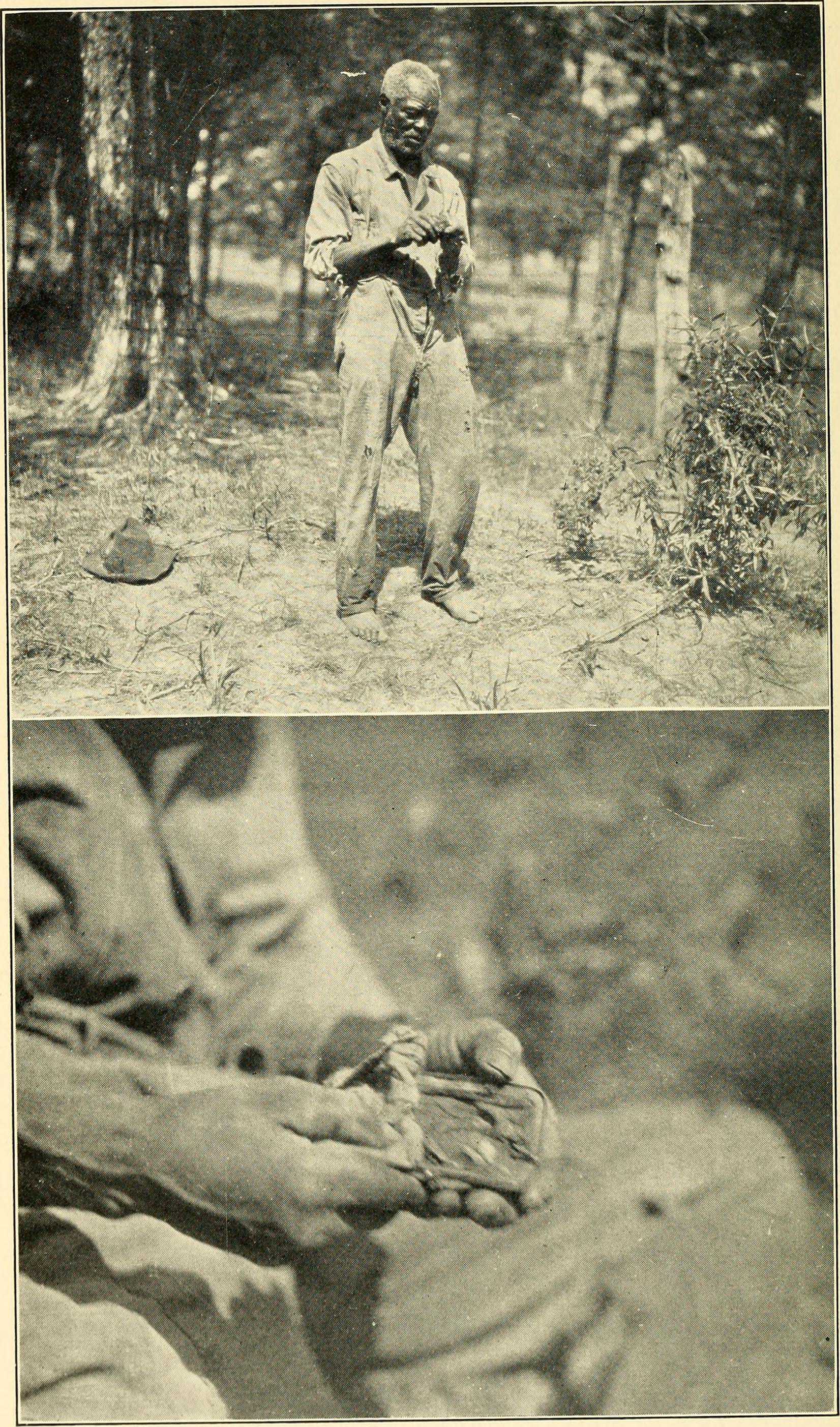
Voodoo ISM and Conjuration 283 Gambling, Debt-getting, and Other Charms. Many and varied are the practical services of conjuration. I have spoken before of the "gambHng hand" made by Ed Murphy. Another one consists of the heart taken from a Hve leather-wing chinch bat and tied to your right (card-shuffling hand) wrist where it cannot be seen. ^ "Hands" to drive off witches are common ^ — being sought from voodoo-doctors even by well educated Negroes of Philadelphia. ^ Almost every practical exigency of life is met by these charms or spells. A conjure friend of mine helped out a white man who was in love with a girl at a certain woman's college. The man wanted the girl to leave the dormitory in order to have an engagement with him. The conjurer put down nine eight-penny nails in the shape of a cofhn at the college gate and in a few minutes the girl joined her lover. Within a short time they were married. ^ Forgetful debtors may be spurred into payment by means of these tricks. ^ Dust some nails thoroughly with some powdered "shame-weed" (make debtor ashamed of not paying), dried wasp stingers ("sting his mind to moving"), and dirt-dauber's nests (make him "itching to see you"), and drive them into a locust tree in the shape of a cross (the cross "draws from all directions"). Within a very short time your debtor will come up and pay you in full. « Another conjurer simply drives five eight-penny and four tenpenny nails in the form of a cross into a tree in front 1170. 2 306. ^ Dana, M., Voodoo, Metropolitan Magazine, vol. 28 (1908), p. 535. ^258. 6 306. •91.
284 Folk Beliefs of the Southern Negro of the debtor's house. ^ One white collector frightened a Negro woman into paying a debt long past due by making a double crossmark in her yard with his umbrella and spitting into this cross. The woman quickly paid him in order to get him to "spoil out the conjure" which he did by simply erasing it with the toe of his shoe. 2 In the past, whipped slaves could bewitch their master so that his wife would feel every cut given to them, so that the master would grow weaker and weaker and finally die, and so that when he tried to whip his slaves none of the blows would touch them. ^ "GuUah Jack (one of the leaders in Denmark Vesey's Insurrection in South Carolina in 1882) was regarded as a sorcerer, and as such, feared by the natives of Africa, who believed in witchcraft. He was not only considered invulnerable, but that he could make others so by his charms (consisting chiefly of a crab's claw to be placed in the mouth); and that he could and certainly would provide all his followers with arms." * Discipline and Train-stopping. One voodoo servant in New Orleans, so her mistress informs me, maintained an absolute discipline over the under servants by means of her charms and spells. Now that she is dead the fear is gone and it is much harder to keep the same servants to their former efficiency. ^ "One voodoo doctor in Chicago was a notorious •doctor of the cult. He was known as 'Old Man.' He had under his absolute control a number of ne1258. 2 Brannon, P. A., Central Alabama Superstitions, Birmingham (Ala.) News, Jan. 18, 1925, p. 15. 3 Parsons, E. C, Folk-Lore of the Sea Islands, S. C, M. A. F. L. S., vol. 16 (1923), pp. 61-62. * Brawley B., Social History of the American Negro, pp. 135-37. 6 128.
VOODOOISM AND CoNJURATION 285 grasses. These, by his directions, infested a certain street as footpads and were the source of much trouble to the police, for their belief in voodoo rendered them wholly fearless." ^ Last summer a young Negro was telling me of a suitor who called to see the daughter of a hoodoo-woman. She lived about a mile from the station and the boy had to catch the eight o'clock train back to town. At eight o'clock he had forgotten about leaving until the train blew for the station. "You wants ter ketch dat train, doan' you.?" the old woman said. "Well doan' bother none, I'll hoi' it back twenty minutes." She cast a charm of some sort, and sure enough the train pulled In twenty min' utes late, although it had already blown for the station. ^ A somewhat similar case is afforded by that old slave, "Old Jule," who resisted every eifort to send her away by using her power to make the steamboat turn around or run backwards all night. ^ A planter found a voodoo charm or ouanga (wongah) containing three cow-peas and some breast feathers of a barn-yard fowl, all folded in cotton cloth and wrapped tightly with thread. He proposed to take it to New Orleans, but his slaves said, "Marse Ed, ef ye go on d'boat wid dat-ah de boat'll sink wl' yer. 'Fore d'lord It will.' " ^ Other Practical Applications. A cherry tree that had never even blossomed before, had to be propped up to keep it from breaking with fruit the spring after a hoodoo drove five rusty nails into Its heart, ^Dana, M., Voodoo, Metropolitan Magazine, vol. 28 (19Q8), p. 534. 2 153. ^Southern Workman, vol. 26 (1891), p. 37. * Cable, G. W., Creole Slave Songs, Century Magazine, vol. 31 (1886), p. 820.
286 Folk Beliefs of the Southern Negro and buried something tied up in a rag at its roots. ^ The power of snake charming also seems to be quite generally attributed to conjure-doctors. "One is told of who claimed that he could turn a horse to a cow, and kill a man or woman and bring them to life again by shaking up his little boxes. He could also whistle in the keyhole after the doors were locked and make them fly open." ^ In Louisa County, Va., a Negro was employed to fire a sawmill engine, but in spite of his best efforts something went wrong with the boiler. He urged his employer to lend him three dollars to go to Spottsylvania County and get a "conjur" doctor to give him professional advice as to the trouble. The doctor assured him that the engine was certainly • tricked and nothing could be done until the boiler was thoroughly cleaned, and a mysterious powder inserted before the fresh water was poured in. Naturally the mill ran well at first, after the boiler was thoroughly cleaned, and great was the joy of the fireman, but his elation was very short-lived, since the mineral deposits in the water caused the same complication as formerly. Of course the Negro did not lose faith in the doctor. He blamed other things. ^ A white man of my own acquaintance took advantage of superstition to get rid of some undesirable Negro tenants living too close to his residence. Wrapping up some chicken bones and sticks in a bit of red flannel he laid the charm on their doorstep. Before he even arose the next morning the Negroes were packing up their things to depart. ■* 1 Boyle, Mrs. V. F., Devil Tales, p. 169. ''Southern Workman, vol. 24 (1895), p. 118. 3 Earnest, J. B., Jr., The Religious Development of the Negro in Virginia, p. 136. *70.
VOODOOISM AND CoNJURATION 287 One hoodoo set a trick and caused a Negro's cow to "lose her cud." A new cud was made to the cow's great rehef, by taking "a Httle roun' bone — one what fits in a jint ef I kin fin' one — nex' I gets a piece of ole greasy dishrag an' kivers hit wid dat, tyin' hit good wid a string." ^ Preventives of Conjuration. It is a long lane from heart-winning to "cow cuds," but in almost every practical episode of life along the way conjure is operative. Evidently we have here a force, second in utility only to West African religion itself, by which mankind can (or thinks he can) achieve almost every desired end — a force which is closely interwoven with his daily life and one which deserves his earnest attention. But this power, like African religion, is not moral, but is capable of indifferently working harm as well as benefit. Thus it behooves its troopers to look to their armor as well as their arms, and we turn now to a consideration of the preventives and cures of conjuration. Fortunately this matter of armament is simplified in that for the most part one and the same substance serves alike for shield and sword. Red Flannel and Silver. Red flannel is used for and against conjuration and is an almost universal cure for "rheumatiz" (rheumatism with the Negroes includes almost every strange ache or pain, many of which are laid at the door of conjure). A voodoowoman of New Orleans - and an old Negress of Charleston, S. C, ^ wore red flannel underwear winter and summer to prevent any ill luck from conjure or rheu1171. 2 128. »187.
288 Folk Beliefs of the Southern Negro matism, while red flannel bands about the wrist are very much in evidence throughout the Negro South. Perhaps silver, however, is the most universal preventive of conjuration. A silver d"me worn about the ankle or neck or placed in the shoe will prevent any trick from exerting its influence against you ^ — this being one of the common charms given by Marie Laveau. ^ Some Negroes openly say that such a coin keeps off evil spirits, ^ showing the close association of conjuration with former fetishism. Frank Dickerson says only a silver ball will do the work (he carries one himself), ^ while others suggest a copper coin in the shoe, ^ a silver ring about the finger, or a goosequill filled with quicksilver worn below the knee. ^ In New Orleans, a voodoo-doctor advised an old Negro woman who had been poisoned to file half of a silver dime away and take the filings in her food. The other half was to be held under her tongue when she took food with her friends for fear they would poison her. ^ An old Negro cook of ours in Mississippi had much the same treatment, which is also common in Georgia. ^ Swallow a dime and you will never be conjured. ^ One Negro estimates that about half the Negroes in Columbus, Miss., use silver coins for counter-charms, either tied to their ankles or put in 1 81, 155, and 288. Thomas and Thomas, Kentucky Superstitions, p. 284 2 269. 375. *91. 'Smiley, P., Folk-Lore from Va., S. C, Ga., Ala., and Fla., J. A. F. L., vol. 32 (1919), p. 380. « Bacon, A. M., Conjuring and Conjure-Dociors, Southern Workman, vol. 24 (1895), p. 211. 7333. «Steiner, R., Observations on the Practice of Conjuring in Georgia, J. A. F. L., vol. 14 (1901), p. 179. •267.
VOODOOISM AND CoNJURATION 289 their shoes. ^ Such a dime will stay bright as long as all Is well, but if any one is trying to set a trick against you, - or if any of your friends are not true to you, 3 the silver will at once turn black. Silver seems to play a considerable part in Negro folk-lore. Ghosts may be killed only with silver bullets, 4 and the spirit may be kept in the grave by screwing the cofhn lid down with silver screws. ^ In one Sea Island folk-tale, where a woman had unknowingly married the devil and gone with him to hell, she sees her mother rise from the grave and turn to a silver knife and her father to a silver dish. ^ In one old spiritual, "Lean on the Lord's Side," there is, in reference to Daniel, one line, "De silver spade to dig his grave," ^ all of which cases show silver as a fetish metal, an association which seems, oflFhand, to be more European than African. No doubt the unusual shiny appearance of the metal is the peculiarity which first gave it this fetish quality. Pepper, Salt, and Frizzly Chickens. Red pepper is another effective and widespread charm for making and breaking hoodoo, combining sharpness of taste with the fetish color. Red pepper in the shoes, « (some say put in the heel of the shoe) ^ or hung over the door ^ " is a sure counter-charm. In one case an 1141. »13, 65, and 400. 3 289. ^306. M05. « Parsons, E. C, Folk-Lore of the Sea Islands, S. C, M. A. F. L. S., vol. 16 (1923), p. 46. M41. Allen, W. F., Slave Songs of the United States, p. 100. *112, and 141. Steiner, R., Observations on the Practice of Conjuring in Georgia, J. A. F. L., vol. 14 (1901), p. 179. * Thomas and Thomas, Kentucky Superstitions, p. 284. loSl. 19
290 Folk Beliefs of the Southern Negro epidemic of sneezing at a Negro ball was traced to red pepper In one of the dancer's shoes. ^ Possibly it Is also this fear of conjure which is at the basis of the notion that red pepper put Into new shoes will keep them from hurting the feet. ^ A red onion carried in the left hand Is also used at times to prevent conjuration and diseases. ^ Salt scattered about the house is also good. ^ This mineral should be the first thing taken Into a new house; the salt box should be set on the kitchen table (poison most likely to be set there), and salt should be sprinkled all over the entire house. ^ The New Orleans Negroes scrub their steps with powdered brick-dust to remove a conjure set there. ^ Sucking a ball of alum, ^ rubbing your limbs with graveyard dirt, ^ or "planting" graveyard dirt, ^ sweeping your house ^ " — all these are equally effective in keeping off harm from conjuration. A "frizzly chicken" is a veritable hoodoo watchdog, for with one of these on the premises a person can rest in peace; it will scratch up every trick laid down against its owner, ^ ^ but if you find one scratching about your house It Is a sure sign you have been conjured. ^ - Some suggest black cats for this purpose as well as frizzly 1 Mrs. S. P. M., Voodooism in Tennessee, Atlantic Monthly, vol. 64 (1899), pp. 377-78. 252. ' 141. Richardson, A. C, Some Slave Superstitions, Southern Workman, vol. 41 (1912), p. 248. 4 81, 112, and 288. 6 141. ^ Pitkin, Helen, An Angel by Brevet, pp. 59-60. M.S. 8 67. 9 150. i''6. 1^171, 141, and 339. Thomas and Thomas, Kentucky Superstitions, p. 284. Cable, G. W., Creole Slave Songs, Century Magazine, vol. 31 (1886), p. 821. Richardson, C, Some Slave Superstitions, Southern Workman, vol. 41 (1912), p. 248. See also, Southern Workman, vol. 24 (1895), p. 78. 12355.
VdODOOISM AND CoNJURATION 291 chickens. ^ In Africa among the Vais if a frizzly chicken Hves in a town, the town cannot burn; and it is considered good luck to eat such a chicken. ~ The Southern Negro says that such a chicken comes out of the egg backwards, ^ and is the devil's own — some Negroes refuse to kill them at all. * Horseshoes and Candles. A horseshoe always brings good luck. It keeps off ghosts, witches, or hoodoos. A hawk cannot catch a chicken if he sees a horseshoe — his legs will cross and he cannot pick the chicken up in his claws. ^ More will be said about the horseshoe later, but it is often used to protect against conjuration. ^ The horse itself seems to have a keen sense for detecting hoodoo bags. "A small red flannel bag filled with pins, small tacks, and other things, and buried under a gate-sill made a horse refuse to enter the gate. After working over the horse for an hour, the driver looked under the sill, found the charm and removed it, and the horse walked quietly in at the gate." ^ Candles, too, are regarded as a protection against spells. "Many a fire has been started by a superstitious Negro who has set a lighted candle underneath his bed." ^ Miscellaneous Preventatives. Cleaning house breaks up conjure, ^ as does also a change of home or room. ^ " 1112. 2 Ellis, G. E., Negro Culture in West Africa, p. 167. 3 298. * Davis, H. C, Negro Folk-Lore in South Carolina, J. A. F. L., vol. 27 (1914), p. 245. 5 171. * Bacon, Miss A. M., Conjuring and Conjure-Doctors, Southern Workman, vol. 24 (1895), p. 211. ^ Ibid., p. 209. 'Dana, M., Voodoo, Metropolitan Magazine, vol. 28 (1908), p. 531. ' Steiner, R., Superstitions and Beliefs from Central Georgia, J. A. F. L., vol. 12 (1899), p. 263. * " Thomas and Thomas, Kentucky Superstitions, p. 284.
292 Folk Beliefs of the Southern Negro Another Informant suggests a smooth stone worn in the shoe as a counter-charm ^ — an object employed in other locaHties as well. ^ An old slave means of avoiding conjuring in the foot was to make a plus sign (the cross again) on the inner sole of the shoe every morning before leaving the house. ^ Others suggest that a spell be broken by giving up your sweetheart or lover, or by smoke-drying a scorpion, pounding it up, and drinking the powder with whiskey. ^ A human bone procured from a grave by the person himself is a sure preventive of hoodoo, ^ and, "in excavating an Indian mound on the Savannah River, Georgia, the Negroes working, took each a metacarpal bone to protect them against cunjer." ^ Gradually the preventives became more complicated. Wear your underclothes wrongside out — perhaps a survival of the time when the single garment worn was turned wrongside out to deceive the spirits. Put saltpeter in the soles of your shoes or take two needles and make a cross with them in the crown of your hat. ' A little piece of root from the "peace plant" kept in your pocket or worn in the shoe is good, ® as is also the root from "Betsy bug's heart," when it is kept in your pocket with some silver money. An old conjurer showed me some of this — the silver had turned black as if it had been scorched, but it is said to keep off 1141. 2 Bacon, A. M., Conjuring and Conjure-Doctors, Southern Workman, vol. 24 (1895), p. 211. 2 Richardson, C, Some Slave Superstitions, Southern Workman, vol. 41 (1912), p. 248. * Thomas and Thomas, Kentucky Superstitions, p. 284. 691. *Steiner, R., Observations on the Practice of Conjuring in Georgia, J. A. F. L., vol. 14 (1901), p. 178. 754. 8 141.
VOODOOISM AND CONJURATION 293 every trick in tlie country. ^ Salt, red pepper, and saltpeter, mixed together and sewed up in red flannel, make a good counter-charm against handicapping. ^ *'A bag, made of red flannel, filled with nails, lodestone, and hair will ward off the devil" ^ — that is to say, one great purpose of "hands" is to protect against other "hands." One Negro servant took some hair from the children of the household and wrapped it about the prongs of a forked stick. She would spit on this and twirl it about a couple of times to ward off possible harm. * In conclusion, I cite a few random practices told me by a Mississippi informant, showing the bizarre methods sometimes used. Sprinkle pepper on some fresh rabbit brains and eat them raw. You will then be as lucky as Brer Rabbit and will be able to step over every trick just as he does. Or mix some mutton suet with powdered bluestone and quinine. Rub this salve on the bottom of your feet every morning before you go out and no one can ever harm you "because "de lamb am so innocent." Else dry out a piece of fresh beef gall in the kitchen. On the first of each month cut off a piece about the size of a pea, roll it in flour, and swallow. No one can conjure you for that month (possibly because the bitter gall drives off spirits). If you want to put things in your shoes, cut a piece of newspaper exactly to fit the sole of your shoe and slip it into place. Sprinkle nine grains of red pepper on top of it. No hoodoo can ever harm you, because he would first have to count every letter on the paper and by that time you would be gone. * 191. 254. 3 405. ^404. ^41.
294 Folk Beliefs of the Southern' Negro Diagnosing Conjuration. Conjuration, naturally, is susceptible to diagnosis and treatment. Some of the symptoms have already been considered. These, of course, are observed, but often a person is warned of attempted hoodooing in a dream. If you dream about a rattlesnake, the conjure-doctor has put something down for you; if the snake tries to bite you, but does not succeed, you have escaped the trick laid down; a rattlesnake indicates dangerous conjure, a little chicken snake in a dream, only slight sickness. If the snake is curled up ready to strike, the conjure-doctor is very angry with you, but if the snake is lying down quietly, the conjure-doctor is just thinking of you. ' This identification of the snake with the hoodoodoctor (or with an enemy, as is most generally the case) may be of significance, since there is at least the possibility that while the snake has been dropped from actual voodoo worship, yet he still remains as a dream symbol of danger. Besides these dream warnings "some Negroes are said to be able to find 'hoodoo tracks' in ashes of the fire, which show that some kind of disaster is coming to the house." ^ Finding the "^Hand.^^ The actual diagnosis is made by observation of the symptoms or by putting a piece of silver into the hand or mouth of the sufferer. If the silver turns black there is no doubt that the person has been conjured. ^ Since the livelihood of the "doctor" depends upon giving treatments, at least an attempt is made to convince every patient that he is tricked and needs special treatment. Sometimes 1 Southern Workman, vol. 27 (1898), p. 37. 2 Thomas and Thomas, Kentucky Superstitions, p. 285. 3 Bacon, A. M., Conjuring and Conjure-Doctors, Southern Workman, vol. 24 (1895), p. 210.
VOODOOISM AND CONJURATION 295 the conjure-bag is located and destroyed as a method of treatment — a feat not so difficult since it is often the conjurer who has himself buried the bag. "An old man once was ill with palsy, as they thought, and after spending much money employing medical doctors and getting no relief, he was advised to change treatment. He employed a conjurer, who came with his 'walking boy' (a bottle with a string tied to its neck, deeply colored, that you may not see what the doctor puts in it — something alive, you may know, which enables it to move or even flutter briskly, and this makes you certain of whatever fact the doctor is trying to impress) in hand, ordered a man to bring a hoe and dig where he would order him to, that he might earth up the thing that caused the man's illness. After he had walked over and around the yard several times with the 'boy' suspended, it was thought by many that he would not be able to find the buried poison, but as they were about to give up their pursuit, the 'boy' fluttered and kicked as though he would come out of the bottle. Then the doctor ordered the man to dig quickly, for the 'trick-bag' was there. On the order being obeyed the poison was found. It was rusty nails, finger and toe nails, hair and pins sewed up in a piece of red flannel." Strange to say, the patient soon recovered. ^ "The blood of a fat chicken is supposed to be the best possible locator of tricks, though a duck, or even a turkey at the season would not be despised. The fact that the fowl afterwards serves as a savory meal for the impecunious 'doctor' may, to some extent influence the choice. The chicken is duly killed and some of the blood sprinkled in the ^ Cures by Conjure-Doclors, Southern Workmari, vol. 28 (1899), p. 315.
296 Folk Beliefs of the Southern Negro palm of the left hand of the doctor. With the forefinger of the other hand he strikes the blood, and the direction in which the blood spurts is supposed to locate the 'trick.' " ^ At other times cards are cut to locate the conjure-bottle, and in one case after the roots were found the conju re-doctor took a flat-iron and drew on a piece of brown paper the image of the person who put the roots there. ^ In still another case an old man was able to tell a woman exactly the spot in her yard where the trick was buried without even visiting the place, which was twelve miles away. ^ '^Turnin'' de Trick. ''^ If the person desires, the trick may now be turned against the person who planted it. Ed Murphy did this by laying the trick he had discovered in a piece of paper, sprinkling quicksilver over it, and setting the paper on fire. The trick exploded and made a hole in the ground a foot deep as it burned up — his enemy soon died. * "It is said that if any one tricks you and you discover the trick and put that into the fire, you burn your enemy, or if you throw it into the running water you drown him." ^ One Negro tells me of how his father left the house because needles and red flannel had been buried beneath it. "He should have thrown sulphur about the house, or, to turn the trick against the one who set it, have thrown it into running water." ^ Hattie 1 Davis, D. W., Conjuration, Southern Workman, vol. 27 (1898), p. 252. 2 Bacon, A. M., Conjuring and Conjure- Doctors, Southern Workman, vol. 24, p. 211, and 225-26. 3 Ihid., pp. 210-11. < 258. * Bacon, A. M., Conjuring and Conjure-Doctors, Souther?i Workman, vol. 24 (1895), p. 211. (Giving several illustrative cases.) 6 57. See also, Owen, M. A., Among the Voodoos, I. F. L. C. (1891), p. 244.
VOODOOISM AND CoNJURATION 297 Harris, with her seemingly Inexhaustible lore, cites several means by which a trick may be turned against a person, or whereby the original conjurer may be discovered. Sweep off a clean place in the back yard and on that clear spot leave a rooster and two hens under a clothes basket all night. Next morning collect their droppings and put them into a bott e of water, leaving it in a "careful place" for three days. Then go at night and make three crossmarks on the door of the person whom you know has tricked you. The trick will be turned against him In less than three days. If the conjurer Is a woman, a simpler way of turning the trick on her Is to get some of her fresh menstrual bandages and bury them in the cemetery on the breast of a grave. To discover who has tricked you get some clay from the outside of one of those old-fashioned stick-clay chimneys on the north side of a cabin, and beat this clay up with bluestone. Every morning for nine mornings take a pinch of this mixture and throw It towards the east. The person who set the trick will come and tell you that some one else had set It, but you will know that person to be guilty. To drive the conjurer out of town, make up a hickory fire and let It burn down to coals. Take up two live coals on a shovel and lay one dead coal aside by Itself. "When de roostah crows for midnight (dat is de end uv day) chunk one piece uv de live coal (dat is yo'self) towards de souf (towards de warm country); throw de odder live coal to de east (nutthin' kin git obber fiah); an' throw de daid coal (dat's yo' enemy) towards de norf (dat's de col' country). 'Fo de week be out he'll be a-leavin' dese parts." In case it is not known who set the trick, the
298 Folk Beliefs of the Southern Negro guilty one may be forced to confess by the same procedure except that the coals are to be thrown at ten o'clock instead of midnight — the dead ember to the north and all the others to the south. "You turns de trick on him dis-a-way an' you's sho boun' ter hear f'um him." ^ Curing the Conjured. "Hoodooed persons sometimes can be cured by a medicine the doctor gives them, or by doing some kind of queer things that he tells them to do." - A tea, so one informant says, made of the lining of the gizzard of a frizzly chicken pounded up with "prince's feathers" {Amarantus hypochondriacus, I think) will relieve a trick every time. ^ If you can whip the person who hoodooed you with a piece of grapevine (Hattie Harris says bring the blood with a rattan stick) you'll break the spell. Mrs. Boyle writes: "We had a cook who had a lizard in her arm and kept a piece of grapevine all summer behind the door in the kitchen, 'Layin' for de 'oman who 'dooded her.' " ■* Others say you must knock the blood out of a hoodoo to prevent him from harming you ^ — the same belief is found in Lancashire with reference to witches. « "If the pain is in your limbs make a tea or bath of red pepper into which put salt and silver money. Rub freely and the pain will leave you. If sick otherwise, you will have to get a root-doctor, and he will boil roots, the names of which he knows, and silver together, and the patient must drink freely of this, and 1141. 2341. For illustrative cures, see Bacon, A. M., Conjuring and ConjureDoctors, Southern Workman, vol. 24 (1895), p. 210. 3 141. M2. 6 61. * Lean's Collectanea, vol. 2, p. 444.
VOODOOISM AND CONJURATION 299 he or she will get well. The king root of the forest is called 'High John, the Conqueror.' All believers in conjurers quake when they see a bit of it in the hands of any one," ^ Fish-bone is also good for cunjer when swelling has occurred. - A cure, which my informant tells me was derived from the Indians, consists of clay from around the mouth of a crawfish hole, mixed with dirt from a red ant's hole and thoroughly wet with whiskey or camphor. To this add water in which angle-worms have been boiled. Rub the conjured person with this and his trouble will soon vanish. ^ "May-butter" * (made on the first day of May), mixed with saltpeter and the yolk of an egg, and rolled into small pills, will cure any case of poisoning (conjuring). Its power lies in the fact that "de cow bites off de top an' bottom uv ebby herb dat grows in de woods an' in May-butter you gets de bes' uv ebby plant." ^ In England it was used as a salve to cure various grievances. ^ Another informant says to get nine needles, nine brass pins, and nine hairs from your own head. Cork these up in a bottle with some of your urine and set the bottle in the back of your fireplace. "Den earnes'ly ax de Lawd ter help yer obbercome dat trick what's sot agin' you." When the bottle bursts, all your ailments will leave you. "^ Water in which silver has been boiled is effective in most cases. ^ In another 1 Remedies to Cure Conjuration, Southern Workman, vol. 28 (1899), p. 112. 2 Steiner, R., Observations on the Practice of Conjuring in Georgia, J. A. F. L., vol. 14 (1901), p. 179. 3 141. M55. 6 91. * Lean's Collectanea, vol. 1, p. 362. M41. 8 150.
300 Folk Beliefs of the Southern Negro case my informant claims the hoodoo-doctor gave a conjured woman a little bundle of sticks (roots) with the instruction to wet them every morning and pray to the sun, asking the Lord to take away the spell. ^ Cases like this are rare and may indicate the last remnants of a former African sun-worship. ^ Again the conjure can be relieved only by catching the cat from which the conjurer obtained the hairs used in setting the trick; 3 while the New Orleans Negroes sometimes dispose of the little voodoo coffins by throwing them, together with fifteen cents, in the middle of the river and calling upon "grand Zombi." * The Power of Faith. It is hard to convey to the modern materialist the intense reality of voodoo beliefs to the average illiterate Negro. The astonishing thing to those who are not acquainted with the almost unbelievable actuality of the spirit environment to primitive people is the fact that voodoo so often works. Reputable physicians everywhere recognize the power of faith in human affairs, and it is due to this overpowering belief in conjuration that the hoodoo-doctor so often accomplishes what he sets out to do, whether it be witching things into, or witching things out of a person. Dr. William S. Sadler, Sr., attending surgeon in one of Chicago's larger hospitals, writes: "I have come to look upon a sincere religious faith as a natural cure for nerves. So far as this curative role is concerned, the creed, faith, or religion is not as important as it is that the patient should wholly and sincerely 1 405. 2 Ellis, A. B., Ewe-speaking Peoples, pp. 31-71. ^Atlanta Constitution, Nov. 1885. Quoted in J. A. F. L., vol. 3 (1890), pp. 281-82. * Pitkin, Helen, An Angel by Brevet, pp. 181-82.
VOODOOISAI AND CoNjURATION 301 believe in it. It is the patient's faith that cures, not the shade of doctrine to which he has given his spiritual allegiance." ^ And, in another place, "there is only one method by which any outsider can work a cure, and that is through the mind of the (neurotic) patient. If he can make the sufferer have faith that he is going to be cured he will be cured; and it won't make any difference whether it is done by sugar pills, a surgical operation, baths, massage, or standing the patient on his head in the corner! It is the patient's faith in the method, not the method itself that will heal him.... I have achieved many cures in this fashion myself." ^ While we do not fully understand the psychological processes involved in such cures, yet the power of faith is recognized by the medical profession, and with the Negroes I am convinced that in a great many cases such cures do actually occur. From this viewpoint voodoo would seem a sort of primitive faith-healing or faith-harming, admirably adapted to the needs and temperament of the illiterate Negro. The Negroes themselves recognize this fact. Many of them have told me, "W'ite folks, hoodoo cain't tech you ef you doan' believe in hit, but hit sho' lam's de gizzud out uv you ef you does believe." Faith in the remedy actually hastens the cure — whether the remedy be a scriptural promise or a hoodoo charm — and faith in the harmful produces, to a certain extent, the harmful, as when a person, believing in the power of snake-dust put into his food, begins to feel actual symptoms of snakes growing within him. In my own 1 Sadler, Dr. William S., Ways to Work Out Your Own Mind Cure, Amer can Magazine, vol. xcviii (1924), p. 129. 2 /bid., p; 41.
302 Folk Beliefs of the Southern Negro conjuring experience I have seen one old Negress definitely helped by a "hand" I gave her to cure chills and fevers; another relieved (so she testifies) of rheumatism; and a third, a bashful swain, given more courage in courtship. In the case of this love charm, given to the retiring "Simp," there was a rather interesting sequel. My brother writes that "Simp" had a quarrel with one of the Negro workmen who "cussed him." Whereupon "Simp" drew out his red flannel love charm and made a crossmark upon his opponent's arm, telling him that he was "marked for life." His enemy had faith in the power of "sech doin's" and left the place running. He has not yet returned. ^ Again, the principal of a Mississippi Negro school writes me: "Some years ago a young woman on the place, I presume she was twenty-one, came in great agony and wanted us to release her from a spell she supposed her grandfather had thrown over her to make her do what he wanted her to do. I argued with her, telling her that he could have no power over her except as she allowed him to have. That it was all in her own mind. But she would not be convinced and went away in great agony." * Such examples illustrate clearly the power of faith in hoodoo, and I will now cite some typical cases obtained from my own informants, showing the potency of the healing touch of this great physician. Reptiles Removed. One of the plantation Negroes near Columbus, Mississippi, had a terrific backache. The "horse" told him that he had a snake in his back. Laying the man on his stomach (so that he could not 1287. 220L
VOODOOISM AND CONJURATION 303 see him) he made some cuts on his back and pretended to extract a small green snake. To this day the Negro believes that the snake was taken from him — but, best of all, he immediately recovered and went back to work. ^ In West Africa, in one case of illness, the fetish-doctor made several incisions on the breast of the patient, and after a series of howls and incantations, applied his lips to the incision and sucked out of the body of the patient those objects which had been witched into him. When such objects as goat's horns, roots, pebbles, broken pottery — all entirely out of place in a human anatomy — had been removed the patient was left in a fair way to recover. ~ A New Orleans Negro "ate, ate, ate," all of the time. He had reptiles in him — could see them running up and down under his skin. He had to eat a lot to keep the snakes from eating him, but with all his eating he dwindled down to skin and bones. The conjure-doctor had him hold out his hand and on the back of it he stuck a little "picture-stamp" face downward. Although the boy had been able to sleep but little before, he now fell into a deep slumber. When he awoke he began to eat heartily. The doctor came and pulled the "stamp" off the back of his hand, rubbed him a little, and made the sign of the cross on his breast. The boy vomited up several snakes and from that time on was perfectly well. ^ A colored minister tells me of a woman who thought she had lizards running up and down under her skin. "Dar hit goes! Dar hit goes!" she would cry and go into a frenzy tearing at her arm or leg. A Negro 1348. 2 Milligan, R. H., Fetish Folk of West Africa, p. 223. 3 54.
304 Folk Beliefs of the Southern Negro hoodoo-woman was called in. This woman already had a lizard hidden in her sleeve, and, waiting for the frenzy to come upon the patient, she gently massaged her arm, pretending to work the lizard down the patient's arm to the finger-tips. Then she gave a sudden fling and "slung de lizzud outer her sleeve out on de flo.' " "Dar hit goes! Dar hit goes!" the curious onlookers cried, and fled. The woman was from that moment cured. ^ A young Alabama doctor was treating a woman who thought she had "something alive" in her stomach. He met with no success and finally turned the matter over to an older doctor who understood better the beliefs and prejudices of the Negro. This canny doctor gave the patient a large dose of powdered ipecac and when she began to vomit, let fall a live frog. 'Tt fell with the vomitus, hopping out of the receptacle and as she saw it, she began to shout, 'Thank God, thank God! I knew it was down there!' and heedless of the fact that she was soiling her floor, vomiting as she scampered around, she did not stop until she had caught the frog, which she preserves to this day to show her friends what came out of her." She was at once cured. ^ When the Negroes of one Mississippi slave-owner were conjured and their limbs swelled he advised them to hold their limbs in smoke made by burning wool from a black sheep. In almost every case they speedily recovered. ^ "Uncle Poosa" of Alabama — a slave brought directly over from Africa — conjured the other Negroes with pieces of snake skins, bits of kinky, wooly hair and 1103. "^ 397. For a similar case in Virginia, see Earnest, J. B., Jr., The Religious Development of the Negro in Virginia, p. 137. "345.
VOODOOISM AND CoNJURATION 305 Other things. While such practices by a native African point directly towards an African origin for hoodoo, yet in almost every case the would-be evil was checkmated by "bread pills" handed out by the owner of the slaves. ^ Hoodooing for Science. Dr. H. Roger Williams of Mobile, Alabama, tells me of an interesting experience of his in this connection: "Not many miles from Mobile I was called to treat a man who was suffering from an abscess of the knee, resulting from an injury of long standing. Seeing that there was nothing to do but hasten suppuration and apply the lance, I administered to the patient, giving instruction as to what must be done in the interval of my coming back on the morrow. When I returned the following morning, I found the house crowded with eager, anxious watchers. I redressed the limb, noticed the solemn headshaking of doubt expressed by many of those gathered, and as I emerged from the house, saw one reverendlooking gentleman standing at the corner of the house, whom I knew to be none other than a hoodoodoctor, especially invited to come and examine the patient by sympathizing friends. I made no comment, but knew that it would take at least three or four days for me to prove that scientific treatment would cure the patient, and the question confronting me was, would not that hoodoo-doctor step in at the psychological moment, and, opening the abscess by pressure, substantiate his claim that the patient's Illness was unnatural. 1407. 20
306 Folk Beliefs of the Southern Negro Something must be done to offset the hoodoodoctor. I set my brow to thinking, and a solution was made that afternoon. I had a patient whose brother had been given as a Christmas present a game called 'Tumlin,' consisting of a board through which was a number of holes, together with two aluminum capsules in each of which was a lead marble. Slanting the board and allowing the capsules to be placed at the top, the weight of the lead marble would roll to the lower end of the capsule, causing it to roll over continuously until it either rolled off the board or into one of the holes. I gave the boy the full price of his whole toy, just for one of the capsules and its contained marble. With the lead marble In the capsule I saturated a piece of flannel cloth with some oil of mustard, beat up some garlic into a pulp, wrapped the garlic in the flannel cloth around the capsule, rolled the wet cover In powdered red pepper, and securely sewed all In another flannel cover of red. When I went to see my country patient the next day as usual, the crowd watching entered the sick room as soon as I did. Walking straight to the bed of the sick man, I threw the 'jack,' for such they are called, into the bed. With the momentum from my hand, together with the constant motion of the excited patient, the jack kept jumping first in one direction, then In another, to the consternation of all present. By the time I could sit down by the bed and get my jack, excitement had reached a high pitch. Without a smile, I said to the sick man, 'This is the only living jack in this section of the country. It has more power and more life than any jack to be found. Keep it under your pillow. Three times a day, take it thus.
VOODOOISM AND CoNJURATION 307 and rub it between your hands.' Here I, pressing the jack between his hands that the odor of the things beneath its coverings could ooze through, ordered him to rub his hand across his breast and near the portion of his leg where I had the poultice. As a matter of course this gave him a smarting sensation everywhere his hand touched, and all the crowd stood awed at what they beheld. 'Now! said I,' talking to him in confidential tones, just loud enough to be heard, 'there are a great many people who are going around the country trying to sell jacks, but if any of them come here and touch your bed, I will know it when I return tomorrow, for they will neither be able to tell it or see what happened to them!' So saying, I dressed the knee and took my departure. From that day, I am told, that hoodoo-doctor had never been seen in that neighborhood. Thus I, having run him off by outdoing him with his own tricks, was left free to draw the abscess to a head, lance it and get the patient well. After the patient had thoroughly recovered, I cut the covering from the jack, exposed my little trick that had so baffled the 'God-given wisdom' of the hoodoodoctor, and from that day to this, that community has no belief in the foolishness of hoodooism." Headaches, Bites, and Hoodoo. Ed Murphy, so another Negro told me, was passing a house one day when a Negro woman called him in to give her something for her headache; Ed simply put his two hands on her head and her headache immediately vanished. ^ I asked Ed about this. He replied that it was absolutely true. It seems that there are two parallel seams (sutures) running broadways of the top of the 1 153.
308 Folk Beliefs of the Southern Negro head — one near the front and one near the back — and one seam running lengthwise along the middle of the head. Headache Is caused by these seams getting too wide. To cure it, simply take the hands and press the seams back together, pressing first from front to back and then from side to side. This is how he cured that woman. ^ A reliable Negro servant at home tells me of how her child was bitten by a bluegummed Negro, a bite which is generally considered fatal. She went into the hen house and got some fresh, green chicken manure which she rubbed on the place where her child was bitten. The child was not harmed, but every tooth in the blue-gummed Negro's head rotted out. ^ In another Mississippi town a Negro girl employed by a reputable white family was hoodooed by a jealous rival. She lay sick in bed and her employer sent a white doctor to see her. The doctor reported that he could not do a thing for her because she had made herself believe that she was going to die, and unless she got the notion out of her head she would die. A Negro workman advised her employer to consult a hoodoo-doctor in the locality, who, he said, could take off any sickness for five dollars. On coming to the home, this conjure-doctor looked at the girl, lay down in the path and rolled over and over on the ground towards the steps, muttering to himself. Then he called for a shovel, saying that the hoodoo was by the steps. Digging In the earth he located a bottle filled with horsehair, old teeth, and rags. He took the charm and told the girl she was safe and would get her lover back. Next morning the 1258. 2342.
VOODOOISM AND CoNJURATION 309 sick girl called for a hearty breakfast and was soon at work again. ^ In another case, so I am told, a woman was sick with fits. The regular doctor did her absolutely no good. A conjure-doctor came and gave her some medicine,, saying that she would soon ask for the very food that had poisoned her. She woke up next morning and asked for turnip greens and corn bread. After giving her some more medicine she got completely well. ^ Fooled to Life. Finally, there is one remarkable case told me by a white plantation owner near Columbus, Miss., a case which illustrates clearly the results of faith in the conjure-bag, and which shows that it is the faith, and not the materials making up the conjurebag, which is the important factor. A Negro woman on his plantation thought she had been tricked. For a long time she had lain in bed without showing any improvement, and it seemed that she was about to die. As a last resort the planter got some skin from a turkey's knee (a scaly covering looking like a snake skin) and tied it up in a red flannel bag along with some hair and lodestone. He visited the sick woman and, without being seen, slipped it into a chink above her door. Then he suggested to one of her friends that the conjure-bag might be hidden about the room. A thorough search brought the bag to light. Great was the anger against the supposed conjurer and great the rejoicing that the bag had been found. The bag (along with $S) was taken to a "horse" to have the spell removed. Within three days the woman was up and about, and great was her amazement when the 1171. U57.
310 Folk Beliefs of the Southern Negro subterfuge was revealed to her about a year later. ^ These cases, which could be multiplied almost indefinitely, - show clearly the grip of superstition upon the Southern Negroes. Conjuration is constantly having a hand in the practical affairs of life. Reserving further analysis for a later connection, we merely call attention to the fact that the African influence greatly predominates over the European, a fact quite in keeping with our earlier conclusion that dissimilar beliefs either remain intact or are entirely eliminated. 1348. 2 See, for instance, Smiley, P., Folk-Lorefrom Va., S. C, Ga., Ala., and Fla., J. A. F. L., vol. 32, p. 379. Bacon, A. M., Conjuring and Conjure-Dociors, Southern Workman, vol. 24 (1895), p. 210. Packwood, Mrs. T. H. C, Cure for an Aching Tooth, J. A. F. L., vol. 13 (1900), pp. 66-67. Bergen, F. D., Concerning Negro Sorcery in the United States, vol. 3 (1890), p. 282. Mrs. S. P. M., Voodooism in Tennessee, Atlantic Monthly, vol. 64 (1899), p. 375 ff. McCullough, J. E., The Human Way, p. 59.
CHAPTER V POSITIVE CONTROL-SIGNS MINOR CHARMS AND CURES Distinction Between Signs and Hoodoo. The length of the past two chapters on conjuration should not be taken as an index of its relative importance, since it was only by dint of patient investigation that the facts presented were scraped together. While hoodoo is possibly the most picturesque form of Negro occultism, yet an exact knowledge of its usages is restricted to a relatively small number of persons, chiefly men, although women are not entirely excluded. "Signs," on the other hand, constitute the largest body of Negro magical beliefs and number among their devotees mainly women, although men are by no means counted out. "Signs" are generally what a person is thinking of when he speaks of Negro superstitions, although the term as used by the Negro is somewhat more inclusive than the English term "omens," taking in not only omens but various small magical practices and taboos as well. The distinction between hoodoo and "signs" is not clear-cut even to a Negro. Perhaps it lies more in the number of adherents than in any inherent quality (hoodoo being more exclusive), though as a general rule the hoodoo charm is more complex. Again, few of the conjuration spells seem to have exact European parallels, while many or most of the signs seem to be of European origin. This is quite to be expected, although not
312 Folk Beliefs of the Southern Negro generally recognized by those whites who poke fun at the Negro because of his so-called "African superstitions," since the Negro women, who are the chief bearers of these European beliefs, were the ones most closely associated with the household life of the Southern planter. Naturally the Negro mother would hand down these beliefs to her children, and mainly to her girls, who were more closely connected with her in the home and to whom the beliefs, dealing largely with things connected with household work, were more appealing, I once heard a Negro preacher remark: "Some folks sez er 'oman haint got no place In de secret society; but, Lawd, de 'oman's laundry's on de outside er dat man in dere an' her cookin's sho In his insides." He might have added also that the woman's superstitions were in the head of that man in the lodge. Positive and Negative Control-signs. In spite of these distinctions, however, signs and hoodoos agree in that both, for the most part, are beliefs in causal relationships which modern science shows to be incorrect. Some of these signs which allow of human control are positive In nature; that is, they indicate methods by which an individual may obtain desired results. Thus, "If you bite a butterfly's head oflf you will get a new dress." Other directed or domesticated signs are negative In type. They Indicate unhappy results which are to be avoided, constituting in reality a set of taboos. 1 An example of this class is: "If you point at a grave your finger will rot off" — a statement which Is really a warning not to point at graves. Many of 1 Compare with Frazer's "negative magic." See The Golden Bough, p. 19.
Positive Control-Signs and Cures 313 the former type are classed simply as good luck signs, while those of the latter are often indicated as bad luck. The formula I have derived for all of these ^'control-signs" is: "If you (or some one else) behave in such and such a manner, so and so will happen" — a formula applying to conjuration as well. Prophetic Signs. Further removed from conjuration and for all purposes identical with our English signs or omens, are those undomesticated causal relationships in which the human individual has no free play. Thus "if a dead tree falls when the wind is not blowing, it is a sign of death." Here man has no control and submits helplessly to the decrees of nature. This large class of "prophetic signs" includes, mainly, omens of good and bad luck, weather signs and dream signs, and the general formula is, "If something (outside of your control) behaves in such and such a manner, so and so will result." In the present chapter those causal relationships will be considered which are positive in type, subject to human direction, and which result in good luck, although I shall from time to time break the classification for the sake of assembling together all the beliefs clustering around certain specific objects. Charms and A?nulets. Prominent among these positive beliefs is the idea that the wearing of certain charms or amulets about the person will produce desirable results of all kinds. Of course the "hand" or "trick" falls in this class, but, as I have said before, its use is restricted to few persons relatively, while those other amulets have a widespread distribution. A leather strap worn about the wrist, ankle, or waist
314 Folk Beliefs of the Southern Negro will give a person strength;^ relieve rheumatism or a sprained wrist; ^ or, worn about the neck, prevent whooping cough. ^ In Africa, the mother ties a string around the waist of her child as a fetish for health. * A buckeye carried in the pocket will surely bring one good luck, ^ as will also mole-paws worn around the neck. ^ The silver coin, so effective in warding off conjuration, is equally effective in bringing good luck when tied around the leg ^ or worn in a necklace about the neck. ^ A silver ring is also efficient, as is also a ring made of a horseshoe nail or a ring with Chinese writing on it ^ — all of which I have seen worn by Mississippi Negroes for this purpose. The red foot of a jay bird kept on the person is said to achieve the same result. ^ ° Nutmeg worn about the neck is said to be very lucky. ^ ^ Sometimes the globular head of the femur of a pig will be kept for good luck; ^ ^ at other times the little ball growing on "he-garlic" is carried with the additional admonition to eat as much garlic as pos1174. 2.57, and 141. 3 Bergen, F. D., On the Eastern Shore, J. A. F. L., vol. 2 (1899), p. 296. ^ Milligan, R. H., The Fetish Folk of West Africa, p. 220. * 274, and 288. Southern Workman, vol. 35 (1905), p. 635. (Ohio Whites). From time to time we will indicate where Negro beliefs, not definitely known to be of Enghsh origin, are found among the whites of Northern Ohio. The settlers in this section of Ohio are mainly of New England extraction and have had relatively Httle contact with the Negroes, thus giving a strong presumption in favor of an European origin, for that particular belief. The informant in all cases is Mrs. N. N. Puckett, Willoughby, Ohio. 6 153. Bergen, F. D., A7ii7nal and Plant Lore, M. A. F. L. S., vol. 7 (1899), p. 12. 7 357. * 141. Pendleton, L., Notes on Negro Folk-Lore and Witchcraft in the South, J. A. F. L., vol. 3 (1890), p. 203. 9 341. 1 « Ibid. 1 1 189. »2 141. Bergen, F. D., Animal and Plant Lore, M. A. F. L. S., vol. 7 (1899), p. 12.
NUTMEG, RED FLANNEL, AND SILVER
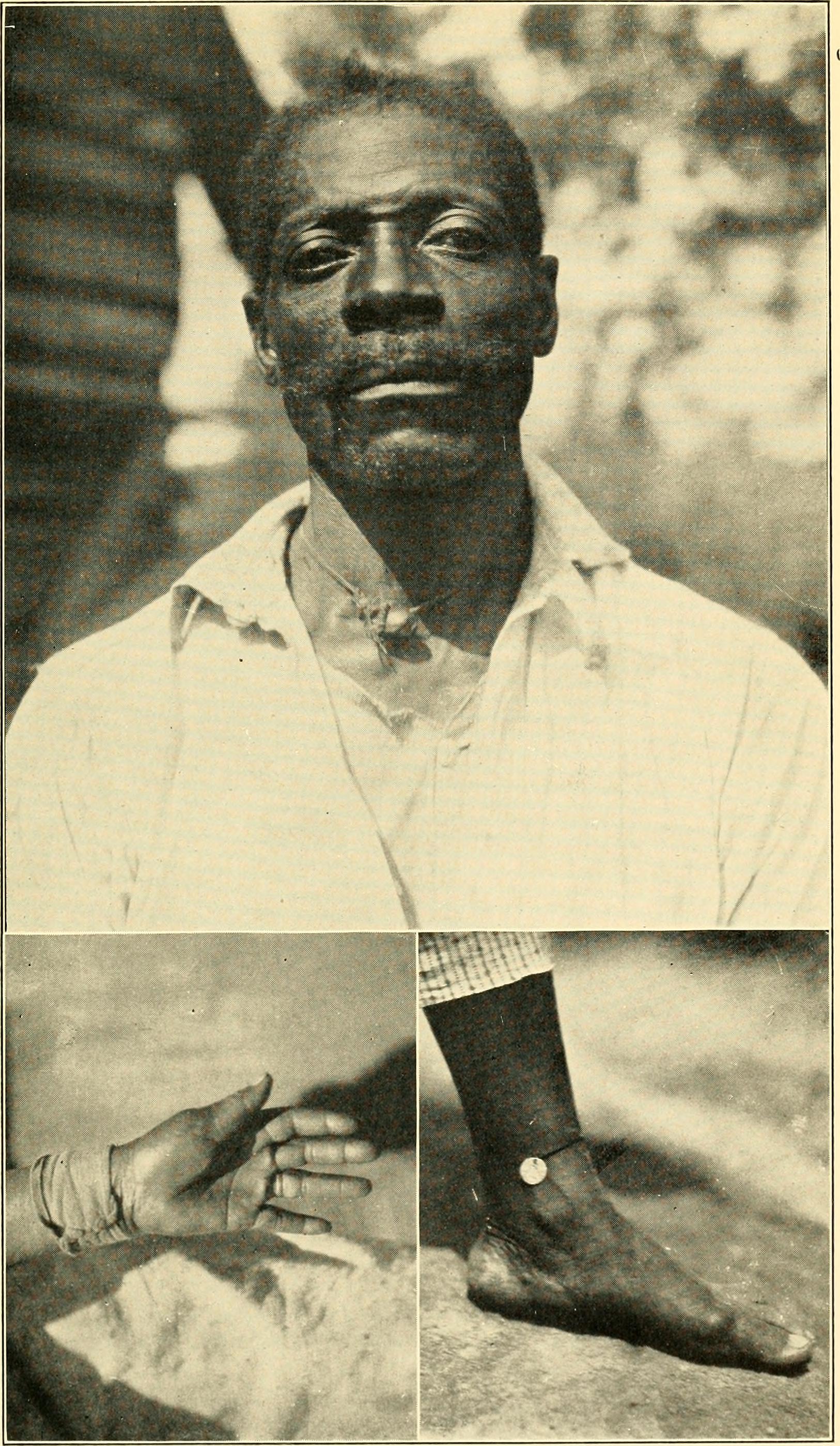
Positive Control-Signs, and Cures 315 sible. * Whoever carries the right eye of a wolf fastened inside his right sleeve remains free from all injuries, ^ and an Irish potato in the pocket keeps off harm ^ as well as cures many diseases. At times the peculiar nature of the charm is so evident that one almost senses the primitive idea of an indwelling spirit, although this idea in most cases is not clearly acknowledged by the Southern Negro. Thus a black stone with natural lettering on it is very lucky, ^ as is also the "swimming bone" (that bone which will float when dropped into water) of a frog. ^ An antique dealer in New Orleans showed me an old Egyptian lamp with which he has much amusement with the Negroes. He would tell them that if they prayed to it they could get what they wanted. The Negroes believed him absolutely and considered it a very valuable relic. ^ One old conjure-doctor in Mississippi told me that the Indian arrowheads often found in the locality were not made by man at all, but were fashioned by God out of thunder and lightning. To use one for good luck, strike a spark from it with your knife (if the sparks fly readily you will know that you have a good knife) and let the spark fall upon a piece of powdered punk. Let the punk smoulder into ashes, which are to be wrapped in a piece of newspaper and carried with you always for good luck. ^ Of the rabbit's foot and horseshoe charms I shall have more to say later, but they are often used 154. 2 241. 3341. ^ Owen, Mary A., Voodoo Tales, p. 68. 6 Owen, Mary A., Among the Voodoos, I. F.L. C. (1891), p. 234. 6 269. ' 258.
316 Folk Beliefs of the Southern Negro in composite charms as where a rabbit's tail, a piece of red pepper, and a mole foot are worn about the neck for long life and health; ^ or where the left hind foot of a graveyard rabbit, a buckeye, a horse chestnut, and a luck bone from a pig ham are put together for good luck ^ — this class, of course, approaching more nearly conjuration, but of possibly too widespread acceptance to be classed under that head. Negroes actually use these charms a great deal. Continued use dulls the idea that there is anything mystical or magical about them and they are not generally regarded as part of the dreaded hoodoo. In fact, hoodoo beliefs derive much of their power from the fact that they represent the unusual; something not clearly understood and used by every one. Perhaps many "signs" are products of the conjurer's imagination standardized by group usage. Animal Taming. The common way of keeping the dog or cat at home is to cut the tip of his tail off and bury it under the doorstep. ^ Others say that hair cut from the tail and buried is sufficient, ^ while others suggest putting the hair between two sticks before burying it. ^ Hair from the top of the head and the end of the tail, buried at the door facing the east, will make the animal return even if he has been stolen. ^ Others suggest wearing a meat skin in the bottom of your shoe for two days and then feeding it 1240. 2 150. 3 155, 288, and 340. <9. ^ 141. Davis, H. C, Negro Folk-Lore in South Carolina, J. A. F. L., vol. 27 (1914), p. 247. 6 204.
Positive Control-Signs, and Cures 317 to the cat; ^ dipping all four paws of the animal together into a tub of water and then throwing him on the bed; ^ or buttering the paws of the cat, which animal will then remain to lick the butter off. ^ The latter usage seems to be of European ^ origin. Again the Negroes will put sugar in the animal's food to achieve this result, ^ while urine ("chamber-lye") put in food or drink and given to a wild animal will immediately tame it; or, given to a person of the opposite sex, will at once win his love. ^ Somewhat diiferent is the Negro idea of scratching the back of the chimney with the cat's front feet and then throwing the animal over the head of the bed, or, in the case of a dog, measuring the dog's tail with a stick and then burying the stick under the doorsteps. Unwanted guests such as flies and fleas, on the other hand, may be driven off by using china-berry leaves. ^ The Feminine Touch. It is to be noticed also that many of these signs are closely connected with the household and are of feminine affiliation, though this relationship is not so pronounced as with the negative "control-signs." Nevertheless some positive beliefs are of particularly feminine Import. Thus If your pot (or rice) ^ boils over, rub your stomach ^ or back ^ " or scratch on the wall ^ ^ and It will stop. To make a »102. 2 141. ^ Ibid., See also, Davis, H. C, Negro Folk-Lore in S. (!., J. A. F. L., vol. 27 (1914), p. 247. ^Leather, E. M., Folk-Lore of Herefordshire, p. 24. M4. « 224. ^331. 8 339. 9 286, and 390. 1 0 357. ' > 222.
318 Folk Beliefs of the Southern Negro guest leave, place a broom upside down behind the door;i tie a string around your dog's neck and he won't eat much; - feed him gunpowder and he will be "sharp" 3 or strong;^ while cutting off his tail will make him smart. ^ If you want to keep a chicken from flopping all about when you have wrung its neck, lay the fowl on the ground and draw a circle about it with your finger. It will not be able to flop outside of this circle. ^ Not all beliefs are -so connected with the household, however. Thus, if a watermelon thief has left the stem of the melon behind him, throw it into the creek and the thief will die;' to make your hair grow, cut some of it off, wrap around a piece of grapevine and plant — if the vines take root and grow your hair will grow with them ^ — and, to kill a dog that bites you, put some of the blood from the bite on a piece of red flannel and burn. ^ To avoid a whipping, walk backwards and throw dirt over your left shoulder. ^ " Finally, tie a string around your little finger when you go to town and you will receive a gift you are not expecting; ^ ^ spit in your hands when you are trading and you will always get the best of the bargain; 12 and whenever you come to a place where a horse has wallowed, make a cross in the wallow and spit in the cross to bring yourself good luck. ^ ^ 163. n22. ^297. M45. 6 112. 6 322 ^ Parsons, E. C, Folk-Lore of the Sea Islands, S. C, M. A. F. L. S., vol. 16 (1923), p. 209. ^Southern Workman, vol. 24 (1895), p. 78. 9 264. 1 » 402. 1 1 267. 12 100. 1^75.
Positive Control-Signs, and Cures 319 The Cross Symbol. This use of the cross symbol is closely akin to conjuration. If you want to stop a path across your field, make crossmarks In It — the crossmark will "cross de one what steps over hit." ^ Negroes may step around the "X" marks, but they won't step over them. - "Goofer" (In this case, bad luck) may be Invoked against an opponent (In a game of marbles, for Instance), simply by pronouncing the word, or by adding a mark or crossmark on the ground and spitting In or near It. ^ Primitive people use the sign of the cross far too often to allow us to assume a Christian origin, but It Is often used by the Negro to ward off bad luck, Its original effectiveness probably being attributed to the fact that It pointed towards all four cardinal points; hence allowing nothing to get by It. The spirit was supposed to get Into the angle of the cross and, not having the Intelligence of a human being, have difficulty In extricating himself. * The crossroad also figures considerably In Negro and European lore. For Instance, when animals are dying oif rapidly from some disease, a well one sacrificed alive at the forks of a road will cure the rest. ^ A North Carolina Negro was caught sacrificing a chicken this way, and he tried to get his employer to burn a live mule at the forks of the road to stop a livestock epidemic. ^ In Cornwall, England, a healthy calf Is sometimes sacrificed to break up the cattle 1 141. ^Steiner,R., Superstitions and Beliefs from Central Georgia, J. A. F. L., vol. 12 (1899), p. 262. ' Davis, H. C., Negro Folk-Lore in South Carolina, J. A. F. L., vol. 27 (1914), p. 247. * Work, M. H., Some Geechee Folk-Lore, Southern Workman, vol. 34 (1905), p. 696 (note). ^91. ^Haskell, J. A., Sacrificial Offerings among North Carolina Negroes, J. A. F. L., vol. 4 (1891), pp. 267-69.
320 Folk Beliefs of the Southern Negro plague;^ but, owing to the prevalence of sacrifice in Africa, ^ we would be inclined to suspect at least some influence from that source. Bats are sometimes used by the Yorubas for sacrifice and, with them, sacrifices to avert impending evil are always exposed in a place where several roads meet, giving rise to a native proverb, "The junction of the road does not dread sacrifices." ^ Possibly this custom of sacrificing at the crossroads is due to the idea that spirits, like men, travel the highways and would be more likely to hit upon the offering at the crossroads than elsewhere. Even more foreign to European thought is the Southern Negro custom of going out into the yard and chopping up the ground with an ax when a storm threatens. This is supposed to "cut de storm in two" and so stop it. ^ Others stick a spade in the ground to split the cloud, ^ or simply place an ax in the corner of the house. ^ In Africa the Northern Gold Coast natives consider rain to be in the possession of a man of the tribe, who, if the rain is too abundant, mounts his roof and threatens the rain with a knife or other implements. ^ Controlling the Rain. Rain-making charms are common in the Negro South as they are in other illiterate 1 Hunt, R., Popular Romances of the West of England, p. 213. ^ See Tillinghast, J. A., The Negro in Africa and America, p. 53. Kingsley, M. H., West African Studies, p. 489, and 50L Beatty, K. J., Human Leopards, Preface p. v, and pp. 6-7. Ellis, G. E., Negro Culture in West Africa, p. 87. Nassau, R. H., Fetichism in West Africa, p. 91. Thomas^ N. W., Anthrop. Rept. on Sierra Leone, pt. 1, p. 58. Burton, R. F., Wit and Wisdom from West Africa, p. 297. Ellis, A. B., Tshi-speaking Peoples, p. 82. Rattray, R. S., Ashanti Proverbs, p. 37. ^ Burton, R. F., Wit and Wisdom from West Africa, p. 287. * 141, and 404. B341. 6 13. ^ Cardinal, A. W., Natives of the Northern Territories of the Gold Coast, pp. 26-27.
Positive Control-Signs, and Cures 321 agricultural sections where rain is essential for a livelihood. Rain may be produced by crossing two matches and sprinkling salt on them;^ by sweeping down the cobwebs in the house; ^ or by building a fire in a stump on a cloudy day. ^ Possibly the most widespread practice, however, is that of hanging up on a fence or bush a snake that has been killed. * This is sure to produce rain within twenty-four hours, ^ or else rain may be produced by simply turning the snake on his back, belly up ^ — the same applying among the lowcountry Gullah Negroes to a dead frog as well. ^ To stop rain, kill a snake and do not turn it over;^ or, in New Orleans, put one or more umbrellas out in the rain. The longer these are left the better. ^ Fair weather may always be secured by sleeping with a flower under your pillow. ^ ° Snakes. In considering the use of snakes to produce rain, it is worthy of note that such reptiles play a large role in Negro signs, and possibly represent a remnant of former voodoo snake worship. If you rub a snake "shed" (skin) in your hand, you will not drop and break any dishes; ^ ^ if you swallow the heart of a blacksnake, it will make you ill-natured, longwinded ^ ^ or valiant, so the Maryland darkeys say; 1333. 2 91. Southern Workman, vol. 25 (1894), p. 15. 3 6. * 155, 288, 113, and 189. Davis, H. C, Negro Folk-Lore in S. C, J. A. F. L., vol. 27 (1914), p. 246. 6 341. 6 324. ' Gonzales, A. E., The Black Border, pp. 91-92. 8 155. « Bergen, F. D., Current Superstitions, M. A. F. L. S., vol. 4 (1899), p. 114. 1033. 1 1 285. 12 Bergen, F. D., Animal and Plant Lore, M. A. F. L. S., vol. 7 (1899), p. 87. 21
322 Folk Beliefs of the Southern Negro while its blood taken warm with whiskey will enable you to do more work than any one else; ^ the skin of a blacksnake worn about the waist, leg, or body, will make you strong and supple, - while tying the hair up with eelskin will make it grow, ^ although the skin itself will "breed lice." "* If you catch a rattlesnake and rub the rattles on your eyes you can always see a rattlesnake before he sees you. ^ You may kill a blacksnake which crosses the road ahead of you by simply making a crossmark, in which case some one else will kill him; ^ or else you, yourself, may break his back by making a crossmark across his trail in the dust and spitting in it. ^ When you kill a snake around your house, burn him and you will be bothered no more. ^ It is especially desirable to kill the first snake you see in the spring, since you will thereby prevail over your enemies all the year. ^ Dreams of snakes are a sign of enemies, as I shall show later, while catching a snake on the end of your fishing line is indicative of enemies trying to entrap and kill you. ^ " The widespread idea of killing the first snake to kill your principal enemy seems to be European in origin. ^ ^ Poultry and AgriculUire. In setting eggs if you desire all the chicks to be hens, let a woman carry the eggs to the nest in her lap; if you desire roosters, carry 'Ibid., p. L59. 2 141 and Ibid., p. 76. ' Ibid. M41. 5 Southern Workman, vol. 27 (1898), p. 37. 6 135. '310. »17. 9 141, 112, 189, 224, and 341. Southern Workman, vol. 23 (1894), pp. 15-16. 10 Bergen, F. D., Animal and Plant Lore, M. A. F. L. S., vol. 7 (1899), p. 37. 1 ' Lean's Collectanea, vol. 2, p. 32.
Positive Control-Signs, and Cures 323 them to the nest in a man's hat. ^ Others say to set the hen in the morning for roosters, and in the afternoon for pullets. 2 In parts of Georgia they say that if you set a hen on thirteen eggs all will hatch but one, ' while in the northern counties of England it is considered lucky to set a hen on an odd number of eggs. * To stop a hen from setting, douse her in a tub of cold water. ^ Hawks may be kept from catching your chickens by sticking a poker in the fire; ^ by threading eggshells, from which chickens have recently hatched, on a piece of straw (or putting them in a covered tin bucket) ^ and hanging them in the chimney. » Others use a stone, known as a "hawk stone" which is placed in the fireplace. ^ Other positive signs have to do with agriculture. One old Negro mammy told me that she purposely made her step-daughter as angry as possible and then put her at once to planting peppers, the idea being that peppers, to grow, must be planted by an angry person. ^ » Others say a red-headed or a high-tempered person should plant them. ^ ^ For large vegetables let children plant them, the vegetables growing with the children; ^ - or plant them in a squatting position and get up and walk away without looking back. ^ ^ It is good luck to plant on Good 1 188, and 341. 2304. 3357. * Henderson, W., Folk-Lore of the Northern Counties of Engla?}d, p. 84. 5 102, and 246. 6 2. ''Southern Workman, vol. 33 (1904), p. 51. 8 141. 9 Showers, Susie B., Alabama Folk-Lore, Southern Workman, vol. 29 (1900), p. 180. 1 0 342 "Price, Sadie E., Kentucky Folk-Lore, J. A. F. L., vol. 14 (1901), p. 33. 12 112. 13 141, and Southern Workman, vol. 23 (1894), p. 209.
324 Folk Beliefs of the Southern Negro Friday ^ (beans, as some say); ^ and watermelons should be planted May 1st, before day, by poking the seed in the ground with your fingers. ^ If you are setting out a tree and name it after a large person it will grow to be a large tree. ^ These signs extend to other farm products, such as cattle. If a cow kicks a great deal, rub her side with milk, ^ or a young cow may be "gentled" by pouring milk on her back, ® or milking the first stream of milk on her right foot, ^ but none should be allowed to fall on the ground for that would make her milk dry up. * Lost Things, Clothes, and Wind-making. Apparently of European » origin is the belief that a lost article may be located by spitting in the palm of the hand, hitting the spittle with the finger (thumb or fore-finger some say) ^ " and noting the direction in which the largest amount of spittle goes. ^ ^ Sometimes the following rhyme is used when striking the spittle in the left hand: Spit, Spit, I've lost my pin, Tell me what corner I'll find it in. ^ ^ 1 100, 218, and 224. 2342, and Thanet, Octave, Folk-Lore in Arkansas, J. A. F. L., vol. 5 (1892), p. 124. 3 141. Davis, H. C, Folk-Lore in South Carolina, J. A. F. L., vol. 27 (1914), p. 245. * 141. Work, Monroe, H., Some Geechee Folk-Lore, Southern Workman, vol. 35 (1905), p. 635. 6 396. 6 112, 342, and 286. ^267. *Lee, C, Some Negro Folk-Lore from Baltimore, J. A. F. L., vol. 5 (1892), p. 111. ^ Fogel,E. M., BeliefsandSuperstitionsofthePennsylvaniaGermnnSjip. S71. 1 0 396. 11141. Davis, H. C, Negro Folk-Lore in S. C, J. A. F. L., vol. 27 (1914), p. 247. 12 Bergen, F. D., Animal and Plant Lore, M. A. F. L. S., vol. 7 (1899), p. 18.
Positive Control-Signs, and Cures 325 Equally widespread is the idea that if you bite a butterfly's head off you will get a new dress ^ (or suit) 2 just like the butterfly. ^ Others add that the butterfly's head must be thrown backwards over the left shoulder in order to fulfill the necessary conditions, 4 Again the Sea Island Negroes will "scratch the boat's mast and whistle for wind," ^ the idea of whistling for wind at sea being distinctly European. ^ Aids to the Lovelorn. Love charms are particularly common and seem to be mainly small bits of conjuration practice which have come into popular use. Hair from your lover's head placed under the band of your hat, ^ worn in your purse, ^ or in your pocket nearest your heart, ^ buried under your lover's doorstep, ^ " or nailed to a tree or post, ^ ^ will make that person love you; but, inserted in a green tree, it will run the owner crazy. ^ ^ Xhe bow from your sweetheart's hat is equally effective ^ ^ in love affairs, worn in your shoe ^ "* or in your stocking (if you lose it he will beat you to death), ^ ^ tied around your leg, ^ ^ or thrown into running water (if thrown into stagnant water he will go crazy). ^ ^ Else you may write a note and 1 112, and 141. Southern Workman, vol. 23 (1894), p. 16. 2 398. 3 J25. * 189", and 341. 6 Davis, H. C, Negro Folk-LoreinS.C, J. A. F. L., vol. 271(1914), p. 246. ^ Leari's Collectanea, vol. 2, p. 163. 7 341, and 224. 8 247. 9 168. 0 240. 1 238. 2 224. 3 169. * 181, and 224. 6 238. 6 341. M88.
326 Folk Beliefs of the Southern Negro slip it in the hat band of the desired person, ^ or pick up that person's track and lay it over the door. ^ Others suggest the boy kissing his elbow in order to win a girl, 3 or putting a letter from his lady love in a can and throwing it into running water. ^ If a boy can contrive to have his eyes meet those of his girl and rub bluestone in his hands at the same time she is his forever. ^ If you pass between two persons of the opposite sex you will marry both of them. « Your Future Mate. Many are the love divinations employed, possibly one of the most common of which is the old Enghsh ^ charm of placing a green pea pod which has nine peas in it over the kitchen door under the impression that the first person of the opposite sex who enters » (within nine days) ^ will be your future mate. Others hold that the coming in of an unmarried person of the opposite sex is simply indicative of your marriage that year. ^ « One woman tells me of taking off her right shoe in the spring upon hearing the first dove of the year and finding a strand of the man's hair she was to marry, ^ ^ and others seem to find this charm equally eflPective. ^ ^ In England ^ ^ and Scotland, ^ " it is the cuckoo instead of the dove, 1111. 2357. 3 252. M31. 1*36. 6 397. ^ Leather, E. M., Folk-Lore of Herefordshire, p. 61. Brand, J., Popular Antiquities of Great Britain, vol. ii, p. 99. Lean's Collectanea, vol. 2, p. 382. 8 91. "188. 10 12. 11141. 1^2 204. Lee, C, Some Negro Lore from Baltimore, J. A. F. L., vol. 5 (1892), p. 110. 1 3 Dyer, T. F. T., English Folk-Lore, pp. 57-58. 1 ^ Gregor, Rev. W., Folk-Lore of the Northeast of Scotland, p. 83.
Positive Control-Signs, and Cures 327 but the general pattern of the beHef Is about the same. Some Negroes vary this by saying that if you get up early in the morning and walk nine steps backward before breakfast, you will find some of your lover's, hair;^ though a Texas Informant says that you must look under the heel track of your last step to find the hair, adding that married people who fail to find hair will not marry again. ^ Throw a piece of "love vine" (or "love tangle" — possibly dodder) over your left shoulder (towards your lover's house) ^ without looking back. If it grows, that person will marry you. * Or take a new shirt or dress and shake it at the new moon, looking closely at the moon and walking backwards. You will see your future husband or wife there. ^ A Georgia informant says to show the new moon a half dollar and say, "New Moon, true Moon" and you will see your future husband. ^ In Scotland "the young women in Galloway, when they first see the new moon, sally out of doors and pull a handful of grass, saying: New mune, true mune, tell me if you can, Gif I hae here a hair like the hair o' my guidman. The grass is then brought Into the house, where It is carefully searched, and if a hair be found amongst it, which Is generally the case, the color of it determines that of the future husband." "^ A Negro version is that a girl on seeing the new moon should repeat: 1267. 2 224. 3 61. ^ i41, and Southern Workman, vol. 24 (1895), p. 78. •■Ml. •357. ' Lean's Collectanea, vol. 2, p. 373.
328 Folk Beliefs of the Southern Negro New moon, pray tell me, Who my husband is to be; The color of his hair. The clothes he is to wear, And the happy day he'll wed me. The man she dreams of that night is to be her husband. ^ Other Negroes say that if you look in a well (through a mirror) ^ on the first day of May you will see your future mate; ^ or, as others put it, you will see anything else that is going to happen before the year is out, * or simply your coffin, ^ A departure consists of reflecting the sun's rays Into the well with a mirror, whereupon you will see your future mate in the reflected rays. ^ Others suggest putting your handkerchief over growing wheat on May 1, In order to see your husband's name;^ while again It is suggested that you throw a snail over your shoulder on that day to be lucky all the year. Such a snail placed on a slate will trace out your future partner's name. ^ While I have thus far located no exact European parallel to these beliefs, yet "In the entire heathen calendar no day was more sacred than May 1, for it was dedicated to Donar (Thor)," ^ and there Is a duplication of the Negro ^ " Idea of washing your face In the dew collected on May 1, to make yourself beautiful. ^ ^ 1380. 2 85. 3 188. n38, and 141. 6 339, and 341. 6 380. 7 176. 8 23. ^ Fogel, E. M., Beliefs and Superstitions of the Pennsylvania Germans, p. 10. 10141. 11 Brand, J., Popular Antiquities of Great Britain, vol. i, p. 218. Lean's Collectanea, vol. 2, p. 396.
Positive Control-Signs, and Cures 329 Put the "pully bone" (breastbone) of a chicken (pulled with some one under the table with your eyes closed) ^ up over your door. The first gentleman to enter will be your future husband. ^ My old mammy has also told me of the familiar English ^ belief that whoever, in pulling a wishbone apart, gets the largest half, may have anything he wishes. ■* At least partially European is the idea of going around the house at nine o'clock on Hallowe'en with a handful of salt, whereupon some one will call the name of your future husband or wife;^ and possibly the idea of looking into a tank of water to see the one you are going to marry ^ is a modification of looking into the well on May 1. More nearly like conjuration, however, is the custom of placing a wooden chip into a glass of water and placing it under your bed. During the night you will dream of crossing a stream, and the one that assists you will be your future husband. ^ If it rains while the sun is shining go outdoors and look under a brick to find a strand of your future husband's hair. * A final complicated charm ^ was told me by a Negro of Columbus, Miss. "To see your future wife, pull off all your clothes at night and turn them wrongside out, hanging them on the foot of the bed. Then kneel and say your prayers backwards 1127. 2 302, and 352. 3 Lean's Collectanea, vol. 2, p. 332. «246. 6 222. 6 341. 7 339. 8 12. ^ For other complicated love divinations, see Bullock, Mrs. Waller R., The Collection of Maryland Folk-Lore, J.A.F. L., vol. 11 (1898), p. 9. Bergen, F. D., On the Eastern Shore, J. A. F. L., vol. 2 (1899), p. 300. Bergen, F.D., 'Current Superstitions, M. A. F. L. S., vol. iv (1896), p. 46.
330 Folk Beliefs of the Southern Negro and get in bed backwards, entirely naked. You will see your future husband or wife before morning."* Wedding Days and Colors. The days of the week have the following significance as relates to weddings: ^ Monday — a bad day. Tuesday — a good day. You will have a good husband and (he) will live long. Wednesday — a grand day. You will have a good husband and will live happily, but will have some trouble. Thursday — a bad day. Friday— a bad day. Saturday — no luck at all. Sunday— no luck at all. May brides will die ^ while June brides will get rich. ■* Colors are significant as follows: ^ Marry in green, your husband will be mean, Marry in red, you wish yourself (soon will be) dead, Marry in brown, you will live (far from) in town, Marry in blue, your husband will be true (or you will live true). Marry in black, you will wish yourself back (foretells bad luck), Marry in gray, you will stray away (will live far away), Marry in pink, your love will sink, Marry in white, you have chosen all right. A bride is also supposed to wear "something old and something new; something borrowed and something blue," in order to have sure happiness in her married life. ® 1170. 2 Combined data from 95, and 141. See also, Bergen F., Current Superstitions, M. A. F. L. S., vol. iv (1896), p. 61. 3 67. ^208. * Combined data from 186, 209, 95, 158, and 224. 6 380, and Ohio Whites.
Positive Control-Signs, and Cures 331 These marriage beliefs, of course, pertain more specifically to the women than the men, and lead us again to the opinion that perhaps the former's share in the transmission of control-beliefs has been greater than the latter's. For further light on this subject of feminine influence I shall for a time break the classification in order to bring together those folk-beliefs relating to childbirth and to children, although, in the main, these causal relationships will be found to be harnessed and subject to human control, though not all of a positive nature. Contraceptives. Contraceptives form an interesting part of Negro medical lore, more expecially since the root-doctor is the one who most often provides them. Drink a mixture of gunpowder mixed with sweet milk, or swallow nine bird-shot — these are sure to prevent conception. If you lie perfectly motionless during coitus or turn on your left side immediately after the act, the same results will be obtained. Else you may hold a brass pin ^ or a copper coin ^ under your tongue during the same period. If you desire never to have a child, go and get some "black haw" roots, digging them from the north and south sides of the plant (crosswise of the world). Brew this into a tea, dropping in a small piece of bluestone while it is boiling, and strain carefully before you bottle it. In another bottle put some tea prepared from "Red Shanks" roots {Ceanothus americanus) mixed with red pepper and a teaspoon of gunpowder. Every time the moon changes take a little from each bottle and you will forever remain childless. ^ Or you may make 1397. 254. M41.
332 Folk Beliefs of the Southern Negro a tea of dogwood root which Is to be taken and followed by chewing some dog-fennel root and swallowing the juice. This will not only prevent conception but will also produce abortion if conception has already occured. ^ Other suggestions for abortions are a yarn string saturated with turpentine worn around the waist for nine days, or else a teaspoon of turpentine each morning for nine mornings. ^ Somewhat more complicated is the vaginal douche made of tea from cocklebur roots mixed with bluestone. This will produce menstruation and wash the foetus out of the womb, but the user must be careful lest she harm herself. To prevent taking cold afterwards she should rub herself from head to foot with vaseline mixed with quinine and sew herself into her undergarments until she is wholly cured. ^ Pre-natal Influences. The customary beliefs about pre-natal influence are found. One pregnant woman hit a dog on the foot — her son had one hand shaped like a dog's paw. ^ Another put her hand on her neck just after her pet dog had bitten some one. The baby's neck was marked with a little dog. The notion exists that eating twin apples or any kind of twin fruit will cause you to bear twins, ^ an idea found also among the Ibos of Africa. ^ Childbirth. In order to make the delivery of the child easier, as soon as the mother begins to show signs of pregnancy she should grease her hips and stomach with "dish-washing grease," keeping this up 2397. 3 141. *IUd. 5 36. ® Talbot, D. A., Woman's Mysteries of a Primitive People, pp. 20-23.
Positive Control-Signs, and Cures 333 until the child is born. Tea made from the clay of dirt-dauber's nests, ^ or from ashes, will also relieve and hasten labor, as will also the striking of the woman upon the buttocks. If the after-birth is retarded, let the patient flow into a bottle, ^ or let her stand over a bucket of hot coals, upon which feathers have been put, until she has been thoroughly smoked. ^ The after-birth (placenta) must be burned — otherwise the woman is liable to bleed to death ^ or at least will not recover so rapidly. ^ In the Sea Islands, dark cloth is always used for vulva dressings, the idea being that white makes it flow too much. One way of stopping the hemorrhage, however, is to apply cobwebs and soot. ^ Or else heat a piece of alum and mix it with sugar, sprinkling the mixture on absorbent cotton. Push this in the vulva to the womb with the third finger of your right hand. This will stop the flow in two hours, but to hasten the process give the patient cold tea made from bark taken from the north side of a cherry-tree. ^ Sugar, by the way, is generally applied by the Negro midwives to the vulva dressings under the impression that it hastens the curative process, and they usually anoint their hands with lard, before attempting to deliver the child. ^ In the Sea Islands burned cotton or lard is used to dress 1141. 2 Parsons, E. C, Folk-Lore of the Sea Islands, S. C, M.A.F. L. S., vol. 16 (1923), p. 197. 3 141. *397. 6 167. 6 Parsons, E. C, Folk-Lore of the Sea Islands, S. C, M. A. F. L. S., vol. 16 (1923), p. 197. M41. 8 167.
334 Folk Beliefs of the Southern Negro the navel cord, ^ and almost everywhere the linen bandage used must be scorched before applying, a practice having some distinct sanitary advantages. ^ Confinement and After. When a mother is confined, the ashes are not taken up until some time after the birth of the child. ^ "You must not sweep under the bed, nor turn over the quilts or pillows In the bed where the child was born, nor must you take up the ashes in the fireplace for a whole month, or the mother will take a cold from which she will never recover. Her hair must not be combed for a month, or all of it will drop out and never grow again." ^ The ashes are simply piled up by the side of the grate during this period, which varied from a month to the day a mother steps out of the door ^ (or until the child Is nine days old). ^ It is noticeable that on the Sea Islands the child Is named on the ninth day, ^ a fact which might seem to indicate that the spirit of the child is not entirely localized in the body until the child is named, and hence this spirit is liable to be injured by sweeping. The setting of a definite day for naming the child is hardly widespread enough, however, to justify such a belief with any degree of certainty. An old Mississippi slave says that the child will die if you name him before he Is a month old ^ — seeming to indicate the 1 Parsons, E. C, Folk-Lore of the Sea Islands, S. C, M. A. F. L. S., vol. 16 (1923), p. 197. 2397. * 167, and 342. Richardson, C, Some Slave Superstitions, Southern Workman, vol. 41 (1912), p. 247. *345. 6345. «397. ^ Parsons, E. C, Folk-Lore of the Sea Islands, S. C, M. A. F. L. S., vol. 16 (1923), p. 198. » 286. Southern Workman, vol. 23 (1894), p. 210.
Positive Control-Signs, and Cures 335 fact that the spirit should have a chance to famiUarize itself with the locality before it is definitely pegged down. This conjecture is strengthened by the fact that when the child is a month old he is taken all around the house and back in the front door, then given a thimbleful of water. ^ The meaning of the practice has been forgotten although one informant claims the thimbleful of water is to keep the baby from slobbering. 2 • On the Sea Islands, where the Negroes are more primitive, the child is carried around on the ninth day, the day he is named, ^ and the thimbleful of water is omitted. Since the Sea Island Negroes have had less European contact we would be inclined to regard the belief as African, although in parts of Europe it is considered ill luck "to turn the bed on which a child has been born, within a month of the birth." ^ We must nevertheless recall again the Sea Island practice of calling the spirit of the child when taking the child from home, lest he be fretful, ^ a usage which shows at least the idea of a child's soul not yet thoroughly attached to the body. Another point in naming is the Negro belief that a child will become very wealthy if the initials of his full name spell a word. ^ In parts of England baptismal names of children are sometimes deliberately chosen with regard to this point. ^ To the Manner Born. The incidents connected with the birth of a child are to a certain degree prognostic of his future. A child born with the face down is 147. 2342. ' Parsons, E. C, Folk-Lore of the Sea Islands, S. C, M. A. F. L. S., vol. 16 (1923), pp. 198-99. * Lean's Collectanea, vol. 2, p. 121. 6 See p. 110. « 141, 293, 370, and 393. ^ Leather, Ella M., Folk-Lore of Herefordshire, p. 113.
336 Folk Beliefs of the Southern Negro born to be drowned, so the Charleston, S. C, Negroes say. ^ One born "foot fo'mos' " cannot be kept in bonds or In jail — "the sperit" will loose him. The same is true of twins, although In this case It is the other twin Instead of the spirit who looses the one in trouble. ^ One Mississippi informant adds the requirement that a boy twin, to have such power must favor (resemble) his mother, and a girl twin, her father. ^ A child born with a "veil" (caul) over his face will have good luck, will be able to communicate with ghosts, and tell fortunes, ^ a belief prevalent in England. ^ It is claimed that in the Carolinas and in Virginia, the Negroes.believe that a child born with his fists tightly clenched is bound to be a thief; ^ and in Alabama, if a child is born with teeth, it is the sign of ill luck in his life. ^ A child born on the 26th of any month will become very rich; ^ a child born on Friday will be hanged; ^ a March baby will be very fickle; ^ ° and a baby born on the gray-quarter of the moon will "sho' be in de calaboose a'fore he gits one an' twenty." ^ ^ If a child is pretty when it is little, it will be ugly when it is grown, while an ugly baby will be a pretty adult. ^ ^ 1 Smiley, P., Folk-Lore from Va., S. C, Ga., Ala., and Fla., J. A. F. L., vol. 32 (1919), p. 382. 2 Parsons, E. C, Folk-Lore of the Sea Islands, S. C, M. A. F. L. S., vol. 16 (1923), p. 197. 3 141. 4 397. * Leather, Ella M., Folk-Lore of Herefordshire, p. 112. 6 Chandler, J., The Ninth Coleman. The Designer, vol. 61 (1924 ),p. 14. 7 364. 8 184. 9 189. i''61. 1 1 33 12 61, and Ohio Whites.
Positive Control-Signs, and Cures 337 A bright child is not expected to live long, ^ a belief apparently European, ^ as is also the Negro ^ idea that the seventh child will be the wisest. ^ Food and Clothing. During the nursing period peas, ^ or tea made from green hanging moss will increase the flow of milk. Camphor may be rubbed on the breasts to dry up the milk after weaning, or some old, rusty nails may be hung about the neck, dangling down between the breasts. Throw these nails in the fire or in an old ants' nest, and when the ants go down the milk will dry up. ^ Else mistletoe worn around the neck and dangling between the breasts will produce the same result, ^ remembering that mistletoe has a semi-sacred character throughout many parts of Europe. ^ Twelve new needles hanging between the breasts on a strand of white thread will dry up the milk if you take the precaution of throwing some mint leaves under your bed. ^ The mother's milk not appearing until three days after the birth of the child, the Negroes insist on the child having food at once, and slip a piece of fat, greasy, bacon in the child's mouth soon after birth "ter clean out his system." ^ ^ There is also the idea that the infant's clothes should be put on over his feet for a month, ^ ^ 163. ^ Fogel, E. M., Beliefs and Superstitions of the Pennsylvania Germans, pp. 56-57. 3 246. * Fogel, E. M., Beliefs and Superstitions of the Pennsylvania Germans, p. 56. Henderson, W., Folk-Lore of the Northern Counties of Englond, p. 2&2. M41. * Parsons, E. C, Folk- Lore of the Sea Islands, S. C, M. A. F. L. S., vol. 16 (1923), p. 198. '91. * Frazer, J. G., The Golden Bough, p. 702. 9 141. 1 » 297, and 298. 1 1 Richardson, C, Some Slave Superstitions, Southern Workman, vol. 14 (1912), p. 247. 22
338 Folk Beliefs of the Southern Negro and, while one old mammy assured me: "Dat-ah ain' no sign — hit's jes' de handiest way ter put de clothes on," ^ the idea of bad luck is probably involved, however, since in parts of Europe it is considered ill luck to put an infant's clothes on the first time over the head. They should be drawn over the feet. ^ In Mississippi the Negroes will not wrap a newborn, baby in new clothes. This would make him die (excite the envy of the spirits) while old clothes will surely bring him good luck, ^ a view, English * in origin. Nails, Hair, and Associates. Widespread, however, is the idea that cutting off a baby's nails before he is a year old will make him roguish or a thief. ^ The nails should be bitten or torn off. ^ Others say that cutting the nails will deform the baby or cause him to have fits, ^ but the most widespread view is the old English ^ one that he will be a thief. Cutting his toe-nails will make him pigeon-toed. ^ If you cut the baby's hair before he is a year old he will be tongue-tied, ^ "^ or before he begins to talk he will never talk. ^ ^ The English version is that he will be a thief. ^ ^ Equally European ^ ^ is the common Negro idea that a child 1342. 2 Lean's Collectanea, vol. 2, p. 116. 3 15, 141, and 200. ^ Leather, E. M., Folk-Lore of Herefordshire, p. 111. 5 16, 81, 112, 155, and 397. 633, and Southern Workman, vol. 23 (1894), p. 15. ^ 141. Moore, R. A., Superstitions from Georgia, J. A. F. L., vol. 7 (1894), p. 305. 8 Henderson, W., Folk-Lore of the Northern Counties of England, p. 9. Gregor, W., Folk-Lore of the Northeast of Scotland, p. 9. 9 235. 10 150. 1 1 204. 12 Leather, E. M., Folk-Lore of Herefordshire, p. 113. 1 ' Henderson, W., Folk-Lore of the Northern Counties of England, p. 13.
Positive Control-Signs, and Cures 339 stepped over won't grow or thrive. ^ You must step backwards over him to avoid any trouble. ^ Not so patently European is the idea that an infant will have a disposition similar to the one who first takes him out of doors. ^ European, * however, is the belief that rocking an empty cradle will make the baby die ^ (or cross). ^ Rocking an empty chair will also make the baby die ^ or be mean. ^ Never measure an infant or he will die ^ — another superstition having an European ^ ^ parallel — while a child on the day that it is two years old is exactly half as tall as it will ever be. 1 1 Babies and Brooms. The broom has various connections with children, possibly with the idea of sweeping away evil spirits, although its European association with witches may be the element causing it in some cases to have opposite results, as where it is said that sweeping under a baby's feet will cause him to become lazy and run away. ^ ^ Sweep the baby (or the baby's feet) ^ ^ with a broom every morning and he will grow faster. ^ ^ Sweeping him with a broomsedge 1320, and 141. Bergen, F. D., Current Superstitions, M. A. F. L. S., vol. iv (1896), p. 23. 2 285, and 317. Davis, H. C, Negro Folk-Lore in South Carolina, J. A. F. L., vol. 27 (1914), p. 246. ^ 91, 139, and 397. Moore, R. A., Superstitions from Georgia, J. A. F. L., vol. 7 (1894), p. 305. * Henderson, W., Folk-Lore of the Northern Counties of England, pp. 10-11. *91, 288, and 391. Williamson, G., Superstitions from Louisiana, J. A. F. L., vol. 7 (1894), p. 229. 6 73. 7 391. «370. ' 141. Moore, R. A., Superstitions from Georgia, J. A. F. L., vol. 7 (1894), p. 305. ^"Fogel, E. M., Beliefs and Superstitions of the Pennsylvania Germans, p. 55. 1 1 Thomas and Thomas, Kentucky Superstitions, p. 14. 12 342. 1 3 335". 1*341.
340 Folk Beliefs of the Southern Negro (the old style) broom will remedy bow-legs. ^ If you want the baby to learn to walk more quickly put him on the floor and sweep dirt around him, 2 or, as others say, set the baby behind the door for nine mornings and sweep all the dust off the floor into the baby's lap. 3 Or else you may wash his limbs in "potliquor." ^ In the Sea Islands and in Mississippi, according to one informant, ^ when a child is slow to walk you should bury him naked in the earth to his waist, first tying a string around his ankle. ^ The same informants also speak of carrying a child to the doctor to have his tongue clipped when he is slow to talk. While sweeping is sometimes used beneficially, one should never sweep the room while the child is asleep. The idea is that you will sweep him away, ^ and this seems to be possibly a half-remembered notion of the African "dream-soul" which leaves the body during sleep. Birthmarks and Thrush. Strictly English ^ is the idea that a birthmark may be removed by licking it for nine successive mornings, although the Negro addenda of fasting and being silent during the licking seems a new development. ^ Another informant ^ ° told me of two other decidedly unique cures. One is to rub the birthmark with a fresh hen's &gg every morning 1112. 2 288. 392. M57. 891. « Parsons, E. C, Folk-Lore of the Sea Islands, S. C, M. A. F. L. S., vol. 16 (1923), p. 199. M83. * Leather, E. M., Folk-Lore of Herefordshire, p. 78. •57. Bergen, F. D., Animal and Plant Lore, M. A. F. L. S., vol. 7 (1899), p. 74. lOHl.
Positive Control-Signs, and Cures 341 just before sunrise for nine mornings, and then to bury the egg under the doorstep. Stranger still Is the Idea that the birthmark may be removed by rubbing It with the thing It most resembles. If the mark resembles an apple, for Instance, rub apple on the mark every day and feed the marked person apples until he Is surfeited with them. The birthmark will then disappear. "Thrash" (thrush) may be cured by suspending nine live wood-lice from the neck of the afflicted child. ^ Catnip Is good for the same affliction, ^ but possibly even more common Is the old English * Idea that the disease may be cured by a person who has never seen his father, blowing Into (or kissing) * the baby's mouth. ^ Fretfulness. A fretful child may be quieted by holding him (or his face) out In the rain for a few minutes ^ — a possible remnant of child exposure. Or else you may blow smoke on the mole of his head (the fontanel). The smoke will go right through, get the child drunk, and put him to sleep. Milk drawn from the mother, smoked, and given to the child will have the same effect. ^ On the Sea Islands the Inner bark of a white root called "quiet root," boiled In with the child's food, is used for a crying child, * while in parts of Alabama the baby Is put down In the doorway of 1 112. Hawkins, J., An Old Mauma's Folk-Lore, J.A.F. L., vol. 9 (1896), p. 130. 2 288. ^ Lean's Collectanea, vol. 2, p. 515. M31. 5 16, 208, and 342. Also Work, M. H., Some Geechee Folk-Lore, Southern Workman, vol. 34, p. 634. 6 141, and 91. Hawkins, J., An Old Mauma's Folk-Lore, J. A. F. L., vol. 9 (1896), p. 130. Parsons, E. C, Folk-Lore of the Sea Islands. S. C, M. A. F. L. S., vol. 16 (1923), p. 198. M41, and Parsons, E. C, Ibid. » Ibid.
342 Folk Beliefs of the Southern Negro the house and all the dirt swept up from the various rooms is quickly swept over him. ^ Tea made from the inside of a chicken gizzard is good for sick babies, 2 while stomach trouble (colic) may be cured by hanging a string of burdock around the child's neck. ^ Stuttering. Frightening the child makes him knockkneed, ^ while tickling him (under his feet) ^ causes him to stutter, ^ this latter belief being found in Europe also. ' This stuttering may be cured, however, by giving the baby a drink out of a bell or by breaking a gall in the child's mouth. ^ It would seem that this latter remedy might have some actual value in leading the child at an early age to form an association between stuttering and bitterness which might cause him actually to improve his style of speech, although the original purpose was, no doubt, to use the ill-tasting substance to drive out the evil spirit which caused the stuttering. Other Ills. Again there is the European ^ belief that if the baby never falls out of bed it will be a fool; ^ ° and if you make a baby a cap before it is born it will never live to wear it ^ ^ — this latter apparently being due to fear of attracting the attention of diseasespirits and linking up with the dressing of the child first in old garments. It will give the young child i"6L 2 155. 3 16. 4 341, and Ohio Whites. 6 61. ^ 139, and 141. Moore, R. A., Superstitions from Georgia, J. A. F. L., vol. 7 (1894), p. 305. ^ Fogel, E. M., Beliefs and Superstitions of the Pennsylvania Germans, p. 42. 8 341. ^ Eichler, LiUian, Customs of Mankind, p. 667. 1 0 16, and 397. ' 1 288.
Positive Control-Signs, and Cures 343 colic to allow any one to kiss him in the mouth, so my old mammy says, ^ and a child should not be allowed to look an old person directly in the face for fear of having bad luck. - Feed the child out of the pot or skillet and he will never run away from home, ^ an Idea which may be a survival of days when the common pot represented the kitchen-ware and table-ware combined, and supping from it the sign of family unity. If you make fun of a little baby (or of any afflicted person) * you will yourself have the thing that you ridicule in him. ^ If you wash the inside of a baby's hand you will wash his luck away, ^ a superstition having its exact European counterpart. ^ Never hand a young baby to a person over a fence — it is extremely bad luck, ^ as is also the bad practice of setting the baby's shoes up higher than himself. ^ If the mother eats turnip greens while the baby is young the baby will die, ^ " possibly due to some supposed connection between turnip greens and mother's milk. If you allow the child to learn to crawl backwards he will rule his father, ^ ^ and you should never chew the baby's food and put It Into his mouth for fear of giving him colic. ^ ^ For Future Greatness. All through the Negro South is found the old English ^ ^ belief that a baby must be 1112. 2 141. 3 342, and 373. ^9, and 112. ^ Thomas and Thomas, Kentucky Superstitions, p. 10. « 141. Southern Workman, vol. 28 (1899), p. 449. ' Lean's Collectanea, vol. 2, p. 114. 8 57, and 288. 9 81. 1 0 47, and 133. ^1141. Richardson, C, Some Slave Superstitions, Southern Workman, vol. 41 (1912), p. 247. 12 341. 1 ^ Henderson, W., Folk-Lore of the Northern Counties of England, p. 10. Dyer, T. F. T., Domestic Folk-Lore. p. 8. Lean's Collectanea, vol. 2, p. 101.
344 Folk Beliefs of the Southern Negro taken upstairs before downstairs in order that he may rise in the world. ^ If he is already on the highest story, his head must be held just inside the loft, as a substitution for the upward journey. ^ Some say the child will not grow unless this is done, ^ and the same bad luck applies to taking the child downhill on his first journey from home. ^ Mirrors and Hats. A baby should never be allowed to look into a mirror (before he Is a year old) ^ or he will have trouble in teething; « will be cross-eyed^ (especially if he sees his father for the first time in a mirror);* or ugly;^ or, if you stand him before the mirror before he is old enough to talk, he will "talk tongue-tied" or not at all. ^ « The English version is that the child should not be allowed to look Into a mirror (before he is a year old) ^ ^ for fear of bad luck. ^ ^ However, the Negroes say that crossed eyes may be brought back into line by sprinkling blood from a black chicken on the back of the child's neck. ^ ^ If a baby puts on a hat that Is too large for him, ^ * or a man's hat ^ ^ (belonging to a father or elder 1 16, 342, 385, 189, and 397. 2 Waring, Mary A., Negro Superslilions in South Carolina, J. A. F. L., vol. 8 (1895), p. 252. 3 118. * 91. Hawkins, J., An Old Mauma's Folk-Lore, J.A.F. L., vol. 9 (1896), p. 130. 5 Bergen, F. D., Current Superstitions, M. A. F. L. S., vol. iv (1896), p. 24. « 153, 200, 16, and 155. ^ 141, 56, and 354. Owen, Mary A., Voodoo Tales, p. 67. Williamson, G., Superstitions from Louisiana, J. A. F. L., vol. 18 (1905), p. 229. 8 240. 9 206. i»36. 1 1 Henderson, W., Folk-Lore of the Northern Counties of England, p. 13. 12 Leather, E. M., Folk-Lore of Herefordshire, p. 113. 1 3 244. 1M6. 1 6 206.
Positive Control-Signs, and Cures 345 brother), ^ or a yarn cap before he Is a month old, - or any hat before he teethes, ^ he will likewise have trouble in teething. Kissing a young baby in the mouth * or holding a baby out of a window ^ will produce the same result. Tooth-cutters. It is reflective of the high rate of infant mortality with the Negroes that a great mass of their folk-medicine centers around this matter of teething. The fact that many of these superstitions having to do with children are of English origin is also suggestive of the fact that the Negro women engaged in household work, particularly in nursing children, represent perhaps the greatest point of personal contact between whites and blacks so far as the transmission of superstition from one race to the other is concerned. Some years ago, while digging for gravel in Mississippi, we turned up a mole. One of the hands grabbed the animal instantly, saying that he needed his paws to help his baby boy cut his teeth. This idea of a necklace of mole feet (or the right fore-foot) ^ hung around the baby's neck to aid teething is one of the very widespread beliefs. ^ In England it is a little bag with mole's feet in it to cure toothache ^ and a moleskin about the neck to assist teething. ^ The association between moles and trouble with the teeth 196. 2 81. S287. U74. 6 Hawkins, J., An Old Mauma's Folk-Lore, J. A. F. L., vol. 9 (1896), p. 130, 6 141. ^ 32, 189, 199, 75, 1, 397, and 289. Moore, R. A., Superstitions of Georgia, J. A. F.L., vol 9 {189Q), p. 22Q. Owen, Mary A., Voodoo Tales, pp. 6Q-Q7. 8 Dyer, T. F. T., English Folk-Lore, pp. 156-57. Leather, E. M., FolkLore of Herefordshire, p. 82. * Lean's Collectanea, vol. 2, p. 514.
346 Folk Beliefs of the Southern Negro is close enough to assume a probable European origin for the belief. Another common charm for teething is fresh rabbit's brains rubbed on the child's gums, ^ or dried and worn around the neck in a black silk bag, ^ or a rabbit's ear rubbed on the gums, ^ or the skin from a rabbit's belly, tied around the child's neck. ■* This idea of a rabbit's brain rubbed on the gums to aid teething ^ or a brain of a hare given to quiet a fretful child ^ is found in Europe as well. Besides rabbit's brains, the Negro uses a necklace of rattlesnake rattles, ^ or hog teeth, ^ or alligator teeth, ^ or a necklace of spices, ^ " or "tread-saft" (horse nettle — Solanum carolinense — strung on a thread and left on until they wear out), ^ ^ or china berries, or calamus root, ^ 2 or beads of elderberries, ^ » or a necklace of elder twigs, ^ ^ or six plain buttons strung around the baby's neck, ^ 5 or a penny about the neck, ^ ^ or a leather string, ^ ^ a frog, ^ » or a nutmeg ^ ^ around the neck, or 1 132, 16, 112, and 406. Southern Workman, vol. 23 (1894), p. 66. 2 Owen, Mary A., Voodoo Tales, pp. 66-67. 3 Hawkins, J., An Old Mauma's Folk-Lore, J. A. F. L., vol. 9 (1896), p. 130 * 57. Lee, C, Some Negro Lore from Baltimore, J. A. F. L., vol. 5 (1892), p. 111. Bergen, F. D., Animal and Plant Lore, M. A. F. L. S., vol. 7 (1894), p. 70. ^ Lammert, G., Volksmedizin und Medizinischer Aherglauhe in Bay em p. 126. ^ Lean's Collectanea, vol. 2, p. 211. "> 57, and 200. Bergen, F. D., Animal and Plant Lore, M. A. F. L. S., vol.7 (1899), p. 13. 8 61, and 157. Southern Workman, vol. 23 (1894), p. 66. "Hawkins, J., An Old Mauma's Folk-Lore, J A. F. L., (1896), vol. 9, p. 130. 1 » 288. 1 1 141. Davis, H. C, Negro Folk-Lore in South Carolina, J. A. F. L., vol. 27 (1914), p. 246. 1 2 150. 1 3 364. 1* 141. Owen, Mary A., Voodoo Tales, pp. 66-67. i'*341. 1 6 106. 1 ' 278. 18 Smiley, P., Folk-Lore from Va., S. C, Ga., Ala., and Fla., J. A.F.L, vol. 32 (1919), p. 379. 19 189, and 341.
Positive Control-Signs, and Cures 347 a grasshopper's nest, ^ or a "sawyer-bug" (Monohammus confusor) tied around the neck (when the bug dies the tooth comes out), ^ or some buzzard feathers, ^ or some dog teeth In a Httle bag. * Mrs. Parsons also cites the Sea Islands case of washing the gums with milk from a dog or tea made from rabbit droppings. "Rabbit Is quick, dawg too, bof quick." ^ A final remedy is that of cutting a sprig of some green bush, naming It after the baby, and hanging it upside down in the corner of the room. When the baby frets from teething just point at the bush and his pains will cease at once. ^ New and Old Teeth. To "call de new teet' back" the teeth shed were put Into a corncob and flung over the house. ^ Others say the shed teeth should be carefully put way, for if a dog should tread on one the child would have a dog's tooth In Its place. ^ The English version requires the dog to eat the tooth. ^ In conclusion of baby-lore, although scattered beliefs concerning children will be given in other connections, there Is that caution to mothers not to put their babies on the bed of a young married couple unless they desire that couple to have a child of their own within a very short time. ^ " This great mass of beliefs relating 1141. 2 Lee, C, Some Negro Lore from Baltimore, J. A. F. L., vol. 5 (1892), p. 111. 3 76, and 100. * Parsons, E. C, Folk-Lore of the Sea Islands, S. C, M. A. F. L. S., voL 16 (1923), pp. 198-99. fi lUd. «397. ^ Parsons, E. C, Folk-Lore oj the Sea Islands, S. C, M. A. F. L. S., vol. 16 (1923), pp. 198-99. 8 141, and Southern Workman, vol. 23 (1894), p. 66. 8 Frazer, J. G., The Golden Bough, p. 39. Lean's Collectanea, vol. 2, p. 162. 1" 312, and 397. Ohio Whites.
348 Folk Beliefs of the Southern Negro to infants illustrates very clearly the importance of the woman as a carrier of folk-beliefs. We now turn our attention to a few of the control-beliefs concerned with moon-lore. Harnessing the Moon. Very general is the belief that if you show money (new money ^ or greenbacks 2) to the new moon you will have money all the month. ^ Others * repeat the English ^ formula of turning the money in their pockets on first seeing the new moon, for the same purpose. Others show money to the moon, throw five kisses to that planet and make five wishes. The wishes will "come true" before the month is over. ^ Others add that one should pray to the moon for good luck when so doing. ^ Still others make a low curtesy to the new moon and say three times, "Howdy, Mos' Moon," in the hope of plenty ^ — three curtseys are made to it in wishing in Europe. ^ "De moon is sho' er great accumulatah." ^ " "Show hit ennything you got an' you'll hab lots er dat thing 'fo' de month is out, 'caze whatebber dat is hit'll grow wid de moon." ^ ^ "Ef you wants something you aint got, borry hit f'um a fren' an' show hit ter de new moon. You'll sho' hab dat thing fo' de end of de month." ^ ^ Whatever you are doing when you see the new moon 1341. 2 141. 341. 4397. ^ Leather, E. M., Folk-Lore of Herefordshire, p. 16. Henderson, W., Folk-Lore of the Northern Counties of England, p. 86. Dyer, T. F. T., English Folk-Lore, p. 36. «310. MOO. » 112. Hawkins, J., An Old Mauma's Folk-Lore, J.A.F. L., vol. 9 (1896), p. 131. ^ Lean's Collectanea, vol. 2, p. 182. 10 141. 11106. 12 141. Southern Workman, vol. 33 (1904), p. 51.
Positive Control-Signs, and Cures 349 you will be doing all the month, ^ but if you point at the moon it is a sign of death. - To bleach your hair in the sun or moon means that you will have better health. ^ Wishes alone may be made to the new moon and will come true, * provided you do not tell them, ^ and, still others say, provided you kiss the person nearest you. ^ This latter, with the Negroes, ^ as well as with the Scotch, * is a good omen. The idea of things in general increasing or decreasing with the moon seems to hold wide sway. In Africa on the Gold Coast, "at the new moon, people sometimes take ash, and putting it into their palms, blow it towards the crescent saying, T saw you before you saw me.' Otherwise they say that the increase of the moon would bring about their own decrease in strength." ^ Conjures, as we said, in the case of the Southern Negro, are set oftentimes with the dark or light of the moon to cause things to waste away or to grow. Shingles laid on during the increase of the moon will swell or curl up, ^ " and all tonics should be given at the full moon. ^ ^ The same principle holds with planting. Some suggest planting all seed on the increase of the moon, ^ ^ but the general Negro rule seems to be to plant root crops, such as 1 122, and 123. 2 113. 3 Speers, Mary W. F., J. A. F. L., vol. 26 (1913), p. 191. * 176, and 339. ''340. 6 370. M59. * Gregor, W., Folk-Lore of the Northeast of Scotland, p. 151. ^Cardinal, A. W., The Natives of the Northern Territories of the Gold Coast, p. 23. 1 ° 141. Davis, H. C, Negro Folk-Lore in South Carolina, J. A. F. L., vol. 27 (1914), p. 245. 1 ' 141. Parsons, E. C, Folk-Lore of the Sea Islands, S. C, M.A.F. L. S., vol. 16 (1923), p. 213. 12 Moore, R. A., Superstitions from Georgia, J. A. F. L.. vol. 7 (1894), p. 305.
350 Folk Beliefs of the Southern Negro potatoes on the dark (or dull) of the moon, while plants such as corn, peas, or beans, growing on top of the soil, should be planted on the light of the moon to flourish properly. ^ On the Sea Islands peas or peanuts should be planted at full moon, or the pods will not fill up, corn and cotton should be planted at the same time since they bear up on top, and potatoes, bearing fruit in the ground, on dark nights. Here, too, the tide is also taken into consideration. Watermelons and potatoes are planted at the flood-tide, and churning is done on the flood-tide to make the butter come quickly, "wid de tide." ^ Soap should be made ^ and hogs killed when the moon is large. Meat killed on the dark of the moon will draw up when cooked, or be tough, ^ or not give any lard, ^ while meat killed when the moon is large will swell. ^ This idea of meat swelling or decreasing with the moon was common in England ^ and Scotland ^ even as early as 1664. ^ The Negro refuses to castrate his hogs until the almanac says the signs are favorable. ^ ^ New Yearns Day. Passing now to some AfroAmerican lore regarding New Year's Day, we find again a great prevalence of European beliefs. The Negroes consider it lucky to eat black-eyed peas and 1 141, and 289. Speers, Mary W. F., J. A. F. L., vol. 26 (1913), p. 190Davis, H. C, Negro Folk-Lore in South Carolina, J. A. F. L., vol. 27 (1914), p. 245. 2 Parsons, E. C, Folk-Lore of the Sea Islands, S. C, M. A. F. L. S., vol. 16 (1923), p. 209. 3 Moore, R. A., Superstitions from Georgia, J. A. F. L., vol. 7 (1894), p. 305. n55. 6 289. 8 159. Parsons, E. C, Folk-Lore of the Sea Islands, S. C, M. A. F. L. S., vol. 16 (1923), p. 209. ''Leather, E. M., Folk-Lore of Herefordshire, p. 15. ^ Gregor, W., Folk-Lore of the Northeast of Scotland, p. 151. ^ Brand, J., Popular Antiquities of Great Britain, vol. iii, p. 142. i»144.
Positive Control-Signs, and Cures 351 hog's head on New Year's Day, ^ some saying that you will have plenty to eat all the year, ^ or that you will have as many dollars as you have peas to eat. ^ In fact there is a Negro folk-rhyme, Dose black-eyed peas is lucky, When e't on New Year's Day, You alius has sweet 'taters, An' 'possum come yore way," * showing clearly the strength of this belief. In a sense. New Year's Day is prognostic of the whole year. In both England ^ and Afro-America ^ the idea prevails that empty pockets on New Year's Day means a year of poverty, while even a handful of something means plenty throughout the year. If you do something on New Year's Day you will do that thing throughout the year. ^ A whipping on New Year's Day and you will be whipped all the year; ^ go off on New Year's Day and you will be going all the year;^ work that day and you will work all the year. ^ ° Much the same idea prevails in England, where it is considered unlucky to sell whiskey on credit on that day, ^ ^ or to allow anything to be taken from your house before something has been brought 1 141, 152, 189, and 341. 2 12, and 224. 3 357, 4 57. " Talley, T. W., Negro Folk Rhymes, p. 201. ^ Henderson, W., Folk-Lore of the Northern Counties of England, p. 55. Lean's Collectanea, vol. 2, p. 235. 6 141. ' 106, and 341. 8 61. 9 206. 1 " Parsons, E. C, Folk-Lore of the Sea Islands, S. C, M. A. F. L. S., vol 16 (1923), p. 209. "• 1 Hardiwick, C, Traditions, Superstitions and Folk-Lore, p. 63.
352 Folk Beliefs of the Southern Negro in. 1 In the Negro South if you stumble on the first day of the year it is bad luck; ^ if you leave the house before seven that morning you will hear of somebody's death; 3 while the first twelve days of January are considered as representing the twelve months of the year. * If it rains on New Year's Day it will surely be a rainy year. ^ The Watery Grave. Another branch of Negro lore partially English in origin is that of locating drowned bodies. Commonly, fodder (set on fire) ^ is thrown into the stream and is supposed to come to a stop over the spot where the body rests. ^ Or else some of the old clothes of the drowned man may be thrown into the current with the same result. ^ The body of the drowned will float on the ninth day or may be brought to the surface sooner by firing guns over the place where the body lies. A loaf filled with quicksilver, floated down-stream, will stop over the location of the body. * These three latter beliefs are English in origin. ^ " General Good Luck. Signs and the practical needs of life are as closely associated in the affairs of the Negro as are "cawn braid an' 'lasses" in his cupboard. True, there are definite acts which give certain set and specific results, but often there are lazy individuals who do not care "ter monkey wid no littl' foolish1 Ihid., p. 62. 2 57, and Southern Workman, vol. 23 (1894), p. 15. 3 360. *341. U19, andOl. "286. Parsons, K C, Folk-Lore oj the Sea Islands, S. C, M. A. F. L. S., vol. 16 (1923), p. 213. 7 91. 8 91, and 41. »91. '"Henderson, W., Folk-Lore of the Northern Counties of England, pp. 43-44. Leather, E. M., Folk-Lore of Herefordshire, p. 10.
Positive Control-Signs, and Cures 353 ness" for each and every separate activity, but prefer instead a sort of "shotgun-sign" bringing good luck in general. One easy way is to set the good luck genius to work while you sleep by putting your shoes with the toes pointing to the bed,^ though all Negroes are not agreed on this, since another informant says, "Always place your shoes, when you retire, under the side of your bed, set right and left as you wore them, with the toes pointing out, not under the bed, if you want to get up well and happy in the morning." ^ More zealous suitors of Dame Fortune move on Sunday, ^ or push an ordinary straight pin back into their garments when it is about to fall out, ^ while to those with even greater assiduity, seven years of good luck result from finding out the number of bounces in a rubber ball. ^ In this Eden of general good luck even the Negro "songster" warbles his melodies. The following old rhyme, referring to the fact that it is good luck to catch a bat in your hat, providing you don't get bedbugs by so doing, is typical: Bat! Bat! Come un'er my hat, An' I'll give you a slish o' bacon, But don't bring none yo' ole bedbugs, If you don' want to git fersaken. ^ "Horse-dotting" or "stamping" is a gainful occupation with the Negroes, and consists of touching the index finger of the right hand to the tongue when seeing a white horse, transferring the spittle to the palm of the 242. 3341. * 141. * 396. 6 Talley, T. W., Negro Folk Rhymes, p. 202. 23
354 Folk Beliefs of the Southern Negro left hand where It Is "pounded In" with the right fist. In Mississippi a hundred "dots" results In the finding of money — a white mule counting for ten "dots" while a white horse counts only one. In Georgia the Idea Is that "stampin' er mule" gives you good luck, ^ while the Baltimore Negroes say that If you count one hundred red horses and begin with a red mule the first person with whom you shake hands will be your future mate. ^ In Leeds a gray horse Is considered good luck, 3 and In Herefordshire a person who crosses his thumbs and wishes on seeing a white horse will surely obtain his wish. ^ More will be said regarding the sacred nature of the horse In connection with horseshoe lore, and white, being the unusual color, is generally looked upon with especial reverence. Wishing. The elusive wish Is "treed" by turning over three times In bed on hearing the first whlppoorwlll of the year, ^ or, as the more meticulous say, by going outdoors and rolling over three times In the direction of the call. ^ Some substitute the mourning dove for the whippoorwill, '' while the lazy man simply "makes his wish" on the first whippoorwill, without the attendant gymnastics. ^ Wishes made the first night spent in a strange house always come true. ^ Fishing and Hunting. In old England "to cast auld schone after an individual or after a company was an 1312. 2 Lee, C, Some Negro Lore from Baltimore, J. A. F. L., vol. 5 (1892), p. IIL ' Lean's Collectanea, vol. 1, p. 444. ■^ Leather, E. M., Folk-Lore of Herefordshire, p. 23. * Showers, Susan B., Alabama Folk-Lore, Southern Workman, vol. 29 (1900), p. 180. 8 141. 7 155. » 378. 9 141, and Ohio Whites.
Positive Control-Signs, and Cures 355 ancient superstitious mode of expressing a wish for the safety or prosperity of the person or party leaving the house." 1 Doubtless this same idea is operative when a member of the household slyly whacks the departing Negro fisherman in the back with an old shoe as he leaves the house. In order to be thoroughly effective, however, in bringing luck on the fishing trip, the thrower of the shoe must return to the house without looking back and without a word of explanation. ^ Again the fisherman himself will throw a shoe backwards towards the house on leaving, ^ or will carry money on a fishing trip for good luck. ^ The Negro ^ custom of spitting on the bait to attract the fish is common in many parts of the world. ^ A good hunter out-thinks his prey by eating the brains of the game he slays 7 ("ef you eats rabbit you will sho be sly an' cunnin' "); ^ while a person desiring to learn to swim will find the swim-bladder of a fish swallowed raw much more effective than any amount of instruction. ^ The Future. The sable fortune-teller extracts the last iota of material satisfaction from his cup of coffee, then waves the cup three times over his head and turns it upside down in his saucer to find the coffeegrounds big with predictions of the future. ^ " One wife found a cross (trouble) pointing towards a clear 1 Lean's Collectanea, vol. 2, p. 13. 2 141. * 57. Work, M. H., Some Geechee Folk-Lore, Southern Workman, vol. 341 (1905), p. 697. *30. 6 141. 6 Bergen, Fanny D., Some Saliva Charms, J. A. F. L., vol. 3 (1890), p. 57. ^ 45, and 197. 8 339. 9 141, and 204. Southern Workman, vol. 23 (1894), p. 66. 10 381.
356 Folk Beliefs of the Southern Negro space (water) on the north (the direction of a neighbor's plantation to which her husband had gone). Across the clear space was another cross (trouble again) with an eagle (luck) on the other side. But between the cross and the eagle was a woman; the whole indicating that a woman on the neighboring plantation would come between her and her husband, but that the wife would win out in the end. ^ Others prefer hydromancy, and look into the well on Hallowe'en Day at eleven o'clock to know their future, ^ or else peer over the well-curb through a smoked glass when the moon is in an eclipse to see their corpse. ^ To those who "know de signs" nothing is unknown. The wise hunter whose smoky, black powder load prevents him from perceiving whether or not his shot reached their rightful destination will look into his gun barrel. If he sees blood there he knows the game was hit. ^ Practicality of ^'Signs.^^ Every possible contingency is brought under the supposed control of man. Beauty comes from eating chicken gizzards, ^ or drinking potliquor;^ long life from eating uncooked bread; ^ and happiness from wearing a smiling face each day until ten o'clock, ^ or from kissing some person on Sunday. ^ An unwelcome visitor is best kept from returning by sweeping behind him as he leaves the house ^ " or by putting red pepper in his tracks, ^ ^ while a congenial 1 Boyle, Mrs. V. F., Devil Tales, pp. 5-6. 2 252. =•177. M02. " 45, and 218. Southern Workman, vol. 23 (1894), p. 66. «157. MIO. 8 341. 9 235. 1061. 1175.
Positive Control-Signs, and Cures 357 crony may be immediately summoned without telephone by spitting on a piece of wood which happens to fall from the fireplace and naming it after that person. ^ Should you desire an immediate reply to a letter no "R. S. V. P." is necessary. Simply place your stamp on the letter upside down. ^ The pen of the tiresome scribe, on the other hand, may be entirely stayed by burning off each end of a letter received from him and returning the scorched fragments to the unlucky admirer. ^ A scarcity of hog feed is best made up for by cuttin,g off the hog's tail, * the nourishment formerly required by that appendage apparently going to the rest of the body, and keeping the pig up to his standard fatness. No snake-bite will kill a dog whose *'dew-claws" have been cut, ^ and he who has selfcontrol enough to keep his tongue out of the cavity left by an extracted tooth will in time find a beautiful gold tooth adorning that gap ^ — a superstition purely European in origin. ^ A person desiring long, straight hair should use a tonic of "May-water" ^ or wrap strings around his wisps of hair from root to end ^ — the latter being the customary way of dressing pickaninnies' hair almost throughout the South. A girl who desires to become a boy has merely to kiss her elbow, ^ ° the same rule applying to a boy who desires to become a girl. ^ 1 Few provinces, either here or hereafter, are 1341. 2395. 3402. * 340. * 91, and Moore, R. A., Superstitions from Georgia, J. A. F. L., vol. 7 (1894), p. 305. 6 298. ^ Lean's Collectanea, vol. 2, p. 126. «235. "286. 10 148, and 341. 11112.
358 Folk Beliefs of the Southern Negro left untouched by these "signs." Fear of thunder Is overcome by catching some rain-water before it hits the ground, ^ and even the devil himself may be brought into view by throwing a red-hot iron into the middle of a whirlwind. ^ Folk Remedies. We turn now to that mixture of herbs and hoodoo constituting Afro-American medicine. True it is that some of these remedies are of real medicinal value, but such are not clearly distinguished by the rural Negroes from the quite useless charms which are used, and, as often as not, the charms are mingled in with the curative herb itself, "jes' ter make sho' " of the desired result. Often quite as much attention is paid to the mode of administration as to the drug itself, which reminds one of the African treatment of disease, where no distinction is made between the therapeutic action of the drug and the mode of its administration. In fact, the administration is judged by the Africans to be the most important part, "both mode of administration and the drug itself deriving all their efficiency from a spirit claimed by the magician to be under his control, which is in some way pleased to be associated with the particular drug and those special ceremonies." ^ This idea of the curative effect of medicine being due to an indwelling spirit is clearly illustrated when the natives refer to a medicine which does a person no good, as a medicine which refuses "to hear" rather than one which refuses "to cure." ^ One Congo medicine-man showed ^Southern Workman, vol. 24 (1895), p. 49. 2 141. 3 Nassau, R. H., Fetichism in West Africa, p. 106. * Schwab, G., Bulu Folk-Tales, J. A. F. L., vol. 27 (1914), p. 274. Koelle, S. M., African Native Literature (Kanuri Proverbs), p. 187, (note 2).
Positive Control-Signs, and Cures 359 great skill in massaging some imbedded gunshot bullets out of a wounded native, but the spectators were more impressed by the irrelevant and absurd rites than by the knowledge and dexterity of the operator. Even where herbs of known medicinal value are employed, the fetish-man, in order to maintain his reputation, invests the treatment with such elaborate magical surroundings as to make the herbalmixture subservient to the charm of fetish agencies. ^ Germs and Ghosts. In several cases the Southern Negro approaches closely this African idea of disease being caused by evil spirits and being cured by driving oif these spirits. Various means are employed to dodge or drive away these mephitic banshees. For instance, a person who feels a chill coming on will run as fast as he can to keep the chill from catching him. ^ My elderly aunts tell me of an old Negro of their acquaintance who used to wear two cow horns on a band around his head to cure the roaring in his h'ead and to keep oif ghosts. When he became too warm and put off the contrivance the evil spirits would come upon him at once. ^ One Negro hoodoo-doctor relieved a person by burning a compound in the room, sprinkling vile-smelling powders on the bed, and opening the window "to let the devil out." Small balls of feathers found in the sick man's pillow were wet with kerosene, burned, and the ashes buried. ^ In general, however, the idea of disease being due to an 1 Glave, E. J., Fetishism in Congo Land, Century Magazine, vol. 19 (1891), p. 835. 2 91. See also, Southern Workman, vol. 23 (1894), p. 66. 3 242, and 281. * Hardy, Sarah M. Negro Superstitions, Lippincott's Monthly Magazine, vol. xlviii (1891), p. 736.
360 Folk Beliefs of the Southern Negro indwelling spirit has been forgotten by the Negro, although the practices formerly designed to remove this indwelling spirit still exist, indicating that practices often outlive the theory with which their origin is associated. For that matter, both the Negro and primitive man in general, for the most part, look at magic only on its practical side — with them magic is always an art, never a science. ^ Certain actions produce certain results: A Georgia woman cures pain by drawing a mystic symbol on the ground,. ^ another woman might use a hot poultice. The latter we would say has real medicinal value, but to the Negro the two are not in essence distinguished, since only the practical ends and not the theory are considered. Rheumatism. With the possible exception of trouble in teething, which we have already discussed, the great Negro ailment seems to be rheumatism. Another reason, however, for the multitudinous cures concocted for this latter disease probably lies in the fact that "rheumatism" is a very inclusive term with the Negroes, taking in almost every unfamiliar ache from a crick in the neck to tertiary syphillis. A buckeye {JEsculus glabra) carried in the (left) pocket ^ is generally supposed to work a cure for rheumatism as well as for piles, * a belief apparently English. ^ A raw potato carried in the pocket will have the same effect, ^ the potato petrifying as the malady is drawn from the 1 Frazer, J. G., The Golden Bough, pp. 11-12. 2 Moore, Ruby A., Superstitions in Georgia, J. A.F. L., vol. 5 (1892), pp. 230-31. * 156, 289, 288, and 345. Also, McCullough, J. E., The Human Way, pp. 58-59. ^ Lean's Collectanea, vol. 2, p. 50©. 6 1, 156, and 341.
Positive Control-Signs, and Cures 361 body. 1 This cure-all is also English in origin. ^ Brass and copper are great enemies of rheumatism, often worn as earrings or finger rings, ^ but generally, as I have often observed with the Mississippi Negroes, as bracelets of brass or copper wire, worn about the wrist or ankle. * A snake skin (claimed in Europe also to be medicinal), ^ especially the skin of a rattlesnake, dried and tied around the wrist or leg is good for rheumatism. ^ Worn around the waist it will prolong life, ^ sometimes being mixed with grease from a cow's hoof, s It may be that the flexibility of the snake was the quality which first suggested its use to cure stiffness. Grease stewed from a black dog is also helpful, ^ though some say it should be put on in the dark of the moon to be most efi'ective. ^ ° The black dog is the animal of unusual color and hence fetishistic; the buzzard is a carrion bird and fetish because of his association with the dead. Oftentimes a buzzard will be stewed down and the grease used for rheumatism or stiff joints. ^ ^ Some folks say that the limbs should be wrapped in red flannel after the grease has been applied ^ ^ — red flannel being in 1278. 2 Dyer, T. F. T., English Folk-Lore, p. 21. Leather, E. M., Folk-Lore of Herefordshire, p. 80. Lean's Collectanea, vol. 2, p. 509. 5 13, and 141. Bergen, F. D., Current Superstitions, M. A. F. L. S., vol. 4 (1896), p. 96 ff. * 150, and 312. ^ Lean's Collectanea, vol. 2, p. 397. 8 91. Smiley, P., Folk-Lore from Va., S. C, Ga., Ala., and Fla., J. A. F. L., vol. 32 (1919), p. 379. Owen, Mary A., Voodoo Tales, p. 227. ^37. Bergen, F. D., Animal and Plant Lore, M. A. F. L. S., vol. 7 <1899), p. 13. 8 91, and 133. 9 341. 1 0 Owen, Mary A., Voodoo Tales, p. 250. 11214, 341, and 280. 1 2 345, and 406.
362 Folk Beliefs of the Southern Negro itself both a cure and preventive of rheumatism, ^ and being at times worn in a simple strip around the wrist. 2 Perhaps after all there may be something in the invisible light rays screened off or attracted by red flannel which may be of some value in curing the trouble. For rheumatism, asthma, and "jerking fits" (epilepsy) two wing feathers of the buzzard are effective if burned under the nose and the smoke inhaled. ^ A coin, especially a (silver) dime, worn about the neck * or ankle will surely stop rheumatism. ^ The use of the same charm to prevent conjuration would seem to indicate that both conjure and rheumatism are in the same category, possibly causally related. Some Negroes wear a penny in the toe of each shoe to cure the disease. ^ Many other rheumatism specifics are to be found in Negro leechcraft. A ball of asafoetida worn around the neck;^ a mole squeezed to death in your hand;* a churchyard snail soaked in vinegar for seven days, rolled in meal, and worn about the neck;^ collard leaves and vinegar, ^ " or vinegar and clay ^ ^ — all these are equally palliative. This reference to clay reminds me of a story told me as a child by an old slave conjuredoctor who is now dead. One winter night when he was racked with rheumatism, an angel appeared to ^ Davis, H. C, Negro Folk-Lorein South Carolina, J. A. F. L., vol. 27 (1914), p. 246. 2 232. 3 141. Parsons, E. C, Folk-Lore of the Sea Islands, S. C, M. A. F. L. S., vol. 16 (1923), p. 213. ^341. ^ 150, 320, 364, and 406. 6 189. ^289. 8 280. "33. 1 0 179. 1167.
Positive Control-Signs, and Cures 363 him in a vision informing him that man was made of dust and that it would take dust to patch him up when he was aihng. Earthworms are the Hfe of dust, therefore fry the earthworms in lard and use the mixture as a salve. He did so and, according to his story, was immediately healed. ^ After that he used the salve for every complaint from headache to bunions and in consequence lived to about the age of ninety. There is no flaw in the logic of his argument, but I have since come to doubt his vision because fried earthworms seem generally to be a favorite ingredient of rheumatism cures, possibly because of their snakelike appearance. Some cook clay, lard, and angleworms together for this purpose; ^ others put the earthworms into a bottle with clay, and cook it. By this process the worms are said to be converted into lard which is to be used as a salve. Or else frog lard mixed with salt, pepper, and turpentine, is very effective, or even fish grease will help out. ^ Backache. For backache (generally called rheumatism) let a child who has never seen his father walk across your back, ^ or, as others say, the seventh daughter of any one. ^ Rolling over twice towards the first dove (or whippoorwill) ^ you hear during the year will likewise stop and prevent such pain. '' Rubbing the part with an eelskin is effective, ^ while in 1107. 2 141. Bergen, F. D., Animal and Plant Lore, M. A. F. L. S., vol. 7 (1899), p. 75. 391. « 286. Southern Workman, vol. 33 (1904), p. 52. s McCuUough, J. E., The Human Way, pp. 58-59. 6 286. ' Southern Workman, vol. 30 (1904), p. 58. *141. Davis, H. C, Negro Folk-Lore in South Carolina, J. A. F. L., vol.27 (1914), p. 246.
364 Folk Beliefs of the Southern Negro Europe (Freiburg) a dried eelskin is tied around a joint for the same purpose. ^ With the Negro a live toad-frog will bring a cure ^ — in Devonshire the toad is burned and the ashes carried about the neck in a silk bag. ^ Gall from animals rubbed on the body will also relieve rheumatism. ^ Probably the original idea was that its bitterness would drive the disease spirit from the affected parts. A bath in white sassafras root tea is good,^ as is also red oak bark tea, ^ or tea made of mullein flowers, '' or a tea made of poke root, alum, and salt, boiled together and used as a linament. « Some say Epsom salts dissolved in water also makes a good linament. ^ A poultice of Jamestown-weed will cure both rheumatism and headache. ^ " Chills and Fever. Next to remedies for rheumatism, cures for chills and fever seem to occupy the largest place in Negro folk-medicine. Cut a notch in a piece of wood for every chill you have had, blow on it, and throw it into a running stream where you never expect to pass again. Go on home without looking back and you will have no more chills. Or bore a hole deep into the sunny (south) side of an oak tree, blow your breath into the hole, and plug up the aperture tightly. The tree will die but your chills will be cured. ^ ^ 1 Fogel, E. M., Beliefs and Superstitions of the Pennsylvania Germans, p. 328. 2 152. 'Henderson, W., Folk-Lore of the Northern Counties of England, p. 170. 4 341. 6 141. 6 91. Parsons, E. C, Folk-Lore of the Sea Islands, S. C, M. A. F. L. S., vol. 16 (1923), p. 212. ^288. 8 324. 9 188. i" Davis, H. C, Folk-Lore in South Carolina, J. A. F. L., vol. 27 (1914), p. 246. "Speers, Mary W. F., J. A. F. L., vol. 26 (1913), p. 191.
Positive Control-Signs, and Cures 365 Hattie Harris prescribes a knot in a piece of string for every chill you have had, the string to be worn about the waist; ^ others say (walking backwards) ^ the string should be tied to a persimmon tree. ^ If you wish, you may cut out as many knots (eyes) from a potato as you have had chills and give it to a hog who "will eat up the chills" with the potato. " Or cut off your toe-nails, put them in a sack and tie the sack to the hind leg of a frog. » Somewhat less pleasant is the tying of a live frog to the patient's big toe, the chill then going out of the patient into the frog. « This transferrence of disease in general to an animal or to some other person is found also in Africa. In some cases there the sick man's ailment is simply transferred to a live fowl, "which is set free with it, and if any one catches the fowl, the disease goes to him." ^ Or, in Calabar, if you are about to die, the medicine-man can give you the soul "of one who is likely to live long, bestowing yours in its place, so that you live and he dies." ^ However, so numerous are the various remedies that the Negro seldom has to resort to the seedy practice of inflicting harmless animals with his chills and fevers. Red pepper or salt in the shoes will prevent and cure chills as well as conjuration, and briars strung around the neck will cure chills and fever ^ — the latter being hard to explain unless in the beginning there was an 1141. 2341. 391. Steiner, R., Sol. Lockhart's Call, J. A. F. L., vol. 13 (1900), p. 67. *204. 6 341. ^Southern Workman, vol. 23 (1894), p. 66. ^ Tylor, E. B., Primitive Culture, vol. ii, p. 48. * Burton, R. F., Wit and Wisdom from West Africa, p. 362. ^Southern Workman, vol. 24 (1895), p. 49.
366 Folk Beliefs of the Southern Negro actual disease spirit to be kept off. Red pepper rubbed up and down the back "warms up de system," ^ as does also a new domestic sack half full of salt into which nine grains of red pepper and four buckeyes have been put. Wear this around your waist and you will never again be bothered with chills. ^ Else you may take bitter-weed tea ^ or wash in water that was heated in the sun. •* In Mississippi ^ and Alabama ^ it is believed that if one carries buckeyes in the pocket he will have no chills through the year. Take a live bedbug, ^ or a grasshopper from which all the legs have been pulled, wrap him up in a piece of dough and swallow alive. This is a sure cure. ^ An old conjurer tells me of his original "chill cure," which consists of snatching up three different kinds of weeds, any sort that happen to be handy, pinching off the middle root of each, tying them together and leaving them to dry. When they are thoroughly dry the chill will have gone. This old Negro chill-specialist also recommends a tea made from willow roots and sprigs into which has been put nine drops of turpentine and nine of camphor. Sweeten with sugar and take. ^ Tea made from red or black snakeroot is a fine general tonic for chills, fever, and malaria. The roots should be obtained in the spring when the sap is high. ^ " Or bathe the patient in a tea made from red oak bark. iQL 2 157, and 14L 3 267. <331. 5 297. « Bergen, F. D., Some Bits of Plant Lore, J.A.F. L., vol. 5 (1892), p. 20. 7 91, and 141. ^Southern Workman, vol. 23 (1894), p. 209. Possibly an attempt to please the gods by reverting to an old type of food. 991. 1 0 54.
Positive Control-Signs, and Cures 367 eight drops of turpentine, and a handful of salt. If the person has fever, wrap him completely (or his forehead) ^ in leaves from the "Palm of Christian," ^ This "Palm of Christian" is the palma Christi (Ricinus communis), or castor oil plant, the term literally meaning the hand of Christ, possibly so-called because of its connection with the healing castor oil. Other good febrifuges consist of smartweed (a species of Polygonum) tea, ^ or tea from mullein leaves, life-everlasting, * dog-fennel, ^ Jerusalem-oak, ^ bitter weed ^ (probably Ambrosia artemesicsfolid), or hog's hoof. ^ Typhoid fever may be cured by taking a bath in steeped peach leaves, while a young black chicken split open and applied bloody and hot to the chest also cures fever. ^ Sore Throat. Of European ^ ° origin is the idea that sore throat may be best "doctored" by tying the sock that you have worn all day around your throat with the sole of the sock turned towards your skin. Lose it accidentally in the night to avoid taking more cold. ^ ^ Others say salt ^ ^ or warm ashes ^ ^ should be put into the stocking, and some insist upon using a 1341. 2 141. Parsons, E. C, Folk-Lore of the Sea Islands, S. C, M. A. F. L. S., vol. 16 (1923), p. 212. '91, 341, and 258. ^ 91. Parsons, E. C, Folk-Lore of the Sea Islands, S. C, M.A.F. L. S., vol. 16 (1923), p. 212. ^67. 6 150. ^208. 8 161, and 208. 9 150. 1" Leather, E. M., Folk-Lore of Herefordshire, p. 81, Lean's Collectanea, vol. 2, p. 512. » 1 141. Southern Workman, vol. 23 (1894), p. 66. 1 2 400. 139.
368 Folk Beliefs of the Southern Negro dark stocking. ^ The patient is given the alternatives of eating salt and gargling with salt and pepper, ^ or of using a tea of black pepper and vinegar in the same manner. ^ Otherwise he may suck a kerosene lamp-wick, ^ or rub his neck on a stump where a hog has rubbed. ^ I am unable to see the original significance of licking the fire tongs or pot hooks the full length from back to point, or of licking an ordinarytable fork in the same manner after having first made a crossmark on it, but one of my hoodoo friends informs me that this is a remarkable panacea for sore throat. ^ A simpler remedy is to hold your throat tight and swallow three times. ' ^^Fallen-Palate.'''' Many of the Negroes think that sore throat, and fever as well, is caused by the falling of the palate, ^ and this complication is always giving them concern. There is supposed to be a hair on the crown (and sides as well) ^ of the head which supports the palate, and the usual remedy when the "palate draps" is to pull this "palate-lock" up quickly, twist the wisp of hair up tightly and tie with a string ^ ° (or piece of cloth). ^ ^ At my father's manufacturing plant in Mississippi the Negro hands frequently have to "lay oflF" a day or so to cure "fallen-palate." An old 1208. 2 9L 3 188. M62. 6 239. 6 91. '267. * 141. Bergen, F. D., Animal and Plant Lore, M. A. F. L. S., vol. 7 (1899), p. 78. "141. i»232, and 397. Davis, H. C, Negro Folk-Lore in S. C, J. A. F. L., vol. 27 (1914), p. 246. 1 1 Brannon, P. A., Central Alabama Negro Superstitions, Birmingham (Ala.) News, Jan. 18, 1925, p. 15.
Positive Control-Signs, and Cures 369 Negro woman In the quarters is a regular "fallenpalate" expert and effects a cure by giving the hair on the top of the patient's head a sudden yank, at the same time striking him sharply in the back of the neck. The flagging palate snaps back into place. ^ If one does not like the hair pulling business he may be cured by touching a spoonful of pepper and salt to the tip of his morose member. It hops back to Its accustomed place and there remains. - This latter remedy seems to be of European origin since it is found among the rural whites of Illinois. •'' Colds and Other Respiratory Diseases. Colds are somewhat akin to sore throat and the Negro, somewhat out of his ethnic habitat, is peculiarly susceptible to respiratory disorders of all sorts. Before going out with a low-neck dress in the winter time, a girl should put a little cold water on her chest just before leaving the house, to avoid catching cold. ^ If the cold-demon has already fastened his insidious talons upon you, you may drive him away (or even cure pneumonia) ^ by taking hog's hoof tea, " or pinetop sweetened with honey; ^ although a tea made from sweet-gum {Liquidambar styraciflua) balls is equally good. ^ Mullein leaves made into tea » or put into the shoe, ^ ° pinestraw tea, ^ ^ dollar leaf {Pyrola 1287. "-Southern Workman, vol. 23 (1894), p. 66. 3 86. M88. 6 397. «341. '400. 8 341. 9 267. 10 13, and 331. » 1 208. 24
370 Folk Beliefs of the Southern Negro rotundifolia) tea, ^ or a drink of ice-water or hot lemonade just before going to bed - are also common treatments used. If you prefer, you may burn some old cotton rags (with sugar ^) and sniff the smoke, ■* or, for catarrh? burn and sniff some wool rags, immediately thereafter inserting a teaspoonful of sweet milk with one grain of salt in it, into the nostrils. ^ For those of a more unctuous nature the familiar goose-grease may be rubbed on the chest. ^ A necklace of small mashed onions about the neck will cure diptheria ^ — doubtless at first by stinking out the disease spirit. Asthma, croup, and colic are relieved by twisting some of a person's hair about a nail, driving the nail part way into a tree, cutting the lock of hair from the head, and then driving both nail and hair deeply into the tree. Within eighteen days the patient will be cured. » Others simply place the hair in a hole in the tree to cure asthma, or else dry some Jimson weed leaves, burn them, and inhale the smoke. ^ Consumption ("brown cheatom," or bronchitis) may be cured by drinking hot blood from the heart of a young heifer; ^ "^ by swallowing a rattlesnake heart live and hot; ^ ^ by gravy stewed from a black cat; ^ ^ grease from a black dog, ^ ^ taken three times a day with a little 166. 2 35, and Ohio Whites. 3 14L '^Southern Workman, vol. 23 (189.5), p. 66, and Ohio Whites. 5 141. 6 26. ^ Davis, H. C, Negro Folk-Lore in South Carolina, J. A. F. L., vol. 27 (1914), p. 246. 8 387. 9 363. i«91. 11 Owen, Mary A., Voodoo Tales, p. 250. 1 2 180. 13 Owen, Mary A., Voodoo Tales, p. 250.
Positive Control-Signs, and Cures 371 honey; ^ the hind leg of a fat dog eaten; ^ or grease from a buzzard smeared on the chest. ^ Whooping Cough. Whooping cough may be conveniently classed as a child's disease, and It Is Interesting to note that we have here again an English turn to the cures, although the parallel Is not entirely exact. This lies In the association of the horse with the cure of the disease. With the Negro, mare's milk (drawn from the left side) ^ Is widely used;^ horse manure Is put on the chest, or the child allowed to play all day In the stable to Inhale the odor;^ or the child Is taken to drink water out of a vessel just used by a white horse. ^ In England three spoonfuls of milk drawn from the teats of the she-ass and mixed with hairs from her back and belly. Is allowed to stand for three hours and then given to the child in three doses, the ceremony being repeated for three mornings. Or else the child is taken Into a stable where there Is a tainted atmosphere, or Is allowed to inhale the breath of a piebald horse. ^ In addition to these equine cures the Negroes also use oil from the hog's hoof;^ a black velvet band around the neck as a preventive; ^ " or a tea made from white ants, i ^ A child who has not seen his father is allowed to breathe into the afflicted person's mouth in hopes of a cure. ^ - One 1141. 2 91. Thomas and Thomas, Kentucky Superstitions, p. 100. 3341. <91. 6 341. «Smilev, P., Folk-Lore from Va., S. C, Ga., Ala., and Fla., J. A. F. L., vol. 32 (1919), p. 379. 7 67. * Leather, E. M., Fokl-Lore of Herefordshire, p. 82. Lean^s Collectanea, vol. 2, pp. 500-02. ^Southern Workman, vol. 23 (1894), p. 66. Informants 57, and 141. 1" Thomas and Thomas, Kentucky Superstitions, p. 131. ''Ibid., and 91. 12341.
372 Folk Beliefs of the Southern Negro informant suggests that the child's head be held over a "commode" (toilet) to stop the cough. ^ Hiccoughs. I rather suspect a European parallel to the beliefs found among the Negroes and common to the whites of both North ^ and South, ^ that hiccoughs may be cured by holding your breath and taking nine swallows of water. ^ Nine grains of pepper for nine mornings, ^ or nine shot held in the mouth are equally serviceable. Some put a straw in the top of their hair; ^ others recommend thinking of one's lover. ^ Toothache. Toothache is a universal ailment, especially among the Negroes, who seldom see a dentist and who live largely on a sugar (molasses) diet. The fabled white teeth of the Negro, so dentists of the South tell me, are more idealistic than actual, particularly as regards the older Negroes with their snaggled, discolored, uncared-for tusks. Perhaps it is the contrast with a black skin that causes us to accord them a snowiness greater than they possess. The Negro likes gold crowns, and I have often seen them with gold shells fitted over perfectly sound teeth simply for the glitter offered. The root-doctress who advised splinters from the north side of a pine tree that had been struck by lightning, to get a person out of jail, also claims that if one picks an aching tooth with one of these splinters and throws the sliver into running water, his toothache 198. 2 295. 3 292. * 152, and 157. Southern Workman, vol. 23 (1894), p. 66. 6.341. « 150, and 172. '341.
Positive Control-Signs, and Cures 373 will immediately be carried away. ^ Generally it is considered unnecessary to throw the splinter into water — pick your teeth with it and your toothache goes. 2 This is true of both Negroes and Europeans, ^ and reflects "the Donar (Thor) cult, just as do the teeth of the boar and the mouse, for they are the symbols of the lightning flash." ^ There are also those toothache cures afforded by picking the teeth with a bone from the backbone of a rattlesnake, or by putting the finger of a dead person in your mouth ^ — in Staffordshire the tooth of a dead person is carried in the pocket for this purpose. ^ One old Negro had a toothache that refused to be cured. The root-doctor took some cotton, put half of it into the patient's tooth and half, including some of the patient's hair, into a hole drilled into a oak tree. The patient, according to the testimony of a white acquaintance, soon recovered. ^ Simpler still, and just as effective, is the plan of drinking water after a horse; ^ of anointing the jaw with oil from a hog's jowl — the latter being good for mumps as well;^ of taking tea made from red oak bark taken from the right side of the tree;^" or of smoking life-everlasting leaves dried and crumbled. ^ ^ Others put chicken manure on the afflicted tooth. ^ 2 1 141. 2 156. ' Fogel, E. M., Beliefs and Superstitions of the Pennsylvania Germans, p. 309. < Ibid., p. 10. ^Showers, S. B., Alabama Folk-Lore, Southern Workman, vol. 29 (1900), p. 443. 6 Dyer, T. F. T., English Folk-Lore, p. 156. '' 128. For an even more peculiar Alabama cure, see Bergen, F. D., JSome Bits of Plant Lore, J. A. F. L., vol. 5 (1892), pp. 20-21. 8 381. ^ 57, and 141. Southern Workman, vol. 23 (1894), p. 66. 1 0 208. 1 1 267. i 2 172.
374 Folk Beliefs of the Southern Negro Shingles. "Shingles" {Herpes zoster) is another disease in which European parallels appear. The cure is blood from a black cat rubbed upon the afflicted part. 1 Others say that the blood should be put on a lump of sugar and swallowed, ^ while others suggest that the tail of the cat be cut completely off and rubbed around the body of the patient. ^ In England the version is that blood from the tail of a black cat should be used, and the disease is attributed to a snake coiling about the body. If it should encircle the body, should the head and tail meet, the patient will die ^ — a fear I have often heard expressed by an old childhood Negro nurse. Wens and Goiters. The touch of a dead man's hand, so the English ^ say, will cure a wen, and I have seen one Negro woman testify at length how a wen on her arm was removed by this same method. ^ In Kentucky a wen on the neck is cured by placing a string around the neck of a deceased friend and then wearing it about your own neck. '' A goiter may be removed by rubbing an Qg% on the neck of one so afflicted and then burying the G^g^',^ or by wearing a horsehair or a live frog ^ about the neck. ^ " 1 57. Bergen, F. D., Animal and Plant Lore, M. A. F. L. S., vol. 7 (1899), p. 68. 2 141, and 341. 3 155, and 288. ^Dyer, T. F. T., English Folk-Lore, p. 147. Tylor, E. B., Primitive Culture, vol. i, p. 307. * Henderson, W., Folk-Lore of the Northern Counties of England, p. 122. Leather, E. M., Folk-Lore of Herefordshire, p. 84. «141. ' Thomas and Thomas, Kentucky Superstitions, p. 131. »1. » 156. »«162.
Positive Control-Signs, and Cures 375 Earache. Earache may be cured by putting the blood from a Betsy bug into the ear, ^ or by taking the head off a wood beetle, called "Old Granny Bess," and dropping the one drop of blood that comes out, into the aching ear. "- Possibly the two bugs are the same with different terminologies. Or get some hair from a young girl and place it in your ear for similar results. 3 An abscessed ear may be cured for life by taking off the head of a cockroach, splitting it in half and pressing the juice into the ear, after which the liquid is held in place with a little cotton. ^ A good salve for earache is obtained from the familiar stewed earthworms, ^ Sprains and Cramps. An eelskin worn about the wrist gives sure relief from pain there ^ — in Europe they are worn to prevent a sprain of the wrist, ^ although their more common use, when worn about the leg, is to prevent cramps while in swimming. * One old conjure-doctor of my acquaintance constantly wears a plaited red flannel string about his wrist to cure sprains, ^ while an Arkansas informant recommends clay from a dirt-dauber's nest. ^ " For cramps, a brass ring; ^ ^ tea from red coon-root ^ ^ {^Hepatica triloba); or a dime about the ankle ^ * are all 1 112, and 320. '^Southern Workman, vol. 23 (1894), p. 66. '387. "Smiley, P., Folk-Lore from Va., S. C, Ala., Ga., and Fla., J. A. F. L., vol. 32 (1919), p. 379. * Davis, H. C., Negro Folk-Lore in Sauth Carolina, J. A. F. L., vol. 27 (1914), p. 246. 8 381. ' Lean's Collectanea, vol. 2, p. 512. 8 Dyer, T. F. T., English Folk-Lore, p. 164. Henderson, W., Folk-Lore of the Northern Counties of England, p. 123. 9 65. i«341. '1381. ' 2 258. »»67.
376 Folk Beliefs of the Southern Negro equally effective. Persons subject to cramps should turn their shoes bottom upward under the bed at night or wash their feet in salt water. ^ Nosebleed. Nosebleed may be cured by putting a bunch of keys (or a nutmeg) ^ down the back ^ or by placing a little piece of plain white paper between the upper lip and the upper gums. ^ This latter, in pressing upon the small capillaries near the nose, may be of actual value in stopping the flow of blood, but at any rate, both beliefs are of European origin. ^ Nosebleed, with the Negroes, may also be stopped by making a cross of two matches in the hair of the head, ^ and sprinkling salt over them. ^ A minie-ball beaten flat and shaped into a heart, if perforated and worn around the neck will also effectively charm against nosebleed. * Wounds. The best traumatic for a nail stuck in the foot consists of a piece of fat meat and a penny bound upon the place where the nail went in. The penny is used to prevent blood poisoning. ^ Sugar and turpentine are also good, ^ ° or the rusty nail which was stuck in the foot may be greased and set away, whereupon it will draw out the poison from the wound. ^ 1 This latter is apparently derived from the European practice of oiling and polishing the weapon 1387. 2 387, and 341. 3 292, 387, 397, and 398. ^ 152, and 156. '" Fogel, E. M., Beliefs and Superstitions of the Pennsylvania Germans, pp. 300-01. « 387. 7 397. ^Southern Workman, vol. 23 (1894), p. 66. MOO. i''392, and 297. 1 1 286, and 297. Showers, S. H., Alabama Folk-Lore, Southern Work' man, vol. 29 (1900), p. 443.
Positive Control-Signs, and Cures 377 which caused the wound, based on the Idea that the wound will thereby heal more quickly. ^ Other Negroes suggest driving the nail into the (north) ^ side of a.tree, ^ or applying some mashed Jimson weed leaves or snake oil to the wound; * while holding the nail wound over the smoke from burning wool scraps, ^ or cedar mixed with shoe soles, ^ will smoke the soreness out. The tarry drippings from a burning piece of "fat (heart) pine" dropped on scorched wool and applied also have curative power. "^ The Negro generally goes about bare-footed, which of course makes nail wounds in the foot of very frequent occurrence. For ordinary wounds, calf liver tied over the injury is sufficient, ^ but sweet milk is sometimes used. If the cut is made on the growth of the moon it will leave a big scar, while a cut made on the wane of the moon will heal up and leave almost no scar at all. ^ Cobwebs and soot are used to stop bleeding, ^ ° the former being a favorite remedy in Scotland ^ ^ and Heidelberg. ^ ^ Another common Negro ^ ^ belief, found also in Scotland, ' * is that a sore may be cured by letting a dog lick it. A fever blister (cold blister) may be cured by kissing a dog. ^ ^ 1 Henderson, W., Folk-Lore of the Northern Counties of England, p. 125. Lean's Collectanea, vol. 2, p. 406. Frazer, J. G., The Golden Bough, p. 42. 2 112. 3 189. ^41. 6 288. «91. ' 155. 8 Ibid. 8 54. » 150, and 397. * Gregor, W., Folk-Lore of the Northeast of Scotland, p. 147. 2 Fogel, E. M., Beliefs and Superstitions of the Pennsylvania Germans, p. 292. 3 341. Thomas and Thomas, Kentucky Superstitions, p. 15. '' Gregor, W., Folk-Lore of the Northeast of Scotland, p. 127. ^6 45, and 342. Thomas and Thomas, Kentucky Superstitions, p. 104.
378 Folk Beliefs of the Southern Negro Snake bite. Again the practice of going barefooted makes the rural Negro pecuHarly liable to snake bites. One European ^ remedy used is a chicken split open and bound warm to the bitten place. If ijie flesh of the fowl turns dark the virus has been drawn from the bite; if it does not turn color the poison has been absorbed by the bitten person. The Negro remedy is the same except that a black hen is usually specified. 2 Somewhat more rational is the application of soda and old-fashioned lye soap to the bite, or the sucking of the bitten place. This sucking, however, should be done only by a person with red gums (the bite of a blue gummed Negro is considered almost as poisonous as the snake bite itself) who must chew a bit of tobacco before he starts sucking. ^ Others say to kill the snake and tie it around your foot, * or to dig a hole in the earth and bury the bitten foot. ^ Mud, snuff, or tobacco applied to a bee or wasp sting will speedily remove the smarting. ® Boils and Headaches. Boils or risings are best relieved by the application of a poultice of mashed elderberry {Sambucus canadensis) leaves ^ or of mashed Jimson weed. * If you object to poultices, bury a dish-rag under the doorstep and your rising will vanish. ^ One who squeezes a mole to death in his hand has the power to scatter a rising by simply rub1 Dyer, T. F. T., English Folk-Lore, p. 137. Lean's Collectanea, vol. 2 p. 486. 2 288, 341, and 382. Smiley, P., Folk-Lore from Va., S. C, Ga., Ala., and Fla., J. A. F. L., vol. 32 (1919), p. 379. 3 141. ^267. 6 219. « 76, 208, and Ohio Whites. 7 258. 8 141. »341.
Positive Control-Signs, and Cures 379 bing the affected parts, ^ a belief of European origin. ^ Horse-radish ^ or Jimson weed will also cure headache if bound on the aching part. Or else one may burn an old shoe and sniff the smoke; ^ or tie a nutmeg about his neck; ^ or wear a string tied around the head with a knot in front in the middle, "to draw de pain." ^ An eelskin around the head is worn in North Lincolnshire for this purpose. "^ Peach leaves around the head, ^ or urine applied to the mole of the head will also effect a cure. The urine soaks right on through and relieves the pain. ^ Salt on the mole of the head will bring about a cure as will squeezing the head from front to back. ^ " Parched collard leaves tied around your head, ^ ^ or dried peach leaves, ^ ^ are also good. Ringworm and Warts. Ringworm {Tinea tonsurans) may be cured by washing in calf slobber, ^ ^ or by the touch of a posthumous son. ^ ^ Wart cures are large in number and resemble in some respects the English variety. Cross pins over a wart and hide the pins where no one can find them; stick a needle through the wart and hide the needle; find a bone, turn it over M5, and 141. Lee, C, Some Negro Lore from Baltimore, J. A. F. L., vol. 5 (1892), p. 111. ^ Gregor, W., Folk-Lore of the Northeast of Scotland, p. 123. ^ 141. Southern Workman, vol. 23 (1894), p. 66. * Ibid. ^156. 'Parsons, E. C, Folk-Lore of the Sea Islands, S. C, M. A. F. L. S., vol. 16 (1923), p. 212. ' Lean's Collectanea, vol. 2, p. 498. 8 150. 9 141. 10 184. 1 » 82, and 75. 12 66. 1^341. 1*286, and Hawkins, J., A?i Old Mauma's Folk-Lore, J. A. F. L., vol. 9 (1896), p. 130.
380 Folk Beliefs of the Southern Negro and throw it away, walking off without looking back — in all of these cases the wart on the body will surely come off. ^ Or pick the wart with a needle until it bleeds, put some of the blood on a bean leaf, and hide it under a stone where no one will step over it. Walk away backwards and the wart will soon go away. ^ Else deposit the blood from the wart in a grain of corn from which you have picked the soft part of the kernel. Do up the corn in a bundle and place it in the fork of the road. Whoever picks up the bundle will get the wart. ^ Tie as many knots in a bit of string as there are warts, and bury it where water from the eaves of the house will drip upon it; rub each wart with a pea and bury the peas, unobserved, in the garden; rub the warts with grains of corn, wrap the corn up in a package and drop in the road. Whoever finds the package will get the warts. * If the wart is a seed wart, pull out the seed, tie it up in a piece of paper and drop it in the street. ^ Or steal a dish-cloth and hide it to make the wart disappear. ^ Decidely English ^ is the Negro belief that the wart may be removed by rubbing it with a piece of fat meat which is then to be buried. When the meat decays the wart will leave. ^ Other English authors mention this cure as well as that of tying a knot in the string for each wart and burying the string ^ and that of rubbing the wart with some object, generally a pebble or a cinder, and then 1289. 2 128. 3 141, and Southern Workman, vol. 23 (1894), p. 66. ^Hawkins, J., An Old Mauma's Folk-Lore, J. A. F. L., vol. 9 (1896), pp. 130-31. ^Southern Workman, vol. 23 (1894), p. 66. 6 150. ' Gregor, W., Folk-Lore of the Northeast oj Scotland, p. 49. Leather, E. M., Folk-Lore of Herefordshire, p. 84. « 156. * Hunt, R., Popular Romances of the West of England, pp. 411-12.
Positive Control-Signs, and Cures 381 throwing the object away in a bag, the one finding the bag getting the warts. Here again the crossroads are the favorite places for depositing the bag, and there is also the crossing of the wart with pins which are to be buried or thrown over the left shoulder. ^ The Negroes also say that warts may be removed when you see the new moon by rubbing some sand on them, turning your back to the moon, throwing the sand over your right shoulder and going away without looking at the moon. ^ "Stump water" (water in a hollow stump concentrated by evaporation in the sunlight) will also cure if it is rubbed three times on the wart. ^ The breath of a child who has never seen his father is also effective. * The European ^ belief that touching a frog or getting toad urine on your hands causes warts is also quite common in Mississippi at least. A "kernel" anywhere about the body may be cured by making a crossmark on the place with soot,^ while corns may be removed by using laundry soap ^ or lemon juice, ^ by applying a pearl button which has been dissolved in lemon juice, * or by rubbing a grain of corn on the callous and feeding it to the oldest fowl in the yard. ^ " 1 Ibid. Lean's Collectanea, vol. 2, p. 517. Henderson, W., Folk-Lore of the Northern Counties of England, pp. 108-09. 2 Work, M. H., Some Geechee Folk-Lore, Southern Workman, vol.34 (1905), p. 634. ' Brannon, P. A., Central Alabama Negro Superstitions, Birmingham (Ala.) News, Jan. 18, 1925, p. 15. ^342. ^ Fogel, E. M., Beliefs and Superstitions of the Pennsylvania Germans, p. S25. The West Africans say that touching a toad will make your hand bitter. See Koelle, Rev. S. M., African Native Literature (Kanuri Proverbs), p. 6. 6 75. '331. 8 267. 9 155. 10 286. Hawkins, J., An Old Mauma's Folk-Lore, J. A. F. L., vol. 9 (1896), p. 130.
382 Folk Beliefs of the Southern Negro Eye Trouble. While eye trouble may not be so common among people who do but little reading, the sty is often found and may be cured by stealing a dish-rag from some one's kitchen, rubbing it on the sty, and throwing it over your left shoulder. ^ There is a common little couplet often used: Sty, sty, leave my eye, Go to (or catch) the next one passing by. To be effective, this must be said in the fork of the road, 2 at midnight, ^ or at a crossroad after you have thrown a stick over your left shoulder, * or on a bridge. ^ Else you may go to a fork in the road early in the morning before any one has made a fresh track and rub your eye with some of the dust from the road, ^ or call some one a liar when he tells you there is a sty on your eye ^ (perhaps in the beginning to confuse the disease spirit whose presence was causing the sty); or pass a solid gold band ring over the sty a few times, * the latter being of European ^ origin. In England the boring of the ear lobes is supposed to strengthen weak eyes, ^ *' while others cut their finger nails on the full of the moon to effect a cure, and some Negroes recommend wearing (brass) ^ ^ earrings for the same purpose. 1 2 While March is an unlucky month, the 1141. 2 160, and 190. Southern Workman, vol. 23 (1894), p. 66. 335. M50. 5 156. 8 175. ^208, and 331. 8 76. ^ Fogel, E. M., Belief sand Superstitions of the Pennsylvania Germans, p. 297. 1 " Lean's Collectanea, vol. 2, p. 402. 11192. 12 239.
Positive Control-Signs, and Cures 383 first snow that falls during that period Is good for sore eyes If taken before the sun has shone upon It. ' One old Negress I know of In Mississippi has a bottle of this which she greatly values, since March snows are not so frequent In her latitude. ^ In Heidelberg It Is the water from the first snow In winter that Is used, ' though In other localities, rain water collected In the month of June or on Holy Thursday Is employed to cure the same malady. * • The older Negroes save May rain water as a sort of general cureall, several Negroes telling of running bareheaded In a May shower to secure this sanatory eflfect. ^ My most famous conjure-doctor says any running water will do, since water "purifies Itself every five yards." Hold a clean bottle with the mouth upstream until It fills up. When things get "troublesome" wet your hands with this water and "dress" yourself. It Is especially good for sore eyes. ^ A tea made from white sassafras root will cure blindness, ^ and an object, both in Europe ^ and in Afro-America, ^ may be removed from one eye by rubbing the other one. Salt water, ^ " or soda and molasses ^ ^ are used to cure sore eyes, while the left eye should be moistened with water In case it jumps. ^ - Weak eyes may be cured by bathing them with the afflicted person's own urine; ^^ 1336, and Southern Workman, vol. 23 (1894), p. 15. 2 141. ^ Fogel,E. M., Belief s and Superstitions of the PennsylvaniaGermans, p. 270. * Lean's Collectanea, vol. 2, p. 495. ^ 267, and 286. «258. ' Davis, H. C, Negro Folk-Lore in South Carolina, J. A. F. L., vol. 27 (1914), p. 246. * Fogel, E. M., Beliefs and Superstitions of the PennsylvaniaGermans, p. 273. 9 246. 1 » 208. 11331. 12 175. 1 3 172.
384 Folk Beliefs of the Southern Negro while the smarting resulting from getting onion juice in the eyes may be stopped by standing in the henhouse for a moment. ^ Fits and Scrofula. Fits of all kinds may be cured by making a pone of corn bread with water in which the patient has washed, mixing in it the paring of finger and toe nails and a lock of the patient's hair. Wrap it in some of the patient's soiled clothing and throw it into a river at midnight in the dark of the moon. ^ Or else the first time that the child or person has a fit, tear oflF the shirt of the patient and burn it up. No more fits will return. ^ Hysterics (and colds) may be cured by running your finger in between all of your toes when you first pull off your stockings and smelling of it, ^ a belief probably of European origin, since it is found among the Pennsylvania Germans. ^ Scrofula is perhaps best treated by tying a live frog about your neck, ^ although a more complicated cure is prepared as follows: Get some roots from the Chinaberry tree and some poke root {Phytolacca decandra). Boil these together, putting in a piece of bluestone and carefully straining. Salve the sores with this mixture and then anoint them with a feather dipped into pure hog lard. This brings the sore to a head; press out the core and you are cured. ^ 126L 2 Bergen, F. D., Animal and Plant Lore, M. A. F. L. S., vol. 7 (1899)^ p. 72. ^ 141. Bergen, F. D., Current Superstitions, M. A. F. L. S., vol. 4 (1896), p. 96. ^241. * Fogel, E. M., Beliefs and Superstitions of the f ennsylvania Germans, p. 268. 8 341. M41.
SOME OP MY INFORMANTS (Note the "mojo" around the neck of the lower center figui'e)
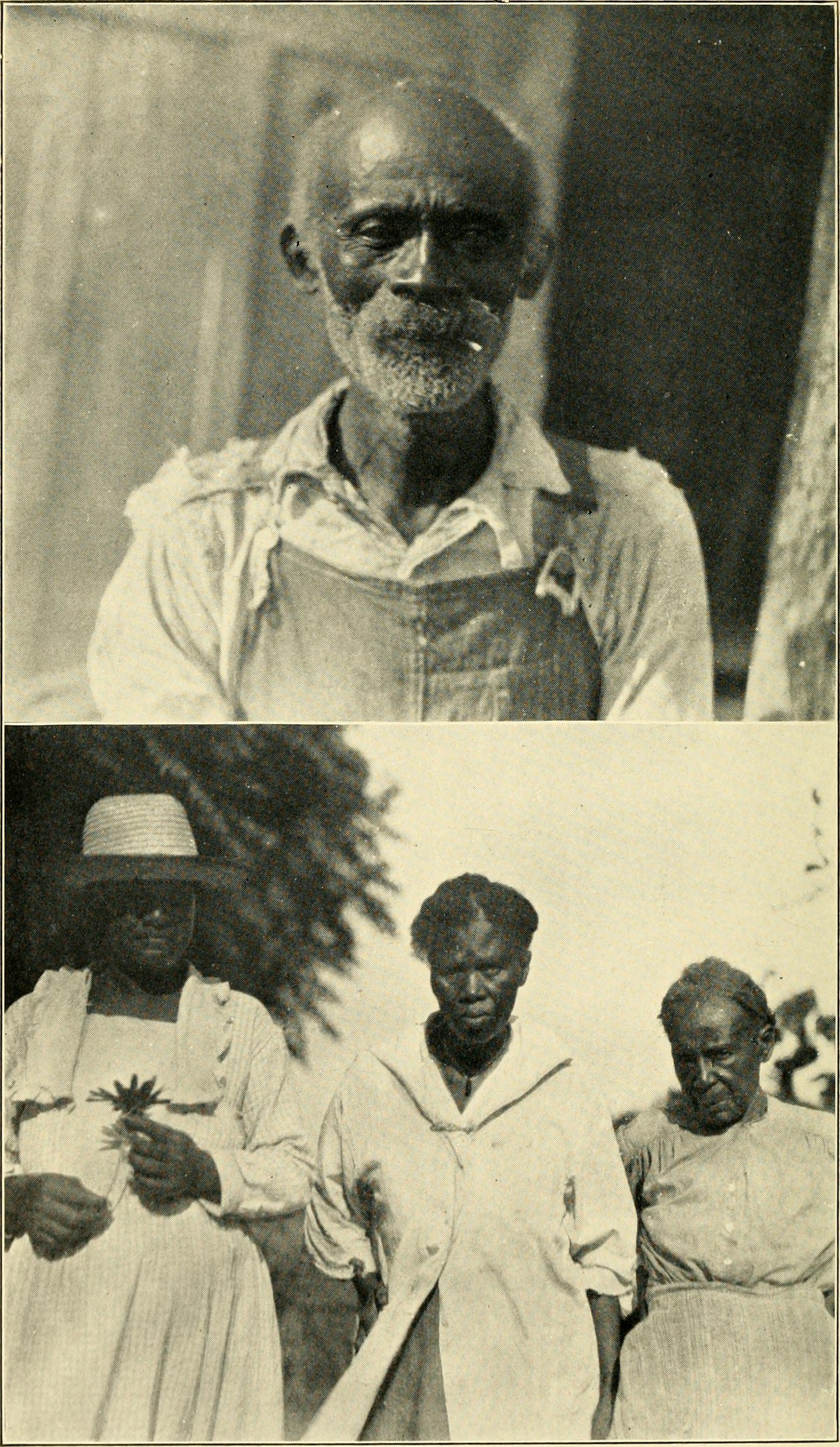
Positive Control-Signs, and Cures 385 Venereal Diseases. Gonorrhea, or "clap," seems to be the venereal disease most clearly recognized by the rural Negro, syphilis apparently being classed as a *'rising" or as "rheumatism," according to the symptoms displayed. Strange to say, gonorrhea is perhaps more often attributed to straining or to lifting some heavy load ^ than to sexual irregularities; possibly the undue strain might be sufficient to hasten the appearance of the outward symptoms of the disease. Teas made from "red shanks" root, from sarsaparilla, and from sumac are possibly most frequently used. One root-doctor directs that the "red shanks" tea be divided into two bottles. Into one is put a small piece of alum and the patient takes it internally; into the other is put a small piece of bluestone and the mixture is used to bathe the affected part. ^ Bluestone is often used along with an ointment, of which lard is the base, in connection with "red shanks" tea, ' and it may be that the astringent action does actually stop the discharge and work an apparent cure. Female-complaint. While disease in general Is not confined to womankind alone, yet, with the Negroes, the great mass of folk-medicine is in their hands rather than in the hands of the men. The women are the great practitioners, the folk-doctors — the old Granny with her "yarbs an' intmints" does much to keep alive these folk-cures and to make these beliefs in general much more a feminine possession than the context would seem to indicate. Nevertheless, some of the cures are designed for more definitely feminine ills. 1 55, and 167. 2 258. 391. 25
386 Folk Beliefs of the Southern Negro Some of these remedies I mentioned in the section dealing with childbirth and children. Remedies to ease menstrual pains are also very common. I cite here some Illustrative types collected indirectly from a reputable Negro root-doctor. ^ Boil some peach leaves In a vessel with a handful of salt. When they reach about the consistency of turnip-greens, pour them into a small tub and put In a tablespoonful of coaloil and eight drops of turpentine. Bathe the affected parts with this and relief will be obtained at once. Or take some "rabbit-tobacco" (white plantain) leaves and steep, mixing In some corn meal which has been thoroughly browned. Strain the mixture and bathe with It. It will quickly stop "flooding." Or else bathe the stomach with kerosene oil or take internally a tea made of "ground-pine" {Lycopodium dendroideum) roots. Tea from red oak bark used internally and as a douche Is also good; while tea from bark from the cherry tree, If taken while cold, will stop the flow almost at once. Miscellaneous Ills. If your foot has "gone to sleep" wet your second finger with spittle and make a cross on it to wake It up - — a remedy formerly used in English hospitals. ^ For chicken-pox, go Into the chickenhouse and let the chickens fly over you, * or simply push the patient backwards Into the henhouse. ^ Fried mice given to children will keep them from wetting the bed, ^ "but de mice mus' be parboiled 114L 2 157, and 267. Southern Workman, vol. 23 (1894), p. 66. ' Lean's Collectanea, vol. 2, p. 58. M31. 5 Hawkins, J., An Old Mauma's Folk-Lore, J.A.F. L., vol. 9 (1896), p. 130. 6 Bergen, F. D., Animal and Plant Lore, M. A. F. L. S., vol. 7 (1899), p. 78.
Positive Control-Signs, and Cures 387 fust," says one informant. ^ In Europe, three roasted mice are used. - Piles may be cured by tea from the bark of the red oak tree or by devil's snuff mixed with fresh lard, the latter being good for bed-sores as well. ' For night-sweats put a pail of water (with sliced onions in it) ^ under the bed. ^ After you have extracted a splinter from your flesh, there will be no pain if you put the splinter in your hair, ^ or, if you eat the splinter after it has been extracted you will never get another one in. ^ Everywhere on the Gold Coast of Africa there is a somewhat similar custom of biting the thorn that has entered one's flesh." ^ Holly leaf tea, ^ corn shuck tea, 1 " or simply warm water, ^ ^ will cure measles. For mumps, the standard remedy is fresh marrow from a hog's jowl rubbed on the jaw. ^ ^ Yov burns, a piece of fat meat is applied to the burned place ^ ^ or elder blooms and bark are made into a salve. ^ * Cancer is probably not differentiated from other sores. I have located only one cure. Boil some green plantain weed {Plantago major) and mix with lard into a salve. Then get some bark from seven different kinds of trees (the kind does not matter so long as they are all different) and boil into a tea. Wash the sore with 1141. ^ Lean's Collectanea, vol. 2, p. 503. U41. M. *286, and Thomas and Thomas, Kentucky Superstitions, p. 115. '341. * Cardinal, A. W., The Natives of the Northern Territories of the Gold Coast, p. 47. '288. i''331,341, and387. 1 1 235. 12 26, and 341. 13 293. 1 * 155.
388 Folk Beliefs of the Southern Negro this tea and smear the ointment on with a feather. This will cure your cancer every time. ^ For a swelling of any sort use mullein tea or a mixture of cream of tartar, vinegar, and rusty nails applied as a lotion. 2 Indigestion may be cured by drinking hot water; ^ by taking ten drops of turpentine in a glass of water; * by taking Samson snakeroot tea;^ by wearing a penny about the neck;*' or by taking a bath in hot water. ^ Vomiting may be stopped by turning upside down under the bed the glass from which you take your medicine. ^ Frostbitten heels are best ministered to by smoking them with pine-top, ^ or by rubbing the heel with a roasted turnip; i° while a black eye may be eased by the application of a poultice of raw Irish potatoes. ^ ^ Heart trouble is best dealt with by wearing a brass finger-ring ^ ^ or a silver ring about the neck, ^ ^ while moles may be removed by having some one give them to the new moon. ^ ^ Elderberry flowers stewed in lard make a good salve for red bug {Tetranychid or harvest tick) bites. ^ ^ For scarlet fever, a tea made of steeped sheep (or chicken) ^ ^ 1141. MOO. 3 321, and 387. M88. 6 175. ei92. 7 381. 8 321. »184. 1 » 208. 11167. 1 2 239. 1 3 100. 1^341. 1* Davis, H. C, Negro Folk-Lore in South Carolina, M. A. F. L., vol. 27 (1914), p. 246. i« Smiley, P., Folk-Lore from Va., S. C, Ga., Ala., and Fla., J. A. F. L., vol. 32 (1919), p. 379.
Positive Control-Signs, and Cures 389 manure is best. ^ Buzzard's grease is said to cure smallpox. 2 To break your husband of drinking, skin a live eel, put the skin in some liquor and give it to him. He will never drink again. ^ To cure your chickens of cholera make a tea of dog fennel and alum and give it to them. * A nutmeg worn around the neck will cure neuralgia ^ (see illustration, p. 314); wash your face in dew every morning for nine mornings to cure tetter; ^ dollar-leaf tea is good for bad breath^ and peach leaf tea for worms. ^ Besides these teas, horehound and sage are also used by the Negroes, ® and in one of the Negro secular songs, "The Sick Wife," the following lines occur: She squall out: "Sam bring me some mint." Make catnip up an' sage tea. ^ ° We have something of the idea in Negro folk-medicine that it takes like to cure like, or, as the Negro puts it, "Hit take dawg ter cure dawg." Thus an old Negro granny would force even more whiskey down the throat of her tipsy son in hopes of permanently curing him. 1 ^ This is observed in other treatments. For dyspepsia, the inside lining of a chicken gizzard is efficacious; for a cut made by an oyster shell, bind an oyster on the wound; for a dog bite, bind on some of 1141. 2 341. ^Southern Workman, vol. 24 (1895), p. 49. M41. 6 267, 141, and 326. 6 208. ^66. »331. ^ Davis, H. C, Negro Folk-Lore in South Carolina, J. A. F. L., vol. 27 (1914), p. 246. i"Talley, T. W., Negro Folk Rhymes, p. 55. 11157.
390 Folk Beliefs of the Southern Negro the hair of the dog that bit you. ^ In Devonshire there is apparently a somewhat similar behef since they beheve that if any one is bitten by a viper the best cure is to kill the viper and to apply his fat to the bitten place. ^ Panaceas. A few general or more or less universal cures might be mentioned. If you are sick and having hard pains, place an ax in bed with you. It will cut the pains. ^ Undoubtedly, treatment by whipping or striking the afflicted person was originally for the purpose of driving out the disease spirits. In one case an old woman doctor whipped a girl's lap with pawpaw switches to drive out the bad blood ("black blood") from her muscles. •* An old conjure-doctor told me that if a disease cannot easily be cured it is sometimes better to wait until the sick man speaks and then to smack him in the mouth with a piece of beef "melt" (spleen). ^ Red sassafras tea is good to purify the blood and will help out in almost every ailment. ® "Barb-iron," a sort of short moss growing mainly at the foot of oak trees, can be used for cures. Set the plant in a shallow vessel of water; it will grow there, and whenever you have any kind of trouble, bathe yourself with this water to drive it away. The water in which cross-vine {Bingonia crucigerd) has been soaked has the same healing power. The. same informant suggests Samspn snakeroot and red coonroot mixed with camphor or whiskey as the best universal liniment. "^ Pepper grass (probably Lepidium virginicum) ' Southern Workman, vol. 23 (1894), p. 66. 2 Henderson, W., Folk-Lore of the Northern Counties of England, p. 128. 3 180. * Snyder, H., Paradise Negro School, Yale Review, vol. ii (1921), p. 166. '-91. 6 141. '258.
Positive Control-Signs, and Cures 391 or poke-berry {Phytolacca decandra) makes a good laxative. ^ Jimson weed boiled into a pulp makes a good general salve, ^ while a poultice of cow manure will cure all serious pains. ^ Pure, fresh clay mixed with clean water and applied will draw all the aches and pains from you as it dries. ^ Water poured on the head of a sick person will help his cure, ^ while the Arkansas Negroes say a rabbit's stomach dried, powdered, and eaten, will cure most diseases — especially the "conjure-sickness." ^ The water in which a newborn baby has been washed makes a good lotion for almost any complaint, ^ or a woolen string, greased with tallow and worn around any part of the body, will stop the pains in that part. ^ Ordinary lime water makes a general tonic; ^ a silver coin tied around the ankle falls into the same category; i" and, finally, there is that old English ^ ^ practice of kissing the hurt place, this being particularly applied to children. ^ ^ Prevention of Disease. The Negro theory of prevention of disease is closely allied to the African or early European one of using odoriferous substances, which at first, no doubt, were intended to keep the disease spirit away. Asafoetida is eaten, ^ ^ or, as is more frequently the case, is worn in a little bag about '288. 2 26. 3 155. ^258. *382. « Bergen, F. D., Animal and Plant Lore, M. A. F. L. S., vol. 7 (1899), p. 70. ' 155. 8 397. 9 235. 1 » 54. Parsons, E. C, Folk-Lore of the Sea Islands, S. C, M. A. F. L. S., vol. 16 (1923), p. 212. 1 ' Lean's Collectanea, vol. 2, p. 487. 12 112. 13 341.
392 Folk Beliefs of the Southern Negro the neck. ^ In parts of Europe asafoetida is sometimes carried in the pocket as a preventive of smallpox. ^ Sulphur wrapped in a bit of cloth and worn about the neck is also good, ^ while a red onion carried in the left pocket will ward off diseases of any kind. ^ In Europe a sliced onion was put in a sick room where infection was feared, under the belief that it "acts as an absorbent." ^ 1 171, 189, 342, and 387. Also Davis, H. C, Folk-Lorein South Carolina, J. A. F. L., vol. 27 (1914), p. 246. ^ Fogel, E. M., Beliefs and Superstitions of the Pennsylvania Germans, p. 270. 3320. * 100, and 141. Richardson, C, Some Slave Superstitions, Southern Workman, vol. 41 (1912), p. 248. * Lean's Collectanea, vol. 2, p. 640.
CHAPTER VI NEGATIVE CONTROL-SIGNS —TABOOS Negro Taboos. Thus far our "signs" into which human control enters have arranged themselves about the formula, "If you (or some one else) behave in such and such a manner, so and so will happen." These signs have been mainly positive in nature; that is, they have indicated means of obtaining ends desirable to the operator. We now turn to the negative signs or taboos — a class of control-signs adhering to the same formula but resulting in ill luck or undesirable consequences which are to be avoided. The Negro does not in general distinguish these from the uncontrolled or prophetic signs which would compare with our English omens. Etiquette With a Vengeance. Many of these taboos have to do with matters of etiquette and seem to be in reality a linking of unpleasant results with uncouth manners in an attempt to frighten the young into a quicker acquisition of American good-breeding. Naturally such an association stimulates the memory and tends towards a negation of the ill-mannered practices, lest unhappy results follow. If you eat too fast, you will marry too young; ^ it is bad luck to sing while eating, ^ for you will be disappointed ^ (however, at first this may have been due to fear of attracting 1365. 2 52, and 186. 395.
394 Folk Beliefs of the Southern Negro envious spirits); and if you take the last piece of bread on the plate, you will not get a wife. ^ This latter idea is illustrative of the fact that many of our apparently meaningless social usages once had a very real purpose behind them. The English version was that you will not be married that year if you take the last portion of food from a dish, but the underlying idea was that always the last portion was to be left for the fairies. 2 Thus it was not mere ill-breeding to break the convention, but actually dangerous, since the fairies would be offended. It Is not so clear why the Negro should call It bad luck to sit in the house with his hat on;^ or to lick his plate, though in the latter case the fear is that "Santa Claus will cut your tongue off" — a threat apparently made by mothers to discipline their children. If one eats with his hat on he will not get enough, * and It is considered bad luck to whistle in the house, or to "sass" the old folks. ^ This latter idea may have at one time had a real meaning, since the old folks were "almost ghosts," and hence worthy of good treatment lest their spirits avenge the disrespect and actually cause bad luck to the offender. The fact that such beliefs are used for the purpose of discipline is indicated by the testimony of Negro mothers and by such statements as the following from a South Carolina informant: "I dreamed that a girl was throwing water on me. It was because I would not help cook supper." ^ There is also a vague Idea of bad luck implied in the school-taught taboo: 1311. '^Lean's Collectanea, vol. 2, p. 151. 3 177. ^373. *372. «77.
Negative Control-Signs — Taboos 395 "If you don't see a dentist don't show your teeth," as interpreted by a Georgia informant. ^ Again there is the beHef that it is bad luck to offer your left hand to a person in shaking hands, - or bad luck for two people to eat out of the same plate. ^ Uncouth to us, but refined enough from the rural Negro point of view, is the admonition: "Don't spit anywhere except under the benches when at church; if you do your teeth will loosen." ^ Feminine Lore. Sweeping. More women observe these taboos than men, and they center largely around feminine occupations. To illustrate this let us consider first some of those beliefs having to do with household activities, or with articles feminine in association. One must always be careful how he handles a broom. A few strokes after dark and "you'll sho' sweep out some member uv de fam'ly." ^ Others say that such indiscretion will sweep you out of a home, ^ though perhaps the greater percentage have forgotten the exact significance of this unseemly act and simply say "bad luck." ^ This would seem to indicate that where "bad luck" alone is expressed as the resultant of certain actions the belief in question is beginning to be forgotten and is in process of decay. If an assiduous housewife "jes' mus' " sweep the house at this time the dirt should be piled in the corner and not be carried out before morning. * The same taboo 1373. 2 175. 3 208. n75. ^ 141, and 189. Williamson, G., Superstitions from Louisiana, J. A. L., vol. 18 (1905), p. 229. «246, and Southern Workman, vol. 28 (1899), p. 449. ^ 81, 106, 341, and 244. 8 246. Smiley, P., Folk-Lore from Va., S. C, Ga., Ala., and Fla., J. A., L., vol. 32 (1919), pp. 381-82.
396 Folk Beliefs of the Southern Negro applies to sweeping the hearth or carrying out ashes after dark ^ — the hearth being originally the center of the household and the danger, no doubt, being that of disturbing the ancestral spirits who would likely be hanging around after dark. The evil may, however, be averted in the latter case by sprinkling salt before you as you walk. - It is a sign of death to shake a table cloth out of doors after sunset, ^ and bad luck to throw scraps or waste food out doors after dark. * This latter belief was probably due to the fear of attracting those dangerous vagabond spirits which especially liked the darkness. The European version is that you should never sweep the kitchen after sunset or you will sweep out your luck. ^ It is especially bad luck to sweep out your house on Friday night, ^ or on New Year's morning. The Negroes say that the latter will cause some one in the family to die before the year is out, ^ the English version was that you sweep your luck away. ^ The Missouri Negroes say that the sweepings every morning should be burned instead of being thrown out;^ the English swept the dust inward from the front door and carried It out in a basket or shovel to prevent bad luck. ^ ° If you leave the dirt in the middle of the floor it is a sign, so the Negroes say, of some one coming. ^ ^ 1 141, 159, and 246. Southern Workrnan, vol. 24 (1895), p. 78. 2 6. ^ 57, and Southern Workman, vol. 24 (1895), p. 155. «332. ^ Fogel, E. M., Beliefs and Superstitions of the Pennsylvania Germans, p. 109. ® 91. Lee, C, Some Negro Lore from Baltimore, J. A. F. L., vol. 5 (18^j2), p. 110. ^73. 8 Lean^s Collectanea, vol. 2, p. 176, and 236. 9 159. 1" Henderson, W., Folk-Lore of the Northern Counties of England, p. 87. Lean's Collectanea, vol. 2, p. 76. 1 1 288.
Negative Control-Signs — ^Taboos 397 Carelessness with fire is foolhardy, but carelessness with a broom is rank danger. Even a slight stroke on a person's foot will soon send him away from home, ^ the same wanderlust developing from sweeping under his feet ^ or under the chair in which he is seated. ^ Perchance the original notion was that part of an individual's spirit-substance or personality was disassociated from his body in this way. Even if a person brush his own shoes off with a broom he will run away, * although some say sweeping under a person's feet prevents marriage ^ and sends a person to jail « rather than simply making him run away from home. Touching or striking a person with a broom will make him lazy, ^ land him in jail ^ (unless he spits on the broom), ^ or get him into trouble, or ^ " into an unfavorable controversy. ^ ^ If a man whips his wife with a broom she will surely leave home, ^ ^ or if a person is hit with an umbrella he will surely go to jail. ^ ^ Of course such actions are used at times with deliberate intent, as where a person wishing to travel will sweep his feet nine times, ^ ^ but the customary viewpoint is that of avoidance rather than use for desirable purposes. Stepping over a broom (or mop) ^ ^ 1 97, and 189. 2327. 3 216. ^320. 6 364, and 320. 679. 7 286, 111, and 150. Southern Workman, vol. 28 (1899), p. 450. 8 188, and 357. 9 63, and 164. 1 « 224, and 396. 11159. 1 2 388. 1379. 1M3. 16 189.
398 Folk Beliefs of the Southern Negro brings bad luck, ^ non-marriage, ^ or a trip to jail. ' Never sweep under a sick man's bed unless you just want him to die. •* Possibly it was originally thought that the sick man's soul, for the time, at least, was absent from the body and in danger of being injured. It is bad luck to move a broom from one house to another; ^ those frugal individuals who insist on taking their old brooms with them in moving are always dissatisfied with their new home. He who desires luck will never sweep a house just before he moves out of it, ^ though other luck-chasers take just the opposite view. ^ It is bad luck to sweep the yard with the house-broom;* sweep the chimney back and you will make your mother cross; ^ sweep off a table with a broom and you'll surely have a quarrelsome home. ^P Finally it is extremely bad luck for two people to sweep in the same room at the same time. ^ ^ Other broomsuperstitions have been mentioned in connection with witches — perhaps this European association has much to do with the superstitious character of this feminine article. Hair and Nails. Turning now to other beliefs, mainly, if not entirely, of feminine association, we take up the question of prohibitions relating to hair and nails. You should never count the teeth in a 181, 141, 341, and 224. Also Parsons, E. C, Folk-Lore of the Sea Islands, S. C, M. A. F. L. S., vol. 16 (1923), p. 210. 2 110. 3 229, and 106. * 224, 183, and 238. 6 152, and Ohio Whites. 6 141. noo. »385. "373. loiTT. 1196.
Negative Control-Signs — ^Taboos 399 comb, they will all break out. ^ If you drop a hairpin and do not pick it up, you will lose a friend. ^ Some (old) people try to save every strand of hair and every finger and toe nail, because they say that when they die they will have to show them before they can get into heaven. ^ These hair combings are sometimes kept in a paper sack and the teeth and nails in a small box, both of which are buried with the individual when he dies. ^ In the main, however, the hair combings and nail trimmings are totally destroyed because of the harm which could be wrought should they fall into the hands of an enemy. Some say, "Hair combings must not be thrown away, else the hair will not grow; nor should these combings be kept, else they will 'come to worms' and the hair will not grow again. Therefore you should be sure to burn all the combings. ^ It is bad luck to throw hair combings out of a window ^ — the bad luck feared generally being hoodoo;^ for, as we have said before, if you place a lock of your enemy's hair in running water he will lose his mind, or if you place some of a person's hair under your doorstep he will never be able to keep away from you. * Another widespread notion of this type is that if hair combings are picked up by a bird and used in constructing a nest the owner of the hair will have headache, ^ or a 1 286, and Southern Workman, vol. 28 (1899), p. 450. 2 155. »311. Bergen, F. D., Animal and Plant Lore, M. A. F. L. S., vol. 7 (1899), p. 65. * 141. 5 57. Bergen, F. D., Animal arid Plant Lore, M. A. F. L. S., vol. 7 (1899), p. 651. ^91. Moore, R. A., Superstitions from Georgia, J. A. F. L., vol. 7 (1894), p. 305. 7 341. * 112, and Thomas and Thomas, Kentucky Superstitions, p. 82. 9 63.
400 Folk Beliefs of the Southern Negro "wandering mind" — at least while the bird is sitting on the nest. ^ In Scotland ^ and England ^ the belief is that a headache will result from such action. Other Negroes think that the person will lose her hair ^ if such happens, or else go crazy. ^ Some even suggest rheumatism as an alternative. ^ ' If a kinky-haired Negro touches a straight-haired Negro's head the hair of one of them will come out. '' Again, if two persons are fixing a third person's hair, the younger of the two will die* (first), ^ and one informant says that in addition to this the older will fall into the well. ^ ^ Gratitude is not always to be expressed, for thanking a person for combing your hair is sure to bring bad luck, ^ ^ generally the calamity of having all your hair come out. ^^ A chronic "worrier" will soon find his hair turning gray, ^ ^ but she who looks into the mirror while combing her hair will soon obtain the much desired straight locks. ^ ^ Quite common is the European ^ ^ idea that combing your hair at night will make you forgetful. ^ ^ Sometimes this is ^ 141, and 189. Williamson, G., Superstitions from Louisiana, J. A. F. L., vol. 18 (1905), p. 229. Speers, M. W. F., J. A. F. L., vol. 26 (1913), p. 190. 2 Gregor, W., Folk-Lore of the Northeast of Scotland, p. 26. ' Leather, E. M., Folk-Lore of Herefordshire, p. 88. *329. ^ 141, and Bergen, F. D., Animal and Plant Lore, M. A. F. L. S., vol. 7 (1899), p. 65. «93. ^ Thomas and Thomas, Kentucky Superstitions, p. 82. 8 119, 67, and 364. 9 224, and 370. 10 63. 11 112, and 356. Moore, R. A., Superstitions from Georgia, J. A. F. L., vol. 7 (1894), p. 305. 12 61, 188, and 310. 1 3 364. 1 * 235. i^Fogel, E. M.,1 Beliefs and Superstitions of the Pennsylvania Germans, p. 341. i«342, 112, 141, 12, 159, and 123. Lee, C, Some Negro Lore from Baltimore, J. A. F. L., vol. 5 (1892), p. 110.
Negative Control-Signs — Taboos 401 used, like a toddy, for the deliberate purpose of forgetting troubles. ^ Some say that it is good luck to cut the hair and nails during the waning of the moon ^ — a common belief in Devonshire;^ others claim that the hair will be slow to grow if cut at this time, but that it should be cut on the new moon so as to grow with the moon, * a belief having also in Worcestershire ^ an English parallel. The day on which your hair or nails are trimmed has a significance for good or evil. It is very bad luck, for instance, to trim your hair on the first day of March. ^ The signs of the various days of the week so far as nail cutting is concerned are as follows: Monday. Cut them for news — or sickness — or money before the week is out. Tuesday. Pair of new shoes. Wednesday. Travel soon. Thursday. Pair of new shoes — or sickness. Friday. Get some money — or have toothache. Saturday. See your lover on Sunday. Sunday. The devil will have you all the rest of the week. '' There is considerable variation besides that indicated in the verse above. Thus, apart from the idea of the devil having you all the week (or all Monday) « as a penalty for cutting your nails on Sunday, Sunday 1 Southern Workman, vol. 23 (1894), p. 46. Also 141. 2 112. 3 Dyer, T. F. T., English Folk-Lore, p. 48. Lean's Collectanea, vol. 2. p. 246. * 141, 218, and 35. Southern Workman, vol. 24 (1895), p. 155. ^ Lean's Collectanea, vol. 2, p. 248. ^Southern Workman, vol. 23 (1894), p. 15, and informant 57. ' Arranged from data obtained from 78, 208, 6, 239, 29, 267, 364, 235, and 395. 8 61. 26
402 Folk Beliefs of the Southern Negro nail trimming is supposed to result in bad luck, ^ a fight, 2 somebody making you ashamed ^ (that same day), * or the losing of a pint of blood by some accident during the next week ^ (or "yo^ will sho' see blood 'fo' Monday"). « All through England such action was considered ill luck ^ as expressed by the rhyme: He that on the Sabbath morn Cutteth either hair or horn Will rue the day that he was born. ^ The complete English versions approximate closely those of the Negroes showing how persistent a belief may be when expressed in verse form: Cut your nails on a Monday, cut them for news (or health), Cut your nails on a Tuesday, a pair of new shoes (or wealth), Cut your nails on a Wednesday, cut them for health (or news). Cut your nails on a Thursday, cut them for wealth (or a pair of new shoes). Cut your nails on a Friday, cut them for woes (or sorrow), Cut your nails on a Saturday, a journey to go (or see your sweetheart tomorrow). Cut your nails on a Sunday, you cut them for evil. For all the week long you'll be ruled by the devil. ^ Some Negroes say, "The finger nails should never be cleaned after dark. It is believed that if the dirt 18L 2 189. 3 183. n34. 5352. 6 364. ^ Henderson, W., Folk-Lore of the Northern Counties of England, p. 10. 8 Leather, E. M., Folk-Lore of Herefordshire, p. 88. 9 Lean's Collectanea, vol. 2, p. 267. The versions in parenthesis are taken from Denham, A. M., A Collection of Proverbs and Popular Sayings, Percy Society, vol. 20, pp. 12-13.
Negative Control-Signs — ^Taboos 403 accumulated under the nails were removed then all which the crop had produced during the day or all which the party had accumulated by trade or otherwise during the daylight hours would be lost, the theory being that the accumulation of dirt has a connection with the accumulation of property. It is perfectly all right to wash the hands and manicure the nails, but it must be done before sundown, or at least before the 'dusk' comes." ^ If you cut your finger nails while sick in bed you will remain in bed until they grow out again. ^ Differing radically from the accepted view, some of the Negroes say that it is bad luck to trim the nails on any day but Friday, except it be the first day of the year or month. ^ It is rather hard to see why Friday should be considered a lucky day to trim nails since it is otherwise regarded as unlucky and since the European ■* version regards it as an unlucky day for nail trimming. Ominous Friday. Breaking for the moment the feminine classification, let us consider some of the Negro beliefs relating to this most unnatural day. To begin with, it is considered ill luck to start on a journey on that day; in fact, to make any sort of move on Friday, ^ (or Wednesday) « will surely result in dire consequences. Accidents are the direct resultant of willfulness in the matter of beginning work on Friday. ^ You must finish whatever you start on that 1 Brannon, P. A., Central Alabama] Negro Superstitions, Birmingham (Ala.) News, Jan. 18, 1925, p. 15. 2 13. 3 112. Southern Workman, vol. 23 (1894), p. 15. * Lean's Collectanea, vol. 2, p. 262. ^ 113,224, and 356. Williamson, G., Superstitions from Louisiana, J. A. F. L., vol. 18 (1905), p. 229. «331. ^ 112, and Davis, H. C, Negro Folk-Lore in South Carolina, J. A. F. L.,vol. 27 (1914), p. 246.
404 Folk Beliefs of the Southern Negro day or you will never finish it. ^ So real are these beliefs that one Negro overseer, when ordered to commence a certain bit of plowing on Friday, would go out in the evening before and run one or two furrows so as not to begin the work on the unlucky day. ^ All through England ^ and Scotland, * as well as on the Continent, ^ Friday was held to be an unlucky day to begin any new work. "Friday was a day on which the fairies seemed to hold revel above ground, raid houses in open daylight, and investigate the very dishes preparing for dinner." ^ The Negroes claim it bad luck to plant on Friday — your seed will never come up. ^ The Creoles had a proverb, ^'Cila qui rit vendredi va pleure dimanche'" ("He who laughs on Friday will cry on Sunday"). ^ If you wash clothes on the last Friday of the year you will wash away one of your family ^ (or bring bad luck). ^ " The same holds true of washing on the first Friday of the New Year ^ ^ or the last Friday before Christmas. ^ ^ The English have the same penalty, but Good Friday is the unlucky day. 1 3 Unlucky Thirteen. With the Negroes, Friday is always an unlucky day, ^ ^ especially Friday the 13th. ^ ^ 1 151, 171, 189, and 362. 2 Haskell, J. A., Sacrificial Offerings among North Carolina Negroes, J. A. F. L., vol. 4 (1891), pp. 267-68. ^ Denham, M. A., A Collection of Proverbs and Popular Sayings, Percy Society, vol. 29, p. 11 (note). Lean's Collectanea, vol. 2, p. 262. ^Gregor, W., Folk-Lore of the Northeast of Scotland, p. 149. ^ Fogel, E. M., Beliefs and Superstitions of the Pennsylvania Germans, pp. 260-61. * Simpson, Eva B., Folk-Lore in Lowland Scotland, p. 101. ^289. *Heam, L., Gombo Zhibes, p. 15. "364. 1 « 202. 1 ' Southern Workman, vol. 23 (1894), p. 15. 12 141. " * Lean's Collectanea, vol. 2, p. 564. 1 * 392. 1 » 401.
Negative Control-Signs — Taboos 405 Thirteen seems to have its usual unluckiness. ^ "If a person is born on the 13th, marries on the 13th, and dies on the 13th it is going to be hot for him." ^ If thirteen (or eleven) ^ eat at a table, one of that number will die * — an English belief, probably a remembrance of the thirteen at the Paschal Supper and the fate of Judas. ^ The thirteenth of the month is always considered unlucky with the Negroes whether it be Friday or not. ^ The Perils of Sewing. Returning again to the folkbeliefs relating to more specifically feminine affairs, we find, in the case of sewing, one widespread notion that you should never sew a dress while it is on you without holding a small stick in your mouth. Failure to have this stick in your mouth will result in death, ^ bad luck, « or some one talking about you or telling lies on you ^ — one lie for every stitch taken. ^ " In West Africa "one dare not sew his cloth while it is on his body lest his relative die." ^ ^ In England the version is that you will be ill spoken of. ^ ^ Here we have a case of remarkably similar superstitions in countries as widely separated as England and Africa, and, as illustrated in other cases, both influences 1288. 2 314. 3 304. *63. ^ Henderson, W., Folk-Lore of the Northern Counties of England, p. 33. 6 80. M88. 8 58. 9 73, 152, 214, and 234. Also Work, M. H., Some Geechee Folk-Lore, Southern Workman, vol. 34 (1905) pp. 696-97. 1 " Richardson, C, Some Slave Superstitions, Southern Workman, vol. 41 (1912), p. 248. 1 1 Cronise and Ward, Cunnie Rabbit, Mr. Spider and the Other Beef, p. 25. i^Gurdon, Lady E. C, County Folk-Lore of Suffolk, vol. i, p. 128. Dyer, T. F. T., Domestic Folk-Lore, p. 82. Lean's Collectanea, vol. 2, p. 58.
406 Folk Beliefs of the Southern Negro persist side by side in the Afro-American beliefs. The prevention of evil by putting a small splinter of wood in the mouth seems to have been an independent American development. Other superstitions thread themselves into the sewing basket. If rats cut your clothes do not allow any one who is kin to you to mend them. ^ If you mend them yourself you will die ^ or at least have bad luck. Always get some one outside the family to do the repairing for you. ^ Never make a new garment for a sick person lest he die; ■* nor should you press or sew after hearing of a death for fear of bad luck. ^ It is likewise bad luck to sew new pieces on an old garment. ^ You should never sew, wash, or iron on New Year's day for fear of causing some member of your family to die. ■' If you sew up a torn or ripped mattress some member of your family will die, ^ and the penalty is the same for putting on a person's new clothes before he puts them on himself. ® A dropped pair of scissors should be closed before picking them up ^ ° — an English belief ^ ^ — though other Negroes claim that it it unusually bad luck to leave the scissors uncrossed (closed), the remedy for such an oversight being three stitches taken on green cloth. ^ ^ This latter idea is probably due to the fact that open scissors ^ 141, and 189. Lee, C, Some Negro Lore from Baltimore, J. A. F. L., vol. 5 (1892), p. 110. 2 274. 3 286, and Southern Workman, vol. 33 (1904), p. 52. * 144, and 364. Southern Workman, vol. 28 (1899), p. 450. 5 267. ^ Thomas and Thomas, Kentucky Superstitions, p. 166. ' 151. 8 352. 9 148. i"141. 1 1 Leather, E. M., Folk-Lore of Herejordshire, p. 87. 1233.
Negative Control-Signs — Taboos 407 represent the all-powerful cross. Never Iron the hem (or tail) 1 of a man's shirt unless you want him to be quarrelsome. ^ One should never cut out a garment on Friday or he will never finish it. ^ But if the garment is cut out on that day you must be sure to finish it the same day under penalty of never finishing it, or of its owner never living to wear it out. * Wash-day. Washing clothes is another feminine occupation around which many taboos cluster. It is bad luck to leave rags or clothes hanging on your fence or clothes line on New Year's eve, ^ and there is also the English ^ belief that if you wash clothes that day you "will wash one out of your family." ^ Wet clothes should never be carried through a house* or from one house to another. ^ If you let your dress get wet in front while you are washing, it is a sign that you will marry a drunkard. ^ ° Not necessarily feminine is the belief that if you wash even your finger tips in water used by another you are sure to have a quarrel with that person. ^ ^ The same belief is found in Europe ^ ^ even to the Negro practice of preventing the misfortune by making a crossmark and spitting over it. ^ ^ Others reverse the formula by saying, 1310. 2 331, 3 188^ and 189. Ohio Whites. ^ 320, and Ohio Whites. MOl. ^ Lean's Collectanea, vol. 1, p. 373. no6. 8 401. 1 0 238, and 310. ^^141, and 352. Richardson, C, Some Slave Superstitions, Southern Workman, vol. 41 (1912), p. 248. 1 2 Lean's Collectanea, vol. 2, p. 157. Henderson, W., Folk-Lore of the Northern Counties of England, p. 84. Leather, E. M., Folk-Lore of Herefordshire, p. 87. ^^57. Lee, C, Some Negro Lore from Baltimore, J. A. F. L., vol. 5 (1892), p. 111.
408 Folk Beliefs of the Southern Negro "wash together, friends forever," but claiming that if two friends use the same towel at once their friendship will be broken. ^ The Imp of the Kitchen. Signs and seasonings sit side by side in the unwritten Negro cook book. The proper technique demands that jellies, butter, sauce, soap, and similar preparations always be stirred to the right. Otherwise they will not "make." ^ The better-advised gastronome insists that all food, and especially cake, must be stirred clockwise if you want it to turn out well. ^ The Scottish version is that the food must be stirred in this way to prevent "bowel complaints." * Any tough old cock of the roost may be reduced to exquisite tenderness by sticking a nail into him before he is cooked. ^ Sopping out the frying pan is a sign that you are going to run away, ^ while burning egg-shells brings sorrow. ^ It is bad luck to break bread in another person's hand ^ — you will "fall out" (quarrel) ^ or the younger person will die first. ^ ° It is also bad luck to eat out of another person's hand. ^ ^ If you let the bread fall in taking it from the stove it is a sign of death, * ^ while turning a loaf of bread upside down at any time will bring bad 1 Williamson, G., Superstitions from Louisiana, J. A. F. L., vol. 18 (1905), p. 229. 2 Moore, R. A., Superstitions from Georgia, J. A. F. L., vol. 7 (1894), p. 229. ^ 141, and 112. Davis, H. C, Negro Folk-Lore in South Carolina, J. A. F. L., vol. 27 (1914), p. 246. * Gregor, W., Folk-Lore of the Northeast of Scotland, p. 30. 6 349. «206. ' 91. Superstitions of Negroes in New Orleans, J. A. F. L., vol. 5 (1892), p. 330. 8 273. 9 286, and Work, M. H., Some Geechee Folk-Lore, Southern Workman, vol. 34 (1905), p. 697. i«315. 1 1 273. > 2 188.
Negative Control-Signs — Taboos 409 luck 1 or cause ships to sink, ^ the latter behef being English in origin. ^ She who spills dishwater will lose her sweetheart, " while a life of singleness awaits those careless ones who let their liishwater boil ^ (you are boiling your friends away). ^ The economical housewife never leaves the skillet on the fire after the bread is done lest the act should make bread scarce ^ — though the usual interpretation is that such procedure will burn up the skillet. » One should never lend or borrow salt or pepper for fear of breaking friendship; ^ but if a person has already borrowed salt, it is extremely bad luck to return it. ^ " This belief is also found in England. ^ ^ Hard times result from sweeping corn into the fire, ^ - and bad luck from throwing in salt or bread ^ ^ — some say it is a sin to throw food of any kind into the fire, ^ " though burning onion peels will bring good luck ^ ^ (drive off spirits). Household Lore. The imp of misfortune flits from kitchen to bedroom, to parlor, to porch, laying his fretful hands upon all who dare violate his household decrees. Sitting on a table brings disappointment, 195. 2 Lee, C, Some Negro Lore from Baltimore, J. A. F. L., vol. 5 (1892), p. 112. ' Henderson, W., Folk-Lore of the Northern Counties of England, p. 89. Lean's Collectanea, vol. 2, p. 151. * 141. Williamson, G., Superstitions from Louisiana, J. A. F. L., vol. 18 (1905), p. 229. 5 188. 6 331, ^ Southern Workman, vol. 28 (1899), p. 449. 8 286. ^Southern Workmaji, vol. 28 (1899), p. 450. 1 » 286. 1 1 Henderson, W., Folk-Lore of the Northern Counties of England, p. 89. Leather, E. M., Folk-Lore of Herefordshire, p. 86. 1231. i='75. '■'91. Davis, H. C, Negro Folk-Lore in South Carolina, J. A. F. L., vol. 27 (1914), p. 248. 16 196.
410 Folk Beliefs of the Southern Negro some say, ^ though most Negroes Insist that it is a sign that you want to marry ^ and cannot ^ — indicating that you will be an old maid. ^ Others stoutly maintain that such behavior will make you lean, ^ but the English version is that you want to be married. ^ It is also bad luck to sit on a trunk ^ — "it brings disappointment and will draw all your luck away." * Putting your hat on the bed is an almost universal Negro sign of bad luck ^ — "sad disappointment" ^ ° — unless it is placed with the bottom side up, which removes any misfortune. ^ ^ Putting the hat on a trunk ^ ^ or table ^ ^ also brings bad luck or disappointment as does hanging your hat on a chair, ^ * or placing a mirror, 1 ^ shoe or umbrella ^ ^ on the bed, or a lamp on the foot of the bed. ^ ' If a friend place her umbrella on your bed you will soon be enemies. ^ ^ Some of these signs may have developed as disciplinary factors making for greater household orderliness. Chairs, Lamps, and Clocks. It is bad luck to turn a chair around on one leg;^^ such action will cause 1 141, and Parsons, E. C, Folk-Lore of the Sea Islands, S. C, M. A. F. L. S., vol. 16 (1923), p. 210. 2 280. 3371. * 61, and 288. 6 364. ^ Lean's Collectanea, vol. 2, p. 305. 7 81, 336, and 356. 8 141.. 9 179, 288, and 249. "112, and 396. 364, 189, 61, and 100. 2 189, and 229. 321. 183. ^6, 335, and 401. ^ Pitkin, Helen, An Angel by Brevet, p. 70. 386. 8 91. Superstitions of Negroes in New Orleans, J. A. F. L., vol. 5 (1892), p. 330. 1 s 139.
Negative Control-Signs — Taboos 411 some one to die, ^ turn some one out, - cause all the cows to go dry, ^ or create a fuss ^ — the latter being the European version. ^ With the Negroes the evil may be prevented by turning the chair back the other way. ^ Rocking an empty chair will surely cause bad luck, ^ or the death of a member of the family ^ ("you is sho' rockin' somebody outer de fam'ly"). ^ It is bad luck to burn two lamps in one room, ^ " or to have two lights on one table. ^ ^ In Europe it is having three candles burning in the room or on the table which is considered unlucky. ^ ^ It is bad luck to keep a clock in your house if it is not running, ^ ^ or to keep two clocks running in one room. ^ * Edged Tools and Other Things. Bring an ax or hoe through the house ^ ^ on your shoulder, ^ ^ and great calamity will befall the inmates. Some Negroes will never put a hoe or ax on their shoulder for fear of bad luck. 1 ^ Some say that if you carry a hoe or spade through the house you will dig a grave soon.^^ To avoid such bad luck, walk out backwards with the ^63. Davis, H. C, Negro Folk-Lore in South Carolina, J. A. F. L., vol. 27 (1914), p. 246. 2 222. 3 62. ^ 141. ^Lean's Collectanea, vol. 2, p. 158. Fogel, E. M., Beliefs and Superstitions of the Pennsylvania Germans, p. 89. 6 261. 7 189, and 243. 8 152. "341. i»113, and 203. 1 1 332. ^^ Lean's Collectanea, vol. 2, p. 144. 1 3 169. 1*148. 16 32, 358, and 171. 16 259, and 81. I'Steiner, R., Superstitions and Beliefs from Central Georgia, J. A. F. L., vol. 12 (1899), p. 262. 1 8 189, and 320.
412 Folk Beliefs of the Southern Negro implement. ^ It Is also hazardous to carry a spade out of your home by the front door. ^ The English version is "terribly bad luck" to enter a house with a shovel or any edged tool on the shoulder. ^ Even the Shropshire ^ belief that it is ill luck to carry anything on your shoulder in the house is repeated by the Negroes. ^ It is ill luck to carry a bucket of water into the house on your head;^ you should always unload your head before entering. ^ No water must be taken out of the pail during the time it is on the head of the person carrying it, this being extremely bad luck. ^ It is also ominous to raise a parasol indoors. ^ The Heidelberg version is, "Es gibt strelt," ^ " but one Alabama Negro declares It is a sign that a coffin Is soon to be brought in for one of the family. ^ ^ The evil genius declares it ill-starred to carry water back to the well In a bucket, ^ ^ and bad luck to leave an ironing board up or a trunk open at night. ^ ^ For various other slips this calamitous basilisk impartially deals his penalties. For whistling in the house, bad luck; ^ * for lying across two chairs, "you sho' measurin' ^ 141. Lee, C, Some Negro Lore from Baltimore, J. A. F. L., vol. 5 (1892), p. 111. 2 173. 3 Leather, E. M., Folk-Lore of Herefordshire, p. 119. Fogel, E. M., Beliefs and Superstitions of the Pennsylvania Germans, p. 98. Lean's Collectanea, vol. 2, p. 148. * Lean's Collectanea, vol. 2, p. 177. 6 169. ^286, and Williamson, G., Superstitions from Louisiana, J. A. F. L., vol. 18 (1905), p. 229. ''Alabama Folk-Lore, Southern Workman, vol. 33 (1904), p. 52. (Ohio whites.) 8 Brannon, P. A., Central Alabama Negro Superstitions, Birmingham (Ala.) News, Jan. 18, 1925, p. 15. 9 24, 81, 62, 186, 110, 141, 334, and 224. Davis, H. C, Negro Folk-Lore in South Carolina, J. A. F. L., vol. 27 (1914), p. 246. ^" Fogel, E. M., Beliefs and Superstitions of the Pennsylvania Germans, p. 104. 1 1 229. 12 17. 1^91. 1*391.
Negative Control-Signs — Taboos 413 yo' grabe;" ^ for sitting on an ironing board, failure to secure a mate, the same penalty being imposed for turning over the chair in which you are sitting; ^ for sitting back to back with another person, the death of the younger; for eating while lying down, ^ or for singing in the bed, ^ bad luck; and for putting eggs in your father's and mother's bed, "dey will quarrel." ^ To avoid broken fortune one should always leave the house by the same door by which he entered ^ — possibly a half-memory of the time when houses had only one door. The superstition, however, is apparently of European origin, ^ as its rather widespread prevalence would lead us to suspect. The Trail to a Whipping. It is a sign of trouble to mark on the back of a chimney. ^ Some say that your back will be marked in the same way by whipping; ^ one old slave Negro says this applies to marking on any parts of the house and adds that "in slavery times" (in a tone of reproach as regards the modern generation) the mothers would in actuality whip their children for doing anything of that sort. ^ " Another informant adds that if you write on the back of a dish some one in your family will die. ^ ^ 1243. 2357. ^Southern Workman, vol. 24 (1895), p. 78, and 155. Informant 141. «243. '^341. *45, 81, 189, 141, and 341. Also Hawkins, J., An Old Mauma's Folk-Lore, J. A. F. L., vol. 9 (1896), p. 131. Richardson, C, Some Slave Superstitions, Southern Workman, vol. 41 (1912), p. 247. ' Fogel, E. M., Beliefs and Superstitions of the Pennsylvania Germans, p. 364. Lean's Collectanea, vol. 2, p. 93. * 184. Alabama Folk-Lore, Southern Workman, vol. 33 (1904), p. 52. 937. i«286 1163.
414 Folk Beliefs of the Southern Negro Coffee-drinking and Mirrors. The inexorable code of spirit-etiquette decrees that he who drinks all the coflfee from his cup will cry later. ^ Perhaps this may be analagous to the English practice of leaving the last bit of food for the fairies, though another informant claims that if you leave water in a cup after drinking, another person can look into the cup and read all of your secrets. ^ Fortune smiles upon the wise person who puts the sugar in the cup before he pours the coffee or tea, but frowns upon those who ignore this decree. ^ Such ruinous action will drown some one, or, as some say, "drown the miller." ^ It is bad luck for two or more persons to look into a mirror at the same time; ^ one (the youngest) ^ will die, ^ or they will see a ghost. ^ The European version is that one will be disappointed. ^ A sick person should never look into a mirror 1 ° lest he die; ^ ^ and there is also the English ^ 2 idea that it is unlucky to place a mirror in water. ^ ^ The Negroes also count it unlucky to look into a mirror after sundown. ^ ^ Peanuts and Policemen. Relating to the household, and, hence, in the main of feminine concern, is the idea that peanut hulls should not be thrown around the 1 91, and Thomas and Thomas, Kentucky Superstitions, p. 152. 2 286, and Work, M. H., Some Geechee Folk-Lore, Southern Workman, vol. 35 (1905), p. 634. 3 141. * Southern Workman, vol. 28 (1899), p. 450. ^286, and Work, M. H., Some Geechee Folk-Lore, Southern Workman, vol. 34 (1905), p. 96. 6 138. ^ 91, and Thomas and Thomas, Kentucky Superstitions, p. 172. 8 91. ^ Fogel,E. M., Beliefs and Superstitions of the Pennsylvania Germans, p. S5. 10 341. 1 1 267. 12 Leather, E. M., Folk-Lore of Herefordshire, p. 87. 1^91. i<331.
Negative Control-Signs — Taboos 415 doorstep for fear of bad luck ^ in the shape of a fuss ^ or a call from the policeman. ^ Necessarily modern and of American origin is the application of the belief in a new setting, i.e., peanuts dropped on the floor of an automobile while you are riding will cause it to break down. * It is also considered a bad omen for one to come indoors eating peanuts. ^ Dangerous Carpentry. If a new window is cut in an old house some member of the family will die ^ or, as one informant suggests, you will soon move out ^ (the European version is death). ^ This is especially true if you saw out the new window and let the sawed boards fall inside the house, ^ although the bad luck may be turned aside by throwing your apron through the window and jumping out after it. ^ ^ This same idea of death also applies to cutting a new door in the house, 1 1 especially if the old doorway is closed up. ^ ^ In fact, adding any new part to an old house ^ ^ (or garden) ^ * will cause death, it being considered "a sin" to use new lumber on old dwellings. ^ ^ If you move into an unfinished house, some one of the family will become ill or die before the year is out. ^ ^ Pos129. 279, and 341. ' 141, and Thomas and Thomas, Kentucky Superstitions, p. 223. ^341. 5 224. 6 112,' 148, and 189. Southern Workynan, vol. 24 (1895), p. 78. 7 341. ^ Fogel, E. M., Beliefs and Superstitions of the Pennsylvania Germans, p. 117. "61. 10 341. 1 1 288. 12 122. 13 381. 1^331. 1^91. Davis, H. C, Negro Folk-Lore in South Carolina, J. A. F. L., vol. 27 (1914), p. 248. 16 100, and 331.
416 Folk Beliefs of the Southern Negro sibly the original thought behind these behefs was that the wandering soul of one of the inmates might become confused by the alterations and fail to find its way back to the body, thus causing death. The Rules of Sleep. Again, this ubiquitous household spirit prescribes an elaborate bedroom code. One should never sleep with his head to the foot of the bed unless he wants shortly to be carried from the house feet foremost, ^ Only the foolish sleep "crosswise of the world" (north and south), since bad luck is the inevitable result of such action, ^ a belief directly opposed to the European idea that such is lucky. ' You should never get out of bed backwards lest you shorten your days, * and a person who is unduly cross is liable to be greeted with, "You sho' done got up on de wrong side er baid dis mawnin','' ^ a saying of European origin. ^ With the Negro, the left side Is the "wrong side;" get up from the right side for good luck. ^ If you sleep in the moonlight you will go crazy ^ — another belief from Scotland; ^ while if you go to bgd hungry you sin. ^ ° Cut flowers should never be kept in a bedroom at night; they will cause sickness and death, ^ ^ and a sick person whose bed is moved, ^ ^ or who is moved from one house to another, ^ ^ will 1 9L Williamson, G., Superstitions Jrom Louisiana, J. A. F. L., vol. 18 (1905), p. 229. 2 267, and 286. ^ Lean's Collectanea, vol. 2, p. 21. * 280. 6 112. 'Lean's Collectanea, vol. 2, p. 21. 7 66, and 175. 8 33. ^ Gregor, W., Folk-Lore of the Northeast of Scotland, p. 152. K'341. 11276. (Ohio whites). 1 2 150. (Possibly because he is separated from his spirit). 1361.
Negative Control-Signs — Taboos 417 die soon. One should never get up late on Monday morning, under penalty of being late all the week. ^ Signs at Sunrise. In some cases special attention is paid to actions upon rising, especially those before breakfast or sunrise. If you drink water before breakfast you will have a chill ^ and if you sing before breakfast you will cry before supper, ^ as indicated by the following Negro folk-rhyme: Doan' sing befo' breakfast, Doan' sing 'fore you eat, Or you'll cry befo' midnight, You'll cry 'fore you sleep. ^ This is the characteristic English version, ^ and the Negro idea that he who gets up merry in the morning will soon be angry ^ is at least partially reproduced in the European saying, "Laugh before breakfast, you'll cry before supper." ^ Other Negroes claim that singing before sunrise means a whipping before night, » or that such indiscretions will surely cause the hawks to catch your chickens. ^ Miscellaneous Domestic Beliefs. Still clustering around the household is the idea that it is bad luck to pass a person on the steps, ^ " a view decidedly English in 1219. 2 168. 3 42, 141, and 189. Parsons, E. C, Folk-Lore of the Sea Islands, S. C, M. A. F. L. S., vol. 16 (1923), p. 210. *57. Talley, T. W., Negro Folk Rhymes, p. 186. ' Henderson, W., Folk-Lore of the Northern Counties of England, p. 85. «246. ''Lean's Collectanea, vol. 1, p. 491. 8 183. 957. 1093, and 141. 27
418 Folk Beliefs of the Southern Negro origin. ^ Walking under a ladder is bad luck, ^ resulting in sickness in the family ^ — the English penalty being non-marriage. ^ The Negro, however, averts this bad luck by burying a penny beneath the ladder * —a possible remnant of former sacrifice to the ill-luck spirit. If you shake hands with some one through a window you will never see him again, ^ or across a fence, bad luck, ^ or death. ^ Sitting in a window or spitting out of the window always brings trouble. ^ One should never stand a h(^e by the house he is living In ^ " lest It cause a death in the family, ^ ^ and If a person leaves a hoe standing up in the field, when he stops hoeing In the evening, he will not sleep a wink that night. ^ ^ Step across a person's feet and he will not grow any more unless you step back, ^ ^ though some extremists go so far as to say that stepping over a person's leg will cause that member to turn to a stick of wood. ^ ^ Shaving at night is unlucky, since they shave you at night when you die, ^ ^ while a family reunion means the death of some one in the family. ^ ^ 1 Leather, E. M., Folk-Lore of Herefordshire, p. S7. Hunt, R., Popular Romances of the West of England, p. 432. Lean's Collectanea, vol. 2, p. 169. 2 19L '17L * Brand, J., Popular Antiquities of Great Britain, vol. 2, p. 167. Lean's Collectanea, vol. 2, p. 162. *33. 6 341. ^ 141. Work, M. H., So7ne Geechee Folk-Lore, Southern Workman, vol. 34 (1905), p. 697. 8 341. 9 66. 1 » 250. 1 1 274. 12 102. i» 155, 189, 288, 357, and 341. i< 141, and Southern Workman, vol. 28 (1899), p. 449. iB^Qj-k, M. H., Some Geechee Folk-Lore, Southern Workman, vol. 31 (1905), p. 696. 1 « 63.
Negative Control-Signs — Taboos 419 Death in the family also results from keeping a tombstone in the house, ^ and a whipping, from bringing a switch home. Cattle and Poultry. Milking is another item generally connected with the mistress of the house so far as the Negroes are concerned. A cow milked on the ground will soon go dry, ^ the same misfortune resulting when milk is thrown into the fire, * when a fork is placed in milk ^ (some say this will make the cow kick) ^ or butter, ^ or when a knife is put in milk. * Again it is the housewife who most commonly looks out for the poultry. If one sets a hen in May all the little chickens will die; ^ the Scottish expression is, "May chickens are aye cheepin','' the taboo being the same. ^ " The Negroes also claim that eggs should never be taken from the nest at night. ' ' Festa^s Creed. Fire-tending has always been the work of woman with the partial exception of those favored communities where the grate has been supplanted by the furnace. Needless to say, with the majority of the Negroes a dusky Vesta still presides 4 372. ^ 298, and 373. ^286. Williamson, G., Superstitions from Louisiana, J. A. F. L., vol. 18 (1905), p. 229. 'Hawkins, J., An Old Mauma's Folk-Lore, J. A. F. L., vol. 9 (1896), p. 131. 8 102, and 318. 9339. 10 127, 233, 239, and 331. 11 286, and Soiithern Workman, vol. 33 (1904), p. 52. 1 2 288. ^ ' Gregor, W., Folk-Lore of the Northeast of Scotland, p. 142. 1*53.
420 Folk Beliefs of the Southern Negro over this source of light and heat, and warms to life many hazy memories in this most conservative of all the household spots. The ignorant one turns a stick of wood around in a fireplace after it has started burning and suffers bad luck. ^ The wise person, on the other hand, averts this mishap by spitting on the end of the stick of wood ^ or by throwing salt upon it. ^ All informed people know that it is bad luck for children to play in the fire, ^ there being the old European ^ result of wetting the bed, ^ and only the most foolish mother will whip a child who burns another, lest the burnt child die. ^ It is bad luck to carry fire to fire, and if one is forced to carry fire from one room to another he should be sure to spit upon the fire. » In Herefordshire it is also considered unlucky to carry fire from room to room. ^ Sitting on a log that is burning will give your mother a weak back, ^ ° while sitting with your back to the fire will result in your own demise. ^ ^ A person must exercise discretion as to the kind of wood he uses in his fireplace. As a general rule wood that pops or crackles loudly in burning should not be used. Sassafras wood pops and sputters, and burning it in the house will surely cause the death of some one present. ^ - One informant, 1 73, 81, and 40L 2 102. Southern Workman, vol. 24 (1895), p. 78. 3 141. ^334. * Fogel, E. M., Beliefs and Superstitions of the Pennsylvania Germans, p. 359. «112. ^ 141, and Southern Workman, vol. 28 (1899), p. 450. * 112. Lee, C, Some Negro Lore from Baltimore, J. A. F. L., vol. 5 (1892), p. 110. ^ Leather, E. M., Folk-Lore of Herefordshire, p. 86. 1 « 280. 1 ' 267. 12 112, 148, and 342. Thanet, Octave, Folk-Lore in Arkansas, J. A. F. L., vol. 5 (1894), p. 124.
Negative Control-Signs — Taboos 421 however, urges that this taboo is due only to fear of the sparks popping out on the floor and burning the house. The same taboo appHes to persimmon wood (if you throw it in a man's fireplace he will soon move away), ^ dogwood (strife), sweet-gum, poplar ("jes' ez de wood pops so will ole Marster pop his whip on yo' back"), 2 or ash. ^ Some Negroes will not burn the wood of a tree that has been struck by lightning. * On the Gold Coast of Africa no one would think of putting out a fire started by lightning or of helping a victim struck by it. ^ A passing acquaintance in Asheville recently informed me that the North Carolina Negroes also consider it unlucky to burn apple wood. Tree Planting. There are certain other wood-taboos, not so closely connected with the household and hence not so specifically feminine in association, which center mainly around tree planting. If you plant a cedar tree, for instance, and it lives, you (or some one in the family) ^ will die ^ (when the tree is large enough to shade a grave, ^ or, if planted on a grave, when it is large enough to shade you). ^ It is even considered bad luck to bring cedar into the house; ^ ° the cedar 1141. ^ 91. Work, M. H., Some Geechee Folk-Lore, Southern Workman, vol. 35 <1905), p. 635. 3 390. * 141. See also, Price, S. F., Kentucky Folk-Lore, J. A. F. L., vol. 14 (1901), p. 33. Work, M. H., Some Geechee Folk-Lore, Southern Workmmi, vol. 35 (1905), p. 635. ^ Cardinal, A. W., Natives of the Northern Territories of the Gold Coast, pp. 26-27. «286. Parsons, E. C, Folk-Lore of the Sea Islands, S. €., M. A. F. L. S., vol. 16 (1923), p. 210. ^288. * 141. Williamson, G., Superstitions from Louisiana, J. A. F. L., vol. 18 (1905), p. 229. »341.
422 Folk Beliefs of the Southern Negro probably deriving its fetishistic atmosphere from the fact that everywhere in the South it is used as a favorite tree for graveyards, possibly because it is an evergreen and hence symbolic of immortality. On the Sea Islands it is believed that if you plant an orange tree you will die the first year that it bears, ^ the same applying in other localities to a walnut tree, ^ to a willow planted before your door, ^ or to fruit trees in general. ■» Marriage. Besides these various superstitions more or less closely connected with the house and household duties, there are other hoary memories which companion the woman of the house. One of the first to strike our attention is the English or Scottish ^ belief that if you serve as a bridesmaid three times you will never marry. ^ If you cry when some one in your family marries it is bad luck. ^ It is bad luck to postpone a wedding ** or for a newly married couple to ride on a train which carries a corpse. ^ If you let any one take oif your ring you will break friendship;^" in Scotland it is considered ominous ever to part with the wedding ring. ^ ^ The Negroes claim that if you wear any one's wedding ring you will never marry, ^ ^ while wearing a ring on your middle finger will cause some 1 Parsons, E. C, Folk-Lore of the Sea Islands, S. C, M. A. F. L. S., vol. 16 (1923), p. 210. 2 100. 3 112, and 141. Work, M. H., Some Geechee Folk-Lore, Southern Workman, vol. 35 (1905), p. 635. n08. ^ Gregor, W., Folk-Lore of the Northeast of Scotland, p. 92. Lean's Collectanea, vol. 2, p. 81. «95. ' 356. «189. 9 386. 1 « 188. ' 1 Lean's Collectanea, vol. 2, p. 185. ' 2 396.
Negative Control-Signs — Taboos 423 one to make you ashamed before your wedding is over. 1 If you kiss a boy before you marry, you will never care very much for him, ^ while if you make a mistake and kiss a boy on the nose it is a sign that he will never be your husband. ^ A boy should never give a girl a letter in her left hand; it will break their friendship. " If you burn up your letters you will never marry the writer ^ — you will break up friendship and "burn up yo' love," " though one informant recommends this process as a way of "gettin' an old lover off yo' min'." ^ It is also said in marrying, "Change the name and not the letter, you marry for worse and not for better," ^ undoubtedly a European belief since it is found among the whites of Ohio ^ and Illinois. 10 Special Feminine Taboos. During certain physiological periods there are special taboos applying to women. Should a woman step over melon vines during menstruation they will bear no fruit, ^ ^ The Negro women of Pulaski County, Va., refuse to handle food at this time, under the assumption that they would spoil the cooking. If they assisted in making cucumber pickle the pickles would get soft; likewise cake-filling would refuse to harden. Wine would never become clear if handled at this time, no matter how often it was "wracked off." Cider would 1402. 291. Alabama Folk-Lore, Southern Workman, vol. 33 (1904), p. 52. 3371. MOO. 6 95 « 189, and 341. « 63, 405, and Ohio Whites. "295. i"86. 1' 141, and Davis, H. C, Negro Folk-Lore in South Carolina, J. A. F. L. vol. 27 (1914), p. 246.
424 Folk Beliefs of the Southern Negro not change into vinegar because the "mother of vinegar" is killed. ^ The same general idea is found in Europe, ^ although among the TImne people of Africa a menstruous woman is forced to observe certain taboos, among which are cooking for her husband or planting anything. ^ Turning Back. The large number of typically feminine beliefs thus far cited show clearly the influence of the woman In the passing on of current superstitions. For the balance of the discussion I shall not make the masculine-feminine distinction so absolute, but merely Indicate the general trend as we go along. Whether these remaining superstitions pertain specifically to womanly aifairs or not, it has been my observation as a collector that the women believe in them and observe them far more assiduously than do the men. One very common assumption Is that it is bad luck to turn back (at the crossroads) * after you have started anywhere, without first making a crossmark in the road ^ and spitting In it ^ (moving backwards all the way). ^ Others evade the bad luck by turning back three times;^ or by going back into the house and saying something, ^ or by sitting down for a time before going out again. ' o One European mode is 1 59. ^ Fogel, E. M., Beliefs and Superstitions of the Pennsylvania Germans, PP.350-5L ' Thomas, N. W., Anthrop. Rept. on Sierra Leone, pt. 1, p. 76. 4 331, 5 106," and 224. 6 141, 306, 234, and 259. Bergen, F. D., Current Superstitions, M. A. F. L. S., vol. iv (1896), p. 134. Work, M. H., Some Geechee Folk-lore, Southern Workman, vol. 34 (1905), p. 69.5. ' Smiley, P., Folk -Lore from Va., S. C, Ga., Ala., and Fla., J. A. F. L., vol. 32 (1919), p. 381. » Parsons, E. C, Folk-Lore of the Sea Islands, S. C, M. A. \F. L. S., vol. 16 (1923), p. 210. 9 188. '"362.
Negative Control-Signs — Taboos 425 to return through another door if you must come back into the house again. ^ Never look back when you are starting anywhere " 'less you jes' lookin' fer trubbr." 2 Hands Behind Head. Some of these taboos are apparently meaningless, and doubtless their origin dates back to some similar African beliefs which have thus far not come to my attention. Too widespread to be a mere matter of chance, and apparently lacking a European parallel, is the idea that locking your hands back of your head (or walking with them clasped behind your back) ^ has drastic consequences — failure to marry, 4 bad luck ^ (to your parents),^ death, ^ or "piling up trouble." ^ "At Charleston, S. C, old people would say to a child who clasped his hands bebehind his neck, 'You mournin' your mother away!' or 'yer mammy is goin' to die'." ^ Other informants take the view that you are praying for your mother to die ^ " or cursing your parents. ^ ^ Walking Backwards. Somewhat akin to this belief, and perhaps even more prevalent, is the notion that if you walk backwards you are cursing your parents ^ ^ (or your mother, ^ ^ or grandmother). ^ * So strong was 1 Fogel, E. M., Beliefs and Superstitions of the Pennsylvania Germans, p. 364. 2 229. ^83. * Ibid. 5 173, 286, and 320. Southern Workman, vol. 28 (1899), p. 450. 6 110. 7 372. * Hardv, Sarah M., Negro Superstitions, Lippincott's Monthly Magazine, vol. xlviii (1891), p. 739. 9 Smilev, P., Folk-Lore from. Va., S. C, Ga. Ala., and Fla., J. A. F. L., vol. 32 (1919), p. 378. 1 » 352. 1 1 308. 1 2 67, 54, 32, 233, 148, and 341. Southern Workman, vol. 33 (1904), p. 52. » 3 324, and 396. Smilev, P., Folk-Lore from Va., S. C, Ga., Ala., and Fla., J. A. F.L., vol. 32 (1919), pp. 378-79. 1*331.
426 Folk Beliefs of the Southern Negro this belief in slavery times that one old slave tells me how the mothers would snatch up their children and whip them for walking backwards. ^ Others "have forgotten the sign" but taboo the act as bringing bad luck, - while still others regard it as a sign of death ^ ("you are measuring the length of your grave"). * One old conjure-doctor, with the usual religiosity of his class, offers as his explanation the fact that Christ commanded all people to go forward, hence making it wrong to go backwards, ^ but the unusual spread of the belief and the special variants applying to the mother, the parent especially loved by the African child, makes an African origin appear more likely. It is also considered bad luck to ride backwards. ^ Teeth-sucking. Closely tied up with these two beliefs is the conviction that sucking your teeth at a person (the upper teeth brought against the lower lip and sucked) is a sign of disrespect, ^ and this too is an act for which the old slaves used to whip their children. ^ They say in South Carolina that it is wrong because the devil sucks his teeth ^ whenever he loses a soul, and would follow you to heaven's gate. ^ " In this case, however, the African origin is not so conjectural, for the Timne-speaking people regard sucking the teeth at a person as an insult which no 1 84. 2 173, and 216. 3 102. * 352. *91. ei3. '84, and 91. 8 141. 9 Parsons, E. C, Folk-Lore of the Sea Islands, S. C, M. A. F. L. S., vol. 16 (1923), p. 57. 1" Smiley, P., Folk-Lore from Va., S. C, Ga., Ala., and Fla., J. A. F. L., vol. 32 (f919), pp. 378-79.
Negative Control-Signs — Taboos 427 lad should allow to go unpunished. ^ Probably in time the African origin of clasping the hands behind the head and walking backwards will be noted as well. Shoe-lore. Putting the left shoe (or stocking) on before the right will bring bad luck, ^ a dogma which has its exact English parallel, * and which applies among the Negroes to taking off the shoes as well. ^ One should never put his shoes higher than his head; ^ it keeps his luck away, ^ or means that he will never wear them again. ^ One old slave disagrees, and claims good luck for elevated shoes. ^ However, putting your shoes under your bed will cause them to hurt your feet ^ " or will give you bad luck in general. * ^ The unnatural practice of walking around with one shoe off means bad luck, ^ ^ a hard time in life, ^ ^ sickness, ^ * a whipping, ^ * or the measuring of your mother's grave. ^ ^ Of apparent European origin is the belief that if a young man gives his sweetheart a pair of shoes she will walk away from him, ^ ^ though ' Cronise and Ward, Cunnie Rabbit, Mr. Spider and the Other Beef, pp. 222-23, 294. 2 141. *91, and 392. Waring, M. A., Negro Superstitions in South Carolina, J.A.F. L., vol. 8 (1895), p. 252. * Lean's Collectanea, vol. 2, p. 168. Gregor, W., Folk-Lore of the Northeast of Scotland, p. 31. ^62. * Lee, C, Some Negro Lore from Baltimore, J. A. F. L., vol. 5 (1892), p. 110. M41. 8 349. 9 286. 1 » 356. 11141, and 152. 1 2 286. 13 Work, M. H., Some Geechee Folk-Lore, Southern Workman, vol. 34 (1905), p. 696. 1M84, and 331. 1^148. 1 * 57, and Thomas and Thomas, Kentucky Superstitions, p. 168. 1 ' Ibid., and p. 54. i
428 Folk Beliefs of the Southern Negro in Europe the girl is supposed to be the giver. ^ If you wear unmatched shoes you will walk in trouble, ^ while if you tie one shoe before you get the other one on, your feet will get sore. ^ Some say that when you once lace one shoe before putting the other on "you lacin' de debbil in hit." " The Elusive Fish. Various fishing taboos are In evidence, and under present day conditions it is the women fully as often as the men who are the anglers. One well rooted notion is that stepping over a fishingpole destroys luck, ^ a belief having a Scottish parallel, ^ though the Negro goes a step further and prevents the bad luck by stepping backwards over the pole. ^ Perhaps it is the European idea that if you swear you will catch no fish ^ which is at the basis of the Negro verse: Wen you don't speak sof Yo' baits comes off; An' de fish jes swim away, reflecting an old antebellum superstition. ^ Donfs for the Farmer. Besides the beliefs relating to planting in the light or dark of the moon, there are other opinions having to do with planting and with plants in general. It is bad luck to plant only half a row or to skip a row, ^ " the usual penalty 1 Lean's Collectanea, vol. 2, p. 80. 2 373. => 175,' and 267. M89. 6 384. ^Lean's Collectanea, vol. 2, p. 143. ^ 286, and Davis, H. C, Negro Folk-Lore in South Carolina, J. A. F. L., vol. 27 (1914), p. 246. * Lean's Collectanea, vol. 2, p. 138. 8 Talley, T. W., Negro Folk Rhymes, p. 214. 1 « 288.
Negative Control-Signs — Taboos 429 being the English ^ one of a death of a member of the family, ^ which may be prevented, however, by going back and finishing the row. ^ "If peas, watermelons, or cucumbers are planted on 'bloom day,' the plant will have all blooms and no fruit." " The Negro belief that transplanting parsley will cause a death in the family ^ (or the death of one's children) ^ is of European origin;^ the Greeks strewed parsley on the graves of the dead, and, in Devonshire, transplanting parsley is a serious offense against the guardian genius who presides over parsley-beds. « Pointing your finger at growing fruit will cause it to drop from the bough, » while burning up the cobs from which you shell your seed corn will cause the sun to burn up the growing corn. Seed corn is always shelled in the field and the cobs left on the ground or buried. ^ ° Somewhat analagous is the butter bean belief. Butter bean hulls are always thrown in the road. "These Negro people nearly always have a garden, and on the fence of the garden always raise butter beans. The hulls of the shelled beans (lima beans) are never burned because if such were the case the crop of the Negro would not be fruitful. They are never fed to the cows or the hogs who would eat them with rare relish, because if this is done while the next year's plants are growing the stock will get into the garden and eat up the vines while still bearing. They are never thrown into the ^ Lean's Collectanea, vol. 2, p. 570. 2 224, and 286. Alabama Folk-Lore, Southern Workman, vol. 33 (1904), p. 52. 3 102. * Ibid. M05. « Williamson, G., Superstitions from Louisiana, J. A. F. L., vol. 18 (1905), p. 230. ' Lean's Collectanea, vol. 1, p. 496. 8 Dyer, T. F. T., English Folk-Lore, p. 3. 9 112, and Southern Workman, vol. 23 (1894), p. 16. 1 0 213, and 358.
430 Folk Beliefs of the Southern Negro garbage because they must be thrown into the road In order that next year's vines will produce. In some localities this idea of reproduction extends to the field crop, in others to cattle, and in still others, even more closely personal, to the family of the persons themselves, many believing that the wife would not bear children if this were not done." ^ The Borrowed Hat. We have already mentioned the fact that putting on another person's hat will give one the headache - unless he first blows into the hat. ^ Doubtless we here have a reflection of the fear that harm may result from powder put on the hatband. If a person borrows a hat from a diseased person and sweats around the hatband when he Is wearing it, he will take that disease. * Putting two hats on your head at once will bring you a whipping ^ (or a "double whipping"). ^ It is also bad luck to wear your hat wrongside out or to put your coat over your head. ^ Money and Trade. Negroes think that pennies and two-dollar bills are unlucky, ^ though with the latter the bad luck may be averted by tearing off one corner of the bill. 3 Some Negroes, however, disagree with this, saying that a two-dollar bill carried in the pocketbook will always bring good luck. ^ ° Somewhat akin to the London "handsel" (where trades-people kiss ^ Brannon, P. A., Central Alabama Negro Superstitions, Birmingham (Ala.) News, Jan. 18, 1925, p. 15. 2 357 _ 3 188^ and 208. *91, and Steiner, R., Superstitions and Beliefs from Central Georgia, J. A. F. L., vol. 12 (1899), p. 267. 6 148, and 317. ® 141, and Thomas and Thomas, Kentucky Superstitions, p. 166. -< 273. 8 315, and 373. "207. *»141, ixnd Alabama Folk-Lore, Southern Workman, vol. 33 (1904), p. 52.
Negative Control-Signs — Taboos 431 and spit upon the first money they receive in a morning, putting it aside in a pocket by itself) ^ is the refusal of some Negro merchants to open a charge account for the first customer Monday morning, the idea being that people would be asking for credit all the week. ^ There is also the notion that it brings good luck to receive a nickel early Monday morning, ^ and thrift is encouraged by the saying, "Ef you sees a penny an' does not save hit you'll sho' want fer hit sometime." * Friendship Hints. For two persons walking together to go on opposite sides of the same tree ("split a tree") is bad luck;^ it cuts their mother's grave or divides their friendship. "^ Two Negroes walking together also think that their friendship will be cut in two ^ or bad luck will result ^ if a person cuts in between them. You should never present your sweetheart with a gift that has a point or cutting edge, such as a pencil, pen, knife, or stick pin, or there will be a severing of affections between you. ^ The folkbelief is of European origin ^ ^ and is probably at the basis of the Kentucky Negro's idea that bad luck follows a man giving a woman an umbrella, ^ ^ though it is hard to see why some Georgia Negroes think the giving of handkerchiefs also causes a loss of affection. ^ ^ Lean's Collectanea, vol. 2, p. 47. 290. ^ 112, and Thomas and Thomas, Kentucky Superstitions, p. 209. *341. 5 264, and 369. (Ohio whites). * 141, and Work, M. H., Some Geechee Folk-Lore, Southern Workman, vol. 34 (1905), p. 695. ' 251. «189. 9 141, 152, 240, and 341. 1 " Henderson, W., Folk-Lore of the Northern Counties of England, p. 88. Lean's Collectanea, vol. 2, p. 159. ^ ' Thomas and Thomas, Kentucky Superstitions, p. 143. 1 2 276.
432 Folk Beliefs of the Southern Negro If you have your fingers covered with rings you will never catch a sweetheart. ^ If you cry after one when he leaves you it is a sign that you will never see him alive again, ^ and there is also the old Scottish ^ belief that it i« dangerous to watch people out of sight, the possibility being that you will never see those persons again. ^ Never tell a sick person good-bye, lest he become worse and die. ^ If you mistreat your best friend you will marry a widow, ^ and if you are going "a piece o' de way" with a person and come to a ditch of water you must cross it with him or you will have bad luck. ^ Personal Etiquette. There are many other items of bad form connected with the association of human beings. For instance, one should never pass things over a person's back lest he give that person the backache;* while telling your signs to white people will bring on bad luck, ^ though in general this belief is not much observed. Taking white flowers to a sick person is bad luck, ^ " while shutting a gate which some one has opened is said by a few to result in disappointment. ^ ^ Once, while 'possum hunting with a group of Negroes I sat down to rest while all the others were standing. One old Negro remonstrated, saying that to do so was very bad luck. ^ ^ It is an 166. 2 127. ' Lean's Collectanea, vol. 2, p. 156. * Cable, G. W., The Grandissimes, p. 86. 6 224. 6 373. 7 135. 8 286, and Southern Workman, vol. 28 (1899), p. 450. 9320. lOHl. 1 1 182., 12 221.
Negative Coxtrol-Signs — Taboos 433 insult to write to any one with red ink, ^ while if any one marks on you with a pencil you will receive the same number of "licks" on your back. ^ When one pickaninny hits another across the back with a switch the one receiving the blow begs the other to hit him again in the same place to take off the "cross." Unless this is done he will surely get a whipping before night. 3 Walking over a crack will break your mother's back, ■* while stepping in another person's tracks will give you bad luck, ^ headache ^ (if you walk in your mother's tracks), ^ or the backache. ^ Again you should never let a very old person point his finger at you unless you are simply courting trouble. ^ Other items are more distinctly personal. Thus, walling your eyes will let people know you are jealous, while having your wisdom teeth extracted will result in death. ^ ° One should never look into a well at noon lest bad luck befall him ^ ^ — one woman did so and saw a funeral procession. Within three days there was a death in her family. ^ ^ It is bad luck to burn up a deck of cards ^ ^ or to wear an opal or moonstone if the gem is not your birthstone. ^ * Never point your finger at a grave or at the moon lest that mem^. 2 367. 'Hardy, Sarah M., Negro Superstitions, Lippincott's Monthly Magazine, vol. xlviii (1891), p. 379. * 158, and Ohio Whites. <> 206. « 315, and 373. ' 207. 8 141, and Alabama Folk-Lore, Southern Workman, vol. 33 (1904), p. 52. 9 308. loei. 1 1 57. 12 Work, M. H., Some Geechee Folk-Lore, Southern Workman, vol. 34 (1905), p. 696. I'Sl. 1 * 63, 405, and Ohio Whites. 28
434 Folk Beliefs of the Southern Negro bef rot off. ^ If you see a star fall and tell some one, you will have bad luck;^ you should never speak of' or point at a shooting star, * though one Informant reverses this and claims that It brings good luck. ^ Counting the stars brings bad luck ^ — some say a sty on the eye. ^ In Yorkshire it is thought sinful to try to count the stars or to point at them; ^ the Negroes say that they will fall if you do. * If you carry your books on your head you will forget your lesson. ^ " It is bad luck to lean up against a brick wall while it is lightning, ^ ^ and sitting on a rock at any time will make your head hard. ^ ^ It Is a sign of misfortune to look over your left shoulder, ^ ^ while measuring yourself will cause your death. ^ * If you brag about anything, or, as one Informant picturesquely puts it, "if you indulge your self-congratulation because of some achievement," you must knock on wood or your luck will turn. ^ ^ The ^^Spring-keeper.'''' In South Carolina they say that If you drink out of the spring at night you will surely go blind; ^« while In Mississippi and elsewhere there Is the Idea that you may drink up the "springkeeper" (described as much like a crawfish or a water1400. 2 243. "9. ^91. 5 14L 6 405. ^357. * Henderson, W., Folk-Lore of the Northern Counties of England, p. 88. »219. ''122. 1386. 2373. 3 276. *286. 5 6, 58, and Ohio Whites. ^Southern Workman, vol. 34 (1894), p. 209.
Negative Control-Signs — Taboos 435 lizard — my Mississippi friends speak of it as a "springlizard") and cause the spring to go dry. ^ This seems to be a survival of the idea that every spring had its guardian spirit or keeper, possibly in an animal form, an idea strengthened by the Negro belief that killing a bullfrog near the spring will also make it go dry. ^ One old slave suggests drinking through a strainer at night lest you drink up the "spring-lizard" and become very sick, ^ while others report cases of people getting live spring-lizards in their insides in this way. * Animal Taboos. There is, in fact, a whole group of taboos centering around animals, ^ some of which will be discussed in a later connection. Besides the consequence of killing a bullfrog near a spring the killing of any ordinary frog will cause you to stump your toe; ® will cause you to die in rags (the same applying to killing cats or dogs); ^ or will make your cows go dry. * In England it is bad luck to kill the Daddy-long-legs or harvestmen; ^ the Negroes say this will make your cows die, ^ " or that it will give you bad luck even to step over this insect. ^ ^ It is also bad luck to kill a 1 112, and Southern Workman, vol. 25 (1896), p. 15. 2 102. 3 286. < 41, and 298. ^ Some of these may be derived from the African taboos on totem animals. See Frobenius, L., the Voice of Africa, vol. i., p. 154, and 196-97. Ellis, A. B., Ewe-speaking Peoples, p. 100. Ellis, A. B., Tshi-speaking Peoples, pp. 166-67, 206-12. Dennett, R. C, Notes on the Folklore of the Fjort, p. 10. Brinton, D. G., Iconographic Encyclopedia of the Arts and Sciences, vol. i, p. 321. 6 13, 141, 186, and 268. M5, 112, 157, and 342. Southern Workman, vol. 28 (1899), p. 450. *62, 91, and 189. Moore, R. A., Superstitiojis from Georgia, J. A. F. L., vol. 7 (1894), p. 306. * Lean's Collectanea, vol. 2, p. 204. ^"91. Moore, R. A., Superstitions from Georgia, J. A. F. L., vol. 7 (1894), p. 306. 1141.
436 Folk Beliefs of the Southern Negro dove, ^ a "snake-doctor" (a kind of dragon fly), ^ or a "lady-bug" (one of the genus Epilachna). ^ If you kill a lizard you will become ragged;* if you kill a turtle he will come back and haunt you; ^ while killing a wren will cause your limbs to get broken. ^ If you talk to a buzzard when it is flying over you it will vomit on you, ^ while crossing the road where a snake has crossed will give you the backache unless you turn around and walk backwards over the spot. ^ Never whistle in the woods for fear of attracting snakes. ^ If you let a chicken die in your hand it will give you the "trembles" or "quivers" (paralysis), ^ ° while walking over ground where a horse has recently wallowed will bring death to the family. ^ ^ Mocking an owl will cause a member of your family to die, ^ ^ while mocking a whippoorwill is a sure sign of a whipping, 1 ^ or of your house burning down. ^ * The Power oj the Petticoat. Conclusion. This completes the discussion of those "signs" subject to human control and ending in either good or ill luck. The part woman plays in the passing on of these beliefs has been graphically illustrated, especially as regards those beliefs of a negative variety, the "don'ts" rather than 1141, and 173. Davis, H. C, Negro Folk-Lore in S. C, J. A. F. L., vol. 27 (1914), p. 247. 2 91, and Davis, loc. cit., p. 245. 3 Parsons, E. C, Folk-Lore of the Sea Islands, S. C, M. A. F. L. S., vol. 16 (1923), p. 210. ^332. 6 404. « 141, and Southern Workman, vol. 28 (1899), p. 450. ^341. * 141, and Alabama Folk-Lore, Southern Workman, vol. 33 (1904), p. 52. 9 219. ' » 342. 11194. 1 2 239. 1^141, and Alabama Folk-Lore, Southern Workman, vol. 33 (1904), p. 51. 1 * 199, and Southern Workman, vol. 23 (1894), p. 210.
Negative Control-Signs— Taboos 437 the "do's." This fact would seem to Indicate that woman is the passive agent, intent on avoiding bad luck, rather than the active agent deliberately seeking to bring her desires into realization. This is all the more evident when we take conjuration into consideration. Most of the conjurers, though not all of them, are men. In conjuration we have a more active exhibition of original creative thought. There Is more variation in the formulas from locality to locality because the conjurer often deliberately manufactures charms on the spur of the moment. I have personally made weird charms of red flannel, curiously carved peach kernels, a rabbit's foot wrapped In a hoodoo-bag, and similar combinations, all strung together on a copper wire, and had conjurers tell me what a perfect Trinity arrangement it represented and specifically how It could be used for certain results. I have already mentioned other chance Ingredients to which conjuredoctors on the spur of the moment have attributed phenomenal qualities, the whole indicating a high degree of Inventive genius. The minor "signs," on the other hand, show much more agreement from locality to locality, and are mainly in the hands of women. Here again we have man indicated as the variable element and woman as the conservative element. Conjuration represents mainly an African survival, while "signs" are, in large part, of European origin and passed on to the Negro women by the white women who have conserved them, thus making them both widespread and uniform. Doubtless the number of these beliefs of European origin is even greater than indicated by direct reference;
438 Folk Beliefs of the Southern Negro since many Northern whites hold to such beliefs and since our survey of English folk-lore has been by no means exhaustive. The point of contact apparently has been chiefly through the household servants, since a large percentage of the beliefs center around domestic service and around children. All of this indicates that the men have held more to the old African beliefs but produced more variations within the culture-pattern; while the women take over more readily the new lore, due to their more constant contact with European culture, but follow the pattern carefully with but little individual variation. As a general rule the most widespread beliefs in America seem to be those which formerly had a wide distribution either in Europe or in Africa. Doubtless the clinging of the male to the old African forms is due to the greater fear and respect these forms command, his desire to be more spectacular, and his relative lack of contact with the new English lore, Negro women were brought into contact with Anglo-Saxon women and the belief was spread from the susceptible to the susceptible; while the Negro man was associated more with the white man where neither pupil nor teacher, as my experience in collecting lore has shown me, is as much given to the expression of superstitious thought. Thus it is that the Negro woman in her constant association with children has become the main keeper and sower of the seed of false generalization. Educate the Negro women to a true understanding of scientific laws, and superstition will be well on its way to extinction, conjuration, with its limited number of followers, dying a natural death.
TWO VOLUMES OF FOLK-LORE
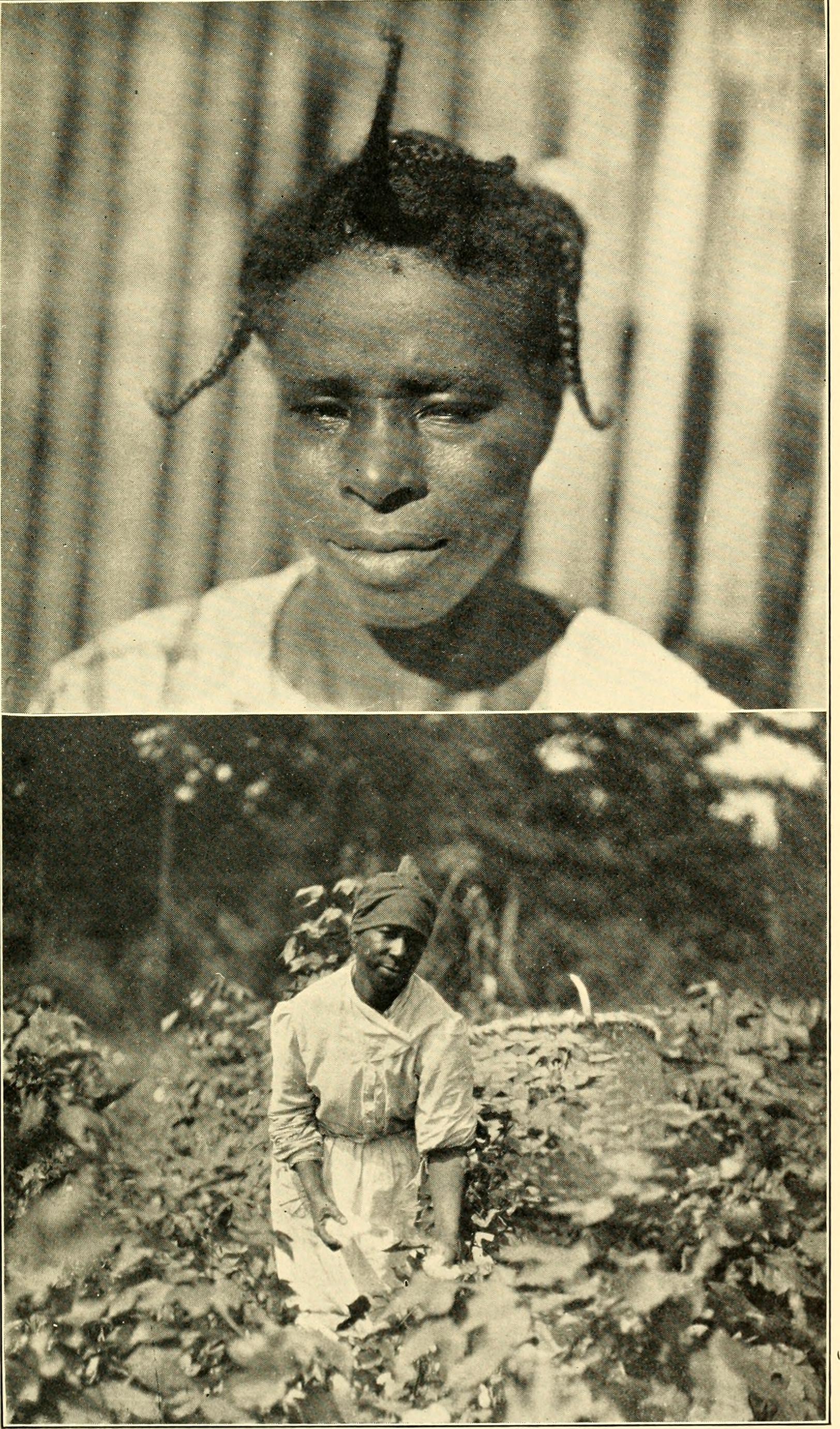
CHAPTER VII PROPHETIC SIGNS OR OMENS Nature of Prophetic Signs. In this class of "signs" we approach more nearly the familiar English signs or omens. The expression is still that of causal relationship, but the action is accidental or outside of personal control and is indicative of results soon to occur. Chance, or some other individual, sets in motion the causes and you suffer the consequences. The general formula is: "If something (outside of your control) behaves in such and such a manner, so and so will result." Here again the classification is not absolutely clear cut; some of the omens may be counteracted by proper behavior on the part of the individual upon whom they act, while in other cases the classification will be enlarged to take in "controlsigns," for the sake of getting together in one place all of the material relating to certain particular objects. The Swish of Skirts. Many of these signs cluster around things feminine in association, though not to the same extent as in the former class of beliefs. Yet the women are, after all, the chief observers of these signs whether they relate directly to things feminine or not. One widespread feminine belief is that if you accidentally drop a dishrag, some one is coming to visit you, ^ or, in its more general form, some one '141, and 341. Moore, R. A., Superstitions from Georgia, J. A. F. L., vol. 7 (1894), p. 306.
440 Folk Beliefs of the Southern Negro hungry is coming. ^ Even In this case, however, the omen may be averted; If you do not want the Individual to come, put the dropped dish-rag In molasses. 2 A dropped spoon or piece of silver vies with the doorbell as an announcer of company, ^ and just as the shrewd housewife can tell the sex of the visitor by the sound of the door knocker, so too does the omen-expert know that a fork dropped means a male visitor while a dropped knife means a woman coming. * Still others limit the sign to the dropping of a knife only and to a bumblebee coming In through the window, ^ a belief found In Herefordshire as well, ^ while In other parts of England a dropped fork Is considered ominous of visitors provided It sticks up In the floor. ^ A dropped spoon with the Negroes is a bad omen (disappointment) ^ If you pick It up, but the luck may be changed by having some one else pick It up for you. ^ If the comb is dropped while you are combing your hair a visitor Is coming; ^ ° while a piece of meat dropped from your mouth at the table is a sign of death. ^ ^ Two forks Inadvertently set at one place mean two husbands ^ ^ (or a wedding before Christmas). ^ ^^ This also applies to two teaspoons in 1 133, 246, 288, 336, and 370. Williamson, G., Superstitions from Louisiana, J. A. F. L., vol. 18 (1905), p. 230. Lee, C, Some Negro Lore from Baltimore, J. A. F.L., vol. 5 (1892), p. 110. 233. 3 173. * 152, 233, and 288. 5 141. 8 Leather, E. M., Folk-Lore of Herefordshire, p. 85. ^ Lean's Collectanea, vol. 2, p. 318. 89. 9 159. 10 61. 11 112, and Thomas and Thomas, Kentucky Superstitions, p. 149. 12 152, and 371. i!'264.
Prophetic Signs or Omens 441 one saucer, ^ this latter being the characteristic English version. ^ If a Negro, without thinking, takes another helping of bread when he already has a piece of bread on his plate a hungry visitor will soon be arriving ^ — another belief of European ^ origin. If a picture falls off the wall the house is haunted, ^ or, more generally, a sign of death ^ — this latter belief being European. ^ Others restrict the sign to a family portrait, ^ while still other Negroes say that it must be a picture of some one already dead and the picture must fall on its face. ^ Connected also with household equipment is the widespread Idea that if you accidentally trip a chair over In getting up you will never marry i " — at least not within a year. ^ ^ This latter has its European ^ - parallel, as have most of the more general Negro beliefs connected with the household. The Fatal Mirror. This same principle is Illustrated by the very prevalent notion that the breaking of a mirror leads to seven years of trouble. ^ ^ Others say that the number of pieces will indicate the number of years of bad luck you will have, ^ " but the English 1141. 2 Leather, E. M., Folk-Lore of Herefordshire, p. 114. Lean's Collectanea vol. 2, p. 327. 3 164. * Fogel, E. M., Belief sand Superstitions of the Pennsylvania Germans, p. 84. ^ Thomas and Thomas, Kentucky Superstitions, p. 285. 6 141, 189, 341, and 379. ^ Lean's Collectanea, vol. 2, p. 555. 8 358. 991. 1 " 108, 168, and 288. 1162. ^^ Lean's Collectanea, vol. 2, p. 321. 13 141, 336, 341, and 397. Also Lee, C, Some Negro Lore from Baltimore, J. A. F. L., vol. 5 (1892), p. 111. Williamson, G., Superstitions from Louisiana, J. A. F. L., vol. 18 (1905), p. 229. The belief may be a survival of the piimitive idea of the soul being connected with the reflection, the sou! being injured when the mirror is broken. 1^ 91, and Thomas and Thomas, Kentucky Superstitions, pp. 171-72.
442 Folk Beliefs of the Southern Negro version is that seven 3^ears of bad luck will result, also adding that it is unlucky to place a mirror in water. ^ The Negroes not only disregard this belief regarding ill luck coming from placing a mirror in water, but even go so far as to prescribe the placing of the fragments of the broken mirror in running water as a means of avoiding the ill luck (the trouble will pass away in seven hours), ^ the running water being supposed to "wash de trubbl' away." ^ Other defenses against this ill-luck demon consist of burying the broken fragments at the foot of a green tree, ^ of taking a drink from a lake, ^ or of simply burying the broken pieces — this latter applying especially to a mirror broken on Sunday. ^ Salt-spilling. Possibly because of the use of salt as a means of preserving a dead body, this mineral is regarded as being more or less fetishistic in nature. There Is also the possibility, it seems to me, that salt, being one of the earliest articles of trade and often Imported, might have acquired during this period a certain quality of mystery lacking in ordinary domestic products. At any rate, spilling salt is bad luck — anger ^ or a quarrel ^ — one should throw some over his left shoulder ^ or into the fire, ^ " or taste a little of It 1 Leather, E. M., Folk-Lore of Herefordshire, p. 87. See also, Knowlson, T. S.,, The Origins of Popular Superstitions, pp". 163-64. 2 189. 3 159, 362; and 396. n41. *33. «334. ^ 141. Moore, R. A., Superstitions from Georgia, J. A. F. L., vol. 7 (1894), p. 306. *341, and 336. Williamson, G., Superstitions from Louisiana, J. A. F. L., vol. 18 (1905), p. 230. 9 176, and 404. i»3g7.
Prophetic Signs or Omens 443 before he speaks ^ to avert this bad luck. Like most other salt beliefs, these seem to be of European origin, both as regards a quarrel following the spilling of salt and the throwing of salt over the left shoulder to avert ill luck. 2 On the other hand the spilling of rice or sugar is regarded by the Negroes as an omen of good luck. ^ The Flame of Fate. In the embers of the hearth smoulder other beliefs of feminine association. If a log falls off the fire it is a sure sign of company coming; * others go further and say that when a stick burns through into a long and a short piece, the piece that falls out on the floor indicates whether it is a long or a short person who is coming. ^ This belief in general seems to be European in origin. ^ Some Negroes say this falling log is a sign of bad luck, but that the bad luck may be avoided by putting the log back in the same position that it occupied before falling. ' Others say that the popping of the fire indicates a quarrel in the family, ^ this belief possibly having something to do with the taboo against burning certain woods that pop a great deal, although the belief is widespread that sparks popping out ^ (into your lap) 1 ^ are a sign of money coming. Other informants 1213. 2 Fogel, E. M., Beliefs and Superstitions of the Pennsylvania Germans, p. 363. Lean's Collectanea, vol. 2, p. 154. Knowlson, T. S., The Origins of Popular Superstitions, pp. 167-68. 3 336. * 141, 246, 316, 206, and 332. ' 146. ^Lean's Collectanea, vol. 2, p. 317. ^ 91, and Thomas and Thomas, Kentucky Superstitions, p. 132. « 141, and 44. ^ 57, and Superstitions of Negroes in New Orleans, J. A. F. L., vol. 5 (1892), p. 330. 10141.
444 Folk Beliefs of the Southern Negro claim that a letter ^ is coming and add that the "whizzing of the fire" indicates a funeral in the immediate family. ^ Once in a while you will also find the old English ^ belief that a flake of soot hanging from the grate bar indicates the visit of a stranger. * General Household Omens. The clock is another household utensil that ticks off signs as well as hours. If a broken clock suddenly strikes, ^ or if a clock strikes between the hours or suddenly stops (these two latter beliefs are English) Mt is a sure sign of death, ^ especially if there is any one in the house seriously ill. ^ Also there is the European ^ belief that if the clock strikes thirteen times it is a sign of death. ^ " If a very young child, without being told, picks up a broom and starts sweeping the house, you might as well prepare for a visitor, ^ ^ the idea apparently being that an innocent child can see things in the future that grown-ups cannot, and knows that the house must be tidied up for the company. The sudden cracking of a skillet on the fire is an omen of good ^ ^ or bad ^ ^ luck — the Negroes differ as to which. If your drinking glass breaks the person nearest you will die; ^^ if the furniture ^ ^ or looking-glass ^ ^ suddenly cracks, or if a 1 336. 2 336, and 304. * Brand, J., Popular Antiquities of Great Britain, vol. 3, p. 183. Lean's Collectanea, vol. 2, p. 318. 491. 6 53, and 189. ^ Leather, E. M., Folk-Lore of Herefordshire, p. 118. M41. 8 Southern Workman, vol. 26 (1897), p. 18. * Lean's Collectanea, vol. 2, p. 551. «63. 61,81, and 123. 141. 3 Boyle, Mrs. V. F., Devil Tales, p. 6. 341. 63. ^Southern Workman, vol. 26 (1897), p. 18.
Prophetic Signs or Omens 445 dish suddenly breaks in your hand ^ it is Hkewise a sign of death. If a lamp goes out when full of oil it is a sure sign of bad luck, - and the wise man will hastily grab such a failing lamp and blow it out so that it will not become extinguished of itself ^ — the same idea applying in European lore. * A person who stumbles at the steps in going to some one's home will know that he is not wanted there, ^ while he who falls while going upstairs will not be married within a year ^ — the European version being the direct opposite; he will be married that same year. '^ If a sick person falls down a step, ^ or if any one falls out of doors, ^ it is an omen of death. Three chairs accidentally placed in a row indicate callers;^" ivy running over a dwelling-house is bad luck;^^ while letting your biscuits burn is a sign of anger. ^ ^ Shoes and Clothing. Happenings to the apparel are indicative of various things — the apparel mentioned is perhaps more often female than male, and the women are again the fondest believers in such lore. The Negroes say that losing your apron (or belt) ^ ^ is losing your best friend; ^^ the European idea is that your lover is thinking of you. ^ ^ Shoe throwing at wed1 196. 2 81. '177. * Lean's Collectanea, vol. 2, p. 144. ^395. 6 22. ^ Lean's Collectanea, vol. 2, p. 321. 8 341. 9 22. i»126. 11 141, and Work, M. H., Some Geechee Folk-Lore, Southern Workman, vol. 35 (1905), p. 635 1 2 264. 1 3 246. 1^79, 13, and 335. 1 * Leather, E. M.J Folk-Lore of Herefordshire, p. IH. Gregor, W., FolkLore of the Northeast of Scotland, p. 87. Lean's Collectanea, vol. 2, p. 328.
446 Folk Beliefs of the Southern Negro dings is common mainly among the more educated Negroes, possibly because, to the slavery-time Negro, weddings were not matters of much ado, and also because of the fact that shoes are not worn any too often by the rural population. Besides this, old shoes are too often begged to be cast away in any such silly fashion. But even though the Negro weddingbells are not accompanied by the barbarous patter of shoes, yet these articles of dress talk in more ways than that demanded by the rural Negro who brought his new shoes back to "de dry-goods sto' " because their squeak was too muffled to attract the attention of the congregation as he paraded them down the aisle of the church. "Dese heah shoes doan' talk loud 'nuif, w'ite folks. Ah la'ks 'em all right, but de folks ska'cely know'd I had er new pair. Hain't you got no louder kind. ^"— all of which goes to show the triumph of vanity over utility in the clothing line. Sometimes the Negroes say that if your shoe strings come untied your sweetheart is thinking of you;^ but, generally the interpretation is that when your right shoe comes untied, some one is "talking good" of you, but if it be your left shoe, then some one is speaking evil of you. ^ In this and other things the Negro almost invariably regards the right side as being the lucky side, while the left side is the unlucky one. If your shoes wear out in the toes before the heels wear out you will be poor, ^ but if the heel wears out first you will steal. * It is small wonder so many ^ 141. Thomas and Thomas, Kentucky Superstitions, p. 55. Lee, C. Some Negro Lore from Baltimore, J. A. F. L., vol. 5 (1892), p. 110. 2 13, 106, 173, and 246. 3 207. *371.
Prophetic Signs or Omens 447 Negroes go barefooted when shoes force one Into the sorry alternative of poor-house or jail. It is good luck accidentally to put on a garment wrongside out, ^ but you must wear it that way until twelve o'clock. Doubtless the original idea was that of deceiving the bad luck spirits, but the belief itself is plainly of European nativity. ^ If the hem of a woman's skirt turn up and she spits on it (or kisses it) * she will surely get a new dress. ^ If a button on the front of your clothes flies off, trouble; ^ if you tear a dress the first time that you wear it, some one will lie about you before night; ^ while if you break your necklace while dressing for a party, it is a bad omen and you should not go. ^ If you find a hairpin, you have found a friend;^ if the points of this hairpin are towards you, you will catch a beau, ^ '^ or if you will hang the hairpin on a nail, you will receive a letter. ^ ^ A hairpin suddenly dropping out of your hair lets you know that your lover is thinking of you. ^ Eyes Thai See Ahead. There is a group of widely diffused signs having to do with various parts of the body in which the "right and left" motif plays a commanding role, the right, here again being connected mainly with good and the left with evil. It is 1 62, 173, 110, and 228. Williamson, G., Superstilions from Louisiana, J. A. F. L., vol. 18 (1905), p. 229. (Ohio whites). 2341. 3 Lean's Collectanea, vol. 2, p. 28. Fogel, E. M., Beliefs and Superstilions of the Pennsylvania Germans, j). 100. ^340. 5 111, 341, and 357. 6 335_ ' 112, and 342. Alabama Folk-Lore, Southern Workman, vol. 33 (1904), p. 52. 8 230. 9 35, and Ohio Whites. •»127. ' I 370. 12 112.
448 Folk Beliefs of the Southern Nero worthy of note that this idea occurs also In West Africa, the Duallas of the Cameroons speaking of the left hand as the "female" hand because it is the "inferior hand." ^ In Calabar there is a proverb: "The dust of the grave touches me, or causes a fluttering sensation in the neck or back of the shoulders when one feels wearied when digging a grave." This is "supposed to forewarn a man of his death. This spasmodic and fluttering sensation in any part of the body, or knocking the foot against anything, is a warning that something is about to happen. The first sensation does not always presage evil; sometimes a fluttering of the vein or skin is deemed a token of good; when the uduri-uden, a part of the leg on which the paddle rests, gives the sign, it shows the paddler that he must go into his canoe." ^ In the South the Negroes say that If your left eye twitches (or itches) it Is a sign of bad luck, while the jumping of the right eye is a good omen. ^ Other indications are that an itching of the right eye means that you will see something pleasant, while the left foreshadows an unpleasant sight;* the right eye, happiness, and the left eye, sorrow ^ (or anger); ^ the right eye, you will see a gentleman, the left eye, a lady, ^ while still others say that it is indicative of the fact that your creditors are after you. ^ Still others attribute a fuss ^ Burton, R. F., Wit and Wisdotn from West Africa, p. 455. 2 Ibid., p. 348. 2 13, 81, 246, and 189. Also Parsons, E. C, Folk-Lore of the Sea Islands, S. C, M. A. F. L. S., vol. 16 (1923), p. 210. Southern Workman, vol. 23 (1894), p. 16. Speers, Mary W. F„ J. ^. i^. L., vol. 26 (1913), p. 191. ^23, and 141. Lee, C, Some Negro Lore from Baltimore^ J. A. F. L., vol. 5 (1892), p. 111. * 125, 288, 336, and 341. «106. ' 101. * Richardson, C, Some Slave Superstitions, vol. 41 (1912), p. 248.
Prophetic Signs or Omens 449 in the family to the itching of the left eye. ' Some make the matter more involved by saying, "If your left eye jump, if your mother's first child was a boy, it is bad luck; if a girl, good luck. If your right eye jump, if your mother's first child was a boy, it is good luck; if a girl, bad luck." ^ Others alter the whole proposition: "When yo' right eye quivvahs dat sho' means bad trubbl', but if yo' lef eye quivvahs on New Year's Day, den you sho' gwine lose one uv yo' fambly in less dan two months time." ^ In slavery times an itching of the left eye meant a whipping within twenty-four hours. * In European lore the itching of the right eye was associated with things pleasant, and the left with seeing something evil, * though in parts of Scotland an itching of either eye signified tears and sorrow. ^ Follow Your Nose. An itching of the nose (at the end) ^ signifies company coming ^ (the characteristic English version), ^ though some Negroes go still further and interpret the itching of the right nostril to designate a man and the left a woman coming to see you, ^ ° while others reverse it and attribute the left to the man and the right to the woman * ^ — a view found also in Devonshire. ^ ^ In either case the company may be prevented from coming by an up^36. * Smiley, P., Folk-Lore from Va., S. C, Ala., Ca., and Fla., J. A. F. L., vol. 32 (1919), pp. 381-82. =•141. * Southern Workman, vol. 23 (1894), p. 46. ' Fogel, E. M., Beliefs and Superstitions of the Pennsylvania Germans, p. 97. 8 Gregor, Rev. W., Folk-Lore of the Northeast of Scotland, p. 27. 8 61J292, 321, and 341. ' Brand, J., Popular Antiquities of Great Britain, p. 174, vol. 3. 1 0 335, » 1 131,' and 246. ^^ Lean's Collectanea, vol. 2, p. 28;'5. 29
450 Folk Beliefs of the Southern Negro ward rubbing of the nose. ^ Others say that an itching left nostril means a woman talking about you, and the right, a man, ^ though here again the sex is at times reversed by some. ^ Others attribute trouble, sorrow, * quarrels, ^ or the receiving of a letter, ^ to the itching of the nose — in the Northern counties of England "it is a sign that you will be crossed, or vexed, or kissed by a fool," ^ while in other parts of Europe it is the sign of receiving a letter. ^ Ears That Talk. If the ear burns, some one is talking about you;^ the right ear, some one is saying good things about you; the left ear, some one is speaking evil of you ^ ^ — this being the most general European version. ^ ^ The Negro, however, "goes the Englishman one better." To make the "back-biter" bite her tongue, in case the left ear is itching, he will spit on his finger and make a crossmark on that ear, ^ ^ or else a woman whose ear is itching may tie a knot in the corner of her apron to make the gossip's teeth ache until the knot is untied. ^ ^ The Itching Palm. If your right hand itches you will get some money, if your left hand, a letter. ^ * 161. 2 Richardson, C, Sovie Slave Superstitions, Southern Workman^ vol. 41 (1912), p. 248. 3321. <23. 5 150. «69. ' Hendersoii, W., Folk-Lore of the Northern Counties of England, pp. 84-85. ^ Fogel, E. M., Beliefs and Superstitions of the Pennsylvania Germans, p. 82. ^341. Davis, H. C, Negro Folk-Lore in South Carolina, J. A. F. L., vol. 27 (1914), p. 248. 1" 13, 132, and 159. Parsons, E. C, Folk-Lore of the Sea Islands, S. C, M. A. F. L. S., vol. 16 (1923), p. 248. 11 Henderson, W., Folk-Lore of the Northern Counties of England, p. 85. 1^141. Lee, C, Some Negro Lore from Baltimore, J. A. F. L., vol.5 (1892), p. 111. 1^13. ' " 13, 106, 125, 159, 288, and 341.
Prophetic Signs or Omens 451 In most cases, however, it is necessary to spit on your itching right hand and thrust it into your pocket, ^ or scratch on wood ^ in order to make the desired wealth come, while others add that you must be careful not to tell any one. ^ By still others the itching of the left hand is interpreted to mean the receiving of money; the right hand, shaking hands with a stranger * (or your best friend). ^ Elsewhere the itching of the right hand means receiving money, the left hand, paying out money. ^ This seems to be the general English version, ^ although in Germany the hands seem to be reversed. ^ Feet, Arms, and Face. If your foot itches it is a sign that you are going to walk on strange land ^ (provided your foot is clean).!" Others hold that such itching indicates a speedy call to the cemetery, ^ ^ though another version is that the itching of the right foot on a journey indicates that you are going where you are welcome, the left foot, where you are unwelcome. ^ ^ One informant says that an itching right foot signifies that you are standing over a grave. ' ^ The English version ' Cable, G. W., The Grandissimes, p. 86. Richardson, G., So7ne Slave Superstitions, Southern Workman, vol. 41 (1912), p. 248. 2 189. »364. ^52. ^ Lee, C., Some Negro Lore from Baltimore, J. A. F. L., vol. 5 (1892), p. 110. « 189, and 397. ' Henderson, W., Folk-Lore of the Northern Counties of England, p. 85. Brand, J., Popular Antiquities of Great Britain, vol. 3, p. 177. * Fogel, E. M., Beliefs and Superstitions of the Pennsylvania Germans, p. 86. 9 159, and 246. Also Parsons, E. C, Folk-Lore of the Sea Islands, S. C, M. A. F. L. S., vol. 16 (1923), p. 210. 1 « 260. 1117, 141, 336, 382, and 395. Work, M. H., Some Geechee Folk-Lore, Southern Work77iaH, vol. 35 (1905), p 634. 12 78. 13 189.
452 r\)LK Beliefs of the Southern Negro is tluit such itcliing points to a walking over strange ground. ' Accidentally stumping the right foot predicts gcH^l luck, but if the left foot is stumped you are sure to ha\c bad luck. - Bad luck upon stumping the left foot may be averted by turning around ^ (twice * or seven times). '» This must have been to deceive the ill luck spirit, since the Negroes say this "cuts de bad luck o^."' Retracing one's steps on stumping the left ti>c will avoid the ill luck (throw the spirits off your track) but one should never do this when the right toe is stumped. •■' Others say that the stumping of the left toe on a visit is a sign that you are not wanted at that place' If you should happen to strike your left elbow while leaving the room on an undertaking of any kind, go back. Bad luck will surely overtake you, ** though good luck comes from kissing the bumped arm. ■' An itching of the lips indicates that some one is talking disrespectfully of you;'" if the right side of your face burns it is a sign of bad luck; ' ' and if the crown of your head itches you may expect to be advanced to a more honc^rable position in life. ' " When youv ilcsh jumps (c^uivers) it is a sign of death, ' •* especially if it be the flesh of your left arm. ' * * Lam's Collcdanea, vol. 2, p. 287. Also Iloiulorson, W., Folk-Lore of the Northern Counties of Encjlaiid, p. 85. Loathor, I'L INI., Folk-Lore of Herefontshire, p. 88. M41, 2U),:V2;\, ami IVM. Parsons, E. C, Folk-Lore of the Sea Islands, S. C, M. A. F. L. S., vol. 1(> (1923), p. 210. » 22, 216, and 2C8. M02. »6(>. •191. '224. •,VM\, 'MV\, and 37(>. '57, and Southern Workman, vol. 23 (1894), p. 16. • 224. 1 0 23. ' » 236. 1 1 23. ' ».301. ' * 246.
Prophetic Signs or Omens 453 Sneezing Signs. Sncc/ing superstitions arc widespread in Afro-America as well as in almost all other parts of the world, primitive or civilized. Sneezing is regarded as a bad omen by the T'.we tribes of Africa because it indicates that the indwelling spirit is about to quit the body, affording an opportunity for a homeless spirit to enter in and cause illness. ' A similar belief leads the Calabar natives to exclaim, "Far from you!" when a person sneezes, with an appropriate gesture as if throwing off some evil. '^ The Southern Negro says that if you sneeze with food in your mouth it is a sure sign of death. ^ There seems to be no European parallel to this belief and 1 rather suspect an African origin; the dangerous spirits, attracted by the food, being more likely to approach the person and to enter the body while a person is eating. 'I'his seems all the more likely since the Negroes say that the death may be avoided by spitting out the food and rinsing the mouth thoroughly with water, " while If the food Is swallowed, death Is certain ** — all the more so if it is molasses (sweet food and hence attractive to spirits) one is eating. « It Is also considered bad luck to yawn at the table. ^ A very common English sneezing rhyme is: Sneeze on Monday, you sneeze for danger, Sneeze on Tuesday, kiss a stranger, Sneeze on a Wednesday, sneeze for a letter, ' Burton, R. F., Wil and W iadom from West Africa, j)..'iTIi. ^ Mills, A. B., Ewe-Npeaking I'dopien, j). 90. "SI, 57, 282, 148,:}4I,:i4
454 Folk Beliefs of the Soltherx Xegro Sneeze on a Thursday, something better, Sneeze on a Friday, sneeze for sorrow. Sneeze on a Saturday, see your sweetheart tomorrow. * W ord for word the same rhyme is found with the ^lississippi Negroes - thus showing the tenacity of |X)pular behefs expressed in verse form. Other informants add a final two lines: Sneeze on Sunday, if its meek. The devil will have you the rest of the week. ' The Xegro South is a fossil bed of European folklore— perhaps further investigations will bring to light these last two lines in England, though there is always the possibility of a native American development. This latter line is apparently important; all that one Georgia informant is able to remember of this verse is, "If you sneeze on Sunday, you'll catch the devil on a ^Monday." ^ Sneezing early in the morning indicates that you will see your lover that day, '" or, as others say, simply that company is coming. * If you sneeze seven (or nine) ' times in succession you will die. * Hair. Strictly European ^ is the idea that a person's longevity may be tested by throwing his hair combings into the fire. If they flame up and ^■^ Lenrts CoUectarvea, vol. 1, p. S48. See also, Henderson, W., Folk-Lore of the Xortfiem CourUies of England, p. 92. *278. » 6, and 3.39. *233. *.36. * 141. Williamson, G., Superstitiong from Louisiana, J. A. F. L., vol. 18 (19a5;, p. 2.30. '311. * 110. * Henderson, W., Folk-Lore of the S'orthern Counties of England, p. 84. Leather, E. M., Folk-Lore of Herefordshire, p. 88. Lean's CoUeclanea, voL 2, p..330.
Prophetic Signs or Omens 455 burn quickly that person will live for a long time, while if they smoulder away slowly he will soon die, ^ though some Negroes reverse the usual readings. ^ If a person be smoking and his pipe suddenly blazes up it is likewise a sign of death; ^ while if a person accidentally spits on himself, some one Is lying about him. ^ If the hair comes out in unusually large quantities when combed it is the sign of sickness, ^ but gray hairs at an early age are indicative of future riches ^ or of old ideas. ^ Features and Fate. These signs connected with the human body gradually lead over into the judging of character by physical peculiarities. Perhaps the classification here is not as exact as it might be, but these expressions of character seem to be more closely related to causal relationships aloof from human control than to the mistakes in natural science which have already been considered. Thus a wide space between the front teeth indicates a liar, ^ a person who cannot keep a secret, ^ a nagging person, ^ '^ or a person that is to live far away from the home folks. ^ ^ The European idea is that such a person will be wealthy and will travel. ^ "^ A person whose eyebrows meet is a "close 1 112, and 141. Lee, C, Some Negro Lore from Baltimore, J. A. F. L., vol. 5 (1892), p. 110. 2397. 3 100. M89. o 23. « lib, and 189. ' 159. «152. 3 385. »"91. 1136. ^^ Lean's Collectanea, vol. 2, p. 126.
456 Folk Beliefs of the Southern Negro preserver" (a miser) ^ or a deceitful individual, ^ beliefs slightly akin to the European ones of being a fortunate fellow or one who will be hanged, though in the Icelandic sagas such a person was considered as a hamrammer or a werewolf. ^ Small ears denote roguishness or stinginess,* large ones generosity;^ this latter idea being found in Europe, ^ as is also ^ the idea of "cold hands, warm heart," ^ Coarse hair designates a good-natured individual, fine hair a quick tempered one, ^ while a hairy chest means riches. ^ "^ To the follower of anthroposcopy, even the color of the eyes has a meaning; a Negro baby with gray eyes can see visions; ^ ^ and there is a Gullah verse: Blue gum, yalluh eye, Black nigguh, berry sly; Yalluh eye, blue gum, Black nigguh, lub rum. ^ ^ ^'Twin toes" (toes joined by a web) are considered good luck both in the South ^ ^ and in England and Scotland. ^ * Long fingers indicate musical capacity. ^ * 1 91, and 14. 2 297. ^ Henderson, W., Folk-Lore of the Northern Counties of England, p. 84. Lean's Collectanea, vol. 2, p. 125. ^342. M26. ® Lean's Collectanea, vol. 2, p. 307. ^ Fogel, E. M., Belief s and Siiperstitions of the Pennsylvania Germans, p. 363. 8 188, and 290. M26. *"141, and Davis, H. C, Negro Folk-Lore in South Carolina, J. A. F. L., vol. 27 (1914), p. 248. 1 1 364. ' 2 Gonzales, A. E., The Black Border, p. 136. 1 3 289. ' * Lean's Collectanea, vol. 2, p. 301. Gregor, W., Folk-Lore of the Northeast of Scotland, p. 26. 1U4 and 218.
Prophetic Signs or Omens 457 A perspiring nose denotes meanness, ^ while a woman whose dress-front is always wet with perspiration is sure to be a tattler, - A sloe-footed woman is always hard to get along with, ^ and a left-handed person owes the devil a half day of work. ^ A mole on the left side of the face is a sign of poverty, ^ while a Negro with dark, pink finger nails is sure to be deceitful. ® Tiny white specks appearing under the finger nails are called "gifts" and signify the coming of a present of some kind both in the South ^ and in England. * The English version of the significance of the particular fingers on which the white spots appear is: Thumb — a gift. Fore — a friend. Middle — a foe. Ring — a letter (or sweetheart) to come. Little — a journey to go. ^ One Mississippi Negro version is: Thumb — loss. First finger — cross. Second finger — gain. Third finger — gift. Little finger — "sweetum" (sweetheart). ^ " Other Negroes say that the number of white spots under your finger nails betokens the number of friends 1370. 291. "322. <36. *371. «61. M41. ^ Brand, J., Popular Antiquities of Great Britain, vol. 3, p. 178. Gregor, W., Folk-Lore of the Northeast of Scotland, p. 126. * Lean's Collectanea, vol. 2, p. 292. i«278.
458 Folk Beliefs of the Southern Negro you have. ^ In England yellow spots on the nails of fingers indicate coming death. ' There they are sometimes called "death-mould;" the Negro calls them "death-moles" or "death-mules," and sometimes says they are blue spots instead of yellow ones, ^ but always the sign is death. * A bump on the tongue (called a "pip") is a "lie bump" and indicates untruthfulness;^ the same belief being prevalent in Europe and other places even as early as 270 B.C. " A fever blister or cold sore on the lip (on a Monday or Thursday) "^ indicates that that person has been courting too much. ^ A tooth falling from a person's mouth gives notice of death; ^ as does also the swallowing of a tooth. ^ ° When a man's sound teeth ache his wife is pregnant. ^ ^ If a girl resembles her mother "she sho' is bawn fer bad luck." ' ' Even mental states may be superstitious semaphores. One Georgia Negro very characteristically says: "Should you be the subject of a deep depression of spirit, contrary to your usual constitutional buoyancy and liveliness, it is a sign that you are about to receive some agreeable intelligence." Preferences, as well, are earmarks of the future; if a young girl likes to cook with green wood she will marry a young man, but if she prefers dry wood she will be wedded to an old one. ^ ^ 1246. ^ Lean's Collectanea, vol. 2, p. 555. 3 286. ^81, 112, and 141. M81. ^Lean's Collectanea, vol. 2, p. 296. See also, Fogel, E. M., Beliefs and Superstitions of the Pennsylvania Germans, p. 89. ' 240, and Ohio Whites. 8 290. » 405. ' « 136. 1114. 1 2 272. 1 3 108.
Prophetic Signs or Omens 459 Love and Wedding Ofnens. This brings us to various love and wedding omens. The tactless swain who writes you with a pencil lets you know that his love for you is getting cold. ^ A flock of birds flying over the church at the time of a wedding forecasts a happy future for the married couple. ^ If it rains on your wedding night you will shed as many tears as there are drops of rain, while rain on the day after marriage marks many sorrows for the bride. ^ Others say that a rain on the wedding day means an untrue mate, * while still others interpret rain on the wedding day to mean death for the man first, while rain on the following day indicates that the bride will die first. ^ Bright sunshine on the wedding morn is good luck; cloudy (or rainy) ^ weather, bad luck; ^ while a "muddy (rainy) wedding" means a slovenly wife. ^ In Europe "happy is the bride that the sun shines on;"^ a rain while returning from church signifies a life of bickering and unhappiness; while a rain in the morning points to the groom burying the bride — a rain in the afternoon indicating the opposite. ^ o With the Negroes the first newly-wed to sit down ^ ^ or the first one to "step off" after they are married ^ - will be the first to die. It is also considered extremely bad luck to drop the wed113. *91, and 141. Thomas and Thomas, Kentucky Superstitions, p. 66. <93. 5 22, and Southern Workman, vol. 23 (1894), p. 46. 6 63. '57. 8 13, and 342. ^ Chambers, Popular Rhymes of Scotland, p. 343. 1 " Lean's Collectanea, vol. 2, p. 88, and Informant 69. 1 1 22. 12 141, and Southern Workman, vol. 23 (1894), p. 46.
460 Folk Beliefs of the Southern Negro ding ring during the ceremony, ^ and if a baby cries at a wedding the couple will not be happy. ^ Cross-eyed Folks. Other omens are centered around human beings and their activities. It is bad luck to meet a cross-eyed woman, ^ especially the first thing in the morning, ^ or worse yet, on Monday morning, since this signifies bad luck all the week. ^ Others say that a cross-eyed person can bring harm only to those of the same sex as themselves, ^ but almost all Negroes shy at meeting cross-eyed persons and especially at looking them in the eye, "^ this latter apparently being a remnant of the evil-eye superstition. If you sit in church beside a cross-eyed lady your beau will not escort you home, but the ill luck from meeting such a person may be averted by crossing your fingers ^ or legs, by turning around three times, by spitting in your hat, ^ by spitting on the ground and grinding the spittle into the earth with your heel, ^ "^ or by looking at your nails. ^ ^ In Europe it is also considered ill luck to meet a squinting woman, but the misfortune is averted by speaking to her. ^ ^ The Deadly Female. With the Negroes men are also given the preference on New Year's day. For a 163. 2 189. 3 90,251, and 327. 4 152, and 224. 6 320, 189, and 61. 6 63. ^ 141, 286, and 288. Smiley, P., Folk-Lore from Va., S. C, Ga., Ala., and Fla., J. A. F. L., vol. 32 (1919), pp. 381-82. Work, M. H., Some Geechee Folk-Lore, Southern Workman, vol. 34 (1905), p. 696. 8 176, and 189. 8 91. Bullock, Mrs. W. R., The Collection of Maryland Folk-Lore, J. A. F.L., vol. 11 (1898), p. 8. i°404. 11189. 1 2 Lean's Collectanea, vol. 2, p. 193, and 201.
Prophetic Signs or Omens 461 dark man to be the first to enter your house on that day Is a sign of good luck, ^ but for a woman to be the first to enter bodes bad luck, especially with your chickens. ^ In Lancashire and elsewhere a dark man is preferred to a light one as the first visitor on New Year's day, a possible remnant of long past strife between the dark haired Celtic tribes and the blond Teutons ^ — and almost everywhere the coming of a woman first is considered most unlucky. * In some cases the Negroes considered it unlucky to meet a (black) ^ woman the first thing Monday morning under pain of bad luck all the week ^ or under pain of having men company all the week. ^ "If you meet a woman first when going to business, turn back ten steps and then go on to keep from being disappointed." ^ If you meet a red-headed woman a gray mule is on behind, ^ while meeting a one-legged person is always an ill omen. ^ ^ Other Human Omens. If two persons happen to say the same thing at the same time, the first one to make a wish will get it. ^ ^ Others say that you must kiss your hand five times and make a useful wish for each kiss, ^ 2 while still others claim one of the two will get a 1106. 2 183. ' Hardiwick, C, Tradition, Superstition and Folk-Lore, p. 63. ^300. Brand, J., Popular Antiquities of Great Britain, vol. 1, p. 20. Henderson, W., Folk-Lore of the Northern Counties of England, pp. 55-56. Fogel, E. M., Beliefs and Superstitions of the Pennsylvania Germans, p. 98. Leather, E. M., Folk-Lore of Herefordshire, p. 90. 6 141, and 224. 6 79, 189, and 141. Smiley, P., Folk-Lore from Va., S. C, Ga., Ala., and Fla., J. A. F. L., vol. 32 (1919), p. 381. '79. 8 189. 9 327. 1 « 206. 1 1 339, and Ohio Whites. 12310.
462 Folk Beliefs of the Southern Negro letter, ^ provided her companion pinches her. ^ If you hear a person talk and do not see the person, you will go on a long journey, ^ and if a person appears on the scene when you are talking about him, that person will live for a long time; ^ but should that person put his hands upon you while you are talking about him you will die. ^ The idea of long life for a person who appears when talked of is found in European lore as well. ^ It Is good luck to meet the same person on the way both to and from any place. '^ If some one steps on your heel that person is going to take your sweetheart away from you. ^ If you blot your paper while writing to a person, that person is thinking of you;^ if you drop your money while going to the store, the thing you desire to purchase is not there; and if you fall out of bed, it is a sign that your mother will run you out. 1 " If sudden cold chills run up and down your back, it is a sign that a rabbit (or squirrel) ^ ^ is running over your grave. ^ - The English version is that a person is walking over your future grave. ^ ^ A bell apparently ringing In your ear points to death ^ ^ in the direction from which the sound seems to come. ^ ^ 1 100, and 336. 2 6. 3 207. *41, and 233. ^ Moore, R. A., Superstitions from Georgia, J.A.F. L., vol. 7 (1894), p. 306. ^ Lean's Collectanea, vol. 2, p. 563. ' 141, and Thomas and Thomas, Kentucky Superstitions, p. 229. 8 288. 3 399. i"373. 1 1 402. 1^131, and 141. Also Work, M. H., Some Geechee Folk-Lore, Southern Workman, vol. 35 (1905), p. 634. 1' Henderson, W., Folk-Lore of the Northern Counties of England, p. 85. Lean's Collectanea, vol. 2, p. 304. 1 « 164, and 188. 1^99.
Prophetic Signs or Omens 463 If some one calls you three times In your sleep you will surely die, ^ the same being the penalty for answering a mysterious voice of any kind. - In England it is said that a call in the voice of some absent person signifies death. ^ The sediment of the sugar in the form of froth rising to the top of a cup of coffee indicates money coming ^ — another belief of European extraction. ^ If you drop your book you will miss your lesson for that day, no matter how hard you have studied. « Such a mishap may be averted, however, by stamping the book before you pick it up, '^ or by getting some one else to pick it up for you. ^ If a match in your hand burns entirely up without breaking, it is a sign that your sweetheart loves you. ^ I have already mentioned the matter of lucky numbers; I might add, however, that, as a general rule, even numbers are considered lucky 1 ^ and odd numbers unlucky. ' ^ The Wise Old Moon. Moon-lore is important, not only in agriculture but in other matters as well. It is always considered bad luck to see the new moon through the tree-tops ^ - — many "entanglements" will follow 1 ^ in the shape of whippings, ^ " sickness, ^ ^ or death in the family. ^ ^ If the disc is seen free from all 1 133. ''306. Thomas and Thomas, Kentucky Superstitions, p. 288. ' Henderson, W., Folk-Lore of the Northern Counties of England, p. 30. ^57. ^ Lean's Collectanea, vol. 2, j). 318. 6 87, and 123. ^ 141, and Thomas and Thomas, Kentucky Supersiitions, p. 15. 8 215. 8 164^ 179, and Ohio Whites. 10 141. 11 11. 1M3, 106, 217, 224, 234, and 297. 1^404. 1 ' 364. 1 * 122. 16 36.
464 Folk Beliefs of the Southern Negro obstructions, however, it is good luck. ^ Informants vary as to the lucky shoulder over which to look at the moon. Some insist that joy or good luck results from first seeing it, clear, over the right shoulder, ^ while anger and disappointment (lasting until the change of the moon) ^ come from seeing it over the left shoulder. * Others, however, are equally Insistent that seeing the new moon over the left shoulder means that you will have good luck, ^ or that you will see your sweetheart within twenty-four hours. ^ The European version agrees that It Is bad luck to see the new moon through branches, but Insists that the left, and not the right shoulder is the unlucky one. ^ If you see the new moon through the crack of a house you will see somebody next day you did not see that day. » The number of stars within a lunar halo indicates the number of one's friends who are going to die soon;^ while a shooting star stands for a soul that has just gone on ^ " (the European says, "a death warning"). ^ ^ If a comet appears it is a sign of war ^ ^ and famine, the same being also the case when the "elements are red"; ^ ^ the former belief being found likewise in Europe. ^ * The Voice of the Elements. One Negress informs me that while In Birmingham, Ala., she saw a small 1141. 2 141, and 162. 3 159. * Moore, R. A., SuperstitionsfroniGeorgia, J. A. F. L., vol. 7 (1894), p. 205. *404. "278. "> Dyer, T. F. T., English Folk-Lore, p. 37. Fogel, E. M., Beliefs and Superstitions of the Pennsylvania Germans, p. 131. Lean's Collectanea, vol. 2, p. 182. 8 285. 9 Hawkins, J., An Old Mauma's Folk-Lore, J.A.F. L., vol. 9 (1896), p. 131. 109. 1 ^ Lean's Collectanea, vol. 2, p. 556. 1271, and 179. »»67. 1 * Lean's Collectanea, vol. 2, p. 325.
Prophetic Signs or Omens 465 whirlwind which ended up in front of a certain house. The next week some people were arrested in that house for stealing. Thus, she states as a certain and original "sign," that the direction taken by a whirlwind indicates the direction of a thief. ^ Thus far I have not been able to locate this superstition elsewhere; perhaps many signs have arisen from such hasty generalizations, as, for instance, the belief that the location of a whirlwind indicates the spot where a quarrel will soon occur. - A little rain with large drops is said to be a "death-rain," ^ that is, a sign of death;* it is also a sign of death when the rain falls crosswise instead of straight down. ^ After a hard rain you will find money if you look closely enough. ® If a thunderstorm comes when a person is critically ill that person will surely die. ^ In many parts of Europe it is said that a green, hot, or black Christmas makes a fat churchyard. ^ The Negroes have much the same idea; a warm Christmas, many deaths, ^ while others pay attention to the brightness or the cloudiness of the day. One Negro servant was given Christmas Eve and Christmas day as holidays. She came to work Christmas morning (it was raining) and when questioned by her mistress she replied: "Why yo' see, hit's lak dis': When us haves a brite Chrismus hit's de sign white folks is gwineter die, an' heaps uv 'em, an' when us haves a dark Chrismus hit's de sign 1141. 2 61. »61. «399. MOO. 6192. '189. ^Lean's Collectanea, vol. 1, p. 367, 371, and 383. 9 67. 30
466 Folk Beliefs of the Southern Negro niggers is sho' gwineter die. Us allers haves a meetin' (after a rainy Christmas) ter pray fer de niggers de Lawd is gwineter call durin' de yeah, an' I knowed I'd hab ter hab termorrow so I jes' cum ter work terday." ^ The following beliefs are more miscellaneous in type. Three rocks in a row indicate a buried treasure near by; ^ if most of the cotton blossoms are white in the morning you will have a good crop, if red, a poor one;^ if you see the shadow of an animal before you see the animal himself you will see somebody you do not want to see; ^ while letting the first fish of the day fall back into the water means that few fish will fall to your lot that day. ^ Animal Harbingers. This brings us to the matter of animal signs, which serve right and left as omens of good or of bad luck. Exactly the same thing is true in Africa, Certain notes from the prophetbird at the beginning of a journey are sufficient to reverse the best laid plans, while other notes send the travelers on with every assurance of success. ^ Similar is the great king-fisher (Usari), whose cry on the right of the hearer indicates good, but on the left, evil. ^ When animals behave contrary to their usual nature it is often considered as an omen — probably because it is peculiar, hence fetish. "The crowing of a cock in the middle of the night is considered by West Africans a bad omen, and the animal is forthwith 1349. 233. 3 141. *352. 6 150. ^ Croriise and Ward, Cunnie Rabbit, Mr. Spider and the Other Beef, p. 175 (note). ^ Burton, R. F., Wit and Wisdom from West Africa, p. 381.
Prophetic Signs or Omens 467 killed." 1 "... A hen crowing like a cock in the morning means the death of a woman; some people kill the hen. If a hen crows several times, the owner offers it anything it will eat and gives it away after praying; then only one person will die." ^ All of these animal actions are carefully observed. "The rat Benda, running across your path from left to right is good; from right to left fairly good; should it appear from the left and run ahead in the direction that you are going, 'Oh! that is very good!' but should it run towards you, well, the best thing for you to do is to go back, for you are sure to meet with bad luck!" ^ The voice of the Obin-ugua, a large white bird whose note resembles the canoe chant, can turn the tide, so the natives of old Calabar believe, * and the Yorubas say that "when the Ogboya (an animal about the size of a cat) strikes its tail thrice on the ground in any town, that town will be deserted." ^ This behavior of animals is even associated with natural phenomena, since the Vey people say that when it rains while the sun is shining it is a sign that a leopardess has just given birth to young. « Cats. Perhaps the most common animal omens among both whites and colored of the South are those relating to cats, and especially to black cats. Aunt Vinie, an old Negress, claims black cats to be mankind's greatest enemies. She claims that they are the cause of most of the unhappiness, failures, sick1 Ibid., p. 105. 2 Thomas, N. W., Anlhrop. Rept. on Sierra Leone, pt. 1, p. 90. ' Nassau, R. H., Fetichism in West Africa, p. 195. '' Burton, R. F., Wit and Wisdom from West Africa, p. 377. ^ Ibid., p. 300. « Bergen, F. D., Current Superstitions, M. A. F. L. S., vol. iv (1895), p. 156.
468 Folk Beliefs of the Southern Negro nesses, and deaths in the world, and that careful precautions must be taken to throw off their hoodoos. ^ As one might suspect from the wide prevalence of these beliefs and from their uniformity, in contrast to the decided variations of conjuration beliefs, they are mostly of European origin. Frigg was the Germanic Venus, and as the wife of Wodan, drives in a chariot drawn by cats, the cat being sacred to her. ^ Besides, the cat, like the boar, was an Aryan personification of storm and tempest, and hence associated with witches who were mainly wind makers. ^ According to a common English ^ (and Negro) ^ expression, a black cat is said to be a witch. Many of the Negro cat beliefs are found in England. A person should never take a cat with him when moving to another house, ^ and it is ill luck to meet a black cat, ^ though the misfortune may be averted by throwing an old iron nail at the animal. ^ In considering the Negro beliefs concerning cats, we shall not restrict ourselves entirely to omens, but include some of the directed cat-signs as well. Most common of all is the English belief, mentioned above, that it is extremely unlucky for a black cat to cross your path ahead of you ^ — some say that this is because a black cat is a haunt and can put a spell on 1116. 2 Fogel, E. M., Belief sand Superstitions of the Pennsylvania Germans, p. 12. ' Hardiwick, C, Traditions, Superstitions and Folk-Lore, p. 164. ^Newell, William W., Negro Superstitions. of European Origin, J. A. F. L., vol. 12 (1899), pp. 294-95. 'Steiner, R., Superstitions and Beliefs from Central Georgia, J. A. F. L., vol. 12 (1899), p. 268. * Lean's Collectanea, vol. 2, p. 199. 7 Ibid., p. 193. * Gregor, W., Folk-Lore of the Northeast of Scotland, p. 124. 8 5, 102,224,379,246,41,189, 106, 173, and 336. Bergen, F. D., Animal and Plant Lore, M.A.F. L. S., vol. 7 (1899), p. 25.
Prophetic Signs or Omens 469 you. 1 Others claim bad luck only if the cat crosses from right to left, good luck if from left to right, ^ although by others the positions are reversed. ^ Still others say that if the cat merely goes across the road in front of you it is sickness, but if he should cross then turn and go back again to where he started, it is death. The evil in either case is averted by spitting on the ground and making a crossmark with the, fingers. ^ Others say that a simple crossmark is sufficient, provided you turn back. ^ One Negro from Kentucky, while riding in an automobile down the main business street of Cleveland, Ohio, made a crossmark and drove all the way around the block to avoid meeting a black cat ahead, ^ Other ways of avoiding the misfortune are to turn around and walk backwards over the spot where the cat crossed the road;^ step off the sidewalk and walk on the side until you pass the spot where the cat crossed;^ or raise your umbrella. ^ If a (black) ^ ^ cat, however, follows you home ^ ^ or "takes up" at your house it is a sure sign of good luck ^ ^ — the same belief obtaining in England. ^ ^ In old Ireland such a cat was con1384. 2 133. 3 182. me. ^32, and Smiley, P., Folk-Lore from Va., S. C, Ga., Ala., and Fla., J. A. F. L., vol. 32 (1919), pp. 381-82. «90. ^ 37, 288, 310, and 397. 8 41. 9 155_ 10 288^ and 341. 11104, and 206. See also, Lee, C, Some Negro Lore from Baltimore, J. A. F. L., vol. 5 (1892), p. 112. 12 341, 173, 112, and 141. Work, M. H., Some Geechee Folk-Lore, Southern Workman, vol. 35 (1905), p. 635. Smiley, P., Folk-Lore from Va., S. C, Ga., Ala., and Fla., J. A. F. L., vol. 32 (1919), pp. 381^82. 1 * Leather, E. M., Folk-Lore of Herefordshire, p. 24. Lean's Collectanea, vol. 2, p. 15.
470 Folk Beliefs of the Southern Negro sidered a good spirit. ^ Other Negroes, however, regard a black cat following you as a sign of trouble, ^ especially if the cat appears on your back doorsteps at meal time. An individual seeing such a cat will leave the table, saying: Cat, cat, go thy way, I'll eat no dinner on this day, thus preventing possible illness. ^ No doubt at first this was a renunciation sacrifice (fasting) to the spirit represented by the black (peculiar color, hence fetish) cat. One old slave tells of seeing children die because the cat sucked their breath;^ the idea is widespread^ and of English ^ origin, as is also ' the Negro ^ belief that a cat allowed in the same room with a corpse will prey upon the dead body. Some Negroes reverse the former idea and say it is good luck to sleep with a cat. ^ Black cats are often regarded as "han'ts" raised from the dead;^*^ they have nine lives (an European belief) ^ ^ and if one of those lives is taken the cat will forever haunt you ^ ^ or at least ^ Fogel, E. M., Beliefs and Superstitions of the Pennsylvania Germans, p. 69. 2341. 3 116. ^286. 6311. Smiley, P., Folk-Lore from Va., S. C, Ga., Ala., and Fla., J. A. F. L., vol. 32 (1919), p. 383. «Dyer, T. F. T., English Folk-Lore, p. 107. Gregor, W., Folk-Lore of the Northeast of Scotland, p. 123. Lean's Collectanea, vol. 2, p. 113. ' Brand, J., Popular Antiquities of Great Britain, vol. 2, pp. 232-33. 8 112, and 406. 9 141. 1 0 384. ^^ Lean's Collectanea, vol. 1, p. 433, and Dyer, T. F. T., English FolkLore, p. 104. 1^64, and 354. Thanet, Octave, Folk-Lore in Arkansas, J. A. F. L., vol. 5 (1892), pp. 123-24.
Prophetic Signs or Omens 471 bring you bad luck. ^ In Scotland it is believed to be bad luck to shoot a cat, ^ but some Negroes go further and call it bad luck to touch a dead cat, ' or to move a live one from place to place. * If you kick a cat you will have rheumatism, ^ while the devil will get you if you drown a cat. ^ Doubtless the idea that the cat has nine lives is due to his tenacious grip on life. One Negro tells of cutting a black cat in two with a new axe. The man then left to work in the field all day long, but when he came back in the evening, the head part of the cat came walking out on two legs to meet him and had to be killed again. ^ Mrs. Boyle tells of "ole Cinder Cat" who could be put in a tar barrel and burned without even so much as scorching her tail. ** If the house cat follows you out every time you leave the house you will forever remain single, ^ while if a cat "washes his face" and looks around, the one he looks at will have trouble ^ " or will marry. ^ ^ I have already mentioned the use of the black cat in curing certain diseases — a white man from Alexander, La., claims to have cured his chronic rheumatism by wearing a black cat hide, dried in the autumn sun, around his waist as a belt. ^ ^ 1 173, 260, and 398. " Gregor, W., Folk-Lore of the Northeast of Scotland, p. 123. ^ 141, and Bergen, F. D., Animal and Plant Lore, M. A. F. L. S., vol. 7 (1899), p. 24. ^Steiner, R., Superstitions and Beliefs from Central Georgia, J. A. F. L., vol. 12 (1899), p. 268. Williamson, G., Superstitions from Louisiana, J. A. F. L., vol. 18 (1905), p. 229. *308. «235. ^91. 8 Boyle, Mrs. V. F., Devil Tales, p. 10. Mil. 11 3i5_ 12 Cross, T. P., Folk-Lore from the Southern States, J. A. F. L., vol. 22 (1909), p. 255.
472 Folk Beliefs of the Southern Negro Brer Rabbit. Caesar ^ mentions the fact that certain peoples in Britain were forbidden to eat the flesh of the hare, a taboo apparently of great antiquity, since the bones of this animal are conspicuous by their absence among the debris of the ancient Swiss lake dwellings, and the kjokkenmodings, or shell mounds, of Denmark. One of the Saxon forms of the goddess Freyja had hares for train-bearers, and another walked at night in the fields of Aargan, accompanied by a hare of silver-gray color. Boadicea, queen of the Iceni, used a hare as an augury before fighting and defeating the Roman soldiers. The expression "as mad as a March hare" doubtless is due to the habits of this animal during the vernal equinox, ^ and rather widespread in European lore is the idea that it is an omen of bad luck for the hare to cross the road ahead of you, ^ though it is good luck if he runs along ahead of you. ^ As if this were not enough proof of the fetishistic nature of the rabbit, in various parts of Europe a hare's foot (or parts of the foot) is carried for cramps ^ or rheumatism. ^ All of this leads us to believe that there was at least a substantial European contribution to Negro rabbit-lore, though the African element cannot be entirely denied, at least in so far as folk-tales are concerned. If Brer Rabbit crosses the road ahead, going to the left, the Negroes look out for bad luck; to the right. 1 Gomne, G. L., Folklore as an Historical Science, p. 286. ^ Hardiwick, C, Traditions, Superstitions and Folk-Lore, pp. 113-14. ^ Ibid., and Brand, J., Popular Antiquities of Great Britain, vol. 3, p. 201. Leather, E. M., Folk-Lore of Herefordshire, p. 23. Lean's Collectanea, vol. 2, p. 195. * Fogel, E. M., Beliefs and Superstitions of the Pennsylvania Germans,^. 108. ^ Dyer, T. F. T., English Folk-Lore, p. 164. Lean's Collectanea, vol. 2, p. 492. « Ibid., p. 509.
Prophetic Signs or Omens 473 good luck. ^ Some say that a rabbit crossing the road from either direction in front of you is a bad sign — while crossing behind you is good luck — "you have passed the trouble." ^ The bad luck may be avoided by turning around and walking backwards over the spot where he crossed the road ahead of you, ^ this being at first doubtless a method of fooling the spirits by reversing the foot-tracks so that they could not follow. Others say that nine steps backward are efficacious only when the rabbit is going slowly; if he is running fast the only thing to do is to turn around and make for home. "* On the other hand, you may take nine steps backward and whirl around; ^ or else s imply turn around three times. ^ Or you may make a crossmark on the ground and spit in it, (turning your hat upside down for a time), ^ or make your cross and put your hat on the left side of your head. ^ Others prescribe that you simply put your hat on backwards. ^ These are probably methods of disguise, while the Alabama custom of taking off the hat and saying, "Good morning, Mr. Rabbit," 1 °. has more of the nature of propitiation or flattery. This may be also the case with pulling a thread from your coat and dropping it in the road when the rabbit crosses, ^ ^ while spitting over 1 217, 234, 250, 224, and 101. 2 Steiner, R., Superstitions and Beliefs from Central Georgia, J. A. F. L., vol. 12 (1899), p. 262. 3 Ibid., and 91, 141, and 234. Speers, M. W., J.A.F. L., vol. 26 (1913), p. 190. 4 37. 6 61. 6 274. 7 42. ^Alabama Folk-Lore, Southern Workman, vol. 33 (1904), p. 52. 9 33, and 102. loBrannon, P. A., Central Alabama Negro Superstitions, Birmingham (Ala.) News, Jan. 18, 1925, p. 15. 11 57, and Parsons, E. C, Folk-Lore of the Sea Islands, S. C, M. A. F. L. S., vol. 16 (1923), p. 210.
474 Folk Beliefs of the Southern Negro your left shoulder to avoid bad luck ^ is no doubt exorcistic. A rabbit crossing your path on Saturday morning is a good luck sign, ^ but ill luck from such an occurence at other times may be effectively avoided by keeping a rabbit's foot in your pocket. ^ The Rabbit's Foot. Europeans until quite recently valued a rabbit's foot and carried it about the person as a charm. ^ This is true of the Negroes (and many whites) as well, and they have a little story about Brer Rabbit disposing of the last witch in the world by putting pepper in her vacated skin. Thus Brer Rabbit is just "bawn ter luck" and his left foot will surely bring luck to you. ^ Some Negroes claim that the right hind foot of a rabbit is the proper one to carry ^ and have the following rhyme to back up their statements: •Ole Molly Cottontail, Won't you be shore not to fail, To give me yo' right hin' foot? My luck, it won't be fer sale. "^ Among most Negroes, however, it is the left hind foot of a graveyard rabbit, ^ killed in the dark of the moon, ^ though the left hind foot of an ordinary rabbit is by no means despised. Others add that such a grave1 334. 2301. 3 278. ^ Lean's Collectanea, vol. 2, p. 439. * Backus, E. M., Tales of Ihe Rabbit from Georgia Negroes, J. A. F. L., vol. 12 (1899), pp. 109-12. 6 341, and 386. ' 57, and Talley, T. W., Negro Folk Rhymes, pp.. 8-9. « McCulIough, J. E., The Human Way, pp. 58-59. 9 Owen, Mary A., Among the Voodoos, I. F. L. C. (1891), p. 234.
Prophetic Signs or Omens 475 yard rabbit must be killed by a cross-eyed person. ^ In New Orleans these rabbit-foot charms, mounted in silver or gold, are conspicuously displayed in the windows of prominent jewelry shops up and down Canal Street. The managers of these stores assure me that the sales are enormous. The one I purchased had with it a printed slip containing a graphic illustration of the rabbit in the act of being shot and the following inscription: "This little luckie is the left hind foot of a graveyard rabbit killed in the full of the moon by a red-headed, cross-eyed nigger at 12 o'clock at night, riding a white mule." The peace of many a rustic graveyard must have been broken by the midnight roar of artillery to supply the huge numbers of rabbit's feet these New Orleans jewelers have. A large rabbit is more effective than a small one. ^ The phenomenal success of General Fitzhugh Lee of Virginia, in his gubernatorial race, was attributed by the Negroes to the fact that he carried a rabbit's foot and a bottle of stump water; ^ and Grover Cleveland in his race for President was given the foot from a rabbit killed on the grave of Jesse James, the famous outlaw, ■* the idea being that the more wicked the person who is dead the more elfective the charms associated with his remains. Some insist that the rabbit's foot be carried in the right hand pocket to bring the best luck. ^ Others say that you must have 142. 2 Brannon, P. A., Central Alabama Negro Superstitions, Birmingham (Ala.) News, Jan. 18, 1925, p. 15. 3 Bergen, F. D., Animal and Plant Lore, M. A. F. L. S., vol. 7 (1899), p. 125. * Concerning Negro Sorcery in the United States, J. A. F. L., vol. 3 (1890), p. 283. 6 Bergen, F. D., Animal and Plant Lore, M. A. F. L. S., vol. 7 (1899), p. 12.
476 Folk Beliefs of the Southern Negro a foot "fixed" by the conjure-doctor, ^ and it is deemed wise to pour whiskey on your rabbit's foot once in a while to keep it in good working order. - Some also •claim good luck from carrying a squirrel's tail, ^ and good luck from a squirrel crossing your path * (the European version), ^ though others consider it ill luck for a squirrel to cross your path. ^ If a flying squirrel gets into your house you will lose some member of the family before the month is out. ^ Horses. Horse-lore is of some importance to the Negro, especially in reference to horseshoes and witches, and is apparently of European origin, or possibly in part a native American development, since the horse is scarcely known in West Africa. If a horse neighs twice after midnight when his master is sick the master will die. ^ If you see a gray mare it is a sign of death, ^ while the next woman you see, after seeing a white horse, will have red hair. ^ " Finding a horseshoe is a sign of good luck, ^ ^ provided you throw it over your left shoulder and then take it home and nail it up over the door. ^ - Others say that you should spit on it, throw it backwards over your shoulder and make a wish; ^ ^ this being the European version, with the added caution that you keep the wish a secret. ^ * 1306. 2 26. 3339. MIL * Lean's Collectanea, vol. 2, p. 196. 6 217. M02. 8 314. M21. 1 " 152. 11191, and 370. 12 152. 13341. 1* Lean's Collectanea, vol. 2, p. 281.
Prophetic Signs or Omens 477 It Is especially good luck to find the horseshoe with the open end towards you, and the number of nails in the shoe indicates the number of years that you will have good luck. ^ If you find a quarter in a horseshoe you will find a large sum of money, - but finding a broken horseshoe brings ill luck which may only be averted by throwing the fragment over your left shoulder and spitting, ^ A horseshoe nailed up over your door will keep "evil spirits" away;^ my old mammy had two of them wrapped in "silver paper" (tinfoil). One she kept over her door and the other under the steps to keep witches out of the house, the silver making them even more effective. ^ A horseshoe hung in an apple tree will make it hold its fruit well. ^ One conjure-doctor of my acquaintance carried a horseshoe magnet all the time, claiming it "picks up all de trubb'ls an' keeps 'em out yo' way." ^ Horseshoes. In Europe the horse and the horse's head were sacred to Wodan. ^ Horses seem also to have been feared (as with American Indians), or worshiped or prized by the Celts, for places are named after them. Penmarch in Brittany, means horsehead or hill. Ardincaple in Scotland, means the mare's height, and there are many other places with similar names. In Gaelic tales, horses are frequently mentioned, and more magical properties are attributed to them than elsewhere in popular lore. ^ Again, 1173. 2 192. »33. *61. 8 112. •122. '91. * Fogel, E. M., Beliefs mid Superstitions of the Pennsylvania Germans, pp. 9-11. * Campbell, J. F., Popular Tales of the West Highlands, vol. i, Intro, p. Ixxix.
478 Folk Beliefs of the Southern Negro however, the magic of iron is observed as being most effective against the fairies who shoot stone arrows, and its use is thought possibly to represent a dim memory of ancient strife between men of the stone and iron ages. ^ Others think the horseshoe charm possibly derived from the crescent of the moon, - though the natives of North Africa and elsewhere use phallic charms shaped much like the horseshoe to ward off the evil eye. ^ However, one must not too quickly assume an exclusive European origin for horseshoelore. The smith in Africa, ^ as in many other parts of the world, is regarded, because of his skill and various idiosyncrasies, as a mystical character;^ and it is noticeable that the Negro rather shrinks from the craft of blacksmithing. ^ Dog language. Passing now to dog-lore, which also has a more or less univ^ersal character, we find again many European survivals. In England the howling of the dog is an omen of death, ^ though the dog may be hushed by pulling off your left shoe and turning it about, or by turning the shoe upside down at the bedside. '^ In other parts of England the same procedure is observed except that the sole of the shoe is spat upon and the foot placed in the place where you sat. ^ The Negro also regards the howling of the dog 1 Ibid., pp. Ixviii and Ixix. - Lean's Collectanea, vol. 2, p. 182. For a good general survey of horseshoe-lore over the world, see Lawrence, R. M., The Folk-Lore of the Horseshoe, J. A. F. L., vol. 9 (1896), pp. 282-92. 3 Eichler, William, Customs of Mankind, pp. 634-35. * Weeks, J. M., Ainong the Congo Cannibals, p. 122. ' Lippert, J., Kulturgeschichte der Menschheit, vol. ii, p. 215 ff. * Bruce, P. A., The Plantation Negro as a Freedvian, pp. 232-33. Chamberlain, A. F., Fear of Fire, J. A. F. L., vol. 17 (1904), p. 77. ^ Leather, E. M., Folk-Lore of Herefordshire, p. 24. ^Lean's Collectanea, vol. 2, p. 401. » Dyer, T. F. T., English Folk-Lore, pp. 101-02.
Prophetic Signs or Omens 479 as an omen of death, ^ especially if he barks continually without cause, ^ or howls in the back yard, ^ or Is restless and noisy during the night. * The dog, with his keenness of scent and his widespread domestication, is especially picked out everywhere as a creature sensitive to lurking spirits, especially the spirit of death. If a dog (or cat) ^ wallows on his back (in front of your door) ^ you should stop him at once. He is ''measuring for somebody's grave" ^ and unless he is stopped somebody will soon die. ** Some say that if he lies on his back in the house with his feet up some one in that house will die, while if he lies in this manner in the yard the neighbor who lives in the direction towards which his head is turned will die. " If a dog crawls along on the ground on his stomach he is also "measuring for somebody's grave" and had better be stopped. 1 0 A dog digging a large, long hole in the ground is also indicating a death in the neighborhood, ' ' and when he lies with his head in the house and his rear outside the door it means a death in the family, though the reverse position merely indicates company. ^ ^ If a dog jumps over a cradle when the baby is there 1125, and 141. Diivis, H. C, Negro Folk-Lore of S. C, J. A. F. L., vol. 27 (1914), pp. 246-47. 2 228. '341. ^23. ' 320. « 236. ^ 112, 141, and 224..See also, Lee, C, Some Negro Lore from lialtimore, J. A. F. L., vol. 5 (1892), p. 111. * 35, 32, 151, and 183. Alabama Folk-Lore, Southern Workman, vol. 33 (1904), p. 51. ^57, and Smiley, P., Folk-Lore from Va., S.C., Ga., Ala., and Fla., J. A. F. L., vol. 32 (1919), p. 382. '" Richardson, C, Some Slave Supersiilions, Southern Workman, vol. 41 (1912), p. 247. 1 1 141, and Bergen, F. D., Animal and Plant Lore, M. A. F. L. S., vol. 7 (1899), p. 27. ^^ Southern Workman, vol. 23 (1894), p. 210.
480 Folk Beliefs of the Southern Negro the child will have bad luck. ^ If a dog sniffs at one's trouser leg and urinates on it, it is a sure sign of good luck, - but if a dog jumps in one window, passes straight through the house and out the other window, it means death. ^ You should always keep a strange dog that follows you home;^ in Europe they say that such is an omen of wealth. ^ It is bad luck to kick ^ or kill a dog, ^ and any time a dog on his own initiative jumps a rabbit you may know that he will be sure to catch him before sundown. ^ Miscellaneous Animal Omens. The lowing of a cow is a sign of death, ^ especially when it occurs continually, ^ " or in front of your house, ^ ^ or, as is most commonly said, late in the night. ' ^ When rodents cut any of your clothes it is a sign of death ^ ^ or moving — most of the Negroes taking the latter view, ^ * especially if it is quilts that the mice have cut. ^ ^ If a rat climbs in your chair at night it is a sign that you are going to marry, ^ ^ while a rat running across the hearth means a "bad enemy." ^ ^ When the "ground^Ihid. 2 258. 3 346. * 141, and 341. Smilev, P., Folk-Lore from Va., S. C, Ga., Ala., and Fla., J. A. F. L., vol. 32 (1919), pp. 381-82. * Lean's Collectanea, vol. 2, p. 15. 6 313. ^ 61. The Africans consider it bad luck to kill an Ajako, a dog-like animal. Burton, R. F., Wit and Wisdom from West Africa, p. 229. 8 355. '133. 1 0 288. 1 1 308. 1^26, 32, and 113. Also Alabama Folk-Lore, Southern Workman, vol. 33 (1904), p. 52. 1 3 J25. ^* Southern Workman, vol. 23 (1894), p. 16, and vol. 33 (1904), p. 52. 1U41, and 274. 16 314. ^''Superstitions of Negroes in New Orleans, J. A. F. L., vol. 5 (1892), p. 330.
Prophetic Signs or Omens 481 puppies" ("puppy-dogs," "water-dogs," or coral-colored lizards) bark after you it is a sure sign of death. ^ If a rattlesnake runs from you it is also a sign of death in the family. ^ A mole burrowing around your house is likewise a death omen, but you can drive the mole away by mixing some bluestone, new salt, and hot ashes, and putting them at the entrance to his burrow, telling the mole to go away. ^ In Europe a mole burrowing near the foundation of a dwelling means moving within a short time, but if the mole burrows entirely around the house it is death. ^ A toad found in the house means death with the Negroes;5 if found in the water, marriage.^ When bats come into the house you are going to move out. ^ The Feathered Prophet. Bird-lore is second only to animal-lore in popularity among the Negroes. Taking first the owl as the bird around which most of these bird-beliefs cluster, we find a little more variance from locality to locality and from the English beliefs, inasmuch as the owl, unlike the cat, horse, or dog, is not a domestic animal associated with the household where the diffusion of English beliefs occured. However, many of the characteristics of Hel were transferred to the Germanic Frigg, and, as such, the owl is her messenger, and the hooting of an owl prognostic ^280, 381, and 341. Davis, H. C, Negro Folk-Lore in South Carolina, J. A. F. L., vol. 27 (1914), p. 246. 2 123, 125, 127, 9, and 310. 3 141. * Lean's Collectanea, vol. 2, p. 567. * 91. Alabama Folk-Lore, Southern Workman, vol. 33 (1904), p. 41. « Bergen, F. D., Animal and Plant Lore, M. A. F. L. S., vol. 7 (1899), p. 38. ''Southern Workman, vol. 33 (1904), p. 51. 31
482 Folk Beliefs of the Southern Negro of death. ^ In Europe ^ and In Africa ^ the hooting of an owl near a house is Indicative of the death of one of the inmates. This almost universal superstition is doubtless due to the nocturnal habits of the bird and his strange half-human cry, and possibly represents a remnant of the belief of the late Middle Ages that such birds were evil spirits coming to devour the souls of the dying. ^ Thus coming from a double source, it is no small wonder that the hooting of the owl is regarded by the Negro as a death omen. ^ Some say that the omen holds only when the owl hoots in the daytime;^ others apply it only to the house of a sick person; ^ while still others claim the hoot of an old owl denotes the death of an old man and that of a young owl, the death of a child. ^ Shutting the OwV s Mouth. To avoid the ill luck or to make the owl hush up, stick a knife in wood;^ squeeze your wrist (this will choke the owl to death); ^ ° turn your pockets wrongside out ' ^ — possibly at first a disguise or a sacrifice of what was in the pockets, though the Negroes say that it puts sand in his eyes; ^ ^ turn some shoes upside down under the bed ^ ^ so that ^Fogel, E. M., Beliefs and Superstitions of the Pennsylvania Germans, p. 12. 2 Leather, E. M., Folk-Lore of Herefordshire, p. 25. Knowlson, T. S., Origins of Popular Superstitions, p. 17L 3 Ellis, A. B., Tshi-speaking Peoples, p. 203. Ellis, A. B., Ewe-speaking Peoples, p. 5L * Lippert, J., Kulturgeschichte der Menschheit, vol. ii, p. 403. 5.341, 336, and 224. « 112, and 141. Alabama Folk-Lore, Southern Workman, vol. 33 (1904), p. 51. ^ 189. WilUamson, G., Superstitions from Louisiana, J. A. P. L., vol. 18 (1905), p. 229. 8 108. 9 155, and 288. i»171, and 289. 1^112, and 224. Alabama Folk-Lore, Southern Workman, vol. 33 (1904), p. 51. 1 2 233. i»342,' 320, 358, 404, and 407. Also Smilev, P., Folk-Lore from Va., S. C, Ga., Ala., and Fla., J. A. F. L., vol. 32 (1919), p. 383.
Prophetic Signs or Omens 483 his claws cannot grasp the limb;i put salt ^ or a shovel ^ (or a horseshoe) * in the fire to burn his tongue 5 (or strangle hlm);^ or tie a hard knot in the (right-hand) ^ corner of your bed sheet, ^ handkerchief, or apron, to choke him to death. ^ These represent the main ways of stopping the hooting of the owl, but there are almost countless variations. Lock your little fingers together and pull hard; ^ " put a hairpin over the lamp chimney ^ ^ (possibly a variant of the iron thrust into the fire); turn your socks ^ ^ or clothes ^ ^ inside out; put one shoe with the toe pointing under the bed and the other shoe with the toe pointing out; 1 * lay a broom (an old-fashioned sedge broom) ^ ^ across the door;i^ cross two sticks and put them in back of the chimney to break the owl's neck; ^ ^ point your finger at the owl; ^ ^ turn a chair down at the foot of the bed;i^ open your pocket knife;-" turn the skillet bottom side up;^! or name the tree in which 1 57, and Southern Workman, vol. 23 (1894), p. 46. 2 91, 141, and 150. Smilev, P., Folk-Lore from Va., S. C, Ga., Ala., and Fla., J. A. F. L., vol. 32 (1919), p. 382. 3 32, and 407. Harris, J. C., tfncle Remus, p. 155, and 177. Lee, C, Some Negro Lore from Baltimore, J. A. F. L., vol. 15 (1892), p. 110. *42, 112, and 141. Alabama Folk-Lore, Southern Workman, vol. 33 (1904), p. 51. 6 57. 6 233. 7 141. 8 75, 189, and 171. 9 233. "150. 1 150, and 199. 275. 3 Smiley, P., Folk-Lore from Va., S. C, Ga., Ala., and Fla., J. A. F. L, vol. 32 (1919), p. 382. 76. 342. «219. ' 108. ■ 373. '61. 2 0 332. 21407
484 Folk Beliefs of the Southern Negro the owl is resting. ^ Almost always the uniformity of a belief over a wide area designate;S a European origin; here we find wide diversity and apparently no European parallels (though the hill whites of Georgia put the poker in the fire). While I have no evidence from African sources for this opinion, this seems to indicate a general African belief which varies from tribe to tribe, or else it may represent individual attempts on the part of particular conjurers to deal with this oracular bird. It is rather remarkable that the Negro, probably because of his stronger faith in the omen, tries to fight against fate while the European helplessly accepts the owl's verdict as final. This Is true of the Negro with reference to almost all omens. He opposes the bad luck by counter-acts and charms, and attempts to avoid the inevitable. The theory of an African origin for these exorcistic owl-beliefs is strengthened by the fact that these beliefs only in rare cases are shared by the Southern whites; probably they represent old conjure practices of an African turn which have gained a wide foothold by meeting a common need. In some localities It is said that if an owl hoots when you are leaving the house on some errand, you must go on back home or bad luck will befall you;^ If you hear an owl when coming home, prepare some extra food — a stranger is surely coming. ^ Others say that an owl hooting on your right side is good luck, * but if he hoots on your left side, bad luck. ^ In this latter 196. 2 141. Williamson, G., Superstitions from Louisiana, J. A. F. L., vol. 18 (1905), p. 229. 3 141. ^ 76, and 310. U89.
Prophetic Signs or Omens 485 case you must turn your right side toward him and walk backwards to avoid the ill luck. ^ It is bad luck to mock an owl; - if you do so you will get a whipping ^ or your house will burn down, ^ Owls are said to be "old people" and must not be molested in any way; ^ if you kill one you will become ragged. ^ Poultry. Another almost universal object of superstition is the cock, possibly because of his nocturnal crowing. In parts of Scotland the cock was believed to have the power of seeing evil spirits, and often in the night he would descend from his roost in that part of the kitchen where the peat was kept and drive off some foe, invisible to man. ^ One very widespread Negro cock superstition is that if the rooster crows in the front door (or in the house) ^ it is a sign of company (the preacher » or a stranger) ^ " coming. ^ ^ The direction in which the rooster looks after crowing, indicates the direction from which that person will come. ^2 If a rooster simply stands with his head in the house a stranger is coming; ^^ but if he comes entirely in the house somebody is coming from a journey. ^ * If he crows while in the house it is an omen of death. ^ ^ iWork, M. H., Some Geechee Folk-Lore, Southern Workman, vol. 35 (1905), p. 635. 2 169. 3 141. *227. M12, 141, and 376. Alabama Folk-Lore, Southern Workman, vol. 33 (1904), p. 51. 6 91. Southern Workman, vol. 24 (1895), p. 78. ^ Gregor, W., Folk-Lore of the Northeast of Scotland, p. 140. 8 101. 3 334. 10 112. Parsons, E. C, Folk-Lore from the Sea Islands, S. C, M. A. F. L. S., vol. 16 (1923), p. 210. 1 1 148, 341, and 381. 12 36. 1 3 246. 1^141. Lee, C, Some Negro Lore from Baltimore, J. A. F. L., vol. 5 (1892), p. 110. 1 5 148, and 306.
486 Folk Beliefs of the Southern Negro In European lore a cock crowing on the threshold or with his face to the door, indicates the coming of a stranger. ^ In Arkansas if a rooster comes to the back door and turns his back to the door it is a sign of trouble. In other ways the crowing of the cock is considered ominous. If a rooster crows after sundown you will have trouble ^ or "hasty news." ^ Others say hasty news comes from a rooster crowing at noon, ^ while still others maintain that the crowing of a rooster at any time has this indication. ^ Again it is said that the crowing of a cock before midnight indicates a "hasty death," ^ though others derive the death omen only from a rooster crowing between sunset and dark. If he crows twice at this time a death will occur in two days; three times, a death in three days. ^ One Georgia informant says that if the rooster crows three times at night and does not get a reply it is a sign of death. ^ The English version is that death is indicated by his crowing at the dead of night ^ "^ (the West African also considers this a bad omen) ^ ^ or before midnight; his crowing in the afternoon merely announcing the arrival of a visitor. ^ - The sneezing of a rooster is a sure sign of death with the Negroes, ^ ^ ^Henderson, W., Folk-Lore of the Northern Counties of England, p. 92. Lean's Collectanea, vol. 2, p. 318. 2 34L ^ 246, and Work, M. H., Some Geechee Folk-Lore, Southern Workman, vol. 35 (1905), p. 635. 4 159, 243, and 341. ^ 112, and Thomas and Thomas, Kentucky Superstitions, p. 265. «2, and 288. '99. 8 320. 9 356. ^ " Henderson, W., Folk-Lore of the Northern Counties of England, p. 33. ^ 1 Burton, R. F., Wit and Wisdom from West Africa, p. 105. ' 2 Leather, E. M., Folk-Lore of Herefordshire, p. 25. 13 91.
Prophetic Signs or Omens 487 and his crowing on the fence a sign of a quarrel with your neighbor. ' If he crows about eleven o'clock it is a sign that the devil is laughing;2 if on Sunday, you will kill him on Monday, ^ The crowing of a hen at any hour is a sign of bad luck * or death, ^ especially if it be a black hen, ^ "You'd bettah jes' twis' her haid off right now 'er somethin' bad'll sho' happen." ^ The Negroes also quote the old English rhyme: ^ A whistling woman and a crowing hen Never come to any good end. ^ In Herefordshire, as in Mississippi and Africa, ^ " a crowing hen is regarded as being very unlucky and must be killed at once, ' ^ Other fowl-omens current among the Negroes are: if two roosters fight after sundown, a death, if two hens, a visitor; ^ ^ if two hens fight (at other times) a sign of two women fighting; 1 ^ and if you hear the chickens early in the morning, a quarrel will result. ^ ^ Wild Birds. Bird-lore in general forms no inconsiderable part of the Negro folk-beliefs. A woodpecker drilling on your house is a sure prophecy of death ^ ^ — "a sign of the screws being bored in the coffin of one »341. 2 154. 3 35.5. M81. 6 81, and 159. •= 125. ' 62, and 224. 8 42. 9 141, 298, and 220. ^ " Thomas N. W., Anthrop. Rept. on Sierra Leone, pt. 1, p. 90. 1 1 Leather, E. M., Folk-Lore of Herefordshire, p. 26. 12 194. > 3 238. 1 4 J22. i^57,''ll2, 22, 189,.341, and.346.
488 Folk Beliefs of the Southern Negro of the Inmates of that house." ^ Others say that It Is simply a sign of moving. - If a mourning dove (turtle dove) mourns around your house there will be a death In the family within a few days ^unless you tie a knot In each corner of your apron to drive the dove away. ^ If two persons are walking together and hear a mourning dove It Is an ominatlon that one of them win soon die; If the first dove heard In the New Year Is behind you, you will die that year. ^ If you are going up hill when you hear the first dove in the spring you will get something; if downhill, you will lose something. ^ Another Informant takes the view that a mourning dove about the place means that you will soon move, and the direction in which you hear the first dove of the year indicates the direction in which you will soon be traveling. ^ If you are walking when you hear the iirst dove of the year you will be healthy; if lying down you will be sick ^ — though others substitute the first whippoorwill for the first dove. ^ In Europe If you hear the first cuckoo of the year while in bed it means illness or death. ^ ° The Negroes also claim the wailing of the whippoorwill (around your house at night) 11 is an omen of death. ^ - If a wild bird flies 193. 2 141. 3 260. ''ST, and Smiley, P., Folk- Lore from Va.,S. C.,Ga., Ala., and Fla., J. A. F. L., vol. 32 (1919), p. 382. s Work, M. H., Some Geechee Folk-Lore, Southern Workman, vol. 35 (1905), p. 635. 691. Lee, Some Negro Lore from Baltimore, J. A. F. L., vol. 5 (1892), p. 110 M41. 8 204. »91, and Southern Workman, vol. xxiii (1894), p. 15. 1 " Lean's Collectanea, vol. 2, p. 546. 1135. i^Davis, H. C, Negro Folk-Lore in South Carolina, J. A. F. L., vol. 27 (1914), pp. 246-47.
Prophetic Signs or Omens 489 into the window it is a death omen ^ (one informant says good luck) - while a bird building a nest in the house indicates the death of a friend before the eggs hatch. 3 The former sort of death sign is all the more certain if the room contain a sick person, ^ while if a bird flies through an open hallway the direction he takes indicates the course which will soon be taken by pall-bearers carrying a coffin from that house. ^ In either case the death may be avoided, so the Missouri Negroes say, by spitting on the floor, drawing a circle around the saliva, walking around the circle with your back to it, and then spitting a second time. ^ Others maintain that the bird must fly through the house to bring death, ^ this being the common English version. ^ The Negroes add that if a bird alights on your head or shoulders ^ or If a bird sits on your window sill, ^ ° it Is an omen of death. If a bird flies across your path from right to left It is also a bad sign. ^ ^ The Buzzard. If a buzzard alights on your house it indicates that you are a thief. This is true because "de buzzud am a subtractor uv de air an' kin smell enny stolen meat you hab hid in de house." ^ ^ This was a real fact in slavery times — the remains of the 1 93, 189, 357, and Oliio Whites. Lee, C, Some Negro Lore from Baltimore, J.A.F. L., vol. 5 (1892), p. 112. Boyle, Mrs. V. F., Devil Tales, pp. 6-7. 2 141. 3 100. M52. 5 346. 8 Bergen, F. D., Animal and Plant Lore, M. A. F. L. S., vol. 7 (1899), p. 17. '283, and 381. 8 Cowan, J. L., Welsh Superstitions, J. A. F. L., vol. 15 (1902), p. 152. Lean's Collectanea, vol. 2, p. 557. 975. 1 » 204. 1 1 125. 1291.
490 Folk Beliefs of the Southern Negro purloined pig or lamb would be concealed in the loft by the slave and the putrefaction brought on in the warm climate would soon make that fact known to Brer Buzzard. ^ Others say that a buzzard alighting on the house is a sign of the death of one of the inmates. 2 If you see a buzzard's shadow before you see the buzzard you will see some one you are not expecting. ^ A flock of crows about a house is a bad sign * — a raven flying over and then returning, indicates death. ^ In Europe the crow was regarded as a bird of ill-omen, even as far back as Virgil's time, ^ and the flight of a crow over the house ^ or a crow alighting on the house ^ was an omen of death. Others claimed that one crow denoted a funeral, two, a wedding. ^ "Wodan had a raven which he sent out each day to gather news for him, and the same bird was the messenger which summoned his heroes to Walhalla, therefore when a crow crosses one's path it is an omen of bad luck or death." ^ " The Friendly Redbird. Crows and buzzards are not only carrion birds, but also birds of peculiar black markings — hence fetish. The redbird is also a peculiarly marked bird, and it is to his lore that we now turn. Strange to say, many of these beliefs have to do with love and kisses. Should a girl see a redbird 1 Richardson, C, Some Slave Superstitions, Southern Workman, vol. 41 (1912), p. 247. 2 188. 3 267. ^ 141, and Bergen, F. D., Animal and Plant Lore, M. A. F. L. S., vol. 7 (1899), p. 32. ^ Richardson, C, Some Slave Superstitions, Southern Workman, vol. 41 (1912), p. 247. 6 Dyer, T. F. T., English Folk-Lore, p. 80. ' Leather, E. M., Folk-Lore of Herefordshire, p. 25. * Gregor, W., Folk-Lore of the Northeast of Scotland, p. 136. " Lean's Collectanea, vol. 2, p. 335. i^Fogel, E. M., Beliefs and Superstitions of the Pennsylvania Germans, p. 11.
Prophetic Signs or Omens 491 and name it after her sweetheart she will see him before sunset, ^ or should she throw a kiss (or nine kisses) 2 at the bird, she will see her sweetheart at that same time the next day. ^ Watch the direction in which the redbird flies; your lover is surely in that direction. If the bird flies in your front yard your lover is coming to see you that same night, * (or there is going to be a fuss). ^ "Wishing on the redbird" is done sometimes simply upon seeing him, ^ but generally it is necessary to throw a kiss (or nine kisses, ^ or "five kisses each containing six wishes") ^ for your wish to come true. ^ If you throw (three) ^ " kisses at the bird, so others say, you will get a letter "f um yo' bes' gal or fellah," ^ ^ or you will see a stranger ^ ^ (some say simply seeing a redbird is a sign of a stranger ^ ^ or relative ^ ^ coming). A bluebird coming to your house also indicates the coming of a stranger or the return of a long absent friend, ^ ^ while a robin alighting on your house is a sign that your beau is near. ^ ^ Insects. Insects, while unimportant as to size, are of considerable importance in their augural powers. A spider found on your person is good luck; ^ ^ the same 1151. 2 17. 3 139. M41. "67. 6 33, and 91. M7. 8 310. 961. 0 67. 1352. 2 175. 3354. M89. U41. 6 402. ' 301.
492 Folk Beliefs of the Southern Negro being true of a spider spinning down before your face. This latter indicates the coming of a letter, and, if you will wrap up the spider in a piece of paper and carry It in your purse, it will bring a sum of money. ^ In England, a spider on the clothes ^ or swinging from the roof 3 is a sign that you will receive money. Perhaps the most widespread Negro spider-omen, however, Is that if a spider "webs downwards" a visitor Is coming * — the color of the spider indicating the color of the visitor.,^ If the spider continues to web downwards the visitor will surely come; If It goes up, the visitor has been prevented from coming ^ (or a death will occur in the family). ^ If a lightning bug flies in the house It Is good luck ^— a stranger, ^ or a friend ^ " will come soon. If a yellow bee sings to you It Is good news; a black bee, bad news. ^ ^ Crickets in the house indicate good luck ^ ^ — never drive them away from the fireplace. ^ ^ They are also regarded as lucky in Dumfriesshire. ^ * A row of ants crawling in your house, 1 ^ especially In your fireplace, ^ ^ indicates that you will soon move out, while a swarm of green flies 1159. 2 Dyer, T. F. T., English Folk-Lore, p. 132. Also Lean's Collectanea, vol. 2, p. 52. ' Henderson, W., Folk-Lore of the Northern Counties of England, p. 83. * 133, 141, 151, 208, and 288. * 254. 8 141. Bergen, F. D., Animal and Plant Lore, M. A. F. L. S., vol. 7 (1899), p. 39. ' 175. »341. 9 102, and 141. 1 » 192. 1 1 267, and 332. 12 141, and Parsons, E. C, Folk-Lore of the Sea Islands, S. C, M. A. F. L. S., vol. 16 (1923), p. 210. ^^ Southern Workman, vol. 24 (1895), p. 78. 1 '' Lean's Collectanea, vol. 2, p. 14. 1 6 92. 16 91, and Southern Workm,an, vol. 24 (1895), p. 78.
Prophetic Signs or Omens 493 coming in is also a bad sign. ^ If a single green fly comes in and buzzes all over your house some prying individual will soon be nosing over your possessions, ^ but if a single large fly comes into the room and then flies out it is an omen of good news. ^ A white spanworm on your body is measuring for your shroud; a green span-worm for your bridal robe, foretelling both long life and happiness. ^ The ticking of the "death watch" (the ticking noise made by a small wood-boring beetle — Anobiuvi domesticum — in the woodwork) is an omen of death both in the South ^ and in England ^ and Scotland. ^ One Missouri informant says, "dem dere de'f watches is hear'd mos' when a pusson is low sick." When the ticking stops the person will die. ^ Plants. Plant omens are not so common, but some have been reported. If collards go to seed the year that you plant them it is a sign of death in your family. ^ There is also the European ^ ° belief that the blooming of a tree twice in the same year is an omen of death. One informant claims to have seen this work out, but says that it can be prevented by picking off the second blossoms and carrying them away. ^ ^ Flowers blooming out of season are also a bad sign. ^ ^ 1246. 2 148. 344. * 57, and Bergen, F. D., Animal and Plant Lore, M. A. F. L. S., vol. 7 (1899), p. 42. 6 141, and Davis, H. C, Negro Folk-Lore in South Carolina, J. A. F. L., vol. 27 (1914), pp. 246-47. ^ Henderson, W., Folk-Lore of the Northern Counties of England, p. 30. ' Gregor, W., Folk-Lore of the Northeast of Scotland, p. 203. 8 346. 9 Work, M. H., So7ne Geechee Folk-Lore, Southern Workman, vol. 35 (1905), p. 635. 1 " Lean's Collectanea, vol. 2, p. 558. 11141. 1 2 400.
494 Folk Beliefs of the Southern Negro An evergreen tree dying in the yard is a sign of death ^ — a behef apparently of European origin. ^ If a tree falls without any one's cutting it, it is a death-omen, ^ especially if it be a green tree and falls in the summer when the wind is not blowing. * Pins. Found things often have their meanings, especially in the case of pins which, of course, represent domestic articles associated chiefly with women. Here again we have a strong European background — almost always this is the case with articles of this sort. "If you see a pin and pick it up, all the day you'll have good luck." ^ In England there is the same identical rhyme with the addition: See a pin and let it be (lie), All the day you'll have to cry. ^ The Negro thinks it is especially good luck to find a pin with the point towards you (sharp luck), while it is bad luck (blunt luck) to find one with the head towards you. ^ Neither kind of luck operates, however, unless you pick the pin up. * If the pin is lying crosswise to you (with the side towards you) something will cross your path before the day is over. * 1 Work, M. H., Some Geechee Folk-Lore, Southern Workman, vol. 35 (1905), p. 635. 2 Lean's Collectanea, vol. 2, p. 558. 3 282. * 17, and 45, and Hawkins, J., An Old Mauma's Folk-Lore, J. A. F. L., vol. 9 (1896), p. 131. ^ 341, and Parsons, E. C, Folk-Lore of the Sea Islands, S. C, M. A. F. L. S., vol. 16 (1923), p. 210. 6 Dyer, T. F. T., English Folk-Lore, p. 270. ^ 141, 288, and 289. Steiner, R., Superstitions and Belief s from Central Georgia, J. A. F. L., vol. 12 (1899), p. 263. Williamson, G., Superstitions from Louisiana, J. A. F. L., vol. 18 (1905), p. 299. 8 132. "392.
Prophetic Signs or Omens 495 It is also unlucky for another person to hand you a pin with the point towards you. ^ In Europe, also, a pin on the floor with the head towards you means bad luck. ^ It is bad luck, so the Negroes say, for another person to take a pin from your dress. ^ Things Found. The Mississippi Negroes will carefully keep a piece of found money as a "luck piece" * — finding a penny means that you will find more. ^ To find a glove and pick it up, bad luck; « to find a handkerchief and pick it up, you will cry. "^ If you find a button on Monday, ^ or find three buttons at any time, ^ it is good luck. If you find a brown chicken feather, stick it in your hair and you will have money, finding a red string is danger, but untying your shoes will avoid it; finding a black string indicates that somebody is going into mourning; while an old shoe found in the yard means visitors. Put the shoe on for luck. ^ " The finding of the four-leaf clover is, with the Negroes, ^ ^ as with the Europeans, good luck. In all of these cases the Negro's chief European acquisitions are connected with those varieties of animals, insects and plants associated with the household, and mainly those with which the whites and blacks were in contact together. Thus the horse, dog, and cat beliefs are largely European, while the cow, 163. 2 Fogel, E. M., Beliefs and Superstitions of the Pennsylvania Germans p. 109. ' Thomas and Thomas, Kentucky Superstitions, p. 161. * 141, and 287. 6 33. 6 81. ^92. 8 81. 9 254. 1 0 33 11100, 141, 173, and 341.
496 Folk Beliefs of the Southern Negro left almost entirely to the Negro's care, has less distinctly European lore associated with it. Clearly the spread of superstitions from European to Negro took place more in the household than on the outside. Dream-signs. There are several beliefs connected with dreaming in general, which might well be related before we take up specific dream-omens. If you tell your dream before sun-up ^ or before breakfast ^ (this latter being the European version) ^ it will come true. Others say that singing before breakfast will make your dreams, good or bad, come true. * Friday night dreams (told Saturday after sunrise) ^ will come true. ^ Some take an opposite view and say that telling any dream before sunrise will prevent it from coming true ^ or will give you bad luck. ^ If you sleep with an apron under your head on Friday night you will dream of the one you will marry, ^ while washing your face and hands before going to bed and leaving them undried, ^ " or putting a finger ring under your pillow, ^ ^ will give you the same information. You may also dream about your future mate by sticking nine pins into the blade bone of a rabbit on a dark night, and sleeping with it under your pillow for nine nights. ^ 2 If you dream while sleeping under a new 1 13, and 188. 2 141, and Williamson, G., Superstitions from Louisiana, J. A. F. L., vol. 18 (1905), p. 229. 3 Fogel, E. M., Beliefs and Superstitions of the Pennsylvania Germans, p. 74. * 404. 6 208. «13. '341. 8 208. 9 67. i»341. 11111, and 370. 12 204.
Prophetic Signs or Omens 497 quilt, that dream will come true. ^ Name each corner of the room after a lover the first night you sleep in a new house; the person that you dream about will be your future mate. ^ In Europe also, your dream the first night in a new house is supposed to come true. * The Negroes say that a dream when the east wind is blowing will come true, ^ or you can make any dream come true by sleeping with your pillow in a vertical position, ^ but should you dream of evil things which you do not wish to happen, throw a little salt in the fire. ® If you turn over (on your left side) ^ when you are dreaming you will forget your dream, ^ and if you go to bed with something on your mind you will dream about that thing. ^ If a man dreams about his sweetheart on Monday night and eats onions on Wednesday evening, his sweetheart will stop loving him. ^ " If you dream about somebody and wake up crying you are going to be glad. ^ ^ Snake-dreams. Without doubt the most widespread dream-sign is that a vision of snakes indicates the presence of an enemy, ^ ^ a fact which might have some significance to that school of psychology which interprets dreams largely as sex symbols. If you fail to kill the dream-snake your enemies are very powerful, 1 155. 2 168. ^ Fogel, E. M., Beliefs and Superstitions of the Pennsylvania Germans, p. 76. * Bergen, F. D., Current Superstitions, M. A. L. F. S.^ vol. iv (1896), p. 74. '^373. 6 252. '121. « 122, and Ohio Whites. 9 341. » 0 240. 11189, and 341. 1 2 39, and 130. 32
498 Folk Beliefs of the Southern Negro but if you kill the serpent you will conquer. ^ The color of the snake, indicates the color of your enemy, ^ though some say that a black snake always represents the devil. ^ In England a nightmare of fighting with and conquering serpents denotes victory over your enemies, •* but among the Ibos of Africa a dream of snakes also indicates enemies. ^ Here it may be a survival of lycanthropy. The dream is regarded as being the real adventures of the dream-soul, and in Mashona-land a person is thought to be able to change himself into a serpent to avenge himself on some enemy, ^ thus making a dream of serpents a dream of real enemies. While it is well-nigh impossible to explain why serpents should so universally be the symbol for enemies, yet this belief coming from two distinct sources might well be expected to persist in the Negro South. Visions of Death and Burial. The signs relating to dreams of the dead have a similar distribution. In this case the chief interpretation among the Negroes is that a dream of the dead is a sign of rain, ^ a belief of distinctly English origin. ^ The Negroes add that a dream of ghosts falling in the well means approaching death, ^ while others claim that a dream of the dead means that you will hear from the living. ^ ° Again a 1 106, 141, 260, 341, and 361. See also, Smiley, P., Folk-Lore from Va., S. C, Ga., Ala., and Fla., J. A. F. L., vol. 32 (1919), p. 381. 2 238, and 386. 3 354. ^ Ash ton, J., Chap-Books of the Eighteenth Century, p. 81. Brand, J., Popular Antiquities of Great Britain, vol. 3, p. 133. * Leonard, A. G., The Lower Niger and Its Tribes, p. 147. ^ Nassau, R. H., Fetichism in West Africa, p. 71. ^ 61, 106, 109, 152, 183, 327, 341, and 381. 8 Leather, E. M., Folk-Lore of Herefordshire, p. 244. Gregor, W., Folk-Lore of the Northeast of Scotland, p. 29. 9 61. 10 63.
Prophetic Signs or Omens 499 vision of a lady's death points to the death of a man, and vice versa. ^ A dream of a new-made grave is a sign of your suffering for the wrongdoings of others, ^ while looking into an empty grave signifies unpleasant tidings. 3 A dream of fresh dirt indicates trouble * or sickness, ^ while seeing some one covered with mud betokens a speedy meeting with a lover, though a dream of walking in mud points to a loss of confidence in a trusted friend. ^ To dream of a casket is a sign of death ^ (or marriage); ^ to see yourself dead, long life ^ and good luck. ^ " Some say a dream of talking with the dead marks a boldness of courage and a clear conscience. ^ ^ Others say that if the dead ask you for anything in your dreams and you give It to them they will soon call for you ^ - — or if you dream of giving away anything "you have given away a person in your house." It is an omen of death. ^ ^ While a dream of the dead generally means rain, it is a widespread belief that a dream of dying or a funeral Indicates a wedding, and a dream of a wedding, a funeral. 1 ^ In England a dream of marriage also indicates death. ^ ^ One old slave Negro says this is true because 1 133, and 243 2 85. =•76. *79. 5397. 8 76. n33. »228. 9313. 1 " 334. 1 1 350. 12 130. 135 1*141, 132, 81, 224, 39, 130, 331, 155, and 341. See also, Smiley, P., Folk-LorefromVa.,S.C.,Ga.,Ala.,andFla.,J.A.F.L., vol. 32 (1919), p. 381. 1^ Leather, E. M., Folk-Lore of Herefordshire, p. 118. Henderson, W., Folk-Lore of the Northern Counties of England, p. 84. Ashton, J., Chap-Books of the Eighteenth Century, p. 82. Brand, J., Popular Antiquities of Great Britain, vol. 3, p. 132.
500 Folk Beliefs of the Southern Negro "ez de man an' 'oman is united ez one in marriage so will dis body leab de earth ter be ez one wid Gawd." ^ Other Negroes claim that a vision of your own marriage indicates happy times; the marriage of some one else, sickness. ^ Dreams of Meat. A dream of fresh meat signalizes death. ^ This is especially true if it is pork that you dream of; ^ a dream of killing hogs indicates a death. "When you dresses de hawg dat's de body you's fixin' fer burial." ^ Another Negro says that he knows this sign is true for he dreamed of "lots an' lots un fresh po'k one night, an' de nex' mawnin' I hear'd er de death uv a fr'en' uv my father's." ^ Others say that a dream of salted "side meat" means the death of an old person, of pork, the death of a child. ' A dream of beef is interpreted by some to mean the death of a white person, ^ by others the death of a Negro, ® while still others say that a dream of meat of any kind means discouragement instead of death. ^ ° Eggs. A dream of eggs is variously interpreted as good luck, ^ ^ success, ^ ^ gain, ^ ^ confusion, ^ * a wedding, ^ ^ or as a sign that you love children. ^ ® If the 1200. 2 76. 3 334, 364, and 381. * 46, and 264. '200. e 147. n4i. 8 346. *91. See also, Work, M. H., Some Geechee Folk-Lore, Southern Workman, vol. 34 (1905), p. 696. 0 35. 1130. •334. ' 378 '■« 321,' 336, and 224. 219. «341.
Prophetic Signs or Omens 501 eggs you dream of are unbroken there will surely be a fuss, but if any of them are broken "den de fuss done broke." ^ Other informants interpret a dream of broken eggs as meaning a (lover's) ^ quarrel. ^ Others say that a dream of unbroken eggs means wealth, but of broken eggs, sorrow; ^ while again, unbroken eggs mean trouble and broken eggs, peace. ^ In any case the fuss or ill luck may be averted by throwing salt in the fire ^ or by breaking an egg before you speak to any one. ^ To dream of eggs in your lap with none falling out is a sign of wealth. ^ In Europe a dream of eggs indicates a quarrel. ^ In Herefordshire a dream of spoiled eggs indicates a death in the family. ^ " Other Common Dream-signs. Dream-signs on the whole have little agreement from locality to locality, though there are some exceptions to this rule and some signs of apparent European origin. Such is the old European ^ ^ belief lingering with the Negroes that to dream of muddy water betokens death. ^ ^ Again a dream of fish indicates an increase in the family, ^ ^ though some limit this sign to fish seen in clear water, ^ " or to catfish seen in muddy water. ^ ^ In Scotland a 1 91, and 141. Southern Workman, vol. 23 (1894), p. 209. 2 13. 3 189. <264. 5 241, and 200. Moore, R. A., Superstitions' from Georgia, J. A. F. L., vol. 7 (1894), p. 305. 8 141, and Southern Workman, vol. 23 (1894), p. 209. ^81. 8 341. ^ Fogel, E. M., Beliefs and Superstitions of the Pennsylvania Germans, p. 75. Gregor, W., Folk-Lore of the Northeast of Scotland, p. 2Q. 1 0 Leather, E. M., Folk-Lore of Herefordshire, p. 257. 1 ^ Fogel, E. M., Beliefs and Superstitions of the Pennsylvania Germans, p. 75. 1291, 141, 189, 407, 33, 224, 106, and 397. See also. Showers, Susan B., Alabama Folk-Lore, Southern Workman, vol. 29 (1900), p. 180. 1 ' 141, and 297. 1 * 132. 1^61.
502 Folk Beliefs of the Southern Negro dream of fresh fish means the arrival of children into the world. ^ Other Negroes interpret the dreaming of fish to mean bad luck, ^ sickness, ^ or death. * A dream of money means trouble ^ or death ^ — some claim a vision of small change indicates good luck and a dream of large money, bad luck, ^ though others take exactly the reverse position. ^ Of European ^ and also African ^ ° incidence, and hence widely distributed, is the idea that a dream of losing a tooth (or having a toothache) ^ ^ indicates coming death. ^ ^ One informant says that the loss of a jaw tooth in a dream indicates the death of a brother or sister, while the loss of a front tooth is no sign at all. ^ ^ Likewise of English ^ ^ origin is the belief that "a dream of fruit out of season means trouble (or a quarrel) ^ ^ out of reason." ^ ^ Representative Specimens, Although I have collected several hundred additional dream-signs, they differ so widely from locality to locality and each belief has 1 Gregor, W., Folk-Lore of the Northeast of Scotland, p. 29. 2 133. »150. ^75. 5 188, 224, and 391. «63. 7 81, 141, and 313. 8 200, 189, 130, and Work, M. H., Some Geechee Folk-Lore, Southern Workman, vol. 34 (1905), p. 696. ® Ash ton, J., Chap-Books of the Eighteenth Century, p. 81. Brand, J., Popular Antiquities of Great Britain, vol. 3, p. 132. Henderson, W., Folk-Lore of the Northern Counties of England, p. 84. Fogel, E. M., Beliefs and Superstitions of the Pennsylvania Germans, p. 76. Lean's Collectanea, vol. 2, p. 299. 1 " Thomas, N. W., Anthrop. Rept. on Sierra Leone, pt. 1, pp. 86-87. 11341. 1 2 81, 341, 152, 61, 63, 336, 189, and 78. See also. Smiley, P., Folk-Lore from Va., S. C, Ga., Ala., and Fla., J. A. F. L., vol. 32 (1919), p. 381. 13 141. 1^ Gregor, W., Folk-Lore of the Northeast of Scotland, p. 29. Lean's Collectanea, vol. 1, p. 487. 1*91, and Work, M. H., Some Geechee Folk-Lore, Southern Workman, vol. 34 (1905), p. 696. 1 « 334.
Prophetic Signs or Omens 503 such a limited following that I see no special point in discussing them here. Instead I am merely listing a few at random as representative. ^ DREAM SIGN Absent person that person will soon return. (46) Abused quarrel with business associate. (397) Accident unexpected meeting. (397 and 35) Activity (great) losses in business. (46) Ax danger and death. (397) Baking (woman baking bread)-good crops. (46) Ball (dancing at a) will receive money. (46) Bank be deceived. (46) Barn (putting grain into) gain a law suit. (46) Basin (full) money, (empty) debts. (46) Beans quarrel. (46) Bear (fighting) persecutions, (running) happiness. (46) Bees (In a swarm) death, (stinglngyou) betrayal, (making honey) honor, (killing a bee) great losses. (267) Bell (ringing of a) misfortune. (46) Bitten death.(155) Chicks quarrel. (247) Chickens (roosters and hens fighting) man and woman visit you. (37) Church success in life. (184) Cooking good dinner next day. (391) Cotton (field of) death. (184) Dagger you will be killed. (33) Eagle (on head of bed) death. (341) Flowers receive money. (1 75) Heaven good luck and honor.(334) Hell bad luck. (334) Hill (climbing one) success In life. (141) 1 For convenience the informant's number will be cited after the belief rather than in the footnotes.
504 Folk Beliefs of the Southern Negro DREAM SIGN Insanity (your own) friends are false. (184) Journey (a long one) inherit money (100) or will not travel. (121) Judgment good health. (1 1 1) Killing friendship (364) or death.(382) Ladder (descending a) good luck. (286) Lantern death. (100) Moon your father's death. (85) Nails (cutting your finger nails) disappointment. (87) Newspapers you will gossip about your neighbors.(207) Onions trouble with servants. (334) Party anger (289) or long life and health.(391) Piano death. (243) Pins go crazy. (243) Procession (a large one) death. (20) Sun mother's death. (85) Rabbit (running one) good luck. (312) Roses somebody loves you. (341) Running good luck. (385) Shoes (lost) death. (130) Shooting death. (5 and 282) Stealing bad health. (334) Talking sickness of relatives. (85) Tar a travel by water.(207) Vegetables well-behaved children. (1 75) War lose your job. (33) Washing death. (209) Worms lose your mind. (33) I suspect that this wide variation is due to the fact that even a stupid person may be original In his dreams. Some happening will follow an unusually vivid dream and the dreamer will establish a causal relationship between the two. Thus one Negro tells me: "I dreamed about my father got killed that night;
Prophetic Signs or Omens 505 on that morning my cousin was killed, just like I saw my father got killed." ^ With him at least a dream of killing has become an omen of death, and without doubt numerous other dream-signs have arisen in the same fashion. Weather-lore. Passing now to weather-lore, we find various animals and birds prominent on the staif of the folk weather bureau. When animals — dogs or cats, 2 old folks, ^ horses, cows or stock in general ^ — play or run and make unnecessary racket they are simply posting a forecast of bad weather. Precisely the same thing is true in England, except that old folks and house animals are mainly omitted; the actions of stock are carefully noted, especially those of pigs. When hogs are crying, and running up and down with hay or litter in their mouths, a storm is surely at hand. ^ This idea of hogs running and "hollering," carrying branches in their mouths, or "piling trash" as a sign of rain or cold weather, is a very widespread Negro belief. ^ Both in Scotland ^ and among the Negroes this is coupled with the belief that hogs can see the wind (in the form of flames of fire). ^ If a person wishes to see the wind, so the Negroes say, he must drink some sow's milk;^ or put a little of the water 1382. 2 23. 3 6, 36, and 166. n02, 35, 173, 313, and 382. Evans, J. H., Weather-Lore., Southern Workman, vol. 25 (1895), p. 16. 5 Brand, J., Popular Antiquities of Great Britain, vol. 5 (1895), p. 16. 6 84, 57, 123, 233, 278, and 316. Also Alabama Folk-Lore, Southern Workman, vol. 3 (1904), p. 51. Ibid., vol. 24 (1894), p. 155. ^ Gregor, W., Folk-Lore of the Northeast of Scotland, p. 130. 8 141. Waring, Mary A., Negro Superstitions in South Carolina, J. A. F. L., vol. 8 (1895), p. 252. 957, 141, and 102. Bergen, F. D., Animal and Plant Lore, M. A. F. L. S., vol. 7 (1899), p. 137. Backus, E. M., Animal Tales from North Carolina, J. A. F. L., vol. 11 (1898), p. 291.
506 Folk Beliefs of the Southern Negro that runs out of the corner of the pig's eye into his own eye;^ or drink goat's milk; 2 or cut his eyelashes. ^ Cows ^ and mules can also see the wind, for oftentimes when one is driving a mule towards the wind the animal will balk, turn around, and go back. A poisoned or hoodooed person can also see the wind. One well-educated old slave tells me that a friend of his who was so hoodooed reports that the wind has the appearance of blue smoke. '" Not only were pigs, according to English lore, supposed to see the wind, but they were also sacred among the Gauls, eating the acorns in the sacred oak groves of the Druids. Even now among the Scotch Highlanders there is a strong prejudice against eating pig's flesh. ^ The boar's head continues to be a prominent object among the traditionary dishes of Christmas festivities. In the Aryan mythology the wild boar represented the ravages of the whirlwind that tore up the earth; in all Indo-European mythologies this animal is connected with storm and lightning. Small wonder that in Lancashire ^ and among the Negroes he is supposed to be able to see the wind. Four-footed Forecasters. In other ways the animals play their part In mantology. When you hear a cow cough it is a sure prediction of rain, ^ and when the cows hold their heads up and "scent" towards the north 114L 2 240. ' 141, and Thomas and Thomas, Kentucky Superstitions, p. 79. ^ Bergen, F. D., Animal and Plant Lore, M. A. F. L. S., vol. 7 (1899), p. 137. 6 84. ^ Campbell, J. F., Popular Tales of the West Highlands, vol. i, Intro, p. Ixxxvi. ^ Hardiwick, C, Tradition, Superstition and Folk-Lore, p. 69. «322.
Prophetic Signs or Omens 507 it means cold weather ^ (in Scotland this sniffing pointed to rain 2). If a mule shakes himself with his harness on, it will rain in less than twenty-four hours. ^ The cat is a household animal, and again we find many weather-beliefs of European origin centering about him. One such belief is that if a cat "washes his face" it is a sign of rain ^ — a belief found in many parts of England ^ and Scotland. ^ The Negroes say that if a cat washes his face sitting towards the fire it will snow. ^ If this animal sits with his back to the fire, beware of cold weather;^ while if he lies with his back to the fire, bad weather. ^ In both England ^ ° and Afro-America ^ ^ when a cat sneezes it is a sign of rain. The croaking of the frogs is likewise a sign of rain — a belief somewhat widely spread among the Negroes, ^ ^ especially in regard to the croaking of tree-frogs ^ ^ — and the West Africans of old Calabar have a proverb: "The frog calls for rain, rain comes." ^ ^ The low country Gullah Negroes have this same idea with reference to the roaring of the alligator. ^ ^ When the squirrels begin to store their nuts early in the fall, ^ ^ 1278. 2 Gregor, W., Folk-Lore of the Northeast of Scotland, p. 133. 3 176. * 141, and 151. See also, Parsons, E. C, Folk-Lore of the Sea Islands, S. C, vol. 16 (1923), pp. 210-12. * Leather, E. M., Folk-Lore of Herefordshire, p. 24. Brand, J., Popular Antiquities of Great Britain, vol. 3, p. 187. 8 Gregor, W., Folk-Lore of the Northeast of Scotland, p. 125. 7 52. « 274, and 341. "148. 1 " Dyer, T. F. T., English Folk-Lore, p. 106. 11141. 1237,219, and 298. 13 17, and 341. 1 * Burton, R. F., Wit and Wisdo7n from West Africa, p. 407. 1 s Gonzales, A. E., The Black Border, p. 118. i«159.
508 Folk Beliefs of the Southern Negro, or when the opossums have unusually thick fur ^ there will be an "extra cold" winter. Aches and Insects. Even human beings, as animals, are not without their personal warnings. We have noted the fact that the playing of old folks indicates a storm or change of weather, but more widespread than this belief is the old English ^ adage that the aching of a corn, ^ toe, ^ or limb, ^ is a sign of rain. When the feet burn ^ or the left foot itches ^ it is also a rain-, sign, while if your "flesh jumps" it is an indication of general bad weather. ^ Even insects serve as barometers— when flies are especially bad it is a sure sign of rain, ^ while finding spider webs spread on the ground or finding ant holes with the doors open indicates fair weather ^ ° — beliefs also found among the whites of Illinois. ^ ^ When the locusts sing, bad weather is coming; ^2 ^nd if the "dirt-daubers" build close to the ground there will be a dry year, but if they build high up look out for lots of rain. ^ ^ Birds and Weather. No form of ornithomancy is more interesting than that having to do with the relation of birds to weather. Chickens, the most domesticated of such birds, have the greatest amount of lore clustering to them. If the cock crows while it ^. 2 Brand, J., Popular Antiquities of Great Britain, vol. 3, p. 242. 3 152, 294, and 334. ^207. 6 192. 6 150. 7 66. 8 112, and Southern Workman, vol. 23 (1894), p. 46. 9 322, and 331, and Ohio Whites. ^"288, and Evans, J. H., Weather-Lore, Southern Workman, vol. 25 <1896), p. 16. 1186. 1 2 1.50. 1 => 290.
Prophetic Signs or Omens 509 is raining, good weather, ^ but if he crows before midnight you may expect a change of weather. One old Negress even went so far as to gather in her clothes from the line on a bright moonlight night upon the crowing of the cock, but, sure enough, it did rain before morning. ^ This sign is especially true if the cock crows when first getting on the roost after sundown, ' and in England there is the old rhyme: If the cock crows on going to bed, He's sure to rise with a watery head. ■* If the cock flies upon the fence and picks his feathers during a rainstorm it will soon "fair off," ^ as is also the case, in general, when chickens pick their feathers after a rain, « though in England such preening at any time indicates foul weather. ' If chickens dust themselves 8 or huddle all together in a bunch, « the Negroes say that it indicates rain. The same is also true if chickens lie on their sides in the sun, but if they run for shelter when it first starts to rain it will not rain long, though if they stay out it will be a lengthy rain. ^ » The latter part of this belief is of European origin. ^ ^ Wild Birds. Wild birds are not, however, without their lore. To see a "rain-crow" (cardinal grosbeak), ^ ^ 1 223. 2349. 3 141, and Southern Workman, vol. 23 (1894), p. 46. «Dyer, T. F. T., English Folk-Lore, p. 92. Denham, M. A., A Collection of Proverbs and Popular Sayings, Percy Society, vol. 20, p. 18. '105. e 339. 'Dyer, T. F. T., English Folk-Lore, p. 93. See also, Gregor, W., Folk-Lore of the Northeast of Scotland, p. 142. 8 141. 991. 10 162. 1 1 Fogel, E. M., Beliefs and Superstitions of the Pennsylvania Germans, pp. 225-26. 1 2 Showers, Susan B., Alabama Folk-Lore, Southern Workman, vol. 29 (1900), p. 180.
510 Folk Beliefs of the Southern Negro or, especially, to hear one call, ^ is a sure sign of rain. In Europe the "horse-crow" tells of rain, 2 though some Negroes attribute this power to the caw of the ordinary crow;^ seven crows flying South is an indication of cold weather, * while a large flock of wild geese or ducks flying north indicates the coming of spring; flying south, winter; ^ flying west, a storm. ® Sea birds seen flying early towards the sea indicate moderate winds and fair weather. "^ A kildeer (plover) crying in the morning or evening indicates cold weather. ^ His cry is supposed to call up the wind, and to kill him would awaken a violent storm, so the Negroes of the Maryland coast say. ^ Swallows flying low in the summer time indicate rainy weather ^ ° — a belief apparently of English origin. ^ ^ Very widespread is the belief among the Negroes that when the buzzard flies very high it Is a sure sign of rain ^ ^ or storm, ^3 as indicated In the old rhyme: Oh, Mr. Buzzard, don't yo' fly so high, Yo' can't get yo' livin' flyin' in de sky. ^ * The mourning of the dove Is a sign of rain, ^ ^ and the direction from which you hear the first dove call in the 1 45, 157, and 342. * Lean's Collectanea, vol. 1, p. 429. 2 61. ^30. s 35, and 37. «336. ^ Evans, J. H., Weather-Lore, Southern Workman, vol. 25 (1896), p. 16. * 141, and Southern Workman, vol. 24 (1894), p. 155. ^ Babcock, W. H., Folk-Lore Jottings from Rockhaven, D. C, J. A. F. L., vol. 4 (1891), p. 171. i»23. ^ ^ Brand, J., Popular Antiquities of Great Britain, vol. 3, p. 194. ^2 112, and 141, Evans, J. H., Weather-Lore, Southern Workman, vol. 25 (1896), p. 16. 13 150. 1^ Bergen, F. D., Animal and Plant Lore, M. A. F. L. S., vol. 7 (1899), p. 47. 16 173.
Prophetic Signs or Omens 511 year Indicates the direction from which most of the rain for that year will come. ^ A flock of blackbirds flying south ^ or domesticated ducks or geese flying about the barnyard ^ indicates rain, while geese cackling at night In the winter tell you of cold weather. * When domesticated pigeons make unnecessary cooing in going in and out of their cote they are telling you of a change In the weather. ^ When a peafowl calls It is a sign of rain, ^ and when a peacock crows and struts around in the morning you have the same sign. ^ If turkeys go to roost with their heads all turned In the same direction you will have stormy weather, ^ while if they roost high In a tree, rain. To hear a small owl hooting Indicates cold weather; ^ likewise the chirping of a flock of jay birds; ^'^ while to hear a woodpecker on January the third points to a very mild winter. ^ ^ Months and Days. This last belief indicates that the characteristics of certain months are of value in predicting future weather conditions. In England a dry March makes the clay lands bear an abundant crop of corn — thus the saying, "A dry March never begs its bread." ^ ^ It Is rather remarkable that precisely the same saying Is found among the Negroes, ^ ' 1 112, and Southern Workman, vol. 33 (1904), p. 51. 244. »189. *44. 6 23. «233. M73. 8 57. ^ Evans, J. H., Weather-Lore, Southern Workman, vol. 25 (1896), p. 16. 10 83. 11141. i^Denham, M. A., A Collection of Proverbs and Popular Sayings, Percy Society, vol. 20, p. 31. Lean's Collectanea, vol. 1, p. 358. i'81.
512 Folk Beliefs of the Southern Negro though environmental conditions, of course, are different. If it snows in March after the trees have budded, the next winter will be an extremely hard one — in fact the weather-signs in March, June, and August should always be carefully watched, since they indicate the weather for the rest of the year. ^ The eighth day of June gives the key to the next forty days. If it rains on that day, forty days of rain; if the sun shines, forty bright days. ^ When the first snow of winter comes you should count the time since the last new moon; the number of days indicates the number of snows you will have that year. ^ An English ^ belief is that if the sun shines through the apple trees on Christmas day there will be plenty of fruit. 5 On the tenth of March if you hear the "flying horses" in the air it is an indication of good crops. ^ Vegetable Weather-prophets. Botanomancy as applied to weather is not without its importance. If a tree falls, you are sure to have bad weather, ^ and when the trees begin to shed their.leaves early you may be sure that an early and hard autumn is coming. 8 If the bark of the trees is very tight in the fall there will be a long and cold winter, but if the bark is loose the winter will be "open and fair." ^ When nuts are plentiful and coons fat a cold winter is on its 1141. 2 152. 3 81. ■• Lean's Collectanea, vol. 2, p. 218. *81. *91, and Alabama Folk-Lore, Southern Workman, vol. 33 (1904), p. 51. ^246. 8 67. 9 159.
Prophetic Signs or Omens 513 way, 1 the same also being indicated by heavy shucks on the corn. ^ If the fire snaps and sparkles slowly and continuously ("treads snow") ^ it is a sign of cold weather or snow, •* this being the only evidence of pryomancy in weather-lore I have been able to locate. Reliable Weather Signs. Some of these weather signs, though developed in superstition, have scientific value. This is especially true of those having to do with conditions of excessive humidity. Thus the Negroes very widely believe that if the smoke falls towards the ground instead of rising upward, ^ or if the soot falls into the fireplace or on the roof, ^ it is a sign of rain. This is true, since it is the excessive humidity of the atmosphere that causes the phenomena. ^ The same condition ^ is the scientific basis for the Negro belief that moisture collecting on the outside of a cold glass of water ^ or an iron vessel ' " is a sign of rain. This same principle might possibly apply to the case of a Negro who had a long hair in his eyebrow. Whenever this hair fell down over his eyes he predicted rain, ^ ^ and it may well be that the excessive humidity is what caused the hair to become limp and fall. ^ ^ The same explanation ^ ^ apM5. Lee, C, Some Negro Lore from Baltimore, J. A. F. L., vol. 5 (1892), p. 111. 233. 2 141, and Evans, J. H., Weather-Lore, SouthernWorkman,vol. 25 (1896), p. 16. * 341. Compare Brand, J., Popular Antiquities of Great Britain, vol. 3, p. 183. i* 23, 268, 358, and 341. 6 192, 401, and 405. ' Humphreys, W. J., Some Useful Weather Proverbs, Year Book, U. S. Department of Agriculture, 1912, p. 381. » Ibid. 9 246, and 336. 1" Evans, J. H., Weather-Lore, Southern Workman, vol. 25 (1896), p. 16. 1 1 405. 12 Humphreys, W. J., Weather Proverbs and Paradoxes, p. 76. 1 3 Ibid. 33
514 Folk Beliefs of the Southern Negro plies to a rope becoming tight ^ and possibly to shoes suddenly becoming squeaky, ^ both of which are regarded as omens of rain. There is also the old European •■' belief that a fog lying close to the ground in the morning indicates fair weather (as is also the case with a heavy dew), * while if the fog lifts early it will soon rain, ^ all of these beliefs having some scientific value. ^ Less scientific is the basis for some of the other beliefs. For example, two (or three) ^ big frosts are followed by a rain ^ or storm. ^ In austromancy we find the idea that a hard wind all evening from the northwest indicates frost, while a heavy wind from the southeast, changing suddenly to northwest, is a sure sign of snow. The same informant told me that a wind blowing the waves on a pond from south to north indicated rain, from north to south, fair weather. ^ ° If a whirlwind goes towards a pond or any other water it is an indication of rain. ^ ^ To see the sun "drawing water" as it sets is also an indication of rain. ^ - If it rains before seven it will stop before eleven ^ ^ (the English version), ^ ^ though other Negroes say, "thunder before seven, rain before eleven," ^ ^ or "thunder before the seventh, rain before 1126. 2 252. ' Lean's Collectanea, vol. 1, p. 352. ^ Evans, J. H., Weather-Lore, Southern Workman, vol. 25 (1895), p. 16. *398. ^Humphreys, W. J., Weather Proverbs and Paradoxes, pp. 47-49, and 56-59. ^ 332. 8 288. ^ Evans, J. H., Weather-Lore, Southern Workman, vol. 25 (1896), p. 16. i«141. 1161, and 57. Southern Workman, vol. 24 (1894), p. 155. 1 2 83, 173, 341, 379, and Ohio Whites. 13 341. i^Gregor, W., Folk-Lore of the Northeast of Scotland, p. 154. Lean's Collectanea, vol. 1, p. 394. 1 5 233.
Prophetic Signs or Omens 515 the eleventh." ^ One Informant told me that if It rains before twelve It will cease at once or get worse. ^ Thunder In the morning ushers In stormy weather, ' while thunder In mid-winter Indicates extreme cold coming'' (with Illinois whites as well), ^ the latter belief having some scientific basis. ^ A rainbow seen in the morning points to a storm on its way, while one seen in the evening points to good weather the next day, 7 both beliefs being true to facts. ^ Other Negroes take the modified Biblical view that a rainbow seen after a rain Indicates that there will be no more rain for a long time, ^ while two rainbows seen at once vaticinate dry weather, ^ o though one Informant says that a rainbow indicates rain the next day. ^ ^ Lightning in the north Is monitory of rain within twenty-four hours, ^ ^ while lightning in the west is a sign of a drouth. ' ^ Moon and Stars. The heavenly bodies, especially the moon, give us many warnings of the kind of weather to expect. The horny moon seems to be thought of as a sort of bowl holding water. If it Is "on Its back" (the points straight upward) dry weather will result, but If the point Is down ("Is on Its point") it is 1223. 2310. 3 141, and Evans, J. H., Weather-Lore, Southern Workman, vol. 25 (1896), p. 16. n59. 5 86. ^ Humphreys, W. J., Weather Proverbs and Paradoxes, p. 66 ff. ' Evans, J. H., Weather-Lore, Southern Workman, vol. 25 (1896), p. 16. ^ Humphreys, W. J., Weather Proverbs and Paradoxes, p. 33 ff. 9379. 10341. 11336. 1 2 336, 40, and 398. 13 13.
516 Folk Beliefs of the Southern Negro "spilling water" and rain will surely come. ^ One informant says that the new moon on its back tells of rain or snow. ^ Both the former ^ and the latter * interpretations are found in England. The Negroes say that a ring around the moon indicates bad weather ^ and that the rain is just as many days away as there are stars in the ring ^ (or that there will be that many days before clear weather). ^ While, of course, the number of stars within the halo does not Indicate the exact number of days before a rain, yet in a general sort of way there is some scientific truth in the proposition. The rings referred to are the lunar coronas, those small colored halos encircling a body when seen through a mist. The larger the water droplets, the smaller the corona (the fewer the stars within it) and the nearer the rain. A large corona indicates smaller droplets and a rain further removed. ^ The belief itself is of European origin. ^ A circle around the moon containing more than five stars is said by the Negroes to indicate cold weather; less than five stars, warm weather. ' ° When the moon changes and seems to lie in the south it is a sign of warm weather; in the north, cold weather. If the 1 155, 286, and 345. Southern Workman, vol. 33 (1904), p. 51. Evans, J. H., Weather-Lore, Southern Workman, vol. 25 (1896), p. 16. 3 Dyer, T. F. T., English Folk-Lore, p. 39. * Lean's Collectanea, vol. 1, p. 383. M59. 8 122. Evans, J. H., Weather-Lore, Southern Workman, vol. 25 (1896), p. 16. ^ 141. Davis, H. C, Negro Folk-Lore in South Carolina, J. A. F. L., vol. 27 (1924), p. 245. * Humphreys, W. J., Some Useful Weather Proverbs, Year Book, U. S. Department of Agriculture, 1912, p. 377-78, and 380. *Fogel, E. M., Beliefs and Superstitions of the Pennsylvania Germans, p. 241. Gregor, W., Folk-Lore of the Northeast of Scotland, p. 152. Dyer, T. F. T., English Folk-Lore, p. 38. '"57. and Southern Workman, vol. 24 (1894), p. 155.
Prophetic Signs or Omens 517 pointer of the seven stars, or the large end of the milky way points to the south there will be warm weather; to the north, cold weather. ^ The Sky. Another belief with a scientific basis Is that a red sky at sunset Indicates fair weather, ^ while a gray sky Indicates rain. ^ The red tint at evening, or, better still, yellow or green, shows less condensation and hence fair weather, while the gray sky Is, of course, due to the presence of water vapor, and. In reality. Indicates the possibility of rain. ■* Other Negroes say that a red sky at sunrise Indicates stormy weather, while a gray sky heralds fair weather, ^ thus completing the European rhyme: Evening red, and morning gray Helps the traveller on his way; Evening gray and morning red, Brings down rain upon his head. ^ Again the Negro says that If the sun rises glittering It Is the sign of a hot day. ^ A ruddy sky In the north at evening is predictive of stormy and boisterous weather, ^ while a red streak extending from east to west overhead at sunset denotes cold, windy weather. ^ Others say that a red sky at sunset in the winter is a sign of frost on the coming day. ^ ° If clouds cross the 1 Evans, J. H., Weather-Lore, Southern Workman, vol. 25 (1895), p. 16. 237, 220, and 141. Evans, J. H., Ibid. 3 122,243, and 301. * Humphreys, W. J., Some Useful Weather Proverbs, Year Book, U. S. De-partment 0/ Agriculture, 1912, pp. 376-77. 5 91, and Evans, J. H., Weather-Lore, Southern Tforfcmon, vol. 25 (1896), p. 16. ^Lean's Collectanea, vol. 1, p. 353. M23. 8 23. 9 Evans, J. H., Weather-Lore, Southern Workman, vol. 25 (1896), p. 16. in23.
518 Folk Beliefs of the Southern Negro sun going towards the west It is the sign of rain, ^ while if they are going towards the east, fair weather. ^ Dark clouds in the south indicate rain, ^ but if there is enough blue sky in the west to make an old woman's apron it will "fair off" * — a belief similar to that found with the Illinois whites. ^ If it is raining and the sun sets fair in the evening It will be fair in the morning, ^ but if it is clear at sunrise and afterwards becomes cloudy It will surely rain. ^ If It clears off at night It will rain soon. * "Sun-dogs" In the sky foretell rain the next day. ^ Sunshine and Rain. Various signs are derived from the phenomena of rain falling while the sun Is shining. Some say that It will rain (the same time) ^ " the next day; ^ ^ but possibly the most grotesque Interpretation Is that the devil Is whipping his wife ^ ^ around the stump ^ ^ with a frying pan. ^ ^ Some say that you must stick a pin In the ground and place your ear close to the pin to hear this whipping going on; ^ ^ or else kneel down and stick a needle in the wall, then get up and pull the needle out with your mouth. You can then hear the devil's wife "hollering." ^ ^ Or, simpler still, »17. 2 61. 3 67.. ^ 126, and 312. 6 86. 8 265. '173. 8 288. 8 173. See also, Evans, J. H., Weather-Lore, Southern Workman, vol. 25 (1895), p. 16. Gregor, W., Folk-Lore of the Northeast of Scotland, p. 152. 1 0 17, and 288. i^llO, and 173. This belief has scientific value. See Humphreys, W. J., Weather Proverbs and Paradoxes, p. 557. 1 2 379. 1 3 298. 1 ^ 135. 1 5 392. 1 6 274.
Ppophetic Signs or Omens 519 you can simply cross a knife and fork and go behind the door, to see this dastardly deed being done. ^ The European version is that when it rains when the sun is shining it will rain about the same time the next day, or else the devil is beating his wife behind the door with a shoulder of mutton. ^ Conclusion. It will be noticed that the European influence is most evident in the case of those omens centering about the household. In the case of weatherlore, however, we have a class of beliefs observed by the men about as much as, or perhaps more than, the women. This would seem to be due largely to the fact that such bits of occupational-lore were handed down to the Negro agriculturists (male and female) as a real part of farm training. To the early slaveholders, and especially to the ignorant overseers, the lore connected with agriculture was almost as important as the farming methods themselves; they were deemed so essential to self-maintenance that both lore and methods were handed down alike in the training of the field hands, while other folk-beliefs were not considered so important. 1 141. 2 Lean's Collectanea, vol. 1, p. 396.
CHAPTER VIII CHRISTIANITY AND SUPERSTITION CONCLUSION Supplements to Christianity. Thus far have we come in our study of acculturation from African origins to Afro-Anxerican present day reahties. Apart from a few Hnguistic contributions here and there, these Africans have contributed httle to the whites, by far the greater amount of material passing from whites to blacks, which seems to indicate that when an advanced and a backward people come into contact, the culture of the backward people is the most affected. This is to be expected under the more or less rigid caste system which has governed the association of the two races; the blacks were looked down upon as cultural inferiors and all things negroid were tabooed to the socially ambitious whites. On the other hand, to the Negro, the white man stood as a model to be emulated in all things, from superstitions to straight hair. In short, the socially inferior predominately imitates the socially superior. Nevertheless, in this would-be European conservatory, certain exotic African growths continued to bloom. These survivals consist almost entirely of matters relating to selfgratification and to the supernatural. These are, of course, the spheres where the Negro, to a certain extent, at least, has been left to his own devices. But any survivals of African religion have become, to the whites, superstition; showing that the difference
Christianity and Superstition 521 between superstition and religion is something purely in the mores — the same belief being religion to one folk and superstition to another. ^ Religion among the Southern Negroes is so full of what the whites call superstition that it would be impossible to disentangle the two did we not have our present concept of Christianity as a standard. But these superstitious supplements that the Negroes have made to Christianity give us an index of the meaning of superstition itself, and it is of value to note the exact nature of this intermingling of African beliefs, European folk-lore and American Christianity, together with some unique interpretations which the Negroes themselves have developed in America. Negro Religion Uniform. Except in the matter of sects there is but little variance in the religious beliefs of the Negro — all the differences in religion in Africa from tribe to tribe have been merged into the unity of Christianity. But these sectarian differences are not to be ignored. The Negro sings of being a Baptist or Methodist, even after he's "daid an' gone," ^ and even when the slaves were war contrabands the common sorrows were not sufficient to break down sectarianism enough for the Baptist contrabands to assist in singing a hymn started by a Methodist. ^ Differences of opinion along minor matters are often sufficient to cause a split in the Negro church. But, taking things as a whole, the general, local, town, family, and individual deities of the Africans * have been replaced, in the main, by the general Christian Deity of the 1 See here, Lehman, A., Aberglaube und Zauberei, pp. 7-9. 2 Hollowell, E., Calhoun Plantation Songs, p. 19. 3 Livermore, Mary A., My Story of the War, p. 267. * Ellis, A. B., Tshi-speaking Peoples, pp. 17-18.
522 Folk Beliefs of the Southern Negro American Negroes. It is true that the individual still clings to certain personal charms or luck-pieces and that certain families or communities fear certain colloquial ghosts, but, taking the group as a whole, so far as actual worship is concerned, the Christian God receives the mass of attention. This merging of the many tribal religions of Africa into one general religion in America would, of course, give the Negro a certain group unity here, which, assisted by similarity of language, blood, and culture, traits lacking in Africa, would also tend towards a more rapid amalgamation and exchange of superstitions. Polytheistic African Religion. Nevertheless, in spite of this outward acceptance of Christianity, the Southern Negro often displays traits strangely like those in Africa. The West African has nothing analagous to our Christ, a God-man connecting man with the great over-God, and this idea appeals to him when presented by Christianity, or Islam. ^ Unlike ourselves, the African is not monotheistic. ^ There are many spirits and "they are all to a certain extent limited in the nature of their power; there is no one spirit that can do all things; their efficiency only runs in certain lines of action." ^ That certain tribes do believe in a Great God, a Maker or Creator, is attested by many observers, but they all agree that little attention is paid to Him. "Under the slightly varying forms of Anyambe, Anyambic, Njambi, Nzambi, Anzam, Nyam, or, in other parts, Ukuku, Suku, and 1 Kinglsey, M. H., West African Studies, p. 127. 2 Tillinghast, J. A., The Negro in Africa and America, p. 150. ^ Kingsley, M. H., Travels in West Africa, p. 445.
Christianity and Superstition 523 so forth, they know of a Being superior to themselves, of whom they themselves inform me that He is the Maker and Father.... While this is all true, their knowledge of God is almost simply a theory. It is an accepted belief, but it does not often influence their life.... In practice they give Him no worship." ^ With all Bantu coast tribes this god is a non-interfering and therefore a negligible quantity. Having made all men, animals, and plants. He takes no further interest in them, and the attention of the folk is turned rather to that great host of malevolent spirits with which the universe is peopled. - With the Ibos, Eka Abassi, a female deity, is the mother of their highest god, the Thunder God, and of all created things. All babies are sent by her and when one dies a non-violent death she has taken him back. ^ Survivals in America. While the Southern Negro believes much more firmly in a single deity than does the native African, yet his intense recognition of ghosts, witches, angels, devils, and other secondary supernatural beings, gives his religion a decidedly polytheistic turn. Very often the Negroes will temporarily lay aside their religion and attain ends by means strongly suggestive of African fetishism. Nassau, in telling some American Negroes of the African fetishism, found to his surprise that they admitted the same thing in their locality. * Things associated with the dead are often used. The hand of a dead friend will bring prosperity; his big toe will keep away disease. 1 Nassau, R. H., Fetichism in West Africa, p. 36-38. 2 Kingsley, M. H., Travels in West Africa, pp. 442-43. ^ Talbot, W. A., Woman's Mysteries of a Primitive People, pp. 8-11. * Nassau, R. H., Fetichism in West Africa, p. 275.
524 Folk Beliefs of the Southern Negro The toe of an enemy can be used as a charm for conjuring enemies. Wid dis bony toe, I'll bring de woe 'Fo' daylight in the mornin'. ^ Mrs. Virginia Frazer Boyle writes me of a human finger found in a Negro conjure-bag, ^ and in New Orleans the Creole Negroes on November 1, gather graveyard dirt from various cemeteries under certain -conditions (mainly silence) under the impression that the wish made while getting the dirt will surely come true. ^ The vulture is a fetish bird in parts of Africa * and the Georgia Negroes say that if you throw a kiss at a buzzard and wish for something you will surely get it. ^ The GuUah Negroes of South Carolina use the term "Bline Gawd," (Blind God) to signify a "personal idol or fetish of African suggestiveness whose aid is invoked to further the desires of its owner," ^ while a Princeton family found their Negro cook with a •chicken's breastbone, some hair, and a piece of coal wrapped in a small velvet bag — a combination reported to be an "ages-old fetish in Guinea." ^ The Negro Christian Deity is like the African gods in that he is distinctly anthropomorphic. ^ African Concept of Sin. The concept of sin is another point of difference between the West Africans 1 Bergen, F. D., Animal and Plant Lore, M. A. F. L. S., vol. 7 (1899), p. 22. 2 42. ^ Superstitions of Negroes in New Orleans, J. A. F. L., vol. 5 (1892), pp. 33132. * Burton, R. F., Wit and Wisdom from West Africa, p. 85. 6 106. 6 Gonzales, A. E., The Black Border, pp. 290, and 133. ^ Dana, M., Voodoo, Metropolitan Magazine, vol. 28 (1908), p. 531. ^ See for instance, Perkins, A. E., Negro Spirituals from the Far Soiith, J. A. F. L., vol. 35 (1923), p. 224.
Christianity and Superstition 525 and the white Americans. "With people in the condition in which the natives of the Gold Coast now are, religion is not in any way allied with moral ideas, whose source is indeed essentially distinct, although the two become associated when man attains a higher degree of civilization. Sin, I use the word in the sense of an offense committed against a god, is amongst the natives of the Gold Coast limited to — first, insults offered to the gods; secondly, neglect of the gods. Murder, theft, and all offenses against the person or against property are matters in which they take no interest, except in the case, when, bribed by a valuable offering, they take up the quarrel in the interest of some faithful worshiper." ^ Thus the African concept differs: "Sin to him not being what it is to us, a vile treason against a loving Father, but a very illadvised act against powerful, nasty-tempered spirits." ^ In still another respect there is a difference. The Bantus have a proverb, " 'Swedo a Yalakendi na moto umbaka' (death begins by one person). This meant that they should all be watchful, lest danger come to them all by indiscretion of a few." ^ This is the idea of a frenzied spirit, offended by the deeds of a single person, lashing out blindly in his rage with an earthquake, or famine, or some other calamity, and bringing disaster to the whole community. In accordance with such a belief every person is forced to be his brother's keeper, or else suffer for sins that he has not committed, for on the Gold Coast, * as in almost ^ Ellis, A. B., Tshi-speaking Peoples, pp. 10-11. 2 Kingsley, M. H., West African Studies, p. 159. 3 Nassau, R. H., Where Animals Talk, pp. 127-28. * Ellis, A. B., Tshi-speaking Peoples, p. 112.
526 Folk Beliefs of the Southern Negro all of West Africa, the majority of spirits are malignant, and every misfortune is ascribed to their action. Even a slight offense is likely to break the bounds of their fury and a person cannot be too careful in seeing that these deities, which are so unconcerned about the relation of man to his fellow-man, should not become offended through the stupid omission of some rite or ceremony connected with themselves. In all things the West African gods are not at all concerned with the relation of man to man, but only with the relation of man to god. Religion and Morality. Like the West Africans, the Christianity of the Southern Negro is not closely connected with morality. An Arkansas Negro considered it all right to conjure inasmuch as he had " 'surrance er salvation," ^ and most of the conjuredoctors with whom I have come In contact are unusually religious and ostentatious In their church obligations — some of them even being ministers. An old Negro testified In meeting that he cursed some, had stolen some, had drunk whiskey some, and had done other things some, but could thank God that he had never lost his religion — this attitude is fairly typical of many of the lower churches of the South. ^ Many petty amusements, ^ such as dancing, fiddling, baseball, picnics, and even checker playing, are tabooed by the church, while other more serious moral breaches, such as unchastlty, theft, and lying, are more or less overlooked. This repressive attitude 1 /. A. F. L., vol. 1 (1888), p. 83. 2 Earnest, J. B. Jr., The Religious Development of the Negro in Virginia, pp. ' For a list, see Morals and Manners among Negro Americans, Atlanta University Pub. No. 18 (1914), p. 90 ff.
Christianity and Superstition 527 may be a remnant of the African fear of exciting the envy of dangerous spirits by too much frivolity and pleasure. Or else, In part, It may be due to the fact that the developing Negro church unconsciously recognized the futility of attempting to repress the more deep-seated natural tendencies, and so began its disciplinary career by controlling the less essential first. Besides It has not been so long since the more conservative Southern churches reversed their condemnation of amusements now highly esteemed — and the Negro to a certain degree merely clings to the precepts of his first teacher. Slave Religion. There are some who say that in Negro Christianity we find, not African tradition, but the African temperament giving rise to a new and original form of Christianity. ^ "In the past, with rapidity, the Negro has adopted the religions of the Caucasians — sacred animals and tribal totems, demigods, and nature-spirits, the phallism, fetishism, and magic of the earlier Mediterranean faiths, conveyed to Negro Africa by the Libyan, Hamite, and HIma; then later, Mohammedanism; Christianity; freemasonry; faith-healing." - We may indeed question, however, the "rapidity" of this process, and observe that Christianity Is not the same with all people, but that it is modified and reshaped to fit in with their secular mores. While the salvation of many benighted African souls was one argument used to justify early Portuguese slave trade, ^ yet this soulsaving passion did not always prevail In the days of 1 Park, R. E., Journal of Negro Hisionj, vol. iv (1919), p. 122. 2 Johnston, Sir H. H., The Negro in the New World, p. 24. ' Earnest, J. B., Jr., The Religious Development of the Negro in Virginia, p. 21.
528 Folk Beliefs of the Southern Negro early American slavery. Down to the latter part of the seventeenth century the belief was prevalent in America that the Negro was merely a beast, ^ and even as late as 1902, from a Bible House in St. Louis was published The Negro a Beast, or In the Image of God — a book which had an enormous circulation among the poorer whites of the South. ^ Burnaby, writing in 1759, mentions the fact that the Virginians scarcely considered the Negro as being of the human species, ^ and Evans, while visiting in North Carolina, was startled to be asked concerning the supposed presence of a tail and absence of a soul with the African Negroes. ^ While I have heard similar queries advanced regarding the human qualities of the Southern Negro, they are, of course, passing into decay. In the earlier days, however, they doubtless exerted a considerable influence in inhibiting the soul-saving efforts of the whites where they thought no soul existed. Some of the slaves were Mohammedans, even down to relatively recent times, and it is worthy of note that in most cases they are described as being superior to the other Negroes ^ — possibly because of their strangeness which would lead them to have a sort of fetishistic control. In other cases, however, the Negro slaves looked upon the new African arrivals with much the same contempt with which the whites regarded Negroes in general ^ — a fact which would tend to make the Negro arrivals take on the outward signs of white 1 Ibid., p. 13. "^ Brawley, B., Social History of the American Negro, p. 325. ^ Quoted in Journal of Negro History, vol. i (1916), p. 399. * Evans, M.S., Black and White in the Southern States, pp. 60-61. * Lyell, Sir Chas., A Second Visit to the United States of North America, vol. i, p. 266. Conrad, Georgia B., Reminiscences of a Southern Woman, Southern Workman, vol. 30 (1901), p. 252. 8 Lyell, Sir Chas., Ibid., p. 267.
Christianity and Superstition 529 // culture as soon as possibles In many cases, however, no deliberate effort was made to give the Negro slaves religious training. ''On some plantations they were allowed to have their own meeting places, but my informant remarks that it was hard to see how her father's slaves learned anything about Christianity since few of them could read and write and there was no one to teach them. ^ * In another case an old slave tells of having no churches but meeting for worship and prayer in the fence corners. He tells of the master whipping one old slave, who prayed for the master all the time he was being whipped. His master was touched and allowed him to preach to the men on the plantation with the result that hundreds were converted. ^ Negro Church a Social Center. The first Negro church in America was a Baptist Church at Silver Bluff, South Carolina, founded some time between 1773 and 1775. ^ Since that time there has been a remarkable development along these lines. The Negro, with his sociable nature, is always ready to "jine" anything, and the church offers him a field — possibly the only field — in which he is independent of the white man's control, ^ and free to develop an institution for Negro needs. Not only did the church serve social ends, many entertainments, concerts, suppers, socials, fairs, literary and debating exercises, cantatas, plays, excursions, picnics, surprise parties, and other social gatherings, being held by the members; * 1 145. 2 286. ' Brawley, B., Social History oj the American Negro, p. 66. ■* Evans, M. S., Black and White in the Southern States, p. 117. * Du Bois, W. E. B., The Philadelphia Negro, pp. 203-^5. For a more detailed discussion of the Negro Church, see Puckett, N. N.. The Negro Church in the United States, Social Forces, vol. 4 (1926), p. 581 ff. 34
530 Folk Beliefs of the Southern Negro but it was the center about which scattered Negro rural communities grew up, ^ and served as- a nucleus around which social ideas and policies might be developed towards a definite objective. ^ Since the church has been very largely the great focal-point of Negro social life, the societal development of the Negro has largely centered'around this organization, although in time it may be that the school will supplant it. With them, as with the Africans, religion is closely connected with the activities of daily life. Emotional Religion. Religion was the societal organization through which the native emotionality of the Negro, repressed by the monotonous toil of slavery, could find expression. Here his personality found relief and outlet, and through his emotional ecstasy and his faith in the hereafter he found forbearance and endurance. ^ Brawley recognizes the fact, common in most rural sections of the South, that the appeal is primarily sensuous and that the Negro is thrilled not so much by the moral as by the artistic and pictorial elements. ^ The Negro himself testifies to this emotional appeal in his songs: Of all de folks I like de bes' I love de shouting Methodist, while the old folks regret the "powerful coldness" of the more modern Negro church with its lessened emotionality. ^ 1 Washington, B. T., The Rural Negro Community, Annals American Academy Political and Social Science, vol. xl (1912), p. 83. 2 Stone, A. H., Studies in the American Race Problem, pp. 330-31. ' Haynes, G. E., The Trend of the Races, p. 77 ff. ■• Brawley, B., Social History of the American Negro, p. 381. * Barton, W. C, Old Plantation Hymns, p. 19.
Christianity and Superstition 531 Before the revival service "an air of intense excitement prevails; the Negroes are expecting strange and occult happenings." ^ Several years of experience with Negro labor in Mississippi has taught me to expect a serious "laying off" of "hands" during this revival period, and Earnest mentions the fact that the American Tobacco Company had to "lay off its hands" because of the religious frenzy of the great revival in Norfolk in 1911.2 Praise-houses. Everywhere before the service there is a long period of singing, tapping of feet on the floor, and rhythmic swaying of the body. This seems in itself to produce a sort of hypnotic eifect, leading to a breakdown of rational inhibitions and to a free display of emotions — the Negroes themselves say that the spirit will not descend without song. ^ On the Sea Islands, especially, where many of the Negroes had never seen a white face and where clothing was absent or at a minimum in the case of the young, superstitions reigned almost supreme, * and here we find perhaps the richest survivals of the slavery time "shout." This generally takes place in the "praisehouses" — most of the Negroes becoming converted here rather than in the church itself. ^ Even as late as 1912, Weatherford reports on St. Helena Island, S. C, seven churches and nearly a hundred praisehouses scattered over the island, in which services were held every Tuesday, Thursday, Saturday, and 1 Snyder, H., A Plantation Revival Service, Yale Review, Oct. 1920, p. 169. 2 Earnest, J. B., Jr., The Religious Development of the Negro in Virginia p. 167. ^ Snyder, H., A Plantation Revival Service, Yale Review, Oct. (1920), p. 172. * Southern Workman, vol. 30 (1901), pp. 185-86, and vol. 29 (1900), p. 388. Towne, Laura M., Pioneer Work on the Sea Islands, Ibid., vol. 30 (1901), p. 399. 5 Park, R. E., Journal of Negro History, vol. 4 (1919), pp. 122-23.
532 Folk Beliefs of the Southern Negro Sunday night. ^ The slavery time "shout" consisted of moving about in a ring, shuffling the feet along inch by inch, sometimes dancing silently, but more frequently singing spirituals. "The foot is hardly taken from the floor, and the progression is mainly due to a jerking, hitching motion, which agitates the entire shouter, and soon brings out streams of perspiration." It is possible that the whole ceremony is a relic of some native African dance. ^ Mrs. Parsons reports much the same sort of things going on today on the outskirts of Beaufort. ^ The Emotion-expert. In this emotional religion perhaps the chief personage, the emotion-expert as it were, is the preacher. He it is who with one hand exalts his tense audience to the very Glory of Glories and with the other wallows them in the swamp-mud of despond, playing upon the whole gamut of their feelings until the real is overwhelmed and forgotten in the unspeakable bliss or pain of the imaginary. Like the fetish-man of Africa, his authority depends partly upon his supernatural call to preach. Sol Lockhart was taken up in a fiery west wind while ploughing; he saw a ladder reaching into heaven and a church with Sol Lockhart behind the pulpit. Later on, his mule started talking to him; he saw an empty red coffin, the spirit of God in the shape of a bird, a man in a long white robe; buildings of white stone in heaven, and a dead head all torn up with rotten teeth. * ' Weatherford, W. D., Present Forces in Negro Progress, p. 30. ^ Allen, W. F., Slave Songs of the United States, Preface pp. xii-xv. » Parsons, E. C, Folk-Lore of the Sea Islands, S. C, M. A. F. L. S., vol. 16 (1923), pp. 205-06. ^Steiner, R., Sol Lockhart' s Call, J. A. F. L., vol. 13 (1900), pp. 67-70.
Christianity and Superstition 533 "Aunt Cindy" had a somewhat more materialistic foundation for her divine power. She was a "preacherwoman" who could do miracles, her chief one being to walk on the water — or rather upon a staging arranged beneath the slimy green water of the bayou. All went well until some mischievous boys sawed a part of her staging away. She went through into the bosom of the pond, but even then her power was not irrevocably lost — the Negroes merely thought that her faith had failed her in the middle of the water. '■ Booker T. Washington noticed that the call to preach generally came just when a person was beginning to learn to read, and that these convulsive spirit voices have stilled somewhat with the opening up of more industrial occupations. ^ The Sermon. Mighty is the power of the word in the hands of an illiterate vendor of emotions. The text was, "Who is worthy to drink the cup.?" The following is an extract from the sermon: "Now I want you to get the bird called the Curiosity that can fly sixty-seven hundred thousand miles in a minute, and he carried him in the valley and he said that the cup foamed so wrathy and the wrath looked so bitter and won't drink it up, 0-o-oh, no-o (groans)." » During the heat of the sermon every pause is punctuated by a long drawn out "Ah-h-h" which not only gives the preacher time to think up something to -say next, but also, through Its dull repetition, has a sort of tom-tom eifect upon the nervous system — even upon that of an educated white observer trained In emotional 1404. 2 Washington, B. T., Up from Slavery, p. 82. ' Southern Workma7i, vol. 24 (1895), p. 61.
534 Folk Beliefs of the Southern Negro control. One minister of my acquaintance introduced an effective variation this summer, as follows: "Wal' brethern — oh mah Lawd — look et ole Norah — oh mah Lawd — buildin' on de Ark — oh mah Lawd— folkes alaughin' at him — oh mah Lawd— 'fo' long de rain came — oh mah Lawd— didn't have no shelter — oh mah Lawd — no place ter sot a fiah — oh mah Lawd — etc." Borne on the wings of the frenzy the preacher rhythmically propels his audience to the dizzy threshold of heaven, swooping suddenly for a whiif of the brimstone in order that they may appreciate more poignantly the heights he has reached. If the speaker is slow but willing, the leader may ask the audience to "mourn him, up, chillun!" Beginning with a soft rhythm the chant increases in intensity and "amens" until the minister finds images with astounding rapidity, speaks in rhythm, gives full movement to head, arms, feet, eyes and face, and loses his self-consciousness in ecstasy. ^ In this way the crowd can make or break a preacher — sweep him along on a thundering crest of eloquence or chili him into stammering silence. The preacher must give the crowd what it wants, which leads me to believe that efforts to lift Negro religion out of the grasp of sensuous emotion must ultimately lie, not primarily in the education of the ministry, but in the education of the congregation. "y^ Sli-pperance uv de Tongue.^'' It matters not what the illiteracy of the minister so long as he can play upon the feelings and think with the tongue. One old Negro preacher could not read. "De Scripture sez," he quoted, "ebby tub mus' stan' on hit's own ^ For an example, see Davenport, P\ M., Primitive Traits in Religious Revivals, pp. 50-5 L
Christianity axd Superstition 535 bottom." If caught drinking, "De Scripture sez hit ain't no harm ter drink a leetle perviding ef you goes off by yo'se'f an' doan' bodder nobody." When caught in a misquotation (the Negroes called it "a lie") he would reply, "De Scripture sez a slipperance uv de tongue ain' no strain on de backbone." ^ Another Negro announced his text from "de two-eyed chapter of de one-eyed John," meaning the second chapter of first John. He had mistaken the Roman numerals "I" for the capital letter "I"— hence "I" would be one "i", "11", two "i's" and so on. - I heard one sermon preached on Mark 5:1-13, where Christ sent the devils from a man into a herd of swine, the man's name being "Legion" on account of the large number of demons within him. This sermon was a tirade against the terrible sin of saying you had " 'ligion" (confused with "legion") when you meant "religion." When you say you have " 'ligion" you mean you have the thousand demons in you, but "re" means "again" and "re-ligion" means you are born again or saved. Almost always in my observation the Negro preacher prefers to deal with narrative events of Biblical heroes, and Snyder, also noting this preference for mythological texts, especially parts of the Old Testament, states that the plantation Negro's mind seems to be in the myth-making stage. ^ This tendency towards the mystical is shown by the addresses recently given in a Mississippi Negro tent-meeting. Among them were "The Mark of the Beast and the Mystic Number 666 of Rev. 13:18." "The Sealing of the 144,000," 141. 2 384. ^ Snyder, H., A Plantation Revival Service, Yale Review, Oct. 1920, p. 172.
536 Folk Beliefs of the Southern Negro "What is the Seal"? "When Hell Burns Out What Follows"? and similar subjects. ^'Comin Thru^ Du Bois says that the preacher, the music, and the frenzy are the three things characterizing slave religion. ^ The frenzy would seem to be an outgrowth of the other two, and indeed it could scarcely be otherwise. After the minister, more or less immoral, perhaps, but with great personal magnetism, has seared his audience with a hell as red and fiendish as the cover of a conjure-bag, the troubled members of the church silently surround the filled "mo'nahs' bench" — a series of benches in front, generally arranged in the shape of a square with the side towards the pulpit open. Some one prays — a fervent personal prayer, aimed at individual mourners, throwing the pitiless light of truth on their sins: "Oh Lawd (pray, Sistah, pray) — dere's ole High-Pocket Tony (Lawd, Lawd, he'p him) — shootin' craps all de time (hab mussy, Lawd) — playin' baseball when he oughter be hearin' Thy Word (hab mussy, Lawd) — lyin' an' cussin' (pray on, sistah) — bring him to us, Lawd, pleeze we ax Thee, Lawd, bring him to us (amen, Lawd, amen,), etc." ^ Then a song perhaps: Oh whar you runnin', sinnah, you cain't hide! Oh whar you runnin', sinnah, you cain't hide! Oh whar you runnin', sinnah, you cain't hide! You cain't hide, sinnah, — you caint hide! You is bound fer de judgment — you cain't hide, etc. De rocks will be melted— yoM cain't hide, etc. 1 Du Bois, W. E. B., The Souls of Black Folk, pp. 190-9L 2 Negro prayers are usually extremely personal, practical, and full of flattery, very much like the African variety. For examples of African prayers, see Ellis, A. B., Ewe-speaking Peoples, pp. 72-73. Nassau, R. H., Fetichism in West Africa, pp. 97-98. Tvlor, E. B., Primitive Culture, vol. ii, pp. 367-68.
Christianity and Superstition 537 The mourner is already weakened by days and nights of fasting and praying. The thundering refrain, "l^o^ cain't hide, sinnahV accompanied by a pounding and stamping of feet ("Ef you doan' stamp in de 'Hgion hit woan' git no further dan de ceiHn'"), ^ pierces his weary heart. The "exhorters," including the powerful preacher and various and sundry awesome conjuredoctors, lay hands upon the kneeling "mo'nahs" and urge them to "take de Lawd." Prayers and songs follow one another until way into the night in endless succession. The sinner is reminded that "Ebbybody got ter lay down an' die." His sins are pointed out: "Doan' let Him ketch you on de ballroom floor"; a way is shown: "So glad — done got ovah!"; and he is warned "Doan' you let no liah turn you 'roun', etc." - The power of mass suggestion is too great — I am almost convicted myself, even though only on the outskirts of the crowd — the "mo'nah," often only a child, untutored in the repression of emotions, and wearied by days of fasting and prayer — often in the graveyard — "comes thru," leaps from his seat and rushes wildly into the night shouting his gladness to the stars. Later on he will tell of his vision and be baptized — he may forget the excitement of that moment and revert to his old sin — no matter, he is safe in the folds of the church. ^ On the Sea Islands much the same program is followed, except 1404. 2 The songs quoted here are some I collected from the Negroes of Lowndes County, Miss. They have countless other revival songs rich with threats and promises among which, "Jesus gona make up my dyin'-baid," "Gawd gimme a light — gwinter let hit shine," "Wonder where's dat gamblin' man?" and "Go to de wilderness," stand out most prominently in my mind. ^ The materials for this description were taken from various Negro rural churches near Columbus, Miss.
538 Folk Beliefs of the Southern Negro that here dream-signs are probably a Httle more closely observed, and the "candidate" has a little white cloth or string tied around his head to mark him off from the rest. ^ During the intense heat of the revival service members of the congregation, whether already in the church or not, frequently go off into convulsions, stagger upright in their seats, shrieking, and hurl themselves struggling into the arms of those behind them, or go spinning down the aisles with eyes closed and arms outstretched. My experience has been that the women are much more superstitious and much more subject to these trances than men, a fact which other observers have likewise noticed. ^ Resemblance to Africa. In Africa, ordinary people who are naturally shy, under stress of religious excitement dance boldly in public, speak incoherently, and are thought by the Ibo people to be possessed by a spirit, ^ just as the American Negro convert claims possession by the Holy Spirit. Ellis gives us a description of the testing-out ceremony for new priests among the Ewes, differing only in degree from those I have seen applied to Negro "converts" in America. "Drums struck up.... After a time one of the new priests who was sitting down, began to tremble and roll his eyes. A god was beginning to take possession of him.... the trembling increa J, and soon the priest was shuddering as if in an ague fit. Every portion of his body seemed to shake, the head, arms, legs, abdomen, and pectoral muscles, all quiver1 Parsons, E. C, Folk-Lore of the Sea Islands, S. C, M. A. F. L. S., vol. 16 (1923), pp. 204-05. ^Barton, W. E., Old Plantation Hymns, p. 41. Bruce, P. A., Plantation Negro as a Freedman, p. 27. ^ Leonard, A. G., The Lower Niger and Its Tribes, pp. 227-28.
»\'Y
POSSESSION BY THE SPIRIT (A Mississippi baptismal service)
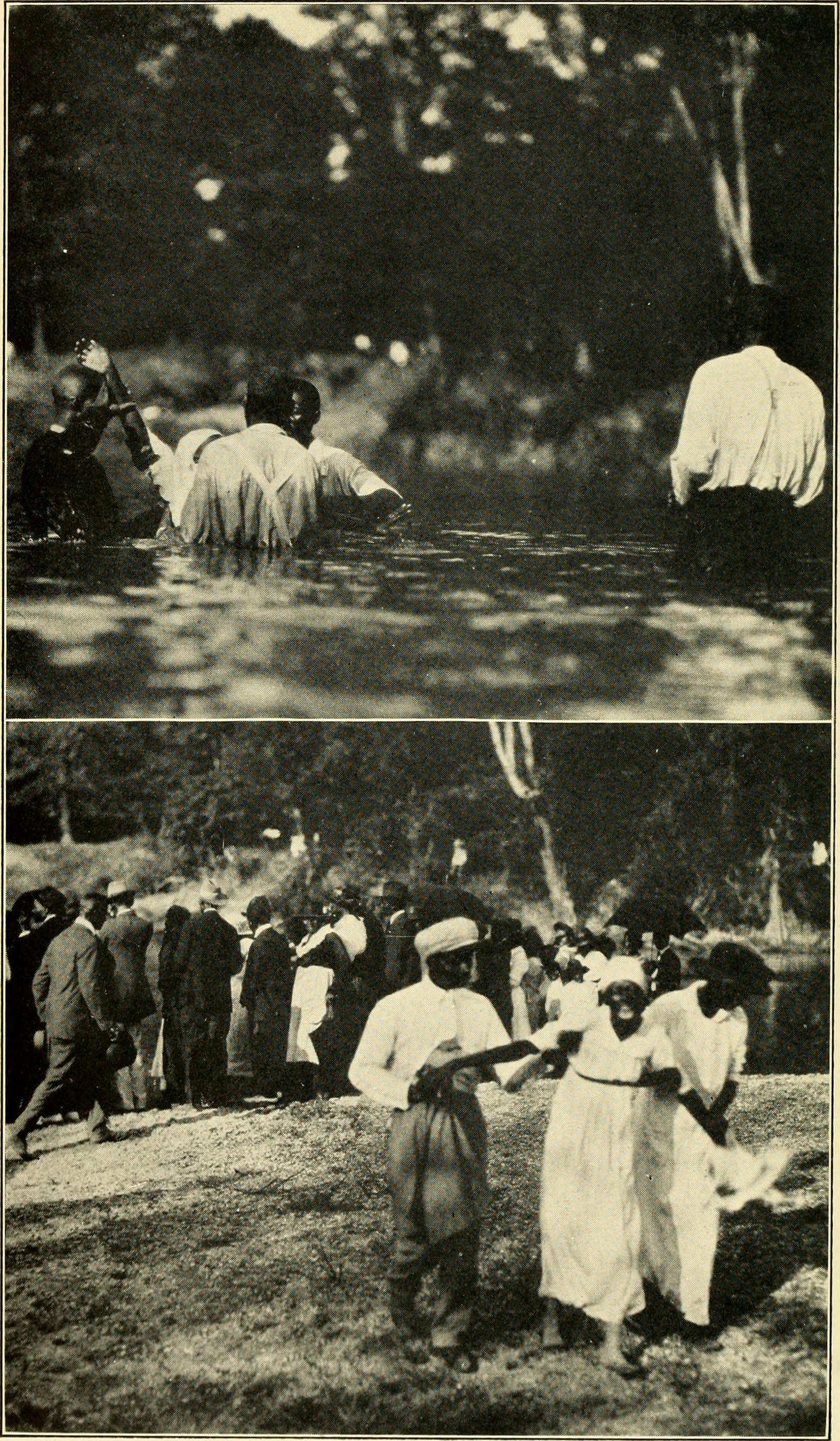
Christianity and Superstition 539 ing violently.... Next, with open mouth and protruding tongue, and with eyes wildly rolling, he worked himself, still seated and quivering violently, into the middle of the arena. There he suddenly leaped into the air, extending his arms over his head, and the quivering ceased. His eyes were closed, his tongue hung from his mouth, and with the slow, uncertain gait of a drunken man, he walked backwards and forwards." ^ Here again it was the old people, and particularly the old women, who were the most impressed and who had the most faith in the genuineness of the whole proceeding. White Examples. This emotional phenomena, including visions, is not restricted by any means, to Negro races. In the Scotch-Irish Kentucky revival of 1800 the "singing ecstasy"; "falling exercise"; the "jerks"; the "barking exercise," wherein all the votaries gathered on all fours, growling and snapping at the foot of a tree as the minister preached — a practice which they designated as "treeing the devil"; "strains of heaven" (visions); and the "holy laugh," on the part of the whites, ^ show the experiences to be common to all individuals with whom the artificial discipline of culture is but little developed. Even the Puritans had similar visions, and "the Greek Rhapsodists, according to Plato, could not recite Homer without almost falling into convulsions." * So great is this hypnotic religious power that in one case in Tennessee a Negro church member who had stolen ^ Ellis, A. B., Tshi-speaking Peoples, p. 131 ff. ^ Ibid., p. 137. ' Davenport, F. M., Primitive Traits in Religious Revivals, pp. 60-86. * Faduma, O., The Defects of the Negro Church, p. 16.
540 Folk Beliefs of the Southern Negro and sold a donation gathered for a minister, Including also a pair of steers and cart owned by an old woman, by means of preaching and singing, persuaded the congregation, even down to the old woman herself, to forgive him for the theft. ^ Negro Visions. Many and varied are the visions related by these converts when "confessing" or "testifying" before the congregations. In some cases a little white man chops open the breast with an ax, takes out the heart, pours out the black blood, washes It pure In the purple stream, and closes In the opening. ^ In other cases the person tests out his religion by asking that a speck of cloud be removed suddenly from the sky or that a cloud be created. Others ask that simple things like crickets or stars (In the daytime) be made suddenly to appear, or that the Lord let them hear some one moan. If these requests are Immediately granted the person Is sure that salvation has been granted him. Other visions are more complicated — such as seeing the devil and the fiery furnace, or, In another case, the Lord telling a woman that He "would be her teddy 'till the big bear came." ^ In other cases the Negroes are told to go to the graveyard and pray and look for signs during the whole night * — a process which, by adding terror to the strain of wakefulness and hunger, would tend more rapidly to weaken the nervous system to the "vision point." An Alabama witness tells of a woman convert's vision: "Ah 1 Davenport, F. M., Primitive Traits in Religious Revivals, pp. 52-53. 2 Ibid., p. 15. '341. The term "teddy" is used by the Negroes to indicate a suitor of second choice — the "big bear" is the preferred suitor. < 117, and 308. Smiley, P., Folk-Lore from Va., S. C, Ga., Ala., and Fla., J. A. F. L., vol. 32 (1919), p. 369.
Christianity and Superstition 541 wuz tu'k by a strand uv my hair and shuck over hell, and all de hair broke and Ah wuz about to fall in hell. Ah looked down and there Ah see'd a black man, and Ah know'd dat wuz de debul, and Ah sed, 'Lawd, hab mussy!' And jes' as dat-ah black man wuz tryin' ter ketch me on his pitch-fork, Ah see'd a littl' w'ite man and Ah know'd dat wuz Jesus, and Ah sed, 'Sabe me, Lawd!' And dat littl' w'ite man tu'k and kicked dat black man in de haid and he fell back in hell, and dat w'ite man tu'k me in His arms, and Ah know Ah's got de 'ligion, caze Ah felt lak Ah nebber felt befo'I''^ One Louisiana woman says in describing her "sperience": "I had a long road ter trabbl.' I see'd myse'f hangin' obber ole hell by de strands uv mah hair. I sho' thought I wuz gone fer good, but den a littl' ole w'ite man came in ole hell an' lif me out wid his lily-w'ite ban's. I had six wings hitched on ter me an' I sho' flew 'way f'um dat-ah place. 'Nudder time I see'd myse'f laid out on a table. Dat same littl' w'ite man wid de lily-w'ite hands cut me plum' open, tu'k mah heart out, an' rinsed hit in drippin' blood ontil hit wuz w'ite ez snow." ^ A Georgia convert told of God being a little white man about two feet high with pretty hair, ending her testimony by mourning and singing "Ain' dat pretty hair.? Ain' dat pretty hair.'*" Another told of the devil chasing him over the cotton rows. ^ A Mississippi woman was taken up into heaven on a milk-white horse and girdled with a golden girdle. Another man was told by the Lord to get lower and lower. He kept on "humblin' hisse'f" until finally he got under the very 1397. = 185. 3 111.
542 Folk Beliefs of the Southern Negro feet of Jesus — then "ligion*" came. ^ In parts of Georgia they say that if a person has not hung over hell on a spider web that that person has not been converted. 2 One Negro was picked up into heaven in a white cloud, where the Lord spoke to him in the form of a flaming circle. ^ Still another was accompanied by an old woman without a head, in her quest for religion. ^ Charity Sherrod, an old Mississippi slave, was called by voices in the night. The devil often appeared to her in the form of a dog, and while working in the "new ground" a whole pack of spirit-hounds ("hell-hounds") chased her. Her dead grandmother, whom she had never seen, appeared and told her her name, a fact which she later verified by her father. A white lamb appeared at her side. She traveled to a river, began to sink while crossing, the devil almost grabbed her, but the Lord asked for her ticket and took her on to heaven. '" '"''Mrs. God.'' One Negress went to heaven and ^^saw Jesus's wife,'"' and found Jesus plowing with a golden plow. She saw Jesus's bed, and also had dinner with them. They had turnip-greens for dinner. When she passed the plow it said, "booh!" ^ Another old woman went up to heaven and asked for "Mr. God." "Mrs. God was sitting behind the door patching Mr. God's pants." " Cases such as these show us that the golden streets of the Negro have at least a small sprinkling of common earth, and that their heaven is 1345. 2 240. »118. *341. 5324. e341. '276.
Christianity and Superstition 543 at least somewhat related to the African other-world, which is built entirely in terms of this world. ^ Wives, turnip-greens, plows, and pants may seem to us out of harmony with pearly gates, golden harps, and thinly draped angels, but the more primitive man can understand the hereafter only in relation to the here. It is to be noticed, however, that these visions apply only to the more illiterate Negroes (and whites). The educated ones rapidly give up the idea and adopt a type of religion more like that of the educated whites. - In fact, one may find all types of Negro churches, varying in emotionality from the ecstatic rural church to the colder educated congregation, with all stages in between. The ^''Foot-wash''' and "//o/y Dances'' The Negro is inclined to take the Bible literally, and many are the practices resulting from this interpretation, or from doctrinal points laid down by various ministers who thereby cater more effectively to the emotional demands of their congregations. In many parts of the South the "foot-wash" is still observed, ^ in which service the members show their humility by washing one another's feet. In the many cases the service is followed by the "shout," including, of course, dancing without crossing the feet. The Negroes sing of the "Rocking Daniel" dance; "Takes a little bit of man to rock Dan," ^ and one of my informants tells me that this type of dance is sometimes of a sensual nature ^ See, for instance: Kingsley, M. H.^ Travels in West Africa, p. 587. Milligan, R. H., Fetish Folk of West Africa, p. 241. Ellis, A. B., Ewe-speaking Peoples, p. 108. ^193, and my own observations. ' 141, and Southern Workman, vol. 25 (1896), p. 82, and 101-02. *57.
544 Folk Beliefs of the Southern Negro where men and women dance together. She has heard of the "Flower Dance," but has never seen one going on. ^ The Sanctified people have a good deal of apparent jig dancing going on in their services, as well as the "Holy Kiss." The "Holy Rollers," of course, also have their peculiar form of worship, involving, I am informed, some gross immorality at times. In his religious affairs the Negro often shows the African tendency to make no absolute distinction between man and beasts. This is shown by the Alabama "sheep-calling" Baptists when the members hide in the bushes and answer, "Ba! Ba!" to the to the "Coo-oo sheep! Coo-oo-sh'p-Cooshy-coo-oo sheep!" of the pastor dressed as a shepherd, finally following him inside and partaking of the sacramental black bread for the unbeliever and white bread for the "true sheep." ^ In another case a man was ploughing on Sunday when his mule and dog started talking to him. He never ploughed again on that day. 3 Christianity and Culture. These cases illustrate some of the outstanding points in the Negro's Christianity. Some superstition is found, of course — it is found with backward white Christians as well, for,, to a certain extent the Negro's religion is simply a recapitulation of that of the Southern whites. Christianity was too involved for the Negro to have grasped it bodily upon his arrival in this country, even if he had had the opportunity for so doing. American super1 141. See Davenport, F. M., Primitive Trails in Religious Revivals, pp. 54-55. 2/6zd.,p. 48. 3 Parsons, E. C, Folk-Lore of the Sea Isla7ids,S. C, M. A. F. L. S., vol. 16 (1923), p. 71.
Christianity and Superstition 545 stitlons, however, were more in line with his African reHgious beHefs, and, encouraged partly by his owners, who found this a ready method of control, the slave adopted some which still adhere to Negro religion. The contact for such spread of superstitions came mainly through the household servants (estimated as including about one-fourth of the total slave population). 1 Superstition is of some value as a disciplinary force, but when culture changes, the objects of discipline need also to change — thus the Negro largely took over Anglo-Saxon folk-beliefs while clinging to a great number of his own folk-tales, which indeed were appreciated by the white children — the main members of the household with whom he came constantly into contact. The weaker the self-maintenance and governmental organization, the more the spirits are needed to supplement the efforts of impotent man. The slave was sure of his living and his master saw to the protection of his life. He had no property in his own name. The aleatory element and the uncertainties of life were probably less pronounced than in Africa, which all meant that such of his religious beliefs as he brought over would tend to be forgotten or to be placed on a somewhat lower plane — the plane of superstition rather than of religion. The absence of an organized priesthood in America would also make it harder for such beliefs to endure. The mere fact that a people profess to be Christians does not necessarily mean that their Christianity is of the same type as our own. The way in which a people interpret Christian doctrines depends largely upon their secular customs and their traditions of the past. There is ' Tillinghast, J. A., The Negro in Africa and America, p. 126. 35
546 Folk Beliefs of the Southern Negro an infinite difFcrcncc between the Christianity of the North and South in America, between that of city and country, and between that of whites and colored, due in the main to their different modes of hfe and social backgrounds. Most of the time the Negro outwardly accepts the doctrines of Christianity and goes on living according to his own conflicting secular mores, but sometimes he enlarges upon the activities of God to explain certain phenomena not specifically dealt with in the Holy Scriptures. Thus the Sea Island Negroes, not fully content with the Biblical justification of the color-code, say that in the beginning God gave man two bundles wrapped up, one big and one small. He gave the Negro first choice and he greedily chose the biggest bundle, whicii contained a hoe and plough and ax, forcing him to do all the manual work in the world. The little bundle of the white man contained a pen and ink, and he consequently was given the indoor work. ' Besides being a slave explanation of the existing social order, this story has also a moral turn in that it shows the evil results of greediness, and, incidentally, the reverence of the Negro for writing. Christ'uuiity in Africa. Before taking up more specifically the Negro interpretation of Christianity it is interesting to note some of the ^■icissitudes of our religion in Africa. We find, for instance, that ''most of the Wolofs profess themselves Mohammedans, the rest Catholics, which arc alike heathen at heart, only the former have charms with texts fn^n the Koran which thev cannot read, and the latter, medals and ' Davis, H. C, Negro luilh-Lorc in South Carolitta,./..1. F. L., vol. 27 (1914), p. 244.
Christianity and Superstition 547 scapulars of the 'Seven Dolours' or of the Trinity, which they cannot understand. Many old rites still flourish, the household gods are not forgotten, and for the lizard, most popular of tutelar deities, the customary milk bowl is daily replenished." ' Real advance in civilization must be founded upon advance in self-maintenance, - and many reliable investigators deplore the eflforts of some missionaries in attempting to build up a civilization by simply changing a religion. •■♦ Indeed harm is at times wrought in that the natives "have had the restraint of fear removed from their minds in the mission schools without the greater restraint of love being put in its place." "* Part of this, however, is no doubt due to the fact that the white man, with whom Christianity is closely associated in the mind of the savage, has also linked up his name with other less reputable activities. Thus, in Liberia there is a rum factory which the natives call "The Good Jesus Factory" — "Christianity and rum being closely associated In the minds of the natives." ■' "It is In no way unbelief which makes difficult the work of missionaries among savages. They believe everything which Is explained to them as a revelation, but it does not grasp and Influence their life in the desired way. They distinguish it, as many reports testify, always as the revelation of a strange god to strange men; it is not their revelation."*"' The Tshi people attributed the great superiority of the whites ' Keane, A. H., Man: Past and PreNcnt, p. 49. 2 Keller, A. G., Societal Evolution, p. 141 ff. ' Thomson, J., Notes on the African Tribes of the British Empire, J. A. I., vol. xvi (1887), p. 184. Ellis, A. B., Ewe-speaking Peoples, p. 12. ^ Kingsley, M. H., Travels in West Africa, p. 659 and 069. '' Afro-American Encyclopedia, p. 227. " Lippert, J., Kullurgeschichte der Menschheil, vol. i, \y. 101.
548 Folk Beliefs of the Southern Negro to the fact that they were protected by a deity of greater power than any of those to which they themselves offered sacrifice. Thus they gladly accepted the white man's God, but simply added Him to their already numerous family of deities. Even then He is considered too distant to interfere ordinarily in human affairs, and, except in times of special calamity, is ignored rather than worshipped. ^ The Devil in Africa and America. The Africans cling to their tendency to worship the malevolent even after they have heard of Christianity. One bishop asked them why they persisted in worshiping the devil instead of God. The reply was, "God is good, God is love and don't hurt anybody — do as you please, God don't hurt you; but do bad and the devil will get you sure! We need not bother about God, but we try to keep on the good side of the devil." ^ The Southern Negro likewise gives the devil as a personage considerably more attention than is paid him by the present whites, though in the past both in Britain and in the Early Colonies ^ as well as in other parts of the world ^ this personage was greatly feared if not actually respected, seeming to show that the Africans were not alone in their emphasis of the malevolent element in religion. Let us now consider this and other addenda made by these Negroes to Christianity. In the main, the Negro shows his principal departures by adding on beliefs not included in the white man's conception of Christianity, and by seeking 1 Ellis, A. B., Tshi-speaking Peoples, pp. 24-30. 2 Race Problems of the South, p. 143. ^ Ashton, J., The Devil in Britain and America. * Carus, P,, The History oj the Devil and the Idea of Evil.,
Christianity and Superstition 549 through Christianity the achievement of ends not sanctioned by the estabhshed canons. In the former class we find that behef which has already been mentioned, that rain while the sun is shining indicates that the devil is whipping his wife (behind the door ^ or around the stump) - for not having turnip greens or cornbread for dinner. ^ Somewhat akin to this is that every Friday the jaybird (redbird * and mocking bird) ^ visit hell to take kindling, « sand, ^ or a drop of water ^ to the devil. Some say that this grain of sand is a ransom for the souls in hell, who cannot be released until all the sand on the surface of the earth has been carried below; ^ while others take the view that the jaybirds sold themselves to the devil at one time for an ear of corn, and are obliged to take sticks and sand to him every Friday to make his fire hot, ^ ^ for, as one of the Calhoun children explains, "the wicked will always burn in torment as long as there is any sand there." ^ ^ One Negro folk-rhyme, however, gives the impression that the devil uses the sand to blind people: Did you ever see de devil wid his iron handled shovel, A-scrapin' up de san' in his ole tin pan? He cuts up mighty funny, he steals all yo' money, He blinds you wid his san'. He's tryin' to git you, man 1 ^ ^ 1 132, and 141. 2 141. 3 404. M02, and Southern Workman, vol. 23 (1894), p. 15. 5 Showers, Susan B., Alabama Folk-Lore, Southern Workman, vol. 29 (1900), p. 180. 6 Price, Sadie F., Kentucky Folk-Lore, J. A. F. L., vol. 14 (1901), p. 53. 'Lee, C, Some Negro Lore from Baltimore, J. A. F. L., vol. 5 (1892), p.m. Also informant 342. 8 352. 9 Southern Workman, vol. 24 (1895), p. 78. 10 42. 1 1 Two Negro Tales Concerning the Jay, Southern Workman, vol. 27 (1898), p. 17. 1 2 51, and Talley, T. W., Negro Folk Rhymes, p. 93.
550 Folk Beliefs of the Southern Negro Other Negroes, notably in Maryland, hold that the jaybird is a sort of sin-reporter, making a trip to hell every third day to tell the devil about the people's sins. 1 The devil is also to a certain extent associated with the hog, the mischievousness of this animal being due to the fact that the devil jumps from time to time through his hind feet. Negro Devil-forms. To the Negroes the devil is a very real individual, generally anthropomorphic, but capable of taking almost any form at will. He walks constantly upon the earth, always interfering with human affairs. Sometimes he is invisible, as where an old slave woman heard the "bomp-bomp-bomp" of the devil's footsteps while she was trying to convert a sick sinner, though no one was visible. ^ So hypocritical is this evil one that he will borrow a person's skin while that person is sleeping and masquerade about in the disguise of that particular individual. * Most of the time, however, when going about on the earth, the Negro devil has the appearance of a gentleman, wearing a high silk hat, and a frock coat, and having an "ambrosial curl" in the center of his forehead to hide the single horn which is located there. Mrs. Virginia Frazer Boyle tells me that when she was first taken to church by her father and mother she used to scan the congregation eagerly for a man with that "ambrosial curl" and one with the "evil eye", which her old Negro nurse had told her were to be found in 1 Bergen, F. D., On the Eastern Shore, J.A.F.L., vol. 2 (1899), pp. 229-300. 231,0. 3 324. ^ Boyle, Mrs. V. F., Devil Tales, p. 209.
Christianity axd Superstition 551 every crowd, even in church, ^ In most cases this Negro devil has cloven feet, - a characteristic also credited to him in European circles. ^ Possibly the black cat is the animal most chosen by the Negro devil for impersonation; some go so far as to say that all black cats represent the devil in disguise, ^ "settin' up dere 'fo' de fiah larnin' folks' business an' schemin' up ways ter tempt 'em." ^ One Negro killed such a cat by hanging it with a greased rope; he had all sorts of bad luck until a hoodoo treated him and set fire to his cabin. When nothing was left but ashes, there, in the midst of the hot coals, sat this same black cat, but the man's troubles were over; his soul and body were free. "^ Nevertheless the devil is not limited to this particular form but may appear as a rabbit, terrapin, serpent, housefly, grasshopper, toad, bat, or yellow dog at will. '^ To the Mississippi Negroes he often appears as a black billy-goat;^ a view strictly in keeping with his custom at the English witches' Sabbath. ^ In New Orleans it is thought by some that snakes and black cats are incarnations of the devil. When the Ames crevasse occurred, multitudes of snakes were left upon the subsiding water and the Negroes refused to kill them. ^ ^ A curious combination of Scripture and devil-lore is found in the Georgia 142. 2 141, and Boyle, V. F., Devil Tales, pp. 114-15. 3 Chambers, R., Popular Rhymes of Scotland, p. 61, and Lean's Collectanea, vol. 2, p. 431. *54. 5 65. 6 Bovle, Mrs. V. F., Devil Tales, p. 178 ff. ' Ibid., pp. 89, and 107-31. 8 141, 286, and 404. ^ Brand, J., Popular Antiquities oj Great Britain, vol. 3, p. 10. 1" Bergen, F. D., Animal and Plant Lore,.1/. A. F. L.
552 Folk Beliefs of the Southern Negro belief regarding the graveyard snake. Tliis snake is mostly black with yellow splotches on the back. It lives all the time in the graveyard where it grieves and mourns. When the devil in the form of a serpent succeeded in tempting Adam and Eve he laughed until he split himself; the spirit part of him goes about tempting folks and helping hoodoos, but the material part lives in the graveyard. The skin of a graveyard snake worn about the waist will enable you to conquer your enemies; the hand anointed with grease from such a snake can always steal things without being observed. "Hoodoo folks is mighty fond er eating snakes, 'case hit makes dem wise an' cute; but dey don't dar ter eat er grabeyard snake, 'case dey ud be eatin' de debbel hisself, an' he couldn't he'p 'em no more." Make an image of a person out of graveyard snake-oil mixed with flour or sand, bake it good by an open fire, and you can give a person pains in any part of his body by sticking pins in the image. You have him "snake-hoodooed," and that is the worst kind of hoodoo. Satan himself may be summoned to help you in your black art by getting a button off a graveyard rattler, sewing it up with a piece of silver in a little red flannel bag, and wearing it over your heart. Say a verse out of the Bible backwards at twelve o'clock on the crossroads on a moonlight night, and old Nick will come running up to meet you. '■ The Faust Legend. This idea suggests somewhat the European Faust legend, and, indeed there are many variants of the theme in many parts of the Negro South. Ole Satan is a conjurer; a belief expressed even in religious songs: 1 Backus, Mrs. E. M., and Leitner, Mrs. E. H., Tales from Georgia, J. A F. L., vol. 25 (1912), p. 133.
Christianity and Superstition 553 De debbil am a liah an' a conjurer too, Ef you doan' look out he'll conjure you, etc. ^ Being a mighty conjurer himself, it stands to reason that he is the proper one to teach others the black art. But conjuring represents an African survival, and it is worthy of note that part of this former religion was not entirely abandoned but merely given a subordinate part in the new system; i.e. attributed to the evil element in the cult. In accordance with this belief that the devil is a master in the black art, one of the first things a person should do when wanting to become a witch is to go to a crossroads and pray to the devil for nine days and nine nights. ^ Strange to say, playing the fiddle or banjo is thought to be a special accomplishment of the devil, ^ and such instruments are tabooed to good church-folk, though the piano or accordion may be used with impunity. Some go so far as to say that playing the violin is actually an audacious communication with Satan himself. ^ Take your banjo to the forks of the road at midnight and Satan will teach you how to play it. ^ One old slave was taught by the devil at home, but was not able to play reels until he had mastered the tune, "Gimme Jesus." ^ It is worthy of note that in the West Highlands the fairies were supposed to teach men to play the pipes. ^ Among the Negroes this playing of 1 112, 141, and 342. Allen, W. E., Slave Songs of the United States, p. 108. Odum, H. W., Negro Hymn, J.A.F. L., vol. 26 (1913), p. 373. 2 250. 5 Boyle, Mrs. V. F,, Devil Tales, pp. 114-15. * 284, and Negro Su-perstitions Concerning the Violin, J. A. F. L., vol. 5 (1892), pp. 329-30. * 141, and Thomas and Thomas, Kentucky Superstitions, p. 291. Xee, C, Some Negro Lore from Baltimore, J. A. F. L., vol. 5 (1892), p. 110. «32. 'Campbell, J. F., Tales of the West Highlands, vol. 12, p. 311.
554 Folk Beliefs of the Southern Negro the banjo is incidental to forming a regular contract with the devil — the Faust motif. A New Orleans conjurer described the procedure to me as follows: If you want to make a contract with the devil, first trim your finger nails as close as you possibly can. Take a black cat bone and a guitar and go to a lonely fork in the roads at midnight. Sit down there and play your best piece, thinking of and wishing for the devil all the while. By' and by you will hear music, dim at first but growing louder and louder as the musician approaches nearer. Do not look around; just keep on playing your guitar. The unseen musician will finally sit down by you and play in unison with you. After a time you will feel something tugging at your instrument. Do not try to hold it. Let the devil take it and keep thumping along with your fingers as if you still had a guitar in your hands. Then the devil will hand you his instrument to play and will accompany you on yours. After doing this for a time he will seize your fingers and trim the nails until they bleed, finally taking his guitar back and returning your own. Keep on playing; do not look around. His music will become fainter and fainter as he moves away. When all is quiet you may go home. You will be able to play any piece you desire on the guitar and you can do anything you want to do in this world, but you have sold your eternal soul to the devil and are his in the world to come. One of this informant's acquaintances sold himself to the devil in this way. He could then do anything. Put him in a refrigeratorcar and lock the door with a "Yale lock"; the man would meet you as you walked away. He could make himself so small that no jail bars could hold him, and,
Christianity and Superstition 555 through his power of invlsibihty could take anything he wanted from the stores without fear of detection. ^ There are other cases of contracts formed with the devil, " and in one case the contract was broken by a duel with the devil in which the shape of the cross was cut on the devil's breast. ^ Others say that the devil always gets his own, even if the person locks himself in his room: "When de debil find de doo' locked he des float in fru de cracks an' jeck his teef out, and pull him fru de keyhole." * There are also the characteristic English folk tales of some haughty woman marrying the devil in the shape of a handsome man, but escaping later by throwing down various things to stop the devil. ^ Minor Devil-beliefs. There are many other minor beliefs connected with the devil. For instance, if the fire burns with a blue flame "hit's makin' anger, and de debil is sho' comin'. Bettah chunk some salt in dar ter dribe him away." ^ In Old England it was said that when an apparition appeared the candles in the room always burned with a blue flame. ^ The devil is always most active at the waning of the moon, * but old shoes, particularly the soles, buried on Monday morning will keep him down through the week. ^ 154. - Skinner, Charles M., Myths and Legends of our Own Land, vol. 2, pp. 9496. 3 Boyle, Mrs. V. F., Devil Tales, p. 59 ff. M2. ^ Cooke, Elizabeth J., English Folk-Tales in America, J. A. F. L., vol* 12 (1899), pp. 126-30. Pendleton, L., Notes on Negro Folk-Lore and Witchcraft in the South, J. A. F. L., vol. 3 (1890), pp. 202-03. « 91, and Bergen, F. D., Current Superstitions, M. A. F. L. S., vol. 4 (1896), p. 147. ' Brand, J., Popular Antiquities of Great Britain, vol. 3, p. 69. « Owen, Mary A., Voodoo Tales, p. 180. 'Bergen, F. D., Current Superstitions, M. A. F. L. S., vol. 4 (1896), p. 142.
556 Folk Beliefs of the Southern Negro A person must never cross the trail of a snake without makins: a crossmark in it and snittiui^ there; otherwise the devil will surely follow him; ' but if a person really desires to see the devil all he need do is to put his shirt on wrongside out and look into a well, or else throw a brick-bat into a whirlwind. - A left-handed person owes the devil a day's work;-' cutting your finger nails on Sunday indicates that you will spend the rest of the week with Satan;^ while dreaming of that gentleman is ominous of sickness and trouble in your famih'. -^ People buried with their hair carefully dressed will have it unplaited by the blackbirds sent by the devil. ^ Even wicked animals seek the help of Satan. When Brer Wolf was trying to catch Sis Pig's little ones he called upon Satan to help him. Satan pulfed and blew at Sis Pig's house; Sis Pig looked and saw his breath like red smoke. That's the reason pigs can see the wind today in the shape of red smoke. " Christ and Other Sacred Characters. Turning to the more sacred personages in Scripture, we find their simple Biblical attributes greatly embellished by the Negroes. Jesus, while on earth, was always ''mighty fond of cuUud folks." In one case He visited an old colored lady's house, and found her very miserable because the rats and mice were destroying everything she had. "Woman, behold your God," He said, and 1 Bergen, F. D., Animal and Plant Lore, M. A. F. L. S., vol. 7 (.1899), p. 17. »341. »110. * 270. »00. • 1-41, and Southirn Workman, vol. 20 (1S07), p. IS. ^ Backus. Emma M., Animal Tales from Xorth Carolina, J. A. F. L., vol. 11 (1S9S), pp. 290-91.
Christianity and Superstition 557 throwing His right-hand glove on the floor, He turned it into a cat. Cats were not present in the ark; they were made later of Jesus's glove and that's why it's unlucky to hurt one and a sin to kill one. ^ The hickory-nut tree has its bark all loose and pointing downward because Zaccheus was up that tree when Christ called him. He slid down so fast that he scraped the bark loose forever. "De Bible say hit wuz a sycamine tree, ^ but dat's jes' de same ez our scaly-bark er hick'ry-nut." The same informant goes on to say that February has but twenty-eight days because Job in his suffering asked that the day of his birth be dropped from the calendar. He was born from the twenty-ninth to the thirtieth of February and these two days were dropped from the calendar except on leap-year when the Lord tacks on an extra day to give the devil another chance. ^ Holy Herbs. Sacred names for plants are common, being in the main restricted to those plants used for beneficial purposes. Devil's snuff, the powder from a dried puff-ball, is poisonous and used generally for harm. ^ Ed Murphy uses this in "conjuring up devilment," but he has a great many others of sacred nomenclature which he uses for cures. I rather suspect him of original development in some of these names, since they are not understood by other Negroes in the locality and since I have not located them elsewhere in the South. Ed is a big exhorter in the church and, considering his inability to read, has 1 McLennan, Marcia, Origin of the Cat; a Negro Tale, J. A. F. L., vol. 9 (1896), p. 71. ^ Compare Luke 19:4. 3 258. M41.
558 Folk Beliefs of the Southern Negro mixed his Scripture and soothsaying remarkably well. The "bowels of Christ" is apparently a species of saliva, with leaves entirely green at first but becoming red or brown around the edges as they mature, finally becoming entirely red. They represent the bowels of Christ on the cross, and stewed in lard and mixed with kerosene, or turpentine make a most excellent salve for all diseases. "Angel's turnip" {Apocynum androscsmi folium) root carried in a red flannel bag is "a sure bringer of good luck," while the leaves of the "peace plant" {Ariscema triphylum) have much the same uses. This plant has two or four leaves running off roughly in the shape of a cross. Here is the way it was created: "When Jesus wuz totin' de cross up de hill ter Calvary de Scripture sez a damsel sed: Mus' Jesus bear de cross alone An' all de worl' go free? No, dere's a cross fur ebby one An' dere's a cross fur me! ^ Well Jesus he stop den an' de peace plant sprung up. Hit wuz her cross an' when it hab four leaves de odder two stands for peace and good will." The "king of the woods" {Aralia racemosa) has three leaves representing the Father, Son, and Holy Ghost. Its root is fine for making jacks, and a tea made of it and coonroot will cure anything. - I was not able to get a specimen of the "blood of Christ," but my root-doctress tells me that wrapped in red flannel (always wrapping towards yourself) along with sugar, spice, and bluestone, ^ A familiar Negro hymn. Verses of church songs are freely quoted and often command precisely the same reverence as verses of Scripture. 2 258.
Christianity and Superstition 559 its root will surely bring you peace. ^ Christ was hung upon a cottonwood tree. The trees know this and are always trembling because they are afraid. ^ God and the Lizard. Such lore applies even to animals. An old ex-slave told me the following. "One day Brer Lizzud an' Deacon Frawg wuz tryin' ter get thru a crack in a split-rail fence. In dem days Brer Lizzud sot up lak Deacon Frawg do now. Ole Deacon Frawg sez, 'Ah'll git thru dishyere crack ef de Lawd spares me.' He tried hit an' squeeze thru all right. Brer Lizzud wuz mo' uppity. Sez he, *Ah'll git thru dishyere crack whedder de Lawd spare me or no.' He tried hit, but, kerflip, came a lawg down an' mash him flat. Dat's why de lizzud be flat terday and crawls de dus' on his belly, while de frawg sets up an' hops." ^ Some Negroes will not eat lamb because the lamb represents Christ; ■» others say that the dove and the eagle are the only two birds that will go to heaven " (the dove representing the Biblical fetish bird, the eagle, the American fetish). Fetishistic Christianity. From time to time ^ I have indicated that, while voodoo practices as a whole tend to stand aloof from European lore because of their pronounced difference, yet in some cases they recognize a certain general kinship in certain elements of European Christianity and a fusion or partial fusion results. "Practices that were originally imported 1141. 2 Davis, Mrs. N. E. M., The Cottonicood Tree: Louisiana Superstitions, J. A. F. L., vol. 18 (1905), p. 251. 332. * 11. 6 Bergen, F. D., Animal and Plant Lore, M. A. F. L. S., vol. 7 (1899), p. 84. 6 See p. 186 ff., 193ff., 205, and 257, for iu.stauce.
560 Folk Beliefs of the Southern Negro from Africa tend to assimilate and fuse with related practices and traits of the European and Hindu cultures wherever the Africans have come into contact with them. Obeah men in the West Indies use the candles, the little shrines, or 'chapels,' as they call them, and various other portions of the ritual of the Catholic Church." ^ This fetishistic concept of Christianity is well illustrated by the results of Roman Catholicism in the Congo. "Its baptism was only an outward one, the heathen natives gladly accepting it as a powerful charm. For each and all his heathen fetishes the priest simply substituted a Roman Catholic relic. The ignorant African, while he learned to bow to the Virgin, kept on worshipping also fetish. The Virgin was only just another fetish. The Roman Catholic priests were to him only another set of powerful fetish doctors. They commanded that, instead of the orunda, the parents should enjoin their children to observe some particular devotion, such as to repeat many times a day the rosary or the crown, in honor of the Virgin; to fast on Saturdays; to eat no flesh on Wednesdays, and such other things as are used among Christians." ^ "All worldly prosperity in Africa depends upon the possession of proper fetishes. They are therefore quick to conclude that we have very powerful fetishes; and it is inevitable that before long they should conclude that the Bible is the missionary's fetish. At Efulen, among the Bulu, when we had been there but a short time, a band of men setting out upon the war path with their guns upon their * Park, R. E., Magic, Mentality and City Life, Publications American Sociological Society, vol. 18 (1924), p. 111. Italics my own. 2 Nassau, R. H., Fetichism in West Africa, pp. 211-12.
Christianity and Superstition 561 shoulders, marched up to our hill and asked if we would give them a Bible to take with them to make their guns shoot straight and procure their success. One day Dr. Good missed a Bible. It had been stolen. He heard nothing of it for a month; after which he was one day walking through a native village where the people, expecting to go to war the next day, were preparing a very powerful fetish or 'war medicine' by boiling together in a pot several of their most reliable fetishes; and in the boiling pot he found his Bible." 2 Such cases show us again very clearly that the same set of facts may be interpreted very diiTerently by different people, depending upon their general culture-pattern. Our interpretation of Biblical facts depends upon that general complex of customs which we call our civilization, and even Christianity differs among different peoples. Christianized Voodooism. This same employment of elements of Christianity for fetish purposes is found with the American Negroes. I am informed that Marie Laveau was a devout Catholic; she kept a little shrine and colored candles burning in her room, had a priest with her just before she died, - and even went so far as to conduct the ritual of the original voodoo creed so as to make it conform to the worship of the Virgin and of other saints. ^ One modern voodoo woman, though the order has been largely broken up, refuses to receive visitants on Saturday because that is the day of '7« Sainte Fierge.^^ She also closes her establishment on Good Friday and in Lent, in 1 Milligan, R. H., Fetish Folk of West Africa, pp. 130-31. 2 269. ^ Castellanos, H. C, New Orleans as it Was, pp. 97-98. 36
562 Folk Beliefs of the Southern Negro the latter case " 'cause de sain' too busy to work wid her." ^ Much of modern voodoo Is really an appeal to the saints for furtherance In some extraChrlstlan undertaking. Take, for Instance, the method recommended to me by a voodoo-doctor of New Orleans last summer to conquer one's enemy: mix a pound of sugar and some powdered coonroot In a newspaper, put this Into a vessel, go Into a room by yourself, and set the vessel on the fire. You must be In a very reverent frame of mind, putting your whole heart Into what you are doing. When the mixture begins to smoke hold your limbs in the vapor, repeating reverently the following formula: "Oh Lord, Good Shepherd, help me, Robert Bryant. St. Michael, conquer so-and-so (your enemy or a woman who Is following you too closely). Oh Lord, Good Shepherd, help me, Robert Bryant. St. Patrick, drive away these devils from me, Robert Bryant. Oh Lord, Good Shepherd, help me, Robert Bryant. St. James, protect my body from all accident. Oh Lord, Good Shepherd, help me, Robert Bryant. St. John, let all of my bad spells and troubles go from the sunrise to the sun setting. Give me good luck and help me to be successful. Oh Lord, Good Shepherd, help me, Robert Bryant." These rites must be held three times a day, the most Important part being that you believe in what you are doing and In its power to cure you. "St. Michael Is used to conquer, St. Patrick to drive away evil, St. James to protect, and St. John to give you good luck." 2 The Missouri voodoos have much the same Idea. In preparing a luck-ball for Mr. Charles 1 Pitkin, Helen, An Angel by Brevet, p. 179. 254.
Christianity and Superstition 563 G. Leland this formula was used: "The God before me, God behind me, God be with me. May this ball bring all good luck to Charles Leland. May it bind down all devils, may it bring them under his feet. May it bring him friends in plenty, may it bind them to him. May it bring him honor, may it bring him riches, may it bring his heart's desire. May it bring him success in everything he undertakes. May it bring him happiness. I call for it in the name of God." ^ No good Christian thinks of using prayer when accosting a strange woman, but one New Orleans hoodoo tells me that to be most successful in courtship of this sort one must use the "Main Power." "Speak ter de Lawd 'fo' you speak ter de 'ooman. Den look de 'ooman straight in de eye, and speak ter her earnes'ly. If she don't notice you let her alone for a while, speak ter de Lawd again, den speak ter her in de same way. Be in deep earnest, smiling, and wid a good disposition. De third time you speaks ter her she is bound ter go wid you." ^ The Lucky Saint Joseph. One of the most graphic illustrations of the way in which Roman Catholic symbols receive a voodoo interpretation is in the use of the "lucky Saint Joseph." This Saint, as generally used by the Roman Catholics of New Orleans, consists of a little gilt figure of Saint Joseph with the Child, enclosed in a small brass case about an inch in height. The Saint is placed upside down in the case and is carried for good luck or even as a charm for getting a good husband. ^ The New Orleans Negroes also 1 Owen, Mary A., Among the Voodoos, I. F. L. C, 1891, pp. 232-33. 254. * See also, Pitkin, Helen, An Angel by Brevet, p. 217.
564 Folk Beliefs of the Southern Negro carry this lucky Saint Joseph, but in their case, lacking the spiritual background, they look upon it in much the same fashion as a rabbit's foot, horseshoe, or any other less sacred charm. ^ I was anxious to see how the Mississippi Negroes, who were not acquainted with this type of fetish, would react to it; consequently I purchased an even dozen of the images for fifty cents and handed some of them out to my hoodoo friends in return for information, giving them, of course, the common Roman Catholic view in regard to Its efficacy. In every case the image received due respect, but the Negroes were not satisfied to obtain mere good luck. One Negro with a wounded hand carried it religiously about with him In hopes of a cure, first encasing It in a little red flannel bag. ^ Another conjurer responded in a way that showed clearly that many of the conjuring methods are simply Individual developments. Filling the case with whiskey he plunged the Saint In head downward, then wrapped It all in red flannel. Before making a "hand" for any one he would wet the Image with camphor and rub It in the palm of his hands until he could notice a brassy smell. Then he would rub his roots well over this smelly spot before putting them into the "trick." Thus some of the power of the "Good Man of the World" or the "Protector," for such he christened Saint Joseph, was transferred to that particular charm. In one case he cured a woman of "rheumatlz" by rubbing the image up and down her back — I say "cured" because I checked up on the case and found that the person In question was really able to return to her work after a 154. 2303.
Christianity and Superstition 565 long absence due to this trouble. ^ The originality of another conjurer expressed itself in "dressing" the image with lodestone and raw camphor, mounting it on a semi-spherical lead base, and using it as a jack. It was supposed to answer questions, to bow in the direction of stolen goods or hidden "tricks," and to fall towards the right cards when he was using this method of telling fortunes. ^ With no intention of sacrilege, these little images won me much confidence that would have been hard to obtain otherwise, and the experiment showed clearly that certain sections of voodoo and Christianity are not too incompatible to mix. Religion and Conjure. In fact, as I have said before, almost all the conjurers of my acquaintance have been even more religious than ordinary Negroes — some of them being ministers. ^ Almost all of them mix scriptural quotations promiscuously with conjure prescriptions, and some of them run especially to the Trinity idea in mixing roots and in regard to body markings. In using the "jack" the formula: By some Peter, By some Paul, And by the God that made us all, "* shows unmistakably the use of Christian personages for what we would call profane purposes. The church and the voodoo society are not entirely separated, remembering that the church is the main social center. 1 258. «91. »42. * Southern Workman, vol. 23 (1894), p. 46.
566 Folk Beliefs of the Southern Negro In Missouri a "fire-dance" was held just after a revival meeting, and the voodoo circle often met in the church itself. ^ In another case a group of voodoo initiates were secretly meeting in the church when a stranger entered, hypnotized them all, and stole their money and valuables. ^ All the way through there is the use of Christian derivations to prevent conjuring, keep off ill luck and to cure diseases. Some Negroes say, "De 'ligion uv de Lawd Jesus Christ will keep off all conjure." ^ In many places I have mentioned the use of the cross symbol, which, however, may be of possible African origin in part. Conjurers make a cross on a person's breast to remove snakes from within him; two needles crossed in the crown of your hat prevent any "trick" from harming you. * Cures are wrought "in the name of the Lord." God is called upon to bless the conjured person, and downfall invoked upon the work of the devil. ^ A "beautyrock" (supposed to have been used by David in slaying Goliath) will bring peace to you;^ and even in the event of a lawsuit the names of the twelve Apostles written on large sage leaves and worn in the shoes will surely bring a favorable outcome. ^ Ask a ghost, "What in de name of de Lawd does you want.''" or simply say, "Lawd hab mussy on me," * and the most frightful specter will vanish at once. Some Negroes 1 Owen, Mary A., Among the Voodoos, I. F. L. C, 1891, pp. 239-40. 2 Dana, M., Voodoo, Metropolitan Magazine, vol. 28 (1908), p. 531. '261. ^54. ^ Bacon, A. M., Conjuring and Conjure-Doctors, Southern Workman, vol. 24 (1895), p. 210. « 258. '241. » 357.
Christianity and Superstition 567 refuse ever to have a doctor, claiming that God is all the doctor they need, ^ a view reflected by the following verse I heard an old Negro woman singing at a revival meeting: I know Jesus am a medicine-man, I know Jesus kin understan'; I know Jesus am a bottle uv gold, Hit takes jes' one bottle ter cure a sin-sick soul.."^ While the reference is to spiritual cure, many of the Negroes apply it to physical cures as well. Members of the Trinity are at times conceived of as being much like African spirits. For instance, some Negroes fear to sweep out the house after dark for fear of "sweeping out de Holy Ghos'." ^ The element of propitiation enters in as shown by the belief that failure to pay the preacher on Sunday will result in a "long dry spell." ■* Biblioviancy. Reading the seventh chapter of Revelations will cut off your bad luck and help you to succeed, while opening the Bible at Genesis and reading a few passages at random before beginning to tell fortunes with cards will give you a general idea of your luck to come. ^ Bibliomancy is found in other connections; for instance, there is the old European^ idea of a casual opening of the Bible for some passage throwing light on the future. The Negro generally makes a wish, then opens his Bible. If he happens on the words, "and it shall come to pass," then he believes his wish will be granted. ^ Again there is 2 103. =272, and 386. •189. M41. ' Lean's Collectanea, vol. 2, p. 344. '397.
568 Folk Beliefs of the Southern Negro the practice of reading the Bible backwards to keep ghosts away, ^ but such practices are not common due probably to Negro Illiteracy. It is perhaps more common to place a Bible with a crossmark made upon It under one's pillow to keep the witches from "riding you"; 2 In Scotland a Bible was carried as protection from fairies. ^ Superstitious Conversion. It has been pointed out earlier in the chapter that much of a secular nature Is Included In the process of "getting religion," Negro revivals minister to self-gratification almost as much as to religion, and In the process of Intense emotional Intoxication leading to the vision there is much superstition. Some "candidates" are Instructed to spend the night In the graveyard, rolling on the ground, praying, fasting, and mourning. In order to get religion more quickly; ** while one little girl saw a "ha'nt," a headless woman. In this "coming through" process. ^ God and his angels can and frequently do talk to good Christians. Dead relatives also hold conversation with them, especially when the Christian is ''How sicF'' " (In a vision-seeing condition). Small omens of various sorts are observed In an effort to determine one's status in the world to come. If a baby cries at baptism the devil is going out of him; ^ in England » 1286. 2 112, 141, and 231. Also, Steiner, R., Observations on the Practice of Conjuring in Georgia, p. 178, J. A. F. L., vol. 14 (1901). ^ Campbell, J. F., Popular Tales of the West Highlands, vol. 2, pp. 59 and 66. U17. 5 341. «306. 7 16, and 397. * Henderson, W., Folk-Lore of the Northern Counties of England, p. 8.
Christianity and Superstition 569 and Scotland ^ precisely the same belief was held, infants at times even being pinched to be sure that the devil would leave. The Negroes also add that no matter how bitter the weather may be when a person is baptized (usually in a river or pool in the open) he can never catch cold; - but if a person chokes while being baptized it is a sign that he has never been truly converted. ^ If the lightning strikes near by * ■or if it rains ^ when a person is dying, or if a person die with his mouth and eyes open, ^ he has surely gone to hell; but if it rains just after a funeral the man's sins have been washed away ^ and he has gone on to heaven, ^ the same being true of a person who dies with a smile on. his face. ^ A Christian on dying hears sweet music, but a sinner hears only a terrible noise ^ " — a view not so dissimilar from deathbed scenes I, as a youth, have heard depicted from the pulpits by sensational white evangelists. Look in a good person's pillow after his death and you will find a crown ^ ^ — a falling star indicates that such a person's soul has gone on to heaven. ^ Dreams and Religion. Dream omens are not without their merit; the religion of the antebellum Negroes consisted largely in the kind of dreams they had, dreams of white being of good omen, while dreams of 1 Gregor, W., Folk-Lore of the Northeast of Scotland, p. 12. 2 9j and 278 » 286, and Southern Workman, vol. 23 (1894), p. 16. <45, and Southern Workman, vol. 23 (1894), p. 16. 547. «341. 7 404. 8 166. 9 127. 10 341. 1 1 Ibid. ^2391.
570 Folk Beliefs of the Southern Negro black pomted to evil. ^ A white man in your dreams represents the Lord, and a black man the devil, ^ while a dream of a black man just after joining the church shows that your confession was prompted by the devil. ^ To dream of falling indicates a need for more prayer; * of dogs running, you are not true in your religious confession;^ and if you dream of fish it is a sign that you have sinned. ^ Others add that whenever a Christian does wrong he will dream that the devil is after him. ^ On the other hand a dream of clear water lets you know that you are on "the right side of God." ^ You can tell the location of a dead person's soul by a dream of that person. If he is moving in a hurry in your dream he has gone to hades, but if you see him in a pleasant state his abode is in heaven. ^ A dream of a preacher is a sure sign of good luck. ^ ° If a person dreams of an angel coming towards him he will soon receive glad tidings; but if the angel fails to approach, that person's life is evil and the dream is a warning to him to reform. ^ ^ Besides dreams^ other minor signs are related more or less directly to religion. If a person's left foot itches on Sunday that person has conjured God on Saturday night at midnight; ^ ^ if you lose a tooth you will have to look ^ Stokes, Rev. A. J., The Negro of Ayitebellum and Reconstruction Days, Home and Foreign Fields, vol. 8 (1924), p. 247. 2 38L U32. ^341. 6 132. «33. '192. «181. »131. »«33. ' » 46. 1 2 240.
Christianity and Superstition 571 for it on the Day of Judgment; ^ and thunder denotes an angry Creator. Aleatory Self-maintenance. This completes our consideration of the intermixture of superstition and religion among the Negroes. Superstition at any time would seem to be those beliefs not receiving the sanction of the more advanced mores of that generation. In self-maintenance where a test is possible, they are represented by those beliefs counter to the scientific laws of that day and time; while in religion, where a test is not so readily possible, they are merely those beliefs differing widely from the commonly accepted creed. ^ But faulty methods of self-maintenance tend to be rapidly selected out, while in religion, where there is less opportunity for a thorough test, outworn beliefs persist. ^ But these religious or semi-religious beliefs have to do with the aleatory element as concerned with self-maintenance, primarily; self-perpetuation, secondarily, and to some small degree, with selfgratification as well. One cannot easily say whether such and such a thing, a rabbit's foot, for instance, affects a person's luck in making a living or not, thus a reliance upon that particular thing will persist long after industrial methods per se have been brought thoroughly up to date. Practices are more enduring than theories — a person will put flowers on a grave though he no longer believes in a malevolent spirit requiring propitiation. We have a feeling that it is 1286. -Richardson, C, Some Slave Superstitions, Southern Workman, vol. 41 (1912), p. 247. ^ For the distinction between magic and miracle, see Lehman, A., Aberglaube und Zauberei, pp. 7-9. Cams, P., History of the Devil and the Idea oj Evil, p. 262 ff. * See Keller, A. G., Societal Evolution, p. 128 flf.
572 Folk Beliefs of the Southern Negro better to do things that way. A man may work his crop all day in accordance with the latest scientific methods of farming. On the way home a black cat may cross his path. He may make a crossmark in the road and spit in it for fear some stroke of chance, a hail storm or a cyclone, may upset all that he has done that day. Thus man has to contend with two separate and distinct things — he has to deal, in the first place, with known laws which produce certain results, and in the second place with the unknown or fortuitous as touching upon the particular problem in hand. In short, he is concerned with primary and secondary self-maintenance, with understood selfmaintenance and with inexplicable or aleatory selfmaintenance. He must set in motion processes which he knows will work out to his own advantage and he must see to it if possible, that the adventitious does not come in and disturb these processes or cause them to produce results other than anticipated. Scientific farming is the primary self-maintenance; spitting in the crossmark after seeing the black cat, the aleatory self-maintenance. This division is not necessarily absolute for all stages of societal growth. The savage without knowledge of natural law, had mainly aleatory self-maintenance, while the more civilized man tends to recognize everything as controlled by law and is passing to a stage of absolute primary self-maintenance. ^ But with the less enlightened in a modern society, both processes go hand in hand, and it is with aleatory self-maintenance, aleatory self-perpetuation, and self-gratification, that superstition has most to do. 1 See in this connection, Kellar, A. G., The Luck Element, Scientific Monthly, Feb. 1917, pp. 145-50.
Christianity and Superstition 573 Primitive and Civilized Religion. When the African slave first landed on our shores he had only what we Americans would call pure superstition. Later there was a blending of superstition and Christianity, as he gradually assimilated the white man's creed and credulences. For perhaps the majority of Negroes and whites today, superstition and Christianity are gradually becoming separated, though each continues to exist, independent of the other. For the average highly educated Negro, as well as the educated white, Christianity alone exists in the final stage, with superstition entirely discarded. But why was it necessary for the slave to add superstition to his early religion.'* Evidently there was something in Christianity which did not quite meet all of his needs at that time. Aside from matters of creed, possibly the most outstanding differences between Christianity and the West African religion, or any other very primitive religion for that matter, is that the primitive religion is more of an everyday affair. In former chapters ^ emphasis was laid upon the reality of the spirit environment to the West African and the obvious way in which it ministered to almost every exigency of his practical life. Religion, self-maintenance, self-perpetuation, and self-gratification are very closely entwined since religion deals with the aleatory element as applied to each of these societal fields. It is the effort to prevent the "dead hand" from interfering with the affairs of life; if possible to get the controlling ghost to help rather than to hinder. Vln modern Christianity there is a tendency to deal with the hereafter rather than 1 See p. 91, 109 ff., 169 ff., and 259 ff.
574 Folk Beliefs of the Southern Negro the here-and-now, though this was not always the case, especially during the Middle Ages where Christianity was called upon to stop plagues, halt storms, prevent earthquakes, and in other ways to assist directly in everyday life. ^ ' The modern scientist no longer seriously believes that Christianity can be applied to growing crops, to making rain, to winning brides, or to the thousand and one miscellaneous affairs of everyday life. More and more, natural law steps into these matters and Christianity becomes more of a Sunday affair, or at least something not related in a causal way to daily commonplaces. No devout Christian would think of praying that his enemy die or that he himself should be a good gambler, and matters like farming or commerce have almost passed out of the sphere of the supernatural. The educated man is able to meet these practical needs through a better understanding of natural law, but the Negro slave was ignorant, knew little of natural law, and was accustomed to depend much upon religion to aid him in controlling his large sphere of the unknown. I have mentioned the fact that Negro prayers, like African prayers, are very practical. Among the GuUah Negroes of South Carolina "each individual expects, and in his prayers, almost exacts, from Father and Son a personal service involving not only benefits for himself but harm to those who despitefuUy use him. 'Me Jedus (Jesus) help me fuh fool de man! Uh put me finguh een de man' eye, en' 'e nebbuh ketch me,' " or else, " 'w'en de man ketch me een 'e house 'en 'e hab 'e razor een 'e han', ^ See White, A. D,, History of the Conflict of Science with Theology in Christendom, vol. i, pp. 323-415, and vol. ii, pp. 1-167. Cams, P., The History of the Devil and the Idea of Evil, pp. 262-305.
Christianity and Superstition 575 Gawd, tangle' de man' foot, en' help me fuh git 'way'." ' Christianity alone was sufficient to deal with the aleatory element with the white man, but the aleatory element with the Negro was greater in scope and Christianity had to be modified somewhat in order to deal with it eflfectively. ""Religion in Overalls'' This modification with the Negro, chiefly took the form of the supplementing of Christianity with superstition. His ignorance was greater and his need for supernatural assistance in consequence was greater. Thus the Negro took over the outward form of Christianity but gave it the interpretation of the Middle Ages, always striving, to make it meet more nearly his practical here-and-now needs, which of course meant that new interpretations and new additions must be made to the established creed. Superstition and religion were alike assimilated, both being to the Negro simply ways of more advantageously dealing with this element of chance which daily affected every phase of his life activities. Even today his religion is extremely practical, his prayers personal, and his church a center of all things social. Religion is more of an everyday matter, concerned not so much with how you behave towards other people as with how other people and Nature in general behave towards you. /In short, Negro religion is really "religion in overalls," dealing more with aleatory self-maintenance and with everyday life than does white religion, i Meaning of Superstition. It does so by means of what we would call superstitious additions or super1 Gonzales, A. E., With.f.sop Along the Black Border, Preface, p. xiii.
576 Folk Beliefs of the Southern Negro stitlous Interpretations. What then, is the meaning of superstition? Some folk-beHefs are simply incorrect concepts of natural phenomena which have no special bearing on the affairs of life, ^ as for Instance, the Idea that on every Easter Sunday the sun shouts, "^ but by far the greater part of them have to do with the explanation and especially the control of this aleatory element which is so prominent In our lives. In the main these superstitions represent simply the efforts of mankind to adapt himself more completely to his imaginary environment, to avoid every possible spiritual danger, and to utilize more fully the last fraction of spiritual power in the unequal contest with life. They arise and persist because all societies, or all portions of one society, fail to advance at equal rates of progress. The more educated upper stratas have reached that understanding of scientific law which enables them to dispense with many means of controlling the aleatory element still in vogue with the less fortunate middle and lower classes. Thus the upper classes speak of such lower class beliefs and practices which have no scientific basis as superstitions, though to those who accept them they are not so regarded. This shows us, of course, that superstition Is a purely relative term depending entirely upon a person's stage of culture. Eliminating Superstition. Now a few final words with reference to the elimination of superstition. Ellis ^ shows how West African religious beliefs beginning with a few local concepts, soon spread to the * Such as the incorrect nature superstitions, pp. 41 ff. n72. ' Ellis, A. B., Yoruba-speaking Peoples, pp. 275, SOL
Christianity and Superstition 577 tribe as a whole. This order seems to be reversed among the Afro-Americans in the process of the disintegration of these beHefs. Folk-beliefs at first accepted by the whole group, are in time given up except in relatively isolated local communities; thus we might say that those beliefs held only locally will probably be the first to disappear entirely. This local acceptation of a belief, however, does not necessarily indicate that it was once believed in by the whole group — it may represent a local West African belief which has never been widely accepted in America. Generally where, instead of some definite consequence, "bad luck" is named as the outcome of a certain combination of circumstances it may be said that that belief is in process of elimination. A person embraces most closely and remembers most clearly those beliefs which affect him most vitally. With the women it is in the main those household beliefs which are largely of European origin — with the men It is more often voodoo; beliefs of African source, pertaining most often to hating, loving, gambling, keeping out of jail, and other such activities in which the male generally takes the active part. It is quite to be expected that under the circumstances the English beliefs of feminine diifusion should be the most common among the Negroes. The mother is more with the children, and in slavery times, when a Negro married a woman on another plantation, as was often the case, the children belonged to the owner of the mother, while the father could punish neither mother nor children, since he would be defacing another man's property. ^ Thus the children ' Mason, O. T., Woman's Share in Primitive Culture, p. 219. 37
578 Folk Beliefs of the Southern Negro fell largely under the control of the mother who passed on down in a uniform way the beliefs that she had garnered from the whites in her household work. The African voodoo beliefs, on the other hand, were more often passed from mature man to mature man outside of the household, allowing more variation in transmission and in individual invention. But both of these sets of beliefs are designed to assist in the control of the luck element, and the best course to pursue in seeking to supplant them would seem to lie in the direction of building up a better understanding of natural law, that is, in reducing that sphere of the unknown which is presided over by pure chance or luck. Literary Education Ineffective. Often education has been oifered blindly as the great cure-all, but I believe that there are certain limitations which should be taken into consideration. In a general sort of way I have noticed in my collection of material that among both blacks and whites the more illiterate are the more superstitious. In the collection of material from students of Atlanta University an attempt was made to see what correlation existed between the degree of education and the amount of superstition. The collector ^ writes: "It would seem that these beliefs vary with the degree of intelligence and disappear altogether among the truly educated. They are also found quite generally among the uneducated white people of this section." Apparently the two most common beliefs among the educated of the community were, that it is bad luck to break a mirror or to have a black cat cross one's path, - both beliefs of European 1347. 2392.
Christianity and Superstition 579 origin and found largely among the whites of the South. But mere training in reading and writing will not do much to remove superstition. Many of the conjurers whom I know could read and write, and some turn this knowledge into direct use in sorcery, as where the Bible is used for purposes of divination. In New Orleans the "Secrets of Albertus Magnus" and the "Sixth and Seventh Books of Moses," compilations of old mediaeval magic, printed on very cheap paper with paper bindings are retailed to the Negroes at a dollar each, though they cost, I am informed, only about ten cents each. The sale is enormous ^ and their use by the literate Negroes very widespread, 2 extending even to the Obeah men of the West Indies. ^ This is reversion with a vengeance and shows the futility of a certain type of education. Superstitions even gather around the seat of learning itself, * as we have already shown by various signs relating to books and to lessons in general. It is said, for example, that if you part your hair in the middle on examination day, ^ or sleep with your books under your pillow, « you will surely know your lesson. The principal of a rather important denominational school in Mississippi, a minister, writes me: ^''Personally I have had one dream that has never failed. To dream of a snake is a warning that somebody is trying to do me harm in some way. I have had 2 54, and Cable, G. W., The Grandissimes, p. 136. ' Park, R. E., Magic, Mentality and City Life, Publication American Sociological Society, vol. 18 (1924), p. 111. * See for instance, the superstitions of Harvard Freshman. Tozzer, A. M., Social Origins and Social Continuities, pp. 242-66. 5 188. «341.
580 Folk Beliefs of the Southern Negro many true dreams, but I bank on this one. If I kill the snake, I likewise conquer the enemy. This snake dream is the only one I can truly bank on." Suggested Training. Such intellectual weeds growing in the school yard cause us to question the efficiency of the school system itself. At any rate they show very clearly that an education purely literary, such as has been in the past the Negro's goal, will not do away with superstition. An understanding of the "unknown" can come only through an understanding of scientific laws. Thus, training in biology, chemistry, physics, and other such sciences, will do more to banish necromancy than will any studious reaching after the "three R's." Many Negroes are getting but little such training in the school work now provided, though college men become acquainted with such subjects and lose their friendship for the old lore. Such changes must needs be very slow, however. Modern psychology shows clearly the importance of childhood impressions, and such impressions are too lasting to be erased at one stroke. One Negro with high school training is extremely fearful of Fridays and black cats. He claims not to believe in bad luck resulting from such, but says that this attitude is merely a habit which he cannot overcome. ^ Doubtless there are many such still in the grasp of early training. Conjure is easier to break up, since it is restricted to fewer people and generally learned later in life, but the common signs and household beliefs can only be slowly removed. Since the mothers are the important agents in passing these along to the children it would »392.
Christianity and Superstition 581 seem necessary to give female education more emphasis in the educational system, especially providing instruction in natural science for the young women. The Northern Negroes are less superstitious, due in part to more education of a scientific nature, and in part to the fact that they come into closer contact with the whites. Beliefs are reinforced and strengthened by contact with other believers, and I have had enough experience of this nature to realize the overwhelming strength of mass suggestion. Where black meets only black in the Black Belt there is no apt standard of comparison and the old ideas remain rooted in fertile soil. Race Pride. One most hopeful sign is the growth of Negro race pride, and from this viewpoint improvement in self-maintenance is important. The whites of the South gave up their superstitions all the more quickly because the Negro took them over and the planter had no desire to be like the slave. Today Negro race pride is forcing many more or less illiterate Negroes to give up, or at least to subdue and refuse to pass on, the old beliefs for fear of ridicule from the more developed members of their race. ^ A professor in one of the most prominent Negro colleges in the South writes in answer to my request for superstitions: "This year we have decided that it would not be wise to suggest an assignment such as you wish because of the Intense race consciousness of the recent years, which Includes temporarily the desire to forget the past in pressing forward to the future." The white man may have done the Negro an injustice in ridiculing him for superstitions of which he himself was largely 1 For the further significance of this feeling see, Puckett, N. N., Race Pride and Folk-Lore, Opportunity, vol. 4 (1926) pp. 82-85.
582 Folk Beliefs of the Southern Negro the author, but this ridicule is destined to be a most potent factor in forcing the Negro to rehnquish them more quickly than he ordinarily would. Conclusion. Line by line increasing knowledge and pride of race are erasing forever these records of folkthought. My appeal is again to lovers of folk-lore, white or black, European or African, to search out and preserve these fascinating ^'mental antiques," that in the future some ambitious soul, observing only their crudities, may exclaim, "We have advanced!" or, struck by some homely gem of thought, contrasted by sheer simplicity with the opinions of his day — a Hepplewhite creation in a room of modern furniture — may ponder sorrowfully over the limitations of a machine-made culture.
REFERENCES CITED Afro-American Encyclopedia. (Nashville, Tenn., 1895.) Ageebi, M., The West African Problem. Article in G. Spiller, Inter-Racial Problems. (London, 1911). AiMES, H. H. S., African Institutions in America, J. A. F. L., vol. 18 (1905). Allen, William F., Slave Songs of the United States. (N. Y., 1871.) American Magazine. Annals of the American Academy of Political and Social Science. Ashton, J., Chap-Books of the Eighteenth Century. (London, 1882). AsHTON, J., The Devil in Britain and America. (London, 1896). Atlantic Monthly. Atlanta University Publications. Number 18 (1914). Babcock, W. H., Folk-Lore Jottings from Rockhaven, D. C, /. A. F. L., vol. 4 (1891). Bacon, (Miss) A. M., Conjuring and Conjure-Doctors, Southern, Workman, vol. 24 (1895). Bacon, (Miss) A. M. (and Parsons, (Mrs.) E. C), Folk-Lore from Elizabeth City County, Virginia, J. A. F. L., vol. 35 (1922). Bacon, (Miss) A. M., Proposal for Folk-Lore Research at Hampton, Virginia, J. A. F. L., vol. 6 (1893). Backus, (Mrs.) E. M., Animal Tales from North Carolina, J. A. F.L., vol. 11 (1898). Backus, (Mrs.) E. M., Negro Ghost Stories, J. A. F. L., vol. 9 (1896). Backus, (Mrs.) E. M., Tales of the Rabbit from Georgia Negroes, J. A. F. L., vol. 12 (1899). Backus, (Mrs.) E. M., (and Leitner, Mrs. E. H.), Negro Tales from Georgia, J. A. F. L., vol. 25 (1912). Banks, F. D., Plantation Courtship, J. A. F. L., vol. 7 (1894).
584 Folk Beliefs of the Southern Negro Barker, W. H. (and Sinclair, C), fVest African Folk-Tales. (London, 1917). Barton, W. C, Old Plantation Hymns. Basden, G. T., Among the Ibos of Nigeria. (London, 1921). Bastian, a., Der Mensch in der Geschichte. Vol. ii, Leipsic, (1860). Beatty, K. J., Human Leopards. (London, 1915). Bergen, (Mrs.) Fanny D., Animal and Plant Lore, M. A. F. L. S., vol. 7 (1899). Bergen, (Mrs.) Fanny D., Current Superstitions, Ibid., vol. 4 (1896). Bergen, (Mrs.) Fanny D., On the Eastern Shore, J. A. F. L., vol. 2 (1889). Bergen, (Mrs.) Fanny D., Some Bits of Plant Lore, Ibid., vol. 5 (1892). Bergen, (Mrs.) Fanny D., Two Negro Witch Stories, Ibid., vol. 12 (1899). Binger, Le Capitaine, Du Niger au Golfe de Guinee par le pays de Kong et le Mossi. Vol. ii (Paris, 1892). Birmingham (Ala.) News. Boas, F., Mythology and Folk-Tales of the North American Indians, J. A. F. L., vol. 7 (1894). Boas, F., The Problem of the American Negro, Yale Review, vol. 10 (1921). Boas, F. (and Sinango, C. K.), Tales and Proverbs of the Vandau of Portuguese South Africa, ]. A. F. L., vol. 35 (1922). BoK, E. W., The Americanization of Edward Bok. (N. Y., 1922). Bolton, H. C, Decoration of Graves of Negroes in South Carolina, J. A. F. L., vol. 4 (1891). Bolton, H. C, Fortune Telling in America Today, Ibid., vol. 8 (1895). BosMAN, W., Description of the Coast of Guinea. Letter in J. Pinkerton's Voyages and Travels, vol. 16 (London, 1814). Boyle, (Mrs.) Virginia Frazer, Devil Tales. (N. Y., 1900).
References Cited 585 Brand, John, Observations on the Popular Antiquities of Great Britain, 3 vols. (London, 1848). Brannon, p. a., Central Alabama Negro Superstitions, Birmingham (Ala.) News, Jan. 18, 1925. Brawley, B. G., Short History of the American Negro.
586 Folk Beliefs of the Southern Negro Castellanos, H. C, New Orleans as It Was. (New Orleans, 1895). Century Magazine. Chamberlain, A. F., Fear of Fire, J. A. F. L., vol. 17 (1904). Chambers, Robert, Popular Rhymes of Scotland. (London, 1841). Chandler, J., The Ninth Coleman, The Designer, vol. 61 (1924). Chatelain, H., African Folk-Life, J. A. F. L., vol. 10 (1897). Chatelain, H., Angolan Customs, Ibid., vol. 9 (1896). Chatelain, H., Folk-Tales of Angola, M. A. F. L. S., vol. 1 (1894). Chatelain, H., Some Causes of the Retardation of Negro Progress, J. A. F. L., vol. 8 (1895). Cleveland (Ohio) News. Le Compte, C. N. de Cardi, Ju-Ju Laws and Customs in the Niger Delta, J. A. I., vol. 29 (1899). Concerning Negro Sorcery in the United States, J. A. F. L., vol. 3 (1890). Conrad, Georgia B., Reminiscences of a Southern Woman, Southern Workman, vol. 30 (1901). CooKE, Elizabeth J., English Folk-Tales in America, J. A. F. L., vol. 12 (1899). CouDENHOVE, H., African Folk, Atlantic Monthly, vol. 128 (1921). Cowan, J. L., Welsh Superstitions, J. A. F. L., vol. 15 (1902). Cronise, Florence M. and Ward, Henry W., Cunnie Rabbit, Mr. Spider and the Other Beef. (London, 1903). Cross, T. P., Folk-Lore from the Southern States, J. A. F. L., vol. 22 (1909). Cruickshank, Brodie, Eighteen Years on the Gold Coast of Africa, vol. ii (London, 1853). CuLiN, S., Reports Concerning Voodooism, J. A. F. L., vol. 2 (1889).
References Cited 587 CuRTis-BuRLiN, Natalie, Negro Folk-Songs. (N. Y., 1919). Dana, M., Voodoo, Metropolitan Magazine, vol. 28 (1908). Davenport, F. M., Primitive Traits in Religious Revivals. (N. Y., 1905). Davis, D. W., Echoes from a Plantation Party, Southern Workman, vol. 28 (1899). Davis, H. C, Negro Folk-Lore in South Carolina, J. A. F. L., vol. 27 (1914). Davis, (Mrs) N. E. M., The Cottonwood Tree; Louisiana Superstitions, J. A. F. L., vol. 18 (1905). Dayrell, E., Folk Stories from Southern Nigeria, West Africa. (London, 1910). Denham, M. a., a Collection of Proverbs and Popular Sayings, Percy Society, vol. 20 (London, 1846). Dennett, R. E., Notes on the Folklore of the Fjort. (London, 1896). Derrickson, (Mrs) S. D., Various Superstitions, J. A. F. L., vol. 18 (1905). Designer, The DoRSEY, G. A., The Ocimhanda, or Witch-Doctor of the Orimhunda of Portuguese Southwest Africa, J. A. F. L., vol. 12 (1899). Down, J., The Negro Races, vol. i (N. Y., 1907). DuBois, W. E. B., The Philadelphia Negro. Publications of the University of Pennsylvania. Series in Political Economy and Public Law. No. 14. (Philadelphia, 1899). DuBois, W. E. B., Souls of Black Folk. (Chicago, 1903). Du Chaillu, P. B., Explorations and Adventures in Equatorial Africa. (London, 1861). Dyer, (Rev.) T. F. T,, Domestic Folk-Lore. (London, 1881). Dyer, (Rev.) T. F. T., English Folk-Lore. (London, 1878). Earnest, J. B., Jr., The Religious Development of the Negro in Virginia. (Charlottesville, Va., 1914). Edinburgh Review. EiCHLER, Lillian, The Customs of Mankind. (N. Y., 1924).
588 Folk Beliefs of the Southern Negro Ellis, A. B., The Ewe-speaking Peoples of the Slave Coast of West Africa. (London, 1890). Ellis, A. B., On Vodu Worship, Popular Science Monthly^ vol. 38 (1891). Ellis, A. B., The Tshi-speaking Peoples of the Gold Coast of ' West Africa. (London, 1887). Ellis, A. B., The Yoruha-s peaking Peoples of the Slave Coast of West Africa. (London, 1894). Ellis, George W., Negro Culture in West Africa. (N. Y., 1914). EspiNOSA, A. M., A Folk-Lore Expedition to Spain, J. A. F. L., vol. 34 (1921). Etude. Evans, J. H., Weather-Lore, Southern Workman, vol. 25 (1895). Evans, M. S., Black and White in the Southern States. (N. Y., 1915). Faduma, O., The Defects of the Negro Church. Paper No. 10, The American Negro Academy. (Washington, 1904). FiNCK, H. T., Jazz — Lowbrow and Highbrow, Etude, vol. xlii (1924). Flint, (Rev.) J., Flint's Letters. (1825). FoGEL, Edwin M., Beliefs and Superstitions of the Pennsylvania Germans. (Philadelphia, 1915). Folk-Tales from Students in Tuskeegee Institute, Alabama, J. A. F.L., vol 32 (1919). FoRTiER, Alcee, Customs and Superstitions in Louisiana, J. A. F. L., vol. 1 (1888). FoRTiER, Alcee, Louisiana Customs. (New Orleans, 1894). Frazer, (Sir) J. G., The Golden Bough. (One vol. ed,, N. Y., 1923). Frobenius, L., The Voice of Africa, 2 vols. (London, 1913). Gatschet, a. S., African Masks and Secret Societies, J. A. F. L., vol. 12 (1899).
References Cited 589 Glave, E. J., Fetishism in Congo Land, Century Magazine, vol. 19 (1891). GoMME, Alice B., Traditional Games of England, Scotland, and Ireland. Dictionary of British Folk-Lore, pt. 1, vol. ii. (London, 1898). GoMME, G. L., Ethnology in Folklore. (N. Y., 1892). GoMME, G. L., Folklore as an Historical Science. (London, 1908). Gonzales, A. E., The Black Border. (Columbia, S. C, 1922). Gonzales, A. E., With ^sop Along the Black Border. (Columbia, S. C, 1924). Grant, Madison, The Passing of the Great Race. (N. Y., 1921). Greber, a.. Uncle Remus Traced to the Old World, J. A. F. L., vol. 6 (1893). Gregor, (Rev.) W., Notes on the Folk-Lore of the Northeast of Scotland. Publications of the Folk-Lore Society, vii (London, 1881). Griffith, T. R., On the Races Inhabiting Sierra Leone, J. A. I., vol. 16 (1887). GuRDON, (Lady) E. C, County Folk-Lore of Suffolk. (London, 1893). Hall, J. A., Negro Conjuring and Tricking, J. A. F. Z,., vol. 10 (1897). Hardwick, Charles, Traditions, Superstitions, and FolkLore. (London, 1872). Hardy, Sarah M., Negro Superstitions, Lippincoti' s Monthly Magazine, vol. xlviii (1891). Harris, Joel C, Told by Uncle Remus. (N. Y., 1905). Harris, Joel C, Uncle Remus: His Songs and His Sayings. (N. Y., 1917). Hartman, C, Traditional Beliefs Concerning the Generation of the Opossum, J. A. F. L., vol. 34 (1921). Harvey, E. H., A Brer Rabbit Story, J. A. F. L., vol. 32 (1919). Haskell, J. A., Sacrificial Offerings Among North Carolina Negroes, J. A. F. L., vol. 4 (1891).
590 Folk Beliefs of the Southern Negro Hawkins, J., An Old Mauma's Folk-Lore, J. A. F. L., vol. 9 (1896). Haynes, G. E., The Trend of the Races. (New York, 1922). Hearn, L., Gombo Zhebes. (N. Y., 1885). Henderson, William, Notes on the Folk-Lore of the Northern Counties of England and the Borders. (London, 1886). HiGGiNSON, (Col.) T. W., Letter in Southern Workman, vol. 23 (1894). Historical Sketch Book and Guide to New Orleans. (N. Y., 1884). HoLLowELL, E., Calhoun Plantation Songs. (3d ed., Boston, 1923). Home and Foreign Fields. House, G. B., The Little Foe of All the World, Southern Workman, vol. 35 (1906). Hueffer, O. M., The Book of Witches. (N. Y., 1909). Humphreys, W. J., Some Useful Weather Proverbs. Year Book U. S. Dept. of Agriculture. (Washington, 1912). Humphreys, W. J., Weather Proverbs and Paradoxes. (Baltimore, 1923.) Hunt, R., Popular Romances of the West of England; or the Drolls, Traditions and Superstitions of Old Cornzvall. (London, 2d ed. 1871). Hutchinson, H. N., The Living Races of Mankind. (N. Y., 1902). I. F. L. C, The International Folk-Lore Congress. (1891). Ingersoll, E., Decoration of Negro Graves, J. A. F. L., vol. 5 (1892). Jacobs, J., Reynard the Fox. (A. L. Burt, N. Y.). J. A. F. L., Journal of American Folk-Lore. J. A. I., Journal of the Anthropological Institute of Great Britain and Ireland. Jamison, (Mrs.) C. V., Alabama Legend Concerning the Willo'-the-Wisp, J. A. F. L., vol. 18 (1905). Johnson, G. B., See Odum, H. W.
References Cited 591 Johnson, James W., The Book of American Negro Spirituals. (N. Y., 1925). Johnston, (Sir) Harry H., The Negro in the New World. (London, 1910). Jones, T. J., Education in Africa. (Phelps-Stokes Fund, N. Y.). Journal of Negro History. Kane, H. P., Reception by the Dead, J. A. F. L., vol. 5 (1892). Keane, A. H., Man: Past and Present. (Cambridge, 1920). Keller, A. G., The Luck Element, Scientific Monthly (February, 1917). Keller, A. G., Societal Evolution. (N. Y., 1920). Kennedy, L., Vodu and Fodun, J. A. F. Z,., vol. 3 (1890). Kennedy, R. E., Black Cameos (N. Y., 1924). Kennedy, R. E., Mellows (N. Y., 1925). KiNGSLEY, (Miss) M. H., Travels in West Africa. (N. Y., 1899.) KiNGSLEY, (Miss) M. H., West African Studies. (N. Y., 1899). Klaatsch, Hermann, The Evolution and Progress of Mankind. Tr. J. McCabe. (London, 1923). Knowlson, T. S., The Origins of Popular Superstitions and Customs. (London, T. Werner Laurie). Koelle, Sigismund W., African Native Literature, or Proverbs^ Tales, Fables, and Historical Fragments in the Kanuri or Bornu Language. (London, 1854). Krehbiel, H. E., Afro-American Folksongs. (N. Y., 1914). Lammert, G., Volksmedizin und medizinischer Aberglaube in Bayern. (Wurzburg, 1869). Lean, Vincent S., Lean's Collectanea, 5 vols. (London, 1902). Leather, Ella M., The Folk-Lore of Herefordshire. (London, 1912). Lee, C, Some Negro Lore from Baltimore, J. A. F. L., vol. 5 (1892). Lehmann, a., Aberglaube und Zauberei, Tr. Peterson. (Stuttgart, 1898).
592 Folk Beliefs of the Southern Negro Leitner, (Mrs.) E. H., See Backus and Leltner. Leonard, A. G., The Lower Niger and lis Tribes. (London, 1906). LippERT, J., Kulturgeschichte der Menschheit, 2 Bande. (Stuttgart, 1887). Lippincoti' s Monthly Magazine. LiVERMORE, Mary A., My Story of the War. (Hartford, Conn., 1891). Livingstone, D., Missionary Travels and Researches in South Africa. (London, 1857). Lomax, J. A., Stories of an African Prince, J. A. F. L., vol. 26 (1913). Lopez, V., Article in the Etude, vol. xlii (1924). Lyell, (Sir) Charles, A Second Visit to the United States of North America, 2 vols. (New York, 1894). Lyell, (Sir) Charles, Travels in North America in the Years 1841-1842, vol. i. (N. Y., 1845). M. S. P. (Mrs.), Voodooism in Tennessee, Atlantic Monthly, vol. 64 (1899). Maddox, John L., The Medicine Man. (N. Y., 1923). M. A. F. L. S., Memoirs of the American Folk-Lore Society. Malcolm, L. W. G., Short Notes on Soul Trapping in Southern Nigeria, J. A. F. L., vol. 35 (1922). Marriott, H. P. F., The Secret Societies of West Africa, J. A. I., vol. 29 (1899). Marshall, (Sir) G., On the Natives of the Gold Coast, J. A. I., vol. 16 (1887). Mason, O. T., Woman's Share in Primitive Culture. (N. Y., 1894). McCullough, J. E., The Human Way. (2d ed. Washington, 1918). McDonald, G., The Gold Coast — Past and Present. (N. Y., 1898). McLennan, Marcia, Origin of the Cat; a Negro Tale, J. A. F. L., vol. 11 (1898).
References Cited 593 Meikleham, R., a Negro Ballad, J. A. F. L., vol. 26 (1913). Metropolitan Magazine. Meyer, E. H., Deutsche Volkskunde. (Strassburg, 1898). MiLLiGAN, Robert H., The Fetish Folk of West Africa. (London, 1912). Minor, Mary Y., How to Keep off Witches, J. A. F. L., vol. 2 (1898). MoLLiEU, G., Travels in the Interior of Africa to the Sources of the Senegal and Gambia. (London, 1820). Moore, Ruby A., Superstitions from Georgia, J. A. F. L., vol. 7 (1894). Morals and Manners Among Negro Americans. Atlanta University Publications, No. 18. (Atlanta, Ga., 1914). Nassau, R. H., Fetichism in West Africa. (N. Y., 1904). Nassau, R. H., Where Animals Talk. (London, 1914). Negro Dances in Arkansas, J. A. F. L., vol. 1 (1888). Negro Superstitions Concerning the Violin, J. A. F. L., vol. 5 (1892). Negro Year Book. (M. H. Work, Tuskeegee Institute, Alabama). Newell, W. W., The Ignis Fatuus — Its Character and Legendary Origin, J. A. F. L., vol. 17 (1904). Newell, W. W., Myths of Voodoo Worship and Child Sacrifice in Hayti. Ibid., vol. 1 (1888). Newell, W. W., Negro Superstitions of European Origin, Ibid., vol. 12 (1899). Newell, W. W., Reports of Voodoo Worship in Hayti and Louisiana, Ibid., vol. 2 (1889). NoTT, G. W., Marie Laveau, Times Picayune. (New Orleans, La., Nov. 19, 1922). Odum, Anna K., Some Negro Folk-Songs from Tennessee, J. A. F. L., vol. 27 (1914). Odum, H. W., Negro Hymn, J. A. F. L., vol. 26 (1913). 38
594 Folk Beliefs of the Southern Negro Odum, H. W. (and Johnson, G. B.), The Negro and His Songs. (Chapel Hill, N. C, 1925). Opportunity. Origins and Interpretations of Primitive Religions. Edinburgh Review, vol. 186 (1897). Owen, (Miss) Mary A., Among the Voodoos, I. F. L. C, (1891). Owen, (Miss) Mary A., Pig Tail Charley, J. A. F. L., vol. 16 (1903). Owen, (Miss) Mary A., Voodoo Tales. (N. Y., 1893). Packwood, (Mrs.) L. H. C, Cure for an Aching Tooth, J. A. F. L., vol. 13 (1900). Park, Mungo, Travels in the Interior Districts of Africa, (2d ed. London, 1799). Park, R. E., The Conflict and Fusion of Cultures with Special Reference to the Negro, Journal Negro History, vol. 4 (1919). Park, R. E., Magic, Mentality, and City Life, Publications of the American Sociological Society, vol. 18 (1924). Parsons, (Mrs.) Elsie C. (and Bacon, (Miss) A. M.), FolkLore from Elizabeth City County, Virginia, J. A. F. L., vol. 35 (1922). Parsons, (Mrs.) Elsie C, Folk-Lore of the Sea Islands, South Carolina, M. A. F. L. S., vol. 16 (1923). Parsons, (Mrs.) Elsie C, Folk-Tales Collected at Miami, Florida, J. A. F. L., vol. 30 (1917). Parsons, (Mrs.) Elsie C, Tales from Guilford County, North Carolina, Ibid. Pendleton, L., Notes on Negro Folk-Lore and Witchcraft in the South, J. A. F. L., vol. 3 (1890). Percy Society, vol. 20. (London, 1846). Perkins, A. E., Negro Spirituals from the Far Sotith, J. A. F. L., vol. 35 (1922). Peschel, O., The Races of Man. (New York, 1876). Phillips, R. C, The Lower Congo; a Sociological Study, J. A. I., vol. 17 (1888). Picayune'' s Guide to Nezv Orleans. (New Orleans, 1896).
References Cited 595 PiNKERTON, J., Collection of Voyages, 17 vols. (1808-1814). Pitkin, Helen, An Angel by Brevet. (Philadelphia, 1904). Ploss, H., Das Kind in Branch und Sitte der Volker, vol. ii. (2d ed. Leipsic, 1884). Popular Science Monthly. Price, Sadie F., Kentucky Folk-Lore, J. A. F. L., vol. 14 (1901). Publications of the American Economic Association. Publications of the American Sociological Society. Publications of the Folk-Lore Society. Publications of the University of Pennsylvania. Series in Political Economy and Public Law, No. 14. Puckett, N. N., The Negro Church in the United States, Social Forces, vol. 4 (1926). Puckett, N. N., Race Pride and Folk-Lore, Opportunity, vol. 4 (1926). Race Problems of the South. Report of the Proceedings of the First Annual Conference of the Southern Society for the Promotion of the Study of Race Conditions and Problems in the South. (Montgomery, Alabama, 1900). Rattray, R. S., Ashanti Proverbs. (Oxford, 1916). Ratzel, F., History of Mankind, 3 vol. ed. (London, 1898). Religious Folk Songs of the Negro. (Hampton, Virginia, 1924). Richardson, C, Some Slave Superstitions, Southern Workman, vol. 41 (1912). Romanes, G. J., Mental Evolution in Man. (N. Y., 1889). Sadler, W. S., Ways to Work out Your Own Mind Cure, American Magazine, vol. xcviii (1924). Scarborough, Dorothy, On the Trail of Negro Folk-Songs. (Cambridge, Mass., 1925). Schwab, G., Bulu Folk-Tales, J. A. F. L., vol. 27 (1914). Scientific Monthly. Seymour, W. H., A Voudou Story, Daily Picayune. (New Orleans, La., July 3, 1892). Showers, Susie B., Alabama Folk-Lore, Southern Workman, vol. 29 (1900). Sikes, Wirt, British Goblins. (London, 1880).
596 Folk Beliefs of the Southern Negro Simpson, B. L. (Weale, B. L. Putnam), The Conflict of Colour. (N. Y., 1910). Simpson, Eve B., Folk-Lore in Lowland Scotland. (London, 1908). SiNAGO, C. K., See Boas, F. Sinclair, C, See Barker, W. H. Skinner, Charles M., Myths and Legends of Our Own Land. (Philadelphia, 1898). Smiley, Portia, Folk-Lore from Virginia, South Carolina, Georgia, Alabama, and Florida, J. A. F. L., vol. 32 (1919). Smith, Clay, Article in the Etude, vol. xliii (1924). Snyder, H. A., Paradise Negro School, Yale Review, vol. xi (1921). Social Forces. Snyder, H. A., A Plantation Revival Service, Ibid., vol. x (1920). Southern Workman and Hampton School Record. (Hampton, Virginia). Speers, Mary W. F., Article in /. A. F. L., vol. 26 (1913). Spiller, G., Inter-Racial Problems. (London, 1911). Steiner, R., Braziel Robinson Possessed of Two Spirits, J. A. F. L., vol. 13 (1900). Steiner, R., Observations on the Practice of Conjuring in Georgia, Ibid., vol. 14 (1901). Steiner, R., Sol Lockhart's Call, J. A. F. L., vol. 13 (1900). Steiner, R., Superstitions and Beliefs from Central Georgia, Ibid., vol. 12 (1899). Steiner R., Superstitious Beliefs from Central Georgia, Ibid. Stokes, (Rev.) A. J., The Negro of Antebellum and Reconstruction Days, Home and Foreign Fields, vol. 8 (1924). Stone, A. H., Studies in the American Race Problem. (N. Y., 1908). Sumner, W. G., Folkways. (Boston, 1907). Superstitions of Negroes in New Orleans, J. A. F. L., vol. 5 (1892).
References Cited 597 Talbot, D. Amaury, Woman's Mysteries of a Primitive People. (London, 1915). Talley, T. W., Negro Folk Rhymes. (N. Y., 1922). Thanet, Octave, Folk-Lore in Arkansas, J. A. F. Z,., vol. 5 (1892). Thomas, Daniel L. and Thomas, Lucy B., Kentucky Superstitions. (Princeton, N. J., 1920). Thomas, N. W., Anthropological Report on Sierra Leone, Part i. Law and Customs of the Timne and other Tribes. (London, 1916). Thomson, J., Notes on the African Tribes of the British Empire, J. A. /., vol. 16 (1887). TiLLiNGHAST, J. A., The Negro in Africa and America. Publications of the American Economic Association, 3d series, vol. 3 (N. Y., and London, 1902). Times Picayune. (New Orleans, La.). TowNE, Laura H., Pioneer Work on the Sea Islands, Southern Workman, vol. 30 (1901). TozzER, A. M., Social Origins and Social Continuities. (N. Y., 1925). Two Negro Tales Concerning the Jay, Southern Workman, vol. 27 (1898). Tylor, E. B., Anthropology. (N. Y., 1881). Tylor, E. B., Primitive Culture, 2 vols..(N. Y., 1883). Waitz, T., Anthropologie der Naturvolker, vol. 2 (Leipsic, 1860). Ward, Henry W., See Cronise, Florence M. Waring, Mary A., Mortuary Customs and Beliefs of South Carolina Negroes, J. A. F. L., vol. 7 (1894). Waring, Mary A., Negro Superstitions' in South Carolina, Ibid., vol. 8 (1895). Washington, Booker T., The Rural Negro Community. Annals American Academy of Political and Social Science, vol. xl (1912). Washington, Booker T., Up From Slavery. (N. Y., 1906).
598 Folk Beliefs of the Southern Negro Weale, B. L. Putman, See Simpson, B. L. Weatherford, W. D., The Negro From Africa to America, (N. Y., 1924). Weatherford, W. D., Negro Lije in the South. (N. Y., 1911)., Weatherford, W. D., Present Forces in Negro Progress. (N. Y., 1912). Weeks, (Rev.) J. H., Among Congo Cannibals. (London, 1913). White, Andrew D., A History of the Warfare of Science with Theology in Christendom, 2 vol. (N. Y., 1903). Whitman, Paul, What is Jazz Doing to American Musict Etude, vol. xlii (1924). Wilberforce, W., The Abolition of the Slave Trade. (London, 1807). Williamson, G., Superstitions from Louisiana, J. A. F. L., vol. 18 (1905). Wilson, (Rev.) J. L., Western Africa. (London, 1856). Wiltse, H. M., a Hoodoo Charm, J. a. F. L., vol. 13 (1900). Wiltse, H. M., In the Field of Southern Folk-Lore, Ibid., vol. 14 (1901). Witemberg, W. J., Items of German-Canadian Folk-Lore, Ibid., vol. 12 (1899). Winterbottom, T., An Account of the Native Africans in the Neighborhood of Sierra Leone. (London, 1803). Work, M. H., Negro Year Book. Work, M. H., Some Geechee Folk-Lore, Southern Workman, vol. 35 (1905). Yale Review. Yearbook U. S. Department of Agriculture. (1912).
LIST OF INFORMANTS (Colleges in Italics) (1) O. N. Abrington, Jefferson City, Mo.; (2) Mrs. L. Acker, Columbus, Miss.; (3) Beatrice Adams, Vicksburg, Miss.; (4) Albany Normal School, Albany, Ga.; (5) Earnestine Albergottie, Burton, S. C; (6) Alcorn Agricultural and Mechanical College, Alcorn, Miss.; (7) Earnestine Allen, Burton, S. C; (8) Ishmael Allen, Columbus, Miss.; (9) Allen Normal School, Thomasville, Ga.; (10) Mr. S. H. Allison, New Orleans, La.; (11) Aaron J. Anderson, Keysville, Ga.; (12) Fred Armstrong, Ft. Valley, Ga.; (13) Lucille Armstrong, Piney Woods, Miss.; (14) Atlanta University, Atlanta, Ga.; (15) Professor A. J. Aven, Clinton, Miss. (16) Carutha Baker, Jefferson City, Mo.; (17) Annie R. Baldwin, Keysville, Ga.; (18) Mrs. John P. Baldwin, Baldwin, La.; (19) Baptist Industrial High School, Hernando, Miss.; (20) Corene Barfield, Thomasville, Ga.; (21) Alfred Barnes, Southland, Ark.; (22) Earnestine Barnett, Ft. Valley, Ga.; (23) Willie Barnett, Ft. Valley, Ga.; (24) James Barnie, Atlanta, Ga.; (25) Emma B. Bayne, Vicksburg, Miss.; (26) Theodore H. Bazel, Louisville, Ky.; (27) Jefferson Beauer, Southland, Ark.; (28) Beaufort County Training School, Burton, S. C; (29) Vivian Bell, Athens, Ala.; (30) Beatrice Bennett, Calhoun, Ala.; (31) Edward Blair, Burton, S. C; (32) Cap Blanks, Columbus, Miss.; (33) Miss Lyda Boyd Blount, Water Valley, Miss.; (34) Boggs Academy, Keysville, Ga.; (35) Bernice Boldridge, Piney Woods, Miss.; (36) Ada Boiling, Calhoun, Ala.; (37) Sarah Bond, Ft. Valley, Ga.; (38) Daniel Bottler, Atlanta, Ga.; (39) Dorothy Bowles, Jefferson City, Mo.; (40) Mrs. Alice Boyd, Kosciusko, Miss.; (41) Mr. Steve Boyd, Columbus, Miss.; (42) Mrs. Virginia Frazer Boyle, Memphis, Tenn.; (43) Mr. P. A. Brannon, Montgomery, Ala.; (44) Ira L. Brazile, Jr., Atlanta, Ga.; (45) Viola Briggs, Columbus, Miss.; (46) Susie B. Brooks, Bunkie, La.; (47) William Brooks, Columbus, Miss.; (48) Wiley Brewer, Columbus, Miss.; (49) Dorothy Brown, Vicksburg, Miss.; (50) Louise Brown, Burton, S. C; (51) Marie Brown, Burton, S. C; (52) Hattie Bryant, Keysville, Ga.; (53) M. R. Bryant, Ft. Valley, Ga.; (54) Robert Bryant, New Orleans, La.; (55) Jesse Buck, Columbus, Miss.; (56) Bunkie Academy, Bunkie, La.; (57) Matthew Butler, Columbus, Miss.; (58) Bertha Bush, Ft. Vallev, Ga. (59) Miss M. Calfee, Pulaski, Va.; (60) Deliah Calvin, Columbus, Miss.; (61) Calhoun Colored School, Calhoun, Ala.; (62) Miss Catherine Campbell, Columbus, Miss.; (63) Lorena Cannon, Atlanta, Ga.; (64) Mr. E. J. Carr, Clinton, Miss.; (65) Robert Carr, Columbus, Miss.; (66) Consuella Carter, Piney Woods, Miss.; (67) Mary Carter, Hawkinsville, Ga.; (68) Central Mississippi College, Kosciusko, Miss.; (69) Augustus C. Chambers, Atlanta, Ga.; (70) Mr. Edward Chapman, Columbus, Miss.; (71) Mattie B. Charmlin, Thomasville, Ga.; (72) Pleasant Ridge Missionary Baptist Church, Columbus, Miss.; (73) Sallie Clark, Ft. Valley, Ga.; (74) Sam Clark, Columbus, Miss.; (75) Elbert Cobb, Piney Woods, Miss.; (76) Laura Cobb, Piney Woods, Miss.; (77) Elizabeth Cochran, Burton, S. C; (78) Reba Cook, Institute, Ala.; {79) Ruth Cooke, Alcorn, Miss.; (80) Lucille Corbett, Thomasville, Ga.; (81) OUie Co.\, Hernando, Miss.; (82) Vanzie Creshon, Piney Woods, Miss.; (83) Willie B. Crocker, Ft. Valley, Ga.; (84) A. R. Crusou, Sr., Columbus, Miss.; (85) Erline L. Cureton, Ft. Valley, Ga.; (86) Professor J. E. Cutler, Cleveland, Ohio. (87) Beatrice Davis, Thomasville, Ga.; (88) Cornelia Davis, Vicksburg, Miss.; (89) Fred Davis, Calhoun, Ala.; (90) Henry Dawson, Willoughby,
600 Folk Beliefs of the Southern Negro Ohio.; (91) Frank Dickerson, Columbus, Miss.; (92) Lucille Dickerson, Ft. Valley, Ga.; (93) Miss Allene Dicks, Natchez, Miss.; (94) Ruth Dilbert, Burton, S. C; (95) Mattie L. Dillard, Ft. Valley, Ga.; (96) W. Eugene Dobun, Atlanta, Ga.; (97) Augusta Donaldson, Ft. Valley, Ga.; (98) William Donnerly, Atlanta, Ga.; (99) Esque Douglas, Jefferson City, Mo.; (100) Iccil Dunn, Piney Woods, Miss.; (101) S. B. Dyer, Columbus, Miss. (102) Isaiah Edwards, Alcorn, Miss.; (103) Alonzo Evans, Columbus, Miss.; (104) Thomas Evans, Columbus, Miss.; (105) Mr. Jeff Eubanks, Clinton, Miss. (106) Edward Ferguson, Jr., Albany, Ga.; (107) Willis Fields, Columbus, Miss.; (108) Walter Flowers, Piney Woods, Miss.; (109) Bertha Fogg, Ft. Valley, Ga.; (110) Henry Ford, Ft. Valley, Ga.; (Ill) Ft. Valley High and Industrial School, Ft. Valley, Ga.; (112) Rena Franks, Columbus, Miss.; (113) Joseph Fuller, Ft. Valley, Ga.; (114) Howard Fultz, Southland, Ark. (115) Professor F. P. Gaines, Greenville, S. C; (116) Mr. George W. Garner, Clinton, Miss.; (117) Virgil Gavin, Jefferson City, Mo.; (118) Miss Lucille Geddes, Natchez, Miss.; (119) T. A. Gentry, Jr., Atlanta, Ga.; (120) Marie Gibbs, Burton, S. C.; (121) Duly Gilbert, Thomasville, Ga.; (122) Annie Mae Givens, Keysville, Ga.; (123) Howard Givens, Keysville, Ga.; (124) Alf Goodman, Columbus, Miss.; (125) Bernice Gordon, Burton, S. C; (126) Ocidee Gordon, Thomasville, Ga.; (127) Arizona B. Graham, Ft. Valley, Ga.; (128) Mrs. C. Bullet Grant, New Orleans, La.; (129) Eloise Grant, Burton, S. C; (130) Florence Grant, Burton, S. C; (131) Irene L. Griffin, Thomasville, Ga.; (132) I. E. Griffin, Ft. Valley, Ga.; (133) Elsie Guilford, Burton, S. C. (134) Andrew R. Hall, Thomasville, Ga.; (135) Leavima Hall, Calhoun, Ala.; (136) James Hardy, Calhoun, Ala.; (137) Mr. John Hardy, Columbus, Miss.; (138) Agnes M. Harne, Ft. Valley, Ga.; (139) Rosa Harrell, Ft. Valley, Ga.; (140) Alfred Harris, Columbus, Miss.; (141) Hattie Harris, Columbus, Miss.; (142) Lou Hatch, Columbus, Miss.; (143) Walter Haughton, Columbus, Miss.; (144) George C. Henderson, Chase City, Va.; (145) Miss Katherine Henley, Columbus, Miss.; (146) Orline Hicks, Calhoun, Ala.; (147) Blanche L. Hollis, Calhoun, Ala.; (148) Daisy Hollinshead, Ft. Valley, Ga.; (149) Will Holloway, Columbus, Miss.; (150) Grace Holmes, Atlanta, Ga.; (151) Gladys Holsey, Ft. Valley, Ga.; (152) W. H. Holtzclaw, Utica, Miss.; (153) Bee Hood, Columbus, Miss.; (154) Johnnie Howards, Calhoun, Ala.; (155) Miss Margaret Howell, Canton, Miss.; (156) Eulalia Hubbard, Jefferson City, Mo.; (157) Janie Hunt, Columbus, Miss.; (158) Maude Hunter, Ft. Valley, Ga.; (159) W. H. Hughes, Jefferson City, Mo. (160) Eddie J. Iron, Columbus, Miss. (161) Beatrice L. Jackson, Piney Woods, Miss.; (162) Miss Marion Jackson, Columbus, Miss.; (163) Mary Jackson, Burton, S. C; (164) Roy D. Jackson, Atlanta, Ga.; (165) Viola Jackson, Burton, S. C; (166) Ida James, Ft. Valley, Ga.; (167) Dr. T. V. James, Columbus, Miss.; (168) Cleo Jefferson, Ft. Valley, Ga.; (169) Maude Jefferson, Ft. Valley, Ga.; (170) Will Jenkins, Columbus, Miss.; (171) Miss Alice j'ohnson, McComb, Miss.; (172) Fred L. Johnson, Atlanta, Ga.; (173) Joel Johnson, Jefferson City, Mo.; (174) Louis Johnson, Columbus, Miss.; (175) Madge Johnson, Piney Woods, Miss.; (176) Mamie Johnson, Ft. Valley, Ga.; (177) Ollie J. Johnson, Keysville, Ga.; (178) Rosetta B. Johnson, Bunkie, La.; (179) Eddie R. Jones, Calhoun, Ala.; (180) Flora Jones, Calhoun, Ala.; (181) Maggie Jones, Ft. Valley, Ga.; (182) Lorenzo Jordan, Thomasville, Ga. (183) Jesse L. Kennedy, Ft. Valley, Ga.; (184) Minnie King, Thomasville, Ga.; (185) Preston King, Bunkie, La.; (186) Arthur Kla, Keysville, Ga.; (187) Miss V. M. Kloss, Aiken, S. C; (188) Knox Academy, Selma, Ala.; (189) Knoxville College, Knoxville, Tenn. (190) Richard Lang, Columbus, Miss.; (191) Miss Clara D. Langford, Columbus, Miss.; (192) Ella Mae Lashley, Piney Woods, Miss.; (193) Maggie
List of Informants 601 Latham, Columbus, Miss.; (194) Mrs. M. Latimer, Clinton, Miss.; (195) Millard Lawrence, Ft. Valley, Ga.; (196) Royal L. Lawrence, Atlanta, Ga.; (197) Mr. W. T. Lawrence, Columbus, Miss.; (198) George Ledgyard, Calhoun, Ala.; (199) Annie Lee, Athens, Ala.; (200) Mr. J. B. Leech, Clinton, Miss.; (201) J. B. Lehman, Edwards, Miss.; (202) Lessie Lincoln, Athens, Ala.; (203) Lincoln Institute, Jefferson City, Mo.; (204) Lincoln Normal and Industrial School, Marion, Ala.; (205) Mr. Sam Lindamood, Columbus, Miss.; (206) Pauline Little, Ft. Valley, Ga.; (207) Erma Littleton, Ft. Valley, Ga.; (208) Luvada Lockhart, Piney Woods, Miss.; (209) Gertrude Lofton, Ft. Valley, Ga.; (210) Mr. J. A. Logan, Clinton, Miss.; (211) Annie Lee Long, Calhoun, Ala.; (212) Harriet Louville, Calhoun, Ala.; (213) Col. W. A. Love, Columbus, Miss.; (214) Mrs. Laura Loyd, Aberdeen, Miss.; (215) Mary L. Lucas, Ft. Valley, Ga.; (216) Clara Luckett, Calhoun, Ala.; (217) S. S. Lynch, Kosciusko, Miss. (218) Annie Mae, Athens, Ga.; (219) Murphy Magee, Piney Woods, Miss.; (220) Clara E. Mainer, Ft. Valley, Ga.; (221) Will Manning, Columbus, Miss.; (222) Ambrose Maples, Athens, Ala.; (223) Bertha Martin, Burton, S. C; (224) Mary Allen Seminary, Crockett, Texas; (225) George Mason, Columbus, Miss.; (226) Helen Mason, Bunkie, La.; (227) Odelle Mason, Athens, Ala.; (228) W. H. Mayfield, Alcorn, iMiss.; (229) Viola McCall, Calhoun, Ala.; (230) Inez McCarthy, Ft. Valley, Ga.; (231) Mary E. McCleod, Ft. Valley, Ga.; (232) Miss Amanda McCormick, Columbus, Miss.; (233) Annie McCuller, Ft. Valley, Ga.; (234) T. O. Mcjunkin, Hernando, Miss.; (235) Annie Mae McKinney, Piney Woods, Miss.; (236) Charles McPherson, Ft. Valley, Ga.; (237) Eddie M. Means, Calhoun, Ala.; (238) Beulah Miller, Ft. Valley, Ga.; (239) Deborah Miller, Thomasville, Ga.; (240) Fannie M. Miller, Ft. Valley, Ga.; (241) Houser A. Miller, Ft. Valley, Ga.; (242) Mrs. J. H. Miller, Aberdeen, Miss.; (243) Lucy Miller, Ft. Valley, Ga.; (244) Twain Miller, Columbus, Miss.; (245) Mr. W. H. Miller, Clinton, Miss.; (246) Caroline Mimms, Columbus, Miss.; (247) Gladys Minor, Thomasville, Ga.; (248) Mississippi College, Clinton, Miss, (white); (249) Mississippi State College for Women, Columbus, Miss, (white); (250) Beatrice Mitchell, Keysville, Ga.; (251) Miss Lena Mitchell, Natchez, Miss.; (252) Vivian A4itchell, Thomasville, Ga.; (253) Will Moore, Columbus, Miss.; (254) Moorehouse College, Atlanta, Ga.; (255) Mr. J. A. Morton, Columbus, Miss.; (256) Mount Herman Seminary, Clinton, Miss.; (257) Lucy Mullen, Columbus, Miss.; (258) Ed Murphy, Columbus, Miss. (259) Laura Newcome, Ft. Vallev, Ga.; (260) Squire Newcome, Ft. Valley, Ga. (261) Rev. J. A. Ousley, Tutwiler, Miss. (262) Professor L. G. Painter, Columbus, Miss.; (263) Zannie Palmer, Calhoun, Ala.; (264) Daisv Paschal, Ft. Valley, Ga.; (265) D. Patton, Calhoun, Ala.; (266) Mrs. L. J. Pauley, Cleveland, Ohio; (267) Julia Payne, Piney Woods, Miss.; (268) Richard M. Payne, Calhoun, Ala.; (269) Mr. James B. Pelletier, New Orleans, La.; (270) Mabel Pendergast, Vicksburg, Miss.; (271) Ella Penrose, Columbus, Miss.; (272) William Perkins, Atlanta, Ga.; (273) John Pettigrew, Ft. Valley, Ga.; (274) Grace Phelps, Keysville, Ga.; (275) Piney Woods Country Life School, Piney Woods, Miss.; (276) Ida M. Pions, Ft. Valley, Ga.; (277) Mrs. Helen Pitkin (Schertz), New Orleans, La.; (278) Mrs. C. E. Pitts, Columbus, Miss.; (279) Miss Elizabeth Pitts, Columbus, Miss.; (280) Amos Poole. Calhoun, Ala.; (281) Mrs. Alice Posev, Aberdeen, Miss.; (282) Otis L. Powell, Ft. Valley, Ga.; (283) Mabel Prewe'r, Thomasville, Ga.: (284) Julia Prewitt, Columbus, Miss.; (285) Emmelina Price, Calhoun, Ala.; (286) Noah Prowell, Columbus, Miss.; (287) Mr. Allen B. Puckett, Columbus, Miss.; (288) Mrs. Allen B. Puckett, Columbus, Miss.;
602 Folk Beliefs of the Southern Negro (289) Mr. Andrew C. Puckett, Clinton, Miss.; (290) Mr. Houston R. Puckett, Columbus, Miss.; (291) Mr. Jason Niles Puckett, Columbus, Miss.; (292) Mrs. Mary Puckett, Aberdeen, Miss.; (293) Miss Mary Alice Puckett, Columbus, Miss.; (294) Miss Miriam Puckett, Columbus, Miss.; (295) Mrs. Newbell N. Puckett, Cleveland, Ohio,; (296) Mr. Willis L. Puckett, Columbus, Miss.; (297) Mr. W. N. Puckett, Columbus, Miss.; (298) Mrs. W. N. Puckett, Columbus, Miss. (299) Theresa Rambo, Ft. Valley, Ga.; (300) Mrs. F. A. Randall, Willoughby, Ohio.; (301) Virginia Redic, Columbus, Miss.; (302) Eleanor Redus, Athens, Ala.; (303) Milton Reeves, Columbus, Miss.; (304) F. W. Reynolds, Atlanta, Ga.; (305) A. B. Rice, Columbus, Miss.; (306) Ben Rice, Columbus, Miss.; (307) Dennis Rice, Columbus, Miss.; (308) Adam J. Richardson, Thomasville, Ga.; (309) Dorothy Rinlis, Burton, S. C; (310) Corine Roberson, Keysville, Ga.; (311) Mary Robinson, Calhoun, Ala.; (312) Rosa Robinson. Ft. Valley, Ga.; (313) Inez Rogers, Ft. Vallev, Ga.; (314) Preston Roper, Calhoun, Ala.; (315) Annie Rozier, Ft. Valley, Ga.; (316) Emory L. Russell, Ft. Valley, Ga. (317) Kutha Sampson, Ft. Valley, Ga.; (318) L M. Saunders, Ft. Valley, Ga.; (319) Mr. T. H. Schaifer, Clinton, Miss.; (320) Miss Etoile Scofield, Columbus, Miss.; (321) Hattie H. Scott, Burton, S. C; (322) Garo Shambly, Columbus, Miss.; (323) Thelma C. Shanklin, Burton, S. C; (324) Charity Sherrod, Columbus, Miss.; (325) Isabelle Sherrod, Columbus, Miss.; (326) Amzi Sherron, Columbus, Miss.; (327) Velma Sibley, Ft. Valley, Ga.; (328) J. W. Silas, Columbus, Miss.; (329) Miss Ruth Simison, Clinton, Miss.; (330) Bessie Simmons, Burton, S. C; (331) M. J. Slaughter, Piney Woods, Miss.; (332) Dewitt Smith, Thomasville, Ga.; (333) Mrs. G. G. Smith, New Orleans, La.; (334) George L. Smith, Ft. Valley, Ga.; (335) Poliva Smith, Ft. Valley, Ga.; (336) Rosa L. O. Smith, Bunkie, La.; (337) Marie Sneed, Burton, S. C; (338) Snow Hill Normal and Industrial School, Snow Hill, Ala.; (339) Gladys M. Soloman, Ft. Valley, Ga.; (340) Jimmie G. Soloman, Ft. Valley, Ga.; (341) Southland Institute, Southland, Ark.; (342) Julia Sparks, Columbus, Miss.; (343) Marion Stanfield, Burton, S. C; (344) Qeither Y. Stanfield, Calhoun, Ala.; (345) Mrs. E. B. Stinson, Columbus, Miss.; (346) E. D. Stockhouse, Jefferson City, Mo.; (347) Hershey H. Strong, Atlanta, Ga.; (348) Mr. Walter Swoope, Columbus, Miss. (349) Miss Elizabeth Tabb, Houston, Miss.; (350) L. B. Tates, Columbus, Miss.; (351) Louise E. J. Taylor, Jefferson City, Mo.; (352) Otis Taylor, Keysville, Ga.; (353) Pink Temple, Columbus, Miss.; (354) Adline Thomas, Calhoun, Ala.; (355) Alice Thomas, Calhoun, Ala.; (356) Amanda Thomas, Ft. Valley, Ga.; (357) Evelyn N. Thomas, Ft. Valley, Ga.; (358) Miss Genie Thomas, Columbus, A4iss.; (359) John Thomas, Columbus, Miss.; (360) Velma C. Thomas, Calhoun, Ala.; (361) Cilia Thomason, Columbus, Miss.; (362) Lillian Toomer, Ft. Valley, Ga.; (363) William J. Trent, Jr., Atlanta, Ga.; (364) Trinity School, Athens, Ala.; (365) Viola Mae Tyrone, Calhoun, Ala. (366) Union Academy, Columbus, Miss.; (367) Utica Normal and Industrial Institute, Utica, Miss. (368) Ficksburg Industrial School, Ficksburg, Miss.; (369) Miss Elizabeth Vinson, Austin, Texas. (370) Herma Wagstaff, Ft. Valley, Ga.; (371) Laura Walden, Ft. Valley, Ga.; (372) Frank Walker, Keysville, Ga.; (373) Mary Lou Walker, Keysville, Ga.; (374) Alonzo Wallace, Columbus, Miss.; (375) Mr. Harland Wallace, Carthage, Miss.; (376) Miss A. Walworth, Natchez, Miss.; (377) Lorenzo Watts, Columbus, Miss.; (378) Annie Belle Ward, Ft. Valley, Ga.; (379) Ethel Ware, Columbus, Miss.; (380) R. B. Ware, Atlanta, Ga.; (381) Beatrice Washington, Burton, S. C; (382) B. T. Washington, Calhoun, Ala.; (383)
List of Informants 603 Rebecca B. Well, Burton, S. C; (384) Miss M. M. Wellborn, Starksville, Miss.; (385) Pearline West, Ft. Valley, Ga.; (386) J. H. Wheeler, Atlanta, Ga.; (387) Ellen White, Bunkie, La.; (388) Andrew Whitfield, Ft. Valley, Ga.; (389) Lizzie Whitfield, Columbus, Miss.; (390) Miss Louise Weir, Starksville, Miss.; (391) L. Wiggins, Ft. Valley, Ga.; (392) R. M. Wilkins, Jr., Atlanta, Ga.; (393) Mattie L. Willard, Ft. Valley, Ga.; (394) Albert Williams, Columbus, Miss.; (395) Cleo B. Williams, Keysville, Ga.; (396) Emily M: Williams, Ft. Valley, Ga.; (397) Dr. H. Roger Williams, Mobile, Ala.; (398) Freddie A. Williams, Ft. Valley, Ga.; (399) M. J. Williams, Ft. Valley, Ga.; (400) Mildred Williams, Thomasville, Ga.; (401) Richard Williams, Thomasville, Ga.; (402) Rosa Lee Williams, Keysville, Ga.; (403) Lela Wilmore, Vicksburg, Miss.; (404) Miss Anne C. Wilson, Rosedale, Miss.; (405) Edythe Wimbush, Atlanta, Ga.; (406) Laura Witherspoon, Columbus, Miss.; (407) Miss Judith Woods, Sumpter County, Ala.
INDEX Abortion, 332. Abscess, 305. Absent, calling the, 180ff.; dreams of the, 503. Accidents, dreams of, 503; Friday and, 403; nail cutting and, 402. Aches, and weather-lore, 508. Adam, conjure root called, 246. Adultery, in Africa, 24; charms for, 261; discovering, 200; among slaves, 24. Africa, natives of West Coast of, 6ff. African, sense in which term is used, 3. After-birth, burying the, 218; hastening the, 333. Agriculture (see also planting), 323fF., 428fF.; of animals, 32; nail cleaning, 403. Air, ghosts and warm, 117, Albinoes, as conjurers, 203; reverenced, 199. Alcohol, in conjure, 269; in voodoo rites, 184. Alligators, origin of scales of, 39; and Marie Laveau, 186; indicate rain, 507; teeth of for teething, 346; used against witches, 165. Almanac, 350. Alphabet, in folk rhyme, 72. Altar, of voodoos, 193. Alum, for bleeding, 333; for blindness, 276; for chicken cholera, 389; for conjure, 290; for gonorrhea, 385; for rheumatism, 364. Amaranthe, 268. Amulets, 313ff.; in Africa, 170; to divert the evil eye, 188. Angels, 524; dreams of, 571; in Negro religion, 114. Angel's Turnip, root for conjure, 245, 559. Anger, and arising, 417; and biscuits burning, 445; and left eye, 448; shown by fire, 556; and new moon, 464; and peppers, 323; and salt, 442. Animals, omens given by, 466fF.; shadow of, 466; taboos concerning, 435ff. Anisette, for conjure, 228. Ankle, strap on the, 313; string on the, 340. Antelope, beaten by turtle, 39; horns of the, 172, 197; food stolen by rabbit, 38. Ants, and conjure, 231, 299; for whooping cough, 371; indicate moving, 492; nest of, 337, 265, 267; bite poisonous, 45. Anvil-dust, in conjure, 230, 237, 252, 277. Apes, can talk, 31. Apostles, and lawsuits, 567. Apple, for birthmarks, 341; for conjure, 265; tree, 477, 512; burning wood of, 421. Apron, under head, 496; knot in the, 488; lost, 445; used against owls, 483; thrown through window, 415. Arithmetic, 72fF. Arm, 452; bag under, 233; beef under, 267; struck by ghost, 116; looked under to see ghost, 139; kissed, 452; reptiles in the, 208, 253, 298; left and right, 190, 201. Arrows, used by fairies, 478. Arrowheads, made by God, 315. Asafoetida, for conjure, 212, 220, 237, 240; for disease, 391ff.; for rheumatism, 362; for witches, 165. Ashes, untouched during confinement, 334; in conjure, 220, 233, 240, 243; near corpse, 396; carried out after dark, 396; for good luck, 315; and moles, 481; blown towards moon, 349; used in mourning, 92; for sore throat, 367; hoodoo tracks in, 294. Asthma, 362, 370. August, weather signs during, 512. Aunty, old Negroes called, 23.
606 Index Automobiles, crossed by cat, 469; ridden by mermaid, 137; peanuts dropped in, 415; in funeral procession, 89. Ax, 41 Iff., to cut cat, 471; to bar door, 128, dreams of an, 503; chosen by Negro, 547; for pains, 390; can run, 115; to cut storm, 320. Baby (see also children and tar baby), put on bed, 347; carried to funeral, 89; cries at wedding, 460. Back, chills up the, 462; dog on his, 479; to the fire, 420; breaking mother's, 433; objects passed over the, 432; rubbed to stop boiling pot, 317; salt on the, 160; sleeping on the, 155; snake in the, 253, 436; child walking over the, 363; weak, 191, 420; whipped on the, 413, 433; of witches, 450. Backache, cause of, 432; and conjure 21 Iff.; cures for, 263fT.; and snakes, 217, 302,436; and tracks, 433. Back-biter (see gossip), 450. Bacon, fed to baby, 337. Bait, comes off, 428; spitting on the, 355. Ball, bounces in a, 353; conjure, 230; of silver, 288. Ballads, 61. Banjo, played by the devil, 554; with Negro slaves, 58. Bank, dreams of a, 503. Baptism, 569; of images, 244. Barber, shaves Brer Rabbit, 49. Barb Iron, for conjure, 390. Barguest, 133. Bark, for cancer, 387; cherry, 386; elder, 212; oak, 373, 386ff.; In voodoo rites, 189. Barn, dreams of a, 503. Baseball, tabooed, 527, 537. Basin, dreams of a, 503. Basket, 396. Bat, carries bed bugs, 48; devil as a, 552; ghost as a, 143ff.; in one's hat, 353; on one's head, 45; heart of a. 283; in the house, 481; sacrificed, 320; wings of a, 226. Battle, African dance for, 177. Beads, for conjure, 218. Beans, In conjure, 228, 231; dreams of, 503; planting, 324, 350; in voodoo rites, 184; leaf of for warts, 380; whistling, 199. Bear, dreams of a, 503; ghost, 120; mistaken for a louse, 76; losing his tail, 36. Beast, Negro regarded as a, 529. Beauty, and birth, 336; to obtain, 356. Bed (see also sleeping), 416; articles placed on the, 410; ax in the, 390; candle under the, 291; cat thrown over head of, 317; chair at foot of, 483; clothes near the, 329; of the dying, 81; conjure placed in, 224, 230, 242; falling from the, 342, 462; glass under the, 388; horseshoe over the, 158; mint under the, 337; nails cut in, 403; in rhyme, 75; not turned, 335; salt under the, 160; shoes under the, 427, 482; singing in, 413; sweeping under the, 334, 398; tracks under the, 354; turning over In, 354; wrong side of, 416. Bed bugs, on bats, 48, 353; for chills, 366. Bedroom, conjure in the, 225. Bed sores, 387. Bed-wetting, 386ff., 420. Beef, under arm, 267; dreams of, 500; gall for conjure, 293; melt for sickness, 390. Bees, notified of death, 82; dreams of, 503; omens given by, 492; sting of, 378. Beetle, 493; in conjure, 234; blood for earache, 375; a witch, 150. Bell, dreams of a, 503; drinking from a, 342; misunderstood, 50; of African priests, 171; ringing, 462. Belt, loosing a, 445; of cat skin, 471. Bench, spitting under a, 395. Betsy Bug's Heart, a conjure plant, 292.
Index 607 Bible, boiled, 561ff.; for divination, S86ff.; to ward off ghosts, 141; to call Satan, 553; singing the, 71ff.; to ward off witches, 165; Bird, called the Curiosity, 534; and death, 89; God a, 533; builds nest of hair, 399ff.; omens given by, 481, 488ff.; and weather-lore, 508ff.; and weddings, 459; witch in the form of a, 149ff. Birth (see also childbirth), 137ff., 33Sff.; on the 13th, 405. Birthmarks, of conjurer, 201; of Nat Turner, 204; removing, 340ff. Birthstone, 433. Biscuits, 445. Bit, used by witches, 151ff. Bite, of dog, 389ff.; of insects, 45. Biting, nails, 338; witch, 152. Bitter-weed, for chills, 366; for fever, 367. Black, 546ff.; Christmas, 465; in dreams, 571ff.; married in, 330; visions of, 205, 542; cat's bone for working wonders, 255ff.; not worn, 193. Blackbirds, used by the devil, 84, 557; and rain, 511. Black haw, 246, 331. Blacksmith, a mystical character, 237; and witches, 159ff. Bleeding, cures for, 221, 333, 377. Blindness, and conjure, 213ff., 223, 224, 226, 245, 260, 275ff.; cures for, 270, 383; and devil's sand, 550; and drinking at night, 434. Blister, 377. Blood (see also nosebleed), driving out bad, 390; of cat, 196; of a chicken, 344; for conjure, 189, 220, 221, 232, 266, 267, 295; for consumption, 370; to kill dog, 318; of beetle for earache, 375; in gun barrel, 356; heart washed in, 541ff.; of kid, 182; knocked out, 298; of murdered man, 96ff.; and nail cutting, 402; to purify, 123; and red color, 221; for shingles, 374; of snake, 251, 322; sucked by vampire, 148, 153; from a wart, 380. Blood of Christ, a conjure root, 246. Blood poisoning, 376. Bloody Bones, 73, 132. Bloom Day, 429. Blossoms picked off, 493. Blue, gums, 74, 204, 308, 378, 458; married in, 330. Bluebird, and visitors, 491, Bluestone, for abortion, 332; in conjure, 237, 240, 246, 293, 297, 326, 559; a contraceptive, 331; for gonorrhea, 385; to destroy moles, 481; for scrofula, 384. Boadicea, 472. Board, nailed to shoe, 271. Boat, stopped by conjure, 285; of witches, 163ff. Boggle, 132. Boggy-boes, 133. Boils, 378; and conjure, 168; and lizards, 208. Bones, blood flows from, 97; of black cat, 255; of chicken, 191, 286, 329 and conjure, 189, 218, 220, 292, 299 to restore cow cud, 287; fetish, 172 of frog, 265, 3 15; ghost comes for, 123 of rabbit, 472; for toothache, 373 in voodooism, 184; for warts, 379. Book, conjure set in a, 276; dropped, 463; carried on head, 434; under the pillow, 580. Bottles, in childbirth, 333; conjure in, 208, 229, 231, 251, 295, 299, 308; to decorate Negro graves, 104; to catch witches, 161ff. Boulder-stone, 133. Bounces, in a ball, 353. Bowels, locking the, 255ff.; preventing trouble with, 408. Bowels of Christ, a conjure root, 246, 559. Bow-legs, preventing, 340. Box, image buried in a, 242ff. Box car, black cat bone to move a, 258. Bracelet, for rheumatism, 361. Bragging, 434. Brains, for conjure, 222, 293; for skill in hunting, 355; substituted, 49; for teething, 346.
608 Index Brass, pin a contraceptive, 331; for conjure, 299; to kill ghosts, 142; for heart trouble, 388; for sprains, 375; for rheumatism, 361; to locate buried treasure, 207; for weak eyes, 382. Bread (see also biscuits), 408; dreams of baking, 503; and conjure, 228, 305; rubbed on cutlass, 263; thrown into fire, 409; offered to ghosts, lOlff.; broken in another's hand, 408; extra helping of, 441; and a dryMarch, 511fF.; last piece on plate, 394; used in sacrament, 545; uncooked, 356. Breakfast, actions before, 417; dreams told before, 496. Break-necks, 133. Breast, chopped open, 541; treatment of mother's, 337; rotting off, 96; of witches, 147. Breastbone, of a chicken, 232,237, 329. Breath, to cure bad, 389; sucked by cat, 470; blown into a hat, 430; blown into a hole, 364; held to avoid Jacko'-my-lantern, 134; for thrush, 341; for warts, 381; for whooping cough, 371ff. Briars, for fevers and chills, 365; in conjure, 240; rabbit thrown into, 40. Brick, dust for conjure, 290; used to see the devil, 557; ghost in the shape of a, 115; hair under a, 329. Brides, 330fF. Bridesmaid, three times a, 422. Bridge, proverb regarding a, 54. Bridle, on the churn, 158; in riddles, 52; and witches, 152, 159. Bronchitis, 370. Broom (see also sweeping), 395ff.; and babies, 339fi'., 444; over the door, 218; to run guest away, 318; and owls, 483; stepped over, 397if.; and witches, 156flF., 163. Brotherhood, creating, 261. Brow of a witch, 147. Brown, married in, 330. Brownie, 132. Brush, and witches, 165. Buckets, and conjure, 243; emptied after a funeral, 98; and hawks, 323; carried on head, 306. Buckeyes, for chills, 366; for good luck, 314, 316; for rheumatism, 360. Buckler, 75. Buckraman, 15. Buffalo, fooled by tortoise, 38. Bug-bear, 132. Bullets, of silver to kill ghosts, 142ff.; to kill witches, 157; treating wounds, of, 359. Bumblebee, and visitors, 440. Bundle, ghost as a, 115. Bunny-hug, 70. Burdock, for colic, 342, Burial (see also corpse, funeral, hearse, and wake), of fragments of corpse, 91; of those meeting unusual deaths, 108; face downward, 160; humor during, 51ff.; to keep ghosts down, 107ff.; of murdered man, 96; of photograph, 245; preparations for, 83ff; to the waist, 340; in back yard, 124. Burning (see also fire), biscuits, 445; cards, 433; cats, 471; conjures, 223, 232, 256; corn-cobs, 429; cures for, 387; of ears, 450; shells of eggs, 408; of face, 452; goopher-dust, 215; hair, 399; image, 244; letters, 423; match, 463; of names, 193; onions, 409; tongue of owl, 483; pine splinters, 278; sweepings, 396; of candle in voodoo, 194. Bush-soul, 112, 130. Bustle, worn by Gold Coast natives, 27fT. Butter, fork placed in, 419; images of, 244; on cat's paws, 317; stirring, 408; comes with the tide, 350; freed from witches, 158. Butter beans, 429ff. Butterfly, head bitten off for new dress, 312, 325; ghost as a, 130; in song, 74. Buttocks, 333.
Index 609 Button, flies oflF clothes, 447; for corns, 381; on dog, 144; found, 495; for teething, 346. Button-root, 226. Buzzard (see also vulture), teaches rabbit to fly, 49; used in conjure, 271, 274; a fetish, 525; grease from a, 389; omens given by the, 489; indicates rain, 510; for rheumatism, 361if.; in song, 74; talking to a, 436; feathers for teething, 347; a witch, 150. Cake, and conjure, 228, 232, 241, 265, 268; stirred to the right, 408; taboos regarding, 423; at voodoo rites, 265; and a stingy woman, 42. Calabash, 37. Calamus root, 346. Calf, slobber for ringworm, 379; sacrificed, 319; tongue of a, 195. Calinda, dance called the, 58, 179. Calling, the absent, 273ff., 283; the preacher, 533ff., in sleep, 463. Calls, in Negro songs, 67. Camel, hair of a, 240. Camel-walk, 70. Camphor, for chills, 366; in conjure, 245, 246, 299; a linament, 390; to dry up mother's milk, 337; put on Saint Joseph, 565. Cancer, cures for, 387fi". Candles, 411flF., in conjure, 179, 227, 238, 265, 291; indicate ghost, 556; in voodoo rites, 184ff'., 193. Candy, blood on, 267. Cane, of conjurer, 202. Cannabalism, 178; in Africa, 5; possible survivals of, 56; among witches, 148, 153. Canoe, 448. Cans, on Negro graves, 105. Cap, made before birth, 342; effect upon teething, 345; of witch, 147. Cards, burned, 433; and conjure, 296; fortune told by, 216. Carpentry, 415. Carriages, 88. Castration, and the almanac, 350. Cat, 467ff., bone of black, 255; eats man's brains, 49; in conjure, 205, 256ff., 290ff., 300; for consumption, 370; devil as a, 552; eaten, 183, 196; eyes of a, 226; fear of, 581; and fetishes, 172; and ghosts, 117, 120, 124, 128fl^., 132, 138, 142fi".; made of Christ's glove, 557ff., hair of a, 228, 274; kept at home, 316; killed, 435; 552, imitated by man, 216; mummies of, 256; crossing path, 579; skin of a, 195, 198, 232; wallowing, 479; and weather, 505, 507; whiskers from a, 269; and witches, 147, 149, 150ff. Catfish, dreams of, 501. Catholicism, in Africa, 561; sisters of, 117; and voodooism, 193. Catnip, for thrush, 341. Cattle, 324, 419; and butter beans, 430; ghosts make noise like, 118; praying, 48ff.; spells cast upon, 196. Caul, born with a, 201, 336; and seeing ghosts, 137fF.; and twin souls, 116. Caution, taught in folk-song, 72. Caves, fetishes, 173; home of souls, 113. Cedar, 4213".; for wounds, 377. Ceiling, snake dust through, 251. Cellar, graveyard dirt in the, 248. Cemetery, call to the, 451; and conjure, 297, first to leave the, 95. Chains, on ghosts, 122. Chairs, 410fF.; lying across, 412; at foot of bed, 483; and conjure, 225; for divination, 282; ghosts in the form of, 115; rats in, 480; three in a row, 445; sweeping under, 397; turned over, 413, 441. Chameleon, wins race with elephant, 39. Champagne, in conjure, 219. Chap-books, 265. Charcoal, 182. Checker playing, forbidden, 527. Cherry, bark from, 333, 386; made to blossom, 285.
610 Index Chest, chicken bound to the, 367; hairy, 456; witches on the, 148, 151, 162. Chicken (see also cock, hen, and poultry), blood of, 295; bones of, 191; breastbone of, 232, 237, 239, 286, 329, 525; for chicken pox, 386; for cholera, 389; in conjure, 227, 297; eats corns, 381; wears crepe, 92; for cross-eyes, 344; disease given to a, 365; dreams of, 503; dung of, 308, 388flF.; feathers of a, 219, 285, 495; for fever, 367; to keep from flopping, 318; frizzly, 290ff., 298; in Negro games, 56; warns of ghost, 103; gizzard of, 223, 240, 342, 356, 389; dies in hands, 436; keeping hawks from, 291, 323, 417, images of, 242; eggs of marked, 48; on New Year's Day, 461; for preacher, 63ff.; sacrificed, 319; for snakebite, 378; sneezing, 47; manure for toothache, 373; and weather-lore, 508. Chicken breasted, 201. Chicken house, 386. Chicken pox, 386. Chief, in Africa, 199. Childbirth (see also birth), 3 3 2fT.; charms for, 261; and the new moon, 46. Children, lore relating to, 46, 54ff., 65, 72ff., 89, 98ff., 100, 110, 112, 120, 153,200, 218, 236, 261, 263, 308, 323, 331ff., 391,363, 444, 449, 460, 470, 480fr., 500, 504, 569. Chills, running up back, 462; and drinking before breakfast, 417; and conjure, 241, 302; cures for, 364ff.; running from, 359. Chimney, and taming animals, 317; calf tongue in the, 195; clay from the, 297; and hawks, 323; marking the, 54; in riddles, 54; stick in the, 483; sweeping the, 398. China-berry, for flies and fleas, 317; for scrofula, 384; for teething, 346. Chips, conjure set with, 223; in water, 329. Cholera, curing chicken, 389, Christ, 73, 114, 557ff.; and cottonwoods, 560; says to go forward, 426; a medicine-man, 568; visions of, 543. Christianity, in Africa, 547ff.; and conjure, 193, 201, 227ff.; 559, 562ff., 566ff., and divination, 281ff.; to drive off ghosts, 141; of Negroes, 528ff.; and superstition, 521ff., 545fF., 560fi'., 574. Christmas, the Friday before, 404; born on, 138; and weather-lore, 465, 512; wedding before, 440. Christmas Eve, angels singing on, 49; cattle pray on, 48ff. Church, birds flying over a, 459; dreams of a, 503; ghost in a, 116; cross-eyed lady in, 460; among Negroes, 530ff.; new shoes at, 446; spitting at, 395; visions of a, 533; voodooism in the, 567. Churchyard, snail from the, 362. Churning, bridle to aid, 158; and the tide, 350. Cider, made during menstruation, 423. Cinder, cat, 471; for warts, 380. Cinderella, in Negro tales, 36. Circle, about chickens, 318; God in a, 543; around spittle, 489; in voodoo rites, 182. Claw, of crab, 284; of leopard, 172; of lion, 217; of owl, 483. Clay, and childbirth, 333; and conjure, 297, 299; to repair man, 211fi"., 363; for pains, 391; for rheumatism, 362ff.; for sprains, 375. Cleaning finger nails, 402ff.; house, 291. Cliff's, home of flying horses, 136. Clocks, 411, 444; stopped at death, 82; ghost in the form of a, 115. Cloth, for vulva dressings, 333; checkered to keep off' witches, 165.
Index 611 Clothing, 445; in Africa and America, 26ff.; of baby, 338ff.; buried. 243, 272; of the dead, 97ff.; given to the dead, 103; to locate the drowned, 352; to cure fits, 384; washed on Friday, 404; worn to a funeral, 92; of a murdered man, lOlff.; new, 406; cut by rats, 406; removed, 329; spider on the, 492; put in tree, 107; washing, 407ff.; wrongside out, 483. Clouds, and conjure, 222; disappearing, 541; ghosts resembling, 120, 130; taken to heaven in, 543; and sieves, 164; split by a spade, 320; and weatherlore, 517ff. Clover, and conjure, 149, 240; four leafed, 495. Coal, and conjure, 168, 280, 525. Coat, love charm on the, 267; protected by hand, 279; over the head, 430; taken off by ghosts, 119; removed, 184; thread from, 473; turned to avoid ghosts and witches, 143, 165. Cobweb, to stop bleeding, 333, 377; and rain, 321; color of witch, 150. Cock, cooking a, 408; and conjure, 227, 297; crowing, 466ff.; imitated, 216; omens concerning the, 685ff.; fools the rabbit, 3SS.; to secure a, 322ff.; to locate a thief, 281. Cocklebur, for abortion, 332. Cocoon, for divination, 281. Coffee, 414; for divination, 355ff., 463; and ghosts, 101, 119; at voodoo rites, 184. Coffin, and birds, 489; blackbirds in a buried, 84; and conjure, 227; dangerous, 99; dirt from the, 246; dreams of a, 499; baby passed over mother's, 99; nail from a, 236; made of nails. 283; never praised, 98; silver screws in a, 107; slipping, 95; taken out on the run, 99; and water bucket, 412; seen in a well, 328; and woodpeckers, 487ff.; in a vision, 533; and voodoo, 300. Colds, 369ff., 384; impossible from baptism, 570; to prevent, 332, 334; weather, 507ff., 5105., 516. Colic, 342, 370; from chewing food, 343; from kissing, 343. Collards, and death, 493; seed to keep off ghosts, 125; leaves for headache, 379; for rheumatism, 362. Color, of wedding dress, 330; influence on folk-lore, 4ff. Comb, dropped, 440; counting teeth in a, 399. Comet, sign of war and famine, 464. Commode, and whooping cough, 372. Confinement, 344ff. Congo, dance called the, 58. Conju re-finger, 46. Constipation, causing, 255ff.; and conjure, 168; enforced, 198. Consumption, 370ff.; and shape of breast, 201; causing, 24S. Contraceptives, 33 Iff. Convulsions, 194ff., 198; in Xegro revivals, 539. Cooking (see also kitchen), 408; a black cat, 258; dreams of, 503; dung, 255; during menstruation, 87; with green wood, 458. Cooling-board, 87. Coon-root, in conjure, 240, 246, 559, 563; for cramps, 375; for linament, 390. Cooter (see turtle). Copper (see also penny), for conjure, 288, 437; for a contraceptive, 331; for rheumatism, 361. Cormorant, witch as a, 149. Corn, blood on, 205; for corns, 381; swept into the fire, 409; planting, 350, 429; in riddles. 53; for warts, 580; in voodooism, 184. Corn bread, and conjure, 309; eaten by devil, 550; for fits, 384. Corncobs, burned, 429; teeth in a, 347. Corn meal, for menstrual pains, 3S6. Corn-root, in conjure, 239ff.
612 Index Corns, how removed from feet, 381; and weather, 503, 513. Corn shuck, tea for measles, 387. Corn stalk, for conjure, 228. Cornerstone, 169. Corpse, eaten by cat, 470; in conjure, 524ff.; turned face downward, 107; money on eyes of, 84; receives friends, 93ff.; hair of, 219, 226; not handled by kinsmen, 83; limp, 82ff.; reflected in mirror, 81ff.; addressed by mourners, 87; touched by murderer, 96ff.; how carried in funeral procession, 88ff.; of murdered man, 96; nails of a, 241; hand of for shingles, 374; teeth of for toothache, 374; on a train, 422; washing the, 51; eaten by witches, 153. Correspondence, to stop undesirable, 357. Cotton, 46; color of blossoms of, 466; in conjure, 271; conjured, 279; dreams of, 503; burned for navel dressing, 333; planting, 350; threads of, 195; for toothache, 373; to plug tracks, 270. Cottonwood, Christ hung on a, 560. Cough, of a cow, 506. Counting, in Africa, 163; of funeral carriages, 88; teeth in a comb, 398ff.; stars, 434; instinct of witches, 142, 156, 162, 293. Courtship (see also love, marriage, and sweetheart), charms for, 302; formulas, 29if.; and ghosts, 118; and prayer, 564; in folk rhyme, 11. Cow (see also beef and heifer), 419; and butterbeans, 429; and chairs, 411; prays on Christmas Eve, 48ff.; and conjure, 205, 287, 299; and daddy-long-legs, 435; dung of, 249, 391; and frog killing, 435; and ghosts, 117, 120, 130, 132, 359; hair ball from, 231; grease from hoof of, 361; horn of, 271; horse changes to a, 386; to stop a kicking, 324; lowing of a, 480; sucked by a milk snake, 43; in proverbs, 54; in riddles, 53; laughing at tailless, 52; in Negro tales, 38; and weather, 505ff.; can see the wind, 506. Cow-ant, bite of poisonous, 45. Crabs, claws of, 284; and moonlight, 45. Crack, walking over a, 433. Cradle, of dead baby, 99; jumped over by a dog, 479ff.; rocking an empty, 339. Cramps, 375; rabbit's foot for, 472; snakeroot for, 246, Crawfish,, mud from hole of, 244, 299; spring-keeper resembles a, 434; holds on until it thunders, 45. Cream of tartar, for swelling, 388. Credit, 351. Crepe, tied to dogs and chickens, 92. Crickets, in the body, 252; omens given by, 492; prayer for, 541; make witches, 155; witch in the form of, 161. Crockery, on Negro graves, 105. Crocodile (see also alligator), talks to Marie Laveau, 186; and witches, 148. Crops, and cotton blossoms, 466; and charms, 148; and dreams, 503; and flying horses, 512. Cross, 302, 319ff.; in conjure, 193, 195, 228, 251, 283ff., 292, 297, 567; used against devil, 556; for divination, 355ff.; of chicken feathers, 219; of fingers, 142, 354, 460; of hairpins, 193; of herbs, 225; of matches, 376; of money, 227; of needles, 273, 292; plant in the shape of a, 559; putting a, 195, to produce rain, 321; represented by scissors, 406ff.; to remove snakes, 303; with spittle, 386; of sticks, 383; taken off, 433; in horse wallow, 318; of pins for warts, 379, 381; and witches, 164. Cross eyes, 460; cured, 344; and mirrors, 344; and rabbit, 475. Crossmark, 407; on the Bible, 569; to avoid cats, 469; on the ear, 450; for kernels, 381; for rabbits, 473; to kill
Index 613 snakes, 322, 557; on turning, 424; In voodoo, 191. Crossroads, 319, 381, 424; and black cat bone, 257; devil at the, 553. Cross-vine, 390. Croup, 370. Crow, 490; and weather, 510. Crow's nest, a Negro game, 55ff. Crown, in the pillow, 570. Cruel Man of the Woods, a Negro conjure root, 245. Crying, after absent, 432; and coffee, 414; and finding a handkerchief, 495; to stop, 341; on Sunday, 404; before supper, 417; and waking, 497; at a wedding, 422, 460. Cuckoo, 326, 488. Cucumbers, pickles of, 423; planting, 429. Cud, of cow conjured away, 287. Cult, Inconsistency of the, 98; not localized, 145; and witchcraft, 355ff. Cups, 414; conjure in, 230; emptied after a funeral, 98; on Negro graves, 104. Curiosity, bird called the, 534. Curl, In devil's hair, 551. Cursing, and conjure, 209, 281; while fishing, 428; of ghost, 124ff; of parents, 425; with voodoo, 181. Curtsy, to the new moon, 348. Cutlass, rubbed with bread, 263. Daddy-long-legs, 435. Daedalus, In Negro tales, 36. Dagger, dreams of a, 503. Dance, In Africa and America, 58ff; the Calinda, 179; the Counjal, 16; to raise the dead, 102; dreams of the, 503; a fetish, 171, 176flF., 198; holy, 60, 544; to win lover, 184ff.; as prayer, 177; purpose of, 60; in Negro religion, 533; no sin, 60; the ^nake, 187; sneezing at a, 290; tabooed, 527; of the voodoos, 182, 184, 185, 186, 193. Dandruff, conjured by, 229. Danger, and sneezing, 453. Daniel, 289. Dark, visitors on New Year's Day, 461. David, 71, 205, 567. Days, of wedding, 330. Dead, dreams of the, 498ff.; stirring up the, 93; talking to the, 569. Death, actions causing, 43, 45, 48fF., 65, 81, 84, 88ff., 91ff., 98ff., 118, 141, 168, 175, 194, 196, 2141f., 216, 223flF., 226, 232, 235fF., 243fF., 339, 342ff., 349, 396, 398, 400, 404ff., 409, 411, 413fF., 418fF., 425ff., 429, 432ff., 436, 440flF.; in Africa and America, 79fF.; for every birth, 112; not real before burial, 86; recognized by dog, 83; made easier, 81; regarded as a little man, 79; bees notified of a, 82; observances after a, 81ff.; omens at time of, 82ff.; omens of. Biff., 83, 85, 95, 204, 220ff., 260, 272ff., 284, 286, 408, 499fF.; of one Improves health of other, 79; due to absence of soul, 1 10; clock stopped at time of, 82. Death light, 135. Death moles, 458. Death watch, 493. Debts, collected by conjure, 260, 283; and the left eye, 448; and the finger nails, 457. Deer (see also antelope), charm to kill a, 263; city man refuses to shoot, 51; beaten In a race with frog and snail, 39; a witch, 149. Deformation, if nails cut, 338. Dentist, 395. Departure, causing one's, 247, 271. Depression, and good news, 458. Despotism, In Africa, 9. Devil (see also Faust Legend), 524, 550, 557; In Africa and America, 549ff.; bound by luck ball, 564; leaves at baptism, 569; blackbirds of the, 84; visited by birds, 550fT.; calling the, 141, 358, 553; and drowned cats, 471; and frizzly chickens, 291; and red, 221; compact with the, 257; and conjure, 168, 190, 206, 229, 230; and the souls of the dead, 85; in dreams, 571;
614 Index undresses to eat, 37; and the left hand, 46, 457; buys soul of Jack, 136; kept away, 233, 293; lacing in the, 428; letting out the, 359; and Marie Laveau, 180; marriage to the, 37, 289, 556; tales among Negroes, 36ff.; in Negro religion, 114; and the rooster 487; as a black snake, 498; and sneezing, 454; and nails cut on Sunday, 401ff.; sucks his teeth, 426; treeing the, 540; in Negro visions, 541ff.; in weather-lore, 518ff.; has souls of witches, 151. Devil's Shoe string, 224, 234, 245, 269, 273. Devil's Snuff, 224, 235, 241, 245, 276, 387, 558. Dew, for beauty, 328; and plant-lice, 46; for tetter, 389. Dew-claws, 357. Dime, and conjure, 234, 280, 288, 289; forcramps, 375; for rheumatism, 362. Diphtheria, 370. Dirt (see also clay, dust, and graveyard dirt), dreams of, 499; swept over baby, 340, 342; piled in corner, 395; finger stuck into, 96; thrown into grave, 95; from under nails, 402ff.; from red ant's nest, 299; evidence of witches, 152. Dirt-daubers, 283, 333, 375, 508. Discipline, by conjure, 284. Disease (see sickness). Disguise, from spirits, 482. Dish, breaking a, 321, 445ff.; broken by ghosts, 118, 126; man changes to a silver, 289; writing on a, 413. Dishpan, pounding on a, 218. Dishrag, for boils, 378; to restore cow cud, 287; dropped, 439ff.; for weak eyes, 382; for warts, 382. Dish water, spilled, 409. Disposition of child, 339. Ditch, 432. Divination, 280ff., 568ff. Divining rod, 154, 207. Divorce, does not effect widow's grief, 90. Dobby, 133. Doctor, seventh son makes a good, 138. Dog, 478ff.; in Africa, 35; brains of a, 49, and conjure, 248ff., 255; for consumption, 370ff.; wears crepe, 92; howling at death, 83; the devil, 543, 552; cutting dew-claws of, 357; dodging the, 248ff.; to cure dog, 389ff.; dream of a, 571; dung of, 225; putty in eyes of, 138; cures sores and fever blisters, 377; to reduce food of a, 318; grease from a,361;and ghosts, 103, 116, 117, 120, 128ff., 130, 132, 143, 144, 543; hair of a, 228, 269, 274; eats Hairy Man, 51; kept at home, 31 6ff.; imitated, 216; improved, 318; killed, 318, 435; draws lightning, 48; and pre-natal influences, 332; fooled by rabbit, 46; in riddles, 53; can talk, 31, 545; teeth for teething, 347; treads on tooth, 347; avoids haunted tree, 116; eaten by voodoos, 187; weather-lore, 505; and witches, 147, 156. Dog-bite, graveyard dirt for, 247. Dog-days, insect bites fatal during, 45. Dog-fennel, for cholera, 389; a contraceptive, 332; for fever, 367. Dog-finger, 46. Dogwood, burning, 421; a contraceptive, 332. Dollar-leaf, for bad breath, 389; for colds, 369. Dolls, on Negro graves, 105; to win love, 265. Donar (see also Thor), 157, 328, 373. Donkeys, and ghosts, 129, 132. Door, broom across the, 156, 218, 483; charm near the, 180, 271, 326; looking past to see ghosts, 139; hair near the, 316, 325; horseshoe over the, 158, 476ff.; leaving by the same 413; new, 415; pepper over the, 289; returning by the, 425; rooster at the, 485; salt in the, 160; spade before the, 412. Door knobs, changed to avoid ghosts, 99ff., 142. Doorsteps, conjure near the, 231, 237, 266, 267, 286; mustard seed under the, 144.
Index 615 Dough, for chills, 366; image of, 243. Dove, for bacliache, 363; in courting rhyme, 77; ghost as a, 120; goes to heaven, 560; heart of a, 268; killing a, 435ff.; omens given by a, 326, 488, 510; wishing on a, 354. Dreams, 85, 496ff.; and Christianity, 539, 570fr.; of the devil, 557; explanation of, 109fF.; of future mate, 328ff.; and the other world, 113; of red, 220ff.; of snakes, 294, 322, 580; and the soul concept, 169; of a swamp, 115; and the voodoos, ISSflf.; of water, 394. Dream-soul, 109ff., 340. Dress, biting butterfly's head off for a, 312, 325; shaken at moon, 327; getting a new, 447; pin taken from the, 495; sewing while on, 405; tearing a, 447; front wet, 407, 457. Drink, from a bell, 342; from a carried bucket, 412; conjure in, 224; from a lake, 442; of Negro preacher, 536; reptile in, 250; from a spring, 434. Drinking, habit of broken up, 260, 289. Drowned, 352; born to be, 335ff.; cats, 471; man floats on ninth day, 352; the miller, 414. Drought, and church contributions, 568. Druids, 507. Drum, in Africa and America, 57fT.; and voodoo, 195. Drunkard, marrying a, 407. Ducks, blood for conjure, 295; and weather-lore, 510ff. Duel, with the devil, 556. Dung, of chicken, 297, 308, 388ff.; to cause constipation, 255ff.; of cow, 249; of dog, 225; of goat to avoid ghosts, 144; of sheep, 388ff.; of rabbit for teething, 347; of chickens for toothache, 373. Dust, of grave, 448; in luck ball, 233; from reptiles, 250ff.; for sty, 382; how swept, 396; from track, 266. Dyspepsia, cure for, 389. Eagle, dreams of an, 503; and luck, 356; goes to heaven, 560. Ears, 450; bored for weak eyes, 382; and ghosts, 130, 139; riddle about, 53, size of, 456; snake from the 253. Earache, 375. Earrings, for weak eyes, 382; for rheumatism, 361. Earth, for snake bite, 378. Earthquake-hole, 47. Easter, death on, 83; customs of Negroes, 55; sun shouts on, 577. Eating, while lying down, 413; too fast, 393; with hat on, 394; from same plate, 395. Echo, in riddles, 53. Eclipse, 47, 205, 356. Education, by song, 71; and superstition, 579ff'. Eel, 44. Eelskin, for backache, 363ff.; for drunkards, 389; for growing hair, 322; for headache, 379; for sprains, 375. Eggs, put in bed, 413; for birthmarks, 340ff.; for conjure, 241, 299; dreams of 500ff'.; Easter, 55; to see ghosts, 139; to cure goiter, 374; manner of hatching, 48; gathered at night, 419; in riddles, 322; how set, 322; shells of, 155, 323, 408; of guinea taken up with spoon, 48. Elbow, kissed, 326, 357; struck, 452. Elderberry, for boils, 378; for burns, 387; for red bugs, 388; for teething, 346. Elements, red, 464. Elephant, beaten by chameleon, 39; for conjure, 217; fooled by rabbit, 38; in Negro tales, 33; devises tar baby, 40; fooled by tortoise, 38. Elephant glide, 70. Eleven, at table, 405. Elisha, 113. Enemies, and conjure, 245, 524; dealing with, 248, 260, 270ff., 296; and
616 Index finger nails, 457; haunted by ghost of, 119; making, 410; and rats, 480; and snakes, 322, 497, 553, 580. Epilepsy, 362. Epsom salts, for rheumatism, 364. Ethnocentrism, and humor, 50ff. Etiquette and signs, 393flF., 432. European, contributions to Negro lore, 78, 80fF., 495flF., 519. Eve, conjure root called, 246. Evergreen, dying, 493. Evil eye, 460, 476, 551. Examinations, and hair, 580. Exhorters, among Negro Christians, 538. Eyes (see also cross eyed, evil eye, Judas eye, and sty), 447; at birth, 138; black, 74, 388; of a cat, 226; color of, 456; of a conjurer, 201flF.; of a corpse, 81, 84fF., 570; crossed, 460; enlarged, 216; of a fish, 234; of ghosts, 117, 129; shut to avoid Jacko'-my-lantern, 134; killed by the, 148 meeting, 277, 326; of a needle 138; removing objects in the, 383 sand in owl's, 482; from a potato, 365 trouble with the, 382; walled, 433 and seeing the wind, 505ff.; of a witch, 147; of a wolf, 315. Eyeballs, for love charms, 261. Eyebrows, meeting, 138, 455ff.; and the weather, 513. Eyeglasses, a fetish, 173. Face, burning, 452; of conjurer, 202; washed in dew, 328, 389; born down, 355ff.; washed and rubbed to see ghosts, 139; looking in the, 243; held in the rain, 341; washed before sleeping, 496; spider before the, 492; cat washing his, 471; and witches, 147. Fair, weather, 509, 512, 514flF. Fairies, 116, 132; avoiding the, 143; food left for the 394, 414; iron used against, 478; teach music, 554; absent with Negroes, 145fT.; Friday for play of, 404; stirrups of the, 153. Faith, power of, 300ff. Falling palate, 368ff. Falling, 445; dreams of, 571. Falsehoods (see also hypocrisy and liar), and dresses, 527; of Negroes, 527, 537; and saliva, 455; and sewing, 405; and bump on tongue, 458. Fangs, of snake, 250. Fast luck, 273. Fasting, and birthmarks, 340; for cat, 470; of Negro converts, 538; to induce the spirit, 198; in voodooism, 187, 189. Fat, of snake, 251, 390; for burns, 387; for ghosts, 140. Father, dreams of, 504ff.; seen in mirror, 344. Faust Legend (see also devil), 257, 553ff. Feast, at funerals, 97. Feathers, of buzzard, 347, 362; chicken, 219, 232, 285, 495; and conjure, 189, 197, 218, 226, 227, 236, 271, 274, 288; and a hard death, 81; in pillows, 359; smoke from 333; in voodooism, 184. February, why only 28 days in, 558. Fecundity, in Africa, 8, 23ff.; promoted, 261. Feet, 273, 451flf.; bare, 185; clothes put on over, 337; of corpse, 88; worked for cramps, 376; of the devil, 552; dog, 479; born first, 336; of frog, 270; and ghosts, 119, 144; graveyard dirt on the, 248; to keep from hurting the, 290; of mole, 316, 345; patting of the, 532, 538; salve on the, 293; hurt by shoes, 427; gone to sleep, 386; sore, 428; stepped over, 418; swept, 339, 397; tingling, 151; and weatherlore, 508. Fellom-City, 14. Femur, of pig, 314. Fence, handing baby over a, 343; rooster crowing on the, 487; conjure on the, 278; shaking hands over the, 418. Fern, seed and ghost, 144. Festivals, voodoo, 183ff.
Index 617 Fetch, 133. Fetishism, 170ff.; practical applications of, 259; survivals of, 524ff. Fever (see also scarlet fever and typhoid), and conjure, 195, 244, 302; and dung, 255; and fallen palate, 368. Fever blister, 377, 458. Fiddle, and the devil, 554; tabooed, 527. Field, hoe left in the, 418. Fighting, of chickens, 487; and nail cutting, 402. File, to break love, 268, 270. Finger (see also conjure finger, dog finger, and thumb), end of baby's, 236; in conjure bag, 236; crossed, 142, 460; to form crow's nest, 55flF.; to stop defecation, 256; to wake foot up, 386; little, 318; locked, 483; to find things lost, 324^; middle, 246, 422; planting with the, 324; pointing the, 429, 433; pricked, 266; and rings, 432; rotting of the, 95ff., 312; saliva on, 450; of a suicide, 226; to detect thief, 282; of the dead for toothache, 373; to dress vulva, 333; and witches, 152. Finger nails, 399fF.; color of, 457; and conjure, 218, 220, 229, 237, 241, 266, 270, 295; not cut, 338; cut by the devil, 555; dreams of the, 504; cut for weak eyes, 382; for fits, 338; in heaven, 399; looking at the, 460; spots on the, 457ff.; cut on Sunday, 557; and witchcraft, 175. fire (see also burning), 419fT., 443ff.; cat before the, 507; for charms, 296, 297, 563; and frizzly chickens, 291, devil in the, 556; throwing food into the, 409; and ghosts, 116, 117, 122, 142, 145; hair thrown into the, 454; in hell, 550; house protected against, 259; and Jack-o'-my-lantern, 133fF.; 13SflP.; old method of kindling, 33; throwing milk into the, 419; nails in the, 337; and owls, 483; applied to placenta, 333; proverb about, 54; for rain, 321; salt in the, 442, 497, 501; skillet on the, 409, 444; and snakes, 322; and tracks, 269; and voodooism, 291; and weather, 513; and wind, 505; witch in the, 161. Fire dance, 566. Firefly (see lightning bug). Fireplace, 443ff'.; bottle in the, 299; crickets and ants near the, 492; and ghosts, 143; and hawks, 323; persimmon wood in, 420; rat on the, 480; swept, 396; wood from the, 357; in verse, 76; witch in the, 150. Fire tongs, licked for sore throat, 386. Fish, bones of, 299; dreams of, 501, 571; eye of a, 234; falls back, 466; grease from, 363; photograph in a, 272; swim bladder of a, 355. Fishing, 354ff., 428; charms for, 260; on Sunday, 72. Fists, clenched at birth, 336. Fits, 384; and conjure, 309; cures for, 362; and nail cutting, 338; in voodooism, 182. Flannel (see red flannel). Flatiron, and conjure, 296. Flattery, in Negro mourning, 89flF. Fleas, driven off, 317. Flesh, jumping, 452; ridged up, 216. Floor, dirt on the, 396; hair on the, 266; log falling on the, 443; pin on the, 495; spitting on the, 489. Flour, and conjure, 240, 553. Flowers, dreams of, 503; to stop rain, 321; blooming out of season, 493; for the sick, 432. Fly, and the devil, 37, 552; driven off, 317; omens given by a, 492ff., 508. Flying, visions of, 542. Fodder, to locate drowned, 352. Food, of babies, 337ff., 343; and conjure, 224, 309; given to dead, 102, 103; for fairies, 414; attracts ghosts, 98, 104, 453; graveyard dirt in, 247; during menstruation, 423; sneezing with, 453; stirring, 408; taboos regarding, 260; thrown away, 98, 396; offered by voodoos, 219; how eaten by witches, 153.
618 Index Fog, and weather, 514. Folk-rhymes (see rhymes). Folk-tales, of Africans and Negroes, 3 Iff. Fontanel, 341. Fool, and falling from bed, 342; kissed by a, 450. Foot (see also feet and rabbit's foot), conjured in the, 235; milk on cow's, 324; hitting the, 448; of jay, 314; left, 508, 571; of toad, 240; print of witches', 156. Foot wash, 71, 544. Foresight, lack of, 9. Forest, home of ghost, 113. Fork, placed in the Bible, 141; in milk, 419; of the road, 382; under sieve, 163; at the table, 440; licked for sore throat, 386; and witches, 156, 158ff. Fortunes, telling, 336. Fowl, buried alive, 219. Fox, in Africa, 34; man imitates, 216; ridden by Brer Rabbit, 37; traps rabbit, 40; frozen tail of, 36. Foxtrot, 70. Frenchman, devises a tar baby, 40. Frenzy, in Negro religion, 537ff. Fretfulness, 341flF.; caused by absence of soul. 111. Freya, 150, 472. Friday (see also Good Friday), born on, 336; and conjure, 228;dreams on, 496; fear of, 581; cutting garments on, 409; and ghosts, 117; jaybird goes to hell on, 550; cutting nails on, 401fF., 403; sewing on, 194; sneezing on, 454; sweeping on, 396; unlucky, 403fF.; wedding on, 330. Friend, loosing a, 399; mistreating a, 432; summoned, 357; untrue, 289. Friendship, 431; broken up, 423, 445; and hairpins, 447; and nails, 457; and rings, 422; and pepper and salt, 409; and washing together, 408. Frigg, 468, 481. Frightening, makes knock-knees, 342. Frog, for backache, 364; in the body, 250, 304; bone of a, 315; eats fire and buckshot, 45; for chills, 365; and conjure, 224, 226, 236, 240fF.; 250ff.,265, 267, 270, 276; who went a courting, 75S.; beats deer In a race, 39; devil as a, 552; eaten, 222; a fetish, 173; present form of, 42; a ghost, 130; for goiter, 374; in the house, 481; killed, 435; lard from a, 263; sacred legend about the, 560 upon Pharaoh, 71ff.; for rain, 321 for scrofula, 384; for teething, 346 in Ebo verse, 17; in voodooism, 185; and warts, 381; and weatherlore, 507; a witch, 150. Frost, 514. Frostbites, cures for, 388. Froth, on coffee, 463. Fruit, and conjure, 385; dreams of, 502; pointed at, 429. Frying pan, 76; sopping from the, 408. Funeral (see also burial, coffin, corpse, hearse, and grave), in Africa and America, 87ff.; crov/s and a, 490; demanded by the dead, 101; dreams of a, 499; indicated by whizzing of fire, 444; fun at a, 77ff.; and status of ghost, 90flF.; of Marie Laveau, 180; multiple, 92ff.; at night, 97; of preacher, 93; procession, 87ff., 433; rain after a, 570. Fur, bags of, 229. Furniture, cracking of, 444ff.; haunted, 127ff. Future, divination of the, 355ff. Gabriel, 94. Gall, of beef for conjure, 293; for rheumatism, 364; for stuttering, 342. Gambling, conjure for, 210, 234, 245, 283; prayers regarding, 537; in Negro song, 67. Games, survivals of African, 56; goofering a, 319; of Negroes, 54if.; funeral survivals in, 102. Garden, altering the, 415. Garlic (see also he-garlic and onion) in conjure, 306; lucky, 314.
Index 619 Garments, conjure by, 229, 238; cut on Friday, 407; and bone of frog, 265; wrongside out, 447. Garrets, home of ghosts, 116. Gate, charm under the, 291; shutting a, 432. Geese, feathers from, 288, grease for colds, 370; make state initials, 47; and weather-lore, 510ff. Generosity, shown by ears, 456. Ghosts (see also plat-eye), 11 Iff.; in Africa, 104, 169ff., 262; kept off by Bible, 569; leaves body, 86; inactive before burial, 86; as cats, 468 ff., 470; attracted by former clothes, 98ff; seen by cock, 485; of conjurers, 214; how dealt with, 88, 90ff., 97, 101, 106ff., 207, 259, 447, 452, 473, 524, 567; and dogs, 479; seen in dreams, 85, 498ff.; feeding the, 102ff.; shown by flame, 556; attracted by food, 396, 453; and graveyard dirt, 248; connected with grave, 95, 96; and horseshoes, 477; and mirrors, 82; and old people, 394; in Negro religion, 569; and silver, 288, 289; injured by sweeping, 85; talked to, 262ff., 336. Ghouls, 153. Giant, ghost like a, 128. Gifts, to the dead, lOlff.; dreams of, 499; with an edge, 431; on finger nails, 457ff.; getting, 318; and love, 209; of shoes, 427ff. Gizzard, for beauty, 356; of chicken, 223, 240, 242; for conjure, 298; for dyspepsia, 389. Glass, breaking a, 444ff.; and conjure, 240; smoked for divination, 356; button on dog, 114; upside down, 388; moisture on a, 513. Glove, of Christ, 557if.; found, 495. Gnat, a ghost, 120; a witch, 150, 161. Goat (see also kid), horn of sucked from body, 303; butts man's brains out, 49; dung to drive off ghost, 144; mistaken for ghost, 132; skin of a, 218; milk to see the wind, 506. God, in West Africa, 523ff.; and conjure, 204, 229, 300, 577; name of in divination, 281ff.; in dreams, 571; and ghosts, 140ff.; and lizards, 560; in Negro visions, 541ff. Goiter, 374. Gold, and ghosts, 125, 263; in the mouth, 372; ore, 225; ring for sties, 382; and witches, 164. Goliath, 205, 564. Gonorrhea, 385. Goober (see also peanut), 15. Good Friday, 323ff., 404, 562. Good luck, typical actions causing, 41, 196, 238, 245flF., 258, 291, 313ff., 323, 328, 330, 338, 339, 352ff., 409; omens of, 336, 442ff., 496, 500, 571. Goofer, 231, 319; dust, 215. Gossip, 452, 458; and dream omens, 504. Gourd, and conjure, 274; slave musical instrument, 57; seed from a, 256; and witches, 155, 161. Government, in Africa and America, 25ff. Grandmother, cursed, 425. Grant, in Negro song, 65. Grapevine, and conjure, 246, 298; to keep ghosts down, 107; to grow hair, 318. Grass, on sinner's grave, 86; and the new moon, 327. Grasshopper, for chills, 366; as the devil, 552; a ghost, 130; a jack-o'my-lantern, 135; nest for teething, 347; and witches, 155. Grate (see fireplace). Gratitude, not expressed, 400. Grave, 94ff.; and cedars, 421; and conjure, 297; decorations of, 80; dreams of, 499; dust from the, 448; fetishes, 173; food on the, 102; ghosts near the, 126; and a spade or hoe, 411; measuring for the, 479; cutting mother's, 431; pointing at a, 96, 312, 433ff.; dug with silver
620 Index spade, 289; standing on a, 451; walked on, 462. Graveyard, cat cooked in a, 258; dirt for conjure, 102, 189, 194, 196, 206, 208, 210, 220, 232, 235ff., 239, 246ff., 286, 275, 278, 290, 525; and comfortable feet, 144; and crossed fingers, 142; and ghosts, 116, 121, 139ff.; praying in the, 538, 541, 569; rabbit from the, 474ff.; snake, 553. Gravy, of cat for consumption, 370. Gray, married in, 330. Grease, from buzzard, 389; of dog for consumption, 370; from fish, 363; eaten to see ghosts, 140; of dishes for pregnancy, 332; for rheumatism, 361; story of the telltale, 38; and witches, 155, 161; on nail for wounds, 376. Greeley, in Negro song, 65. Green, married in, 330. Greetings, to the dead, 93ff. Griff e, 180. Grigri, 16, 186, 218, 225, 226. Ground, cow milked on the, 419; spitting on the, 460. Ground pine, for menstrual pains, 386. Ground puppies, barking, 481; and conjure, 240, 251. Growth, and conjure, 218, 243; of hair, 401; and the moon, 349ff.; and being stepped over, 339. Guest (see visitor). Guinea, fools Brer Rabbit, 38fF.; eggs removed with a spoon, 48. Guitar, played by Satan, 555. Gull, a witch, 149. Gullah, origin of term, 16. Gullah Jack, 15, 284. Gum, arable, 240; elastic, 13, 238; chewed in trading, 277. Gums, blue, 74; 204, 308, 378, 458; when teething, 347. Gumbo, at voodoo feasts, 184, 186, 193. Gun, barrel for divination, 356; fired to locate drowned, 352; placed in the fire, 264; to frighten off ghosts, 109. Gunpowder, and conjure, 225, 241, 269, 274, 278; a contraceptive, 331; to make a dog smart, 318. Hair, 398ff., 454ff.; to tame animals, 316; for asthma, 370; unplatted by devil's blackbirds, 84, 557; of dog for bites, 390ff.; combing the, 440 during confinement, 334; for colic 370; and conjure, 175, 180, 189, 194 201, 203, 208, 212, 218ff, 223, 226 228ff, 232, 236ff., 240, 249, 266ff.^ 269fr., 274, 276, 293, 295, 299, 300 304, 309, 325, 495, 525; for croup 360; not cut, 338; decorations of the 27; for earache, 375; and examina tions, 580; and fallen palate, 368ff. for fits, 384; to avoid ghosts, 143 of God, 542; for goiter, 374; to grow, 318, 322, 357; hairpin falling from the, 447; held over hell by the, 542 of horse, 182; matches in the, 143 of future mate, 326ff.; demon with matted, 40; and the moon, 327, 349 omens regarding the, 456; red, 323 461, 475; loose in voodoo rites, 185 splinter in the, 387; of the dead placed in tree, 107; and whooping cough, 372; and witches, 151ff. Hair ball, for conjure, 231. Hairdresser, 180. Hairpin, 447; dropped, 398; over the lamp, 483; removed at voodoo rites, 193. Hallowe'en, 119, 329, 356. Hands, 4S0fF.; walking on backs of the, 216; bread broken in the, 408; cold, 456; conjure in the, 230; of the dead^ 24; chickens die in the, 436; graveyard dirt on the, 247; behind head, 425; kissed, 461; the left, 46, 296, 395, 423, 448; the right, 139, 207; of dead for shingles, 374; devil's snuff on the, 245; tingling, 151; touched by the, 462; spit in when trading, 318; urine on
Index 621 the, 273; washing the, 343, 496; shaken through a window, 418; of witches, 149; worms in the, 252. Handkerchief, and love divination, 328, found, 495; as a gift, 431; of voodoo king, 181; and owls, 483. Hanged, born to be, 336; and eyebrows, 456. Happiness, 356, 448. Hare (see rabbit). Harelip, of conjurer, 201. Hats, 430; and babies, 344ff.; on backwards, 473; bat in the, 353; bow from, 325; to take up collection, 141; in conjure, 214, 224, 252, 275ff., 292; and setting eggs, 323; placed on furniture, 410; to avoid ghosts, 143ff.; hair in, 325; knocked off by ghost of a house, 115; worn in the house, 394; needles in the, 460; upside down, 473. Haunt (see ghost). Hawks, and chickens, 323, 417; and horseshoes, 291; stone used against, 323. Hay, in pig's mouth, 505. Head, at foot of bed, 416; bird on the, 489; books on the, 434; bucket on the, 412; of butterfly, 325; and character, 74; of cat, 471; coat over the, 430; of corpse, 533; of dog, 479 of goat, 144; and ghosts, 118, 144 145; hands behind the, 425; hard 436; squeezed for headache, 379 and hoodoo bag, 165; of horse, 477 itching of the, 452; lizard dust on the, 266; in the loft, 344; raw, 73 of rooster, 485fF.; of snake, 226 249ff.; strength of, 189; touched, 400, Headache, 379; and conjure, 227, 274 307ff.; and hair combings, 399ff. and borrowed hat, 430; Jimson weed for, 364; and photographs, 244; prevented, 275; and tracks, 433. Health, and sun and moon, 349. Hearse, 88ff. Heart, of a bat, 243; washed in blood, 541if.; of snake for consumption, 370; of dove, 268; hair near the, 325; image of the, 219; for nosebleed, 376; of snake, 321; trouble, 388; eaten by a witch, 148. Heart's Root, for conjure, 266. Heaven (see also other world), 145; birds go to, 560; Negro's concept of, 102; and dreams, 503, 571; Jack goes to, 136; hair and nails needed in, 399; visions of, 533ff., 542ff. Hedgehog, wins race with rabbit, 39. Heel, dust from the, 272; frostbitten, 388; shoe wears out in the, 446; stepped on, 462; walking on the, 216. He-garlic, lucky, 314. Heifer, for consumption, 370. Height, at two years, 339. Hel, 481. Hell, 145; visited by birds, 550ff.; dreams of, 503, 571; and Jack-o'my-lantern, 135ff.; signs of, 85, 570; woman goes to, 289; visions of, 542. Hemorrhage (see also bleeding), puerperal, 221. Hens, crowing, 74, 232, 467, 487; set in May, 419; riddle about, 52; to secure, 322S.; to stop from setting, 323; for snake bite, 378. Hen house, for smarting eyes, 384; for chicken pox, 386. Herbs, in hoodoo's grave, 101. Hiccoughs, 372. Hickory, and conjure, 297; bark of and Zaccheus, 558. High John the Conqueror, 299. Hill, and children, 343; dove heard when climbing, 488; dreams of a, 503. Hippopotamus, fooled by spider and tortoise, 38. Hips, greased during pregnancy, 332. History, in Negro song, 65. Hob-goblin, 133. Hoboulard, 133. Hobthrust, 133. Hoe, 411; by house or in field, 418; Negro chooses the, 547. Hog (see also bacon, lard, and pork), 212; and butter beans, 429; blood of,
622 Index 232; eats up chills, 365; for colds, 369; led away by conjurer, 203; saving food of, 357; hoof for fever, 367; a ghost, 120; femur for good luck, 314; marrow from jowl of, 387; devil jumps between legs of, 551; killed on large of moon, 3 50; sacred, 506; rubbing stump, 368; for teething, 346; for toothache, 373; and weather, 505; for whooping cough, 371; can see the wind, 557. Hole, dug by dogs, 479; in ear to see ghosts, 139; for witches to enter house, 147. Holly, for measles, 387. Holy Ghost, 128. Honey, for blindness, 276; for colds, 369; for consumption, 371. Honey locust, thorn from the, 244. Honor, gaining, 260. Hoodoo, in Negro song, 168. Hoof, grease from cow's, 361; of hog for fever, 367. Hooting, of owl, 481ff. Horehound, 389. Horns, of antelope, 197; fetishes, 172; and conjure, 218; of cow, 271, 359; of the devil, 551; in voodoo rites, 182flF.; fights witches, 159. Hornet, lives until sundown, 44. Horse, 476fF.; detects hoodoo, 291; conjurer called a, 159, 201, 204; changes to a cow, 286; not able to move stubborn corpse, 123; and divination, 158flF.; dying, 136; putty in eyes, 138; flying, 136ff., 512; and ghosts, 120, 121, 127, 130; hair for goiter, 374; omens at graveyard, 94; headless, 129; in heaven, 542; and hearse, 89; consumed by Jacko'-my-lantern, 135; draws lightning, 48; born in May, 46; nails of, 228; stamping, 353ff.; water for toothache, 373; wallow, 318, 436; and weather-lore, 505; for whooping cough, 371; and witches, 150, 152, 158fT., 159. Horse chestnut, lucky, 316. Horse crow, and rain, 510. Horsehair, 182; and conjure, 225, 308; for goiter, 374; turns to a snake, 251. Horse nettle, for teething, 346. Horse radish, for headache, 379. Horseshoe, 315fF., 476, 565; for conjure, 291; and ghosts, 107, 142; meaning of the 477fF.; and owls, 483; and witches, 158. House, 409fT.; altering the, 100, 415fiF.; bats in the, 481; broken up, 269ff.; moving broom to the, 398; burning, 421, 436; buzzard on the, 490; and cats, 486flF.; cedar in the, 421; and children, 335, 444; cleaned for conjure, 291; wet clothes in the, 407; lowing of cow before the, 480; deserted after a death, 101; dog's head in the, 479; dreams in a new, 497; raided by fairies, 404; ghost in the form of a, 115; going into the, 424; and graveyard dirt, 247; hat on in the, 394; haunted, 116, 131ff., 441; ivy on the, 445; leaving the, 396; lightning bug in the, 492; entering a locked, 260, 286; and moles, 481; moon seen from the, 464; leaving on New Year's Day, 352; and owls, 482flF., 484; eating peanuts in the, 415; returning to the, 473; in riddles, 52; rooster crowing in the, 485ff.; salt in the, 290; flying squirrel in the, 476; night in a strange, 354; sweeping the, 395fF.; teeth thrown over the, 347; edged tools in the, 411; whirlwind in front of the, 465; whistling in the, 394; entered by witches, 147; woodpecker on the, 487. Household, folk-lore regarding the, 317ff., 438, 496, 546. Howling, of dog, 478fF. Hulda, or Harke, 55. Hulls, of butter beans, 429flF. Humor, in Africa, 8; of ghosts, 13 Iff.; of Negroes, 8ff., 49, 102; in rhyme, 76fiF. Humpty Dumpty, 53.
Index 623 Hunger, at bedtime, 416; and comets, 464; proverb about, 54. Hunting, brains for, 355; and conjure, 168, 210, 260ff.; person driven, 152; escape while, 51; in Negro rhyme, 75. Hyena, in African tales, 34; witch as a, 149. Hypnotism, in church, 567; or religion, 540flf. Hypocrisy (see also falsehood and liar), in Africa and America, 9ff.; in Negro song, 68. Hysterics, 384. Icarus, in Negro tales, 36. Ignis fatuus (see Jack-o'-my-lantern). Ill luck, typical actions causing, 84, 88, 95flF., 98, 270, 313, 319, 330, 338, 393flF.; typical omens of, 82, 336, 502. Image (see also tar baby), in conjure, 206, 228, 242ff., 296, 525, 553; spider caught on a gummed, 40; souls in an, 170ff.; in voodooism, 182; to kill witches, 157. Immorality, of Negroes, 527. Immortality, cedar symbol of, 422. Impulsiveness, in Africa 8. Indigestion, cures for, 388. Indigo, snake of, 378. Inheritance, in Africa, 12. Initiation, of voodoos, 182ff. Ink, white man chooses, 547; writing with red, 433. Insanity, in Africa, 199; and conjure, 168, 216, 260, 271, 274ff., 276; cured, 191; dreams of, 504; from fear of ghosts, 125; and hair, 325, 400; from sleeping in moonlight, 416; omens of, 504; and photographs, 245; and spiders, 252. Insects, 45, 491ff.; and conjure, 231; as ghosts, 130; and weather-lore, 508. Intestines (see also bowels), of slain grumble, 97; turned into reptiles, 251ff.; resemble snakes, 250. Intoxicants, fetishes, 176fF. Invisibility, producing, 257ff.. 556. Ipecac, to remove frog from body, 304. Irishman, jokes about, 50ff. Iron (see also flatiron), in conjure, 218; used against fairies, 478; rod of, 208; thrown into a whirlwind, 358. Ironing, 406ff. Ironing board, sitting on a, 413; left up, 412. Isolation, effect upon superstitions, 11. Itching, of ears, 450; eyes, 448ff.; feet, 451fF.; hand, 450ff.; head, 452; lips, 452; nose, 449. Ivory root, 226. Ivy, and bad luck, 445. Jack, in conjure and divination, 168, 206, 229, 279ff., 306, 565. Jackal, 34, 40. Jacket-a-wad, 133. Jack-o'-my-lantern, 132ff.; origin of, 135fT. Jail, and birth, 336; escaping from, 248, 277ff.; and sweeping, 397. January, important in weather-lore, 352; woodpecker in, 511. Jataka, 40. Jaw, of conjurer, 201, 203; of squirrel, 232. Jawbone, 70; and key of slaves, 57, 59. Jaybird, for conjure, 232; foot of, 314; goes to hell, 550. Jazz, origin of term, 69ff. Jealousy, sign of 433. Jelly, 408; witch in the form of, 163. Jellyfish, in conjure, 230. Jerusalem oak, for fever, 367. Jesse James, 475. Jews, sacrifice to dead, 102. Jimmy-burties, 133. Jimson weed, for boils, 378; for colds, 370; for conjure, 226, 235, 238, 246; for headaches, 376, 379; for rheumatism, 364; salve of, 391; for wounds, 377. Jockey Club, 273. Jokes (see humor). Journey (see also travel), dreams of a, 504; begun on Friday, 403.
624 Index Jowl, of a hog, 387; for toothache, 373. Judas, 405. Judas Eye, 188. Jug, and conjure, 243, Ju-ju (see also fetish), 172. Jumping, eye, 449; flesh, 452. June, rain water for weak eyes, 383; importance in weather-lore, 512; wedding in, 330. Kelpie, 133. Kernel, 381. Kerosene, in conjure, 236; for disease, 359; for menstrual pains, 386; for a salve, 559; for sore throat, 368. Kettle, slave musical instrument, 56. Keys, for conjure, 231; slave musical instrument, 57; for nosebleed, 376. Keyhole, seive over the, 163; witch enters by the, 147. Kicking, a dog, 480. Kid, blood of a, 182; at voodoo feast, 187. Killing, a cat, 470fF.; a dog, 480; owls, 485. Kin, sewing clothes, 406. Kindling, taken to hell, 550. King, of the slaves, 59ff. Kingfisher, omens regarding, 466. King of the Woods, 246; and the Trinity, 559. Kissing, 423; unknown in Africa, 22; causes colic, 343; elbow, 357; by a fool, 450; hand, 461; holy, 545; money, 430ff.; and the moon, 348, 349; and teething, 345; and redbirds, 490fF.; skirt, 447; a stranger, 453; on Sunday, 356; for thrush, 341; wife, 209; a wound, 391. Kitchen (see also cooking), 408ff.; peas over door of, 326; salt in the, 290. Kitty-candlestick (see Jack-o'-my-lantern). Kjokkenmodings, or shell mounds, 472. Knee, abscess on, 305; knock, 342; of turkey, 309. Knife, placed in Bible, 141; in conjure^ 217, 223 ff.; dropped, 440; to avoid ghosts, 143; and Jack-o'-my-lantern, 134fF.; put in milk, 419; and owls, 482ff.; to stop rain, 320; woman turns to a silver, 289; to keep off witches^ 160, 165. Knots, and chills, 365; and doves, 488;. for headaches, 379; and owls, 483;. for warts, 380. Koran, a charm, 547. Kra (see dream-soul). Ladder, dreams of a, 504; vision of a,, 533; walking under a, 418. Ladybug, killing a, 436. Lake, drinking from a, 442. Lamb (see also sheep, mutton, and wool), not eaten, 560; visions of a, 543. Lamps, 411; from Egypt, 315; extinguished, 445; on Negro graves, 105iT.; hairpins over a, 483. Language (see also speech), African survivals in America, 14ff., 16ff., 19; and folk-lore, 7, 13, 20ff.; improvised, 29; Negro mutilations of, 13ff., 21. Lanterns, carried by ghost dogs, 129; dreams of, 504; and Pigseys and Jack-o'-my-lanterns, 134. Lap, sparks in the, 443. Lard, in delivering child, 333ff.; in conjure, 212; for gonorrhea, 385; and graveyard dirt, 247; for piles, 387; for red bugs, 388; for rheumatism, 363; in salve, 559; for scrofula, 384. Lark, in courtship rhyme, 77. Laughing, before breakfast, 417; and the devil, 487; on Friday, 404. Law, in West Africa, 25; escaping the, 277ff. Lawsuit, and Christianity, 567. Laziness, in Africa and America, 8; and brooms, 339, 397; and tables, 410.
Index 625 Leap-year, to give devil another chance, 558. Leather, straps of, 313, 346. Leaves, in conjure, 218; rustled by ghosts, 114. Left, arm, 201; side of bed, 416; bird goes to the, 489; cat crossing to the, 469; side of the face, 457; significance of in folk-lore, 447ff.; foot, 508, 571; side of grave, 248; hand, 246, 266, 290, 296, 395, 423, 457; side of head, 473; jack turns to the, 281; call of kingfisher on the, 466; owl hooting on the, 484flF.; pocket, 266, 360, 392; foot of rabbit, 474; rabbit going to the, 472; rat running to the, 467; shoe, 427, 446, 478; shoulder, 138flF., 143, 248, 318, 325, 327, 381, 382, 442, 464, 474, 476flt.; side, 331; teat of horse for whooping cough, 371; wrist, 185. Leg, bow about, 325; to remedy when bowed, 340; chair turned on the, 410ff.; coin on the, 314; of conjurer, 201; of dog for consumption, 371; crossed, 460; fluttering of the, 448; of frog, 241; ghost without, 128; lizard in the, 301ff.; one, 461; snake skin about, 322; turns to wood, 418. Lemons, for cold, 370; for corns, 381; for love, 209. Leopard, fetish, 172ff.; burial of man killed by a, 108; and rain, 467; witches in a, 148. Lesson, forgotten, 434; missed, 463. Letter, burned, 357, 423; and finger nails, 457; and hairpins, 447; in the left hand, 423; and itching hand, 450; and love charm, 326; example of Negro, 29; and itching nose, 456; and redbird, 491; rhyme about a, 76; and sneezing, 453; and popping sparks, 443ff.; and speaking together, 462; and spider, 491; on a stone, 315; and witches, 142. Liar (see also falsehood and hypocrisy), in Negro song, 68; and sties, 382; giving toothache to a, 455. Lice, bear confused with, 16\ from eelskins, 322; from dew, 46; for thrush, 341. Life-everlasting, for fever, 367; for toothache, 373. Light, death, 135; sign of ghosts, 116; colored visitor on New Year's Day, 461. Lightning, arrowheads made of, 315; and brooms, 157; drawn by horse and dog, 48; when dying, 85, 570; and displeased ghost, 103; struck by, 278, 421; and walls, 434; and weather, 515. Lightning bug, 492; and blindness, 45; is Jack-o'-my-lantern, 135. Limbs, broken, 436; and owls, 483, washed in pot-liquor, 340. Lime water, a tonic, 391. Linament, 390. Lion, in African tales, 34; claw of a, 217; in Negro tales, 33; witch a, 149. Lip, blister on the, 458; itching, 452; of witch, 147. Liquid, witches use magic, 155. Liver, buried separately, 96; of an owl, 226; for wounds, 377. Lives, of a cat, 470flF. Lizards, in Africa, 548; barking, 481; bite of spring, 45; in the body, 216, 250fT., 298, 303ff.; and conjure, 202, 222, 224, 234, 240, 266; and God, 560; killing a, 45, 436; has removable tail, 44; in voodooism, 195. Loaf, to locate drowned, 352. Lock, breaking a, 555. Locomotive (see train). Locust, trees, 283; and weather, 508. Lodestone, for conjure, 194, 206, 235, 237, 239, 269, 277, 309; and Saint Joseph, 566; carried by witch, 164. Lodges, among Negroes, 87. Loft, head in the, 344. Log, sitting on a burning, 420; falling from the fire, 443; a ghost, 115; witches in a, 150. Longevity, 462; and brightness, 337;
626 Index food for, 356; and hair, 454; and a span worm, 493. Lost, articles found, 324flt. Love (see also marriage and sweetheart), unknown in West Africa, 22; charms for, 193ff., 196, 209ff., 217, 236, 246, 258, 261, 264ff., 283, 302, 316, 325ff.; omens of, 326, 459fF.; and redbirds, 490fr. Lover (see sweetheart). Love Powder, 209, 264flF. Love V^ine, 327. Luck (see good luck and ill luck). Luck ball, 231, 563ff. Luck numbers, 190. Lumber, new, 142, 415. Lycanthropy (see metamorphosis). Magic, 360. Maggots, in the body, 252. Magnet, in conjure, 225; for luck, 196, 477. Malaria, 366. Mane, of horse plaited, 153. Mantle, and ghosts, 142. Manure (see dung). March, born in, 336; a dry, 511ff.; and hair cuts, 401; hare, 472; snow in, 382, 512; unlucky, 382. Mare, a gray, 476. Marie Laveau, the voodoo queen, 179ff., 186, 191, 225, 562. Marriage (see also brides, love and sweetheart), 394, 422ff., 445; in Africa, 22ff.; and cats, 471; and chairs, 441; and conjure, 240; and dish water, 409; divinations of, 326ff., 354; dreams of, 496, 499; to a drunkard, 407; and funerals, 89; and hands behind head, 425; and ladders, 418; chance of lost, 413; customs of slave Negroes, 24ff.; omens of, 459ff.; and rats, 480; and red, 221; and rings, 432; and sweeping, 397ff.; and cooking wood, 458; and span worms, 493; and tables, 410; test, 33; on the thirteenth, 405; and toads, 481; too young, 393. Marrow, from hog's jowl, 387. Mass, to cause death, 141. Mast, scratched for wind, 325. Master, dropped by slave, 50. Matches, burned, 463; to avoid ghosts, 143; for nosebleed, 376; for rain, 321. Mattress, and conjure, 219, 227; changed when dying, 81; sewed up, 408. May, butter and conjure, 299; love divinations in, 328; the first, 328fF.; hen set in, 419; water, 210, 257, 383; watermelons planted in, 324; wedding in, 330. May apple, in conjure, 240, 254. Meal (see corn meal), and conjure, 240. Meanness, and perspiring nose, 457. Measles, cures for, 387. Measuring, a baby, 339; a grave, 479; in proverbs, 54; yourself, 434. Meat, dreams of, 500; dropped, 440; skin worn in shoe, 316; for warts, 380; for wounds, 376. Medicine, poured on grave, 104; can't hear, 358; of Negroes, 358ff.; and witches, 148, 159. Meeting, eyebrows, 138, 455ff.; a person twice, 462. Melons, and menstruation, 423. Menstruation, 267, 297, 332, 386, 423ff. Mercury (see quicksilver). Mermaids, among Negroes, 137. Metamorphosis, 148ff., 150, 157, 160ff., 173, 205fF., 286, 498, 551fr. Mice, and lightning, 373; cut quilts, 480; to prevent bed-wetting, 386fF. Midnight, cock crowing before, 509; and conjure, 274, 278, 297, 571; and curing fits, 384; and ghosts, 117, 139; and graveyard dirt, 246; gathering leaves at, 190; rabbit killed at, 475; mass of Saint Secdire at, 140; to remove sties, 382. Midwife, steals caul, 138. Milk, for blindness, 276; cows give bloody, 43; for colds, 370; a contra
Index 627 ceptive, 331; used to train cows, 324; drives off ghosts, 142; and graveyard dirt, 249; for lizards, 546 mother's, 337; proverb about, 54 smoked, 341; and snakes, 251, 254 of dog for teething, 347; turnip greens and, 343; of mare for whooping cough, 371; of sow to see the wind, 505; for wounds, 377. Milking, 419. Mill, stopping a, 249, 286. Minie ball, for nosebleed, 376. Mining, in West Africa, 263. Minister (see preacher). Mint, 337, 389. Miracles, of preacher-woman, 534. Mirror, 414; and babies, 344; on the bed, 410; breaking a, 579; in conjure, 216, 257; cracking, 441ff.; covered at death, 81ff.; to see ghosts, 139; and straight hair, 400; and love, 328; omens given by a, 441ff. Miser, indicated by eyebrows, 456. Mistletoe, to dry mother's milk, 337. Mock beggar, 133. Mock burial, among Ibos, 91. Mocking, an owl, 485; a whippoorwill, 436. Mocking bird, goes to hell, 550. Mock orange, in conjure, 239ff. Mohammedanism, in America, 529. Mojo, origin of term, 19. Molasses, and conjure, 193, 228; dish rag in, 440; for sore eyes, 383; draws ghosts, 453; at foot of grave, 102. Mole, for boils, 378ff.; burrowing, 481; loosing his eyes, 42; paws for good luck, 314; for rheumatism, 362; for teething, 345; a witch, 149. Moles, removed from body, 388; on the face, 457; on arm for luck, 201. Monday, arising on, 417; finding button on, 495; no credit on, 431; catching the devil on, 454; dreams on, 497; fever blister on, 458; cutting nails on, 401ff.; killing rooster on, 487; burying shoes on, 556; sneezing on, 453; wedding on, 330; meeting woman on, 460. Money (see also dime, nickel, penny and wealth), 430ff.; put in coffin 102; and conjure, 236, 288, 289 300; upon eyes of corpse, 84; for cramps, 375; stolen from dead, 123 dreams of, 502; dropped, 462 finding, 495; in fishing, 355; and ghosts, 140ff.; and horses, 354 in a horseshoe, 477; shown to moon 327, 348; and cutting nails, 401ff. and New Year's Day, 3 5 Iff.; paid out, 451; and Itching palm, 450ff. found after a rain, 465; and sparks 443; and spiders, 492; unlucky 430; to win wife, 268ff.; given to widow, 94; and witches, 149, 158, 164; to cure wounds, 376. Monkey, plays ghost, 131; glasses turn men into, 173; caught on a wax baby, 40. Monument, kept in the house, 419; not erected until after sermon, 93. Moon, 348ff., 463ff.; and birth, 336; influence upon childbirth, 46; and conjure, 212, 223ff., 242, 278; and contraceptives, 331; and crabs, 45; in divination, 327ff., 356; and grease of dog, 361; dreams of the, 504; eclipse of the, 47; and weak eyes, 382; and ghosts, 117; and graveyard dirt, 246; and graveyard rabbit, 474ff.; and nails and hair, 401; and horseshoe, 478; giving moles to the, 388; pointing at the, 333, 348; prayer to the, 176; sleeping In the light of the, 416; and warts, 381; and weather, 515ff.; Influence upon wounds, 377. Moonstone, 433. Mop, stepped over, 397ff. Morality, in Negro religion, 527. Moses, 29. Mosquito, killed by holding breath, 47. Mosquito hawk (see snake doctor).
628 Index Moss, 390; in conjure, 225, 234; to increase motlier's milk, 337. Mother, love of African for his, 22ff.; haunts baby, 99; given weak back, 420; made cross, 398; speaking to ghost of, 263; grave of, 427, 431; and hands behind head, 425; injury to, 433; resemblance to, 458; run out by, 462. Mourner's bench, 537. Mourning, 87; black for, 91; neglected by child, 90; to avoid ghosts, 100; of ghosts, 119; hearing, 541; customs among Negroes, 89ff.; up the preacher, 535; and spontaneous song, 62. Mouth, bones passed through, 257; charm in the, 284; open when dying, 85, 570; food in the, 453; kissing in the, 343; dropping meat from the, 440; nail in the, 140; of owl shut, 484ff.; snake in the, 253; stick in the, 405; struck in the, 390. Moving, and ants, 492; and bats, 481; caused by conjure, 286; and doves; 488; and unfinished house, 415, while ill, 416; and mice, 480; and moles, 481; and persimmon wood, 421; and woodpecker, 488. Mud, dreams of, 499; image of, 244; and weddings, 459. Mule, dying, 45ff.; and ghosts, 114, 139; selecting a good, 46; for good luck, 354; and rain, 507; sacrificed, 319; talking, 533, 545; white, 475; can see the wind, 506; and meeting a woman, 461. Mullein, for colds, 369; for fever, 367; for rheumatism, 364; for swelling, 388. Mumpokers, 133. Mumps, cures for, 373, 387. Murder, detecting, 88, 96flF., 260, 279ff. Murderer, bothered by ghosts, 122flF., 127; dust from grave of, 194. Music, in Africa and America, 56flF.; for discipline, 56; when dying, 570; instruments of, 56ff.; and religion, 537flF. Mustard, oil of, 306; seed for ghosts, 144; seed for witches, 164. Mutton, devil beats wife with, 519; suet for conjure, 293. Nagging, and teeth, 455. Nails (see also finger nails and toe nails), 398ff.; to cure asthma and colic, 370; thrown at cat, 468; stuck in cock, 408; from cofRn, 326, in conjuration, 231, 234, 240, 256, 271, 274, 283, 285, 293, 295; for croup, 370; hairpin on a, 447; in a divining-rod, 207; from a horseshoe, 267, 314, 477; for love, 210; in the mouth, 140; about the neck, 337; driven in the shadow, lllff.; for swelling, 388; into footprint of witch, 156; into tree from wounds, 377; treatment of for wounds, 376. Name, of dead avoided, 99; to children, 200, 334ff.; changed, 101, 423; conjure by the, 193fF.; called by ghost, 118; to win love, 266; of future mate, 328flF.; to tree, 483ff.; and wealth, 335. Nature, erroneous beliefs regarding, 41ff. Neck, blood on the, 344; fluttering, 448; knocked crooked by ghosts, 145; of owl, 483; string about the, 185. Necklace, broken, 447; of coins, 314; of onions for diphtheria, 370; of mole's feet, 345; for teething, 346. Needles, for conjure, 195, 228, 230ff., 235, 240, 242ff., 273, 276, 292, 296, 299, to hear the devil, 518; looked through to see ghosts, 138; in the hat, 567; for warts, 379; and weaning, 337; to catch witch, 160, 162. Negro, sense in which term is used, 3. Neighing, of horse, 476. Neuralgia, cures for, 389. News, good, 458; and nails, 401ff.;
Index 629 gathered by raven, 490; and the rooster, 486. Newspaper, dreams of the, 504; to dodge ghosts, 142; image cut from, 242; in shoes, 293; and witches, 165. New Year's Day, 350flF.; and praying cattle, 49; and clothes, 407; and quivering eye, 449; sweeping on, 396; meeting woman on, 460ff.; work on, 406. Nickel, in conjure, 227; on Monday, 431. Night, drinking at, 434; eggs gathered at, 419; hair combed at, 400; rooster crows at, 486. Night bat, 133. Nightmares, 158flF. Night sweats, to cure, 387. Noah, 32, 71, 535. Nobility, Negro's relation to, 26. Noise, and conjure, 212; at Loanda funerals, 91; strange, 118. Noon, wearing garments until, 447; and ghosts, 117, 139; crowing rooster at, 486; looking into well at, 433. Nose, 449ff.; bean concealed in the, 199; kiss on the, 423; perspiring, 457; snake from the, 253. Nosebleed, 376. Note, for a love charm, 326. Notebook, to fool conjurer, 213. Numbers, lucky, 233, 463; in voodoo, 190. Nutmeg, for headache, 379; lucky, 314; for neuralgia, 389; for nosebleed, 376. Nuts, and weather-lore, 512. ■Oak, bark from the, 212, 364, 386, 387 for chills, 364, 366; a fetish, 221 for fever, 367; moss at foot of, 390 for toothache, 373. ■Oaths, making and breaking, 261. Obedience, in folk-song, 72; demanded by a ghost, 126. Occupations, in West Africa, llff.; and European culture, 10, 12. Ogbondl, African league, 27. Oil (see also kerosene), in conjure, 195, 218. Old, looking in the face of the, 343; owls are the, 485; sassing the, 394. Omens, 313, 439ff. Onions, and conjure, 290; for diphtheria, 370; and disease, 392; and dreams, 497, 504; in the eye, 384; burned for luck, 409; for night sweats, 387. Opal, worn, 435. Opossum, copulation of the, 47; mistaken for ghost, 132; and cold weather, 508. Oracle, voodoo queen a, 181. Orange, tree pointed at, 422. Ore, in hoodoo bag, 236. Organ, a fetish, 173. Ornaments, of Negroes, 27ff. Ostara, 55. Other world (see also heaven), Negro concept of, 113. Owl, 481ff.; a conjurer, 206; a fetish, 173; hooting of a, 74; liver of a, 226; mocked, 436; stretches ears of rabbit, 36; in voodoo rites, 196; prophesies cold weather, 511; a witch, 148, 156. Ox, a ghost, 116. Oyster, for shell wounds, 389. Paddle, 448. Pains, ax to cut, 390; graveyard dirt for, 247; cured by a symbol, 360; tallow for, 391. Painting, of Marie Laveau, 180. Palate (see fallen palate), 369. Palm, of Christian for fever, 367; oil to avoid ghosts, 142; placenta buried near a, 218. Panaceas, 390ff. Pans, emptied after a funeral, 98. Paper, blotted, 462; for nosebleed, 376; spider in a, 492. Paralysis, and dying chicken, 436; by conjure, 271. Parlor, conjure in the, 225. Parsley, transplanting, 429.
630 Index Paschal Supper, 405. Passing, between two people, 326. Path, cat crossing a, 468ff.; conjure in the, 228, 230, 235, 237, 240, 245, 274; to stop a, 319. Pawpaw, switches, 390. Peace, charm for, 205, 245. Peace Plant, 245, 278, 292, 559. Peach, kernels in charms, 437; leaves for headache, 379; leaves for menstrual pains, 386; for typhoid, 367; for worms, 389. Peacock, and rain, 511. Peanut (see also goober), 414ff.; in African charms, 142; and the full moon, 350. Pearl, button of, for corns, 381. Peas, in conjure, 285; in divination, 326; to increase mother's milk, 337; and the moon, 350; eaten on New Year's Day, 350ff.; planting, 429; for warts, 380. Pebbles, taken from body, 303; in divination, 282; gazing through, 205; for peace, 567; for warts, 380. Peg-a-lantern (see Jack-o'-my-lantern). Pen, white man chooses a, 547. Pencil, writing with a, 459. Penny, finding a, 495; for indigestion, 388; buried under ladder, 418; for rheumatism, 362ff.; saved, 430; for teething, 346; unlucky, 430; for wounds, 376. Pepper, borrowed, 409; forchills, 365ff.; and conjure, 193, 228, 230flF., 235, 240, 249, 272, 274, 289ff., 293; a contraceptive, 331; to cure fallen palate, 369; to drive off ghosts, 143; used in a jack, 306; planting, 323; for sore throat, 368; and visitors, 356; for whooping cough, 372; and witches, 154ff., 160, 474. Pepper grass, a laxative, 390. Perfume, in conjure, 212, 223, 237; in voodoo rites, 185. Persimmon, not burned, 421; and chills, 365. Perspiration, for conjure, 229. Phallism, among Negroes, 528. Pharaoh, 64, 71ff. Photograph, and conjure, 194, 244ff., 271ff. Physique, and folk-lore, 4. Piano, conjure in a, 225; dreams of a, 504. Pickaninny, origin of term, 15. Pickle, taboos regarding, 434. Picnics, forbidden to church members, 527. Picture, falling, 441; to remove snakes, 303. Pig (see hog.) Pigeon, to cure lameness, 195; and weather-lore, 511; toed, 338. Pigseys, 134, 153. Piles, cures for, 387. Pillow, books under, 580; conjure in, 224, 226ff.; fork under, 158ff.; crown found in the, 570; and dreams, 197; removed from the dying, 81; flowers under the, 321; ring under the, 496; salt under the, 160; a seive under the, 163; not turned, 334. Pinching, to get a letter, 462. Pine, splinters of, 278; for wounds, 377. Pinestraw, for colds, 369. Pinetop, for frostbites, 388. Pink, married in, 330. Pins, 494fr.; and conjure, 195, 219, 228, 230ff., 235, 240ff., 266, 291, 295, 299; a contraceptive, 331; to hear the devil, 518; dreams of, 504; in garments, 353; stuck in image, 553; lost, 324; stuck under pillow, 496, for warts, 379; for witches, 160. Pip, on the tongue, 458. Pipe, blazes up, 455; of conjurer, 241. Pipes, 57, 557. Pistol, of frog, 75. Pitcher, ghost of a, 114; on Negro graves, 105. Placenta (see after-birth). Plantain, 386; for cancer, 387.
Index 631 Plants, 493; for teething, 347; and weather-lore, 512ff. Planting (see also agriculture), on Friday, 404; and the moon, 349ff.; trees, 421ff. Plat-eye, 130. Plate, to call ghosts, 140; two eating from the same, 395; for witch's wings, 149. Playing, in the fire, 420. Plover, and storms, 510. Plow, Negro chooses the, 547; used on Friday, 404; used by Jesus, 543. Pneumonia, 369; due to conjure, 168. Pocket, hair in, 266ff.; hand in, 451; rabbit's foot in, 475; turned to avoid ghosts, 134, 143, 482. Pointing, finger, 433; at fruit, 429; at grave or moon, 433ff.; at owl, 483; at a star, 434. Poison, a fetish, 173; and conjure, 224ff., 260; prevented by silver, 288; from snakes, 249. Pokeberry, a laxative, 391; for rheumatism, 364; root, 235; for scrofula, 384. Poker, and hawks, 323; and owls, 483. Policemen, and peanuts, 414ff. Polytheism, among Negroes, 113fT., 524. Poplar, burning, 421. Pork, dreams of, 500; love of ghost for, 107. Pot, feeding baby from, 343; to stop a boiling, 317; cock under a, 281; broken in conjure, 217; for coffee, 76; on Negro graves, 105; has power of motion, 115; in riddles, 52; in voodoo rites, 184, 186. Pothooks, licked for sore throat, 368. Pot liquor, for beauty, 356; and walking, 340. Potato, and chills, 365; conjure in a, 223; for black eyes, 388; lucky, 315; and the dark of the moon, 350; for rheumatism, 360; and the tide, 350. Pottery, taken from the body, 303; broken for the corpse, 218. Poultice, of cow manure, 391. Poultry, 322ff., 419, 485flF. Poverty, due to killing animals, 435; and moles on the face, 457; producing, 245; and New Year's Day, 351; and owls, 485; and shoes, 446. Powders (see also gunpowder and love powders), burned to drive off' the devil, 359; to remove conjure from a sawmill, 286. Praise-houses, among Negroes, 532. Prayer, said backwards, 329; and conjure, 567; danced, 177; for mother's death, 425; to the devil, 554; escape by, 51; and folk-tales, 31; need of, 571; of Negroes, 20ff., 537, 575ff.; and spontaneous song, 62; and voodooism, 563ff.; of witches, 141. Preacher, 312; character of, 533fF.; and conjure, 168, 204, 205; dance to raise dead, 102; dreams of a, 571; funeral of, 93; and a rooster, 485; in song, 63ff. Pregnancy, care during, 266, 332fi'.; and the dead, 98; indicated by toothache, 458. Priest, in Africa, 171, 539ff., 249. Prince's Feathers, a conjure plant, 298. Property, in Africa and America, 12. Prophet bird, 466. Prosperity, and the dead, 104. Prostitution, religious, 178. Proverbs, Africa and American, 54. Pumpkin, attracts ghosts, 119. Punk, for good luck, 315. Purpose of the Earth, a Negro conjure root, 246. Purse, hair in the, 325. Quarrel, from breaking bread, 408; and turned chair, 410; and conjure, 209; and dreams, 501flt.; and the left eye, 448ff.; and popping fire, 443; and an itching nose, 450; and peanuts, 414ff.; and redbirds, 491;
632 Index and spilling salt, 442; and ironing shirt, 407; and sweeping, 398; and whirlwinds, 465. Queen, of the voodoos, 178ff., 185. Quicksilver, and conjure, 193, 277ff., 296; for divination, 280; to locate drowned, 352. Quiet root, 341. Quilt, and dreams, 497; cut by mice, 480, not turned, 334. Quinine, and abortion, 332; and conjure, 243. Quivering, of eyes, 449. Rabbit, 472; skin for baby, 75; blade bone of, 496; and conjure, 216 293; the devil, 552; jumped by dog 480; dreams of, 504; the Easter, 55 a fetish, 173; eating flesh of, 472 foot of a, 143, 206, 223, 225, 234 239, 315ff., 437, 472ff., 474fF., 565 fur of a, 240; and ghosts, 117 over grave, 462; for menstrual pains, 386; riddle about, 52; eaten for slyness, 355; stomach of, 391; tail of, 240, 248, 270ff., 316; in African tales, 34; in Negro tales, 36, 40, 49; for teething, 346ff., a witch, 149, 157. Race pride, and superstition, 582fF. Racing, conjure for, 236. Rags, burned for colds, 370; for conjuring, 233; actions resulting in, 435fF. Ragtime (see jazz). Rain, turns to blood, 123; on Christmas, 465fF.; controlling the, 259, 320fT.; and death, 85, 465, 570; and dreams, 498ff.; and fretfulness, 34; and hell and heaven, 86; on New Year's Day, 352; rhyme to stop the, 75; on Saturday, 48; signs of, 505ff., 514ff.; caused by hanging up a snake, 74; in Negro song, 71; while sun shining, 329, 467, 518ff., 550; on wedding day, 459; predicted by a worm, 281. Rainbow, carried by Jesus, 114; and weather, 515. Rain crow, egg to see ghost, 139; and rain, 509ff. Rain water, to call the absent, 180; for sore eyes, 382; to cure fear of thunder, 358; in voodooism, 189. Rats, 480; cuts clothes, 406; brains eaten, 222; and ghosts, 125; crossing path, 467; witch as a, 149. Rattan, to lay ghosts, 107. Rattles, from rattlesnake, 322, 346. Ravens, 490. Red, ants, 299; clover, 233; coffin, 533; the fetish color, 168, 181, 220fr.; elements, 464; flannel in conjure and folk-medicine; 168, 206, 212, 220ff., 228, 231, 234ff., 241, 245ff., 266, 268, 270, 273, 279, 286fF., 291, 293, 295, 296, 302, 306, 309, 318, 361ff., 375, 436, 553, 559, 565; worn by ghost, 128; hair, 323, 461, 475, 476; horses, 354; ink, 433; foot of jay, 314; oak, 364, 366ff., 373, 386, 387; onion, 290; paint, 238; pepper, 240, 248fF., 272, 289ff., 293, 298, 306, 331, 356, 365flF.; powder, 191; sassafras, 390; sky, 517; string, 495. Redbird, 490ff.; goes to hell, 550. Red bugs, 388. Red Shanks, a conjure root, 246, 259, 331; for gonorrhea, 385. Reels, singing of, 60, 68. Reflection, of ghost, 140; of the sun, 47. Reincarnation, of African dead, 100; in Africa and America, 112fF. Religion, practical applications of, 259ff.; of slaves, 73; and Negro song, 68ff., 538; and witchcraft, 174. Remedies, of Negroes, 358ff. Reptiles, in the body, 216, 249flF. Resin, and conjure, 237, 240. Respect, taught in folk-song, 72. Respiration, diseases of the, 364. Reunion, of family, 418. Revenge, conjure for, 218. Revival, description of Negro, 532ff. Rheumatism, 314, 360flF.; and cats, 471; and hair combings, 400; and conjure, 244, 287, 302; red flannel
Index 633 for, 565; rabbit's foot for, 472; and image of Saint Joseph, 565ff.; toadstool for, 246. Rhymes, of the Negroes, 8, 16ff., 21, 29, 59ff., 62ff., 71ff., 85ff., 129, 143, 168, 182flF., 186, 281flt., 324, 328, 330, 351, 353, 382, 389, 401, 417, 428, 453ff., 470, 474, 487, 494, 510, 525, 531, 537, 550, 555, 559, 568. Rhinoceros, fooled by the tortoise, 38. Ribbon, red for love, 221. Rice, to stop from boiling, 317; in conjure, 148, 217; offered to African dead, 104; spilled, 443; and voodooism, 193. Riddles, of Negroes, 52ff. Riding, by witches, 151, 160. Right, arm, 139, 190, 201, 233; side of bed, 416; cat crossing to the, 469; foot, 241, 269, 273, 324, 345, 474ff.; side and ghosts, 144; hand, 207; jack turns to the, 281; kingfisher calls on the, 466; side of oak, 373; owl on the, 484; rabbit on the, 472ff.; rat on the, 467; general lore regarding the right and left sides, 447ff.; side of sheet, 483; shoe, 326, 446; shoulder, 269, 381, 464; food stirred to the, 408; eye of wolf, 315; wrist, 283. Ring, of horseshoe nail, 314; under pillow, 496; for rheumatism, 361; of silver, 314; for sprains, 375; for sties, 382; and sweethearts, 432; dropped at wedding, 460. Ring-Lights, 14. Ringworms, 379. River, and Jack-o'-my-lanterns, 134; money put into, 300; visions of a, 543. Roaches, in the body, 252; for earache, 375; witches as, 161. Road, butter bean hulls thrown into the, 430; crossed by rabbit, 472ff.; track of snake in the, 436; thread dropped in the, 473. Robins, and lovers, 491. Robin goodfellow, 133. Rock, a fetish, 171; three in a row, 466; sitting on a, 434; witch as a, 148. Rocking, an empty chair, 411; an empty cradle, 339. Rodents, 480. Roof, conjure through the, 224; woodpecker pecking on the, 204; spider near the, 492. Room, changed for conjure, 291; naming corners of the, 497. Rooster (see cock). Roots, for conjure and folk-medicine, 208, 222, 226ff., 230ff., 235, 245ff., 254, 265ff., 276, 280, 292, 298ff., 300, 303, 331, 341, 346, 364, 366, 375, 383ff., 384, 385, 558ff., 565. Rope, of hangman, 238; and rain, 514. Roses, conjure by, 224; dreams of, 504. Row, skipped in planting, 428. Rum, and Christianity, 548; to wet a charm, 228; won at funerals, 102. Running, from a chill, 106; conjure for, 209. Sack, tracks in a, 269. Sacrifice, of humans in Ashanti, 58; at crossroads, 319; to the dead, lOlff., 103ff.; to the earth, 263; of food, 470; to the ghosts, 91; of a penny, 418; to the spirits, 234, 482; survivals of, 238; to the widow, 94. Saffron, and conjure, 225. Sage, and lawsuits, 567; for medicine, 389. Saints, and conjure, 193, 563, 564. Sale of new born children, 100. Saliva, and brooms, 397; and cats, 469; disposal of at church, 395; and conjure, 189, 229; and cross-eyes, 460; in a crossmark, 284, 407, 424; on the ear, 450; in the fire, 420; and fishing, 355; on the floor, 489; to wake foot up, 386; and ghosts, 124; removes evil of pointing at a grave, 96; on the hands, 265, 272, 451; on a horseshoe, 476; and money, 431; on one's self, 455; to locate lost property, 324; and rabbits, 473ff.; on the
634 Index skirt, 447; to kill snakes, 322, 557; and trading, 276ff., 318; and white horses, 353; through the window, 418; on wood, 357, 420. Salt, and ashes, 396; borrowed, 409; for chills, 365ff., 367; for colds, 370; and conjure, 193, 225, 228, 230ff., 235, 238ff., 268, 272, 276, 290, 293, 298; near the corpse, 83, 87; for cramps, 376; and the devil, 556; and dreams, 497; for sore eyes, 383; for fallen palate, 369; in the fire, 409, 420, 501; not in ghost's and witche's food, 104, 161; to drive off ghosts, 143; for headache, 379; and future mates, 329; for menstrual pains, 386; and moles, 481; for nosebleed, 476; and owls, 483; for rain, 321; for rheumatism, 363ff.; for sore throat, 367; spilled, 442ff.; to keep witches of, 155, 160. Saltpeter, and conjure, 292ff., 299. Salve, 391. Sampson, 71, 212. Samunga, 18. Sand, and conjure, 193, 229, 231; taken to hell, 550; images of, 553; in eyes of owl, 482; and witches, 164. Sand-burr, for conjure, 234. Santa Claus, bites tongue off, 394. Sarsaparilla, 246. Sassafras, for blindness, 383; for blood, 390; not burned, 420; for conjure, 237; for rheumatism, 364. Saturday, and dreams, 496; nails cut on, 410ff.; rabbit on, 474; sneezing on, 454; sun must shine on, 48; and voodooism, 562; wedding on, 330. Sauce, stirring, 408. Saucer, and divination, 355; two spoons in a, 441. Sawyer bug, for teething, 347. Scabs, and conjure, 229. Scarlet fever, cures for, 388ff. Scars, and the moon, 377. Scandal, preventing, 260. Scarecrow, 133. Scarification, in Africa, 27. Screws, of silver in coffin, 289. Scripture, misquoted, 5. Scrofula, 384. Seams, in the head, 307ff. Sea shells, on Negro graves, 105. Secret societies, 25ff, 312. Seed, to avoid ghosts, 144; from a gourd, 256; from warts, 380; to keep off witches, 164. Seed of the Earth, in conjure, 234. September, rhyme about, 71. Sermon, on Negroes, 63, 112, 534flf. Seventh, daughter for backache, 363; son can see ghosts, 138; child wise, 337. Sewing, 405 ff.; on Friday, 194. Scissors, dropped, 406; to see ghosts, 139; to avoid witches, 160. Scorpions, in conjuring, 222, 240. Shadow, of an animal, 466; of a buzzard, 460; ghost like a, 126; location of the soul in the, 11 Iff.; witch as a, 150. Shame weed, 246, 266ff.; for debt, 283; for love, 268. Shaving, at night unlucky, 418. Shavings, from the graveboard, 248. Sheep (see also lamb, mutton, and wool), black, 304; dung of, 388ff.; a ghost, 116; In song, 74; why lip Is split, 76; a witch, 149. Sheep-calling Baptists, 545. Sheets, torn by ghosts, 124; knots in, 483. Shepherd, see spirit, 133. Shield, in divination, 282. Shingles, cure of, 374; on the roof, 349. Ships, sunk by witches, 408ff. Shirt, to call the devil, 557; torn for fits, 384; ironing hem or tail of, 407. Shoe, 427ff., 445; placed on bed, 410; under bed, 353; bow in the, 325; brushing the, 397; and conjure, 203, 223, 271; to prevent cramps, 376; cross on the, 292; not worn by the dead, 84; buried against the devil, 556; dreams of, 504; graveyard
Index 635 dirt in, 248; found, 495; at funerals, 92; burned for ghosts, 142; hair in the, 267, 271; burned for headache, 379; not set up high, 343; left, 478; for luck, 354iT.; skin of meat in, 316; and nails, 401ff.; newspaper in, 293ff.; and owls, 482ff.; pepper in the, 289ff.; and rain, 514; right, 326; root in the, 276, 292; salt in the, 238ff.; silver in the, 288; snake dust in the, 251; stone in the, 292; strings untied, 446; of suitor flies off, 119; burned for wounds, 377. Shooting, at ghosts, 144ff.; at a photograph, 245; witches, 157. Shot, a contraceptive, 331; flogged, 263; for whooping cough, 372. Shoulder, bird on the, 489; charm over the 269; fluttering, 446; graveyard dirt over the, 248; the left, 138ff., 143, 325, 381, 382, 442, 474, 476ff.; and love, 327; moon seen over the, 464; the right, 381; snail thrown over the, 328, edged tools on the, 411; and a whipping, 318. Shouting, in Negro religion, 532flf.; among slaves, 59. Shovel (see also spade), of the devil, 550; in divination, 282; for dust, 396; and owls, 483. Shroud, bag made from a, 226; ravellings from a, 232; and span worms, 493. Sickness, transferred to animals, 365; absorbed by salt and ashes, 87; and moved beds, 416; and birds, 489; due to trapping bush-soul, 112; indicated by a caul, 138; and cats, 467ff., 469; and clocks, 444; and conjure, 168, 208, 232, 236, 276; and doves, 488; and wounded dreamsoul, 109ff.; and farewells, 432; and ghosts, 120; and graveyard dirt, 247; and falling hair, 455; from hat, 430; and ladders, 418; and mirrors, 414; and the new moon, 463; and nails, 401ff., 403; omens of, 499, 502, 504, 557; and owls, 482; prevented, 391ff'.; and shoes, 427; and big toe, 524; transferred, 154; and witchcraft, 259; and witchs, 151, 154, 164. Sieve, divination by a, 282; to avoid ghosts, 144; riddle about the, 53; and witches, 151, 163. Signs, 311ff. Silence, and birthmarks, 340; while feeding ghosts, 103. Silk, bag and teething, 346; in luck ball, 233. Silkroot, 254. Silver, 289; used in coffin, 107; and conjuring, 230, 268, 287ff., 292, 294, 298, 299, 553; dime for cramps, 375; dishes, 185; dropping the, 440; to kill ghosts, 123, 142ff.; to pay ghosts, 246; for good luck, 314; ring for heart trouble, 388; for rheumatism, 262; coin for sickness, 391; spoon, 256; carried by witch, 164; to kill witches, 157ff., 477. Sin, 409, 416; concept of, 525ff.; of Negroes, 537. Singing, in bed, 413; before breakfast, 417; and dreams, 496; while eating, 393; and voodooism, 193. Sipher wood, 226. Sitting, back to back, 413; on ironing board, 413; while others stand, 432; on a table, 409ff'; in a window, 418. Skillet, feeding baby from a, 343; cracking, 444; on the fire, 409; and owls, 483. Skin, of an antelope, 197; of a cat, 195, 198, 232; conjurer leaves his, 205fF.; borrowed by the devil, 551; fluttering of the, 448; of a goat, 218; of a snake, 236, 276, 321, 322; spotted, 202; from leg of turkey, 309; of witch, 154ff., 159, 160flf., 164, 474; around witch's neck, 147. Skirt, shaken at the moon, 327; salt in the, 238; turned up, 447. Skull, a fetish, 172. Sky, and weather-lore, 517. Slander, charms to prevent, 219. Slate, snail on a, 328. Slaves, source of American, 3ff'., 6; and energy, 8; song about selling, Ti.
636 Index Sleeping (see also bed), 416ff.; on the back, 155; called while, 463; with a cat, 470; rhymes for causing, 73ff., 239, 241if.; and dreams, 496; foot, 386; and hoes, 418; on housetop, 33; sweeping while, 340; talking while, 152. Sleeve, wolf's eye in the, 315. Slue footed, 457. Smallpox, treatment of, 389, 392. Smarting, of eyes stopped, 384. Smartweed, 246; for fever, 267. Smells, for colds, 384; to prevent disease, 39; to drive off ghosts, 384. Smiles, and happiness, 356. Smoke, from feathers of buzzard, 262; for colds, 370; and conjure, 238, 304; and enemies, 563; from feathers, 333; for frost bites, 388; blown on head, 341; for headache, 379; proverb about, 54; and rain, 513; in riddle, 53; for toothache, 373; wind resembles, 506, 557; witch as, 151; for wounds, 377. Smoking, 455. Smothered, by witches, 151. Snails, in conjuring, 222, 268; for good luck, 328; wins race, 39; for rheumatism, 362; and salt, 239; shell of a, 172, 240, 255, 270. Snakes, 42ff., 321flF.; bites of, 245, 357, 378, 390; in the body, 198, 216, 249ff., 301ff.; burial of person bitten by a, 108; brains of a, 222; cane changed to a, 202; in conjure, 217, 222, 226, 230ff., 234, 236, 240, 267, 275, 278, 286, 553; heart of for consumption, 370; and crossmarks, 557, 567; the devil, 552ff.; dreams of, 294, 322, 497flF., 580ff.; has feet, 44; fetishes, 173; graveyard, 553; escape of hunter from, 51; and Marie Laveau, 180; marriage to a, 160ff.; origin of the, 76; to call a person, 180; to make rain, 74, 321; crossed road, 436; and shingles, 374; skin, 304, 361, 553; does not die before sundown, 44; removable tail of, 44; bones for toothache, 373; track of a, 44; in voodooism, 181fF., 185, 187, 193, 195, 321; whistling, 436; and witches, 149; worship of, 177fF.; oil for wounds, 377. Snake-doctor, 45; killing a, 436. Snakeroot, in conjure and folk-medicine, 235, 237, 246, 254, 277, 366, 388, 390. Sneezing, 435flF.; of cat, 507; at dance, 290; to indicate ghost, 112; of a rooster, 486. Snow, for sore eyes, 383; signs of, 507, 512ff.; the first, 512. Snuff (see also Devil's Snuff), for sting of bee, 378; and conjure, 249. Snuffbox, conjure in a, 255. Soap, for corns, 381; and the moon, 350; for snake bite, 378; stirring, 408. Sock (see also stocking), in conjure, 272, 276; turned, 483. Soda for sore eyes, 383; for snake bite, 378. Sole, of shoe, 136; burned for wounds, 377. Soloman, 71. Songs (see also ballads and rhymes), 60ff.; in Africa, 65ff.; and education, 60ff., 71ff.; warning slaves, 64; spontaneous, 61ff., 65ff.; structure of Negro, 66ff.; superiority of religious, 68ff.; originated during wakes, 86ff. Soot, to stop bleeding, 333, 377; on bar of grate, 44; for kernels, 381; and rain, 513; to detect thief, 282. Sore throat, cures for, 367ff. Sorghum wheel, 76. Sorrow, and conjure, 232; from burning egg shells, 408; and the eyes, 448ff.; and nail cutting, 402; and itching nose, 450; and rain, 459; and sneezing, 454. Soul (see bush-soul, ghost, and spirit), in Africa, 108ff.; in animals, 113; of babies called. 111, 335ff.; absent from the body, 80, 111, 334, 398; remains in body until burial, 86;
Index 637 in the form of a butterfly, 130; of dying called, 80; concept from dreams, 109; and dreams, 169; exchanged 365; in inanimate objects, 114; location of the, 113fF.; lost, 415ff.; eaten by owl, 482; in shadow, lllflF.; and shooting stars, 464; of sleeper, 110; and sweeping, 397; trapped, 162. Spade, (see also shovel), to split clouds, 320; carried out the front door, 412; left on the grave, 94; of silver, 289. Sparks, from arrowheads, 315; and money, 443. Sparrow, caught by hare, 37; witch eats like a, 153. Spears, in divination, 282; have ghosts, 59. Speech, survivals of African, 59; of animals, 31fT.; for the dying, 262; evil, 446, 450; of ghosts, 121ff., 124; to ghosts, 140; grandiloquent, 13ff., 30ff., 218fF.; and hair, 338; and mirrors, 344; salt before, 442ff. Spelly-coats, 133. Spice, and conjure, 228, 246, 559; for teething, 346. Spider, 491ff., importance in Africa, 34, 38; in the body, 250ff.; caught by gummed image, 40; and insanity, 252; and letters, 491; and weather, 508; hung over hell on web of, 543; a witch, 161. Spindle, of a witch, 147. Spirit (see also ghost and soul), leaving the body, 453; enters converts, 539ff.; in a snail shell, 270; of witch, 161ff. Spirituals (see rhymes and songs). Spitting (see saliva). Spleen, of beef for sickness, 390. Splinters, and conjure, 241, 278; for toothache, 372fT.; treating wound of, 387. Spoon, dropped, 440; to remove eggs from nest, 48. Spots, on finger nails, 457; ghost in the shape of white, 120ff. Sprains, 375; toadstool for, 246. Spring, rabbit beaten for drinking from a, 39ff.; keeper, 434ff.; lizard, 435. Spunky, 134. Spur, of chicken, 240. Squeak, of shoes, 446. Squirrel, 476, over grave, 462; jaw of a, 232; and weather-lore, 507. Srakman, lllff., 133. Stable, to cure whooping cough, 371; and witches, 158. Stamp, upside down, 357. Stars, 434; in lunar halo, 464; signs of heaven, 570; running around moon, 47; prayer for, 541; shooting, 464; and weather, 5151f". Stealing (see theft). Steel, filings from, 206, 268, 277; for strength, 212. Stem, of melon, 318. Stepping, over child, 338ff.; over fishing pole, 428; on heel, 462. Steps, horseshoe under, 477; ghosts and new, 142; passing person on the, 417fT.; stumbling on the, 445. Sterility, caused by conjure, 261. Sticks, and conjure, 300; crossed, 483; to measure dog's tail, 317; broken by ghosts, 118; broken to see ghosts, 139; twirling hair on, 293; in the mouth, 405; of witches, 154. Stick-lick, at Negro funerals, 102. Stirrups, of fairies, 153ff.; of witches, 152. Stocking (see also sock), bow in the, 325; and conjure, 273; in folk-rhyme, 77; for sore throat, 367. Stomach, dog crawling on his, 479; bathed with kerosene, 386; greased during pregnancy, 332; of rabbit, 346, 391; reptiles in the, 250ff., 254, 304, rubbed to stop boiling pot, 317; warm, 254. Stones (see also hawk-stone and rock), for conjure, 197, 231, 291; used by
638 Index fairies, 478; with natural lettering 315; in visions, 533. Storm, and cats, 468; death during a, 85; signs of a, 510, 514, 517; stopping a, 320; predicted by worm, 281. Stove, bread falling from the, 408; peppers on the, 272. Straw, and hawks, 323; in hair for whooping cough, 372. Stream, charm near a, 270; and chills, 364; dreams of a, 329; ghost near a, 116. Strength, charms for, 260; of ghost, 118; and the moon, 349; and leather strap, 314. Strife, and dogwood, 421. String, for abortion, 332; about ankles, 340; knotted for chills, 365; and food of dog, 318; found, 495; and gifts, 318; to grow hair, 357; for headache, 379; about image, 243; to hold up palate, 368; to prevent witchcraft, 185. Stumbling, on New Year's Day, 352; on the steps, 445. Stump, and rain, 321; water for luck, 475; rubbed for sore throat, 368; water for warts, 381; devil whipping his wife around the, 550; witch in a, 150. Stumping, feet, 452. Stuttering, 342. Sty, 382; from counting stars, 434. Success, and dreams, 500. Sucking, for snake bite, 378. Sugar, for childbirth, 333; for chills, 366; in coffee, 463; for colds, 370; and conjure, 194, 209, 246, 559, 563; first in cup, 414; to keep cat at home, 317; for shingles, 374; for wounds, 376. Suggestion, in Negro Christianity, 538ff. Suicide, finger of a, 226. Suit, to get a new, 325. Sulphur, and conjure, 230, 235, 237, 240, 269, 274, 280; to prevent disease, 392; and ghosts, 142, 144. Sumac, 246. Sun, and conjure, 255; and death, 243; an African deity, 33; dreams of the, 504; shouts on Easter, 577; in an eclipse, 47, 205; bleaching hair in the, 3 49; burned woodpecker's head, IS; king, 33; prayed to, 300; signs before the rising of the, 417, 496; and rain, 329, 467, 518ff., 550; looking in mirror after the setting of the, 414; rooster crows after setting of the, 486; must shine on Saturday, 48; heating water in the, 366; reflected in well, 328; and weather, 514, 517ff.; on weddingday, 459. Sunday, crying on, 404; fishing on, 72; itching foot on, 571; kissing on, 356; breaking mirror on, 442; moving on, 353; cutting nails on, 401ff., 557; plowing on, 545; rooster crowing on, 487; sneezing on, 454; stealing on, 71; sun shouts on Easter, 577; wedding on, 330; ghost working on, 125. Sundogs, and rain, 518. Superstition, nature of, 521ff., 572ff., 576ff.; eliminating, 577. Supper, crying before, 417; not helping cook, 394; for the dead, 102ff. Swamp, can sleep and dream, 115; fooled into by Jack-o'-my-lantern, 134; voodoo meetings in, 185. Sweeping (see also broom), 395ff.; and babies, 339ff.; under bed, 334; of child, 444; up conjure, 290; and the corpse, 84ff.; corn into the fire, 409; and the holy Gho'st, 565; away visitors, 356. Sweet gum, burned, 421; for colds, 369. Sweetheart (see also love and marriage), 445; called, 244; and dreams, 497, 499; and finger nails, 457; can see ghosts, 137; gift to a, 431; given up, 292; and hairpins, 447; and heels, 462; and hiccoughs, 372;
Index 639 and burning match, 463; and new moon, 464; and cutting nails, 401ff.; and redbirds, 491; and rings, 432; naming room after, 497; and shoes, 427ff.; and shoe strings, 446; and sneezing, 454. Swelling, cures for, 388. Swimming, bone of frog, 315; learning, 355; preventing cramps while, 375. Switch, and whippings, 419; hit with a, 433. Sword, of courting frog, 75. Symbol, drawn on ground to cure disease, 360. Syphilis, 360, 385. Table, two lights on a, 411; cloth shaken out, 396; sitting on a, 409; sweeping a, 398; thirteen at the, 405; yawning at the, 453. Taboos, 393ff. Tacks, in conjure, 291. Tail, of cat, 143, 374; of dog, 316, 318; of hog, 357; of lizard, 234; of the ogboya, 467; of rabbit, 316; of squirrel, 476. Tales (see folk-tales). Tallow, for pain, 391; in voodoo rites, 182. Tank, looking into a, 329. Tapeworm, 350. Tar, in conjure, 230; dreams of, 504; and ghosts, 137. Tar baby, 38fF.; a living creature, 41; for luck, 41. Tattler, and wet dress, 457. Tea, pouring, 414. Tears, in conjure, 229. Teeth, 455; of alligator, 165, 346; born with, 336; and conjure, 229, 308; in comb, 398ff.; cutting, 345ff.; to rot dog's, 247; dreams of, 502; gold, 357; devil jerks, 556; needed at judgment, 571ff.; of leopard, 172; of Negroes, 372; rotted, 308; not shown, 395; of snake, 232; and spitting, 395; sucking the, 426ff.; swallowed, 458; to aid teething, 346ff.; of dead for toothache, 373; wisdom, 433; of witch, 143. Teething, 345ff.; and hats, 345; and mirrors, 343. Temper, and hair, 456. Ten Fingers, a conjure plant, 246. Terrapin (see turtle). Tetter, to cure, 389. Texts, of Negro preachers, 536fF. Theft, in Africa, 526; and conjure, 175, 278ff., 553; detecting, 196, 199; by the devil, 550, 556; dreams of, 504; forgiven, 540fT.; among Negroes, 527; protecting against, 259; and shoes, 446; in song, 71; and voodoo, 284ff.; and a whirlwind, 465. Thief, born a, 336; shown by buzzard, 490; chased by ghost, 123; and cutting hair, 338; killed, 318; and cutting nails, 338. Thimble, drinking from a, 335. Thirteen, and setting eggs, 323; unlucky, 82, 404ff., 444. Thor (see also Donar), 157, 221, 328, 373. Thorn, biting a, 387; and conjure, 244. Thread, from coat, 473; and weddings, 337. Thrush, cures for, 341. Thumb, spot on the, 457. Thunder, 45; indicates God's anger, 572; arrowhead made of, 315; to cure fear of, 358; and displeased ghosts, 103; god of, 524; and weather, 514ff. Thursday, and sore eyes, 383; fever blister on, 458; cutting nails on, 401ff.; sneezing on, 454; wedding on, 330. Ticket, to heaven, 543. Tickling, causes stuttering, 342. Tide, influence upon animals, 45; turned by bird, 467; and planting and churning, 350. Tiger, in Negro tales, 33. Tinfoil, and conjure, 233; on horseshoe, 477.
640 Index Titanic, song about the, 64ff. Toadstool, 246. Tobacco, for sting of bee, 378; in conjure, 240; and bite of snake, 378; in voodooism, 187. Toby, 19. Toes, to cure disease, 524; and frogs, 365, 435; and hysterics, 384; of shoes, 353, 446; of dead tied together, 107; and weather, 508; webbed, 456; and witches, 152. Toe nails, 399ff.; and chills, 365; in conjure, 218, 220, 229, 236fF., 241, 266, 270; and being pigeon-toed, 338. Tongue, biting the, 470; bumps on the, 458; of calf, 195; clipped, 340; coin under the, 331; cut off, 394; tied, 338, 344; pip on the, 458; and gold teeth, 357; silver under the, 288. Tonic, for malaria, 366; given at full moon, 349. Tools, edged, 411; left on grave, 95. Toothache, 372ff.; to cause, 450; dreams of, 502; and gossip, 238; foot of mole for, 345; and cutting nails, 401fF.; indicates wife's pregnancy, 458; in rhyme, 1(). Touching, dead cat, 471; posthumous son for ringworm, 379. Towel, used by two, 408. Tracks, and conjure, 220, 230, 237ff., 248, 266ff., 294, 326, 356; stepping in, 433. Trading, 430fF.; and conjure, 260; and saliva, 318. Train, and conjure, 272, 285; carrying corpse, 422; ghost in the form of a, 115. Travel, and brooms, 397; conjure for, 260; and finger nails, 457; and itching foot, 451; omens of, 504; and cutting nails, 401ff.; and hearing person, 462; signs during, 466; and teeth, 455. Treasure, and ghosts, 117, 126ff., 141; locating a, 207. Tree, 421ff., 493fi".; and song of angels, 49; and chills, 364; conjure in, 223; notified of death, 82; dung in a, 255flf.; falling, 313; fetish, 171fT., 173; and ghosts, 107, 113, 117, 127, 142; hair in a, 267, 272, 274, 325; to grow a large, 324; struck by lightning, 421; man as a, 148; burying mirror near a, 442; seeing moon through a, 463ff.; nail into, 271, 277; naming a, 483; nailing photograph to a, 245; splitting a, 431; indicates water, 207; and weather-lore, 512. Trinity, and conjure, 234, 437; and plants, 246, 559, 566. Trouble (see also ill luck), and buttons, 445; forgetting, 401; and hands behind head, 425; and itching nose, 450; and rooster, 486; in Negro song, 71; washed away, 442. Trousers, love charm in, 268; turned to avoid ghosts, 143; patching God's, 543; dog urinates on the, 480. Trunk, conjure in a, 231; open at night, 412; sitting on a, 410. Tuberculosis (see consumption). Tuesday, nails cut on, 401ff.; sneezing on, 453; wedding on, 330. Turban, of conjurer, 203. Turkey, and conjure, 295, 309; and weather-lore, 511. Turkey-trot, 70. Turning, around, 452, 460, 473; back, 424ff., 452, 461, 469. Turnip, for frost bites, 338; seed for witch, 164. Turnip greens, for conjure, 309; fed to dead, 103; eaten by the devil, 550; not eaten, 343; in heaven, 543. Turpentine, and abortion, 332; for chills, 366ff.; and conjure, 249; and graveyard dirt, 247; for indigestion, 388; for menstrual pains, 286; for rheumatism, 363; in a salve, 559; for wounds, 386. Turtle, in Africa, 34ff., 38; devil a, 552; catches jackal or hare, 40; will haunt one, 45; and the Irishman,
Index 641 50ff.; killed, 436; wins race, 39; holds on until it thunders, 45. Twins, causing birth of, 261, 332; cannot be imprisoned, 336; bearing of a sin, 65. Typhoid, 367. Ugliness, and birth, 336; and mirrors, 344. Umbrella, on the bed, 410; raised for cats, 469; gift of a, 431; hit with a, 397; to stop rain, 321. Uncle, old Negroes called, 23. Underwear, turned for conjure, 292; of red flannel, 221, 287ff. Unicorn, 120. Upstairs, taking baby, 344; falling, 445. Urine, to tame animals, 317; and conjure, 235, 273ff., 299; of dog, 480; for weak eyes, 383; for headache, 379; for love, 317; of frog causes warts, 381. Vampires, in Africa, 148; among Negroes, 153. Vase, in voodoo rites, 185. Vaseline, for abortion, 332. Vaudeville, Negro contributions to, 70ff. Vegetables, planted by children, 323; dreams of, 504. Vein, prevents conjure, 275; fluttering, 448. Velvet, black for whooping cough, 371. Venereal disease, 385. Ventriloquism, 198; by conjure, 233. Verse, conservatism of, 16ff. Vervein, and love, 265. Village, changed, 263. Vinegar, in conjure, 193, 210, 231, 255; and menstruation, 423ff.; for rheumatism, 362; for sore throat, 368; for strength, 212; for swelling, 388. Finmoin, to win love, 265. Viper, 390. Visions, and gray eyes, 456; of Negro converts, 63, 541, 544; of Negro ministers, 533ff.; of Nat Turner, 204ff.; among whites, 540. Visitors, 396; kept away, 318, 356; and chairs, 445; and cock, 485; and dogs, 479; dreams of, 503; and things dropped, 439ff.; and fires, 443; and green flies, 493; and itching hand, 451; on New Year's Day, 461; and itching nose, 449fF.; omens of, 441; and owl, 484; and redbirds, 491; and finding shoes, 495; and sneezing, 454; and soot, 444; and spiders, 492; and meeting a woman, 461; of witch, 147. Vomiting, of buzzard, 436; to stop, 388. Voodoo, 168ff.; chant, 16; origin of cult, 166ff., 177ff.; origin of term, 15. Vulture (see also buzzard), a fetish, 173. Waist, snake skin about the, 322, 361; strap on the, 316; string on the, 365. Wakes, 86ff., 91. Walking, taught to baby, 340; backwards, 327, 339, 365, 380, 411, 424ff., 436, 469, 473, 485; boy, 295; in one shoe, 427; between two, 431; where horse has wallowed, 436; on the water, 534. Wall, hair in crack of the, 266; leaning on the, 434; scratched to stop boiling pot, 317. Waller-wups, 134. Walnut, planted, 422. Wangateur, 19, 195. War, charms for, 210, 260; and comets, 464; dreams of, 504. Warlock, 133. Warts, cures for, 379flf. Washing, 407ff'.; dreams of, 504; clothes on Friday, 404; before sleeping, 496. Wasp, sting of a, 378; stingers of a, 283; lives until sundown, 50fT. Watch, in Negro riddle, 53; mistaken for turtle, 50ff. Water (see also drink), bones put into.
642 iNDE^i 257; taken before breakfast, 417; cat in, 317; given to child, 335; and chills, 366; to avoid taking cold, 369ff.; and conjure, 175, 214flF., '218, 261, 269fr., 296, 299, 325; for washing corpse, 84; crossed, 432; left in cup, 414; dreams of, 501, 571; for sore eyes, 383; for fits, 384; and ghosts, 98, 121; and pointing at grave, 96; hair placed in, 399; carried on head, 412; taken to hell, 550; and setting hens, 323; for hiccoughs, 372; for indigestion, 388; locating, 207; and future mate, 329; for measles, 387; mirror placed in, 414, 442; rinsing mouth with 453; for night sweats, 387; on photograph, 245; pigeons crossing, 195; purifies itself, 195, 383; running, 232, 271, 274, 326; for sickness, 391; left in room for soul, 110; to kill a thief, 318; a general tonic, 390; for toothache, 372ff.; used by two, 407; walking on the, 534; for warts, 380; left for witches, 157; and worms, 299. Water lizard, 434flF. Watermelons, on graves, 102; planting, 324, 429; smell of indicates snakes, 44; stolen, 318; preventing theft of, 278; and the tide, 350. Wax, and conjure, 229; image of, 244. Wealth (see also money), and day of birth, 336; and hairy chest, 456; and bubbles in coflFee, 463; and dogs, 480; to gain, 260; and gray hair, 455; omens of, 501, 503; and teeth, 455; if initials spell a word, 335. Weapons, medicine rubbed on, 263. Weather-lore, 281, 313, 505. Wedding (see also marriage), salutation in Africa, 23fT.; crows and a, 490; day of the, 330; dreams of, 499, 500; fun at a, 11; omens of a, 440, 459fT.; postponed, 422; throwing shoes at a, 445; Negro song at white, 71. Wedding ring, 422. Wednesday, journey begun on, 403; nails cut on, 401ff.; eating onions on, 497: sneezing on, 330. Weeds, for chills, 366; leaves from, 190. Well, devil in a, 557; and divination, 356; falling into a, 400, 498; looking into a, 328, 433; carrying water to the, 412. Wens, 374. Werewolf (see also metamorphosis), 456. Whale, fooled by the rabbit, 38; a witch, 149. Wheat, for love, 268, 328. Whip-lash, a Negro game, 56. Whipping, avoided, 318, 276; for walking backwards, 426; with a broom, 397; for burning, 420; and conjure, 209, 238, 280fF.; by the devil, 518, 550; to cure disease, 390; and left eye, 449; in folk-song, 73; for failing to wash feet, 71; getting a, 413, 433; and two hats, 430; and the new moon, 463; on New Year's Day, 351; and owls, 485; for burning poplar, 421; revenge for a, 284; and wearing one shoe, 427; a shot, 263; and singing, 417; and bringing a switch, 419; for sucking teeth, 426. Whippoorwill, and backache, 363; mocking a, 436; omens of a, 488ff.; the first of the year, 354. Whirlwind, and the wild boar, 506; the devil in a, 358, 557; ghosts in a, 126; and quarrels, 465; and rain, 514; and theft, 465. Whiskers, from cat and dog, 269; of a leopard, 173. Whiskey, and conjure, 231, 233fF., 245fT., 248, 252fr., 270fT., 292, 299; to cure drinking, 389; attracts ghosts, 142; a linament, 390; on foot of rabbit, 476; in riddles, 52; put upon Saint Joseph, 565; in song, 72; in voodooism, 187, 189; for work, 322. Whistling, to open locked doors, 286; in the house, 394, 412; of medicine
Index 643 horn, 199; attracts snakes, 436; for wind, 325. White, 546fF.; in dreams, 570ff.; man in jokes, SOff.; married in, 330; man hearing signs, 432; in riddles, 53; in visions, 205, 541, 542. Whooping cough, 314, 371ff. Widow, and husband's ghost, 119; and the Hairy Man, 51; mourning of the, 91ff., 93; marrying a, 432. Will-o'-the-wisp (see Jack-o'-my-lantern). Willow, for chills, 366; planting a, 422. Wind, cat and the, 468; carries conjure, 224; dreams during an east, 497; indicates ghosts, 117; seen by hogs, 505fiF.; making, 325; saplings rubbing in the, 89; and weather, 514. Window, 418; baby held out of, 345; bird flies in the, 489; bumblebee through the, 440; dog through the, 480; hair thrown from the, 399; horseshoe over the, 158; new, 415; salt in the, 160; spitting through the, 418; witch enters the, 104, Wine, offered to ghosts, 104; to win love, 266; and menstruation, 423; offered to spirits, 219; in voodooism, 193. Wings, of ghosts, 120; of horses, 136ff.; of jaybird, 232; visions of, 542; of whippoorwill, 232. Wisdom, of seventh child, 337. Wishbone (see also breastbone), and wishing, 329. Wishing, 354; on Bible, 568; on buzzard, 524; and horses, 354; on horseshoe, 476; on the new moon, 349; and redbirds, 491, and speaking together, 461. Witches, 133, 141, 147ff., 524; how to become a, 554; and brooms, 339; and cats, 258, 468; driven off by conjure, 283; detecting, 259; in Negro games, 56; and horseshoes, 477; mulberry, 115; killed by rabbit, 474; kept from riding, 569; put parents to sleep, 239; in Negro song, 168; strangled, 243; stirrups of, 152. Witchcraft, 79, 146, 168, 174ff. Wives, purchased in Africa, 22ff.; of God and Christ, 543; stolen by witches, 151. Wodan, 157, 468, 477, 490. Wolf, helped by the devil, 557; eye of lucky, 315; food of stolen by rabbit, 38; in African tales, 34. Woman, 317ff.; more convulsive, 539ff.; dreams of a death of a, 499; ghost in the form of a, 126; contributions to Negro lore, 68, 312, 33 Iff., 345, 395ff., 436ff., 439ff., 494, 578ff.; during pregnancy, 98; and folkmedicine, 385ff.; chief mourners, 90; in proverbs, 54; unlucky, 460ff.; whistling, 74ff., 487. Wood, burning of, 97, 420ff., 443; notched for chills, 364; turned in the fire, 420; cooking with green, 458; knocking on, 434; leg turns to, 418; and owls, 482; scratching on, 451; and witching, 197. Woodpecker, a conjurer, 204; and death, 487; origin of the, 142; head burned In the sun, 76; and weather, 511. Wood shed, conjure placed In the, 223. Wool, bags of, 229; In conjure, 223, 304; for pains, 391; for wounds, 377. Work, charms for, 277; with dead, 84; begun on Friday, 403ff.; on New Year's Day, 351. Worms (see also span worm), for backache, 212; removed from the body, 389; boiled, 299; and conjure, 222; in a cocoon, 281; dreams of, 504; for earache, 375; hair changing to, 399; in the hand, 352; salve from, 363. Worry, and gray hair, 400. Wounds, 376ff.; of corpse bleed, 88; Catholic Image for, 565; and the dog-finger, 46; made by oyster, 389.
644 Index Wren, killing a, 436. Yard, conjure in the, 230; dog howling Wrist, and conjure, 283; red flannel i" the, 479; redbird in the, 491; about the, 288; the left, 185; and ^ ^"""^7 f^"' f?„,„-.., T~,r Yarn, in luck ball, 233. owls, 482; pain in the, 375; strap on. ' ' ^ J J r- Yawning, at the table, 453. the, 313. ^ Writing, a charm, 218; on chimney or Zebraw, ghoul called a, 154. dish, 413; with red ink, 433; with Zaccheus, and hickory nut bark, 558. a pencil, 459. Zombi, 179, 186, 194, 300.
Ji. GR103 P6 ' DATE DUE ri mv -: 'jJmGAYLORD PRINTEOINUSA Negro t hapet Hillt The University of North Carolina press; Londony H. Miifordt 1926» xiv p«t 2 l«, 644 p. front., plates* 24 cm* 49024